Progestin vs progesterone: what every woman needs to know
TL;DR: Progesterone is the bioidentical hormone your body makes. Progestins are synthetic versions used in many birth control pills and some HRT formulations. They bind to different receptors, carry different risks, and feel different in your body. The Women's Health Initiative found elevated breast cancer risk with synthetic progestin but not with bioidentical progesterone in follow-up cohort data.
What is the actual difference between progestin and progesterone?
Progesterone is a steroid hormone your ovaries produce naturally. Its molecular structure is identical to what your body synthesizes, which is why it's called bioidentical. Micronized oral progesterone (brand name Prometrium in the US) and compounded bioidentical progesterone are made from plant-derived precursors but shaped into the exact same molecule your ovaries make.
Progestins are a broad class of synthetic compounds engineered to mimic progesterone's effects on the uterus, mainly to keep the uterine lining from overgrowing. But they are not progesterone. They were designed decades ago, partly because natural progesterone broke down too fast in the gut to work as a pill. Chemists modified the structure to survive digestion, and those structural changes carry real downstream effects.
Here's the practical result. Progestins bind not only to progesterone receptors but also, to varying degrees, to androgen receptors, glucocorticoid receptors, and mineralocorticoid receptors. That cross-reactivity drives many of the side effects women report: acne, water retention, mood changes, lower HDL cholesterol. Bioidentical progesterone has a much narrower receptor profile [1].
Different progestins also differ from each other a lot. Levonorgestrel (used in many IUDs and pills) is highly androgenic. Drospirenone (Yaz, Yasmin) has antimineralocorticoid activity that can actually reduce bloating. Medroxyprogesterone acetate, or MPA, is the progestin used in most of the older HRT combination studies and carries the highest concern in the breast cancer literature [2].
For women managing menopause or perimenopause, which form of progestogen you're using matters a great deal.
Why does the type of progestogen in HRT affect breast cancer risk?
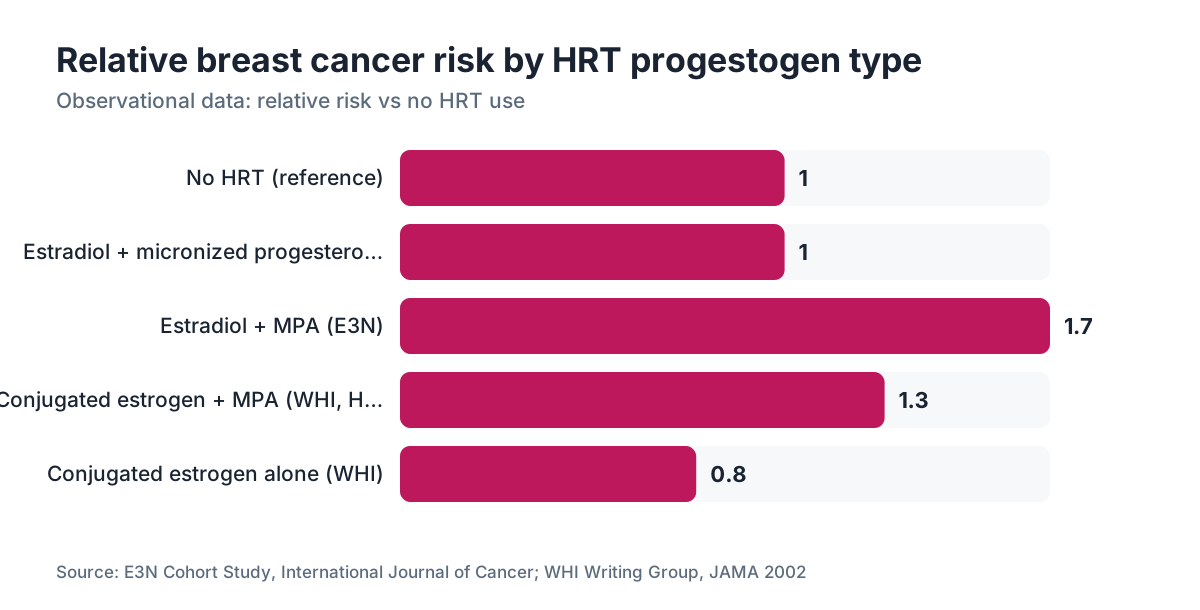
The Women's Health Initiative (WHI) trial is the reason this question matters so much. The WHI's combination arm used conjugated equine estrogen plus medroxyprogesterone acetate (MPA). That arm found a hazard ratio of 1.26 for invasive breast cancer, meaning about a 26% relative increase in risk over placebo after roughly 5.6 years of use [3].
That finding, reported in 2002, sent millions of women off HRT overnight. What got less attention in the headlines: the estrogen-only arm of the WHI, which enrolled women who'd had hysterectomies and didn't need a progestogen at all, found no increased breast cancer risk and actually trended toward protection [12].
French observational data told a different story when women used transdermal estradiol plus micronized progesterone rather than MPA. The E3N cohort study, covering roughly 80,000 French women, found no statistically significant increase in breast cancer risk with that combination, while the MPA combination showed a relative risk around 1.69 [4].
This doesn't mean bioidentical progesterone is proven safe forever at any dose. Observational data has limits. But the mechanistic explanation holds up: progesterone promotes differentiation of breast cells, while certain progestins, especially those with androgenic or glucocorticoid activity, may instead push breast cell proliferation. The North American Menopause Society (NAMS) acknowledges in its 2022 hormone therapy position statement that the type of progestogen matters and that micronized progesterone "may be associated with a better safety profile" than synthetic progestins [5].
For a closer look at progesterone alone, see our progesterone article.
How do progestins and progesterone compare head to head?
The table below summarizes the differences that matter in the clinic. Keep in mind that "progestins" covers a wide class of compounds, so the column reflects common patterns rather than every synthetic version.
| Feature | Bioidentical Progesterone | Synthetic Progestins | |---|---|---| | Molecular identity to body's hormone | Exact match | Different structure | | Receptor binding | Progesterone receptors primarily | Progesterone + androgen, glucocorticoid, or mineralocorticoid receptors (varies by agent) | | WHI breast cancer signal | No increased risk in E3N and similar studies | Increased risk with MPA (HR ~1.26 in WHI) | | Sleep effects | Mild sedative via GABA-A receptor; often improves sleep | Neutral to disruptive depending on agent | | Mood effects | Generally neutral to positive; metabolizes to allopregnanolone | Variable; some women report depression, irritability | | Cardiovascular effects | Neutral to favorable on lipids | Some progestins lower HDL (especially androgenic ones) | | Common forms | Oral micronized (Prometrium), vaginal gel, compounded | Pill, patch combo, IUD (levonorgestrel), injection (DMPA) | | Typical HRT use | With estradiol for uterine protection | With estrogen in many older combo HRT formulations | | FDA-approved for menopause HRT | Yes (Prometrium 200 mg) | Yes (various combos) |
One note on the sleep column. Oral micronized progesterone crosses the blood-brain barrier and converts to allopregnanolone, a neurosteroid that acts on GABA-A receptors. Many women report noticeably better sleep after switching from a progestin to oral bioidentical progesterone, and small trials back that up [6].
Which progestogen is in common HRT and birth control formulations?
This is where it gets granular. Reading your pill or patch label matters.
For hormone replacement therapy, older combination pills like Prempro contain conjugated equine estrogen plus MPA. Combipatch contains estradiol plus norethindrone acetate, a progestin. Activella is estradiol plus norethindrone acetate in pill form. Bijuva is the exception: an FDA-approved oral capsule containing estradiol plus micronized progesterone (bioidentical), approved in 2018. Prometrium 200 mg oral capsules are the most commonly prescribed bioidentical progesterone for HRT, and they're taken at bedtime because of the sedative effect.
For birth control, the progestins vary widely. Norethindrone, levonorgestrel, desogestrel, gestodene, norgestimate, drospirenone, and dienogest are all progestins used in combined oral contraceptives. The hormonal IUD (Mirena, Kyleena, Liletta, Skyla) releases levonorgestrel locally in the uterus. The shot (Depo-Provera) is depot medroxyprogesterone acetate, the same MPA from the WHI, just in injectable form.
Progesterone itself isn't used in standard hormonal contraception because it doesn't suppress ovulation reliably at doses that are practical to deliver.
If you're approaching menopause age and your doctor is recommending HRT, asking which progestogen they're prescribing, and why, is a completely reasonable question.
Does progesterone or progestin affect mood and anxiety differently?
Many women report that synthetic progestins, particularly in the luteal phase of a cycle or the second half of an HRT cycle, worsen mood, anxiety, or irritability. This isn't imagined. Androgenic progestins in particular have been tied to premenstrual-type mood symptoms in research settings.
Bioidentical progesterone metabolizes in the brain to allopregnanolone, a positive allosteric modulator of GABA-A receptors. In plain terms, allopregnanolone is calming. It's in the same class of neurosteroids as the drug brexanolone (Zulresso), which the FDA approved for postpartum depression in 2019 specifically because of this mechanism [7].
Some women are paradoxically sensitive to allopregnanolone and feel anxiety or low mood from it rather than calm. This appears to be the same sensitivity that causes premenstrual dysphoric disorder (PMDD) when their own progesterone rises naturally in the luteal phase. For those women, oral bioidentical progesterone can feel just as bad as a progestin, even though the mechanism differs [11].
There's no universal winner. Most women tolerate bioidentical progesterone better than synthetic progestins for mood. A meaningful minority does not. Tracking symptoms across a cycle, or switching the route of administration (vaginal progesterone bypasses some of the neurosteroid conversion), can help identify which camp you're in.
Is bioidentical progesterone safer than progestin for cardiovascular health?
The cardiovascular story is more nuanced than the breast cancer headlines suggest, but the evidence generally favors bioidentical progesterone.
Androgenic progestins, especially older ones like norethindrone and levonorgestrel, lower HDL cholesterol. That's not trivial for women already at elevated cardiovascular risk in the years around menopause. Drospirenone, because of its antimineralocorticoid activity, has a more neutral or even slightly favorable lipid profile and lowers blood pressure a little in some women.
Medroxyprogesterone acetate, the WHI progestin, may have blunted the protective effects of estrogen on blood vessels. In vitro and animal studies show MPA can dampen estrogen-related vasodilation while progesterone does not. Translating animal work to clinical decisions has limits, but the mechanism lines up with what the population data shows.
The NAMS 2022 position statement notes that progestogen type "may affect cardiovascular risk" and that micronized progesterone appears more favorable than synthetic progestins on lipid profiles [5].
For women who've had a pulmonary embolism, DVT, or stroke, the type and route of progestogen matter even more. Oral hormones carry higher clot risk than transdermal forms, and that applies to oral progesterone too, though the absolute risk increase is small at standard doses.
Can you use progesterone without estrogen in perimenopause?
Some practitioners prescribe low-dose progesterone alone in early perimenopause, before significant estrogen decline, for women whose main symptoms are sleep disruption, anxiety, or heavy periods from anovulatory cycles. The rationale: the first hormone to drop in perimenopause is often progesterone, not estrogen.
The evidence base for progesterone-only therapy in perimenopause is limited. There aren't large randomized trials. Small studies and clinical experience suggest it helps sleep and calms bleeding irregularity in that early window. It doesn't touch vasomotor symptoms (hot flashes, night sweats) as well as estrogen does.
If someone offers you a "progesterone cream" over the counter for menopause symptoms, be careful. Over-the-counter creams contain 1.8 to 22 mg per application, but absorption is highly variable and serum levels are unpredictable. Prescription progesterone is dosed to achieve measurable serum concentrations. FDA-approved oral Prometrium 200 mg produces reliable serum levels. Compounded topical creams often don't.
Learn more about the hormonal timeline in our when does menopause start guide.
What do the actual clinical guidelines say about progesterone vs progestin?
The Endocrine Society's 2015 clinical practice guideline on menopausal hormone therapy states that women with an intact uterus need a progestogen alongside estrogen to protect the endometrium, but it doesn't mandate that the progestogen be synthetic. The guideline acknowledges micronized progesterone as an option that may have a more favorable side-effect profile [8].
NAMS goes further in its 2022 hormone therapy position statement: "Micronized progesterone may be preferable to synthetic progestins, given the potential differences in the risk profiles, particularly with respect to breast cancer and cardiovascular disease." The statement is careful, using "may be preferable" rather than a firm directive, because head-to-head randomized trial data comparing the two is still thin. Most of the favorable evidence for micronized progesterone comes from observational studies [5].
The FDA has approved Prometrium (oral micronized progesterone 100 mg and 200 mg) for prevention of endometrial hyperplasia in postmenopausal women receiving conjugated estrogens, and for secondary amenorrhea. The 200 mg dose taken for 12 days per cycle is the standard endometrial protection dose in cycling HRT regimens [9].
Guidelines create the framework, but many prescribers still reach for combination pills with MPA because they're familiar, cheaper, and covered more consistently by insurance. That gap between guideline preference and prescription reality is real, and worth knowing about when you talk to your provider.
How do cost and insurance coverage compare?
Cost is a practical factor the hormone conversations often skip.
Generic oral micronized progesterone (Prometrium generic) typically costs $30 to $70 per month with GoodRx-style discounts at major pharmacy chains as of 2024. Brand-name Prometrium can run $150 to $200 per month without insurance. Compounded bioidentical progesterone capsules vary widely, from $40 to $120 per month, depending on the pharmacy and dose.
Many common progestin-containing HRT pills or patches (Prempro, Combipatch) are covered by most insurance plans because they've been on the market for decades. Generic versions usually run $20 to $50 per month with insurance. Hormonal IUDs (Mirena) are progestin-containing and cost $900 to $1,300 without insurance, but they're usually covered fully under the ACA's preventive care mandate for contraception.
Birth control pills containing progestins are almost universally covered without cost-sharing for women under ACA-compliant plans, under the preventive services requirement [10].
If cost is driving the decision, a generic progestin-containing HRT may be more accessible. If your provider believes bioidentical progesterone is the better clinical fit, check whether your insurance covers Prometrium generic specifically, because many plans do, and a GoodRx coupon can close the gap on the rest.
For women exploring telehealth hormone care, platforms like WomenRx can prescribe both FDA-approved progesterone and progestin-containing formulations and walk through which option fits your history and risk profile.
What questions should you ask your doctor before starting either?
The most useful questions aren't "is natural better?" (too vague) but specific ones about your situation.
First: Do I still have my uterus? If yes, you need some form of progestogen with any systemic estrogen. If you've had a hysterectomy, you may not need any progestogen at all, which removes the whole progestin-vs-progesterone debate.
Second: What is the specific progestogen you're prescribing, and why? The answer should name the compound, more than say "hormone" or "progesterone-like." If the answer is MPA or norethindrone, ask whether micronized progesterone is an option and why they're recommending the synthetic version instead.
Third: What route of administration are you recommending? Oral progesterone has the sedative sleep benefit. Vaginal progesterone gel (Crinone, Endometrin) delivers locally with less systemic effect, which helps if you're sensitive to the neurosteroid effects. Patches containing norethindrone are transdermal but still deliver a synthetic progestin.
Fourth: What monitoring do you recommend? Endometrial protection is the point of the progestogen. Whether you're on a continuous regimen (small daily dose of progestogen alongside daily estrogen) or a cyclical one (higher dose for 12 to 14 days per month), the goal is preventing endometrial hyperplasia. If you develop unexpected uterine bleeding, an endometrial biopsy or ultrasound to check lining thickness is appropriate.
Your personal history with breast cancer, blood clots, depression, or liver disease all shape which option makes more sense. An estrogen patch plus oral micronized progesterone is one of the regimens with the strongest observational safety data, but it's not the only valid approach.
Who should avoid progestins specifically, and who might need them?
Some women have compelling reasons to avoid synthetic progestins beyond just preferring the bioidentical route.
Women with a personal history of hormone-sensitive breast cancer are generally advised to avoid systemic hormone therapy altogether, progestin or progesterone. Progesterone-only local vaginal preparations for genitourinary symptoms are a gray area some oncologists will consider. No blanket recommendation works here; it's individualized with your oncologist.
Women with a strong family history of breast cancer but no personal diagnosis are candidates for both forms. The observational data suggesting lower breast cancer risk with micronized progesterone vs MPA belongs in that conversation, though it's not definitive.
Women with PMDD or a history of sensitivity to progesterone's neurosteroid effects may do better on a vaginal route of progesterone (less conversion to allopregnanolone in the brain) or, paradoxically, on a low-androgenic progestin like drospirenone that doesn't touch GABA pathways at all.
Women using the Mirena IUD for endometrial protection alongside systemic estrogen get progestin delivered locally, with very little systemic exposure. Some gynecologists offer this to sidestep the oral progestin-vs-progesterone debate almost entirely.
Women who've had a hysterectomy: you don't need any progestogen. Estrogen alone is appropriate, and adding progestogen if you're in this group provides no uterine protection benefit while still carrying whatever risks the particular compound has. A bone density test is worth discussing if you're considering or already on post-hysterectomy estrogen therapy.
What's the bottom line on progestin vs progesterone for perimenopause and menopause?
Here's where the evidence actually sits, in plain language.
Bioidentical micronized progesterone has a more favorable side-effect profile than synthetic progestins for most women, based on consistent observational data, plausible mechanisms, and what women report clinically. It protects the uterus as well as progestins do at the right dose. It improves sleep for many women rather than disrupting it. It has no meaningful androgenic side effects. The E3N cohort study found no significant breast cancer risk increase when it was paired with transdermal estradiol, in contrast to the MPA combination [4].
Synthetic progestins aren't uniformly bad. Hundreds of millions of women have used them for decades in contraception and HRT. Drospirenone has some favorable properties. The levonorgestrel IUD used for local endometrial protection has minimal systemic effects. Progestins are more accessible, cheaper in some formulations, and have longer regulatory track records.
The evidence doesn't yet come from a large head-to-head randomized trial comparing micronized progesterone to MPA over 10 years in menopausal women, which would be the ideal study. Until that exists, the E3N data and the biological rationale are the best available guide.
For most women with an intact uterus starting HRT, transdermal estradiol plus oral micronized progesterone at bedtime is what a careful reading of the current evidence supports. That's not a guarantee, and it's not the only defensible choice. But if you're going to choose, the evidence leans that direction.
To work through your specific history with a clinician who focuses on women's hormones, WomenRx provides telehealth hormone consultations for perimenopause and menopause, including prescriptions for both FDA-approved progesterone and progestin formulations where appropriate.
Frequently asked questions
Is bioidentical progesterone the same as natural progesterone?
Yes, in terms of molecular structure. Bioidentical progesterone (Prometrium or compounded) has the identical chemical structure to the progesterone your ovaries produce, even though it's made from plant precursors in a lab. Natural in this context means the molecule is identical to your body's own, not that it's unprocessed or unregulated.
Does the progesterone in birth control pills protect against breast cancer like natural progesterone might?
Combined oral contraceptives don't contain progesterone. They contain synthetic progestins paired with synthetic estrogens. The breast cancer data on oral contraceptives shows a small increased risk during use that returns to baseline after stopping. This is a separate question from the HRT literature, because the hormones, doses, and the age of the women are all different.
Can progesterone help with sleep?
Oral micronized progesterone is metabolized in the brain to allopregnanolone, a neurosteroid that activates GABA-A receptors and promotes sedation. Many women report better sleep after switching to oral bioidentical progesterone taken at bedtime. Small clinical studies support this effect. Vaginal progesterone bypasses much of this conversion and has less sedative effect.
What is medroxyprogesterone acetate (MPA) and why is it controversial?
MPA is the synthetic progestin used in Depo-Provera (the birth control shot) and in older HRT formulations like Prempro. It's controversial because the Women's Health Initiative trial, which used MPA combined with conjugated estrogen, found a 26% relative increase in breast cancer risk. MPA also has mild androgenic and glucocorticoid activity that bioidentical progesterone doesn't share.
Do I need a progestogen if I've had a hysterectomy?
No. The sole reason progestogen is added to estrogen in HRT is to protect the uterine lining from estrogen-driven overgrowth. Without a uterus, that risk doesn't exist. Women who've had a hysterectomy are typically prescribed estrogen alone, which avoids the progesterone-vs-progestin question entirely and may actually carry a more favorable breast cancer risk profile.
Is the levonorgestrel IUD the same as taking a progestin pill for HRT?
Not in terms of systemic exposure. The levonorgestrel IUD delivers progestin locally into the uterus, with very low serum levels. For women using systemic estrogen for menopause symptoms, a Mirena IUD can provide endometrial protection without meaningful systemic progestin exposure. It's not FDA-approved for this indication but is used off-label for that purpose.
What does 'micronized' mean in micronized progesterone?
Micronization means the progesterone is ground into very small particles before being suspended in oil and encapsulated. This dramatically improves absorption through the gut wall, since regular progesterone powder is poorly absorbed orally. Without micronization, oral doses high enough to reach therapeutic levels weren't practical. Prometrium is micronized progesterone in peanut oil.
Can progesterone cream from a health food store replace prescription progesterone?
Generally no. Over-the-counter progesterone creams contain variable amounts of progesterone, often 1.8 to 22 mg per application, and absorption through skin is highly inconsistent. They're unlikely to reach serum levels high enough for reliable endometrial protection. Prescription oral micronized progesterone or compounded formulations from a licensed pharmacy deliver predictable doses.
Does progesterone cause weight gain?
Progesterone has mild appetite-stimulating effects and can cause temporary water retention in some women, but the evidence for meaningful long-term weight gain from progesterone alone is weak. Synthetic progestins, especially those with androgenic activity, are more consistently linked to modest weight gain and fluid retention. Neither should be the dominant driver of weight change compared to diet and activity.
How do I know which progestogen my HRT contains?
Read the drug label or package insert under 'active ingredients.' Prometrium or generic oral micronized progesterone means bioidentical. If you see medroxyprogesterone acetate, norethindrone, levonorgestrel, drospirenone, or norgestimate, it's a synthetic progestin. If you're unsure, ask your pharmacist to name the specific progestogen compound in your formulation.
Are progestins safe in perimenopause for birth control?
Progestin-containing contraceptives are widely used in perimenopause and considered safe for most healthy nonsmokers under 50 to 55. Women over 35 who smoke have elevated cardiovascular risk with combined estrogen-progestin pills. Progestin-only pills and IUDs carry fewer vascular risks. Perimenopause-specific hormone concerns differ from contraceptive safety questions, so discuss both aspects with your provider.
What is the difference between progesterone and progestin in terms of the PMDD or mood connection?
Some women with PMDD are paradoxically sensitive to allopregnanolone, the brain metabolite of progesterone. For them, both rising natural progesterone in the luteal phase and oral bioidentical progesterone in HRT can worsen mood. Vaginal progesterone or switching to a progestin that doesn't affect GABA pathways may be better tolerated. This is a real subset of women, worth discussing if you have a history of severe PMS or PMDD.
Does progesterone protect against endometrial cancer better than progestins?
Oral micronized progesterone at 200 mg for 12 to 14 days per month produces endometrial protection comparable to progestins at standard doses, based on studies used to support FDA approval. Continuous low-dose regimens (100 mg nightly) also appear effective in observational data. No strong evidence suggests either is superior for endometrial protection specifically, as long as the dose and duration are adequate.
Sources
- Endocrine Society Journal of Clinical Endocrinology and Metabolism: Characterization of receptor binding profiles of progestogens
- FDA Drug Database: Medroxyprogesterone Acetate (Provera) prescribing information
- JAMA 2002: Risks and benefits of estrogen plus progestin in healthy postmenopausal women (WHI Writing Group)
- International Journal of Cancer: E3N cohort study on postmenopausal hormone use and breast cancer risk
- North American Menopause Society (NAMS): 2022 Hormone Therapy Position Statement
- NIH National Library of Medicine: Micronized progesterone and sleep in postmenopausal women
- FDA Drug Approval Database: Brexanolone (Zulresso) approval for postpartum depression, 2019
- Endocrine Society Clinical Practice Guideline: Treatment of Symptoms of the Menopause, 2015
- FDA: Prometrium (progesterone, USP) prescribing information
- HealthCare.gov: Preventive care benefits for women under the ACA
- NIH National Library of Medicine: Allopregnanolone and its role as a GABA-A receptor modulator
- Women's Health Initiative: Estrogen-alone vs placebo in hysterectomized women (JAMA 2004)