Progesterone test: what the numbers actually mean for women
TL;DR: A progesterone blood test measures the hormone in nanograms per milliliter (ng/mL). In cycling women, a mid-luteal result above 10 ng/mL suggests ovulation happened. In perimenopause and menopause, levels usually fall below 1 ng/mL. The test tells you the most when it's timed right, usually 7 days after suspected ovulation, or on day 21 of a 28-day cycle.
What is a progesterone test and why does it matter?
A progesterone blood test measures how much progesterone is circulating in your bloodstream at one moment in time. The result comes back in nanograms per milliliter (ng/mL), and what counts as "normal" shifts hard depending on where you are in your menstrual cycle, whether you're pregnant, and whether you've reached menopause.
Progesterone is made mostly by the corpus luteum, the temporary gland that forms in the ovary after an egg is released. No ovulation, no gland. Progesterone stays low, and the second half of your cycle can turn chaotic. Low mid-luteal progesterone is one of the most common but underdiagnosed reasons for luteal phase defects, irregular cycles, and trouble conceiving.
The test also matters for women on hormone replacement therapy. Anyone with a uterus who takes estrogen needs progesterone (or a synthetic progestin) to protect the uterine lining. Checking progesterone can confirm whether a dose is adequate, or whether absorption from a cream or gel is actually reaching therapeutic blood concentrations.
It's also one of the first tools a clinician reaches for when evaluating perimenopause. Erratic, low, or absent luteal-phase progesterone often shows up years before estrogen starts to drop, which makes it an early signal that the transition has started. [1]
What are normal progesterone levels by cycle phase and life stage?
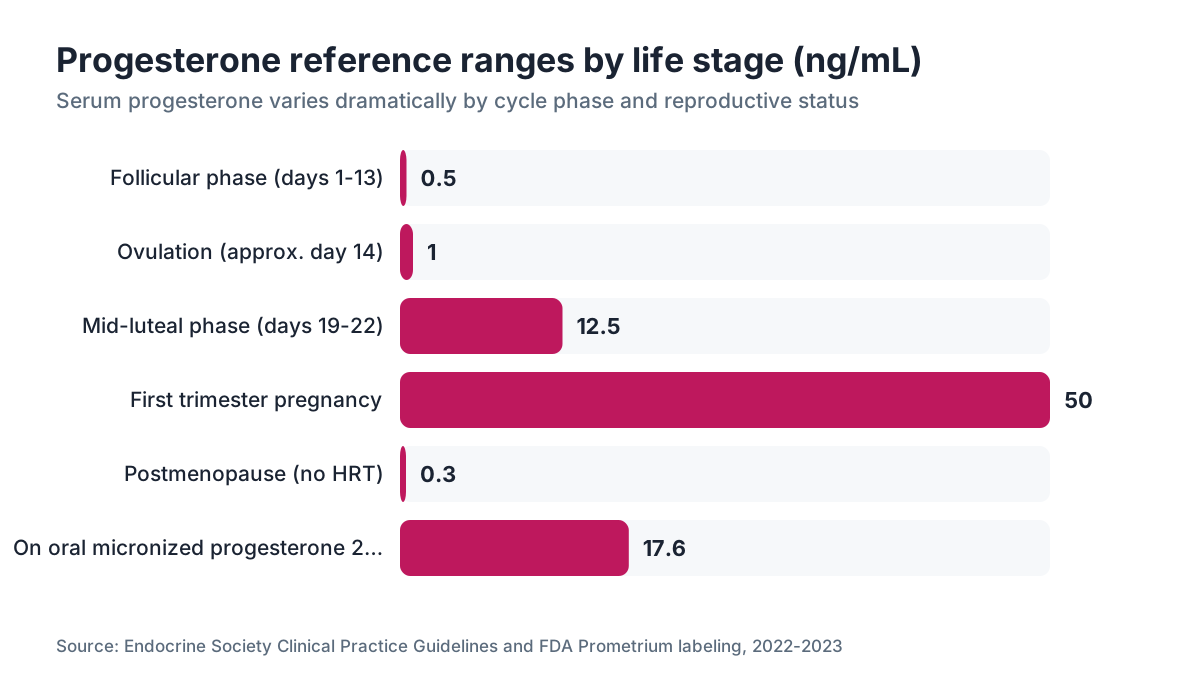
This is where a lot of confusion lives, because one number means very different things depending on timing. The table below summarizes reference ranges used by most major clinical labs and supported by Endocrine Society guidelines. [2]
| Life stage / cycle phase | Progesterone (ng/mL) | |---|---| | Follicular phase (days 1-13) | 0.1 to 0.9 | | Ovulation (day 14, approx.) | 0.5 to 1.5 | | Mid-luteal phase (days 19-22) | 5.0 to 20.0 | | Pregnancy, first trimester | 11.2 to 90.0 | | Pregnancy, second trimester | 25.6 to 89.4 | | Pregnancy, third trimester | up to 200+ (range varies widely) | | Postmenopause (no HRT) | < 0.5 |
The number that gets cited most in fertility medicine is 10 ng/mL. A mid-luteal progesterone above 10 ng/mL is generally accepted as evidence that ovulation happened. Below that threshold, especially below 5 ng/mL, is where clinicians start looking at anovulation, luteal phase defect, or ovarian insufficiency. [3]
For postmenopausal women on oral micronized progesterone (such as Prometrium 200 mg nightly), blood levels often sit in the 3 to 20 ng/mL range a few hours after the dose, then fall back toward baseline by morning. Serum progesterone doesn't map neatly onto progesterone cream absorption, which is one reason topical cream dosing stays controversial, and why many endocrinologists won't rely on serum levels alone to guide cream therapy. [4]
Pregnancy ranges are wide because placental progesterone production ramps up fast. A single low result early in pregnancy can be concerning, but serial measurements or a trend over several days matter more than any one draw. [5]
When should you get a progesterone blood test?
Timing is everything. A progesterone test drawn on the wrong day of your cycle is close to useless, and this is the single most common reason women get back a low result that doesn't reflect a real problem.
For cycling women, the standard advice is to test roughly 7 days after ovulation. Textbook 28-day cycle? That's day 21. If your cycle runs 35 days, ovulation probably lands around day 21, so you'd test around day 28. Ovulation predictor kits (OPKs) help here, because they let you pin the LH surge, then count 7 days forward to schedule the blood draw.
If you're trying to confirm whether you're ovulating at all, one well-timed mid-luteal draw is usually enough. A result above 10 ng/mL confirms ovulation happened that cycle. One low result doesn't prove anovulation, because ovulation can skip individual cycles even in healthy women.
For women in perimenopause or early menopause with symptoms like insomnia, anxiety, heavy periods, or cycle irregularity, progesterone testing works best as part of a broader panel that includes FSH, estradiol, and sometimes LH. The menopause workup rarely rests on progesterone alone.
Women already on HRT should ask their prescriber exactly when to test relative to their last dose, because oral progesterone creates a large but short-lived spike in blood levels. Test too soon after a dose and you get a falsely high reading. Test too late and you get a falsely low one. Most labs time the draw 12 hours after the last pill to capture a rough average. [4]
How is the test done and what does it cost?
The progesterone blood test is a standard serum draw. A phlebotomist takes blood from a vein, usually in the arm, and the sample goes to a chemistry analyzer. No fasting required. Results usually come back within 24 to 48 hours at most commercial labs.
Cost varies a lot depending on how you get it. Through a conventional insurance plan with a valid diagnosis code, out-of-pocket cost is often zero to $30. Without insurance, cash-pay prices at commercial labs like Quest Diagnostics and LabCorp typically run $25 to $75 for the progesterone test alone. Direct-to-consumer lab ordering services (Ulta Lab Tests, Walk-In Lab, HealthLabs) often list it for $30 to $60. [6]
A progesterone test ordered as part of a broader female hormone panel can run $100 to $300 without insurance, but ordering the individual test separately is almost always cheaper than a bundled panel if you only need one or two markers.
Some telehealth platforms, including hormone-focused ones like WomenRx, include lab work in an initial evaluation, which can bring the effective per-test cost down if you were planning to see a provider anyway.
Saliva and urine progesterone tests exist but aren't used in standard clinical practice for diagnosis. The Endocrine Society's clinical practice guidelines state plainly that serum (blood) testing is the standard for measuring progesterone, and that saliva testing hasn't been validated for clinical decision-making. [2]
What does a low progesterone result actually mean?
A low result means different things in different contexts, so before you draw conclusions, confirm the timing of the draw.
If you drew on day 21 of a 28-day cycle and got below 5 ng/mL, the likely explanations are: ovulation didn't happen that cycle, ovulation happened later than expected (making the draw too early), or you have a luteal phase defect where the corpus luteum doesn't make enough progesterone even after ovulation.
Low luteal-phase progesterone links to trouble conceiving, early pregnancy loss, irregular or heavy periods, and symptoms like premenstrual spotting, anxiety in the second half of the cycle, and poor sleep in the two weeks before your period. These symptoms map onto what many clinicians and patients now call "estrogen dominance," though that phrase isn't a formal diagnosis, and the real dynamic is relative progesterone deficiency rather than absolute estrogen excess. [3]
In a woman not trying to conceive, low progesterone matters mostly for symptom management and long-term uterine health. Anyone taking estrogen for symptom relief needs adequate progesterone exposure. The PEPI trial (Postmenopausal Estrogen/Progestin Interventions), a randomized controlled trial, found endometrial hyperplasia in 62% of participants using unopposed estrogen over three years, compared to less than 1% in those using combined estrogen-progestogen therapy. [7] That's not a small difference.
Primary ovarian insufficiency (POI), once called premature ovarian failure, is diagnosed when ovarian function declines before age 40. FSH above 40 IU/L on two tests at least a month apart, plus persistently low estradiol and progesterone, points toward POI rather than typical perimenopause. [8]
What does a high progesterone result mean?
High progesterone is less often the reason someone gets tested, but it happens. The most common reason for an unexpectedly high reading in a non-pregnant woman is simply that the test was drawn in the mid-luteal phase, which is exactly when progesterone should peak, and nobody accounted for the timing.
In pregnancy, very high progesterone in the first trimester is generally reassuring. A progesterone below 5 to 10 ng/mL in early pregnancy is a stronger warning sign for miscarriage than a high level is for any pathology.
Elevated progesterone outside of pregnancy or the luteal phase can point to adrenal disorders, particularly congenital adrenal hyperplasia (CAH), where the adrenal glands overproduce progesterone precursors. Ovarian tumors that make steroid hormones are a rarer cause. In these cases, progesterone is one piece of a broader workup that includes 17-hydroxyprogesterone and other adrenal markers. [2]
If you're on progesterone supplementation (oral, vaginal gel, suppository) and your serum levels are very high, that usually reflects recent dosing rather than a disease process. Route of administration matters: vaginal progesterone creates high local concentrations in the uterus but relatively modest systemic levels, so serum testing underestimates uterine exposure. This is why vaginal progesterone gets used in IVF protocols regardless of what blood levels show.
How does progesterone testing fit into a perimenopause evaluation?
In hormonal terms, perimenopause shows up first as progesterone decline and later as erratic estrogen swings. Women often feel symptoms (sleep disruption, mood changes, cycles lengthening or shortening, heavier periods) years before their FSH climbs into the menopausal range or they'd meet any formal criteria for menopause. [1]
The perimenopause age range usually runs from the early 40s into the mid-50s, with the average onset of full menopause in the US around 51. If you're in your 40s and your mid-luteal progesterone keeps coming back below 5 ng/mL on well-timed tests, that's meaningful data even when your FSH looks normal.
The Menopause Society (NAMS) notes that hormone testing isn't required for a clinical diagnosis of menopause, which is defined as 12 consecutive months without a period in the absence of other causes. But testing does add value when the picture is murky, when symptoms are significant, or when a woman is under 45 and the clinician needs to separate perimenopause from thyroid disease, hyperprolactinemia, or other causes of menstrual irregularity. [9]
A reasonable starting panel for a symptomatic woman in her 40s includes estradiol (E2), FSH, LH, progesterone (day 21 or 7 days post-ovulation), TSH, prolactin, and sometimes testosterone. Adding AMH (anti-Mullerian hormone) gives a rough estimate of ovarian reserve, though AMH doesn't predict symptom onset with any precision. None of these tests tells the whole story alone.
How does progesterone testing guide hormone replacement therapy decisions?
If you have a uterus and you're starting estrogen therapy, progesterone isn't optional. It's there to prevent endometrial overstimulation. The question becomes: is the dose and form of progesterone you're taking actually working?
For oral micronized progesterone (Prometrium), serum testing can confirm absorption, though levels swing hard through the day depending on when you took the pill. The FDA-approved labeling for Prometrium 200 mg shows mean serum levels peaking around 17.6 ng/mL at 3 hours post-dose and dropping to roughly 2 ng/mL at 24 hours. [10] Testing 12 hours after the prior night's dose gives you a trough-adjacent reading that most clinicians find useful.
For vaginal progesterone (gels like Crinone, suppositories), serum levels sit much lower than oral dosing, often 1 to 3 ng/mL even on therapeutic doses, because the uterine first-pass effect captures most of the progesterone locally. Don't panic if your serum level looks low on vaginal progesterone. The uterus is getting what it needs.
For progesterone cream, the honest answer is that nobody has great data on what serum level equals adequate endometrial protection. The closest data come from small studies that found highly variable serum absorption from transdermal creams, with many women not reaching levels considered protective. The Endocrine Society does not recommend progesterone cream as a substitute for FDA-approved progesterone in women with a uterus on estrogen therapy. [2]
If you're using hormone replacement therapy and wondering whether your current regimen is adequate, a targeted progesterone blood test, timed correctly, is a reasonable check. Pair it with symptom tracking rather than chasing a number in isolation.
For women exploring HRT options, WomenRx offers telehealth-based hormone evaluations that include lab orders, so you can get tested and reviewed without a multi-month wait for a specialist appointment.
Can you test progesterone at home?
Technically yes, though the practical value varies. Several companies now offer finger-prick dried blood spot (DBS) kits or saliva collection kits you do at home and mail to a lab.
Dried blood spot testing for progesterone correlates decently with venous blood draws in research settings, and companies like ZRT Laboratory and Lets Get Checked sell home-based hormone panels. But these tests aren't part of standard clinical practice, and results from home kits can differ enough from standard serum draws that a clinician may not feel comfortable acting on them without a confirmatory venous draw.
Saliva progesterone testing has been marketed hard by compounding pharmacies and some functional medicine practices, but the Endocrine Society's position is blunt: salivary hormone testing hasn't been validated for clinical use and shouldn't guide treatment decisions. [2] Saliva progesterone levels don't reliably reflect tissue levels or serum levels, and results from different labs for the same sample can vary by a factor of ten.
If you want actionable data, a standard blood draw ordered through your provider or a direct-to-consumer lab (Quest, LabCorp, or similar) is the most reliable option. The small hassle of a phlebotomy visit is worth it.
How does progesterone testing connect to fertility and ovulation tracking?
If you're trying to conceive, a mid-luteal progesterone draw is one of the most direct, affordable ways to confirm that ovulation is actually happening. Basal body temperature charting and OPKs suggest ovulation, but a serum progesterone above 10 ng/mL at the right point in the cycle confirms it biochemically.
Some reproductive endocrinologists use a higher threshold. A progesterone above 15 ng/mL mid-luteal is sometimes described as stronger confirmation of an adequate luteal phase, though the clinical evidence for treating a "suboptimal" level between 10 and 15 ng/mL is weak in women who are otherwise ovulatory. [3]
In assisted reproductive technology (ART) cycles, progesterone gets monitored often. On the day of a frozen embryo transfer, many clinics want progesterone above 10 to 20 ng/mL to confirm the endometrium is prepared. Levels vary by protocol (natural, medicated, modified natural), and each clinic sets its own thresholds.
For women with recurrent pregnancy loss, low luteal-phase progesterone is one part of the evaluation, but it's rarely the whole story. The American Society for Reproductive Medicine (ASRM) notes that while luteal phase defect has been proposed as a cause of recurrent loss, direct evidence that treating low progesterone reduces miscarriage rate stays limited, though some trials (notably the PRISM trial) suggest a possible benefit in women with early pregnancy bleeding and prior loss. [11]
If you also want to understand your overall hormonal picture during the reproductive years, reading about progesterone as a hormone gives context that makes test results easier to read.
What questions should you ask your doctor about your progesterone result?
Getting a result is one thing. Knowing what to do with it is another.
First, ask whether the draw was timed correctly. If your clinician ordered a progesterone test without asking where you are in your cycle, and you're a cycling woman, the result may not be interpretable.
Second, ask what reference range the lab used. Ranges vary between labs, and some print a follicular-phase range on a result that was actually drawn in the luteal phase, which can make a normal level look low.
Third, ask whether this single result changes anything about your management or whether a repeat test is needed. Progesterone fluctuates cycle to cycle. One low result in a woman who isn't trying to conceive and has no symptoms doesn't necessarily mean anything has to change.
Fourth, if you're on progesterone therapy and your level came back low, ask what form and dose you're taking and whether the timing of the draw was right for that route. Oral micronized progesterone has a short half-life. Drawing blood 20 hours after a bedtime pill gives a much lower reading than drawing at peak.
Fifth, ask whether other tests should go with this result. Progesterone doesn't exist in isolation. Estradiol, FSH, TSH, and testosterone together paint a fuller picture, especially for women in their 40s working through early perimenopause or considering HRT.
WomenRx offers a structured hormone consultation that starts with the right panel and times it appropriately, which saves a lot of back-and-forth if you're starting from scratch.
What's the connection between progesterone and other hormone tests?
Progesterone doesn't operate alone, and reading it in isolation can mislead you.
Estradiol and progesterone have a see-saw relationship through the cycle. In the follicular phase, estradiol rises while progesterone stays low. After ovulation, progesterone climbs sharply while estradiol dips briefly then stabilizes. In perimenopause, progesterone tends to fall first, creating a relative imbalance even before estradiol turns erratic. This is why some women in their early 40s with "normal" estradiol still feel terrible: their progesterone is quietly declining. [1]
FSH is the other companion test that matters. A persistently elevated FSH (above 25 to 30 IU/L alongside symptoms) suggests the ovary is straining to respond, even in a woman still cycling. Paired with a low mid-luteal progesterone, elevated FSH paints a picture of declining ovarian function. [8]
LH matters less for routine progesterone evaluation but helps detect polycystic ovarian syndrome (PCOS), where an elevated LH-to-FSH ratio in the follicular phase (often greater than 2:1 or 3:1) is part of the diagnostic picture alongside anovulation and low mid-cycle progesterone.
Testosterone, DHEA-S, and cortisol round out the adrenal piece. Stress genuinely suppresses progesterone: the steroidogenesis pathway favors cortisol production over progesterone when the body senses chronic stress, a phenomenon sometimes called "cortisol steal," though the real mechanism is more complicated than that phrase suggests. [2]
For women watching bone health alongside hormone changes, a bone density test is worth considering once estrogen levels start declining, since progesterone and estrogen both influence bone resorption.
Frequently asked questions
What is a normal progesterone level for a woman in her 40s?
It depends entirely on where she is in her cycle. A woman in her 40s who is still cycling should have a mid-luteal progesterone above 10 ng/mL if she ovulated. If cycles are becoming irregular, progesterone may be low even when a period occurs, because anovulatory cycles get more common in perimenopause. There is no single "normal" number without cycle-day context.
Can a progesterone test diagnose menopause?
No. Menopause is a clinical diagnosis defined as 12 consecutive months without a period. A persistently low progesterone (below 0.5 ng/mL) plus elevated FSH above 40 IU/L and low estradiol supports the diagnosis but can't replace the clinical timeline. NAMS guidelines note that hormone testing isn't required for menopause diagnosis in women over 45 with classic symptoms.
Should I take progesterone if my blood test shows low levels?
Not automatically. Low levels need context. Was the test timed correctly? Are you having symptoms? Do you have a uterus and take estrogen? A low mid-luteal level in a symptomatic woman considering HRT is a reasonable prompt to discuss progesterone therapy with a provider. A low level on a randomly timed draw, with no symptoms, doesn't necessarily mean treatment is needed.
How do I know if my progesterone test was done at the right time in my cycle?
The ideal window is 7 days after ovulation. In a 28-day cycle that's day 21; in a 35-day cycle it's around day 28. If you use ovulation predictor kits, count 7 days from your LH surge. A test done too early in the luteal phase shows a falsely low result even if ovulation happened. Always tell the ordering lab which cycle day the draw was taken.
What progesterone level indicates ovulation?
A serum progesterone above 10 ng/mL in the mid-luteal phase (about 7 days after the LH surge) is the commonly used threshold to confirm ovulation. Some reproductive endocrinologists prefer to see above 15 ng/mL as a stronger indicator of adequate luteal function, particularly in women with unexplained infertility or recurrent loss.
Is a day 21 progesterone test accurate?
Yes, but only if you have a 28-day cycle. Day 21 is chosen because it falls 7 days after day 14 ovulation in a textbook cycle. If your cycle is longer, day 21 may be too early to catch the luteal peak. The smarter approach is to base the draw on 7 days post-ovulation rather than a fixed cycle day, especially if your cycles aren't consistently 28 days.
Can low progesterone cause anxiety and sleep problems?
Yes. Progesterone metabolizes into allopregnanolone, a neurosteroid that acts on GABA-A receptors in the brain with calming, sleep-promoting effects. When progesterone falls in the luteal phase or during perimenopause, that calming signal drops too. Anxiety, irritability, and insomnia in the two weeks before a period, or during perimenopause, are common low-progesterone symptoms that many women get told are stress rather than hormonal.
Is saliva progesterone testing reliable?
No. The Endocrine Society's clinical practice guidelines state plainly that salivary hormone testing hasn't been validated for clinical use and shouldn't guide treatment decisions. Salivary progesterone levels don't reliably reflect serum or tissue levels. Despite heavy marketing by some compounding pharmacies and functional medicine practices, the scientific consensus supports serum blood testing only.
How much does a progesterone blood test cost without insurance?
Without insurance, a standalone progesterone blood test at a commercial lab typically costs $25 to $75. Quest Diagnostics, LabCorp, and direct-to-consumer lab ordering services like Ulta Lab Tests or HealthLabs generally list it in this range. Bundled female hormone panels cost more, but if progesterone is the only test you need, ordering it separately almost always saves money.
What progesterone level is considered too low during pregnancy?
A progesterone below 5 ng/mL in the first trimester is generally considered low and linked to a higher risk of miscarriage or ectopic pregnancy. Most healthy intrauterine pregnancies show progesterone above 20 ng/mL in the first trimester, though ranges are wide. A single low result is less informative than a trend; serial measurements every 48 hours give more clarity in early pregnancy.
Does taking progesterone cream raise blood levels?
Only modestly and inconsistently. Transdermal progesterone cream has highly variable serum absorption, and many women don't reach levels considered adequate for endometrial protection. The Endocrine Society does not recommend progesterone cream as a substitute for FDA-approved oral or vaginal progesterone in women with a uterus on estrogen therapy. Serum levels from cream use are often misleadingly low while tissue levels may be higher, making clinical interpretation hard.
What other tests should I get alongside a progesterone test?
For a full hormonal picture, most clinicians add estradiol, FSH, LH, and TSH at minimum. Testosterone (total and free) matters for libido and energy. Prolactin rules out pituitary causes of irregular cycles. In the 40s, AMH helps estimate ovarian reserve. If you're evaluating perimenopause, this panel together is far more informative than progesterone alone.
Can you check progesterone on a telehealth visit?
Yes. Many telehealth providers can order a standard serum progesterone draw at a commercial lab near you without an in-person visit. You get a lab requisition, go to a draw site, and results go back to your telehealth clinician for interpretation. This is increasingly common for women doing hormone evaluations through menopause-focused or women's health telehealth platforms.
How often should progesterone be tested on HRT?
There's no universal protocol, but most hormone-prescribing clinicians recheck levels 6 to 12 weeks after starting or changing a regimen, then annually once stable. The goal is to confirm adequate absorption and appropriate levels rather than chase a specific number month to month. If symptoms change, an off-cycle recheck makes sense. Timing the draw consistently relative to dose and cycle day makes results interpretable over time.
Sources
- The Menopause Society (NAMS), Menopause Practice: A Clinician's Guide, 6th edition overview
- Endocrine Society, Clinical Practice Guideline: Hormonal Testing and Hormone Therapy in Women
- Practice Committee of the American Society for Reproductive Medicine, 'Current clinical irrelevance of luteal phase deficiency,' Fertility and Sterility 2015
- FDA, Prometrium (micronized progesterone) prescribing information
- ACOG Practice Bulletin No. 200: Early Pregnancy Loss, American College of Obstetricians and Gynecologists
- Quest Diagnostics, Patient Services, Lab Test Pricing
- Writing Group for the PEPI Trial, 'Effects of estrogen or estrogen/progestin regimens on heart disease risk factors in postmenopausal women,' JAMA 1995
- European Society of Human Reproduction and Embryology (ESHRE), Guideline on Primary Ovarian Insufficiency, 2016
- The Menopause Society, Position Statement: Hormone Therapy 2022
- DailyMed, National Library of Medicine, Prometrium capsules prescribing information
- Coomarasamy A et al., 'PRISM Trial: Progesterone in Women with Early Pregnancy Bleeding,' New England Journal of Medicine 2019