Progesterone tablets: what every woman should know
TL;DR: Oral micronized progesterone tablets (brand name Prometrium, plus generics) are FDA-approved to protect the uterine lining in women using estrogen therapy and to treat secondary amenorrhea. They come in 100 mg and 200 mg doses, are taken at bedtime because they cause drowsiness, and behave very differently from synthetic progestins like medroxyprogesterone acetate.
What are progesterone tablets and how do they differ from synthetic progestins?
Progesterone tablets, in the context most women are asking about, means oral micronized progesterone. Micronized just means the progesterone molecule has been ground into tiny particles so your gut can absorb it. The molecule itself is identical to the progesterone your ovaries make. That matters.
The brand most people know is Prometrium, available in 100 mg and 200 mg capsules filled with micronized progesterone suspended in peanut oil [1]. Generics carrying the same formulation are widely available. The FDA approved Prometrium in 1998.
Synthetic progestins are a different category entirely. Medroxyprogesterone acetate (MPA), norethindrone, levonorgestrel, and others were engineered in labs to activate progesterone receptors, but their chemical structures are not progesterone. Some bind androgen receptors or glucocorticoid receptors too, which creates side-effect profiles that differ meaningfully from micronized progesterone. The Women's Health Initiative used MPA in its combination arm, and the elevated breast cancer signal seen there has not been replicated in studies using micronized progesterone [2].
For a wider look at how progesterone fits the hormone picture, see our guide to progesterone.
Here is the practical test. If your prescription says "progesterone 200 mg oral" and your pharmacy fills it as Prometrium or a generic micronized progesterone capsule, you are getting bioidentical progesterone. If it says "Provera" or "medroxyprogesterone," you are not.
What is oral micronized progesterone FDA-approved for?
The FDA-approved indications on the current Prometrium label are two [1]. The first is endometrial protection in postmenopausal women who have a uterus and are receiving conjugated estrogens. The official phrasing is "prevention of endometrial hyperplasia in postmenopausal women who are receiving conjugated estrogens." The second is secondary amenorrhea, meaning absent periods in women who are not menopausal.
That first indication is the one most perimenopausal and menopausal women encounter. Estrogen stimulates the uterine lining. Without a progestogen to balance that stimulation, the lining can grow excessively, and over time that raises the risk of endometrial cancer. Any woman who has a uterus and uses systemic estrogen therapy needs progesterone or a progestin. Full stop.
The Endocrine Society's 2015 menopause guideline puts it plainly: a progestogen is required for endometrial protection in all women with a uterus who use systemic estrogen, and the type of progestogen affects tolerability and risk [7].
Off-label uses are common and are where much of the clinical nuance lives. Prescribers routinely use oral micronized progesterone to help with sleep, to manage irregular bleeding in perimenopause, and to support mood stability. The FDA does not regulate the practice of medicine, so off-label prescribing is legal and often evidence-informed, but those uses are not on the label.
If you are weighing whether hormone replacement therapy is right for you, knowing the difference between on-label and off-label use makes for a sharper conversation with your prescriber.
What dose of progesterone tablets do most women take?
Two doses cover most menopausal prescriptions. The Prometrium label lists 200 mg per night for 12 days per 28-day cycle for cyclic uterine protection, and 100 mg per night continuously when used alongside daily estrogen [1].
Perimenopause is messier. Because cycles are still happening (however irregularly), prescribers often use progesterone in a way that mirrors or supports whatever the ovaries are doing. Doses range from 100 mg to 200 mg nightly, sometimes cycled, sometimes continuous. There is no single universal protocol.
For sleep specifically, 100 mg at bedtime is the dose most studied and most commonly prescribed off-label. A small but often-cited trial by Schussler et al. found that 300 mg of oral progesterone increased slow-wave sleep in postmenopausal women, though 300 mg is above the typical clinical dose, and that sedative effect is part of why you always take this at bedtime, not in the morning [3].
If you have had a hysterectomy, you do not need a progestogen at all for uterine protection, because there is no uterus to protect. Some practitioners still prescribe low-dose progesterone for sleep or mood support in that population, but that is an individualized, off-label decision.
| Indication | Typical dose | Timing | |---|---|---| | Uterine protection (cyclic) | 200 mg | 12 nights per 28-day cycle | | Uterine protection (continuous) | 100 mg | Nightly | | Secondary amenorrhea | 400 mg | 10 nights per cycle | | Off-label sleep support | 100 mg | Nightly at bedtime | | Perimenopause (varies) | 100 to 200 mg | Nightly or cyclic |
Why do you take progesterone tablets at night?
Because they will make you sleepy. This is not a side effect to push through. It is a pharmacological fact, and for most women it works in their favor.
When oral micronized progesterone is metabolized in the gut and liver, it produces neurosteroid metabolites, primarily allopregnanolone. Allopregnanolone binds to GABA-A receptors in the brain, the same receptors that benzodiazepines act on. The result is sedation, reduced anxiety, and in many women, genuinely better sleep quality [3].
Take it in the morning and you will likely feel foggy by noon. Take it at 10 pm and that sedation lands when you want it. This timing is one of the few things practitioners universally agree on.
The drowsiness does tend to fade after a few weeks as your body adjusts. Most women keep taking it at bedtime anyway, because that is simply when it works best.
What are the side effects of progesterone tablets?
Drowsiness is the most common one, and as covered above, it is dose-dependent and timing-manageable. Beyond that, the side-effect profile of oral micronized progesterone is generally considered more favorable than synthetic progestins, though that comparison is easier to make in observational data than in head-to-head trials.
Side effects reported in clinical trials and on the Prometrium label include [1]:
- Dizziness or unsteadiness (related to the GABA-mediated sedation)
- Headache
- Breast tenderness or pain
- Abdominal bloating
- Mood changes, including irritability or depressive symptoms in a subset of women
- Vaginal discharge
The mood piece deserves honesty. Most women tolerate oral micronized progesterone well, and many report better mood and sleep. But a minority, possibly those with prior sensitivity to progesterone fluctuations (think premenstrual dysphoric disorder, or PMDD-like symptoms in perimenopause), find that progesterone at any dose worsens their mood or causes anxiety. If that is you, tell your prescriber. Options include switching the progestogen route (a levonorgestrel IUD, for example, gives local uterine protection with very little systemic absorption) or adjusting timing.
Allopregnanolone sensitivity also explains why some women feel almost too sedated on 200 mg nightly. Dropping to 100 mg often fixes that while keeping endometrial protection in continuous regimens.
One contraindication matters here: Prometrium capsules contain peanut oil. Women with peanut allergies should not use this formulation [1]. Compounded micronized progesterone in olive oil or other bases exists as an alternative.
For context on how menopause shapes which symptoms progesterone is actually helping, that article covers the full picture.
How does oral progesterone compare to other forms like cream, suppositories, or the patch?
Route of administration changes everything about how progesterone works.
Oral micronized progesterone goes through first-pass liver metabolism, which is what creates the neurosteroid metabolites that aid sleep. That same first-pass effect means a large portion of the dose is metabolized before it reaches systemic circulation, so blood levels of progesterone itself run lower than you might expect from the dose.
Progesterone cream sold over the counter is a different story. Most OTC progesterone creams contain amounts too low to reliably protect the uterine lining. The FDA does not recognize OTC progesterone as generally safe and effective for that purpose, and NAMS states that OTC progesterone creams should not be relied on for endometrial protection [4]. If you have a uterus and use estrogen, an OTC cream is not a substitute for prescription progesterone.
Vaginal progesterone suppositories and gels (Crinone, Endometrin) reach high local uterine concentrations through the uterine first-pass effect. They are used mainly in fertility treatment and luteal phase support, not in menopausal hormone therapy.
Transdermal patches contain estrogen, not progesterone. The estrogen patch delivers estrogen through the skin, but a separate oral or vaginal progestogen is still needed for uterine protection.
Here is the short version. For menopausal hormone therapy, oral micronized progesterone tablets are the standard prescription form. For uterine protection, they have to be at the right dose. For sleep, the oral route has an advantage no other route can match.
| Form | Uterine protection | Sleep benefit | Systemic absorption | Notes | |---|---|---|---|---| | Oral micronized (Prometrium) | Yes, at 100 to 200 mg | Yes (allopregnanolone) | Moderate (first-pass) | Peanut oil allergy risk | | OTC progesterone cream | No | Uncertain | Low, variable | Not FDA-approved for this | | Vaginal gel/suppository | Yes (local) | No | Low systemic | Used mainly in fertility | | Levonorgestrel IUD | Yes (local) | No | Minimal | Good for progesterone-intolerant women | | Compounded progesterone | Depends on formulation | Possibly | Variable | Requires pharmacy compounding |
Is oral progesterone safer than synthetic progestins for breast cancer risk?
This is one of the most important and genuinely unsettled questions in menopause medicine. The short answer: the available evidence suggests oral micronized progesterone carries a lower breast cancer risk than MPA specifically, but the data has real limits.
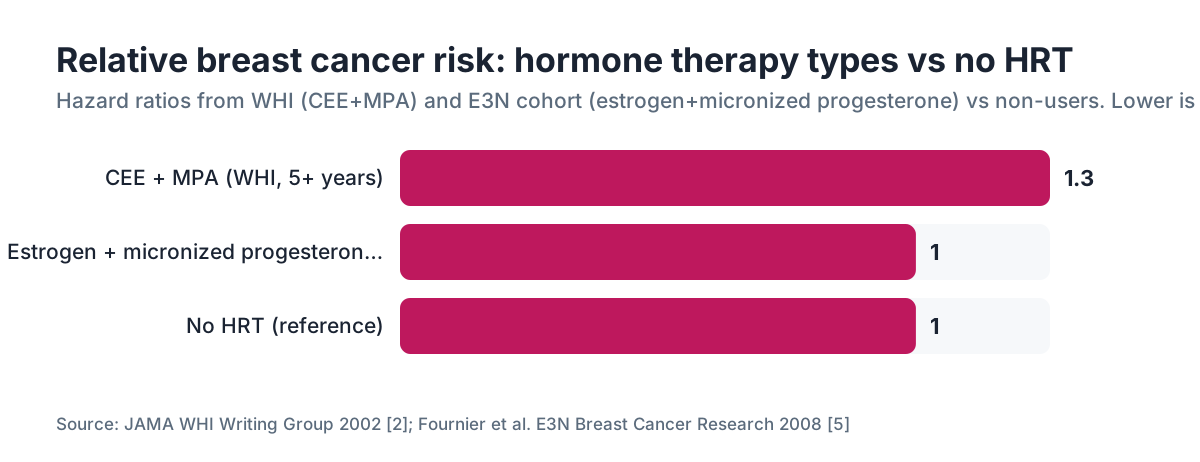
The Women's Health Initiative (WHI) trials, published starting in 2002, used conjugated equine estrogen plus MPA in the combination arm. That arm showed a statistically significant increase in invasive breast cancer risk after about 5 years, with a hazard ratio of 1.26 versus placebo [2]. The estrogen-alone arm (women without a uterus) did not show that increase and actually trended toward reduced risk.
The E3N cohort study, a large French observational study, compared different hormone regimens and found that women using estrogen plus micronized progesterone had breast cancer risk that was not significantly elevated versus never-users after 5 years, while women on synthetic progestins did show elevated risk [5]. That is reassuring, but observational studies cannot fully account for confounding, and E3N participants were healthier and leaner than average.
NAMS states in its 2022 Menopause Hormone Therapy Position Statement that "micronized progesterone appears to be associated with less breast cancer risk than synthetic progestins," and that for women within 10 years of menopause onset or younger than 60, the benefits of hormone therapy generally outweigh the risks for most healthy women [4].
Nobody has a large, long-term randomized controlled trial using micronized progesterone specifically. The closest thing is inference from E3N and similar cohorts. That is the honest state of the evidence.
Can progesterone tablets help with sleep and mood in perimenopause?
Yes, and this is one of the more persuasive off-label uses.
Sleep disturbance is one of the earliest and most disruptive symptoms of perimenopause. Progesterone levels drop before estrogen does, and that drop removes the GABA-mediated calming effect that progesterone's metabolites provide. Many women notice they become lighter sleepers, wake more easily, and feel more anxious well before hot flashes ever start.
Oral micronized progesterone at 100 to 300 mg has increased slow-wave sleep and reduced nighttime waking in small trials of postmenopausal women [3]. The 2018 Menopause paper by Schussler et al. found improvements in sleep architecture at 300 mg, though 300 mg is higher than what most practitioners routinely prescribe.
Mood is more variable. For women whose mood symptoms are driven by progesterone deficiency relative to estrogen (estrogen dominance in the functional medicine vocabulary, though that term has baggage), adding progesterone can help. For women with underlying sensitivity to progesterone metabolites, it can paradoxically worsen anxiety. Dose and timing matter here too. Lower doses taken at night keep daytime mood effects to a minimum.
If you are trying to place perimenopause on your own timeline, our guide on when does menopause start has useful context.
Platforms like WomenRx (womenrx.com) can connect you with practitioners who prescribe oral micronized progesterone as part of a full hormone evaluation, which usually means reading your symptoms, labs, and cycle pattern together rather than chasing a single number.
How much do progesterone tablets cost and are they covered by insurance?
Generic micronized progesterone is affordable compared to many specialty hormones. Prices vary by pharmacy and insurance status.
Cash prices (without insurance) for a 30-day supply of generic progesterone 100 mg, based on GoodRx and similar pharmacy discount programs as of mid-2025, run roughly $20 to $60 depending on the pharmacy [6]. Brand Prometrium costs much more, often $150 to $250 or more for 30 capsules at 100 mg without insurance.
With insurance, generic micronized progesterone is typically covered as a Tier 1 or Tier 2 drug under most plans that cover menopausal hormone therapy. Coverage varies widely, and some plans still require prior authorization for hormone therapy. Medicare Part D covers it for FDA-approved indications.
Compounded progesterone capsules, if prescribed for a patient with a peanut allergy or for a dose not sold commercially, are not covered by most insurers because compounded drugs are not FDA-approved products.
The price gap between brand and generic is real. Unless you have a specific reason to use Prometrium brand (a peanut oil-free need, a particular inactive ingredient issue), generic micronized progesterone 100 mg or 200 mg is the same molecule at a fraction of the cost.
What does a typical progesterone tablet prescription look like for menopause?
A straightforward continuous-combined hormone therapy prescription for a postmenopausal woman with a uterus might read: estradiol 1 mg daily (or an equivalent patch) plus micronized progesterone 100 mg orally at bedtime daily.
A sequential (cyclic) regimen might read: estradiol daily throughout the cycle plus micronized progesterone 200 mg orally at bedtime for the first 12 days of each calendar month.
Both approaches achieve endometrial protection. ACOG describes both cyclic and continuous progestogen options for women with a uterus using estrogen [12]. Continuous-combined tends to produce amenorrhea (no periods) after several months, which many postmenopausal women prefer. Sequential produces predictable withdrawal bleeding at the end of the progestogen phase, which some women find reassuring as a sign the lining is shedding properly.
Perimenopause prescriptions vary more. A common pattern is progesterone 100 to 200 mg nightly for 14 days per month, timed to support the luteal phase or manage irregular bleeding.
If you are comparing hormone delivery systems, our piece on hormone replacement therapy compares pill, patch, gel, and other estrogen options in detail. The progesterone component almost always involves oral micronized progesterone or a progestin, with oral micronized being the preference for women who want a bioidentical molecule.
Who should not take oral progesterone tablets?
Contraindications from the Prometrium label and standard clinical guidance include [1] [4]:
- Known or suspected pregnancy (progesterone supports early pregnancy, but oral Prometrium is not the indicated form; this is about the menopausal use case)
- Undiagnosed abnormal vaginal bleeding
- Known or suspected breast cancer or hormone-sensitive malignancy
- Active or history of arterial thromboembolic disease (stroke, MI)
- Active or history of venous thromboembolism (DVT, pulmonary embolism), though oral micronized progesterone carries lower VTE risk than some synthetic progestins
- Liver dysfunction or disease
- Known allergy to peanuts (Prometrium specifically; compounded alternatives exist)
The VTE point deserves a note. Oral estrogen does raise VTE risk; transdermal estrogen largely does not. Oral micronized progesterone appears to have lower thrombotic risk than older synthetic progestins, but it is still an oral hormone with hepatic metabolism. Women with a personal or strong family history of clotting disorders should raise this specifically.
Women with a history of PMDD or severe progesterone sensitivity may find symptoms harder to manage on oral progesterone and should ask about alternatives like the levonorgestrel IUD.
How long does it take for progesterone tablets to work?
For sleep, many women notice an effect within the first few nights. The pharmacokinetics are fast: oral micronized progesterone reaches peak serum levels roughly 2 to 3 hours after ingestion, and the neurosteroid metabolites that drive sedation form quickly [1].
For endometrial protection, the relevant question is whether bleeding patterns stabilize, and that usually takes one to three months on a continuous regimen. Initial spotting or irregular bleeding is common in the first two to three months of continuous-combined therapy as the uterine lining thins. Persistent bleeding after three months warrants investigation.
For mood, the timeline is more variable. Some women feel calmer within weeks. Others need four to six weeks to notice a difference, similar to the time frame for many mood-affecting interventions.
Blood levels of progesterone after oral dosing vary widely between individuals, partly from differences in gut absorption and partly from first-pass metabolism. A serum progesterone level drawn a few hours after an oral dose can look much higher than it would after a vaginal or topical dose, but that does not necessarily translate to proportionally better tissue effects. Practitioners differ on whether routine progesterone level monitoring helps for oral dosing; most use symptom response and bleeding patterns as the main guide.
Frequently asked questions
Do I need progesterone if I have had a hysterectomy?
No, not for uterine protection. The only reason to include progesterone in hormone therapy is to protect the uterine lining from estrogen stimulation, and if there is no uterus, that risk does not exist. Some practitioners prescribe low-dose oral micronized progesterone for sleep or mood support after hysterectomy, but that is an off-label, individualized choice, not a standard requirement.
Can I take progesterone tablets without estrogen?
Yes, though this is typically done off-label for sleep support or to manage perimenopausal symptoms in women who are still cycling. Progesterone alone does not treat hot flashes the way estrogen does. For full menopausal symptom relief, most women need both. If you have a uterus and are only using progesterone, uterine protection is not a concern because no estrogen is stimulating the lining.
What is the difference between Prometrium and generic micronized progesterone?
The active ingredient is identical: micronized progesterone. Prometrium uses peanut oil as its carrier oil. Some generics use different carrier oils, which matters if you have a peanut allergy. Beyond that, bioequivalence studies support that generics work the same way. The price difference is significant: generics typically cost 70 to 90 percent less than brand Prometrium.
Can progesterone tablets cause weight gain?
Possibly, in some women. Progesterone can increase appetite and affect fluid retention slightly. The clinical evidence for meaningful weight gain from oral micronized progesterone specifically is limited. Many women in perimenopause attribute weight changes to progesterone when the underlying driver is actually metabolic shifts from estrogen decline. Distinguishing these takes careful symptom tracking around medication timing.
How do I know if my progesterone dose is working?
The two main indicators are symptom response (better sleep, more stable mood, improved bleeding patterns) and, for women using it to protect the uterine lining, absence of abnormal uterine bleeding. Routine serum progesterone levels are not reliably useful for monitoring oral dosing because first-pass metabolism creates wide variability. Persistent irregular bleeding after three months of continuous-combined therapy warrants an endometrial evaluation.
Is bioidentical progesterone the same as compounded progesterone?
Not exactly. Bioidentical means the molecule is identical to what your body makes. Oral micronized Prometrium and its generics are bioidentical and FDA-approved. Compounded progesterone is also bioidentical but is made at a compounding pharmacy and is not FDA-approved as a finished drug product. Compounding can be useful for peanut allergies, specific doses, or alternative delivery forms, but FDA approval provides a standardized quality check that compounding pharmacies are not uniformly held to.
Can progesterone tablets interact with other medications?
Yes. CYP3A4 enzyme inducers (rifampin, certain anticonvulsants like carbamazepine, some antifungals) can alter progesterone metabolism significantly. Sedative medications including benzodiazepines, sleep aids, and alcohol amplify the CNS sedation effect. Tell your prescriber everything you are taking, including supplements, because St. John's Wort also induces CYP enzymes and can lower progesterone levels [11].
Can progesterone tablets help with anxiety in perimenopause?
For many women, yes, through the same GABA-receptor mechanism that aids sleep. Allopregnanolone, the main metabolite of oral progesterone, is an anxiolytic neurosteroid. Women with progesterone deficiency relative to estrogen often notice more anxiety in the late luteal phase of their cycle. Restoring progesterone at bedtime can blunt that. But a subset of women with PMDD-like sensitivity may paradoxically feel more anxious on progesterone.
What happens if you skip doses of progesterone tablets?
Occasional missed doses are unlikely to cause immediate harm for the sleep or mood benefits. For endometrial protection, consistent daily dosing on a continuous regimen matters more over time. Skipping doses on a cyclic regimen can cause irregular withdrawal bleeding. If you regularly miss doses, talk to your prescriber about whether a different delivery method or a longer-cycle regimen would work better for your lifestyle.
Does progesterone protect against osteoporosis?
The evidence is weaker than for estrogen, which has the strongest bone-protective data. Some studies suggest progesterone receptors on bone cells (osteoblasts) may support bone formation, but progesterone is not considered a primary treatment for osteoporosis prevention [9]. Estrogen therapy remains the most effective hormonal option for preserving bone density in menopausal women. See our guide on bone density test for more on how to assess your bone health.
Is it safe to take progesterone tablets long-term?
NAMS's 2022 position statement indicates that for healthy women under 60 or within 10 years of menopause onset, hormone therapy including progesterone for uterine protection has a favorable benefit-risk profile. Use beyond 5 to 10 years requires individualized reassessment. The main long-term concerns are breast cancer risk (lower with micronized progesterone than with MPA) and cardiovascular effects, both of which depend heavily on timing, dose, and individual health history.
Why does progesterone make me feel emotional or low some days?
Progesterone metabolites that act on GABA receptors can, in sensitive individuals, produce a flat or low mood rather than calm. This appears more common in women with a history of mood sensitivity tied to their menstrual cycle. The effect is often dose-dependent. Reducing from 200 mg to 100 mg, switching to a vaginal route (which avoids the neurosteroid conversion), or timing it strictly at bedtime can all reduce mood side effects.
Can I use progesterone tablets to delay or stop periods in perimenopause?
Progesterone on its own does not stop periods; what it does is regulate and sometimes lighten them. A continuous-combined regimen (estrogen plus daily progesterone) in postmenopause typically produces amenorrhea after a few months. In perimenopause, when ovaries are still active, results are less predictable. High-dose progestins are sometimes used to delay a period for an event, but that is a short-term clinical use, not something to do routinely without guidance.
Sources
- DailyMed (NIH), Prometrium (micronized progesterone) prescribing information
- JAMA, Women's Health Initiative Writing Group, 2002
- Menopause Journal, Schussler et al., 2018 (progesterone and sleep)
- The Menopause Society (NAMS), 2022 Hormone Therapy Position Statement
- Breast Cancer Research, Fournier et al., E3N cohort study, 2008
- GoodRx, progesterone 100 mg capsule pricing
- Journal of Clinical Endocrinology and Metabolism, Endocrine Society Menopause Hormone Therapy Guideline, 2015
- Journal of Clinical Endocrinology and Metabolism, Prior JC, 2011 (progesterone bone effects)
- NIH MedlinePlus, Progesterone drug information
- ACOG, Practice Bulletin No. 141, Management of Menopausal Symptoms (2014, reaffirmed 2023)