Progesterone suppositories: what they are, how they work, and side effects
TL;DR: Progesterone suppositories are bioidentical progesterone inserted vaginally (or rectally) to support the luteal phase, IVF cycles, prevent uterine hyperplasia during HRT, or manage preterm labor risk. They work faster than oral progesterone and skip first-pass liver metabolism. Most side effects are local: discharge, irritation, and spotting. Systemic drowsiness is far less common than with oral progesterone.
What is a progesterone suppository and how does it work?
A progesterone suppository is a solid or gel form of micronized progesterone that dissolves at body temperature after vaginal (or, less commonly, rectal) insertion. The progesterone absorbs directly through the vaginal or rectal mucosa into surrounding tissue and the bloodstream, skipping the liver on the first pass.
That first-pass bypass matters a lot. Swallow oral progesterone and the liver converts a large fraction of it into metabolites, mainly allopregnanolone, before it ever reaches the uterus. Those metabolites are sedating, which is why oral progesterone capsules (brand name Prometrium) are usually taken at bedtime. Suppositories sidestep most of that conversion. You still get some systemic absorption, but uterine tissue picks up progesterone more directly through what researchers call the uterovaginal first-pass effect, a preferential uptake from vaginal mucosa to uterus described in pharmacokinetic studies going back to the 1980s [1].
Most vaginal progesterone products use micronized progesterone, meaning the hormone is ground into very fine particles suspended in a base (oil, wax, or a polycarbophil gel). The FDA has approved several vaginal progesterone formulations, including Crinone 8% gel, Endometrin 100 mg inserts, and Prochieve. Compounded progesterone suppositories (typically 100 mg, 200 mg, or 400 mg) are also widely prescribed, especially in fertility and menopause care where commercial doses don't fit the clinical need.
For a broader look at how progesterone functions in the body, the progesterone overview covers receptor biology, the menstrual cycle role, and why low progesterone matters across the lifespan.
What are progesterone suppositories prescribed for?
Clinicians prescribe vaginal progesterone suppositories in four main situations, and the dose and duration differ substantially across them.
Assisted reproductive technology (ART) and IVF luteal support. This is the highest-volume use. After an embryo transfer in an IVF cycle, the ovaries have been suppressed and can't make enough progesterone on their own to hold the uterine lining. Vaginal progesterone at 90 mg (Crinone 8%) or 100 mg (Endometrin) once to three times daily is the standard of care endorsed by the American Society for Reproductive Medicine [2]. Vaginal delivery reaches adequate endometrial progesterone with lower peak serum levels than intramuscular injections, which matters for patient comfort.
Hormone replacement therapy (HRT) uterine protection. Any woman who still has a uterus and takes systemic estrogen for menopause symptoms needs progestogen to protect against endometrial hyperplasia and cancer. Oral micronized progesterone (Prometrium) is the most commonly prescribed form in the US, but some women, especially those bothered by its sedating effect, prefer vaginal progesterone because the sedating metabolite load is lower. No FDA-approved vaginal progesterone product is specifically labeled for HRT endometrial protection in the US, so this is typically off-label or via compounding, which your prescriber should discuss with you openly. For the full HRT picture, the hormone replacement therapy guide is worth reading alongside this one.
Preterm labor prevention. ACOG and SMFM recommend vaginal progesterone 90 mg gel or 200 mg suppository nightly for women with a singleton pregnancy and a cervical length of 16 mm or less at 16 to 24 weeks of gestation [3]. The evidence at the population level is genuinely mixed, but the short-cervix subgroup data are the strongest signal.
Luteal phase support in natural cycles. Women with a documented luteal phase defect, recurrent miscarriage, or perimenopause-related progesterone insufficiency sometimes get vaginal progesterone in the second half of the cycle. The evidence here is thinner than for IVF support, but the practice is common and low-risk.
What are the side effects of vaginal progesterone suppositories?
Most progesterone suppository side effects are local, not systemic. That's the main reason clinicians pick vaginal delivery over oral for patients who want to avoid drowsiness.
Local / vaginal side effects
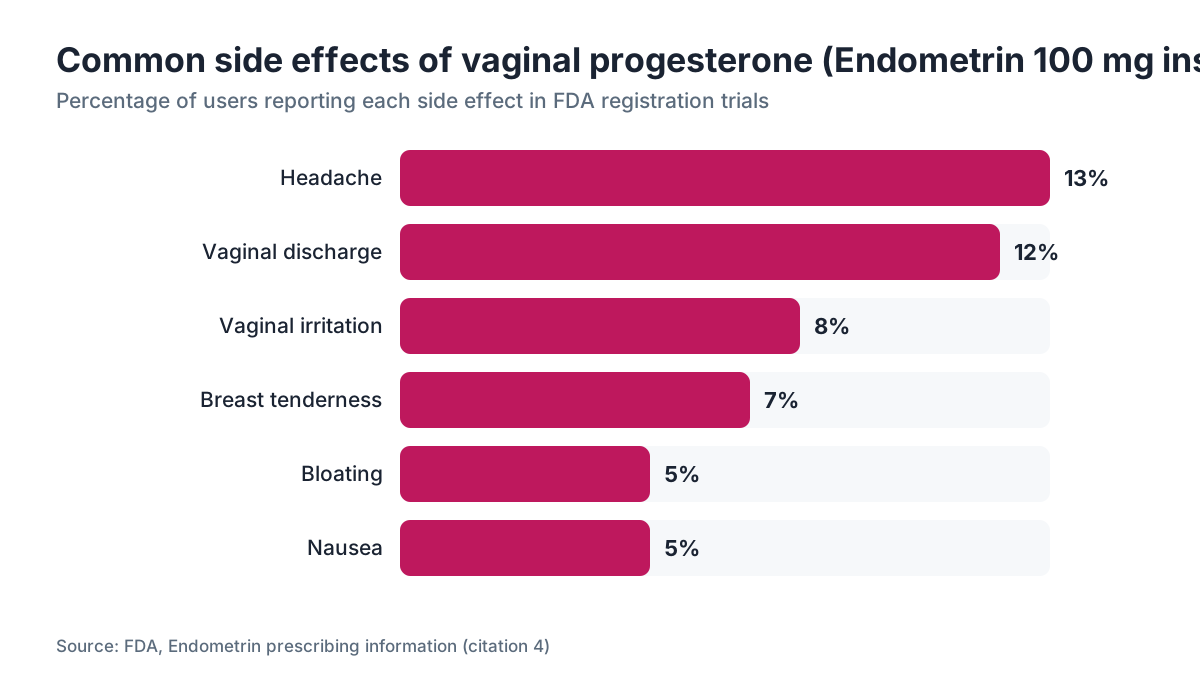
Discharge is the most common issue. The suppository base, whether oil, wax, or gel, doesn't absorb completely and exits as a white or yellowish residue. In the Endometrin trials, discharge was reported by roughly 12 percent of users [4]. Wear a thin panty liner during treatment. It's practical, not optional.
Vaginal irritation, itching, or a burning sensation happens in a smaller share of users. The Crinone gel contains polycarbophil, which is mildly acidic, and some users notice a pH-related sting. Switching bases (for example, from a polycarbophil gel to a compounded cocoa butter or PEG version) sometimes fixes this.
Spotting or light breakthrough bleeding is common in fertility cycles and is not a reliable sign that the embryo transfer failed or the cycle is going poorly. The suppository itself can cause minor cervical irritation.
Gel accumulation in the vaginal canal is specific to Crinone users. The polycarbophil forms a soft, curd-like material that some women find alarming. It's benign. Let it exit on its own; douching or aggressively removing it is not recommended.
Systemic side effects
These exist but are far quieter than with oral progesterone. Some women notice mild fatigue, breast tenderness, or mood changes in the luteal phase, all effects of progesterone itself regardless of route. Headache is reported in roughly 13 percent of Endometrin users in the prescribing information [4]. Nausea is uncommon.
Bloating and pelvic cramping are reported anecdotally and may reflect progesterone's effect on uterine and GI smooth muscle. Progesterone relaxes smooth muscle broadly, which is why it slows GI motility and can contribute to constipation, though less so by the vaginal route than oral.
Serious allergic reactions are rare but possible. Any worsening rash, difficulty breathing, or significant swelling means stop the medication and call a provider.
Side effects by formulation: a comparison
| Side effect | Crinone 8% gel | Endometrin 100 mg insert | Compounded suppository | |---|---|---|---| | Vaginal discharge | Very common | Common (~12%) | Common | | Gel accumulation | Common (polycarbophil) | Not typical | Base-dependent | | Irritation / itching | Moderate | Moderate | Variable by base | | Headache | ~17% | ~13% | Not systematically studied | | Bloating | Reported | Reported | Reported | | Sedation | Low | Low | Low (vs. oral) |
Data from FDA-approved prescribing information for Crinone and Endometrin [4][5].
How do vaginal progesterone side effects compare to oral progesterone?
This is probably the most practical question for anyone being offered a choice between routes. Oral micronized progesterone (Prometrium 200 mg) has a sedation rate that's clinically meaningful. The FDA label for Prometrium notes dizziness in 15 percent of users and lists drowsiness as a common effect; the drug carries a warning about impaired alertness and motor function [6]. That's because hepatic metabolism converts oral progesterone efficiently into allopregnanolone, a potent GABA-A receptor positive modulator. It makes many women genuinely sleepy.
Vaginal progesterone avoids most of that conversion. Serum allopregnanolone runs substantially lower after vaginal administration at equivalent uterine-tissue doses than after oral. A 2000 pharmacokinetic study in Fertility and Sterility found vaginal progesterone produces uterine tissue concentrations comparable to or exceeding those from intramuscular injections despite lower peak serum levels [1]. The translation: you get endometrial coverage without the brain-sedating metabolites that make oral progesterone a bedtime-only drug for many women.
The tradeoff is the local side effects above. Oral progesterone produces essentially no vaginal discharge or irritation. So the choice often comes down to one question: do you find sedation or discharge more tolerable?
For women in perimenopause weighing these decisions, the perimenopause age article and the when does menopause start guide give context on why progesterone becomes relevant earlier than most people expect.
How do you insert a progesterone suppository correctly?
Insertion technique affects how much progesterone absorbs and how much leaks back out. The basics are simple but worth doing right.
Wash your hands thoroughly before and after. Use the applicator that comes with Crinone or Endometrin. For compounded suppositories that arrive without an applicator, a standard vaginal applicator (sold separately at most pharmacies) works fine, or you can use a clean fingertip to push the suppository as far back into the vaginal canal as is comfortable, toward the posterior fornix.
Lying down for 15 to 30 minutes after insertion meaningfully reduces leakage. Many practitioners suggest inserting at bedtime for this reason, even for vaginal progesterone, because you're horizontal for hours afterward. If your prescription calls for morning or midday doses too, a brief rest after insertion helps.
Avoid inserting tampons or having penetrative sex close to insertion time. If you have a monitoring ultrasound or exam scheduled the same day, ask your clinic whether to insert before or after (most prefer after the exam).
Refrigeration requirements vary by product. Endometrin inserts store at room temperature (68 to 77 degrees F). Compounded suppositories in a cocoa butter base usually need refrigeration and will melt at room temperature. Always check the storage label on your specific pharmacy's packaging.
If you miss a dose, insert it as soon as you remember, unless it's close to your next scheduled dose. Don't double up. For IVF cycles especially, call your clinic rather than guessing, because the protocol timing there is precise.
What is the usual progesterone suppository dosage?
Dose depends entirely on why you're taking it. There's no single universal dose.
For IVF luteal phase support, the standard commercial options are Crinone 8% gel (90 mg progesterone) once daily starting after egg retrieval, or Endometrin 100 mg two to three times daily. Both are FDA-approved for this indication [4][5]. Compounded suppositories in the 100 to 200 mg range are also used, particularly when insurance won't cover brand products.
For preterm labor prevention in singleton pregnancies with a short cervix, ACOG guidance cites 90 mg vaginal gel (Crinone) or 200 mg suppositories nightly, started at 16 to 24 weeks and continued through 36 weeks and 6 days [3].
For menopause HRT uterine protection via vaginal progesterone, doses typically range from 100 to 200 mg nightly or on a cyclic schedule (for example, 200 mg for 12 to 14 days per month to mimic a luteal phase). These doses are generally off-label in the US for this specific use and prescribed by clinicians comfortable with bioidentical hormone therapy. The North American Menopause Society (NAMS) recognizes compounded bioidentical hormones as a valid option when conventional approved therapies are inadequate, while pressing for individualized risk discussion [7].
For luteal phase defect in natural cycles, 100 to 200 mg vaginally once to twice daily from ovulation through the expected period or early pregnancy confirmation is a common approach, though the evidence for this specific use is limited.
Never self-prescribe or adjust the dose on your own. Progesterone in pregnancy is not a supplement to layer on without monitoring.
Are compounded progesterone suppositories the same as FDA-approved products?
Not exactly, and the differences matter.
FDA-approved vaginal progesterone products (Crinone, Endometrin, Prochieve) have gone through clinical trials showing specific efficacy and safety profiles for labeled indications. The FDA label gives you real adverse event rates from controlled studies, not estimates.
Compounded progesterone suppositories are made by a licensed compounding pharmacy, usually with USP-grade micronized progesterone in a base of the prescriber's or pharmacist's choosing (cocoa butter, PEG, or other excipients). They are not FDA-approved in the sense of having undergone new drug application review. They are legally dispensed under a physician prescription, and the USP progesterone ingredient itself is well-characterized.
The practical upsides of compounding: dose flexibility (you can get 200 mg or 400 mg suppositories not sold commercially), different bases for women irritated by polycarbophil gels, and often lower out-of-pocket cost than brand products. The downside is variable pharmacy quality. The FDA inspects 503A and 503B compounding pharmacies, but sterility and potency problems have occurred at some facilities historically [11]. Using a PCAB-accredited compounding pharmacy or one your prescribing clinic has vetted is worth asking about.
Cost comparison: Crinone 8% gel runs roughly $500 to $800 for a 30-dose supply without insurance. Endometrin is in a similar range. A compounded 200 mg suppository supply for the same period often runs $60 to $150 depending on the pharmacy, making cost a very real driver of patient choice.
If you're exploring telehealth to access both conventional and compounded progesterone options, WomenRx works with licensed prescribers who can talk through which formulation fits your clinical situation and insurance picture.
Can you use a progesterone suppository rectally?
Yes, and this route is sometimes clinically preferred.
Rectal progesterone suppositories absorb well through the rectal mucosa. The rectal route matters for women who have had vaginal surgery, have significant vaginal atrophy that makes insertion uncomfortable, or are in a post-partum or post-procedure period where vaginal insertion is off the table.
Pharmacokinetically, rectal progesterone does not get the direct uterovaginal first-pass effect that makes vaginal delivery attractive for IVF cycles. Serum progesterone after rectal insertion is typically comparable to vaginal at the same dose, but uterine tissue concentrations may be lower. For fertility applications specifically, vaginal is generally preferred over rectal.
For systemic effects like sedation, rectal and vaginal routes look similar, both producing lower allopregnanolone peaks than oral.
In practice, if your provider prescribes a compounded suppository for rectal use, the physical formulation is often identical to the vaginal version. The base sets melt time and insertion ease. Cocoa butter bases melt at body temperature quickly, which some patients prefer for rectal use.
Who should not use progesterone suppositories?
Contraindications for vaginal or rectal progesterone overlap heavily with those for oral progesterone, because the hormone itself is the same.
Absolute contraindications include known or suspected hormone-sensitive cancers, particularly undiagnosed abnormal uterine bleeding that hasn't been evaluated, which could mask endometrial pathology. Liver impairment severe enough to affect steroid metabolism is a contraindication to most progestogens. Known hypersensitivity to progesterone or to any component of the specific formulation (peanut oil is a component of some oral forms; the vaginal gel's polycarbophil base can trigger reactions in sensitive individuals) calls for a base switch or route change.
Progesterone is not appropriate as a contraceptive. It does not reliably prevent pregnancy. Women using it for luteal phase support in IVF cycles are actively trying to conceive.
Venous thromboembolism history is listed as a precaution in older progesterone prescribing information, but that evidence comes primarily from synthetic progestins (like medroxyprogesterone acetate), not micronized bioidentical progesterone. Evidence from the large E3N cohort and NAMS clinical guidance suggests micronized progesterone carries a more favorable VTE profile than synthetic progestins, though it's not zero-risk and the data aren't strong enough to ignore VTE history in the clinical conversation [7][12].
Depression or history of mood disorders: progesterone metabolites act on GABA-A receptors, and while the vaginal route lowers this exposure compared to oral, any history of progesterone-linked mood worsening should be disclosed to your provider before starting any progesterone form.
Does vaginal progesterone affect a pregnancy test result?
No. Progesterone does not contain or mimic hCG, the hormone pregnancy tests detect. Taking vaginal progesterone during an IVF cycle will not produce a false positive on a urine or serum pregnancy test.
The trickier question is whether it masks a failed cycle. It doesn't. hCG levels still rise or don't rise based on whether a viable embryo has implanted, independent of your progesterone supplementation. Because progesterone holds the uterine lining, stopping it abruptly before a period has a chance to start can delay bleeding even in a non-pregnant cycle. IVF clinics draw serum hCG on a scheduled beta day, typically 9 to 14 days after transfer, rather than relying on when bleeding starts. Follow your clinic's protocol, not home test timing.
If you test at home and see a faint positive, don't stop the progesterone suppositories based on that. Wait for your clinic's instruction after a confirmed serum beta. Early discontinuation of luteal support has been linked to increased miscarriage risk in ART cycles.
How long do you stay on progesterone suppositories during IVF or pregnancy?
For IVF frozen embryo transfers, most reproductive endocrinology clinics continue vaginal progesterone through the first 8 to 10 weeks of pregnancy, when the placenta takes over progesterone production (the luteo-placental shift). Some clinics extend to 12 weeks. There's no universal cutoff date with definitive trial evidence behind it precisely; the 8 to 10 week range is clinical consensus grounded in when placental progesterone production becomes self-sustaining.
For fresh IVF cycles, where the corpus luteum is partially functional but suppressed by gonadotropins, luteal support typically runs from egg retrieval through weeks 8 to 10.
For preterm labor prevention in singleton pregnancies with a short cervix, ACOG recommends progesterone through 36 weeks 6 days [3].
For HRT, vaginal progesterone continues as long as estrogen therapy does, typically indefinitely if the woman has a uterus, or on a cyclic schedule if a monthly bleed is preferred. Stopping estrogen but continuing progesterone has no rationale; they're paired for endometrial protection.
Abrupt discontinuation outside of a clinical protocol is a bad idea. Progesterone withdrawal triggers uterine bleeding and, in early pregnancy, potentially destabilizes the luteal phase before the placenta is ready.
What should you tell your doctor before starting progesterone suppositories?
Full medication history. Progesterone can interact with rifampin (a tuberculosis antibiotic), certain anticonvulsants (carbamazepine, phenytoin), and ketoconazole, all of which affect CYP3A4, an enzyme involved in progesterone metabolism. These interactions matter more for oral progesterone but are worth disclosing regardless of route.
Any current vaginal infection. Bacterial vaginosis or an active yeast infection should be treated before starting suppositories. The shift in vaginal pH and environment from the suppository base can worsen existing infections, and it's harder to evaluate discharge when suppository residue is present.
Allergy history, particularly to any oils, waxes, or topical agents. The carrier base in compounded suppositories varies, and knowing your sensitivities helps the pharmacy choose well.
Your hormone replacement therapy history if this is for menopause. Whether you use an estrogen patch, gel, or oral estrogen changes the calculus on progesterone dose and schedule.
Any history of uterine fibroids or endometriosis. Progesterone affects these conditions differently, and your provider may want closer monitoring or a different progestogen.
At WomenRx, clinicians reviewing hormone prescriptions ask for a current symptom picture and, where indicated, baseline labs before prescribing progesterone in any form. A telehealth intake doesn't replace a pelvic exam, and a good provider will tell you when an in-person evaluation is needed before proceeding.
Frequently asked questions
How quickly does a progesterone suppository dissolve?
Most vaginal progesterone suppositories made with a cocoa butter or wax base dissolve within 15 to 30 minutes at body temperature. Polycarbophil gel products like Crinone don't fully dissolve; the base stays as a gel deposit that slowly exits over 24 to 48 hours. Lying down for at least 15 minutes after insertion gives the active ingredient time to absorb before any residue leaks out.
Can a progesterone suppository cause a missed period?
Yes. If you stop it after an unsuccessful cycle, the withdrawal bleed may take several days to begin once you discontinue. Progesterone maintains the uterine lining. In a non-pregnant cycle, stopping progesterone triggers shedding, but with a delay. If you're on progesterone for HRT or fertility, don't stop it without guidance from your provider; the timing matters for both cycle management and early pregnancy support.
Is vaginal progesterone safe in early pregnancy?
FDA category-style ratings no longer apply, but progesterone is an essential pregnancy hormone. Supplemental vaginal progesterone in early pregnancy for luteal support or in women with prior miscarriage has not been shown to cause fetal harm across multiple large trials. The PROMISE trial found no benefit for women with unexplained recurrent miscarriage broadly, though some subgroup analyses suggest benefit in women with a short luteal phase or low progesterone.
Why do I have a lot of discharge after using a progesterone suppository?
The discharge is mostly the unabsorbed suppository base, not a sign of infection. Oil- or wax-based suppositories liquefy and drain naturally. Crinone gel leaves a thicker, curd-like white residue. Both are normal and expected. If the discharge has an unusual odor, a significant color change, or comes with burning that's new or worsening, contact your provider to rule out infection, which can coincidentally develop during treatment.
Can I have sex while using a progesterone suppository?
Most fertility clinic protocols ask patients to abstain from vaginal intercourse during IVF cycles for reasons beyond the suppository. If you're using vaginal progesterone for other reasons, wait at least a few hours after insertion so the active ingredient can absorb. Your partner may notice residue from the base, which is harmless. Avoid penetrative sex immediately after insertion, since it can displace the suppository before full absorption.
What if I forget to insert my progesterone suppository?
Insert it as soon as you remember, unless you're already close to your next scheduled dose. Don't double up doses. For IVF cycles, a single missed dose in mid-luteal phase is unlikely to be catastrophic, but call your clinic to ask. They may want you to check a serum progesterone level to confirm your levels are still adequate, especially within the first two weeks after transfer.
Does progesterone suppository cause weight gain?
Progesterone itself can cause fluid retention and bloating, and some women report a few pounds of water weight during luteal phase supplementation. This is a hormonal effect, not fat gain. It reverses when progesterone stops or drops during menstruation. The vaginal route is unlikely to cause more or less weight change than oral at equivalent progesterone doses, since the weight effect comes from the hormone, not the delivery method.
Can progesterone suppositories cause cramping?
Mild uterine cramping is reported by some users and can reflect a normal uterine response to progesterone, which regulates myometrial tone. In IVF cycles, cramping after embryo transfer causes significant anxiety, but it's common and not a reliable sign of implantation or its failure. Severe cramping, particularly with heavy bleeding, should be evaluated promptly. Otherwise, mild cramping that doesn't worsen is generally not a reason to stop therapy.
Are progesterone suppositories covered by insurance?
FDA-approved products like Endometrin and Crinone are covered under many insurance plans when used for IVF or other approved indications, but prior authorization is often required and coverage varies widely. Compounded progesterone suppositories are frequently not covered, but their lower cash price ($60 to $150 per cycle at many pharmacies) makes them more affordable than brand products without coverage, which can run $500 to $800 or more for a comparable supply.
How do I know if my progesterone level is high enough while using suppositories?
Serum progesterone on vaginal therapy is often lower than on intramuscular progesterone at equivalent uterine doses, because vaginal delivery concentrates the hormone in uterine tissue rather than the bloodstream. Many reproductive endocrinologists use a serum progesterone target of 10 to 20 ng/mL for IVF luteal support, though the literature shows endometrial response is what matters, and serum levels don't perfectly predict it. Your clinic's cutoff may differ; ask explicitly.
Is there a difference between progesterone suppositories and progesterone pessaries?
Not meaningfully. Pessary is the British and international English term for the same dosage form: a solid that dissolves vaginally at body temperature. In US medical and pharmacy practice, both suppository and insert are used. Crinone is a gel rather than a solid suppository. All deliver progesterone by the same route. If you see pessary in UK or Australian fertility clinic instructions, it means the same thing you'd call a vaginal suppository or insert in the US.
Can men use progesterone suppositories?
Progesterone has a function in male physiology too, and some providers prescribe it for men (typically as a topical cream rather than a suppository). Rectal suppositories are physically usable by men. This article focuses on female reproductive and hormonal applications. Any use of progesterone in male patients is entirely different in indication, dose, and evidence base and needs a separate clinical conversation.
What's the difference between progesterone and progestin suppositories?
Progesterone suppositories contain bioidentical progesterone, chemically identical to what the ovaries produce. Progestins are synthetic compounds that activate progesterone receptors but have different chemical structures and different side effect and metabolic profiles. Medroxyprogesterone acetate and norethindrone are progestins. Currently available vaginal suppositories for luteal support use bioidentical progesterone, not synthetic progestins, which is a meaningful distinction for breast cancer risk, cardiovascular effects, and mood.
Can a progesterone suppository help with perimenopause symptoms?
Possibly, though the evidence is more limited than for full menopause HRT. In perimenopause, cycles turn irregular and luteal phase progesterone often declines before estrogen does. Some clinicians prescribe vaginal progesterone in the second half of the cycle to reduce heavy irregular bleeding, sleep disruption, and mood shifts. The perimenopause age guide covers when these changes typically begin and what triggers them.
Sources
- Fertility and Sterility, Miles et al. (1994) and Cicinelli et al. (2000) on uterovaginal first-pass effect
- American Society for Reproductive Medicine (ASRM), Progesterone and IVF luteal phase guidance
- ACOG Practice Bulletin No. 234, Prediction and Prevention of Preterm Birth
- FDA, Endometrin (progesterone) prescribing information
- FDA, Crinone 8% (progesterone gel) prescribing information
- FDA, Prometrium (oral micronized progesterone) prescribing information
- North American Menopause Society (NAMS), 2022 Hormone Therapy Position Statement
- Endocrine Society, Clinical Practice Guideline on Menopausal Hormone Therapy
- NIH MedlinePlus, Progesterone vaginal drug information
- Coomarasamy et al., PROMISE trial, New England Journal of Medicine (2015)
- FDA, Compounding and the Drug Supply Chain Security Act, compliance information
- E3N French Cohort Study, Fournier et al., Breast Cancer Research and Treatment (2008)