Progesterone suppositories: symptoms, side effects, and what's normal
TL;DR: Progesterone suppositories commonly cause vaginal discharge, bloating, breast tenderness, and mild drowsiness. Most side effects are mild and peak in the first two weeks, then ease. A few symptoms mean call now: severe abdominal pain, heavy bleeding, chest pain, or sudden vision loss. This guide walks through every common and uncommon symptom, why it happens, and how to tell normal from worrying.
What are progesterone suppositories and who uses them?
Progesterone suppositories are micronized progesterone suspended in a wax or oil base and inserted vaginally (or, less often, rectally). The vaginal lining pulls the hormone straight into the uterine tissue through what researchers call the "first-uterine-pass effect," so the uterus gets a high local concentration while blood levels stay relatively low compared to the same dose swallowed [1].
That pharmacokinetic quirk is the whole reason suppositories exist. Oral micronized progesterone (like Prometrium) causes real sedation, because a metabolite called allopregnanolone builds up in the bloodstream after the liver processes the dose. The vaginal route mostly sidesteps that.
Who gets prescribed them? Four groups, mainly:
- Women in the luteal-phase support window of IVF or frozen embryo transfer, where vaginal progesterone is often standard of care [2]
- Women in perimenopause or early menopause who need a progestogen to protect the uterine lining from estrogen-only hormone replacement therapy
- Women with a luteal phase defect contributing to early pregnancy loss
- Women with progesterone deficiency in natural cycles who are trying to conceive
The FDA has approved Endometrin (progesterone 100 mg vaginal insert) specifically for assisted reproductive technology. Prometrium capsules carry an approved vaginal route in their labeling, even though the capsule is marketed for oral use [5]. Compounded suppositories at higher doses (200 mg, 400 mg, 600 mg) are widely used in fertility medicine, though those specific formulations are not individually FDA-approved products [3].
If you're on progesterone for perimenopause or menopause symptoms, your prescriber may have picked suppositories on purpose, to dodge the sleepiness oral progesterone brings.
What symptoms do progesterone suppositories cause, the full list
Symptoms come from two places. The progesterone itself acts on hormone receptors all over the body, and the base (usually oil, cocoa butter, or PEG) irritates the vaginal or rectal lining right where it sits.
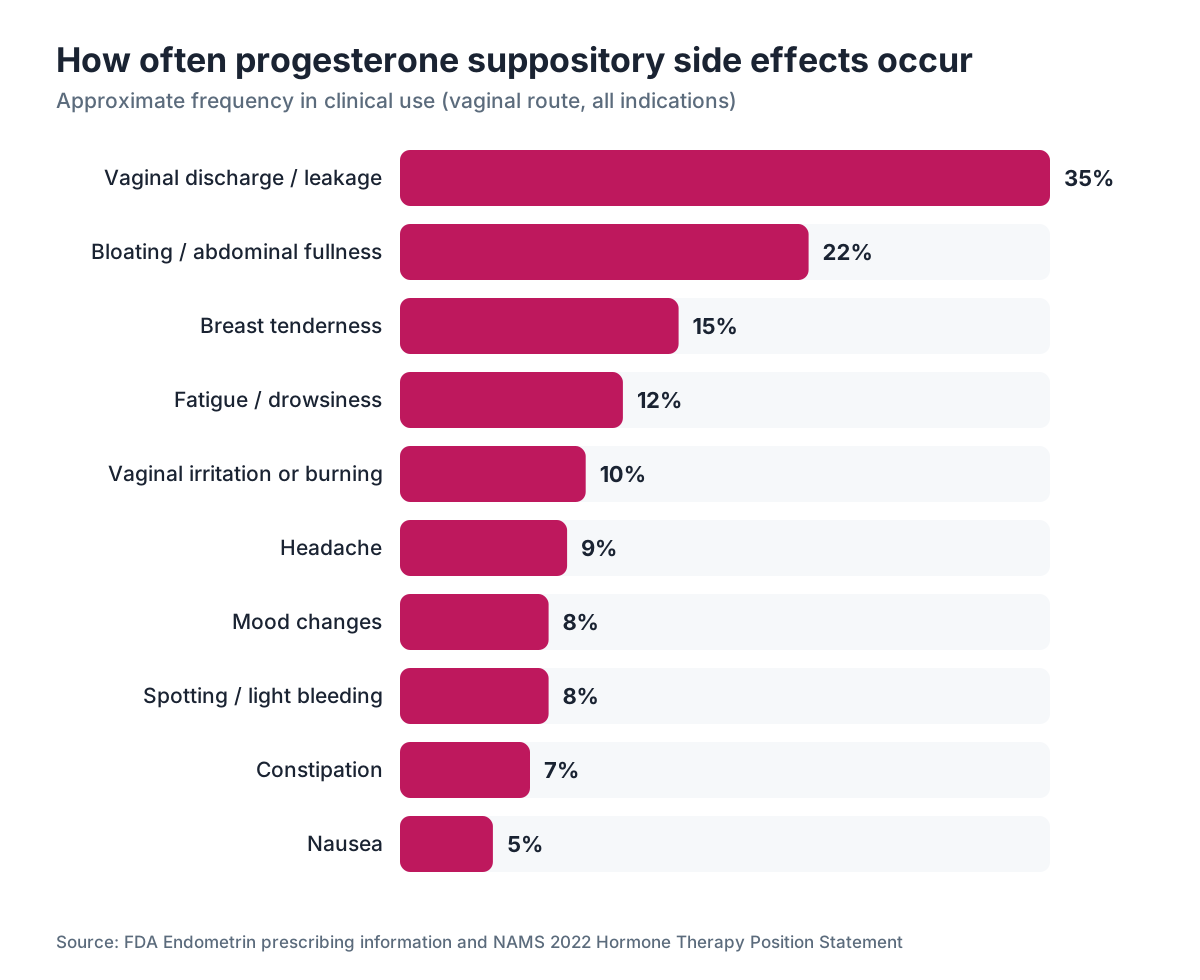
Here's what shows up across clinical trials and FDA labeling, sorted by how often it happens [3][6]:
| Symptom | Frequency in clinical use | Why it happens | |---|---|---| | Vaginal discharge / leakage | Very common (>30%) | Base melts and runs out | | Bloating / abdominal fullness | Common (15-25%) | Progesterone slows GI motility | | Breast tenderness | Common (10-20%) | Progesterone receptor activation in breast tissue | | Drowsiness / fatigue | Common, less than oral route | Allopregnanolone metabolite | | Vaginal irritation or burning | Common (5-15%) | Local mucosal reaction to base | | Headache | Moderately common | Vasomotor effect of progesterone | | Mood changes (weepiness, low mood) | Moderately common | CNS progesterone receptor effects | | Spotting / light bleeding | Moderately common in HRT users | Uterine lining response | | Constipation | Moderately common | Slowed GI motility | | Nausea | Less common than oral route | Reduced first-pass metabolism | | Vaginal yeast infection | Uncommon but possible | Altered vaginal pH, occlusive base | | Urinary symptoms (urgency, frequency) | Uncommon | Progesterone effect on smooth muscle |
The discharge is the near-universal one. It is not a sign of infection or a dosing problem. It's the melted base leaking back out, usually white, waxy, or a little yellowish. A panty liner is basically required equipment.
Is the vaginal discharge normal and how do I tell it from infection?
Yes. White or off-white waxy leakage is normal and expected after every single dose. That is the answer, and it settles most of the worry.
The base (cocoa butter or PEG, depending on the product) melts at body temperature. Not all of it absorbs. The rest runs out, and it can look alarming if nobody warned you. Endometrin labeling lists vaginal discharge in 12 to 14% of women as a reported event, though the real-world rate runs higher because women often don't report it as a problem [3].
Here's what should make you stop and look closer:
- Discharge that's yellow-green, has a strong odor, or has a cottage-cheese texture (possible bacterial vaginosis or yeast)
- Discharge with real vaginal burning, swelling, or redness that started after you began the suppository
- Any discharge after you've stopped the suppositories and your cycle has resumed normally
Progesterone does shift the vaginal environment enough to raise yeast risk a little. If you've had recurrent yeast infections, tell your prescriber before you start. They may set you up with a preventive antifungal plan.
A simple rule for sorting normal from abnormal: normal leakage is odorless or faintly waxy, shows up within hours of insertion, and runs white to pale yellow. Infectious discharge has an odor, brings itching or soreness, and keeps coming even between doses.
Why do progesterone suppositories cause bloating and constipation?
Progesterone relaxes smooth muscle. That's the same mechanism that protects a pregnancy, because the uterus is smooth muscle and you don't want it contracting. But your gut is smooth muscle too, so progesterone slows transit time through the whole GI tract [10].
So food and gas move slower, bowel movements get less frequent, and you feel full and bloated. This is exactly the constipation many women hit in the first trimester, when natural progesterone surges.
A few things that actually help:
- More fluid (around 2 liters of water a day is a reasonable baseline, though needs vary)
- Fiber from whole foods rather than supplements, which can make gas worse
- Walking, which nudges GI motility through movement rather than hormones
- Magnesium citrate 200 to 400 mg at bedtime, which many clinicians suggest off-label for progesterone-related constipation
If constipation turns severe, don't grind through it. Straining raises intra-abdominal pressure, which can irritate an early pregnancy. Ask your prescriber about dose timing or a short course of an osmotic laxative.
Bloating usually peaks around day 5 to 10 and eases as your body settles in. Still bad at three weeks? Mention it.
Do progesterone suppositories make you tired or affect your mood?
This is where the vaginal route really parts ways from oral. Swallowed micronized progesterone hits the liver on first pass and throws off a lot of allopregnanolone, a neurosteroid that acts on GABA-A receptors in the brain. That produces sedation, a calming effect, and in some women real fatigue or low mood [1].
The vaginal route cuts that liver conversion way down. Studies comparing vaginal to oral progesterone at equivalent uterine-protective doses consistently show lower serum allopregnanolone with the vaginal form. Lower is not zero, though. Some women still notice fatigue, brain fog, or mild mood shifts on suppositories.
Mood effects are real and they cut both ways. Some women feel calmer on progesterone. Others feel weepy, irritable, or mildly down, especially in the week before a period if they're dosing cyclically. Clinicians call this progesterone intolerance, and it runs more common in women with a history of PMS or PMDD [4].
If mood symptoms are heavy, your prescriber has moves: adjust the dose, shift the timing, or in some cases switch to a synthetic progestogen. Progesterone intolerance is a recognized clinical thing, not a character flaw.
Sleepiness, when it does show up with suppositories, tends to bother women less than the oral kind, and some actually like a mild calm at bedtime. Inserting at night is the standard trick, so any drowsiness works with your sleep instead of against your workday.
What does breast tenderness from progesterone suppositories feel like?
It usually shows up as diffuse soreness, heaviness, or sensitivity across the whole breast, not a single lump or spot. Most women say it feels like the days before a period, which tracks, because that's exactly when natural progesterone peaks.
Progesterone receptors sit in breast tissue, and high local or systemic progesterone stirs up glandular activity. In trials of vaginal progesterone for ART, breast discomfort turns up in roughly 8 to 13% of women [3].
A few reassuring points. The tenderness is almost always bilateral (both breasts, evenly), comes on gradually, and fades within days of stopping the suppository or once progesterone levels drop. One-sided tenderness, a firm lump, skin changes, or nipple discharge that hangs on past treatment are reasons to see your doctor, not things to write off as the suppository.
Women using progesterone suppositories inside hormone replacement therapy alongside an estrogen patch or other estrogen sometimes get more breast tenderness than those on suppositories alone. Estrogen primes breast tissue to answer progesterone more strongly.
What is spotting and bleeding during progesterone suppository use, and when should you worry?
Light spotting (a few spots of pink or brown) is common in two specific spots: early in an IVF cycle before pregnancy is confirmed, and in women using progesterone cyclically for HRT.
In IVF, spotting in the first two weeks after transfer is extremely common and is not a reliable sign of loss. The suppository can mildly irritate the cervix, and the waxy discharge sometimes looks faintly bloody. Studies have not found a clear link between early spotting and miscarriage rates in medically supported cycles [2].
In HRT, some breakthrough bleeding is expected in the first three months while the uterine lining adjusts to the cyclic hormone pattern. After three months, bleeding should turn predictable and lighter [7]. Unexpected heavy bleeding, bleeding between expected periods, or any bleeding more than 12 months after your last natural period (true postmenopause) needs evaluation, full stop [4].
Spotting that needs prompt attention:
- Soaking more than one pad an hour for two hours
- Severe one-sided pelvic pain with the bleeding (ectopic pregnancy concern in fertility patients)
- Heavy bleeding at any point in early pregnancy
- Postmenopausal bleeding after suppositories are stopped
First-timers often mistake the waxy, tinted discharge for blood. Hold the panty liner up to a good light. Blood is red or brown and dilutes to pink in water. Suppository discharge is off-white or pale yellow and doesn't dilute the same way.
What are the serious side effects that need immediate medical attention?
Most suppository symptoms are mild and pass on their own. But progesterone, like any hormone, carries a small risk of serious events, and the FDA labeling names several [3].
Call your doctor or head to an emergency room for:
- Sudden sharp chest pain, shortness of breath, or coughing up blood (possible pulmonary embolism, a risk with any progestogen, though very low with the vaginal route)
- Sudden vision loss, severe headache, or slurred speech (possible stroke; progestogen therapy carries a small added risk in certain groups)
- Severe abdominal pain with fever (possible ovarian hyperstimulation syndrome in IVF patients, or, rarely, a serious pelvic infection)
- Signs of severe allergic reaction: throat swelling, hives, trouble breathing within hours of insertion
- Severe depression or thoughts of self-harm (progesterone can rarely trigger depressive episodes in susceptible women)
MedlinePlus lists chest pain, sudden vision changes, and severe abdominal pain among the vaginal-progesterone symptoms that call for emergency care [6]. The absolute risk of clots with vaginal progesterone runs well below that of synthetic progestogens like medroxyprogesterone acetate, based on observational data from the French E3N cohort and other sources, but it isn't zero, especially in women who smoke, carry extra weight, or have other cardiovascular risk factors [4].
Not sure whether what you feel counts as serious? Call anyway. Telehealth platforms like WomenRx are built for exactly this kind of triage, when you want a clinician's read fast without a trip to urgent care.
How long do progesterone suppository symptoms last?
The timeline hangs on why you're using them.
For IVF and ART, suppositories usually run from egg retrieval or embryo transfer through 8 to 12 weeks of pregnancy if it takes, at which point the placenta takes over progesterone production. Side effects peak in the first week or two and taper even while you keep dosing, as your body adjusts. Discharge and bloating tend to stick around the whole time, though.
For luteal phase support in natural cycles, use covers the second half of the cycle (roughly days 15 to 26), so symptoms last about 10 to 12 days per cycle and clear when your period arrives.
For perimenopausal and menopausal HRT (see perimenopause age for when HRT usually starts), suppositories may run cyclically (10 to 14 days a month) or continuously. Continuous use tends to bring less breakthrough bleeding but may keep low-grade side effects simmering. Most women feel a lot better by month three [7].
One practical note about stopping in a non-pregnant cycle. When progesterone drops sharply, you may get a few days of mood changes or a withdrawal headache before your period. That mirrors what happens naturally when progesterone falls before menstruation, and it's usually nothing to worry about.
How can you reduce progesterone suppository side effects?
A few evidence-informed moves genuinely help.
Dosing at bedtime is the most consistent recommendation across fertility clinics and menopause practices. Drowsiness, mood effects, and even some abdominal symptoms bother you less when they land during sleep. The suppository also stays put longer when you're lying down, which may help absorption.
Use a pantyliner from day one, so the waxy discharge doesn't spark anxiety or stain your clothes. Treat that as a rule, not a suggestion.
For local irritation, wash and dry your hands before insertion. Some women chill the suppository slightly first (refrigerator cold, not frozen) to slow the melt and cut early irritation. If the base burns, ask your compounding pharmacy or prescriber about switching to a different base material.
For bloating and constipation, the GI section above covers the playbook. Skipping large meals right before you insert can also ease the fullness.
For breast tenderness, a supportive bra (some women wear one to sleep) helps mechanically, and brief cold compresses cut the soreness. There's no good evidence that vitamin E or evening primrose oil does anything for progesterone-related breast tenderness, popular as they are online.
If side effects are wrecking your quality of life after several weeks, your prescriber has real options: dose change, a different formulation, or for HRT users, a different progestogen entirely. Clinicians who focus on hormones (see hormone replacement therapy for how to find them) won't wave your symptoms away.
If you're mapping your whole hormonal picture, platforms that handle integrated hormone management, including menopause and perimenopausal care, can set suppository side effects inside the larger treatment plan.
Do progesterone suppositories work differently than oral or gel forms?
Yes, and the differences matter clinically.
Oral progesterone (like Prometrium) produces the highest serum levels and the most sedation, because liver first-pass metabolism churns out allopregnanolone. It also drives the most systemic progesterone receptor activity [5].
Vaginal suppositories and gels (like Crinone 8%) deliver high local uterine concentrations with lower serum levels, that uterine-first-pass effect again [1]. That's the point, because in both fertility and HRT the goal is usually endometrial protection or support, not systemic exposure.
Crinone gel uses a bioadhesive polymer that clings to the vaginal wall and releases progesterone over a longer stretch. Suppositories melt faster and release quicker. Head-to-head inside IVF cycles, live birth rates come out broadly similar between vaginal suppositories and vaginal gel across most trials, though standardizing the formulations is hard [2].
Over-the-counter progesterone cream is a different story. Transdermal cream produces highly variable, generally low serum levels and does not reliably protect the endometrium at typical OTC doses. The North American Menopause Society states plainly that OTC progesterone creams have not been shown to give adequate endometrial protection [4].
The practical ranking for endometrial protection in HRT: FDA-approved oral micronized progesterone or a vaginal insert/suppository from a known-quality source. OTC cream is not a substitute.
Our progesterone guide walks through every form.
What symptoms suggest the progesterone dose may be too high or too low?
Too-high signals cluster in the brain and gut: excessive drowsiness even on the vaginal route, notable low mood, bloating that won't ease with time, and unusual breast pain.
Too-low signals depend on context. In IVF, a low progesterone level on a blood draw (often below 10 to 15 ng/mL on day 5 after transfer, though labs and protocols vary) may prompt a dose increase whether or not symptoms are present. In HRT, too little progesterone shows up as irregular bleeding or a lining that doesn't thin properly on withdrawal.
Here's the nuance. Vaginal progesterone produces famously low serum levels compared to what the uterus is actually getting, so blood tests alone don't tell the whole story [9]. A serum level of 3 to 5 ng/mL in a woman on vaginal suppositories does not mean she's under-dosed if her uterine tissue exposure is fine. This trips people up and sometimes leads to needless dose escalation [1].
If you're unsure the dose is right, the clearest signals your prescriber reads are endometrial thickness on ultrasound (fertility) or bleeding pattern (HRT), weighed against your symptom load. Blood levels are one data point, not the verdict.
Frequently asked questions
How long after inserting a progesterone suppository does the discharge start?
Discharge usually begins within 30 to 60 minutes as the waxy or oil base melts at body temperature, and it can run for several hours. Most women notice it most when they stand up after lying down. Inserting at bedtime keeps it from being obvious during your day.
Can progesterone suppositories cause cramping?
Mild cramping is reported by some women, mostly in the first few days. Progesterone should actually calm uterine contractions, so cramping more likely comes from local irritation by the base or from insertion technique. Significant cramping, especially one-sided cramping in early pregnancy, needs medical evaluation.
Do progesterone suppositories cause weight gain?
Progesterone can cause temporary water retention and bloating, which reads as weight on the scale. True fat gain from suppositories at normal clinical doses is not well supported by evidence. A change of more than 2 to 3 pounds that lasts past one cycle is worth raising with your prescriber, since it more likely reflects fluid or diet than the progesterone.
Why am I spotting while on progesterone suppositories during IVF?
Light spotting in the first two weeks after embryo transfer is very common and is not a reliable predictor of pregnancy loss. The cervix is sensitive then, and inserting the suppository can cause minor irritation. The waxy discharge can also carry a slight pink or brown tint that looks like blood. Heavy bleeding or one-sided pelvic pain is different and needs immediate attention.
Can progesterone suppositories cause a yeast infection?
They can raise the risk a little. Progesterone shifts vaginal pH and glycogen levels, creating an environment friendlier to Candida, and the base can be occlusive. Women with a history of recurrent yeast infections should mention it to their prescriber before starting, since a preventive antifungal plan may make sense.
Is it normal to feel emotional or depressed on progesterone suppositories?
Mood changes are a recognized side effect in sensitive women, sometimes called progesterone intolerance. Women with a history of PMS, PMDD, or postpartum depression are more prone to it. The vaginal route causes less neurosteroid buildup than oral, but the effect isn't zero. Low mood or depressive symptoms lasting more than a few days warrant a call to your prescriber.
Do progesterone suppositories make you nauseous?
Nausea is less common with suppositories than with oral progesterone, because the vaginal route skips the liver's first-pass conversion. Some women still get mild nausea, especially at higher doses. If you're in early pregnancy and using suppositories for luteal support, telling suppository nausea from pregnancy nausea is genuinely hard.
What does progesterone suppository discharge look like, and how is it different from infection?
Normal suppository discharge is white to off-white, waxy, odorless or faintly oily-smelling, and shows up within hours of insertion. Infectious discharge (bacterial vaginosis or yeast) usually has a distinct odor, may be yellow-green or cottage-cheese in texture, and comes with itching or soreness. If you're unsure, a brief telehealth consult can sort it out without an office visit.
Can I use a tampon or have sex while using progesterone suppositories?
Most fertility protocols advise against tampons, since they can absorb the suppository before it fully absorbs. Sex is generally fine but should sit at least 1 to 2 hours away from your dose. Some prescribers advise abstaining in the first two weeks after embryo transfer to avoid uterine disruption. Follow your specific clinic's guidance, which accounts for your situation.
How do I know if my progesterone suppository is working?
Side effects don't tell you whether it's working. In IVF, serum progesterone levels and endometrial appearance on ultrasound are the standard measures. In HRT, the bleeding pattern is the key signal. Having no side effects does not mean the dose is too low. Some women feel almost nothing and still hit excellent tissue-level exposure.
Do progesterone suppositories cause headaches?
Headaches are a listed side effect in progesterone labeling and hit some women, thought to be tied to progesterone's vasomotor effects. Migraine sufferers may notice a shift in their pattern. Staying well hydrated and dosing at bedtime can help. A severe or sudden headache unlike your usual pattern is always a reason to seek evaluation.
Can progesterone suppositories cause back pain?
Back pain is an uncommon but reported symptom. It can reflect progesterone's smooth-muscle-relaxing effect on the ligaments and muscles around the pelvis and lower back, similar to pregnancy. Mild lower back aching that settles over the course of use is generally not worrying. Pain that's severe, one-sided, or comes with fever or urinary symptoms needs evaluation.
What should I do if a progesterone suppository falls out?
If it comes out intact within 30 minutes of insertion, you can reinsert a new one. If it's been longer, or you can't tell how much absorbed, most prescribers advise skipping the replacement and resuming at the next scheduled dose. Call your clinic if you're unsure, especially in an IVF cycle where holding levels steady matters.
Are progesterone suppository side effects worse than oral progesterone?
They're different, not clearly worse. Oral progesterone brings more drowsiness, brain fog, and next-day sedation because it makes more allopregnanolone in the liver. Vaginal suppositories bring more local symptoms: discharge, irritation, mild cramping. For women who need to stay sharp during the day, suppositories are usually easier to tolerate. For women put off by vaginal messiness, oral may win in some HRT contexts.
Sources
- Journal of Clinical Endocrinology and Metabolism (Endocrine Society), de Ziegler et al., 'The first uterine pass effect'
- American Society for Reproductive Medicine (ASRM), Practice Committee Opinion on progesterone supplementation for luteal phase and ART support
- FDA, Endometrin (progesterone 100 mg vaginal insert) prescribing information
- North American Menopause Society (NAMS), 2022 Hormone Therapy Position Statement
- FDA, Prometrium (micronized progesterone) prescribing information
- MedlinePlus (NIH National Library of Medicine), Progesterone vaginal
- Obstetrics and Gynecology (ACOG journal), trial and observational data on vaginal progesterone for endometrial protection in HRT
- Fertility and Sterility, review of progesterone supplementation in early pregnancy and IVF
- American College of Obstetricians and Gynecologists (ACOG), FAQ on progesterone and progestins