Progesterone suppositories: what they are, how they work, and who needs them
TL;DR: Progesterone suppositories are solid doses of progesterone inserted vaginally or rectally. They bypass the liver, delivering hormone locally and into the bloodstream. Doctors prescribe them for luteal-phase support in IVF, recurrent pregnancy loss, preterm birth prevention, and menopausal hormone therapy when oral progesterone isn't tolerated. Common doses range from 25 mg to 600 mg depending on the indication.
What are progesterone suppositories and how do they work?
Progesterone suppositories are solid, waxy inserts containing micronized progesterone that melt at body temperature after vaginal or rectal placement. Once the wax dissolves, progesterone absorbs through the mucosa and enters local tissues first, then the bloodstream. That absorption route is the whole point: it sidesteps the first-pass liver metabolism that oral progesterone goes through, which means you need a lower dose to get therapeutic tissue levels and you avoid some of the liver-related metabolite load.
The pharmacokinetics are genuinely different from oral micronized progesterone (Prometrium). A pharmacokinetic review published in Fertility and Sterility found that vaginal progesterone creates high local endometrial concentrations out of proportion to serum levels, a phenomenon sometimes called the "first uterine pass effect." [1] In plain terms: the uterus gets more progesterone per milligram than a blood test would suggest. That matters a lot for fertility patients whose goal is uterine lining preparation, and it matters for safety assessments too, because a "low" serum progesterone doesn't mean the tissue level is low.
Rectal suppositories work the same way mechanically but avoid vaginal discharge and are sometimes used when vaginal inflammation, infection, or post-surgical anatomy makes vaginal insertion impractical.
Most commercial and compounded suppositories use micronized progesterone suspended in a cocoa butter or PEG (polyethylene glycol) base. The base affects melting speed, how much leaks back out, and occasionally local irritation. Cocoa butter tends to melt more completely at body temperature. PEG-based suppositories hold their shape longer but can cause more discharge. Worth knowing if you're comparing formulations.
What are progesterone suppositories used for?
The FDA has approved progesterone vaginal suppositories and gels for two main indications: luteal-phase supplementation in infertility treatment and prevention of preterm birth in women with a short cervix. Beyond those approvals, progesterone suppositories show up regularly in clinical practice for a third use: endometrial protection in menopausal hormone therapy, particularly for women who can't tolerate oral progesterone.
IVF and assisted reproduction. This is the highest-volume use. After egg retrieval, the ovaries temporarily stop making adequate progesterone, so the luteal phase has to be supported externally. Vaginal suppositories (most commonly Endometrin, the FDA-approved insert, or compounded versions) are the global standard. The dosing is usually 100 mg two to three times daily starting the day of egg retrieval or embryo transfer and continuing through 8 to 12 weeks of pregnancy. [2]
Recurrent pregnancy loss. The PROMISE trial (2015, BMJ) tested 400 mg vaginal progesterone suppositories twice daily versus placebo in women with unexplained recurrent miscarriage. It found no significant difference in live birth rates across the whole group, though a subgroup analysis hinted at possible benefit in women with a prior live birth. [3] The PRISM trial (2019, NEJM) was larger and found a modest increase in live births in women who had vaginal bleeding in early pregnancy, specifically a live birth rate of 65.8% in the progesterone group versus 63.3% in placebo. [4] The absolute benefit was small, but the intervention is low-risk, so many reproductive endocrinologists offer it anyway. Nobody has great data on the optimal dose or duration. The 400 mg twice-daily vaginal regimen is simply the most-studied one.
Preterm birth prevention. Vaginal progesterone reduces the risk of preterm birth before 33 weeks in women with a cervical length under 25 mm at mid-pregnancy. A 2011 NEJM trial showed this benefit clearly, and ACOG incorporated it into guidelines. [5] The typical dose is 90 mg vaginal gel (Crinone) or 200 mg suppository nightly.
Menopausal hormone therapy. Women on estrogen therapy need progesterone (or a synthetic progestogen) to protect the uterine lining from estrogen-driven overgrowth. Oral Prometrium is the first-line option most providers reach for, but some women get significant next-morning grogginess from the sedative metabolite allopregnanolone. Vaginal progesterone avoids most of that sedation because less drug gets converted to allopregnanolone in the liver. The downside is that dosing data for endometrial protection via vaginal route is thinner than for oral. The BIJOU study showed that 4% Crinone every other day was enough to prevent endometrial hyperplasia in women on estrogen, but the evidence base is narrower than for 200 mg oral nightly. [6] If you're exploring hormone therapy options, the hormone replacement therapy overview and the progesterone explainer both go deeper on this tradeoff.
How do progesterone suppositories compare to pills, patches, and creams?
This is where the nuances actually matter clinically. Each delivery route has a different absorption profile, a different side-effect footprint, and different evidence behind it.
| Form | Route | First-pass liver metabolism | Uterine tissue level | Sedation risk | Best evidence for | |---|---|---|---|---|---| | Oral micronized (Prometrium) | Oral | Yes, significant | Moderate | Higher (allopregnanolone) | Menopausal HRT, cycle support | | Vaginal suppository / insert | Vaginal | Minimal | High (uterine first pass) | Lower | IVF luteal support, preterm prevention | | Vaginal gel (Crinone 4%, 8%) | Vaginal | Minimal | High | Lower | IVF, menopausal HRT (BIJOU data) | | Rectal suppository | Rectal | Minimal | Lower than vaginal | Lower | Alternative when vaginal not possible | | Topical cream | Transdermal/skin | Minimal | Very low | Lowest | Poorly studied; not FDA-approved for uterine protection | | IM injection (in oil) | Intramuscular | None | High serum | Low | IVF in some protocols |
The biggest clinical takeaway from that table: topical progesterone creams sold over the counter do NOT provide reliable endometrial protection. The FDA has not approved any progesterone cream for that purpose, and serum and uterine levels are highly unpredictable. Women on estrogen therapy who use only a cream for progesterone coverage are taking a real risk of endometrial hyperplasia. That point is stated explicitly in the Endocrine Society's menopause guidelines. [7]
Oral progesterone has the strongest evidence for endometrial safety and is what NAMS (the North American Menopause Society) lists as the preferred bioidentical progestogen in its 2022 Hormone Therapy Position Statement. [8] Vaginal is a reasonable second-line when oral causes intolerable sedation. Intramuscular is mostly used in IVF because the shots hurt and the serum levels are high and sustained, which helps in certain protocols but is overkill for menopause management.
For women in perimenopause, sorting out which progesterone form fits which symptom pattern is genuinely complicated. The answer depends on whether the main goal is cycle regulation, uterine protection on estrogen, or sleep support, and those goals sometimes point to different routes.
What dose of progesterone suppository is typically prescribed?
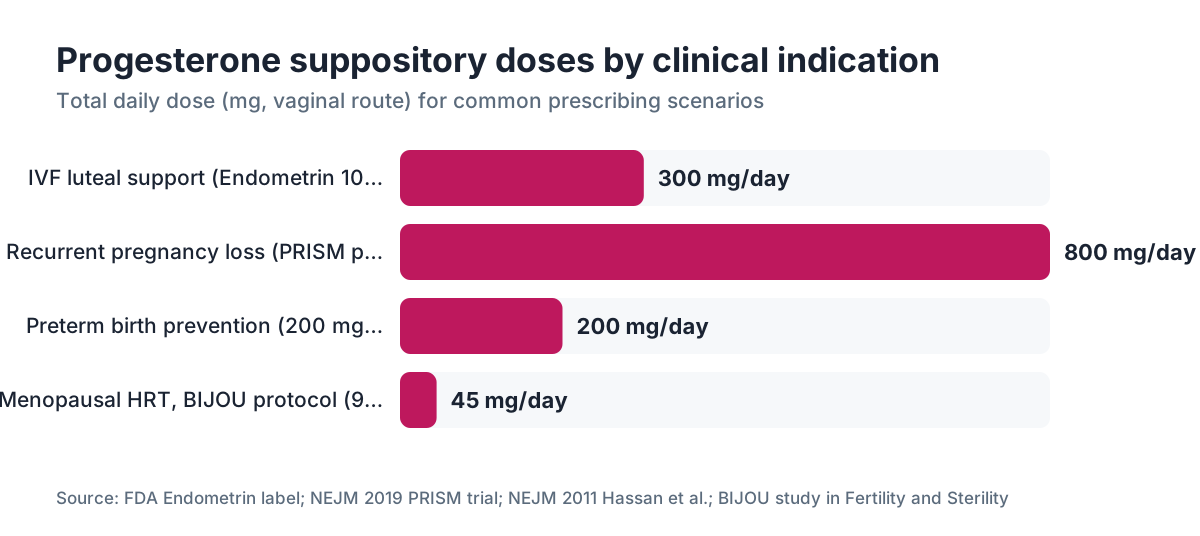
Dosing varies significantly by indication, and there's no single "standard" dose. That's partly because suppositories aren't all the same product and partly because the evidence base for each use has its own dose-finding history.
For IVF luteal support, Endometrin (the FDA-approved vaginal insert) is prescribed at 100 mg inserted vaginally two to three times daily. [2] Compounded vaginal suppositories are often formulated at 200 mg twice daily or 100 mg three times daily, which gives equivalent total daily exposure. Some high-responder or donor-egg protocols use higher doses temporarily.
For recurrent pregnancy loss using the PRISM protocol, 400 mg vaginally twice daily (800 mg total per day) is what the trial used, starting at confirmed pregnancy and continuing through 16 weeks. [4]
For preterm birth prevention with a short cervix, 200 mg nightly vaginally is the common dose, though 90 mg gel (Crinone) is also used and FDA-approved for that indication.
For menopausal hormone therapy via vaginal route, the data from the BIJOU study used Crinone 4% gel (90 mg progesterone per applicator) every other day. Compounded suppositories for this purpose are usually 100 mg to 200 mg nightly or every other night, though this is off-label and dose-response data is limited.
One honest caveat: compounded suppositories aren't subject to the same FDA bioavailability testing as approved products. The labeled dose and the absorbed dose may differ depending on the base, particle size, and compounding quality. If you're using a compounded version, your prescribing clinician should be working with an accredited PCAB compounding pharmacy and ideally monitoring serum or salivary levels periodically.
What are the side effects of progesterone suppositories?
The most common side effects are local, not systemic, because the dose reaching general circulation is relatively low.
Vaginal discharge is the most frequently reported issue. The wax or gel base melts and exits the body, often within a few hours of insertion. Wearing a panty liner is basically mandatory. Some women find the messiness tolerable. Others hate it, especially if they're inserting twice or three times daily for months during IVF.
Vaginal irritation or itching can happen, more often with PEG-based suppositories than cocoa butter. If irritation is significant, switching to a different base formulation usually fixes it.
Abdominal bloating, breast tenderness, and mood changes are the systemic progesterone effects. They're real but generally milder than what oral progesterone produces at equivalent doses, because serum levels are lower. Women who had severe PMS or PMDD on hormonal birth control sometimes find vaginal progesterone gentler.
Sedation is significantly reduced compared to oral. The allopregnanolone metabolite that causes the "Prometrium hangover" is a liver conversion product. Bypass the liver and far less of it forms. Women who switch from oral to vaginal progesterone often report better next-morning alertness.
Rarely, some women report pelvic cramping or spotting, especially early in pregnancy when the suppository is used for luteal support. Light spotting in early pregnancy doesn't necessarily mean the suppository failed. Implantation bleeding and progesterone-related cervical sensitivity are both common.
Allergic reactions to the base (cocoa butter, peanut oil, or PEG) are possible but uncommon. Check the ingredient list if you have known nut allergies, because some bases use peanut or soy-derived oils.
Systemic progesterone effects at pharmacologic doses include fluid retention, headache, and depression in susceptible women. These are the same cautions that appear on Prometrium's prescribing information, and they apply to high-dose vaginal regimens too. [9]
How do you insert a progesterone suppository correctly?
Technique matters more than most people expect. A suppository inserted only partway, or into the wrong channel, absorbs poorly and creates more mess.
Wash your hands before and after. Many suppository kits come with a plastic applicator similar to a tampon applicator. If yours does, use it: it deposits the suppository higher in the vaginal canal where mucosal surface area is greater and absorption is faster. Without an applicator, insert the suppository as far up as your finger can comfortably reach, aiming slightly toward your lower back (the angle of the vaginal canal).
Timing matters. Progesterone suppositories absorb best when you're lying down afterward, so bedtime insertion is convenient and reduces leakage. If your prescription calls for daytime doses, lying down for 20 to 30 minutes after insertion cuts down on how much melts out before it absorbs.
Refrigerate suppositories if the room is warm. They melt at body temperature, which is the whole design, but they'll also soften and deform at room temperatures above about 77°F (25°C). A suppository that has partially melted in the package is harder to insert cleanly and may absorb inconsistently.
For rectal insertion, the technique is the same as vaginal but aimed toward the rectum. Use a water-based lubricant on the tip if needed. Rectal absorption is somewhat less predictable than vaginal, and rectal serum levels tend to be slightly lower for the same dose, though individual variation is wide.
If you miss a dose, insert it as soon as you remember unless it's close to the time of the next dose. Don't double up. For IVF patients, consistency is especially important around embryo transfer. Notify your clinic if you forget a dose in that window.
Are compounded progesterone suppositories the same as brand-name versions?
Not automatically, no. This is a real clinical question and the answer is more nuanced than either "compounded is fine" or "only use brand-name."
FDA-approved products like Endometrin (100 mg vaginal insert) and Crinone (4% and 8% vaginal gel) have passed bioavailability and bioequivalence testing. You know within defined limits how much progesterone absorbs and how consistently. [2]
Compounded suppositories have not gone through that testing. A 200 mg compounded suppository might deliver more or less progesterone than the label says, depending on the particle size of the micronized progesterone, the base formulation, and the compounding pharmacy's quality controls. The FDA has noted in multiple communications that compounded drugs are not FDA-approved and lack the same efficacy and safety data. [10]
That doesn't mean compounded is always inferior. A skilled PCAB-accredited pharmacy using pharmaceutical-grade micronized progesterone in a well-characterized base can make a product that works well. Compounded suppositories are also much cheaper (more on cost below), which matters a lot for patients doing multiple IVF cycles.
The practical guidance: if you're using compounded progesterone for IVF or pregnancy maintenance, ask your prescribing provider which pharmacy they've vetted and whether they monitor progesterone levels. Serum progesterone checks around week 5 to 7 of pregnancy give a rough sense of whether supplementation is working, though the uterine first-pass effect means serum levels underestimate endometrial exposure.
For menopausal hormone therapy, if the goal is endometrial protection, the evidence is strongest for FDA-approved oral micronized progesterone (Prometrium 200 mg). If you're using compounded vaginal for tolerance reasons, that's a reasonable clinical choice, but your provider should tell you the endometrial safety data is thinner. Telehealth platforms like WomenRx that specialize in women's hormones can help you think through which formulation fits your specific history and goals.
How much do progesterone suppositories cost?
Cost varies enormously between brand-name, generic, and compounded versions, and insurance coverage is inconsistent.
Endometrin (brand, 100 mg, 21-count box) runs roughly $300 to $500 without insurance. With IVF-specific insurance or a pharmacy coupon, it can drop substantially, but many patients pay cash for fertility medications.
Crinone 8% vaginal gel (brand, 15 applicators) lists around $400 to $600 without insurance.
Compounded progesterone suppositories cost much less. A common compounding pharmacy price for 30 suppositories at 200 mg runs approximately $40 to $100 depending on the pharmacy and base. That price gap is clinically meaningful for someone inserting twice daily for 10 to 12 weeks.
For menopausal use, Prometrium (oral 200 mg capsules, 30 count) runs about $100 to $180 without insurance. Generic micronized progesterone capsules are often $20 to $50. Vaginal use of these oral capsules (inserting them vaginally instead of swallowing them) is actually common practice, and some clinicians prefer it precisely because it uses the same FDA-approved micronized progesterone in a well-characterized form, just delivered vaginally. This is off-label but widely done.
Insurance coverage: fertility medications, including progesterone suppositories for IVF, are covered by 19 states with fertility insurance mandates as of 2024, but coverage details vary. Progesterone for menopausal HRT is more reliably covered under pharmacy benefits. Always run your specific suppository through GoodRx or your insurer's formulary before assuming a cash price.
Are progesterone suppositories safe during pregnancy?
This is one of the most common questions and the answer requires honesty about what the data actually shows.
Progesterone is a naturally occurring hormone in pregnancy. The corpus luteum produces it in high quantities through the first trimester, and the placenta takes over production from about 10 to 12 weeks. Using supplemental progesterone during this period is, in principle, replacing something the body already makes abundantly.
Decades of use in IVF, where virtually all luteal phases are artificially supported, have not shown increased rates of fetal malformation with vaginal progesterone. [2] The FDA's prescribing information for Endometrin does not list teratogenicity as a concern based on available data. [2]
The picture is more complicated for progestins (synthetic progestogens like medroxyprogesterone acetate), which have a different safety profile. Micronized progesterone suppositories use bioidentical progesterone, not synthetic progestins, so the two are not interchangeable in this discussion.
For recurrent miscarriage, the PROMISE and PRISM trials both ran progesterone exposure through 16 weeks of pregnancy with no detected increase in fetal abnormalities. [3][4] The PRISM trial specifically noted: "There was no evidence of harm to the baby from progesterone treatment."
For preterm birth prevention, vaginal progesterone at 200 mg nightly has been used in large trials with no signal of fetal harm. [5]
The honest caveat: these trials weren't powered or designed to detect rare congenital defects. Long-term follow-up data on children exposed in utero to supplemental progesterone is limited. No major medical society flags a safety concern, but we're working with absence-of-evidence rather than definitive evidence-of-absence for rare outcomes. Most reproductive endocrinologists consider the risk-benefit profile clearly favorable for the approved indications.
Who should not use progesterone suppositories?
Contraindications overlap substantially with those for oral progesterone because the hormone is the same, even if the delivery route differs.
Active or past thromboembolic disease (DVT, pulmonary embolism) is a significant caution. Progesterone affects coagulation factors, and the FDA label for Endometrin lists "thrombotic disorders" as a warning. [2] The risk with vaginal progesterone is thought to be lower than with oral estrogen-progestogen combinations, but it's not zero, especially at the high doses used in some fertility protocols.
Undiagnosed vaginal bleeding is a contraindication. Using progesterone without knowing the source of bleeding could mask a serious gynecologic condition.
Known or suspected hormone-sensitive cancer, particularly endometrial or breast cancer, is a contraindication. This applies to any exogenous progesterone, more than suppositories.
Liver disease. Although vaginal progesterone largely bypasses first-pass hepatic metabolism, systemic progesterone still gets processed by the liver, and women with significant hepatic impairment should use caution.
Allergy to the base ingredients (peanut oil, cocoa butter, PEG, or the progesterone itself) is a reason to switch formulations rather than avoid the class entirely. Most patients who react to one base can tolerate another.
Pregnancy of unknown location or suspected ectopic pregnancy. Starting progesterone support before a viable intrauterine pregnancy is confirmed can delay diagnosis of an ectopic, which is dangerous. IVF cycles have close ultrasound surveillance for exactly this reason, but women using progesterone outside a monitored cycle should confirm intrauterine location before starting.
Women approaching or in menopause should discuss with their provider whether their uterine status and personal history change the risk calculus. The NAMS 2022 Position Statement gives the clearest summary of when progestogens are and are not needed in HRT. [8]
How do progesterone suppositories fit into hormone therapy for perimenopause and menopause?
This is where the clinical picture gets genuinely interesting and where most online information is thin.
During perimenopause, progesterone's main job in HRT is protecting the uterine lining from the proliferative effects of estrogen. Any woman with a uterus who takes systemic estrogen needs an adequate progestogen. Full stop. Using estrogen alone in a woman with a uterus significantly raises the risk of endometrial hyperplasia and cancer, a fact supported by decades of data and stated clearly in NAMS guidelines. [8]
The most common approach is oral micronized progesterone, 200 mg nightly for 12 to 14 days per cycle (sequential regimen) or 100 mg nightly continuously. Vaginal progesterone suppositories are an alternative for women who can't tolerate oral, primarily because of next-day sedation or significant GI effects.
The tricky part is dosing for endometrial protection by the vaginal route. Because vaginal progesterone creates higher uterine tissue levels relative to serum, lower doses may be enough for endometrial protection even when serum levels look subtherapeutic. The BIJOU study established 90 mg every other day (Crinone 4%) as effective for endometrial protection in women on transdermal estradiol. [6] Compounded 100 to 200 mg vaginal suppositories are used similarly off-label, though the head-to-head data against oral is thin.
For women who want or need topical estrogen only (for genitourinary symptoms, not systemic relief), the dose is low enough that progestogen coverage is not required. This is a common point of confusion. The estrogen patch explainer covers systemic versus local estrogen distinctions in more detail.
One more thing worth knowing: some women find that vaginal progesterone at bedtime actually improves sleep in perimenopausal stages despite the reduced sedation compared to oral. That's not a well-controlled finding, but it comes up consistently in clinical practice. The sleep benefit may come from progesterone's mild receptor-mediated effects in the brain rather than the allopregnanolone pathway. The data on this is preliminary and the mechanism is debated.
What do I need to know about monitoring while using progesterone suppositories?
Monitoring depends heavily on why you're using them.
For IVF patients, most clinics check serum progesterone at the time of embryo transfer and again around 5 to 7 weeks gestation to confirm adequate support. Target serum levels vary by clinic and protocol; a common benchmark is above 10 ng/mL for vaginal supplementation, though some programs target higher. Because of the uterine first-pass effect, a serum level of 10 to 15 ng/mL on vaginal progesterone may reflect much higher endometrial tissue levels. Your IVF clinic's protocol supersedes any general benchmark.
For menopausal HRT with vaginal progesterone, endometrial monitoring matters. If you've been on combined estrogen-progestogen therapy and have any unexpected bleeding, an endometrial biopsy or transvaginal ultrasound to check endometrial thickness is appropriate. The threshold most gynecologists use for biopsy is an endometrial stripe above 4 to 5 mm on postmenopausal women. The absence of bleeding is reassuring but not definitive proof of endometrial safety in all cases.
For preterm prevention, monitoring is primarily ultrasound-based (repeat cervical length) rather than hormone-level-based.
For recurrent pregnancy loss, once you've started vaginal progesterone at the PRISM-tested dose, serum levels are less informative than fetal viability ultrasounds and hCG trends. Progesterone levels naturally fluctuate in early pregnancy and a single draw below a threshold doesn't tell you much without context.
Routine mammography and pelvic exams don't change because you're using vaginal progesterone specifically, but staying current on screening matters for any woman using HRT long-term. If you're considering or already on hormone therapy, the hormone replacement therapy overview has a full section on recommended monitoring intervals.
Frequently asked questions
Can I use oral progesterone capsules vaginally instead of buying suppositories?
Yes, and many clinicians recommend it. Inserting an oral micronized progesterone capsule (like Prometrium 200 mg) vaginally is off-label but widely practiced and has a reasonable evidence base. The FDA-approved capsule dissolves vaginally and delivers progesterone through the mucosa much like a purpose-made suppository. The main downside is the capsule's olive oil and gelatin base, which can be messier than a cocoa-butter suppository. Ask your prescribing provider before switching formulations.
How long does it take for a progesterone suppository to dissolve?
A cocoa butter-based suppository fully melts within 20 to 30 minutes at body temperature. PEG-based inserts take slightly longer, up to 45 minutes. Lying down after insertion for at least 20 to 30 minutes reduces leakage and improves absorption. You'll typically notice some discharge or wetness within an hour of insertion, which is the melted base exiting, not the progesterone itself.
Do progesterone suppositories make you tired the way oral progesterone does?
Significantly less so, for most women. The sedation from oral progesterone comes from the liver metabolite allopregnanolone, which binds GABA receptors in the brain. Vaginal progesterone bypasses most first-pass liver metabolism, so far less allopregnanolone is formed. Women who switched from Prometrium to vaginal suppositories because of morning grogginess often report noticeably better next-day alertness. Some residual fatigue is possible at higher doses.
Can progesterone suppositories cause a positive pregnancy test?
No. Progesterone suppositories do not contain hCG, the hormone that pregnancy tests detect. A positive test while using suppositories means you are pregnant. The suppositories may slightly affect how symptoms feel in early pregnancy, but they do not cause false positives on urine or blood pregnancy tests.
Is vaginal progesterone safe if I have a history of blood clots?
This requires an individualized conversation with your physician. Progesterone does affect coagulation, and the FDA label for Endometrin lists thromboembolic disorders as a warning. Vaginal delivery is thought to carry lower thrombotic risk than oral estrogen-progestogen combinations because serum levels are lower, but women with a personal history of DVT, PE, or clotting disorders need a formal risk assessment before using any systemic progestogen. Don't self-prescribe in this situation.
When should I insert progesterone suppositories, morning or night?
Most providers recommend at least one dose at bedtime, primarily because lying down for several hours after insertion maximizes absorption and minimizes leakage. For twice-daily dosing, a morning dose roughly 12 hours after bedtime works fine. For three-times-daily dosing, spacing doses 8 hours apart is the standard. If morning doses cause discharge that's disruptive to your day, ask your provider whether a different scheduling or dose frequency is appropriate for your protocol.
Can progesterone suppositories help with sleep during perimenopause?
Some women report improved sleep with vaginal progesterone, though the evidence is weaker than for oral, which carries the allopregnanolone-mediated sedative pathway. A few small studies suggest progesterone itself has mild sleep-promoting effects independent of that metabolite. This is not an approved indication, and the data doesn't support starting progesterone suppositories for sleep alone without another clinical reason. If sleep is your main concern, discuss the full picture with a hormone specialist.
How do progesterone levels in blood tests look when using vaginal suppositories?
Often lower than you'd expect, and lower than equivalent oral doses would produce. This is the uterine first-pass effect: most of the progesterone goes to uterine tissue before reaching general circulation. A serum level of 10 to 15 ng/mL on vaginal progesterone likely reflects much higher endometrial concentrations. Interpreting a serum level without knowing the delivery route can lead to incorrect conclusions. Always tell your lab or provider how you're taking progesterone.
Are over-the-counter progesterone creams as effective as suppositories?
No. Over-the-counter progesterone creams produce unpredictable and generally low serum and uterine levels. The FDA has not approved any OTC cream for endometrial protection. The Endocrine Society explicitly states that topical progesterone creams cannot be relied upon for uterine protection in women on estrogen therapy. Women using estrogen for menopause who rely only on a cream for progesterone coverage are at real risk of endometrial hyperplasia.
What happens if I use too much progesterone from suppositories?
Signs of progesterone excess include significant bloating, breast tenderness, mood depression, headache, and irregular bleeding or spotting. Because vaginal absorption is somewhat self-limiting (mucosal saturation slows uptake at high concentrations), toxicity from suppositories is rare. That said, the high doses used in some recurrent pregnancy loss protocols (800 mg per day) can cause real side effects. If you're experiencing severe mood changes or pelvic pain, contact your prescribing provider before adjusting your dose on your own.
Do progesterone suppositories expire, and can I store them at room temperature?
Yes, they expire. Check the manufacturer or compounding pharmacy label for the beyond-use date. Suppositories should be stored in a cool, dry place, ideally refrigerated if room temperature exceeds about 75 to 77°F (24 to 25°C). At higher temperatures, they can soften, deform, and become difficult to insert. Softened suppositories that are then refrigerated can still be used, but the shape and drug distribution may be less uniform. Discard any that have melted completely and resolidified outside of their packaging.
Can I have sex while using progesterone vaginal suppositories?
Yes, but time intercourse at least two to three hours after insertion, or insert the suppository after sex. The melted base residue can be messy and the active drug is best left in place to absorb. For IVF patients, your clinic may have specific guidance on intercourse timing around embryo transfer. There's no evidence that intercourse itself is harmful during progesterone supplementation, but the physical mechanics of recent suppository use make spacing them practical.
Are progesterone suppositories the same thing as progesterone pessaries?
Yes. In British and Australian medical literature, vaginal progesterone inserts are almost always called pessaries. In North American practice, the terms suppository and vaginal insert are more common. The PROMISE and PRISM trials, which are UK-based, refer to 400 mg progesterone pessaries. These are the same formulation as what North American providers call suppositories. When reading international guidelines or trial results, the terms are interchangeable.
Will progesterone suppositories stop my period or cause spotting?
They can do both, depending on timing and context. In a cyclic HRT regimen, progesterone is withdrawn at cycle end, which triggers a withdrawal bleed similar to a period. In a continuous combined regimen, periods typically stop over time. In pregnancy maintenance protocols, spotting is common and not necessarily a sign of failure. Progesterone also thickens cervical mucus and can affect bleeding patterns independently of withdrawal timing. Unexpected heavy bleeding always warrants a call to your provider.
Sources
- Fertility and Sterility, Kuhl et al., pharmacokinetics of vaginal progesterone review
- FDA, Endometrin (progesterone) Prescribing Information
- BMJ 2015, Coomarasamy et al., PROMISE trial (progesterone vs placebo in recurrent miscarriage)
- NEJM 2019, Coomarasamy et al., PRISM trial (progesterone in early pregnancy with bleeding)
- NEJM 2011, Hassan et al., vaginal progesterone in women with short cervix and preterm birth prevention
- Fertility and Sterility, BIJOU study, Crinone 4% for endometrial protection in menopausal women on estrogen
- Endocrine Society, Clinical Practice Guidelines on menopause hormone therapy
- North American Menopause Society (NAMS), 2022 Hormone Therapy Position Statement
- FDA, Prometrium (micronized progesterone) Prescribing Information
- FDA, Compounded Drug Products guidance page
- ACOG Practice Bulletin on preterm birth prevention with vaginal progesterone
- National Conference of State Legislatures, state fertility insurance mandate tracker 2024