Progesterone supplements in pregnancy: what the evidence actually says
TL;DR: Progesterone supplements prevent preterm birth in women with a history of spontaneous preterm birth or a short cervix, and they support early pregnancy in IVF cycles and some cases of recurrent miscarriage. The injectable form (Makena/17-OHPC) lost FDA approval in June 2023 after a confirmatory trial failed. Vaginal micronized progesterone is now the preferred form. Whether you need it depends entirely on your situation.
What does progesterone actually do during pregnancy?
Progesterone is the hormone that makes pregnancy possible. After ovulation, the corpus luteum (the empty follicle left behind after an egg is released) starts pumping out progesterone to prepare the uterine lining for a fertilized egg. If implantation happens, progesterone levels stay high, keeping the lining intact and keeping the uterus from contracting too soon. Without enough progesterone, early pregnancy typically ends in miscarriage.
Around 8 to 10 weeks, the placenta takes over progesterone production in what's called the luteo-placental shift. After that point the corpus luteum contribution drops off and the placenta becomes the main source for the rest of pregnancy [1]. This is why supplemental progesterone prescribed for early pregnancy support usually stops around 10 to 12 weeks. The placenta has the job now.
Progesterone also acts directly on the cervix and uterus. It keeps the cervix firm and long (a short, softening cervix signals preterm labor risk), and it quiets uterine muscle so contractions don't fire early. That dual job is why researchers have studied it so hard as a preterm birth prevention tool [2].
Natural (bioidentical) progesterone is chemically identical to what your body makes. 17-alpha-hydroxyprogesterone caproate (17-OHPC), sold under the brand name Makena, is a synthetic progestin that's structurally related but not identical. These two forms have very different evidence behind them, and that difference drives most clinical decisions.
Who actually needs progesterone supplementation in pregnancy?
Most pregnant women do not need supplemental progesterone. The evidence supports it in a few specific, well-defined groups, and nowhere else.
Women with a history of spontaneous preterm birth. If you've delivered before 37 weeks without a clear one-off cause (like placenta previa), your risk of delivering early again is high. This group has the most clinical trial data behind progesterone use [3].
Women with a short cervix found on ultrasound. A cervical length below 20 millimeters at 16 to 24 weeks raises preterm birth risk sharply. Trials by Fonseca and Hassan both showed vaginal progesterone cut that risk [2].
Women using assisted reproductive technology. IVF cycles suppress the ovaries, so the corpus luteum either doesn't exist or doesn't work properly. Progesterone supplementation is standard of care after embryo transfer and usually continues through the first trimester [1].
Women with recurrent pregnancy loss. The evidence here splits. The PROMISE trial (2015, New England Journal of Medicine) found no significant benefit of vaginal progesterone in women with unexplained recurrent miscarriage who weren't bleeding [9]. But the PRISM trial (2019, also NEJM) found that vaginal progesterone started at the time of early pregnancy bleeding raised live birth rates, with the biggest benefit in women with three or more prior losses [4].
If you don't fall into one of these groups, routine progesterone in a low-risk pregnancy has no evidence behind it and ACOG (the American College of Obstetricians and Gynecologists) does not recommend it [3].
What forms of progesterone are used in pregnancy?
There are three main forms, and they are not interchangeable.
| Form | Route | Main use | FDA status | |---|---|---|---| | Micronized progesterone (Prometrium, generics) | Oral or vaginal | Early pregnancy support, IVF, short cervix | Off-label for pregnancy (approved for other indications) | | Progesterone vaginal gel (Crinone 8%) | Vaginal | IVF luteal support | Off-label for pregnancy in US | | 17-OHPC (Makena) | Weekly IM injection | Prior spontaneous preterm birth | Withdrawn from US market June 2023 |
Vaginal micronized progesterone is the most widely used form for pregnancy support worldwide. Vaginal dosing skips first-pass liver metabolism, so blood levels stay steadier than with oral dosing, and the drug concentrates directly in uterine tissue (the uterine first-pass effect) [5]. Typical doses are 200 mg to 400 mg vaginally at bedtime.
Oral micronized progesterone gets used too, but it causes real sedation because it metabolizes to allopregnanolone, a neurosteroid with a sleepy effect. Providers who prescribe oral progesterone in pregnancy almost always tell patients to take it at night.
17-OHPC (Makena). This one has a complicated story. The FDA gave Makena accelerated approval in 2011 based on a single trial (Meis et al., NEJM 2003) showing it cut preterm birth in women with prior preterm birth [6]. The large confirmatory trial (PROLONG, 2019) found no benefit. FDA advisory committees voted to withdraw approval in 2019 and 2022, and the FDA formally pulled Makena's approval in June 2023 [7]. Compounded versions of 17-OHPC are still technically available through compounding pharmacies, but the clinical evidence for the drug is now seriously in doubt.
For most situations in 2024 and 2025, vaginal micronized progesterone is the form to reach for.
Does progesterone prevent miscarriage?
This is the question most women searching this topic actually want answered, and the honest answer is: it depends on why and when.
For recurrent miscarriage, the PRISM trial (NEJM, 2019) is the strongest data we have. Researchers randomized 4,153 women who came in with vaginal bleeding in early pregnancy to either 400 mg vaginal progesterone twice daily or placebo, started before 12 weeks. Across the whole group, the live birth rate was 75% with progesterone versus 72% with placebo, a difference that wasn't statistically significant. But in the subgroup with three or more prior miscarriages, the live birth rate was 72% with progesterone versus 57% with placebo, a 15 percentage point gap [4]. The study authors concluded: "Among women with early pregnancy bleeding, progesterone therapy was associated with higher rates of live births in women with previous miscarriages."
For women with one or two prior miscarriages and no current bleeding, the evidence is weaker. The PROMISE trial (NEJM, 2015) found no significant benefit in women with unexplained recurrent miscarriage who weren't actively bleeding at enrollment [9].
Here's the part providers wish more women understood: for a chromosomally abnormal pregnancy, progesterone almost certainly does nothing. Most first-trimester miscarriages come from chromosomal errors in the embryo, and no amount of supplemental progesterone lets a chromosomally abnormal pregnancy continue. So if you miscarry while taking progesterone, it doesn't mean the progesterone failed. The loss was probably chromosomal.
If you have a history of miscarriage and you're newly pregnant, talk to your OB or a reproductive endocrinologist before assuming you need progesterone. Checking your own progesterone level early is standard at many practices, because a low level (generally below 10 ng/mL in the first trimester, though cutoffs vary) can shape the decision [1].
Can progesterone supplements prevent preterm birth?
Preterm birth prevention is where the evidence is strongest, and also where it got messiest most recently.
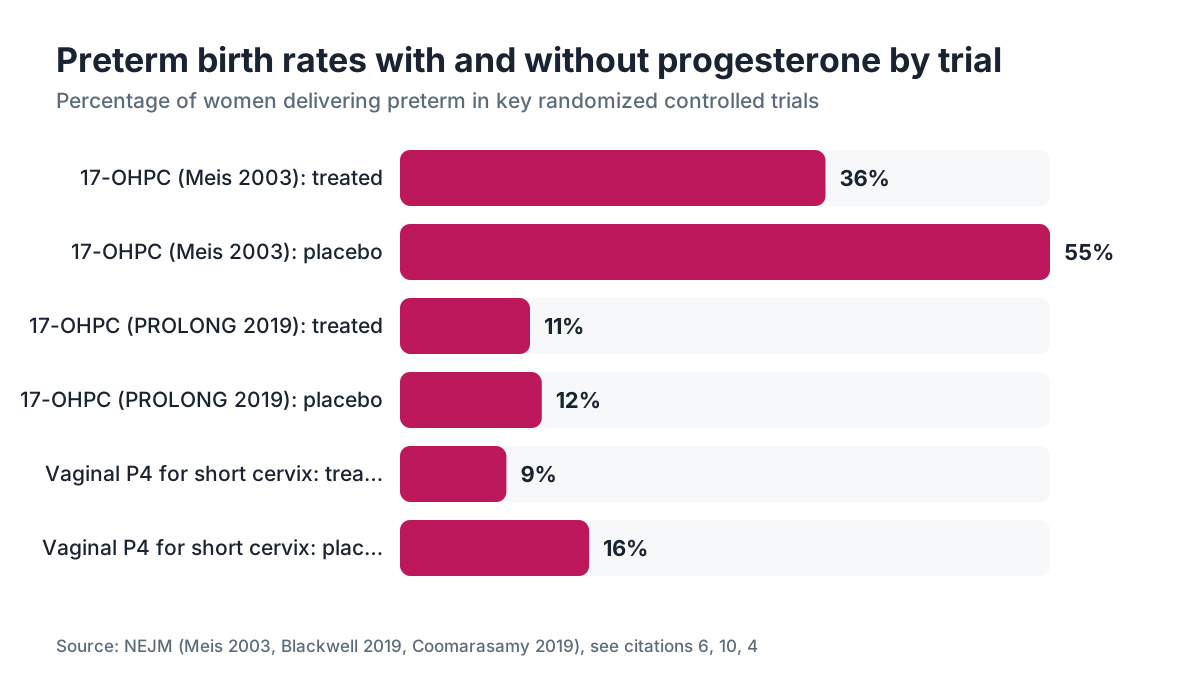
The Meis trial (NEJM, 2003) showed weekly 17-OHPC injections cut preterm birth before 37 weeks from 55% to 36% in women with prior spontaneous preterm birth, a 34% relative risk reduction [6]. That trial drove the original FDA approval of Makena.
Vaginal progesterone for short cervix has held up better. A 2018 individual patient data meta-analysis of 974 women published in Ultrasound in Obstetrics and Gynecology found vaginal progesterone cut preterm birth before 33 weeks by about 38% in women with a singleton pregnancy and cervical length 25 mm or less [2].
Then came PROLONG. This large multicenter randomized trial, published in 2019, enrolled 1,708 women with prior preterm birth and found no statistically significant difference in preterm birth rates between 17-OHPC and placebo [10]. Those results, plus a review showing the original Meis trial had design weaknesses (no placebo injections in the control arm), pushed the FDA to withdraw Makena's approval [7].
Current ACOG guidance (Practice Bulletin 234, updated 2021) recommends vaginal progesterone for singleton pregnancies with a cervical length of 25 mm or less at 16 to 24 weeks, and recommends shared decision-making about 17-OHPC for women with prior spontaneous preterm birth, given the conflicting data [3].
So: vaginal progesterone for a short cervix has solid randomized trial support. Progesterone for prior preterm birth is far shakier after PROLONG, and the injectable form is no longer FDA-approved.
What is a normal progesterone level during pregnancy?
Progesterone climbs sharply across the first trimester and keeps rising into the second and third. Here's what typical ranges look like [1]:
| Pregnancy stage | Typical progesterone range (ng/mL) | |---|---| | Non-pregnant luteal phase | 1.8 to 24 | | Weeks 1-12 (first trimester) | 11 to 90 | | Weeks 13-28 (second trimester) | 25 to 90 | | Weeks 29-40 (third trimester) | 48 to 300+ |
These ranges vary between labs and between people, so a single number rarely settles anything. The trend matters more than one value. In the first trimester, a level below 5 ng/mL is generally linked to a nonviable pregnancy. A level between 5 and 10 ng/mL is a gray zone. Above 25 ng/mL is generally reassuring, though IVF pregnancies can run higher because of supplementation [1].
If your provider is tracking progesterone early, expect repeat draws rather than a single test. A rising progesterone trend next to a growing gestational sac on ultrasound tells you far more than any lone number.
One thing women on vaginal progesterone should know: vaginal absorption produces high local tissue concentrations but lower-than-expected serum levels. Your blood progesterone number may read lower than it would with oral dosing, yet the uterine tissue concentration can still be therapeutic. Some labs flag these levels as low in error. Make sure your provider knows you're using vaginal progesterone when they read your results.
For how progesterone works outside pregnancy, see our progesterone explainer.
Are progesterone supplements safe for the baby?
This question doesn't have a fully settled answer, and anyone who tells you otherwise is oversimplifying.
For micronized progesterone, the safety picture is reassuring. Bioidentical progesterone is identical to what the body makes, and it doesn't carry the masculinizing effects seen with some older synthetic progestins (like norethindrone). Long-term follow-up studies on children exposed to vaginal progesterone in utero have not shown developmental harms [5].
For 17-OHPC, it's murkier. ACOG and the FDA noted that long-term child safety data from the PROLONG trial was collected but still being analyzed at the time of withdrawal. The PROLONG protocol included follow-up of children to 5 years. As of 2023, no clear harms to children had been identified, but the data set is not complete [7].
What's well-established is that older synthetic progestins (not the same as 17-OHPC or micronized progesterone) used in early hormonal contraceptives were tied to virilization in some female fetuses. Modern progesterone formulations used in pregnancy don't carry this risk on current evidence.
Progesterone supplements have not been linked to higher rates of birth defects in large observational studies. The FDA classed them as Pregnancy Category B (animal studies show no fetal risk with no adequate human studies, or animal effects not confirmed in humans) under the old category system [7].
The honest position: for the indications where progesterone actually works (IVF support, short cervix, high-risk preterm birth prevention), the benefit outweighs the small risk. For situations where the evidence is weak, a clean safety profile is no reason to use a drug that doesn't help.
How is progesterone supplementation typically prescribed in pregnancy?
Dosing, timing, and duration all depend on the indication.
IVF / ART cycles: Vaginal progesterone typically starts the day of or the day after egg retrieval (or before a frozen embryo transfer), continues through the first trimester, and tapers after 8 to 10 weeks once placental function is confirmed. Common products include Endometrin (progesterone vaginal inserts, 100 mg two or three times daily), Crinone 8% gel (once daily), or generic micronized progesterone 200 mg to 400 mg vaginally at night.
Short cervix at mid-pregnancy: Vaginal progesterone 200 mg nightly, started when a transvaginal ultrasound between 16 and 24 weeks shows a cervical length at or below 25 mm, continued through 36 to 37 weeks [3].
Prior preterm birth: This used to be 17-OHPC 250 mg IM weekly from 16 to 20 weeks through 36 weeks. With Makena withdrawn and the evidence uncertain, practice now varies widely. Some providers use vaginal progesterone instead (200 mg nightly), knowing the evidence for this specific indication is thinner than for short cervix.
Early pregnancy / threatened miscarriage: If prescribed, typically 400 mg vaginally twice daily from the time of bleeding through 12 weeks, following the PRISM protocol [4].
One practical point: vaginal progesterone leaves a white, waxy residue and discharge. That's normal and not a sign of infection. It's one reason many providers tell patients to dose at bedtime.
Prescriptions usually come from OBs, reproductive endocrinologists, or maternal-fetal medicine specialists. Telehealth providers like WomenRx can help with progesterone management inside broader hormonal care, though high-risk obstetric management needs specialty involvement.
What did the FDA say about 17-OHPC (Makena) and why does it matter?
The Makena withdrawal is one of the bigger regulatory events in obstetric pharmacology in years, and it's worth understanding what actually happened.
Makena got accelerated approval in 2011 based on the Meis NEJM trial. Accelerated approval lets a drug reach market based on a surrogate endpoint (here, preterm birth rate) on the condition that the maker runs a larger confirmatory trial proving clinical benefit. The confirmatory trial was PROLONG, which enrolled women internationally and found no significant difference in preterm birth rates or neonatal outcomes between 17-OHPC and placebo [10].
An FDA advisory committee voted 14 to 1 in 2022 to recommend withdrawal. The FDA agreed, and Makena's approval was formally pulled in June 2023. The FDA stated: "FDA is withdrawing approval of Makena... because the required confirmatory trial failed to verify the drug's clinical benefit."
Compounded 17-OHPC is still available through some compounding pharmacies under FDCA sections 503A and 503B. But compounding pharmacies can't legally compound drugs that are essentially copies of a withdrawn approved drug for the same indication without meeting specific criteria. The regulatory status of compounded 17-OHPC is contested and varies by pharmacy and state [7].
For women currently on 17-OHPC: ACOG's interim guidance after the withdrawal treated discontinuing the drug mid-pregnancy as a decision to make with each patient. There's no evidence that stopping 17-OHPC mid-pregnancy causes harm. Switching to vaginal progesterone is an option, though the evidence for vaginal progesterone in prior preterm birth (as opposed to short cervix) is weaker.
The Makena story is also a good reason to stay skeptical of any off-label use that gets marketed hard without strong confirmatory data.
What are the side effects of progesterone supplements in pregnancy?
Side effects vary a lot by form.
Vaginal progesterone: Local irritation, discharge (the waxy white residue comes from the carrier), and occasional spotting. The spotting causes real anxiety because it mimics early miscarriage, but it's a known, benign effect of the suppositories and gels. Some women report bloating and breast tenderness, similar to the early pregnancy symptoms progesterone itself drives.
Oral progesterone: Sedation is the main one, which is why most providers say take it at night. Some women report dizziness, nausea, and mood changes. The sleepy effect is strong enough that driving right after a dose isn't recommended.
Injectable 17-OHPC: Injection site reactions (pain, swelling, bruising) were the most common side effects in clinical trials, reported in about 35% of patients. Rarer but more serious reactions included allergic reactions and, in theory, risks tied to oil-based injections (the vehicle is castor oil).
Systemic progesterone effects: At high doses, progesterone relaxes smooth muscle throughout the body. That's why pregnancy itself causes constipation, heartburn, and slower digestion, and supplemental progesterone can make those worse.
Progesterone does not raise the risk of ectopic pregnancy, doesn't cause birth defects at clinical doses, and isn't linked to gestational diabetes or hypertension on current data [5].
If you develop severe abdominal pain, heavy bleeding, or signs of an allergic reaction while taking any form of progesterone, call your provider right away. Those are not expected side effects.
How does progesterone in pregnancy relate to hormones later in life?
The hormonal story doesn't end at delivery. Understanding progesterone in pregnancy is a useful way into your hormonal health across your whole reproductive life.
Progesterone drops fast after delivery (along with estrogen), and that crash is a major driver of postpartum mood changes. The FDA approved brexanolone (Zulresso) in 2019 specifically for postpartum depression, and its mechanism runs through the same neurosteroid pathway (allopregnanolone) that oral progesterone affects.
As women move into their late 30s and 40s, progesterone is usually the first hormone to decline as cycles get less regular in perimenopause. It can show up as shorter luteal phases, spotty cycles, sleep trouble, and anxiety well before estrogen drops much. For more on this shift, see our perimenopause age and when does menopause start articles.
In menopause hormone therapy, progesterone (or a progestin) goes alongside estrogen in women who still have a uterus, to prevent estrogen-driven endometrial hyperplasia. The form matters here too: oral micronized progesterone (Prometrium) appears to have a friendlier cardiovascular and breast profile than synthetic progestins like medroxyprogesterone acetate, based on the French E3N cohort and other observational data [8]. See our hormone replacement therapy overview for the detail.
WomenRx providers work with women across this full hormonal arc, from early reproductive years through menopause, and can help connect your pregnancy hormone history to your current picture.
The point is that progesterone isn't only a pregnancy drug. It's a central player in female hormonal health from first period to last, and knowing how it behaves in pregnancy helps you read what happens to it later.
What questions should you ask your provider about progesterone in pregnancy?
If you're newly pregnant and wondering whether you need progesterone, or a provider has already recommended it, these are the questions worth raising.
Why specifically are you recommending this? The answer should map to one of the evidence-supported indications: IVF cycle, short cervix on ultrasound, or prior spontaneous preterm birth. If none of those apply, ask what the evidence is for your situation.
Which form and why? Vaginal micronized progesterone is generally preferred over 17-OHPC given where the evidence sits now. If 17-OHPC comes up, ask about the PROLONG trial and why the risk-benefit math still favors it in your case.
How long will I take it? For IVF support, usually through 10 to 12 weeks. For short cervix or prior preterm birth, through 36 to 37 weeks. Get the endpoint straight upfront.
What do I do if I spot while on vaginal progesterone? It can cause benign spotting. Know in advance what level of bleeding warrants a call versus an ER visit.
Will you monitor my progesterone levels? In IVF pregnancies, most reproductive endocrinologists check levels regularly. In natural pregnancies, monitoring is less standardized. It's fair to ask about a baseline level, especially with a history of loss.
What's the evidence that this helps me specifically? Be skeptical of anyone prescribing progesterone for a low-risk singleton pregnancy with no prior preterm birth, no short cervix, and no recurrent loss history. The data does not support routine use [3].
Frequently asked questions
Can I take over-the-counter progesterone cream during pregnancy?
No, and this matters. Over-the-counter progesterone creams sold as supplements aren't regulated as drugs by the FDA, their hormone content varies widely between products, and no clinical trials support their use in pregnancy for any indication. Pharmaceutical-grade progesterone prescribed by a licensed provider is a completely different product with known dosing and safety data. Don't substitute OTC creams for prescription progesterone.
What happens if I stop taking progesterone supplements suddenly during early pregnancy?
In natural pregnancies where progesterone was started for a low level or threatened miscarriage, stopping abruptly carries theoretical risk in the first trimester before the placenta takes over production (typically by 10 to 12 weeks). In practice, most providers taper rather than stop cold. For IVF pregnancies, the timing of discontinuation is more precise because placental function can be confirmed. Never stop prescription progesterone without talking to your provider first.
Does low progesterone always mean miscarriage?
Not necessarily. A low progesterone level in early pregnancy is linked to higher miscarriage risk but doesn't guarantee loss. It can also reflect normal variation in draw timing, lab assay differences, or a viable pregnancy progressing at lower-than-average levels. Progesterone is typically read alongside ultrasound findings and serial hCG measurements, not in isolation. One low number without other worrisome findings is not a diagnosis.
Is the progesterone used in IVF the same as what's prescribed for preterm birth prevention?
It can be the same drug (micronized progesterone) used for different purposes at different doses. IVF protocols typically use 200 to 400 mg vaginal progesterone nightly or twice daily starting around egg retrieval or embryo transfer. Preterm birth prevention for short cervix also usually uses 200 mg vaginally nightly, but started mid-pregnancy. The drug may be identical; the indication, timing, and duration differ.
Can I get pregnant using progesterone supplements if I have luteal phase defect?
Luteal phase defect, where the post-ovulation phase is too short or progesterone too low to support implantation, is a contested diagnosis. Some reproductive endocrinologists prescribe vaginal progesterone after ovulation in women trying to conceive naturally with a documented short luteal phase. The randomized trial evidence for this is weak, but the risk-benefit math is often seen as favorable given progesterone's safety profile. Have this conversation with a reproductive endocrinologist, not a general clinician.
Why did the FDA withdraw Makena and is it still available?
The FDA withdrew Makena (17-alpha-hydroxyprogesterone caproate) in June 2023 because the required confirmatory trial (PROLONG) failed to show clinical benefit in reducing preterm birth or improving neonatal outcomes. The original approval rested on a single smaller trial. Compounded versions of 17-OHPC may still be available through compounding pharmacies in some states, but their regulatory status is complicated and the evidence for the drug itself remains in doubt.
How do I know if my progesterone is high enough in early pregnancy?
A first-trimester progesterone level above 25 ng/mL is generally reassuring for a viable intrauterine pregnancy. Below 5 ng/mL is strongly linked to nonviability. The 5 to 25 ng/mL range is a gray zone where clinical context and ultrasound findings matter most. Vaginal progesterone makes serum levels read lower than the actual uterine tissue concentration, so tell your lab and provider if you're using vaginal supplementation when levels are drawn.
What is the PRISM trial and what did it find?
PRISM (Progesterone in Spontaneous Miscarriage) was a 2019 randomized controlled trial in the New England Journal of Medicine enrolling 4,153 women with early pregnancy bleeding. Vaginal progesterone 400 mg twice daily did not significantly raise live birth rates across the whole group, but in women with three or more prior miscarriages, live birth rates were 72% with progesterone versus 57% with placebo. It's the largest trial to date on progesterone for threatened miscarriage.
Can taking progesterone in the first trimester cause birth defects?
Current evidence doesn't support a link between micronized progesterone or 17-OHPC and birth defects at clinical doses. Older synthetic progestins from decades-old oral contraceptives were tied to some masculinization in female fetuses, but modern formulations used in pregnancy support are structurally different and haven't shown this risk in large observational studies. Long-term child follow-up data from PROLONG continues to be analyzed.
Do I need progesterone supplements if I got pregnant naturally and have no history of miscarriage or preterm birth?
No. Routine progesterone supplementation in low-risk, naturally conceived singleton pregnancies with no prior losses or preterm births has no clinical trial support and is not recommended by ACOG. If a provider recommends it without a clear evidence-based indication, it's fair to ask what specific risk factor is driving that recommendation and what data supports supplementation for your situation.
What's the difference between progesterone and progestin in pregnancy?
Progesterone is the bioidentical hormone, chemically identical to what your ovaries and placenta make. Progestin is a broad term for synthetic compounds with progestogenic activity, including 17-OHPC (Makena), medroxyprogesterone acetate, and others. They bind progesterone receptors but have different structures, metabolites, and side effect profiles. For pregnancy support, bioidentical progesterone is generally preferred where evidence supports either option, because its metabolites are naturally occurring compounds the body knows how to handle.
Does progesterone help with morning sickness?
No. Progesterone contributes to morning sickness rather than relieving it. High progesterone slows gastric emptying and relaxes the lower esophageal sphincter, which worsens nausea and reflux. That's partly why nausea peaks in the first trimester when progesterone (and hCG) are rising fastest. Supplemental progesterone in early pregnancy can make nausea worse in some women. Treating morning sickness is a separate question from progesterone supplementation.
Can progesterone levels predict miscarriage?
A single very low progesterone level (below 5 ng/mL) is strongly linked to nonviability, but progesterone alone can't distinguish a viable intrauterine pregnancy with low levels from an early ectopic or missed miscarriage. It's always read alongside serial hCG measurements and ultrasound findings. A progesterone level above 20 ng/mL in the first trimester makes ectopic pregnancy unlikely, which is one reason providers draw it during early pregnancy pain or bleeding workups.
Sources
- StatPearls (NCBI Bookshelf), National Library of Medicine — Physiology, Progesterone
- Ultrasound in Obstetrics and Gynecology — Romero et al. 2018 individual patient data meta-analysis on vaginal progesterone and preterm birth in short cervix
- ACOG Practice Bulletin No. 234 — Prediction and Prevention of Preterm Birth
- New England Journal of Medicine — Coomarasamy et al. PRISM trial 2019
- American Society for Reproductive Medicine (ASRM) — Progesterone supplementation during the luteal phase and in early pregnancies after ART
- New England Journal of Medicine — Meis et al. 2003, 17-alpha-hydroxyprogesterone caproate and preterm birth
- FDA — Drug Safety and Availability, Makena (hydroxyprogesterone caproate) withdrawal June 2023
- Breast Cancer Research and Treatment — Fournier et al. E3N cohort, progesterone vs progestin and breast cancer risk
- New England Journal of Medicine — Coomarasamy et al. PROMISE trial 2015
- New England Journal of Medicine — Blackwell et al. PROLONG trial 2019
- Society for Maternal-Fetal Medicine (SMFM) — Progesterone and preterm birth prevention consult series