Progesterone supplements: what actually works and what doesn't
TL;DR: Prescription bioidentical progesterone (Prometrium, compounded) is the only form with proven safety and efficacy data for menopause and hormone therapy. Over-the-counter progesterone creams contain real hormone but at doses too low and too inconsistently absorbed to protect the uterine lining. Wild yam supplements contain no progesterone at all. If you have a uterus and take estrogen, you need prescription-strength progesterone.
What is a progesterone supplement and why do women take one?
Progesterone is a hormone your ovaries produce in the second half of every menstrual cycle. Its main job is to prepare the uterine lining for a fertilized egg and, if pregnancy doesn't happen, to trigger the shedding of that lining. During perimenopause and menopause, progesterone production drops sharply, often before estrogen does. That shift is a big reason cycles become irregular and sleep turns terrible before hot flashes ever start.[1]
Women take progesterone supplements for several reasons. The most medically established is uterine protection: anyone with a uterus who takes estrogen therapy must also take some form of progestogen to prevent estrogen from over-stimulating the lining and raising endometrial cancer risk.[2] Beyond that, progesterone has real sedative properties, which is why oral micronized progesterone taken at night improves sleep quality in a way synthetic progestins generally don't.[3] Some women also use progesterone for PMS, heavy periods, or cycle irregularity in perimenopause.
The word "supplement" here covers a wide spectrum, though, and that spectrum matters enormously. At one end you have FDA-approved oral micronized progesterone (Prometrium). In the middle you have compounded progesterone in various forms. At the far end you have OTC progesterone creams and wild yam products that call themselves supplements. These are not equivalent products. The differences in bioavailability, dose reliability, and evidence base are large enough that conflating them is genuinely misleading.
What are the different types of progesterone supplements?
| Type | Source | Bioavailability | Requires Rx? | Evidence level | |---|---|---|---|---| | Oral micronized progesterone (Prometrium) | Bioidentical, peanut oil capsule | Moderate; peaks ~3 hrs | Yes | High (RCTs, FDA-approved) | | Compounded oral/sublingual progesterone | Bioidentical, custom base | Variable | Yes | Moderate (no FDA review) | | Vaginal progesterone gel/suppository (Crinone, Endometrin) | Bioidentical | High local; lower systemic | Yes | High for fertility use | | OTC progesterone cream (e.g., Pro-Gest) | Bioidentical, transdermal | Low and unpredictable | No | Low; no endometrial protection data | | Wild yam cream or capsules | Diosgenin (plant precursor) | Zero conversion in humans | No | None |
Oral micronized progesterone has the longest and cleanest safety record in menopausal hormone therapy. The Women's Health Initiative Memory Study and the French E3N cohort study both used this form, and the French data showed oral micronized progesterone combined with estrogen carried a lower breast cancer risk than combination synthetic progestin regimens.[4]
Compounded progesterone is chemically identical to Prometrium but is made by a compounding pharmacy rather than a pharmaceutical manufacturer. The FDA does not review compounded formulations for safety or efficacy, which means potency can vary batch to batch.[5] That doesn't make it wrong to use, but it does mean you should use a pharmacy that participates in the PCAB (Pharmacy Compounding Accreditation Board) accreditation program.
Vaginal progesterone products achieve very high local concentrations in the uterus through a phenomenon called the "uterine first pass effect," making them the standard of care in fertility medicine. They're less commonly used in menopause management but can be appropriate for women who can't tolerate oral forms.
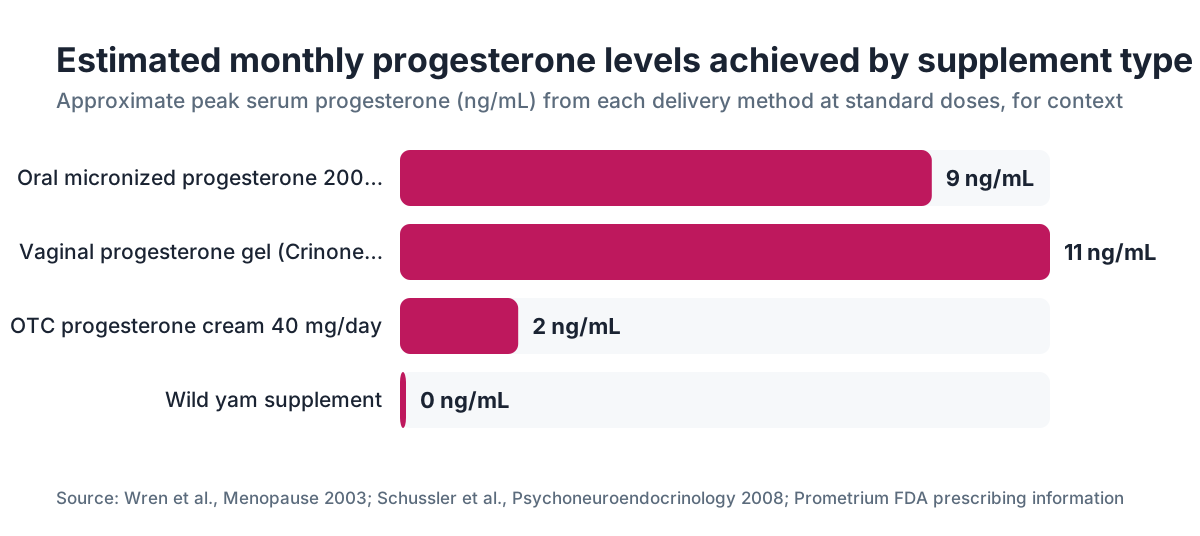
OTC creams sit in a genuinely difficult regulatory space. They're marketed as cosmetics or dietary supplements, which means the FDA doesn't require proof of efficacy before they go on shelf.[5] Some creams do contain measurable amounts of bioidentical progesterone, typically 20 mg per 1/4 teaspoon application, but skin absorption is inconsistent and the blood and tissue levels achieved are generally insufficient to oppose estrogen in the uterine lining.[6]
Do OTC progesterone creams actually work?
For symptom relief in women who don't take estrogen, maybe a little. For uterine protection in women who do take estrogen, no.
A small randomized trial published in Menopause found that transdermal progesterone cream raised serum progesterone levels but not reliably into the luteal-phase range needed to protect the endometrium.[6] The North American Menopause Society states in its position statement that "progestogen creams available without a prescription cannot be recommended for endometrial protection."[7] That's about as direct as a medical society gets.
Where some women report benefit from OTC progesterone cream is in managing hot flashes and mood shifts in perimenopause when they're not on estrogen. The evidence is thin here, but the risk profile is also lower because the stakes of under-dosing are different. If you're not on estrogen, under-dosing progesterone cream doesn't put your uterus in danger. It just may not help much.
The bigger practical problem with OTC creams is dose uncertainty. Progesterone content per jar varies widely across brands. Some studies have found products containing less than half the labeled dose, and absorption through skin depends heavily on where you apply it, skin thickness, temperature, and even what else is on your skin. You can't reliably titrate something that unpredictable.
If you're using an OTC progesterone cream and feel better, that experience is real. But if you're also on estrogen therapy, please have a conversation with a prescriber about whether that cream is actually protecting your uterus. The answer is almost certainly that it isn't.
Does wild yam supplement contain progesterone?
No. This is one of the most persistent myths in the supplement space.
Wild yam (Dioscorea villosa) contains a compound called diosgenin, a plant steroid that chemists can convert into progesterone in a laboratory. Your body cannot perform that conversion. There is no enzyme in human physiology that turns diosgenin into progesterone after you swallow or rub on a wild yam product.[8]
The confusion persists partly because the pharmaceutical industry does use diosgenin as a starting material to synthesize progesterone in the lab, and some marketing has leaned into that connection without being honest about the biology. Telling someone that wild yam is "a natural source of progesterone" is technically true in the same sense that crude oil is "a natural source of plastic."
If a wild yam product happens to also have added synthetic or bioidentical progesterone, the label should say so. Some OTC creams combine wild yam extract with actual progesterone; read ingredient lists carefully. If the label says only "wild yam extract" or "diosgenin," the product will not raise your progesterone levels at any dose.
Who actually needs a progesterone supplement?
The clearest indication is having a uterus and taking systemic estrogen therapy. This isn't optional. Unopposed estrogen causes endometrial hyperplasia (abnormal thickening of the uterine lining), which can progress to endometrial cancer. The risk is not theoretical: the Women's Health Initiative showed that conjugated estrogen alone in women with a uterus raised endometrial cancer risk.[2] Adding adequate progestogen eliminates that excess risk.
Women who have had a hysterectomy generally don't need progesterone for uterine protection, though some choose it for sleep or mood reasons.
Perimenopausal women with heavy or irregular bleeding sometimes benefit from progesterone to regulate cycles. Oral micronized progesterone 200 mg taken for 12 days of the cycle is one standard approach. The Endocrine Society's clinical practice guidelines for menopause management include this as an evidence-based option.[9]
Women trying to conceive who have luteal phase deficiency (low progesterone in the second half of the cycle) often need progesterone support. This is squarely in fertility medicine territory and almost always involves a prescription form.
The one group for whom the benefit is more ambiguous is women in early perimenopause with symptoms like anxiety, poor sleep, or mood changes who aren't on estrogen and don't have documented low progesterone. Some integrative practitioners prescribe low-dose progesterone in this context, and there is biological plausibility (progesterone metabolites act on GABA receptors, producing calming effects). But the evidence from randomized trials is limited, and this remains a clinical judgment call rather than a standard recommendation.[3]
What dose of progesterone do you actually need?
Dose depends almost entirely on why you're taking progesterone.
For uterine protection with continuous combined hormone therapy, the standard oral micronized progesterone dose is 100 mg daily taken at bedtime. For sequential (cyclic) regimens, 200 mg per day for 12 to 14 days each month is the typical protocol. These doses come from FDA prescribing information for Prometrium and are consistent with NAMS guidance.[7]
For sleep as the primary goal in menopausal women, some clinicians use 300 mg at night, though the FDA-approved dose stays at 200 mg for non-pregnant women. The sedative effect is dose-dependent and comes primarily from allopregnanolone, a neurosteroid metabolite of progesterone that potentiates GABA-A receptors.[3]
For luteal phase support in fertility treatment, vaginal progesterone gel (Crinone 8%) or suppositories (Endometrin 100 mg twice daily) are typical starting points.
For perimenopausal cycle regulation in women not on systemic estrogen, 200 mg orally for days 14 to 26 of the cycle is a common approach.
OTC creams typically deliver around 20 mg per application, applied twice daily. Compare that to 100 to 200 mg in a standard oral prescription dose. The bioavailability difference between oral and transdermal routes makes that comparison even more unfavorable for the cream.
What are the side effects of progesterone supplements?
Oral micronized progesterone's most common side effect is also, for many women, its most useful feature: drowsiness. Take it at night and it's a sleep aid. Take it during the day and it's a problem.[7]
Other common side effects include breast tenderness, bloating, mood changes (some women feel calmer, some feel low or irritable), headache, and vaginal discharge with vaginal forms. These track closely with the progesterone levels in your second half of the cycle, which makes sense because that's what you're replicating.
Prometrium contains peanut oil. If you have a peanut allergy, you cannot take it. Compounded progesterone in a different base is the standard workaround.
Synthetic progestins (medroxyprogesterone acetate, norethindrone, levonorgestrel) differ meaningfully from micronized progesterone in side effect profile. They're more likely to cause mood-related side effects, have more androgenic activity (which can affect cholesterol and libido), and the WHI data associated them with higher cardiovascular and breast cancer risk than oral micronized progesterone showed in observational data.[4] When people say "progestin" caused problems in the WHI, they're mostly talking about medroxyprogesterone acetate, not bioidentical progesterone.
The risk most worth knowing about: progesterone can mask early pregnancy spotting and should be used with caution in women who might be pregnant unless specifically prescribed for luteal support. It also shouldn't be used in women with undiagnosed vaginal bleeding, liver disease, or a history of blood clots from prior progestogen use, though the clot risk with oral micronized progesterone appears lower than with synthetic progestins.
Can progesterone supplements help with sleep, mood, and anxiety?
This is where progesterone's pharmacology gets genuinely interesting.
Progesterone is metabolized in the brain into allopregnanolone, a potent positive modulator of GABA-A receptors, the same receptor target as benzodiazepines and alcohol. This isn't theoretical. It's the mechanism behind brexanolone (Zulresso), an FDA-approved IV formulation of allopregnanolone for postpartum depression.[10] The biology explains why many women report that oral micronized progesterone at bedtime improves both sleep onset and sleep quality.
A randomized crossover trial by Schussler et al. found that 300 mg of oral micronized progesterone improved polysomnographic sleep measures in postmenopausal women, including slow-wave sleep.[3] That's the deep, restorative sleep stage that tends to deteriorate with age.
For mood and anxiety specifically, the picture is more complicated. Some women feel noticeably calmer on progesterone, especially in the luteal phase when levels are naturally highest. Others, particularly those with a history of PMS or PMDD, find that progesterone metabolites provoke mood symptoms rather than relieve them. This sensitivity appears to be related to GABAergic receptor subunit differences and is an active area of research.
The practical takeaway: if your main complaints are night waking or anxiety, oral progesterone at bedtime is a reasonable discussion to have with a prescriber. It's not a first-line psychiatric treatment, but it has real sedative and anxiolytic properties that are underused in clinical practice.
How is progesterone prescribed in hormone replacement therapy?
In standard hormone replacement therapy (hormone replacement therapy), progesterone's role depends on whether your uterus is intact. If it is, you need progestogen. If you've had a hysterectomy, you don't, though some practitioners offer it for quality-of-life reasons.
There are two main dosing patterns. Continuous combined therapy means taking both estrogen and progesterone every day without a break. This eventually leads to no monthly bleeding in most women, which many prefer. Sequential (cyclic) therapy means taking estrogen continuously but progesterone only for 12 to 14 days per month, usually causing a withdrawal bleed at the end of the progestogen phase. Sequential regimens are more often used in perimenopause, when some cycle regulation is still happening.
The choice between continuous and sequential depends on how far past menopause you are, your bleeding history, and personal preference. NAMS guidance suggests that continuous combined therapy is generally preferred for women more than a year past their last period, while sequential therapy fits better in early perimenopause because it's more likely to yield predictable withdrawal bleeding rather than breakthrough bleeding.[7]
For women exploring this, telehealth platforms like WomenRx can prescribe oral micronized progesterone alongside estrogen therapy after a clinical evaluation, which is particularly useful if local menopause-knowledgeable prescribers are scarce.
Progesterone can be combined with an estrogen patch (the patch delivers estrogen; you take progesterone orally or use a separate form). This combination is popular because the patch avoids first-pass liver metabolism of estrogen, and oral progesterone at night handles the uterine protection and sleep benefit simultaneously.
Is prescription bioidentical progesterone safer than synthetic progestins?
The evidence leans toward yes, with some important caveats about study design.
The E3N cohort study, a prospective French study of over 80,000 women, found that estrogen combined with oral micronized progesterone was associated with no significant increase in breast cancer risk, while estrogen combined with synthetic progestins was.[4] The Women's Health Initiative used medroxyprogesterone acetate, a synthetic progestin, and it's that combination that drove much of the breast cancer signal in the 2002 results.
The Endocrine Society's clinical practice guidelines note that "micronized progesterone may have a more favorable safety profile than synthetic progestins for endometrial protection and breast cancer risk," while acknowledging that most of this evidence is observational rather than from head-to-head RCTs.[9]
Cardiovascular risk is another area of difference. Synthetic progestins, particularly medroxyprogesterone acetate, tend to partially counteract the favorable cardiovascular effects of estrogen on lipid profiles and vasodilation. Micronized progesterone appears more neutral in this regard.
For thromboembolism (blood clots), oral estrogen combined with synthetic progestins carries meaningful risk, while the combination of transdermal estrogen plus oral micronized progesterone appears to have no significant increase in VTE risk in observational studies. The NAMS 2022 position statement on hormone therapy addresses this distinction specifically.[7]
None of this means synthetic progestins are categorically bad. Millions of women have used them safely for decades, and some formulations (like levonorgestrel-releasing IUDs) deliver progestin locally with minimal systemic exposure. But if you're weighing options, bioidentical oral micronized progesterone has the more favorable risk profile in the current evidence base.
What should you look for in a progesterone supplement (or avoid)?
If you're pursuing prescription progesterone through a menopause-knowledgeable clinician, the main decision is between brand Prometrium and a compounded form. Prometrium is the easier choice because it has consistent manufacturing standards and FDA oversight. Compounded is appropriate when you need a different dose than the available 100 mg and 200 mg capsules, when you need a peanut-free formulation, or when you need a non-oral delivery route.
For compounded progesterone, use a pharmacy accredited by PCAB or one that does PCAB-equivalent testing. Ask for a certificate of analysis showing potency testing on your specific batch. This isn't overcautious. FDA testing of compounded hormone products has repeatedly found potency variations outside acceptable ranges.[5]
If you're looking at OTC options despite the limitations above, at minimum look for products that list the actual milligram amount of USP progesterone on the label (more than "wild yam extract"). Avoid products where the only active ingredient is diosgenin or wild yam, which will do nothing for your hormone levels. Be skeptical of any OTC product making claims about "balancing hormones" or treating menopause symptoms. The FDA has sent warning letters to companies making such claims on products that haven't gone through drug approval.[5]
If you want to understand your actual progesterone levels before starting anything, serum progesterone testing on day 21 of your cycle (if you're still cycling) gives you the most useful snapshot. Saliva testing is used by some functional medicine practitioners but has significant methodological limitations and is not recommended by major endocrinology societies for clinical decision-making.[9]
The broader question of whether you actually need progesterone is best answered with a full hormone workup and a clinician who understands menopause and perimenopausal transitions rather than a trip to the supplement aisle.
How do you get a progesterone prescription and what does it cost?
Generic oral micronized progesterone (the generic for Prometrium) costs roughly $30 to $80 per month at most pharmacies with a GoodRx-type discount card, depending on dose and quantity. Brand Prometrium runs $150 to $250 per month without insurance. With insurance, cost-sharing varies widely, but generic oral progesterone is on most formularies at Tier 1 or 2.[11]
Compounded progesterone pricing depends on the pharmacy and formulation. A 30-day supply of compounded oral progesterone capsules typically runs $40 to $90 at a compounding pharmacy, though this varies considerably by region and formulation complexity.
Getting a prescription requires a prescribing clinician, which means a physician, nurse practitioner, or physician assistant licensed in your state. OB-GYNs and internists are the traditional route. Menopause Society-certified practitioners (formerly NAMS-certified menopause practitioners) often have the most specific training; you can find one at the Menopause Society's provider directory.[7]
Telehealth has meaningfully expanded access. Platforms focused on women's hormones can often evaluate you, review labs, and prescribe within a week, which matters if you live somewhere without a menopause-knowledgeable clinician nearby. WomenRx offers this kind of evaluation for hormone therapy including progesterone prescriptions, where appropriate after clinical assessment.
Insurance coverage for hormone therapy prescriptions has improved but remains inconsistent. Many plans cover FDA-approved progesterone under the ACA's preventive care provisions when prescribed for menopause management, but coverage for compounded hormones is much spottier. Call your pharmacy and run your specific NDC number through your insurance before assuming what you'll pay.
Frequently asked questions
Can I take an OTC progesterone supplement instead of a prescription?
For uterine protection while on estrogen therapy, no. OTC progesterone creams don't consistently deliver enough hormone to prevent endometrial hyperplasia. NAMS specifically states OTC progestogen creams cannot be recommended for endometrial protection. For symptom relief in women not on estrogen, some women try OTC creams, but evidence of benefit is limited and doses are unreliable.
How long does it take for progesterone to work?
The sleep-promoting effects of oral micronized progesterone often show up within one to two weeks. For uterine protection, the effect on the endometrial lining builds over the first month. For cycle regulation in perimenopause, most women see changes within one to two cycles. Symptom improvement for hot flashes or mood may take four to eight weeks of consistent use, as with most hormone therapy.
Can progesterone supplements cause weight gain?
Progesterone itself tends to have a relatively neutral effect on weight. Some women notice bloating or fluid retention, particularly in the first month. Synthetic progestins, especially medroxyprogesterone acetate, have more frequently been associated with appetite changes and weight gain in clinical trials than oral micronized progesterone. If weight is a concern alongside hormone management, discuss this with your prescriber.
Do I need progesterone if I've had a hysterectomy?
Generally no, for uterine protection purposes. Without a uterus there's no endometrial lining to protect. However, some women who've had a hysterectomy choose progesterone for sleep, mood, or other quality-of-life reasons, which is a legitimate clinical conversation. This doesn't apply to women who had an endometrial ablation; if the uterus is still present, even after ablation, progesterone is still typically recommended with estrogen.
Can I use progesterone cream while on an estrogen patch?
You can, but it likely won't protect your uterine lining adequately. The estrogen patch delivers consistent, measurable estrogen. To balance that with progestogen protection, you need a form of progesterone with reliable, sufficient absorption. Oral micronized progesterone at 100 mg nightly is the standard companion to transdermal estrogen. If you use a cream instead, discuss it with your clinician and consider getting an endometrial biopsy or regular ultrasound monitoring.
Is progesterone safe for breast cancer survivors?
This requires an individualized conversation with your oncologist. Most standard guidelines recommend against systemic hormone therapy, including progesterone, for women with hormone receptor-positive breast cancer. The data on progesterone specifically is less definitive than for estrogen, but caution is warranted. Some oncologists allow low-dose vaginal estrogen for local symptoms in certain survivors, but systemic progesterone typically requires careful risk-benefit discussion.
What is the difference between progesterone and progestin?
Progesterone is the naturally occurring hormone, produced by the ovaries and placenta. Bioidentical progesterone (like Prometrium) has the exact same molecular structure. Progestins are synthetic compounds designed to mimic progesterone's effects but have different molecular structures. Examples include medroxyprogesterone acetate (Provera), norethindrone, and levonorgestrel. Progestins bind progesterone receptors but also interact with androgen and other receptors, which changes their side effect profile.
Can progesterone help with perimenopausal heavy periods?
Yes, and this is one of its better-supported uses. Oral micronized progesterone taken for the second half of the cycle (typically days 14-26) helps regulate the endometrial lining and can reduce heavy or prolonged bleeding that's common in perimenopause when anovulatory cycles lead to estrogen dominance. A progesterone-releasing IUD (Mirena) is another option that works locally with minimal systemic hormone exposure.
What happens if you take progesterone without estrogen?
In postmenopausal women, taking progesterone alone without estrogen is generally not standard practice for menopause management, but it's done for specific purposes like sleep improvement. In perimenopausal women who still produce some estrogen, cyclic progesterone can help regulate cycles and manage symptoms. Without any estrogen to oppose, there's no uterine protection need. The main effects you'd experience are progesterone's direct effects: sedation, possible mood changes, and cycle regulation if you're still cycling.
Can you buy progesterone supplements over the counter?
You can buy OTC products labeled as progesterone cream without a prescription. Some contain actual USP progesterone, typically 20 mg per application. However, these are regulated as cosmetics, not drugs, meaning no efficacy or safety review is required. They are not proven to protect the uterine lining or reliably raise hormone levels to therapeutic ranges. Prescription oral micronized progesterone requires a clinician's order.
Is progesterone the same as the morning-after pill or birth control?
No. The morning-after pill (Plan B) contains levonorgestrel, a synthetic progestin at high dose that prevents ovulation or implantation. Combined birth control pills use synthetic estrogen plus a progestin. Bioidentical progesterone as used in hormone therapy or fertility treatment is a different molecule used in a different clinical context. Progesterone supplements as discussed here are not a contraceptive method.
How do I know if my progesterone levels are low?
A serum progesterone test on day 21 of your cycle (in a 28-day cycle) gives the clearest picture of whether you ovulated and what your luteal phase levels look like. A result below 3 ng/mL on day 21 generally suggests you didn't ovulate or have luteal phase deficiency. In postmenopausal women, progesterone is expected to be very low (less than 0.1 to 0.2 ng/mL) and testing it is less clinically informative than symptom evaluation.
Does progesterone cream absorb through the skin well enough to matter?
Skin absorption of progesterone from cream does occur, but the resulting blood levels are generally below what's needed for uterine protection or reliable symptom management. Studies show wide individual variation in transdermal absorption, and repeated application can lead to accumulation in fat tissue that doesn't reflect serum or tissue levels accurately. For most therapeutic purposes, oral or vaginal routes are more reliable.
Can a progesterone supplement help me get pregnant?
Prescription progesterone is a cornerstone of fertility treatment for luteal phase support after IVF embryo transfer and for women with documented luteal phase deficiency. It's not a general fertility booster for healthy cycles. OTC progesterone creams are not appropriate for this use because dose reliability is too low. If you're trying to conceive and suspect low progesterone, work with a reproductive endocrinologist rather than starting an OTC product.
Sources
- NAMS (North American Menopause Society), The Menopause Society 2023 Position Statement on Hormone Therapy
- NIH National Cancer Institute, Women's Health Initiative hormone therapy trials overview
- Schussler P et al., 'Progesterone reduces wakefulness in sleep EEG and has no effect on cognition in healthy postmenopausal women,' Psychoneuroendocrinology, 2008
- Fournier A et al., 'Unequal risks for breast cancer associated with different hormone replacement therapies: results from the E3N cohort study,' Breast Cancer Research and Treatment, 2008
- U.S. Food and Drug Administration, Compounding and Compounded Hormone Products information
- Wren BG et al., 'Transdermal progesterone and its effect on vasomotor symptoms, blood lipid levels, bone metabolic markers, moods, and quality of life for postmenopausal women,' Menopause, 2003
- The Menopause Society, 2022 Hormone Therapy Position Statement
- Endocrine Society, Patient Resources on Menopause and Hormone Therapy
- Endocrine Society, 'Treatment of Symptoms of the Menopause: An Endocrine Society Clinical Practice Guideline,' JCEM 2015
- U.S. Food and Drug Administration, brexanolone (Zulresso) approval information
- GoodRx, Progesterone (micronized) pricing data