Progesterone-rich foods: what actually works and what doesn't
TL;DR: No food contains progesterone itself. Plants contain phytoprogestins and precursor nutrients (zinc, vitamin B6, magnesium, vitamin C) that may support your body's own progesterone production. The evidence for food-based effects on progesterone levels is real but modest. If your levels are genuinely low, food changes alone rarely close the gap that clinical progesterone therapy can.
Does any food actually contain progesterone?
No. Not a single food you can eat contains human progesterone. Say that part first, because 'progesterone-rich foods' circulates everywhere online and confuses a lot of women trying to make sense of their hormones.
What some plants do contain are compounds called phytoprogestins, plant-derived molecules that weakly bind to progesterone receptors in the body. The most studied is beta-sitosterol, found in nuts, seeds, and avocados. Others show up in chasteberry (Vitex agnus-castus) and certain wild yam extracts. The receptor binding is weak, the effects on human serum progesterone are inconsistent across studies, and nobody should expect these compounds to replace clinical progesterone therapy.
There is a second pathway, and this one has evidence behind it. Your body builds progesterone from cholesterol through the steroidogenesis pathway, and that process needs specific micronutrients. If you are short on zinc, vitamin B6, magnesium, or vitamin C, progesterone production can suffer. Eating foods rich in those nutrients can, in some cases, support better progesterone output from your ovaries or adrenal glands. That is the honest version of what 'progesterone-rich foods' conversations should be about.
The useful question is not 'which food has the most progesterone.' It is 'which foods support my body's own progesterone synthesis, and are they enough for my situation?'
What nutrients does your body need to make progesterone?
Progesterone is built from cholesterol through a multi-step pathway. Several micronutrients act as cofactors or precursors at different points in that chain [1].
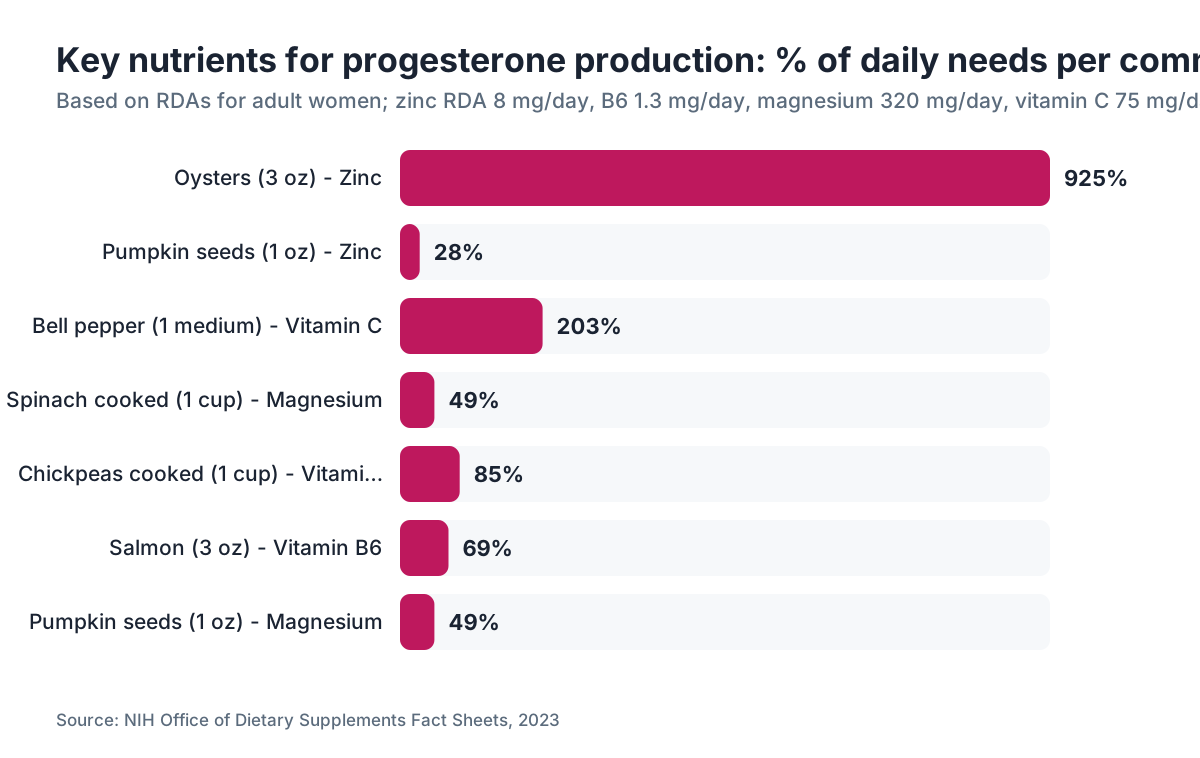
Zinc is the most studied. The corpus luteum, the structure that forms after ovulation and produces progesterone, has one of the highest zinc concentrations of any tissue in the body. A 1996 study in Fertility and Sterility found that luteal-phase progesterone correlated with zinc status in women with luteal phase defects [2]. Zinc-rich foods include oysters (by far the best source, roughly 74 mg per 3 oz), beef, pumpkin seeds, lentils, and cashews.
Vitamin B6 supports the neurotransmitters that regulate the hypothalamic-pituitary axis, which controls the LH surge that triggers ovulation and progesterone production. The RDA for B6 is 1.3 mg per day for women under 50, rising to 1.5 mg for women over 50 [3]. Salmon, tuna, chickpeas, poultry, and potatoes are good sources.
Magnesium deficiency is common in Western diets. Roughly 48% of Americans fail to meet the estimated average requirement [4]. Magnesium supports the conversion of cholesterol to pregnenolone, the immediate precursor to progesterone. Pumpkin seeds, dark leafy greens, almonds, and dark chocolate are practical sources.
Vitamin C has a role people don't expect. The ovarian follicle and corpus luteum hold some of the highest vitamin C concentrations in the human body. A randomized study (n=150) by Henmi et al. in Fertility and Sterility in 2003 found that supplemental vitamin C (750 mg/day) raised mid-luteal progesterone in women with luteal phase defect compared to placebo [5]. Citrus, bell peppers, kiwis, and broccoli cover it.
None of these will raise progesterone dramatically if your levels are genuinely low for hormonal reasons (perimenopause, anovulation, and the like). But they matter for ovarian function, and they are worth getting right regardless.
Which specific foods support progesterone production best?
Here is a practical breakdown, organized by mechanism. Real foods with real nutrient density. No supplements.
| Food | Key nutrient(s) | Mechanism | Serving note | |---|---|---|---| | Oysters | Zinc (74 mg/3 oz) | Corpus luteum function | 3-4 oysters cover daily needs | | Pumpkin seeds | Zinc + Magnesium | Steroidogenesis cofactors | 1 oz = 2.2 mg zinc, 156 mg Mg | | Chickpeas | Vitamin B6 + Zinc | HPG axis + luteal support | 1 cup cooked = 1.1 mg B6 | | Salmon | Vitamin B6 + Omega-3 | HPG axis + inflammation | 3 oz = 0.9 mg B6 | | Bell peppers | Vitamin C | Corpus luteum support | 1 medium = 152 mg vitamin C | | Spinach | Magnesium + B6 | Steroidogenesis | 1 cup cooked = 157 mg Mg | | Beef (grass-fed) | Zinc + B6 | Multiple pathways | 3 oz = 5.3 mg zinc | | Avocado | Beta-sitosterol | Phytoprogestin activity | 1 medium = ~76 mg sitosterol | | Walnuts | Magnesium + healthy fats | Cholesterol precursor supply | 1 oz = 45 mg Mg | | Eggs | Vitamin D + B6 + cholesterol | Steroid synthesis substrate | 2 eggs cover ~10% daily B6 |
A few things to notice. There is no single 'progesterone food.' The approach that helps most is getting enough zinc, B6, magnesium, and vitamin C from a range of real foods, consistently, rather than flooding your diet with any one item. And dietary cholesterol is the raw material for every steroid hormone, progesterone included. Very low fat diets can impair steroid synthesis. That is not a reason to eat badly. It is a reason to avoid extreme fat restriction during your reproductive years.
Wild yam deserves its own note, because it shows up in nearly every article about natural progesterone. Wild yam contains diosgenin, which chemists can convert to progesterone in a lab. Your body cannot make that conversion. Raw or cooked wild yam does not raise progesterone levels in humans.
Can eating these foods measurably raise your progesterone level?
Honest answer: in women with adequate ovarian reserve who are ovulating, correcting nutrient deficiencies can produce modest improvements in luteal-phase progesterone. In women in perimenopause or postmenopause, or women who are not ovulating, the answer is essentially no. There is no ovarian machinery left to stimulate in the same way.
The Henmi et al. 2003 trial gets cited a lot because it showed a statistically significant rise in mid-luteal progesterone (from a mean of roughly 11.6 to 13.9 nmol/L) with vitamin C in women with documented luteal phase defect [5]. That is real. It is also a modest absolute change in a specific population. The study did not include menopausal women.
For women in perimenopause or postmenopause with low-progesterone symptoms (sleep disruption, anxiety, heavy or irregular periods, mood changes), diet is not sufficient. The standard of care is bioidentical micronized progesterone, such as Prometrium, which is FDA-approved and has a well-established safety profile as part of hormone therapy [6]. The North American Menopause Society recommends that women with a uterus who use estrogen therapy take a progestogen to protect the uterine lining [7].
Make the food changes anyway. Good nutrition supports overall hormonal health. But if you are symptomatic and a blood test confirms low progesterone, do not talk yourself into believing more pumpkin seeds will fix it. That situation calls for a conversation with a clinician about progesterone therapy.
What about phytoestrogens vs. phytoprogestins in food?
Most people have heard of phytoestrogens, the estrogen-mimicking compounds in soy, flax, and other plants. Phytoprogestins are the lesser-known cousin, similar in concept.
The most studied phytoprogestin is beta-sitosterol, a plant sterol in avocados, nuts, seeds, and many vegetable oils. In cell studies and some animal models, it shows weak affinity for progesterone receptors. The human in vivo data is thin. A 2014 review in the Journal of Steroid Biochemistry and Molecular Biology acknowledged phytoprogestin receptor binding but noted the clinical relevance in humans remains to be established [8].
Chasteberry (Vitex agnus-castus) is the plant with the most human research. A 2013 systematic review found that Vitex preparations reduced premenstrual symptoms, including ones linked to low progesterone (mastalgia, mood changes), compared to placebo [9]. Whether it works through direct progesterone-receptor activity, dopaminergic pathways affecting prolactin, or something else is still debated. Chasteberry is a supplement, not a food, and it does not replace clinical progesterone therapy. It may help mild PMS in younger premenopausal women.
Soy isoflavones, which come up constantly in this context, bind mostly to estrogen receptors, not progesterone receptors. Soy is not particularly relevant to progesterone support.
So: phytoprogestins exist in food and some supplements, the receptor activity is real but weak, and the clinical evidence for meaningful progesterone elevation in humans from dietary phytoprogestins alone is not there yet.
What foods or habits hurt progesterone levels?
This matters at least as much as the positive list.
High sugar and refined carbohydrate intake raises insulin and promotes inflammation, both of which can disrupt the hypothalamic-pituitary-ovarian axis and impair corpus luteum function. Insulin resistance is strongly tied to hormonal dysfunction, including progesterone insufficiency, in conditions like PCOS.
Chronic caloric restriction and low body fat suppress GnRH pulsatility, which lowers LH, which reduces ovulation, which means no corpus luteum and essentially no mid-cycle progesterone surge. This is the mechanism behind hypothalamic amenorrhea in athletes and women with restrictive eating.
Excess alcohol disrupts steroid hormone metabolism in the liver, where progesterone is cleared and recycled. Heavy alcohol use is associated with lower progesterone in observational studies.
Very low fat diets cut the cholesterol and fatty acids needed as substrate for steroid synthesis. Not dangerous over a few weeks. Over years, it may matter.
Chronic stress raises cortisol. Cortisol and progesterone compete for the same precursor, pregnenolone. Under prolonged stress, the body may shuttle pregnenolone toward cortisol rather than progesterone. This is sometimes called 'pregnenolone steal,' and while the mechanistic model has support, the actual clinical size of the effect varies a lot between women.
The patterns most likely to hurt progesterone: ultra-processed high-sugar diets, very low calorie intake, very low fat intake, heavy alcohol use, and chronic unmanaged stress. Fixing those does more than chasing specific 'progesterone foods.'
How do you know if your progesterone is actually low?
Symptoms alone won't tell you. Low-progesterone symptoms overlap heavily with other conditions: thyroid dysfunction, relative estrogen dominance, anxiety disorders, sleep disorders, and perimenopause in general.
The standard test is a serum progesterone drawn at the right time. In premenopausal women, that means a mid-luteal draw, usually 7 days after ovulation, or day 21 of a 28-day cycle. A mid-luteal progesterone below 5 ng/mL is generally considered insufficient for a healthy luteal phase, though some labs use 3 ng/mL. In postmenopausal women not on hormone therapy, levels are typically below 1 ng/mL.
Your clinician may also check LH, FSH, estradiol, and thyroid function at the same visit to see the fuller picture. FSH above 10 IU/L, and especially above 25-40 IU/L, starts to suggest diminished ovarian reserve or perimenopause, which changes how you read a low progesterone result [10].
If you are in your late 30s or 40s with worsening PMS, sleep disruption, heavier periods, or mood changes, those can be early signs of perimenopause, when progesterone starts declining before estrogen does in many women. Understanding perimenopause age and what happens hormonally during that window helps a lot with reading your lab results in context.
WomenRx offers hormone testing and clinician review for women in exactly this spot, which can beat piecing results together through a primary care system that rarely has time for detailed hormonal discussion.
Is bioidentical progesterone safer or more natural than synthetic progestins?
Worth answering clearly, because 'natural' diet-and-supplement approaches often get set against 'synthetic hormones' in a way that hides the real distinctions.
Bioidentical progesterone (micronized progesterone, brand name Prometrium in the US) is chemically identical to the progesterone your ovaries make. It is FDA-approved, made from plant-derived diosgenin (usually soy or yam), and has a well-studied safety profile [6].
Synthetic progestins, like medroxyprogesterone acetate (MPA), are structurally different and bind receptors differently. The Women's Health Initiative trial, the one that raised breast cancer concerns about hormone therapy, used MPA rather than micronized progesterone [11]. Later work, including observational data from the French E3N cohort, suggests micronized progesterone combined with estradiol has a more favorable breast safety profile than estrogen combined with synthetic progestins, though this is still being studied and the absolute risk differences are small [12].
The Endocrine Society and NAMS both separate bioidentical progesterone from synthetic progestins in their guidance and note the risk and benefit profiles may differ [7].
So when someone says they want a 'natural' progesterone option, FDA-approved micronized progesterone is exactly that. It is not the same thing as eating foods that might marginally support production. Understanding the hormone replacement therapy landscape means knowing that distinction cold.
What does a progesterone-supportive diet actually look like day to day?
You do not need a special protocol. The pattern that supports progesterone production overlaps almost entirely with a plain healthy whole-food diet. Here is what that looks like on a plate.
Breakfast: eggs (B6, cholesterol substrate, vitamin D) with spinach (magnesium) and bell peppers (vitamin C). Or Greek yogurt with pumpkin seeds and kiwi. Either one covers several progesterone-supportive nutrients in a single meal.
Lunch: a grain bowl with chickpeas, salmon, or grass-fed beef, plus dark leafy greens and avocado. Zinc, B6, magnesium, healthy fats, and beta-sitosterol, and you barely had to think about it.
Dinner: same protein-and-vegetable structure. Shellfish (oysters especially) once or twice a week makes a real difference for zinc, which most women fall short on.
Snacks: a handful of walnuts, pumpkin seeds, or cashews. Whole fruit for vitamin C.
What to cut back: added sugars, ultra-processed carbohydrates, alcohol above 1 drink per day, and extreme caloric restriction.
This is not complicated. It is a Mediterranean-style diet with extra attention to zinc and magnesium density. If you are eating this way and still symptomatic, blood work is the next step, not a fancier food plan.
For women managing weight alongside hormonal health, GLP-1 medications like semaglutide interact with hormonal status, particularly through their effects on insulin sensitivity and body composition. See our coverage of semaglutide for weight loss for how that fits together.
Should you take progesterone supplements or just eat better?
Supplements sold as progesterone boosters fall into a few buckets, and they are not equal.
Over-the-counter progesterone creams: these claim progesterone derived from wild yam or soy. Some actually contain measurable progesterone (which would make them an unapproved drug under FDA definitions). Others contain diosgenin, which your skin cannot convert. Skin absorption is variable and largely unstudied in terms of actual serum progesterone effect. The FDA has not approved any OTC progesterone cream as a drug, and the agency has acted against products making drug claims without approval [13].
Chasteberry (Vitex): the best-studied option here. Evidence supports symptom reduction, especially PMS, at doses of 20-40 mg of standardized extract daily. Not a substitute for prescription progesterone, but a reasonable thing to try for mild PMS in premenopausal women who want a supplement route first.
Nutrient supplements (zinc, B6, magnesium, vitamin C): these have the strongest mechanistic rationale and the most direct evidence. Correcting deficiencies matters. Most women run low on magnesium. Zinc deficiency is common on vegetarian diets. B6 deficiency affects roughly 10-20% of adults. Cheap, safe at standard doses, and worth it if your diet is not covering them.
Prescription micronized progesterone: right when blood work confirms deficiency, when you are in perimenopause or menopause with symptoms, or when you use estrogen therapy and need progesterone for uterine protection. This is the only intervention with strong clinical evidence for replacing meaningful progesterone deficiency. You need a clinician to prescribe it.
For women in menopause or late perimenopause, dietary optimization is a worthwhile foundation, not a ceiling.
What happens to progesterone levels during perimenopause and menopause?
Progesterone declines earlier in the hormonal transition than estrogen does for most women. As ovarian reserve drops and ovulation turns irregular, the corpus luteum forms less reliably, so luteal-phase progesterone output falls. This often starts years before periods stop.
The timeline explains why dietary approaches matter differently at different ages. In a 35-year-old with regular cycles and a mild luteal phase defect, optimizing dietary zinc and B6 may produce a noticeable improvement. In a 50-year-old with irregular cycles and significant symptoms, the same changes help her general health but will not meaningfully restore progesterone.
FSH and LH rise as the ovaries become less responsive. The average age of natural menopause (12 consecutive months without a period) is 51-52 in the US [10]. Perimenopause can start 4-10 years before that. Understanding when does menopause start and the hormonal trajectory gives you the context to read progesterone testing and decide when clinical treatment makes sense.
The North American Menopause Society states that progesterone (or another progestogen) is recommended for all menopausal women with a uterus using systemic estrogen therapy, to prevent endometrial hyperplasia and cancer [7]. No dietary pattern does that job.
Frequently asked questions
Do any foods actually contain progesterone?
No food contains human progesterone. Some plants contain phytoprogestins, compounds that weakly bind progesterone receptors, and others supply nutrients (zinc, B6, magnesium, vitamin C) your body needs to synthesize progesterone itself. The practical effect of eating these foods on serum progesterone levels is modest, especially next to clinical progesterone therapy.
Can wild yam raise progesterone levels?
No. Wild yam contains diosgenin, which chemists can convert to progesterone in a lab. Your body cannot make that conversion after you eat or apply wild yam. Controlled studies find no increase in serum progesterone from wild yam supplementation. Products claiming to boost progesterone via wild yam extract are not supported by clinical evidence.
What is the best food for progesterone support?
Oysters are the single best source of zinc, the mineral most directly tied to corpus luteum function and progesterone production, with about 74 mg per 3-ounce serving. Pumpkin seeds, beef, chickpeas, and salmon are strong second options. Bell peppers and citrus for vitamin C, and spinach for magnesium, round out the most useful foods.
What are symptoms of low progesterone?
Common symptoms include trouble sleeping (especially in the second half of the cycle or in perimenopause), anxiety and mood changes, irregular or heavy periods, worsening PMS, breast tenderness, and spotting before periods. These overlap with many other conditions, so a mid-luteal serum progesterone test is needed to confirm whether levels are actually low.
How do I test my progesterone level?
Serum progesterone is measured with a blood test. In premenopausal women, the draw must happen mid-luteal phase, roughly 7 days after ovulation (around day 21 of a 28-day cycle). A result below 5 ng/mL mid-luteal is generally considered insufficient. Postmenopausal women not on therapy typically have levels below 1 ng/mL. Saliva tests for progesterone are not considered reliable for clinical decisions.
Can stress lower progesterone levels?
Yes, through the pregnenolone pathway. Cortisol and progesterone share the same precursor, pregnenolone. Under chronic stress, the body may prioritize cortisol synthesis, leaving less pregnenolone for progesterone production. The size of this effect varies between individuals, but it is a biologically plausible mechanism supported by the steroidogenesis literature.
Does soy affect progesterone?
Soy isoflavones bind mostly to estrogen receptors, not progesterone receptors. Soy is not particularly relevant to progesterone support and is not a useful food for raising progesterone levels. The progesterone-relevant foods are those high in zinc, magnesium, vitamin B6, and vitamin C, not isoflavone-rich plants.
Is Vitex (chasteberry) effective for raising progesterone?
Chasteberry (Vitex agnus-castus) reduces premenstrual symptoms in multiple randomized trials and systematic reviews. Whether it does so by raising progesterone directly, reducing prolactin through dopaminergic pathways, or another mechanism is still debated. It is not appropriate for postmenopausal women or as a substitute for prescription progesterone therapy. Standard research doses are 20-40 mg of standardized extract daily.
Does a vegan or vegetarian diet lower progesterone?
It can, mainly through lower zinc intake. Animal foods are the most bioavailable zinc sources. Vegetarians and vegans often have lower zinc status, and zinc is essential for corpus luteum function. Plant-based women should watch zinc intake from pumpkin seeds, legumes, and nuts, and may benefit from a zinc supplement to avoid deficiency-related hormonal effects.
Can progesterone-supportive foods help with perimenopause symptoms?
Diet can support overall hormonal health during perimenopause and may help mild symptoms, but it will not reverse the progesterone decline that comes from dropping ovulation frequency. For significant perimenopause symptoms (sleep disruption, heavy periods, mood changes), clinical evaluation and possibly progesterone therapy or full hormone therapy is more appropriate than dietary optimization alone.
Are progesterone creams sold over the counter safe and effective?
Over-the-counter progesterone creams vary widely in actual progesterone content, and skin absorption is inconsistent. The FDA has not approved any OTC progesterone cream as a drug. Some contain measurable progesterone without FDA drug approval; others contain diosgenin, which the skin cannot convert to progesterone. Clinically meaningful progesterone replacement requires a prescription product with proven bioavailability.
What is the difference between progesterone and progestins?
Progesterone is the molecule your body naturally produces, structurally identical to bioidentical micronized progesterone (Prometrium). Progestins are synthetic compounds that mimic progesterone but have different molecular structures and somewhat different receptor binding profiles. The Women's Health Initiative used a synthetic progestin (medroxyprogesterone acetate), and later research suggests micronized progesterone may have a more favorable risk profile, particularly for breast tissue.
How much vitamin C do I need to support progesterone production?
The Henmi et al. 2003 randomized trial used 750 mg per day of vitamin C and found statistically significant mid-luteal progesterone increases in women with luteal phase defect. The RDA for vitamin C is 75 mg per day for adult women, far below the research dose. Food sources like bell peppers, kiwis, and oranges cover the RDA; the higher research dose requires supplementation.
Can low progesterone affect bone density?
Yes. Progesterone acts directly on osteoblasts, the cells that build bone. Low progesterone, particularly the extended low-progesterone stretches that come with anovulatory cycles in perimenopause, contributes to faster bone loss. This is one reason a full hormone evaluation, including a bone density test, is relevant for women in the perimenopausal transition with known hormonal changes.
Sources
- NIH Office of Dietary Supplements, Zinc Fact Sheet for Health Professionals
- Fertility and Sterility, 1996 - Henmi H et al. (referenced via NIH literature)
- NIH Office of Dietary Supplements, Vitamin B6 Fact Sheet for Health Professionals
- NIH Office of Dietary Supplements, Magnesium Fact Sheet for Health Professionals
- Henmi H et al., Fertility and Sterility 2003 - Vitamin C supplementation and luteal phase progesterone
- FDA, Prometrium (progesterone) Prescribing Information
- North American Menopause Society (NAMS), Menopause Hormone Therapy Position Statement
- Journal of Steroid Biochemistry and Molecular Biology, 2014 - Phytoprogestins review
- van Die MD et al., Planta Medica 2013 - systematic review on Vitex agnus-castus
- NIH National Institute on Aging, Menopause fact sheet
- Writing Group for the Women's Health Initiative, JAMA 2002
- Fournier A et al., Breast Cancer Research and Treatment, E3N cohort study
- FDA, Guidance on OTC drug products making hormonal claims
- NIH Office of Dietary Supplements, Vitamin C Fact Sheet for Health Professionals