Progesterone pills: what every woman should know before starting
TL;DR: Progesterone pills fall into two distinct categories: oral micronized progesterone (Prometrium, 100 to 200 mg) used in menopausal hormone therapy, and progestin-only pills (mini-pills like norethindrone) used for contraception. They work through different mechanisms, carry different risk profiles, and are not interchangeable. The right choice depends entirely on why you need progesterone in the first place.
What exactly is a progesterone pill, and why does the name matter?
The phrase "progesterone pill" is used loosely enough to cause real confusion in doctors' offices and online forums. Two completely different drug classes share the name.
Oral micronized progesterone is bioidentical progesterone, chemically identical to what your ovaries make. The FDA-approved brand is Prometrium. It is used in menopausal hormone therapy (MHT) to protect the uterine lining from estrogen-driven overgrowth, and sometimes off-label for perimenopause sleep and mood symptoms. The word "micronized" just means the progesterone particles are milled small enough to survive digestion; without that processing, oral progesterone is almost entirely broken down before it reaches the bloodstream [1].
Progestin-only pills (POPs), often called the mini-pill, contain synthetic progestins such as norethindrone (0.35 mg, the older US standard) or drospirenone (4 mg, the newer Slynd formulation). These are contraceptives. They work mainly by thickening cervical mucus so sperm cannot pass, and in some cycles they suppress ovulation. They do not provide the same progesterone signal as bioidentical progesterone and have a different side-effect and risk profile [2].
Getting these two confused can lead a perimenopausal woman to think she is on "hormone therapy" when she is actually on a contraceptive with no systemic estrogen, or lead a woman needing birth control to take a menopause medication that offers essentially no contraceptive protection. So before anything else: know which pill you are discussing.
How does oral micronized progesterone work in the body?
After you swallow a Prometrium capsule, the progesterone is absorbed in the small intestine and travels through the liver before reaching circulation. That first-pass metabolism converts a significant fraction into neurosteroid metabolites, particularly allopregnanolone, which binds GABA-A receptors in the brain. That is why oral micronized progesterone has a sedating effect that vaginal or transdermal routes do not share [3].
In the uterus, progesterone opposes estrogen by reducing the number of estrogen receptors in the endometrium and triggering secretory changes that prevent uncontrolled cell growth. This is the core reason any woman with a uterus who takes systemic estrogen for menopause also needs progestogen protection. The risk of endometrial hyperplasia and cancer rises sharply with unopposed estrogen; adding progesterone or a progestin brings that risk back to baseline [4].
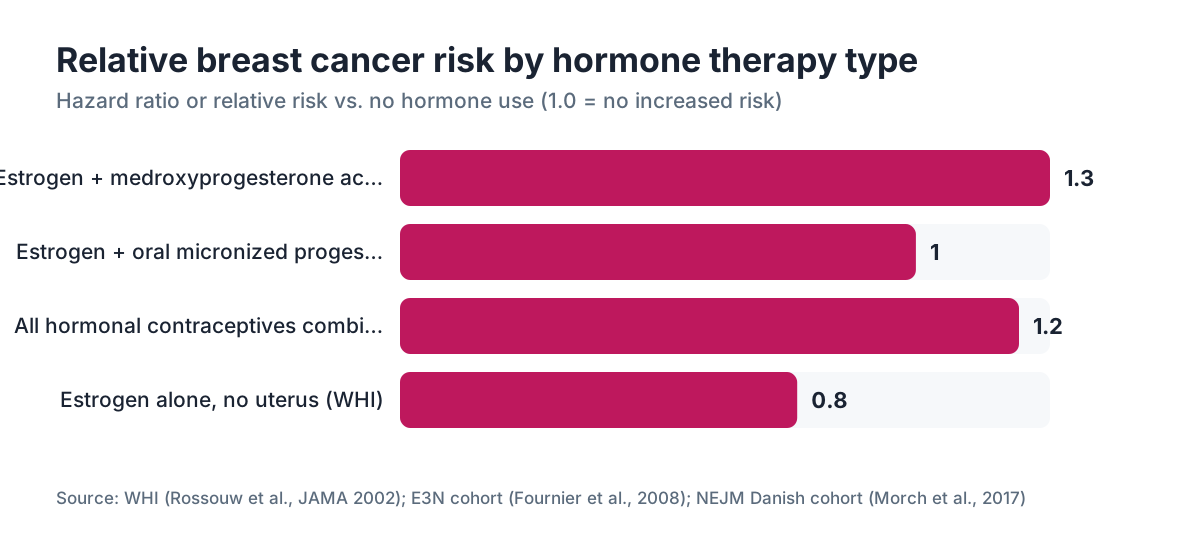
Progesterone also has effects on breast tissue, bone, mood, sleep, and cardiovascular function, though the clinical significance of each varies and the data are often debated. The short version from the Women's Health Initiative: different progestogens are not equivalent in their risk or benefit signals, and oral micronized progesterone appears to carry a more favorable breast and cardiovascular profile than medroxyprogesterone acetate (MPA), the synthetic progestin used in the original WHI [5].
For a deeper look at what progesterone does systemically, the progesterone explainer on this site goes through the receptor biology in more detail.
Who actually needs oral micronized progesterone?
The straightforward answer: any woman with a uterus who is taking systemic estrogen therapy for menopause. That is not optional. It is a clinical standard endorsed by the North American Menopause Society, the Endocrine Society, and the American College of Obstetricians and Gynecologists [4][6].
Women who have had a hysterectomy do not need progesterone at all. Estrogen alone is fine for them, and adding progesterone without a uterus provides no established benefit and adds drug exposure unnecessarily.
Beyond the protective role, some clinicians prescribe oral micronized progesterone off-label in perimenopause for sleep disruption and mood instability, even before systemic estrogen is started. The evidence for this is real but limited: a 2012 randomized trial published in Menopause found that 300 mg oral micronized progesterone taken at bedtime improved sleep quality in recently postmenopausal women compared to placebo [7]. That sedating allopregnanolone mechanism is the likely explanation.
Progesterone is also used in fertility medicine to support the luteal phase during IVF cycles, though that application almost always uses vaginal gel or suppositories rather than oral pills because the vaginal route delivers more progesterone to the uterus per dose.
If you are early in the transition, the perimenopause age article walks through when symptoms typically start and why the hormonal picture is so variable in those years.
What dose of oral micronized progesterone is standard?
For endometrial protection with continuous combined hormone therapy, the standard dose is 100 mg daily taken at bedtime [1][4]. For cyclic regimens, where progesterone is taken only 12 to 14 days per month, 200 mg nightly is the typical dose because the shorter duration requires a higher daily amount to ensure adequate uterine protection.
The bedtime recommendation is not arbitrary. The sedating metabolites peak roughly two hours after ingestion, so taking it at night turns a side effect into a benefit for most women.
Food matters. Prometrium is formulated in peanut oil and should be taken with food to improve absorption and reduce nausea. Women with peanut allergies need to use a different formulation, typically compounded progesterone in a non-peanut-oil base.
Dose adjustments are sometimes made for women who experience excessive next-day sedation at 100 mg. In practice, some clinicians drop to 50 mg or switch to a vaginal route. Nobody has a perfect algorithm here; it takes some back-and-forth with your prescriber.
For the broader context of how progesterone fits into a full hormone regimen, the hormone replacement therapy article covers how estrogen and progesterone are typically combined.
How does the progestin-only pill (mini-pill) work for contraception?
Progestin-only pills work through two main mechanisms. First, they thicken cervical mucus within hours of the first dose, making it difficult for sperm to reach an egg. Second, they alter the endometrial lining. Ovulation suppression is inconsistent with older low-dose formulations like norethindrone 0.35 mg but more reliable with newer higher-dose formulations [2].
The FDA approved drospirenone 4 mg (Slynd) in 2019 specifically for use in women who cannot or prefer not to use estrogen-containing contraceptives. Unlike norethindrone, drospirenone 4 mg suppresses ovulation in most cycles, making it more similar in mechanism to combined oral contraceptives while still being estrogen-free [2].
Typical-use failure rate for the mini-pill is around 7 percent per year, comparable to combined pills with typical use. With perfect use, it is under 1 percent. The critical caveat for norethindrone 0.35 mg: you must take it within the same three-hour window every day. Miss that window and you need backup contraception for 48 hours. Slynd has a 24-hour missed-pill window, which most women find more practical [2].
The progestin-only pill is a good fit for women who are breastfeeding (estrogen can reduce milk supply), women with a history of blood clots, migraines with aura, or other contraindications to estrogen. It does not protect against STIs.
What are the real side effects of progesterone pills?
Side effects split clearly by which type you are taking.
With oral micronized progesterone, the most reported side effects are drowsiness and dizziness, both tied to the allopregnanolone metabolite. Some women experience breast tenderness, bloating, and mood changes including low mood or irritability, especially in the first one to three months. Headache shows up in clinical trials at rates of roughly 16 percent [1]. Nausea is less common but real, usually reduced by taking the capsule with food.
Less common but serious: oral micronized progesterone is contraindicated in women with known hypersensitivity to peanuts (due to the peanut oil base in Prometrium) and should be used with caution in women with liver impairment, since first-pass hepatic metabolism is a major clearance route [1].
With progestin-only pills, the most common complaint is irregular bleeding. This ranges from spotting to complete amenorrhea to unpredictable cycles. About 40 percent of women on norethindrone-based mini-pills stop using them within a year, with irregular bleeding being the top reason. Acne and headache also show up. Drospirenone-based Slynd has a slightly better bleeding profile in clinical data but is more expensive [2].
The mood question for both types: it is real, not imaginary, and it varies enormously between individuals. The best-designed studies suggest a small but measurable increase in depression risk with hormonal contraceptives as a class [8], though separating mini-pill-specific effects from the broader group is difficult in the literature.
Is progesterone-only birth control safe for women with certain health conditions?
This is where the progestin-only pill has a real advantage over combined pills for specific groups.
Women with a history of venous thromboembolism (blood clots) are generally advised to avoid estrogen-containing contraceptives. The progestin-only pill is considered a lower-risk option. The WHO Medical Eligibility Criteria for Contraceptive Use categorizes norethindrone-based POPs as a Category 2 (benefits outweigh risks) for women with a history of DVT or PE, compared to Category 4 (unacceptable risk) for combined pills in the same group [9].
For women with migraines with aura, combined pills are contraindicated due to elevated stroke risk. Progestin-only pills are Category 2 in this group as well [9].
Breastfeeding women in the first six weeks postpartum: progestin-only pills are generally considered safe for milk supply after that initial window, while combined pills are avoided until at least six months postpartum in breastfeeding women.
Women with lupus, inflammatory bowel disease, or hypertension also have nuanced guidance. For lupus specifically, the eligibility depends on whether antiphospholipid antibodies are present; women with those antibodies may still face clotting risk even on progestin-only methods.
One important note: neither type of progesterone pill is appropriate as a treatment for menopausal symptoms without also addressing estrogen levels. A progestin-only contraceptive pill will not relieve hot flashes the way hormone therapy does. These products do entirely different physiological jobs.
How do progesterone pills compare to other progestogen options?
The table below puts the main options side by side on the dimensions that matter most clinically.
| Option | Type | Main Use | Endometrial Protection | Bioidentical | Sedation | Route | |---|---|---|---|---|---|---| | Prometrium 100 to 200 mg | Oral micronized progesterone | MHT | Yes | Yes | Moderate-high | Oral | | Norethindrone 0.35 mg | Synthetic progestin | Contraception | Partial | No | Low | Oral | | Drospirenone 4 mg (Slynd) | Synthetic progestin | Contraception | Partial | No | Low | Oral | | Medroxyprogesterone acetate (Provera) | Synthetic progestin | MHT / cycle regulation | Yes | No | Low | Oral | | Levonorgestrel IUD (Mirena) | Synthetic progestin | Contraception / MHT uterine protection | Yes (local) | No | None | Intrauterine | | Vaginal progesterone gel (Crinone) | Micronized progesterone | Fertility support | Yes | Yes | Low | Vaginal |
Key takeaway from that table: medroxyprogesterone acetate (MPA) is still widely prescribed and is effective at protecting the endometrium, but the Women's Health Initiative data linked it to a higher breast cancer signal than micronized progesterone [5]. The Endocrine Society and NAMS now generally prefer oral micronized progesterone over MPA when feasible, particularly for women who are at any elevated breast risk [6].
If you use an estrogen patch and need to add progesterone, oral micronized progesterone at bedtime is the most common pairing. The estrogen patch article covers how that combination is typically structured.
What does the research say about progesterone pills and breast cancer risk?
This is the question women ask most, and the honest answer is: the risk profile depends heavily on which progestogen you use and for how long.
The original Women's Health Initiative randomized trial, published in JAMA in 2002, found that combined estrogen plus MPA (Prempro) was associated with an increased risk of breast cancer after roughly five years of use. The hazard ratio was 1.26, meaning about a 26 percent relative increase compared to placebo [5]. That finding triggered a dramatic drop in hormone therapy prescriptions that many researchers now consider an overcorrection.
Data from the French E3N cohort study and later analyses suggest that oral micronized progesterone combined with estradiol does not carry the same elevated breast risk seen with synthetic progestins, and may even be neutral compared to estrogen-only therapy [10]. The Menopause Society's 2023 position statement notes: "Available evidence supports that the risk of breast cancer with MHT depends on the type, dose, duration of use, and route of administration of the progestogen component" [6].
For progestin-only contraceptive pills, a large 2017 Danish cohort study published in the New England Journal of Medicine found a relative risk of breast cancer of 1.20 with all hormonal contraceptives combined, but the subgroup data for progestin-only pills was based on smaller numbers and the confidence intervals were wide [8].
The bottom line: oral micronized progesterone appears to be the safer progestogen for breast tissue based on current evidence. For women with a personal history of breast cancer, any hormone therapy is generally avoided and requires detailed specialist guidance.
If you are working through a menopause diagnosis and trying to weigh hormone therapy risks, this research context matters enormously for that conversation with your provider.
How are progesterone pills prescribed and what does a telehealth visit look like?
Whether you are getting a prescription for menopausal hormone therapy or a progestin-only contraceptive, the process starts with a health history and usually includes documentation of your current symptoms, menstrual status, and a baseline risk assessment for cardiovascular disease, breast cancer, and thromboembolic events.
For MHT, most prescribers want to know your uterine status (hysterectomy yes or no), your current estrogen level or FSH if the diagnosis of menopause is in question, and your complete family history for breast and cardiovascular disease. Blood pressure, BMI, and sometimes a lipid panel are part of the baseline. A mammogram within the prior one to two years is typically required before starting or continuing estrogen plus progesterone regimens.
A telehealth visit can handle most of this workup through a detailed intake questionnaire and a short video or messaging consultation. WomenRx does exactly this for hormone therapy evaluations, so women can start or adjust a progesterone-containing regimen without needing to find a brick-and-mortar menopause specialist, which is genuinely difficult in many parts of the country.
For progestin-only contraceptive pills, the evaluation is simpler. Most healthy women do not need a pelvic exam before getting a prescription, and the main screening is a blood pressure check and review of contraindications.
For context on when menopause symptoms typically begin and whether a hormone evaluation makes sense for you, the when does menopause start article is a practical starting point.
What are the most common reasons progesterone pills are stopped, and what should you do instead?
Discontinuation is common. For oral micronized progesterone in MHT, the main reasons women stop are persistent next-day sedation, mood changes particularly low mood or anxiety, and breakthrough bleeding when switching from cyclic to continuous regimens.
If sedation is the problem, some providers drop the dose to 50 mg or switch to a vaginal route. Vaginal progesterone bypasses much of the liver conversion to allopregnanolone, so the sedating effect largely disappears. The trade-off is that vaginal administration is less convenient and more expensive without good insurance coverage.
If mood changes are the issue, it is worth distinguishing whether the symptom started after beginning progesterone (suggesting drug effect) or was present before (suggesting perimenopausal mood dysregulation that the estrogen component might actually improve over time). Some women who do poorly on cyclic progesterone do better on a levonorgestrel-releasing IUD for endometrial protection, because the IUD keeps progestogen action mostly local to the uterus with lower systemic levels.
For progestin-only contraceptive pills, irregular bleeding drives most discontinuation. If you can tolerate six months of variable bleeding, patterns often stabilize. If not, an IUD or an implant may provide more predictable bleeding control with similar progestin-only hormonal exposure.
What you should not do: stop progesterone without talking to your prescriber if you are on systemic estrogen and still have a uterus. Going even a few months with unopposed estrogen carries real endometrial risk. If you cannot tolerate any progestogen formulation, the conversation shifts to whether estrogen dose reduction or a different delivery method changes the equation, or whether an IUD can serve as your endometrial protection while you go back to lower systemic progesterone.
For those exploring whether weight management medications might also be part of their picture, particularly given how metabolic changes in perimenopause affect body composition, the semaglutide for weight loss article covers the evidence for that separate conversation.
How much do progesterone pills cost, and does insurance cover them?
Cost varies significantly depending on which pill, which pharmacy, and your insurance situation.
Prometrium 100 mg (30 capsules) has a retail cash price of roughly $80 to $130 at major US pharmacies, though GoodRx and similar discount programs can bring this below $30 at some locations [1]. Generic oral micronized progesterone 100 mg is widely available and considerably cheaper than branded Prometrium at most pharmacies.
Norethindrone 0.35 mg (progestin-only contraceptive) is one of the cheapest oral contraceptives on the market. Generic norethindrone runs $10 to $25 per pack without insurance, and under the Affordable Care Act most insurance plans must cover FDA-approved contraceptive methods with no cost sharing, meaning many women pay nothing [12].
Drospirenone 4 mg (Slynd) is significantly more expensive: roughly $180 to $220 per month cash price as of recent data, with insurance coverage variable and often requiring prior authorization.
Compounded progesterone, sometimes prescribed when Prometrium is not tolerated due to peanut allergy or when a dose not available commercially is needed, typically runs $25 to $60 per month depending on the compounding pharmacy and formulation. Compounded products are not FDA-approved and do not carry the same consistency guarantees as manufactured pharmaceuticals, a real consideration.
If cost is a barrier to hormone therapy and you are paying out of pocket, generic oral micronized progesterone plus a low-dose estradiol patch is often one of the most affordable complete MHT regimens available.
Frequently asked questions
Can I take a progesterone-only pill to treat hot flashes?
No, not effectively. Progestin-only contraceptive pills like norethindrone do not contain estrogen and will not meaningfully reduce hot flashes. Oral micronized progesterone used in hormone therapy helps maintain the estrogen-progesterone balance, but the estrogen component is what primarily relieves vasomotor symptoms. Taking progesterone alone as menopause treatment is not standard practice and is unlikely to provide adequate symptom relief.
Is oral micronized progesterone the same as the mini-pill?
No, they are completely different drugs. Oral micronized progesterone (Prometrium) is bioidentical progesterone used in menopause hormone therapy to protect the uterus from estrogen's proliferative effects. The mini-pill is a synthetic progestin-based contraceptive. They share some progesterone receptor activity but have distinct metabolites, different side effect profiles, different doses, and different indications.
Do I need progesterone if I take estrogen for menopause?
Yes, if you still have your uterus. Estrogen alone stimulates the uterine lining and raises risk of endometrial hyperplasia and cancer. Adding a progestogen counteracts that. Women who have had a hysterectomy do not need progesterone with their estrogen; for them, estrogen-only therapy is standard. The North American Menopause Society is explicit on this distinction in its hormone therapy guidelines.
What is the difference between progesterone and progestin?
Progesterone is the natural hormone your ovaries produce. Progestins are synthetic compounds designed to mimic progesterone's effects at the receptor level. They are not identical in behavior: natural progesterone metabolizes into neurosteroids that affect the brain, while synthetic progestins generally do not. Their cardiovascular and breast tissue risk profiles also differ, which is why the distinction matters in clinical decisions about which to prescribe.
How long does it take for oral micronized progesterone to work?
For endometrial protection, it works from the first cycle it is taken correctly. For sleep improvement, many women notice an effect within the first week due to the sedating allopregnanolone metabolite. For mood and perimenopausal symptom stabilization, most clinical experience suggests a four-to-eight-week window before judging effectiveness. Breakthrough bleeding at the start of continuous combined therapy often settles within three to six months.
Can the progesterone-only pill cause weight gain?
The evidence is mixed and mostly weak. Large controlled studies have not shown a consistent causal link between progestin-only pills and significant weight gain. Some women report increased appetite or fluid retention, particularly in the first few months. A 2014 Cochrane review found insufficient evidence to confirm a causal effect of progestin-only contraceptives on weight. Individual responses vary, and metabolic changes in perimenopause often coincide with starting these medications, making attribution difficult.
Is it safe to take progesterone pills long-term?
For oral micronized progesterone in hormone therapy, the current consensus from NAMS and the Endocrine Society is that for healthy women under 60 who started therapy within ten years of menopause onset, the benefits generally outweigh risks. Duration beyond five to seven years requires individualized reassessment. For progestin-only contraceptives, long-term use is considered safe for most healthy women, with fertility returning quickly after stopping.
What happens when you stop taking progesterone pills?
Stopping oral micronized progesterone while continuing estrogen puts the endometrium at risk of hyperplasia over time, so stopping should always be done with medical guidance. If the whole hormone therapy regimen is stopped, menopausal symptoms may return. With progestin-only contraceptives, fertility typically returns within one to two normal cycles after stopping. There is no documented long-term fertility impairment from mini-pill use.
Can progesterone pills help with anxiety or sleep?
Oral micronized progesterone, specifically, has a legitimate sedating and anxiolytic effect via its conversion to allopregnanolone, which activates GABA-A receptors. A randomized trial published in Menopause in 2012 found 300 mg at bedtime improved sleep quality in postmenopausal women compared to placebo. Progestin-only contraceptives do not have this effect. Some women find progesterone calming; others find it worsens mood. Individual neurosteroid response varies significantly.
Are progesterone-only pills effective birth control for women over 40?
Yes. Progestin-only pills are a reasonable contraceptive choice for women over 40, including those who smoke or have cardiovascular risk factors that make estrogen-containing pills less safe. Natural fertility does decline with age, which improves the real-world effectiveness of all contraceptives in this group. However, until a woman has gone twelve consecutive months without a period (confirmed menopause), pregnancy remains possible and contraception is still warranted.
What foods or drugs interact with progesterone pills?
Prometrium is metabolized via CYP3A4. Drugs that induce this enzyme, including rifampin, certain anticonvulsants like carbamazepine, and St. John's Wort, can reduce progesterone levels. Inhibitors like ketoconazole or grapefruit juice may increase exposure. Taking Prometrium with food increases absorption by about 30 percent. For progestin-only contraceptives, the same enzyme inducers can reduce effectiveness, and backup contraception is recommended during coadministration.
Can I use progesterone pills if I have PCOS?
It depends on the goal. In PCOS, cycles are often anovulatory, meaning no progesterone is produced after a missed ovulation. Cyclic oral micronized progesterone (10 to 14 days per month) is sometimes prescribed to induce withdrawal bleeds and reduce endometrial hyperplasia risk from chronic unopposed estrogen. Progestin-only contraceptives can also be used, though they do not address the androgen excess or insulin resistance components of PCOS directly.
How does the progesterone-only pill affect periods?
Irregular bleeding is the defining side effect. With norethindrone 0.35 mg, some women experience spotting between periods, some have lighter more frequent bleeds, and some develop amenorrhea. With drospirenone 4 mg (Slynd), the bleeding pattern is slightly more regular due to more consistent ovulation suppression. Most prescribers advise women to commit to at least three months before judging the bleeding pattern, since it often stabilizes after the initial adjustment period.
What is the best time of day to take progesterone pills?
For oral micronized progesterone (Prometrium), bedtime is best. The sedating neurosteroid metabolites peak about two hours after ingestion, so nighttime dosing turns a side effect into a sleep benefit and avoids daytime drowsiness. For progestin-only contraceptive pills, the critical requirement is consistency: same time every day, within a three-hour window for norethindrone 0.35 mg or a 24-hour window for drospirenone 4 mg.
Sources
- FDA, Prometrium (progesterone) prescribing information
- FDA, Slynd (drospirenone 4 mg) prescribing information
- Bhagwagar Z et al., 'Progesterone, GABA-A receptors and neurosteroids,' in Psychopharmacology (Berl)
- The Menopause Society (NAMS), 2022 Hormone Therapy Position Statement
- Rossouw JE et al., Writing Group for the WHI, JAMA 2002;288(3):321-333
- The Menopause Society (NAMS), 2023 Menopause Hormone Therapy Guidelines
- Hitchcock CL, Prior JC, Menopause 2012;19(7):776-785
- Morch LS et al., New England Journal of Medicine 2017;377:2228-2239
- WHO Medical Eligibility Criteria for Contraceptive Use, 5th edition (WHO)
- Fournier A et al., Breast Cancer Research and Treatment 2008;107(1):103-111
- Endocrine Society, Clinical Practice Guideline: Treatment of Menopause
- HealthCare.gov, ACA contraceptive coverage requirements