Progesterone-only menopause treatment: side effects explained
TL;DR: Progesterone-only menopause therapy (oral micronized progesterone or a levonorgestrel IUD) most often causes drowsiness, bloating, breast tenderness, and mood shifts. Most of these are dose-dependent and quiet down within 8 to 12 weeks. Serious risks are rare but real. This guide covers what to expect, which formulations cause which side effects, and when symptoms mean it's time to change your medication.
What is progesterone-only menopause treatment and who gets it?
Progesterone-only therapy means using a progestogen (either bioidentical progesterone or a synthetic progestin) without pairing it with estrogen. This is not the typical HRT setup. Most women in perimenopause and menopause who use hormones take both estrogen and a progestogen together, because unopposed estrogen thickens the uterine lining and raises endometrial cancer risk.
So who actually uses progesterone alone? Three main groups. First, women who have a uterus and are estrogen-sensitive or estrogen-contraindicated (rare, but it happens with certain hormone-receptor-positive cancers or cardiovascular histories). Second, women in early perimenopause whose main complaint is sleep disruption, anxiety, or heavy irregular periods, where progesterone alone can help without adding estrogen they don't yet need. Third, women using a levonorgestrel IUD (like Mirena) as their progestogen component, sometimes alongside systemic estrogen but with essentially zero systemic progestogen exposure from the device itself.
The two most common formulations in the US are oral micronized progesterone (Prometrium, 100 mg or 200 mg capsules) and the levonorgestrel-releasing intrauterine system [1]. Compounded progesterone creams and troches also exist, though their absorption is poorly standardized and the FDA has not approved them for endometrial protection [2].
The formulation you're on drives almost everything about your side effects, because the route of delivery changes the whole picture.
What are the most common side effects of progesterone-only treatment?
Your side effects depend heavily on whether you're taking oral micronized progesterone, a synthetic progestin pill, or a progestogen-releasing IUD. Here's a practical breakdown.
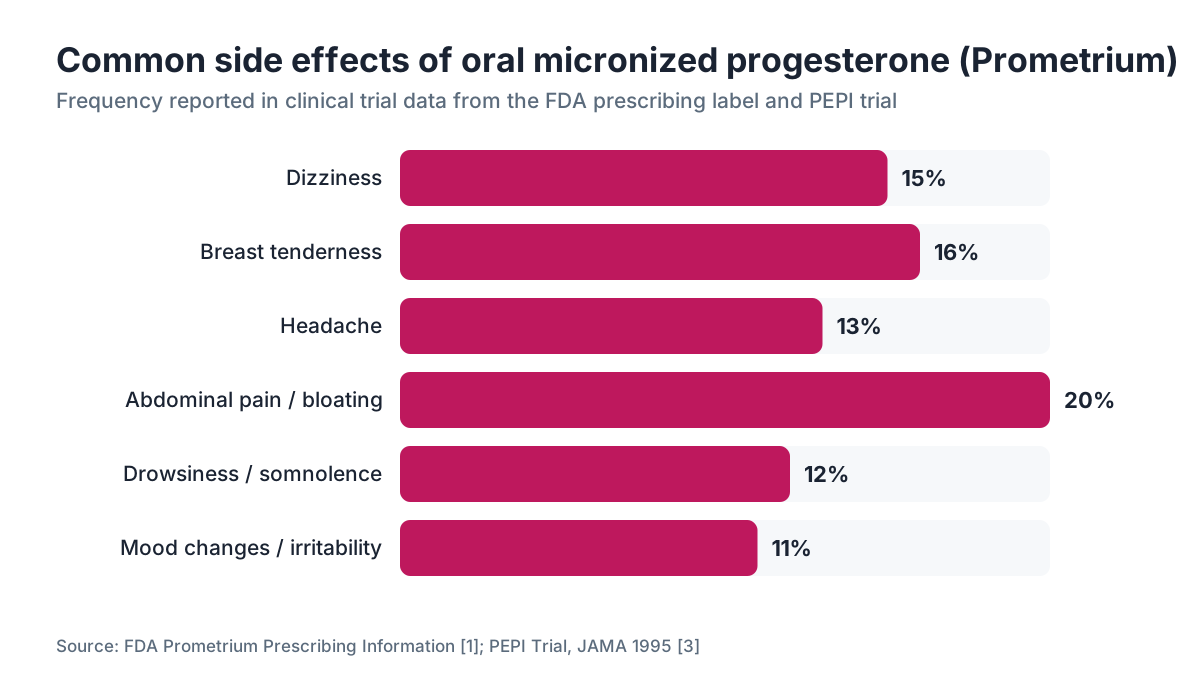
Oral micronized progesterone (Prometrium) is the most commonly prescribed bioidentical option. Because it's taken orally and metabolized in the liver, it produces neurosteroid metabolites (particularly allopregnanolone) that act on GABA receptors in the brain. That mechanism is why it makes you sleepy. The FDA-approved label for Prometrium lists the most frequent adverse reactions from clinical trials as: dizziness (15%), somnolence or drowsiness (documented in multiple trials), headache, abdominal pain or cramping, breast tenderness, and mood changes including depressed mood or irritability [1].
In the PEPI trial (Postmenopausal Estrogen/Progestin Interventions), a long-running NIH-funded randomized trial, participants on oral progesterone reported more bloating and breast tenderness than those on placebo [3].
The sedation effect is real enough that most prescribers tell patients to take it at bedtime, and many women actually find this useful if they have sleep trouble.
Synthetic progestins (medroxyprogesterone acetate, norethindrone, levonorgestrel in oral form) have their own profile. They don't produce the same sedating neurosteroid metabolites, so drowsiness is less prominent. But they're more androgenic, which can mean acne, oily skin, and mood shifts that some women find harsher than the oral micronized version.
The levonorgestrel IUD releases progestogen locally into the uterine cavity. Systemic absorption is minimal (roughly 6-20 mcg/day depending on the device) [4]. That means most systemic side effects are blunted. The tradeoffs are local: irregular spotting or breakthrough bleeding for the first 3-6 months, occasional cramping with insertion, and in some women, low-grade hormonal symptoms like acne or mood changes from even small systemic exposure.
A practical summary of what to expect by formulation:
Side effects by formulation: comparison table
| Side effect | Oral micronized progesterone | Synthetic progestin (oral) | Levonorgestrel IUD | |---|---|---|---| | Drowsiness / sedation | Very common (15%+) | Uncommon | Rare | | Bloating / abdominal discomfort | Common | Common | Rare (local only) | | Breast tenderness | Common | Common | Rare to mild | | Mood changes / irritability | Moderate (some women improve) | More androgenic, more mood impact | Rare | | Acne / oily skin | Rare | More common (androgenic progestins) | Occasional | | Irregular bleeding | Possible early on | Possible early on | Very common first 3-6 months | | Headache | Reported in trials | Reported in trials | Rare | | Weight changes | Mild, often transient | Mild to moderate | Minimal |
Sources: Prometrium FDA label [1], ACOG guidance on intrauterine devices [4], Endocrine Society Clinical Practice Guideline [5].
The table makes one thing clear: if sedation is your main complaint with Prometrium, switching to an IUD or a low-androgenic progestin may help. If breakthrough bleeding is your main complaint after starting a Mirena, it almost always resolves by month 6 and is not a reason to remove the device early unless it's genuinely heavy.
Does progesterone cause weight gain in menopause?
This is probably the question I hear most, and the honest answer is: probably not much, but the picture is muddier than anyone wants to admit.
Controlled trials have not consistently shown that progesterone alone causes clinically significant weight gain. The Women's Health Initiative (WHI), which studied combined estrogen plus progestin (not progesterone-only), found modest weight changes that were difficult to separate from aging itself [6]. The progesterone-only literature is thinner.
What is well-documented is fluid retention and bloating, especially in the first 4 to 8 weeks. Women often read this as weight gain when it's really water. Step on the scale two weeks into Prometrium and see 2 or 3 extra pounds? That is almost certainly not fat.
Androgenic synthetic progestins (like medroxyprogesterone acetate) have a slightly more credible weight-gain signal, possibly because they have some glucocorticoid receptor activity at higher doses. A 2019 review in Climacteric noted that progestins with higher androgenicity are associated with more metabolic disruption than micronized progesterone [7].
Bottom line: if weight is a concern, micronized progesterone beats androgenic synthetic progestins, and the IUD nearly eliminates systemic exposure entirely.
Can progesterone cause depression or anxiety?
This is where it gets genuinely complicated, and where the old research and new research point in nearly opposite directions.
Older studies (and the WHI, which used medroxyprogesterone acetate) associated progestin use with mood disruption, depressed mood, and irritability. Some women felt significantly worse on the progestin phase of sequential HRT.
Micronized progesterone has a different neurological story. Its metabolite allopregnanolone is a positive allosteric modulator of GABA-A receptors. In most women, that's calming and anxiolytic. The FDA-approved drug brexanolone (Zulresso), used for postpartum depression, works through the same allopregnanolone mechanism, which tells you something about progesterone's relationship to mood [8].
But here's the uncomfortable caveat: a subset of women, particularly those with a history of PMDD (premenstrual dysphoric disorder) or sensitivity to progesterone fluctuations, react badly to even micronized progesterone. For them, the GABA modulation doesn't translate into calm; it translates into dysphoria, brain fog, or heightened anxiety. Nobody has a good test to predict who falls into this category ahead of time.
Start progesterone and feel noticeably more depressed or anxious after 4 to 6 weeks (more than a first-week adjustment)? That's worth a conversation with your prescriber. The answer might be a lower dose, a vaginal route (which reduces neurosteroid metabolite exposure compared to oral), or switching formulations.
Women exploring perimenopause symptoms often find mood changes are the hardest to attribute clearly, because perimenopause itself disrupts mood independent of any medication.
What side effects should make you call your doctor right away?
Most progesterone side effects are uncomfortable, not dangerous. But some warrant prompt attention.
Call your provider the same day if you notice unusual vaginal bleeding after you've been postmenopausal for more than 12 months (this needs investigation regardless of whether you're on hormones, as explained in more detail at is bleeding after menopause always cancer). Also call promptly for sudden severe headache, visual changes, chest pain, leg swelling or pain, or shortness of breath, since these could point to a clotting event.
Progesterone-only therapy carries a lower thrombotic risk than combined estrogen-progestin oral therapy. The ESTHER study found that oral estrogen (not transdermal) combined with certain progestins raised VTE risk, while micronized progesterone did not appear to raise it above baseline [9]. Still, any clotting symptom is an emergency regardless of which hormone caused it.
Severe allergic reactions to Prometrium are rare but possible, partly because the capsule contains peanut oil. Women with peanut allergies should not take oral micronized progesterone in the Prometrium formulation [1].
Anaphylaxis, jaundice, or signs of liver dysfunction also warrant immediate care.
How long do progesterone side effects last?
For most women, the first 4 to 8 weeks are the roughest. Bloating, breast tenderness, and mood swings tend to peak in the first month, then quiet down as your body adjusts to the new hormonal environment.
The drowsiness from oral micronized progesterone often lasts longer, but it becomes manageable once you've locked in bedtime dosing. Some women report the sedative effect fades after 3 or 4 months; others find it stable indefinitely (and don't mind it).
Irregular bleeding with the levonorgestrel IUD is the one side effect that follows a different timeline. Expect spotting or unpredictable light bleeding for up to 6 months. By month 12, roughly 20% of Mirena users have amenorrhea (no periods) and most others have very light, predictable cycles [4].
If significant side effects haven't improved by the 12-week mark, that's a real signal, not a reason to keep waiting it out. Formulation changes, dose adjustments, or switching to a vaginal route of progesterone can make a genuine difference.
Is vaginal progesterone a way to avoid systemic side effects?
Yes, and it's an underused option worth knowing about.
Vaginal progesterone (Crinone gel, Endometrin suppositories, and some compounded options) delivers high local concentrations to the uterus via what's called the first-uterine-pass effect, while producing much lower systemic blood levels than oral dosing. The practical result: less drowsiness, less bloating, less mood disruption, similar (though not identical) endometrial protection.
The catch is that the evidence for endometrial protection via vaginal progesterone in postmenopausal HRT is weaker than the evidence for oral progesterone. Most of the vaginal progesterone data comes from fertility medicine (supporting IVF pregnancies), not menopause trials. NAMS and the Endocrine Society both note this evidence gap and treat vaginal progesterone as an option for women who cannot tolerate oral routes, with the caveat that optimal dosing for endometrial protection isn't as well established [5].
For context on how menopause society guidelines weigh these formulation tradeoffs, see our overview of menopause society guidance on HRT options.
The NAMS 2022 Hormone Therapy Position Statement states that "progesterone administered vaginally is associated with fewer systemic side effects than oral administration," which fits the pharmacokinetic data [10].
Does progesterone protect against breast cancer or raise the risk?
This is one of the most debated questions in menopause medicine, and it matters even more for women using progesterone alone.
The WHI found an increased breast cancer risk with combined conjugated equine estrogen plus medroxyprogesterone acetate, but not with estrogen alone in women who had hysterectomies [6]. That led many researchers to suspect the progestin component as the driver of breast risk in combined HRT.
Observational data from France (the E3N cohort study) suggested that estrogen combined with micronized progesterone had a better breast cancer risk profile than estrogen combined with synthetic progestins. Women on estrogen plus micronized progesterone showed no statistically significant increase in breast cancer risk compared to non-users over a median 8-year follow-up [11].
For progesterone-only therapy (without estrogen), the breast cancer data is sparse, because it's a less common treatment pattern. The theoretical argument is that without the proliferative signal of estrogen, breast tissue isn't being pushed toward hyperplasia in the same way.
Honestly, nobody has definitive data on long-term progesterone-only breast cancer risk in postmenopausal women. The best current position, reflected in NAMS guidance, is that micronized progesterone appears safer than synthetic progestins from a breast standpoint, but all hormone use should be individualized based on personal and family history [10].
This is one area where working with a clinician experienced in menopause medicine, whether through a specialist office or a telehealth platform like WomenRx that focuses specifically on women's hormones, is genuinely worth it rather than going with whoever happens to be available.
How does progesterone interact with sleep, and is that a side effect or a benefit?
For a lot of women, this is the one side effect they're grateful for.
Oral micronized progesterone taken at night has measurable sleep-promoting effects. A randomized trial published in Menopause found that 300 mg oral micronized progesterone significantly improved subjective sleep quality, reduced wakefulness after sleep onset, and improved sleep efficiency compared to placebo in postmenopausal women [12]. The mechanism is allopregnanolone binding to GABA-A receptors, a mild sedative effect similar to benzodiazepine action but through a different pathway.
Sleep disruption affects an estimated 40 to 60% of perimenopausal women, so for anyone whose main complaint is insomnia or fragmented sleep, this "side effect" is often the whole reason they're glad they started progesterone [5].
The flip side: take it in the morning, or need to drive after taking it, and the sedation becomes a genuine hazard. Some women are more sensitive than others and feel groggy or foggy even the next day. Alcohol amplifies the sedation and should be avoided the same night.
If daytime functioning takes a hit, talking to your provider about a lower dose (100 mg instead of 200 mg) or a vaginal formulation is worth exploring.
What happens if you stop progesterone suddenly?
Stopping oral progesterone abruptly, especially after months of use, can trigger withdrawal symptoms that feel a lot like a rough case of PMS: irritability, sleep disruption, bloating, and sometimes a withdrawal bleed if you're still perimenopausal.
This isn't dangerous, but it's uncomfortable and can be alarming if you're not expecting it.
For women on sequential HRT (estrogen continuously, progesterone for 10 to 14 days per month), the monthly progesterone withdrawal is exactly what causes the scheduled bleed. That's intentional and normal.
Stopping progesterone when you're on continuous combined therapy (estrogen plus progesterone daily) is not something to do without medical guidance, particularly if you still have a uterus, because it exposes the endometrium to unopposed estrogen. Even a few months of unopposed estrogen can cause endometrial hyperplasia.
Want to stop or change your regimen? Talk to your provider first and taper on a plan. This matters even more for women also managing other hormonal changes like thyroid hormone replacement therapy, where multiple hormones interact in ways that need coordinated management.
Are compounded progesterone creams safer than oral progesterone?
No. And this is a case where "natural" marketing leads women away from the better-evidenced option.
The appeal of transdermal or compounded progesterone creams is real: no sedation, no GI side effects, no peanut oil carrier. But the evidence that they provide adequate endometrial protection is poor. The FDA has stated explicitly that compounded progesterone cream has not been shown to protect the endometrium from estrogen-induced hyperplasia, and NAMS echoes this concern [2][10].
The reason comes down to pharmacokinetics. Progesterone applied to the skin reaches relatively low serum levels compared to oral or vaginal routes, and the uterine tissue concentrations needed to prevent endometrial proliferation appear insufficient with topical application in most studies.
That doesn't mean transdermal progesterone has no effect. It does circulate and it does have systemic activity. The problem is that the activity is unpredictable and almost certainly not enough for endometrial protection in women using systemic estrogen.
If the side effects of oral progesterone are genuinely intolerable, the right next step is vaginal progesterone or a levonorgestrel IUD, not a cream from a compounding pharmacy.
For women wanting the broader picture of women's hormonal health and what resources exist, the new menopause covers how thinking about menopausal care has shifted in the last decade.
How do you manage or reduce progesterone side effects?
Some strategies actually work. Some are more hope than evidence. Here's what I'd do.
Take oral progesterone at bedtime. This is the single most effective step for managing sedation and much of the brain fog. Peak sedation hits 1 to 3 hours after ingestion, so timing it before sleep turns the main side effect into a benefit [1].
Start with the lower dose. If you've been prescribed 200 mg, ask whether 100 mg is enough for endometrial protection in your regimen. For continuous combined therapy (low-dose progesterone daily), 100 mg is often plenty and produces fewer side effects.
Give it 8 to 12 weeks before declaring failure. Breast tenderness and bloating consistently improve over the first 2 to 3 months in most women. Calling it a failure at week 3 means missing the adaptation window.
Avoid alcohol on progesterone nights. The interaction amplifies sedation and can leave you groggy the next morning.
If mood effects dominate, consider a vaginal route. Vaginal progesterone lowers the neurosteroid metabolite load compared to oral, which may help women who are sensitive to allopregnanolone's mood effects in either direction.
Track your symptoms systematically. A simple log of sleep quality, mood, bloating, and breast tenderness over 8 weeks gives your provider real information rather than a vague complaint that "it's not working." A phone app or a paper symptom diary works equally well.
At WomenRx, providers who specialize in women's hormones can walk you through these formulation tradeoffs in a way a busy primary care visit often can't accommodate.
For women managing hot flashes alongside progesterone side effects, the question of whether supplements or extra interventions help is worth exploring through resources like health & her perimenopause support.
Frequently asked questions
Can I take progesterone only (without estrogen) to treat menopause symptoms?
Yes, progesterone alone is sometimes used in perimenopause for sleep disruption, heavy bleeding, or anxiety, and occasionally for women who can't take estrogen. It doesn't significantly relieve hot flashes or vaginal dryness the way estrogen does. For full symptom control, most clinicians prescribe both. Progesterone-only therapy is a legitimate but more limited approach, and your prescriber should tailor it to your specific symptoms and history.
Why does progesterone make me so tired?
Oral micronized progesterone is metabolized into allopregnanolone, a neurosteroid that binds GABA-A receptors in the brain with a sedating effect. This is dose-dependent and most pronounced 1 to 3 hours after ingestion. Taking it at bedtime converts this side effect into a sleep aid for most women. A lower dose (100 mg vs. 200 mg) or switching to vaginal progesterone reduces the sedation significantly.
Does progesterone-only HRT cause weight gain?
Controlled trials don't show meaningful fat gain from micronized progesterone. Early bloating and fluid retention are common and often mistaken for weight gain. Androgenic synthetic progestins (like medroxyprogesterone acetate) may have a slightly greater metabolic effect. If weight change is a concern, micronized progesterone is the better-tolerated choice, and the levonorgestrel IUD has minimal systemic exposure and no documented weight-gain signal.
Can progesterone cause depression during menopause?
For most women, micronized progesterone is neutral or mildly mood-improving through its allopregnanolone metabolite. A subset of women, especially those with a history of PMDD or hormone sensitivity, experience dysphoria or brain fog. Synthetic progestins, particularly medroxyprogesterone acetate, have a stronger association with depressed mood in older trial data. If depression worsens after starting progesterone, switching formulations or routes is worth a prompt conversation with your provider.
Is oral micronized progesterone (Prometrium) safer than synthetic progestins?
For several outcomes, yes. The French E3N cohort study found estrogen plus micronized progesterone was associated with no significant increase in breast cancer risk over 8 years, unlike estrogen plus synthetic progestins. Micronized progesterone also appears to have lower cardiovascular and thrombotic risk than some synthetic progestins. The evidence base is observational, not from randomized trials, but it consistently favors micronized progesterone on both breast and cardiovascular markers.
How long does it take for progesterone side effects to go away?
Most side effects (bloating, breast tenderness, mood fluctuations) peak in the first 4 to 6 weeks and improve substantially by weeks 8 to 12. Sedation from oral micronized progesterone often persists but becomes manageable with bedtime dosing. Irregular bleeding with the levonorgestrel IUD typically resolves within 6 months. If symptoms haven't improved meaningfully by 12 weeks, talk to your prescriber about a dose or formulation change rather than continuing to wait.
Can I use progesterone cream instead of oral progesterone to avoid side effects?
Compounded progesterone cream avoids sedation but does not reliably protect the endometrium from estrogen-induced hyperplasia. The FDA has not approved topical compounded progesterone for this indication, and NAMS guidelines caution against relying on it for endometrial protection. If you need endometrial protection and can't tolerate oral progesterone, vaginal progesterone or a levonorgestrel IUD are evidence-supported alternatives.
Does the levonorgestrel IUD (Mirena) cause systemic side effects during menopause?
Systemic absorption from the Mirena IUD is low, roughly 6 to 20 mcg of levonorgestrel per day, compared to oral progestin doses typically 10 to 20 times higher. Most women have few systemic side effects. A small percentage report mild acne, mood changes, or headache from even low systemic exposure. The most common issue is irregular spotting in the first 3 to 6 months, which resolves for the majority of users by month 12.
Is breast tenderness from progesterone a warning sign?
Generally no. Breast tenderness is listed as a common side effect in Prometrium's FDA label and in trial data. It's caused by progesterone's effect on breast tissue and usually fades within 6 to 12 weeks of starting therapy. However, any new breast lump, skin change, or nipple discharge should always be evaluated by a provider regardless of hormone use. Tenderness alone (diffuse, bilateral) that improves over weeks is almost always a hormonal adjustment effect, not a warning sign.
What is the difference between progesterone and progestin, and does it change the side effect profile?
Progesterone refers to the bioidentical molecule identical to what your ovaries produced. Progestins are synthetic compounds designed to bind progesterone receptors but with different receptor affinities (some are more androgenic, some have glucocorticoid activity). These differences produce distinct side effect profiles: progestins tend to cause more androgenic effects (acne, mood disruption) and fewer sedating neurosteroid effects than oral micronized progesterone. The distinction matters for prescribing, especially for women sensitive to mood or metabolic effects.
Can progesterone-only therapy cause irregular bleeding?
Yes, depending on formulation and regimen. Sequential progesterone (10 to 14 days per month) produces a predictable withdrawal bleed at the end of the cycle, which is intentional and normal. Starting a levonorgestrel IUD causes irregular spotting for 3 to 6 months in most women. Oral progesterone used continuously (daily) can occasionally cause breakthrough spotting. Any heavy bleeding or bleeding that occurs after 12 months of confirmed menopause needs prompt evaluation regardless of hormone use.
Should I avoid progesterone if I have a history of depression?
Not necessarily, but it warrants careful monitoring. Micronized progesterone is generally better tolerated than synthetic progestins in women with mood history, due to its allopregnanolone pathway. Women with a history of PMDD or significant hormone-related mood changes are the group most likely to react badly. Starting with a lower dose, using vaginal rather than oral progesterone, and monitoring mood symptoms with a diary over the first 6 to 8 weeks gives you and your provider real data to work with.
Is progesterone safe for women with a history of blood clots?
Micronized progesterone appears to have a more favorable thrombotic profile than synthetic progestins, particularly when combined with transdermal (not oral) estrogen. The ESTHER study found that the combination of transdermal estrogen plus micronized progesterone did not significantly raise VTE risk compared to non-use. Women with a personal history of clotting disorders should work with a clinician familiar with this nuance, as risk depends on clot history, thrombophilia status, and the specific hormones involved.
Sources
- FDA, Prometrium (progesterone) prescribing information
- FDA, Bioidentical Hormone Therapy guidance page
- NIH, PEPI Trial (Writing Group for the PEPI Trial), JAMA 1995
- ACOG guidance on intrauterine devices and long-acting reversible contraception
- Endocrine Society Clinical Practice Guideline, Treatment of Symptoms of the Menopause, 2015
- NIH Women's Health Initiative, WHI study results
- Climacteric, 2019 review on progestogen androgenicity and metabolic effects
- FDA, Zulresso (brexanolone) approval announcement
- ESTHER study, Canonico M et al., Circulation 2007
- NAMS 2022 Hormone Therapy Position Statement, Menopause journal
- E3N cohort study, Fournier A et al., Breast Cancer Research and Treatment 2008
- Menopause journal, Hitchcock CL and Prior JC, 2012, oral micronized progesterone and sleep