Progesterone medication: types, doses, and what actually works
TL;DR: Progesterone medication comes in several forms: FDA-approved oral micronized progesterone (Prometrium), progestin-containing pills and IUDs, vaginal inserts, and compounded creams. For menopausal hormone therapy, micronized progesterone is the preferred form based on current evidence. Dose, timing, and formulation change everything: symptom relief, uterine protection, and how well you tolerate it.
What is progesterone medication and why do women need it?
Progesterone is a hormone your ovaries make, mostly after ovulation. It prepares the uterine lining for a possible pregnancy, and if pregnancy doesn't happen, its drop triggers your period. During perimenopause, progesterone falls before estrogen does. That imbalance is behind a lot of early perimenopause symptoms: irregular bleeding, poor sleep, anxiety, and a general feeling that something is off.
Progesterone medication fills two separate jobs depending on your situation. For women in perimenopause or menopause who take estrogen, progesterone (or a synthetic progestin) protects the uterine lining from the overgrowth estrogen alone can cause, a condition called endometrial hyperplasia that can progress to cancer [1]. For women trying to conceive with assisted reproduction, progesterone supports the early pregnancy. Different contexts, different formulations, different doses.
One thing to clear up early: progesterone and progestins are not the same, even though people lump both under "progesterone medication." Bioidentical progesterone has the same molecular structure as what your body makes. Progestins are synthetic compounds that bind progesterone receptors but carry different structures and, often, different effects on cholesterol, mood, and breast tissue. That distinction changes how you weigh risks.
See our deeper background on progesterone and how it fits into the broader hormone replacement therapy picture.
What are the different types of progesterone medication?
There are four main categories.
1. Oral micronized progesterone (bioidentical) Brand name: Prometrium. FDA-approved, derived from plant sources, chemically identical to human progesterone. The micronization process makes it absorbable by mouth. Standard doses for uterine protection in HRT are 100 mg/day taken continuously, or 200 mg/day for 12 days each month in a cyclic regimen [2]. It crosses the blood-brain barrier and converts to a metabolite called allopregnanolone, which has calming, sleep-promoting effects. That's why most clinicians tell patients to take it at night.
2. Synthetic progestins (oral and injectable) Medroxyprogesterone acetate (MPA), sold as Provera, is the most studied progestin. It was the form used in the Women's Health Initiative. Norethindrone, levonorgestrel, and dydrogesterone are others. They protect the uterus and suppress ovulation well, but some carry a less favorable profile for mood and lipids than micronized progesterone.
3. Hormonal IUDs The levonorgestrel IUD (Mirena, Liletta, Kyleena) releases a progestin locally into the uterine cavity. For women on estrogen who want uterine protection without systemic progestin exposure, this is a legitimate option that some gynecologists use off-label in the menopausal setting, though it isn't FDA-approved for that specific indication [3].
4. Vaginal and topical forms FDA-approved vaginal progesterone (Crinone gel, Endometrin inserts, Utrogestan vaginal) is used mainly in fertility treatment and luteal phase support. Compounded progesterone creams sell widely but lack consistent absorption data and aren't FDA-approved for uterine protection in HRT. More on that below.
| Form | Brand examples | FDA-approved indication | Systemic exposure | |---|---|---|---| | Oral micronized progesterone | Prometrium | Endometrial protection in HRT, secondary amenorrhea | High | | Medroxyprogesterone acetate | Provera | HRT, contraception, amenorrhea | High | | Levonorgestrel IUD | Mirena, Liletta | Contraception, heavy periods | Very low | | Vaginal gel | Crinone | Infertility/ART luteal support | Moderate | | Vaginal insert | Endometrin | ART luteal support | Moderate | | Compounded cream | Various | Not FDA-approved | Unpredictable |
What is micronized progesterone and is it better than progestins?
Micronized progesterone is the preferred form in most evidence-based menopause guidelines, and the reasons are fairly clear [4].
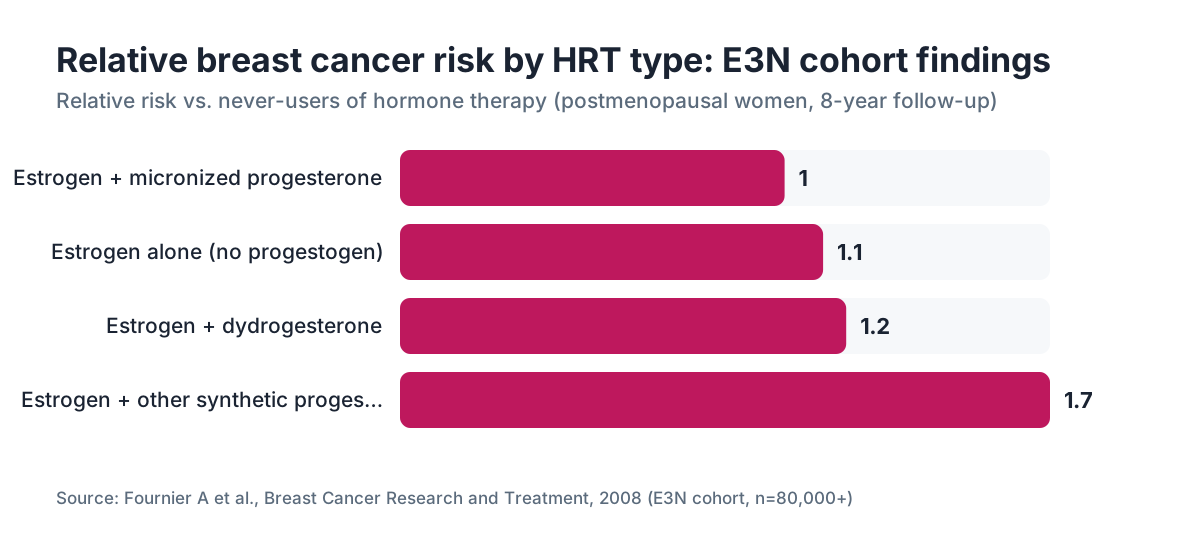
The E3N cohort, a French prospective study of over 80,000 postmenopausal women, found that women using estrogen plus micronized progesterone had no significantly elevated breast cancer risk over follow-up, while women using estrogen plus synthetic progestins did show elevated risk [5]. This is observational data, not a randomized trial, so causation isn't proven. But combined with the mechanistic differences in how bioidentical progesterone and synthetic progestins interact with breast tissue receptors, the finding shifted clinical consensus.
For sleep and mood, micronized progesterone has a real pharmacological edge. Its metabolite allopregnanolone is a positive allosteric modulator of GABA-A receptors, the same pathway benzodiazepines target, though with a much milder effect. Women who struggle with insomnia or anxiety during perimenopause often report that oral micronized progesterone at bedtime helps more than a progestin would.
Progestins still have their place. They cost less. Some combination HRT products use norethindrone or dydrogesterone precisely because their absorption and pharmacokinetics are more predictable in pill form. Dydrogesterone in particular is approved in Europe (Femoston combination pills) and has data suggesting a favorable breast and cardiovascular profile, though it isn't sold as a standalone product in the United States.
The North American Menopause Society (NAMS) 2022 Hormone Therapy Position Statement notes that "progestogen is needed to prevent endometrial hyperplasia in women with a uterus," and acknowledges that emerging data suggest micronized progesterone and some progestins may differ in their effects on breast, mood, and sleep [4].
What are standard progesterone doses for menopause HRT?
Dose depends on the regimen (cyclic vs. continuous) and whether you're still having periods.
For women in early perimenopause who still cycle, a cyclic regimen is common: 200 mg of oral micronized progesterone for 12 to 14 days per month, usually the last two weeks of the calendar month. This mimics the luteal phase and keeps periods more regular while protecting the uterus.
For postmenopausal women (12 or more months since the last period), a continuous regimen is standard: 100 mg every night. The lower continuous dose keeps the endometrium protected without triggering monthly withdrawal bleeding, which most postmenopausal women would rather skip.
With synthetic progestins, equivalent protective doses differ by compound. MPA (Provera) at 2.5 mg/day continuously, or 5-10 mg/day for 12-14 days cyclically, is standard. Norethindrone acetate doses in combination products run from 0.1 mg to 1 mg/day depending on the product.
One point people miss: if you've had a hysterectomy (uterus removed), you do not need progesterone or a progestin with your estrogen. The only reason to add it in HRT is uterine protection. Some practitioners still prescribe low-dose progesterone after hysterectomy for sleep or mood, but that's off-label and the evidence for that specific use is thin.
For menopause symptom management, getting the dose and timing right usually takes a few months of adjustment. Start low and adjust based on symptoms like spotting, bloating, or mood changes.
Does progesterone cream actually work?
Progesterone cream is one of the most marketed, least regulated products in women's health. Most sell over the counter as "natural" or "bioidentical" without FDA approval, and the evidence they work is genuinely weak.
The core problem is absorption. Progesterone is a fat-soluble molecule. Applied to skin, it collects in fat tissue but doesn't reliably reach bloodstream levels high enough to protect the uterine lining. A review in Maturitas found that topical progesterone creams did not consistently achieve serum progesterone levels sufficient for endometrial protection [6]. That matters enormously: a woman on estrogen who thinks her compounded cream is protecting her uterus may be leaving the lining exposed.
Some women do report symptom relief from progesterone cream, particularly for hot flashes and sleep. Maybe even low systemic exposure has some effect, or the cream's metabolites act locally on the central nervous system. But "feels better" and "endometrium is protected" are two different endpoints, and the cream data only speaks to the first, unreliably.
The FDA has acted against some compounding pharmacies making specific claims about progesterone creams without supporting evidence [7]. If you use one, your clinician should be monitoring your endometrium, typically with periodic transvaginal ultrasound.
Here's what I'd do. I wouldn't use a compounded cream as my primary progesterone source if I have a uterus and I'm on estrogen. For someone without a uterus who just wants to experiment with progesterone for sleep, it's lower-stakes, but the absorption is still inconsistent.
What are the side effects of progesterone medication?
Side effects vary by formulation, which is one more reason the form you choose matters.
Oral micronized progesterone's most common side effect is sedation. Taken at night, that's often a feature. Taken in the morning, it's a problem. Dizziness, breast tenderness, and bloating show up too. At higher doses, some women notice mood changes or vivid dreams, likely from allopregnanolone activity.
Synthetic progestins, MPA (Provera) especially, have a more variable side-effect profile. Some women on MPA report irritability, low libido, acne, and depression. These effects are thought to relate partly to progestins' androgenic activity (some bind weakly to androgen receptors) and partly to their effect on sex hormone-binding globulin.
Vaginal progesterone can cause local irritation, discharge, and (with the gel) a chalky residue. Those are largely mechanical, not hormonal.
Both progesterone and progestins can cause breakthrough bleeding or spotting, especially in the first three to six months of a new regimen. Persistent unscheduled bleeding always needs evaluation.
Rare but serious: progesterone and progestins are contraindicated in women with a history of blood clots, certain liver conditions, or hormone-sensitive cancers. Oral progesterone and progestins don't appear to carry the same venous thromboembolism risk as oral estrogen, but the data are weaker for progestins than for progesterone itself [4].
Allergy to peanut oil is a contraindication for Prometrium specifically, because the capsule uses peanut oil as its vehicle. Worth checking before prescribing.
How does progesterone medication fit into hormone replacement therapy?
Progesterone doesn't work alone in HRT. It's the required partner of estrogen for any woman who still has her uterus. Estrogen drives most of the symptom relief: hot flashes, vaginal dryness, bone protection, cardiovascular benefits. Progesterone's job in HRT is mostly protective.
Still, progesterone contributes on its own to sleep quality, anxiety, and possibly mood. Women who are estrogen-dominant in perimenopause (still making estrogen but with declining progesterone) sometimes do well on progesterone alone before adding estrogen. That's a nuanced call that depends on symptom pattern and labs.
For the bigger picture on hormone replacement therapy and where progesterone fits, it helps to understand the estrogen options too, including the estrogen patch, the transdermal route with the best safety data for estrogen delivery.
Combination HRT products blend estrogen and progestin into a single tablet, patch, or ring. Examples include Combipatch (estradiol/norethindrone patch) and Activella (estradiol/norethindrone acetate oral). Convenient, but less flexible for adjusting each hormone independently. Most menopause specialists who personalize therapy prefer to separate the components.
WomenRx, for example, works with women on exactly this kind of individualized protocol, where progesterone type, dose, and timing get chosen based on the person's symptoms and history rather than defaulting to a combination product.
Knowing when does menopause start and the perimenopause age range helps you place yourself in the transition, which directly affects which progesterone regimen makes sense.
Is progesterone safe? What does the research actually show?
The Women's Health Initiative (WHI), published in 2002, raised serious concerns about HRT and breast cancer, but one detail often gets lost: the WHI used conjugated equine estrogen plus medroxyprogesterone acetate (Prempro), not estradiol and not micronized progesterone [8]. The breast cancer signal was attributed mostly to the MPA component, not estrogen alone.
The WHI estrogen-only arm (in hysterectomized women who got no progestin) actually showed a non-significant reduction in breast cancer risk. Most people have never heard that.
Micronized progesterone has a more favorable safety signal in observational data. The E3N cohort, cited earlier, is the largest and longest-running source here. After 8 years of follow-up, the relative risk of breast cancer in estrogen plus micronized progesterone users was 1.00 compared to never-users. The authors specifically noted: "the risk of breast cancer was not increased in users of estradiol plus progesterone" [5].
For cardiovascular safety, progesterone looks neutral to mildly beneficial. It doesn't worsen lipid profiles the way some synthetic progestins do. Blood pressure effects are minimal.
The contraindications are real: undiagnosed abnormal uterine bleeding, active liver disease, prior hormone-sensitive cancer (breast, uterine), and known hypersensitivity. Go over family history and personal risk factors with a clinician before starting any HRT.
The Endocrine Society's clinical practice guideline on menopause recommends individualized risk-benefit assessment, noting that for healthy women under 60 or within 10 years of menopause onset, hormone therapy benefits generally outweigh risks [9].
What about progesterone for fertility and pregnancy support?
In fertility treatment, progesterone medication is standard care. After egg retrieval in IVF, the ovaries are suppressed and can't make their own progesterone. Vaginal progesterone (Crinone gel or Endometrin inserts) or intramuscular progesterone in oil is given daily to support the uterine lining until the placenta takes over, usually around weeks 8 to 10 of pregnancy.
For frozen embryo transfer cycles, progesterone starts a few days before transfer and continues through the first trimester. The dose and route are protocol-specific, but 90 mg vaginal gel once daily or 100 mg vaginal insert three times daily are common.
Intramuscular progesterone in sesame or ethyl oleate oil is still used in many clinics because it produces reliable, measurable serum levels. It's painful and takes daily injections in the gluteal muscle, often given by a partner. Subcutaneous progesterone (Prolutex) offers a less painful alternative with comparable efficacy in some studies.
For women with recurrent pregnancy loss, low progesterone in early pregnancy, or a luteal phase defect, supplementation with vaginal or oral progesterone is sometimes prescribed in the first trimester. The PROMISE trial (NEJM, 2015) found that vaginal micronized progesterone did not significantly improve live birth rates in women with unexplained recurrent miscarriage and a closed cervix, though a subgroup analysis suggested possible benefit in women with three or more prior losses [10]. The PRISM trial in 2019 added data showing some benefit for early bleeding in pregnancy. This is an area of active research and the clinical picture is still moving.
How is progesterone medication prescribed and what does it cost?
Progesterone medication requires a prescription in the United States. A primary care physician, OB-GYN, or menopause specialist can prescribe it, though finding a clinician comfortable with the nuances of HRT dosing still takes effort for many women.
Cost varies a lot by formulation and whether you use insurance:
| Medication | Typical cash price (30-day supply) | Generic available? | |---|---|---| | Prometrium 100 mg (30 caps) | $70-$130 | Yes (micronized progesterone) | | Provera 2.5 mg (30 tabs) | $20-$40 | Yes (medroxyprogesterone acetate) | | Crinone 8% gel (15 applicators) | $350-$500 | No | | Endometrin 100 mg inserts (21) | $300-$450 | No | | Compounded progesterone cream | $30-$80 | N/A (not FDA-approved) |
Generic micronized progesterone capsules are widely available and much cheaper than brand-name Prometrium. Same active ingredient, bioequivalent by FDA standards. GoodRx and similar tools can drop the cash price of generic micronized progesterone under $30 at some pharmacies [11].
Compounded progesterone from a 503A pharmacy needs a prescription and isn't covered by most insurance plans. 503B compounders, which make larger batches under stricter FDA oversight, are generally limited to fertility clinic supply chains.
Telehealth platforms that focus on women's hormones, including WomenRx, typically run a virtual consultation and then route a prescription to a preferred pharmacy, which can be faster than waiting months for a gynecology appointment.
What questions should you ask before starting progesterone medication?
Knowing what to ask before your appointment saves time and leads to better prescribing.
First, ask whether you need it at all. If you've had a hysterectomy, you probably don't. If you use only low-dose vaginal estrogen, the systemic absorption is often low enough that uterine protection isn't required (confirm this with your clinician based on dose and product).
Second, ask which form fits your situation. If sleep and mood are your main concerns alongside uterine protection, oral micronized progesterone at bedtime makes sense. If you've had bad mood side effects on progestins before, that history should push you toward micronized progesterone rather than MPA.
Third, ask about monitoring. Once on HRT with progesterone, most clinicians want pelvic exams and a low threshold for transvaginal ultrasound if you have irregular bleeding. Endometrial biopsy may be needed if bleeding is persistent or heavy.
Fourth, ask about interactions. Progesterone can interact with some antifungals, rifampin, and certain anti-epileptic drugs that induce liver enzymes, which can lower progesterone levels.
Fifth, set your baseline. Track your symptoms before starting, including sleep, mood, hot flashes, and cycle regularity, so you have real data to judge whether the medication helps. Subjective changes in the first two to three months are the clearest signal.
For more on the broader hormone transition, our resources on menopause age and what's normal can frame what you're experiencing before you walk into that appointment.
Frequently asked questions
What is the difference between progesterone and progestin?
Progesterone is the hormone your body naturally makes, and bioidentical progesterone medication has the identical molecular structure. Progestins are synthetic compounds engineered to bind progesterone receptors but with different chemical structures. They work for uterine protection and contraception but have different side-effect profiles, particularly for mood, lipids, and possibly breast tissue. The terms get used interchangeably in pharmacy and insurance contexts, which causes real confusion.
Can I take progesterone without estrogen?
Yes. Some women in perimenopause take progesterone alone for symptoms tied to low progesterone, particularly insomnia and anxiety, before their estrogen drops much. There's no established standard dose for this off-label use, but 100 to 200 mg of oral micronized progesterone at bedtime is commonly used. Evidence for progesterone-only therapy as a primary HRT strategy is much thinner than for combined estrogen-progesterone therapy.
Does progesterone cause weight gain?
Progesterone itself is not clearly linked to weight gain in the research. Synthetic progestins, MPA especially, can cause water retention and bloating that feels like weight gain. Some women report more appetite with progestins. Micronized progesterone looks more weight-neutral based on available data, though large long-term controlled studies on body weight are lacking. Any weight change on a new hormone regimen deserves a conversation with your prescriber.
How long does it take for progesterone to start working?
For sleep, many women notice a difference within the first one to two weeks on oral micronized progesterone at bedtime. For uterine protection and cycle regulation, the effect is present from the first complete cycle of use. Mood effects can take four to eight weeks to judge. If you've seen no benefit after three months at an adequate dose, that's a signal to reassess the dose, timing, or formulation.
Is vaginal progesterone as effective as oral for uterine protection in HRT?
Vaginal progesterone reaches high local concentrations in the uterus through what's called the first-uterine-pass effect, so it works well in the endometrium at lower systemic doses. It's FDA-approved for fertility support but not specifically approved for HRT endometrial protection in the US. Some European guidelines accept it for that purpose. In practice, most US clinicians use oral micronized progesterone or an IUD for HRT uterine protection.
Can progesterone help with perimenopause symptoms?
Yes, especially for sleep and anxiety. Progesterone decline often comes before estrogen decline in perimenopause, so women in their early-to-mid 40s may have symptoms driven more by low progesterone than low estrogen. Oral micronized progesterone at bedtime can improve sleep through its GABA-A modulating metabolite allopregnanolone. It also helps regulate irregular cycles in early perimenopause. See our guide to perimenopause age for context on timing.
What happens if you take estrogen without progesterone and still have a uterus?
Estrogen without a progestogen in a woman with an intact uterus makes the uterine lining grow continuously, a condition called endometrial hyperplasia. Left untreated, hyperplasia can progress to endometrial cancer over years. This is well-established: unopposed estrogen is the strongest known modifiable risk factor for endometrial cancer. Progesterone or a progestin is always required alongside estrogen for any woman who hasn't had a hysterectomy.
Is compounded bioidentical progesterone cream safe?
It's not demonstrably unsafe in the sense of causing harm, but it's not proven effective for uterine protection. Skin absorption is variable and often too low to reach serum levels that protect the endometrium. Women with a uterus who take estrogen should not rely on a topical cream for uterine protection without confirmed serum levels and endometrial monitoring. The FDA has flagged specific claims by some compounders as unsupported by evidence.
Can progesterone medication affect your mood or cause depression?
This varies by formulation. Oral micronized progesterone often improves mood and sleep for perimenopausal women through its allopregnanolone metabolite. Synthetic progestins, MPA (Provera) especially, are more likely to cause mood side effects including irritability and low mood in susceptible people. Women with a personal or family history of premenstrual dysphoric disorder may be especially sensitive to progestins. Switching formulations often resolves it.
Do I need progesterone if I use a very low-dose vaginal estrogen?
Generally no. Ultra-low-dose vaginal estrogen products like Vagifem 10 mcg or Imvexxy 4 mcg produce minimal systemic absorption and aren't thought to stimulate the endometrium much. Most guidelines, including NAMS, say progestogen isn't required with low-dose local vaginal estrogen. Higher doses of vaginal estrogen or rings that produce more absorption may call for reconsidering added uterine protection.
What blood tests should I get before starting progesterone?
There's no single required test, but a baseline before starting any HRT typically includes FSH, estradiol, and sometimes a full thyroid panel to rule out thyroid dysfunction as a symptom driver. A pelvic exam and, where symptoms or history warrant it, a transvaginal ultrasound to check endometrial thickness are reasonable. Hormone serum levels alone don't dictate treatment; symptoms and clinical context matter as much as numbers.
Is progesterone used in birth control pills?
All hormonal birth control pills contain a progestin, not bioidentical progesterone. Progestins in combined pills suppress ovulation, thin the uterine lining, and thicken cervical mucus. Common progestins in pills include norgestimate, levonorgestrel, drospirenone, and norethindrone. The progestin-only mini-pill works mainly through cervical mucus thickening. Because pill progestins have androgenic activity that varies by compound, side effects like acne, mood changes, and libido shifts vary across formulations.
Can you take progesterone if you've had breast cancer?
This is one of the hardest questions in hormone therapy, and the honest answer is: it depends, and the data are limited. Most oncologists recommend against any systemic hormone therapy after hormone-receptor-positive breast cancer. Some specialists are exploring micronized progesterone in survivors, citing its different receptor profile compared to progestins, but there's no consensus and no completed randomized trials in this population. This decision needs a detailed talk with your oncologist.
Sources
- FDA, Prometrium (progesterone) prescribing information
- FDA, Prometrium prescribing information – dosing section
- ACOG Practice Bulletin No. 129 – Intrauterine Device
- NAMS 2022 Hormone Therapy Position Statement, Menopause
- Fournier A et al., Breast Cancer Research and Treatment, 2008 – E3N cohort study
- Wren BG et al., Maturitas 2003 – topical progesterone and endometrial protection
- FDA Consumer Updates – Bioidentical Hormones
- Rossouw JE et al., JAMA 2002 – Women's Health Initiative trial
- Endocrine Society Clinical Practice Guideline – Treatment of Symptoms of the Menopause, 2015
- Coomarasamy A et al., NEJM 2015 – PROMISE trial
- GoodRx – progesterone (micronized) pricing data