Progesterone injections: what women need to know
TL;DR: Progesterone injections deliver bioidentical or synthetic progesterone directly into muscle or fat, bypassing the gut for faster absorption. They're used in IVF cycles, luteal-phase support, and sometimes menopause hormone therapy. Doses typically run 25 to 100 mg intramuscularly per day or every few days. Oral or vaginal forms work well for most women, but injections remain the gold standard in certain fertility protocols.
What is a progesterone injection and what is it used for?
A progesterone injection is a shot of progesterone, dissolved in oil or an aqueous suspension, given directly into muscle (intramuscular, IM) or under the skin (subcutaneous, SQ). Because it skips first-pass liver metabolism entirely, it gets progesterone into your bloodstream faster and more predictably than an oral pill. That matters a lot in fertility medicine, where precise hormone levels on precise days can make or break an IVF cycle.
The three main clinical uses are:
- Luteal-phase support in assisted reproductive technology (ART). After egg retrieval, the ovary temporarily can't make enough progesterone on its own. Injections bridge that gap until the placenta takes over, usually around 8 to 10 weeks of pregnancy [1].
- Premature birth prevention. The FDA approved Makena (17-hydroxyprogesterone caproate, 17-OHPC) in 2011 for reducing preterm birth risk in women with a singleton pregnancy and a prior spontaneous preterm birth, though that approval was voluntarily withdrawn by the manufacturer in 2023 after a confirmatory trial failed to show benefit [2].
- Menopausal hormone therapy (MHT). Progesterone protects the uterine lining when estrogen is prescribed. Oral micronized progesterone (Prometrium) is the most common route, but some women who can't tolerate oral forms or need sustained serum levels use compounded injectable progesterone [3].
There are also niche uses: functional hypothalamic amenorrhea, abnormal uterine bleeding, and in transgender women receiving feminizing hormone therapy where progesterone is sometimes added (though evidence for that last indication remains thin).
If you're exploring progesterone as part of broader hormone replacement therapy or specifically for menopause symptoms, it helps to understand the full route-of-administration landscape before deciding on injections.
How does progesterone injection work in the body?
Progesterone is a fat-soluble steroid. Injectable preparations suspend it in sesame oil, cottonseed oil, or (for aqueous forms) use a different formulation to make it water-dispersible. After an IM injection into the gluteal muscle or vastus lateralis, the oil depot releases progesterone slowly into surrounding tissue, where it's absorbed into the bloodstream.
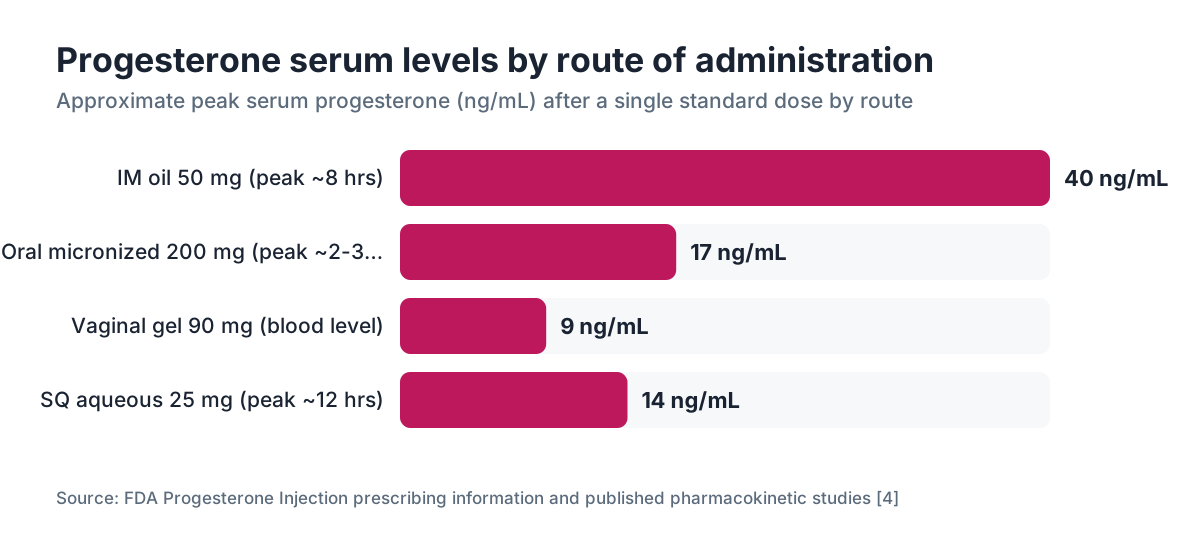
Peak serum levels after a single 50 mg IM dose typically appear within 8 hours and can stay elevated for 24 to 48 hours [4]. Compare that to oral micronized progesterone, which peaks in about 2 to 3 hours but drops sharply as the liver converts much of it to inactive metabolites. Vaginal progesterone (suppositories or gel) achieves high local uterine concentrations through what pharmacologists call the first-uterine-pass effect, but blood levels are lower and more variable.
Once circulating, progesterone binds progesterone receptors in the uterus (thickening the endometrial lining and suppressing contractions), the brain (where its conversion to allopregnanolone has sedating, anxiolytic effects), the breast, and elsewhere. It also counteracts estrogen's proliferative effect on the endometrium, which is why any woman with a uterus on estrogen therapy needs adequate progestogen exposure [5].
The injection route also avoids the neurosteroid metabolites that oral progesterone produces. Some women actually miss those: the mild sedation from oral Prometrium at bedtime is, for many, a benefit rather than a side effect. With injections, you get the uterine-protection and hormone-level benefits without as much sleepiness. That trade-off matters when choosing a route.
What are the different types of progesterone injections?
Not all injectable progesterone is the same molecule. The main types:
| Type | Brand name(s) | Molecule | Main use | |---|---|---|---| | Progesterone in oil (IM) | Generic, compounded | Bioidentical P4 | IVF luteal support, MHT | | Aqueous progesterone (IM or SQ) | Prolutex (not FDA-approved in US) | Bioidentical P4 | IVF luteal support | | 17-hydroxyprogesterone caproate | Makena (withdrawn 2023) | Synthetic progestin | Preterm birth prevention | | Medroxyprogesterone acetate (MPA) injection | Depo-Provera | Synthetic progestin | Contraception, amenorrhea |
Progesterone in oil is the workhorse. It's bioidentical to what your ovaries make and is FDA-regulated as a generic injectable. Compounding pharmacies also make it, sometimes with adjustments (different oil carrier, subcutaneous concentration) that FDA-approved generics don't offer.
Aqueous subcutaneous progesterone (25 mg/0.5 mL) has grown in popularity for IVF because SQ injections are much easier to self-administer than IM shots into the glutes. Several randomized trials comparing SQ aqueous to IM oil progesterone have found comparable ongoing pregnancy rates, though the SQ preparations with FDA approval in the US are limited [6].
Depo-Provera is a synthetic progestin, not bioidentical progesterone. It works as a contraceptive by suppressing ovulation and thinning the endometrium. It's not interchangeable with bioidentical progesterone for menopause hormone therapy or fertility support.
For a deeper look at progesterone in all its forms, our article on progesterone covers oral, vaginal, patch, and injectable options side by side.
What dose of progesterone injection is typically used?
Dosing depends entirely on what you're treating.
For IVF luteal support, the most common IM protocol is 50 mg once daily in sesame or ethyl oleate oil, starting the day of or the day after egg retrieval and continuing until 8 to 10 weeks of pregnancy if a positive test occurs [1]. Some protocols use 25 mg twice daily to smooth out serum peaks and troughs. Subcutaneous aqueous progesterone is typically dosed at 25 mg once or twice daily.
For threatened or recurrent miscarriage, the PROMISE trial (published in NEJM in 2019) randomized women to 400 mg vaginal progesterone twice daily or placebo starting at 6 weeks. That was a vaginal, not injectable, protocol, but it's relevant because it represents the kind of evidence base that guides dosing decisions in early pregnancy [7].
For menopausal hormone therapy, when compounded injectable progesterone is used off-label, doses are highly variable and not standardized by any major guideline. The Endocrine Society and NAMS (North American Menopause Society) both recommend FDA-approved oral micronized progesterone as the preferred progestogen for MHT because the evidence base for injectable progesterone in this setting is thin [3][5].
For premature birth prevention (the now-withdrawn Makena indication), the approved dose was 250 mg IM weekly beginning at 16 to 20 weeks of gestation. Given the failed confirmatory trial, most practitioners are no longer using this protocol [2].
Always: the dose prescribed should be based on serum progesterone monitoring and the specific clinical protocol your reproductive endocrinologist or OB has established. There is no universal "right" dose.
What are the side effects of progesterone injections?
Injection-site reactions are the most common complaint, and with daily IM shots they can turn genuinely painful. The oil carrier is viscous, and repeated injections into the same muscle cause local inflammation, induration (a hard knot under the skin), and sometimes abscessed nodules if injection technique is poor. Rotating sites, warming the oil before drawing it up, and using a 1.5-inch 21 to 22 gauge needle help, but they don't erase the problem. Many women say injection-site discomfort is the hardest part of an IVF cycle.
Systemic side effects reflect progesterone's pharmacology:
- Bloating and breast tenderness (very common)
- Fatigue and drowsiness (less than with oral, but still present)
- Mood changes, including irritability or low mood in some women
- Headache
- Vaginal discharge if you're also using vaginal supplementation
Allergic reactions to the oil carrier (sesame oil is a common allergen) are a real, underrecognized problem. If you have a sesame allergy, a compounded formulation in a different oil, like ethyl oleate or grapeseed oil, is essential. Anaphylaxis is rare but has been reported [4].
With long-term use, the picture becomes less clear. Medroxyprogesterone acetate (the synthetic progestin in Depo-Provera) is associated with reduced bone mineral density during extended use, and the FDA added a black-box warning to that effect [8]. Bioidentical progesterone injections don't carry the same warning, but very long-term injectable use for MHT lacks safety data comparable to oral micronized progesterone.
Serious risks from progesterone itself include thromboembolic events, though the risk is considerably lower than with synthetic progestins, particularly with bioidentical progesterone. Women with a personal or family history of blood clots should discuss this explicitly with their prescriber.
How do you give yourself a progesterone injection at home?
Self-injection is standard practice for IVF patients. Fertility clinics train patients extensively, but here's the overview of what good technique looks like.
For IM injections in oil:
- Warm the vial in your hands or briefly in warm water for a minute or two. This thins the oil and makes injection easier and less painful.
- Draw up the prescribed dose using an 18-gauge needle (larger bore for drawing), then switch to a 21 to 22 gauge, 1 to 1.5-inch needle for injection.
- Identify the upper outer quadrant of the buttock (the ventrogluteal or dorsogluteal site). Avoid the central and lower buttock where the sciatic nerve runs.
- Clean the site with an alcohol swab. Let it dry.
- Insert the needle quickly at a 90-degree angle to the skin. Slow entry is more painful.
- Aspirate slightly (pull the plunger back a hair). If blood appears in the syringe, you've hit a vessel: withdraw and start over with a new needle.
- Inject slowly. Fast injection of viscous oil increases tissue trauma.
- Withdraw and apply gentle pressure. Don't rub vigorously.
- Rotate injection sites: alternate buttocks daily.
For SQ aqueous injections, the technique is simpler: pinch a fold of skin on the abdomen or outer thigh, use a shorter 25 to 27 gauge needle, inject at a 45-degree angle. Much easier for most patients.
If pain or a hard nodule at the injection site is not resolving, or if you see signs of infection (redness, warmth, swelling, fever), call your clinic immediately. Injection-site abscesses are uncommon but they happen.
How does progesterone injection compare to vaginal suppositories and oral progesterone?
This is the question most IVF patients want answered, and the honest answer is: for pregnancy outcomes, they're probably equivalent when used correctly.
| Route | Serum levels | Uterine levels | Convenience | Pain/discomfort | |---|---|---|---|---| | IM oil injection | High, stable | High (via blood) | Requires partner or flexibility | Significant site pain | | SQ aqueous injection | Moderate, stable | Moderate | Self-injectable | Mild | | Vaginal suppository/gel | Low in blood | Very high (uterine) | Easy | Vaginal discharge | | Oral micronized (Prometrium) | Moderate, variable | Moderate | Easiest | Drowsiness |
A 2021 systematic review and meta-analysis in Fertility and Sterility compared vaginal with IM progesterone for IVF luteal support and found no statistically significant difference in live birth rates across the pooled trials [6]. The confidence intervals were wide enough that a real difference can't be ruled out, but the signal isn't there yet to say one is clearly superior.
For endometrial receptivity in frozen embryo transfer (FET) cycles, some reproductive endocrinologists prefer IM progesterone because serum levels are more predictable and the uterus isn't relying on the first-uterine-pass effect that vaginal routes depend on. FET cycles are particularly sensitive to progesterone timing because there's no corpus luteum producing any progesterone at all.
For menopause hormone therapy, oral micronized progesterone (Prometrium 100 or 200 mg at bedtime) has the strongest safety data, including the large French E3N cohort study showing lower breast cancer risk compared to synthetic progestins [3]. Injectable progesterone for MHT sits outside major guideline recommendations simply because there aren't enough long-term data.
Injections aren't superior across the board. They're preferred in specific clinical contexts, and for most menopause applications, oral or vaginal routes have better evidence behind them.
Is progesterone injection safe during pregnancy?
Bioidentical progesterone is produced naturally by the corpus luteum and then the placenta throughout pregnancy, so the molecule itself is not foreign to the pregnant body. The question is whether supplemental progesterone injections above physiologic levels cause harm.
For IVF-supported pregnancies, decades of clinical use have not produced a safety signal for major congenital anomalies with progesterone-in-oil IM injections. The FDA classifies progesterone as Pregnancy Category B (under the old system), meaning animal studies showed no risk and adequate human data are reassuring, though not conclusive [4].
The situation with 17-OHPC (Makena) is more complicated. The Maternal-Fetal Medicine Units Network confirmatory trial (PROLONG, published 2019) found no reduction in preterm birth or improvement in neonatal outcomes versus placebo, leading to the manufacturer's withdrawal of the NDA in 2023 [2]. The American College of Obstetricians and Gynecologists has updated its guidance accordingly [11].
For MPA (Depo-Provera), there are older observational concerns about virilization of female fetuses with first-trimester exposure, though the absolute risk appears low. Depo-Provera is not recommended during pregnancy.
If you're in early pregnancy and your fertility clinic has you on IM progesterone, continuing as prescribed is appropriate. Stopping abruptly before the placenta has taken over progesterone production (before roughly 8 to 10 weeks) can precipitate a drop in progesterone that threatens the pregnancy.
Can progesterone injections help with menopause symptoms?
The honest answer is: not as directly as estrogen does, and not with the same evidence base.
Most menopausal symptoms, including hot flashes, night sweats, and vaginal dryness, are driven by estrogen decline. Progesterone's role in hormone therapy is primarily to protect the uterine lining in women who still have a uterus and are taking systemic estrogen. Without adequate progesterone, estrogen-only therapy raises the risk of endometrial hyperplasia and cancer [5].
Some women report that progesterone (particularly oral micronized progesterone) improves sleep, which is a real menopause complaint, and there's plausible mechanistic support through allopregnanolone's GABA-A modulating effects. Whether injectable progesterone produces the same sleep benefit is not well-studied, because its metabolite profile differs from oral.
WomenRx clinicians who manage hormone therapy in perimenopausal and postmenopausal women generally reserve injectable progesterone for patients who have documented absorption issues with oral or vaginal forms, or who are already comfortable with injection protocols from fertility treatment. If you're exploring options, hormone replacement therapy and our guide to perimenopause age cover the full clinical landscape.
The estrogen patch paired with oral micronized progesterone is currently the best-evidenced MHT regimen for symptom control with a favorable safety profile. That's where the data point. Injectable progesterone for menopause is an option, but it's off-label, it's not guideline-supported, and anyone selling it as a premium solution is getting ahead of the evidence.
For women who have had a hysterectomy, no progestogen of any kind is needed, which removes the question entirely.
How much do progesterone injections cost?
Cost varies widely depending on whether you're using an FDA-approved generic, a compounded preparation, or a brand-name product.
FDA-approved progesterone in oil (generic): roughly $30 to $80 per 10 mL vial (containing 50 mg/mL or 100 mg/mL). At 50 mg daily for an 8-week IVF luteal support protocol, you'd go through multiple vials. Insurance coverage through fertility benefits varies dramatically by state and employer plan [9].
Compounded progesterone: $40 to $150 per vial depending on the pharmacy and formulation. Compounded versions aren't subject to FDA price transparency rules, so prices vary more.
Depo-Provera (MPA 150 mg): approximately $50 to $100 per injection without insurance, administered at a clinic quarterly.
Makena (17-OHPC): at its peak, it cost roughly $690 per weekly injection, or about $14,000 for a full course. It's now withdrawn from the market [2].
For insurance coverage, fertility treatments are covered by mandated benefit laws in about 20 states as of 2024. Progesterone injections as part of an IVF protocol are typically covered when the IVF cycle itself is covered. Progesterone for MHT is usually covered as a prescription drug under standard pharmacy benefits, though injectable forms may require prior authorization.
A practical note: if your insurance denies coverage for injectable progesterone and approves vaginal progesterone gel (Crinone) or suppositories, and your reproductive endocrinologist considers them clinically equivalent for your situation, the vaginal route may be the pragmatic choice on cost grounds alone.
What questions should you ask your doctor before starting progesterone injections?
Going into this conversation prepared makes a real difference. Here are the questions worth asking:
- Why is the injectable route recommended over vaginal or oral progesterone for my specific situation? What does the evidence say for my diagnosis?
- What serum progesterone level are we targeting, and how often will we check it?
- Which oil carrier is in this preparation, and do I have any known allergies to it?
- Exactly which injection site should I use, and can I watch a demonstration before I leave the office?
- What should I do if I miss a dose? What if I have significant injection-site pain or a hard lump that isn't resolving?
- How long will I need to stay on this protocol, and what's the plan for tapering or stopping?
- Is this covered under my insurance, and is prior authorization needed?
- Are there any drug interactions with other medications or supplements I'm taking?
- What signs or symptoms would warrant an urgent call to the clinic?
- If this doesn't work, what's the next step?
If your doctor can't or won't answer these questions clearly, that's useful information about whether you're getting good care. Reproductive medicine protocols for injectable progesterone are well-established and any experienced clinician should be able to walk you through the rationale without difficulty.
For women managing broader hormone concerns across perimenopause and menopause, these conversations fit into the larger picture covered in our articles on when does menopause start and menopause age.
Are there situations where progesterone injections are a bad idea?
Yes. Contraindications and cautions that matter:
Known or suspected breast cancer or estrogen/progesterone receptor-positive malignancies. The FDA labeling for progesterone injections lists undiagnosed abnormal vaginal bleeding, known or suspected pregnancy (for contraceptive formulations), and active thromboembolic disorders as contraindications [4].
Liver disease. Progesterone is metabolized hepatically. Severe liver impairment can lead to accumulation and unpredictable blood levels.
Sesame or peanut allergy. Most progesterone-in-oil formulations use sesame oil. Anaphylaxis risk is real. A compounded alternative in a different carrier oil is the appropriate substitute.
History of ectopic pregnancy or undiagnosed pelvic pain during fertility treatment. Progesterone doesn't cause ectopic pregnancies, but the luteal support it provides can maintain an ectopic, masking symptoms that would otherwise prompt evaluation sooner. This isn't a contraindication exactly, but it's a reason for careful monitoring.
Women who are already taking combination oral contraceptives for cycle suppression before an IVF cycle need to follow their specific clinic protocol rather than adding supplemental progesterone without guidance.
Depo-Provera specifically carries additional cautions: it reduces bone mineral density with extended use (more than 2 years), which matters most for adolescents still building peak bone mass and for perimenopausal women already losing bone. If you're concerned about bone health, our article on bone density test is worth reading before committing to long-term injectable progestin therapy.
Frequently asked questions
How quickly does a progesterone injection start working?
Serum progesterone levels rise within a few hours of an IM injection, peaking around 8 hours post-injection for a 50 mg oil-based dose. Tissue-level effects in the uterus begin within 12 to 24 hours. Your clinic will typically check a serum progesterone level 24 to 48 hours after the first injection to confirm adequate levels, often targeting above 10 to 15 ng/mL for luteal support during IVF.
What is the difference between progesterone injection and Depo-Provera?
Progesterone injection (the generic or compounded form) uses bioidentical progesterone, the same molecule your ovaries make. Depo-Provera uses medroxyprogesterone acetate, a synthetic progestin. They're not interchangeable. Depo-Provera is primarily a contraceptive and suppresses ovulation. Bioidentical progesterone injections are used to support fertility or protect the uterus in hormone therapy. Synthetic progestins also carry a bone density warning with long-term use that bioidentical progesterone does not.
Can progesterone injections cause weight gain?
Progesterone can cause water retention and bloating, which may register as a pound or two of scale weight. True fat gain from progesterone injections is not well-documented. Depo-Provera (the synthetic progestin) has stronger evidence for weight gain, with some studies showing 2 to 4 kg over 12 months in a subset of users. Short-term IVF luteal support protocols typically don't last long enough to cause meaningful weight changes.
How painful are progesterone injections, and how do I reduce the pain?
Daily IM oil injections are genuinely uncomfortable for many women. Rotating injection sites every day, warming the vial before drawing it up, using a large bore needle to draw and a finer needle to inject, injecting slowly, and applying a warm compress afterward all reduce pain. Switching to subcutaneous aqueous progesterone eliminates most of the injection-site pain, and several trials show similar pregnancy rates with that route.
What should I do if I miss a dose of my progesterone injection?
Contact your fertility clinic immediately, same day if possible. Don't double the next dose without explicit instruction. Missing a luteal support dose can drop serum progesterone below the threshold needed to maintain early pregnancy, so timing matters. Your clinic may advise a same-day make-up injection if you're early in the day, or may have a protocol for what to do if it's late. Never guess.
Can progesterone injections cause depression or anxiety?
Progesterone's metabolite allopregnanolone has anxiolytic effects for most women, but a subset of women are sensitive to hormonal fluctuations and experience worsened mood, irritability, or low-grade depression with progesterone exposure. This is more documented with oral and vaginal progesterone than with injections. If you have a history of premenstrual dysphoric disorder or postpartum depression, tell your prescriber before starting any progestogen, injectable or otherwise.
Do I need progesterone injections if I have no uterus?
No. Women who have had a hysterectomy don't need any progestogen because there's no uterine lining to protect. Estrogen alone is appropriate for MHT in this group. The sole purpose of adding progesterone (or a synthetic progestin) to estrogen therapy is to prevent endometrial hyperplasia. Without a uterus, that risk doesn't exist, and progesterone adds side effects without benefit.
Can progesterone injections prevent miscarriage?
For women undergoing IVF, yes: luteal support with progesterone injections is standard of care because the retrieval process temporarily disrupts ovarian progesterone production. For women with recurrent miscarriage or threatened miscarriage in natural conception, the evidence is more mixed. The PROMISE trial (2019, NEJM) found a small benefit for vaginal progesterone in women with a prior miscarriage, but results were not statistically significant for all subgroups.
What oil is used in progesterone injections, and does it matter?
Most commercial progesterone-in-oil preparations use sesame oil. Some compounded formulations use ethyl oleate, grapeseed oil, or castor oil. The oil choice matters if you have allergies: sesame allergy is underdiagnosed and can cause reactions ranging from injection-site inflammation to anaphylaxis. Ethyl oleate is generally better tolerated for women with sesame sensitivity. Ask your pharmacy specifically what carrier oil is in your vial before the first injection.
Is injectable progesterone bioidentical?
Generic progesterone-in-oil for injection is bioidentical, meaning it's chemically identical to the progesterone produced by the human ovary. Compounded injectable progesterone is also bioidentical. Depo-Provera (medroxyprogesterone acetate) and the now-withdrawn Makena (17-hydroxyprogesterone caproate) are synthetic progestins, structurally related to but not identical to human progesterone. The bioidentical distinction matters clinically because synthetic progestins have different receptor binding profiles and safety data.
How long do you stay on progesterone injections after IVF transfer?
Most fertility clinics continue luteal support through 8 to 10 weeks of pregnancy, at which point the placenta has typically taken over progesterone production. Some clinics extend to 12 weeks, particularly for frozen embryo transfers or patients with prior losses. The transition is gradual in many protocols: dose is maintained, then slowly weaned over 1 to 2 weeks rather than stopped abruptly. Your clinic's protocol is the guide here.
Can men receive progesterone injections?
Men produce small amounts of progesterone naturally, and some practitioners use progesterone in testosterone replacement protocols to manage estrogen conversion or for other reasons. However, the evidence base for progesterone supplementation in men is extremely thin. This article focuses on use in women, where the clinical indications are much better established. Men considering progesterone should work with an endocrinologist experienced in male hormone management.
Does insurance cover progesterone injections for IVF?
Coverage depends on your state and plan. Roughly 20 states have laws mandating insurance coverage for infertility treatment as of 2024, and in those states, progesterone injections as part of a covered IVF cycle are typically reimbursed. Outside mandate states, coverage is employer-plan dependent. Depo-Provera for contraception is covered under most plans at no cost under the ACA's preventive care requirements.
Sources
- ASRM Practice Committee, Fertility and Sterility – Progesterone and the luteal phase
- FDA Drug Withdrawals and Discontinuations – Makena (hydroxyprogesterone caproate)
- North American Menopause Society (NAMS) – 2022 Hormone Therapy Position Statement
- FDA – Progesterone Injection (progesterone in oil) prescribing information
- Endocrine Society Clinical Practice Guideline – Treatment of Symptoms of the Menopause (2015)
- Fertility and Sterility – 2021 systematic review, vaginal versus intramuscular progesterone for luteal support
- Coomarasamy A et al., NEJM 2019 – PROMISE trial: Progesterone for prevention of recurrent miscarriage
- FDA – Depo-Provera (medroxyprogesterone acetate) prescribing information and black box warning
- National Conference of State Legislatures – State Laws Related to Insurance Coverage for Infertility Treatment
- Fournier A et al., Breast Cancer Research 2008 – E3N cohort study on progestogen type and breast cancer risk
- ACOG Practice Bulletin – Prevention of Preterm Birth (updated after PROLONG trial)