Progesterone hypersensitivity: symptoms, diagnosis, and treatment
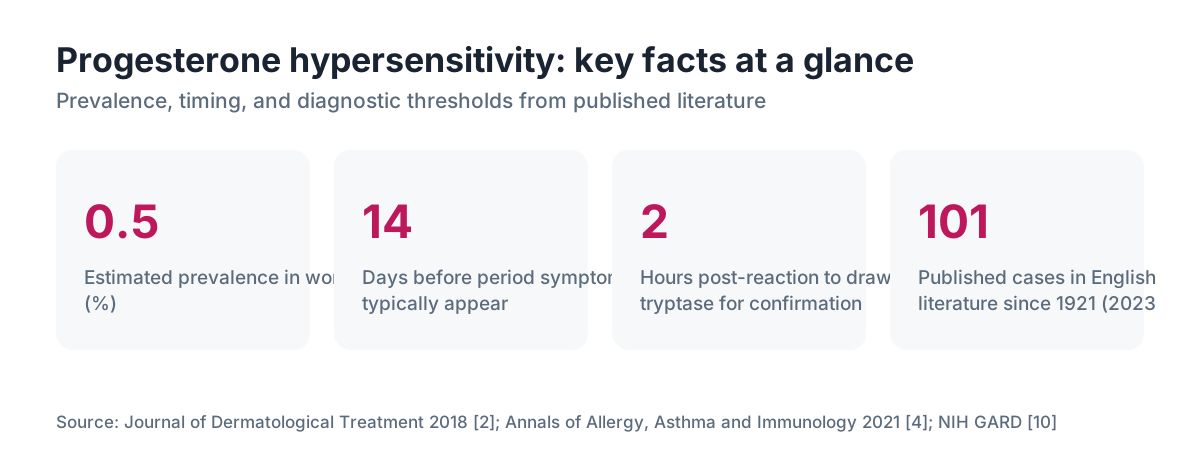
TL;DR: Progesterone hypersensitivity (also called autoimmune progesterone dermatitis) is a rare condition where a woman's immune system reacts to her own progesterone. It causes cyclical hives, angioedema, breathing trouble, or anaphylaxis that track with the luteal phase, roughly 7 to 14 days before her period. It affects an estimated 0.5% or fewer of women. Diagnosis rests on an intradermal progesterone test; treatment ranges from ovulation suppression to desensitization.
What is progesterone hypersensitivity?
Progesterone hypersensitivity is an immune reaction to progesterone, the hormone that rises in the second half of the menstrual cycle. Two overlapping presentations sit under the same umbrella: autoimmune progesterone dermatitis (APD), where the skin is the main target, and a broader category sometimes called endogenous progesterone hypersensitivity, which can hit the airways, gut, and cardiovascular system.
The immune system develops either IgE-mediated (immediate) or T-cell-mediated (delayed) sensitivity to progesterone. Researchers still don't fully understand why. Because progesterone surges every luteal phase, the reaction recurs on a schedule, typically 7 to 14 days before menstruation, then fades within a day or two of the period starting as progesterone drops [1].
The condition is rare. Most published case series run under 50 patients, and precise prevalence is unknown. A 2018 review in the Journal of Dermatological Treatment estimated it affects fewer than 1 in 200 women, though the authors note underdiagnosis is likely because few clinicians think to look for a hormonal trigger in cyclic skin disease [2].
This is different from a reaction to synthetic progestins in hormone replacement therapy or oral contraceptives, though exogenous progestins can sensitize some women and set the condition off. Some cases appear after pregnancy, some after exposure to exogenous progesterone, and some seemingly out of nowhere.
What are the symptoms of progesterone hypersensitivity?
The tell is timing. Symptoms show up in the luteal phase (roughly days 14 to 28 of a 28-day cycle), peak in the days before menstruation, and clear when progesterone drops at the start of the period. If a woman's symptoms follow that rhythm, progesterone hypersensitivity belongs on the differential.
Skin is the most commonly reported target. Urticaria (hives), eczema, erythema multiforme, and vesicular eruptions all show up in published case series. Some women develop angioedema, a deeper swelling of the skin and mucous membranes that can involve the lips and throat.
Systemic reactions are less common but far more serious. These include:
- Anaphylaxis: documented in multiple case reports, occasionally requiring epinephrine [1]
- Bronchospasm and asthma-like episodes
- Nausea, vomiting, and abdominal pain
- Headache and neurological symptoms
Mood and neurological symptoms deserve a separate word. Progesterone metabolizes into allopregnanolone, a neuroactive steroid that modulates GABA-A receptors. Some women with hypersensitivity report severe premenstrual mood disturbance, anxiety, or depersonalization that tracks with luteal timing. Whether that is a true immune reaction or a pharmacodynamic sensitivity is still debated in the literature [3].
The skin findings can mimic contact dermatitis, atopic eczema, and chronic idiopathic urticaria. That's one reason the average time to diagnosis in reported cases runs to several years. If standard allergy workups and dermatology treatments don't explain cyclic flares, chart the hormonal timing explicitly.
How common is progesterone hypersensitivity and who gets it?
Honest answer: nobody has solid population prevalence data. Autoimmune progesterone dermatitis has been documented since at least 1921, but case series rarely top 50 patients, and there is no large registry. The best estimate, from the 2018 Journal of Dermatological Treatment review, is fewer than 0.5% of women [2].
Risk factors drawn from case reports and small series include:
- Prior sensitization to exogenous progesterone (injectable progesterone during fertility treatment is a documented trigger)
- History of pregnancy (endogenous progesterone peaks in the third trimester)
- Atopic background (personal or family history of allergies, asthma, or eczema)
- Use of progestin-containing oral contraceptives, then stopping
Onset spans the reproductive years, from adolescence through perimenopause. Symptoms sometimes get worse during perimenopause, when cycles turn irregular and progesterone swings unpredictably. A subset of women get relief after menopause, when endogenous progesterone production ends, unless they start progesterone-containing HRT.
The condition affects almost exclusively women, by definition, since the trigger is endogenous progesterone. Rare cases in transgender women using exogenous progesterone have been documented.
How is progesterone hypersensitivity diagnosed?
There is no FDA-cleared diagnostic test. Diagnosis is clinical and confirmatory, built on three things: consistent cyclic timing, exclusion of other causes, and a provocation test.
Step one is documenting the cycle connection. A symptom diary kept across two to three cycles, noting when symptoms start and stop relative to menstruation, is the starting point. Many clinicians also order a mid-luteal serum progesterone (day 21 in a 28-day cycle) to confirm ovulation is happening and progesterone is rising when symptoms appear.
Step two is the intradermal progesterone test, the closest thing to a gold standard. Aqueous progesterone is injected just under the skin, then read at 20 minutes (immediate, IgE-mediated) and at 24 to 48 hours (delayed, T-cell-mediated). A 2021 case series in the Annals of Allergy, Asthma and Immunology described the protocol and named a wheal-and-flare response at 20 minutes or induration at 48 hours as confirmatory [4]. The test has to be done where anaphylaxis can be treated.
Some centers also measure serum-specific IgE to progesterone, though standardized commercial assays are not widely available in the US. Patch testing with progestogens can identify delayed-type hypersensitivity.
The intradermal test itself can trigger systemic reactions. A 2020 case report in the Journal of Allergy and Clinical Immunology: In Practice documented anaphylaxis during diagnostic testing [5]. This is not a test to do at home or in an unprepared office.
Other lab work aims at exclusion: ANA, complement levels, tryptase (baseline and post-reaction), and total IgE help separate autoimmune progesterone dermatitis from chronic spontaneous urticaria, lupus, and mast cell disorders.
What conditions can mimic progesterone hypersensitivity?
Several conditions produce cyclic, perimenstrual symptoms and get confused with progesterone hypersensitivity.
Chronic spontaneous urticaria can fluctuate with hormonal changes and look identical to APD on the skin. The distinction: it does not reliably resolve with menstruation or with ovulation suppression.
Premenstrual syndrome and premenstrual dysphoric disorder (PMDD) share the luteal-phase timing completely. The difference is that progesterone hypersensitivity usually produces objective allergic signs (wheals, angioedema, bronchospasm) while PMDD is mainly mood and cognition. They can coexist.
Catamenial anaphylaxis gets listed separately from progesterone hypersensitivity but often runs on the same mechanism. Women who develop anaphylaxis strictly around menstruation should be worked up for progesterone hypersensitivity first.
Mast cell activation syndrome (MCAS) can be both a mimic and a comorbidity. Progesterone acts directly on mast cell degranulation [6], so women with underlying mast cell instability may have an amplified luteal-phase reaction that partly resembles APD without being purely autoimmune.
Contact dermatitis to progestins in vaginal suppositories or topical creams stays localized and clears when the product stops. It does not cycle with the endogenous cycle.
What triggers progesterone hypersensitivity in the first place?
The sensitization mechanism is still being worked out. The leading theory involves prior exposure to exogenous progestogens that share structural features with endogenous progesterone. The immune system mounts a response to the exogenous hormone, then re-encounters endogenous progesterone each luteal phase, and cross-reactivity drives the recurring reaction [1].
Published triggers include:
- Intramuscular progesterone in IVF protocols (multiple case reports link a first APD episode to a fertility treatment cycle)
- Progestin-only pills and the progestin in combined oral contraceptives
- Medroxyprogesterone acetate (Depo-Provera injections)
- Vaginal progesterone suppositories
Pregnancy itself is a trigger in some cases. Serum progesterone reaches 100 to 200 ng/mL in the third trimester, against a luteal-phase peak of roughly 5 to 20 ng/mL in a non-pregnant cycle [7]. First presentation after a pregnancy or miscarriage shows up in multiple case reports.
A minority of cases appear with no identified exogenous exposure. The hypothesis there is molecular mimicry or spontaneous loss of tolerance to a self-antigen, but the evidence is thin.
How is progesterone hypersensitivity treated?
Treatment depends on severity, on whether the woman wants to keep her fertility, and on how much the symptoms are disrupting her life.
For mild cyclical hives or eczema, first-line options are non-sedating H1 antihistamines like cetirizine or fexofenadine, started in the mid-luteal phase, with omalizumab for more refractory cases. These manage symptoms without touching the hormonal driver.
Suppressing ovulation removes the luteal progesterone surge and is the most direct move. Options include:
- Combined oral contraceptives: suppress ovulation and flatten the progesterone curve, though the progestin component can cause reactions in sensitized women, so the choice of progestin matters
- GnRH agonists (leuprolide): create a temporary medical menopause; highly effective but not sustainable long-term without add-back estrogen because of bone loss
- Danazol: an older synthetic androgen that suppresses ovulation; effective in case series, but androgenic side effects limit use
- Bilateral oophorectomy: reserved for severe, refractory cases where quality of life is badly hit and childbearing is complete
Desensitization (progesterone immunotherapy) has been reported in small case series. The protocol gives escalating doses of progesterone over days to weeks to build tolerance. A 2019 case series in the Journal of Allergy and Clinical Immunology: In Practice reported successful desensitization in four patients, two of whom later completed pregnancies [8]. This needs a skilled allergist and makes the most sense for women who want to conceive.
For severe acute reactions, standard anaphylaxis management applies: epinephrine auto-injector, antihistamines, corticosteroids, and emergency services. Women with a history of systemic reactions should carry an epinephrine auto-injector and have a written anaphylaxis action plan.
Progesterone-containing HRT at menopause is a live clinical question for these women. Micronized progesterone and synthetic progestins differ structurally, and some women with APD tolerate one but not the other. There is no controlled trial data here. The decision needs a specialist who understands both allergy and menopause medicine, and the Menopause Society (formerly NAMS) admits there is little guidance for this subset.
If you're working with a hormone-literate clinician and want to review your options across your cycle, platforms like WomenRx can connect you with providers who handle complex hormonal cases.
Can progesterone hypersensitivity cause anaphylaxis?
Yes. This is the most dangerous presentation and the one that gets missed most often, because clinicians rarely ask about menstrual timing when a woman shows up with anaphylaxis of unclear cause.
Catamenial anaphylaxis (tied to the menstrual cycle) is a recognized entity. A 2021 review in the Annals of Allergy, Asthma and Immunology found progesterone hypersensitivity was the leading identifiable cause in women with recurrent unexplained anaphylaxis that clustered in the luteal or perimenstrual phase [4].
The mechanism appears to be IgE-mediated mast cell degranulation set off by rising progesterone. Tryptase drawn within 2 hours of an acute episode supports the diagnosis.
Any woman who has had unexplained anaphylaxis more than once should be asked directly whether her reactions land at a consistent point in her cycle. If the answer is yes, referral to an allergist-immunologist with experience in hormonal triggers is the right next step.
How does progesterone hypersensitivity affect pregnancy and fertility treatment?
This creates a real clinical bind. Progesterone rises sharply in early pregnancy and is needed to maintain the uterine lining. A woman who reacts to her own progesterone may have trouble tolerating a pregnancy without help.
Case reports describe women with confirmed APD who had urticaria, angioedema, or systemic reactions in the first trimester as endogenous progesterone climbed, with some natural improvement by the second trimester as the immune system shifts toward tolerance.
Fertility treatment makes it harder. IVF protocols usually require exogenous progesterone (vaginal suppositories or intramuscular injections) during the luteal phase and early pregnancy. That is also, as noted, a common route to sensitization in the first place.
Desensitization before a planned pregnancy is the approach with the most support, thin as that support is. The 2019 case series cited above [8] is the best published precedent. Women should ideally complete desensitization and then conceive promptly, before tolerance fades.
A coordinated plan between a reproductive endocrinologist and an allergist matters here. This is not a situation for a single generalist to manage alone.
What happens to progesterone hypersensitivity at menopause?
For most women with APD, natural menopause brings relief. Ovarian progesterone production stops, the luteal phase no longer exists, and the trigger is gone. Multiple case reports and small series note symptoms resolving after the final menstrual period [2].
The catch is HRT. Standard menopause hormone therapy in women with a uterus includes a progestogen to protect the endometrium from unopposed estrogen. If that progestogen sets off the same immune response as endogenous progesterone, symptoms come back.
This is unresolved territory. Options discussed in the literature include:
- Estrogen-only therapy in women who have had a hysterectomy (no progestogen needed)
- The tissue-selective estrogen complex (Duavee, which pairs bazedoxifene with conjugated estrogen), using a SERM instead of a progestin
- Intrauterine levonorgestrel (Mirena) to protect the endometrium locally with minimal systemic progestogen
- Micronized progesterone (Prometrium) at the lowest effective dose, in case the woman tolerates natural progesterone better than synthetic progestins, or the reverse
None of these has been tested in controlled trials specifically in women with confirmed APD. The decision has to be individual, starting with the lowest feasible progestogen exposure and a low threshold to switch if symptoms return. A menopause-specialized clinician who also understands allergy is genuinely the best path. Read more on hormone replacement therapy and the estrogen patch as one delivery option.
The Menopause Society (NAMS) 2022 hormone therapy position statement says individualized assessment is required for women with complex hormonal sensitivities [9].
What does the research say about long-term outcomes?
Honest answer: the evidence base is thin. The autoimmune progesterone dermatitis literature is almost all case reports and small case series. There are no randomized controlled trials, no prospective cohorts with long follow-up, and no validated diagnostic criteria endorsed by a major society.
What the case series collectively suggest:
- Symptoms are chronic and recurrent through reproductive life without treatment
- Ovulation suppression reliably controls symptoms in the reported cases
- Spontaneous remission happens but isn't predictable
- Anaphylaxis risk is real and recurs without intervention
- Desensitization can enable pregnancy in motivated patients with access to skilled allergists
The NIH lists autoimmune progesterone dermatitis in its Genetic and Rare Diseases Information Center (GARD), which at least confirms institutional recognition [10]. A 2023 systematic review in Clinical and Experimental Allergy identified 101 published cases in the English literature since 1921, which shows how small the evidence pool really is.
The practical takeaway: clinicians managing this condition work from pattern recognition, mechanistic plausibility, and analogy to better-studied hormonal allergies. Treatment decisions should be made in the open with the patient, naming the evidence quality out loud.
For women tracking new research, the AAAAI (American Academy of Allergy, Asthma and Immunology) practice resources on hormonal allergy are among the more regularly updated clinical summaries available [11].
How is progesterone hypersensitivity different from a sensitivity to synthetic progestins?
This distinction matters clinically and often gets muddled.
True progesterone hypersensitivity (APD) is an immune response to progesterone itself, the endogenous molecule. Synthetic progestins (medroxyprogesterone acetate, norethindrone, levonorgestrel, drospirenone) share some structural features with progesterone but are distinct molecules.
A woman can react to a synthetic progestin without having true APD. Her intradermal test to progesterone would come back negative; her reaction is confined to the specific synthetic compound. Stop that compound and the problem goes away.
A woman with true APD reacts to endogenous progesterone and will have symptoms every luteal phase, no matter what medications she is or isn't taking.
The confusion comes because exogenous progestins can sensitize a woman to endogenous progesterone through cross-reactivity. So the timeline might look like this: she starts Depo-Provera, develops a local reaction, stops it, then starts getting cyclic hives every luteal phase. That progression points to progestin-sensitized APD.
In practice, intradermal testing with both progesterone and the relevant synthetic progestins clears up the picture. Some women react to both; some only to the synthetic compound. FDA labeling for micronized progesterone (Prometrium) also lists hypersensitivity as a risk and contraindicates the drug in anyone with known progesterone allergy [13].
For women on hormone replacement therapy, the type of progestogen can make a real difference, and this is exactly the conversation to have with a prescriber who understands allergy alongside hormones. See our broader guide to progesterone for how different formulations compare.
Frequently asked questions
Can progesterone hypersensitivity cause depression or anxiety?
It can contribute to mood symptoms. Progesterone metabolizes into allopregnanolone, which acts on GABA-A receptors in the brain. Women with hypersensitivity may get amplified neurological responses in the luteal phase, including anxiety, mood swings, or depersonalization. Whether this is a true immune-mediated reaction or a pharmacodynamic sensitivity is still debated. A diary tracking mood alongside physical symptoms helps clarify the pattern.
How do I know if my hives are from progesterone hypersensitivity or something else?
The clearest signal is strict cyclic timing: hives appear in the 7 to 14 days before your period and clear within 1 to 2 days of bleeding starting. If your hives hit randomly through the month or persist through menstruation, a hormonal trigger is less likely. Keep a symptom and cycle diary for two to three months, then see a dermatologist or allergist who can check both hormonal and non-hormonal causes.
Is progesterone hypersensitivity the same as PMDD?
No, though they share the luteal-phase timing. PMDD is mood and cognitive symptoms (depression, irritability, anxiety) that resolve with menstruation, without objective allergic signs. Progesterone hypersensitivity usually involves physical allergic findings: hives, angioedema, bronchospasm, or anaphylaxis. They can coexist in the same person. PMDD is also far more common, affecting 3 to 8 percent of women, while APD affects fewer than 0.5 percent.
What doctor should I see for progesterone hypersensitivity?
Start with an allergist-immunologist, ideally one with experience in hormonal triggers or catamenial anaphylaxis. A dermatologist is right if skin is the main symptom. Often you need both, plus a gynecologist or reproductive endocrinologist if fertility is on the table. Primary care providers and general OBGYNs often aren't familiar with this condition, so asking directly about experience with autoimmune progesterone dermatitis is reasonable.
Can I still use birth control if I have progesterone hypersensitivity?
Possibly, with careful selection. Combined oral contraceptives suppress ovulation and remove the luteal progesterone surge, which takes away the main trigger. But the progestin component can cause reactions in some sensitized women. Progestin choice matters: some women tolerate drospirenone but not norethindrone. Progestin-only methods (mini-pill, Depo-Provera, hormonal IUD) carry more risk of making things worse. Work this out with an allergist and gynecologist together.
What is the intradermal progesterone test and is it safe?
The intradermal progesterone test injects a small amount of aqueous progesterone just under the skin, then reads the site at 20 minutes and again at 24 to 48 hours. A wheal-and-flare response is positive. It's the primary diagnostic provocation test. It isn't risk-free: systemic reactions, including anaphylaxis, have been reported. The test must be done in a clinical setting stocked with epinephrine and emergency support.
Does progesterone hypersensitivity go away after menopause?
For most women, yes. Natural menopause ends ovarian progesterone production, removing the recurring trigger. Many case reports document symptoms resolving after the final menstrual period. The exception is women who then start progestogen-containing hormone replacement therapy, which can reactivate symptoms. Estrogen-only HRT (appropriate only after hysterectomy), or alternative endometrial protection like bazedoxifene, may be worth discussing with a menopause specialist.
Can fertility treatments trigger progesterone hypersensitivity?
Yes. Intramuscular progesterone used during IVF luteal-phase support is one of the most documented sensitization triggers in the published case series. The high doses, injected route, and repeated exposure appear to promote immune sensitization. Women with no prior history of APD have developed it after a single IVF cycle. If you get cyclic allergic symptoms after fertility treatment, tell your allergist about the IVF history explicitly.
What is desensitization for progesterone hypersensitivity and does it work?
Progesterone desensitization gives escalating doses of progesterone over days to weeks under medical supervision to build immune tolerance. It has been reported in small case series, most notably a 2019 series in the Journal of Allergy and Clinical Immunology: In Practice where four patients were desensitized and two later had pregnancies. Success rates can't be quantified from the existing literature. It's the primary option for women with APD who want to conceive.
What emergency medications should a woman with progesterone hypersensitivity carry?
Any woman with a history of systemic reactions or anaphylaxis tied to her cycle should carry at least two epinephrine auto-injectors (EpiPen or generic) and have a written anaphylaxis action plan reviewed by her allergist. Non-sedating antihistamines help with milder breakthrough reactions. Some allergists also prescribe a short course of oral corticosteroids to use perimenstrually in severe cases. All treating providers, including any ER she might visit, should have this history documented.
Is there a blood test to diagnose progesterone hypersensitivity?
No standardized blood test is commercially available in the US. Some specialty labs can measure serum-specific IgE to progesterone, but the test isn't validated or widely accessible. A mid-luteal serum progesterone confirms ovulation is happening and progesterone is rising during symptomatic periods, which supports the diagnosis indirectly. The intradermal test remains the primary confirmatory tool. Elevated baseline tryptase may point to a concurrent mast cell disorder.
Does micronized progesterone (Prometrium) cause fewer reactions than synthetic progestins?
It might, in some women. Micronized progesterone is bioidentical to endogenous progesterone, so a woman with cross-reactive sensitivity to synthetic progestins but not to progesterone itself could do better on Prometrium. The flip side: a woman with true APD is sensitized to progesterone itself and may react to Prometrium as readily as to synthetic progestins. There are no controlled trials comparing formulations in confirmed APD. This is a case-by-case decision.
Can progesterone hypersensitivity cause breathing problems?
Yes. Bronchospasm, asthma-like episodes, and in severe cases laryngeal edema are documented in case reports. These are part of the systemic reaction spectrum and represent more serious presentations. Women who notice worsening asthma or new respiratory symptoms that track strictly with the luteal phase should mention the timing to their pulmonologist or allergist. Cyclic asthma worsening has other causes too, but progesterone hypersensitivity belongs in the differential.
How does progesterone hypersensitivity affect women going through perimenopause?
Perimenopause often means irregular cycles with unpredictable progesterone surges, which can make APD symptoms harder to anticipate. Some women report their symptoms get worse because cycles turn erratic. Others find that as ovulation drops off, luteal-phase surges become fewer and symptoms ease. A clinician familiar with both perimenopause hormonal changes and allergic disease matters during this transition. See our guide on perimenopause age for context on hormonal timing.
Sources
- Foer D et al., 'Autoimmune Progesterone Dermatitis,' Allergy and Asthma Proceedings, 2019
- Itsekson AM et al., review in Journal of Dermatological Treatment, 2018
- Bixo M et al., 'Progesterone, GABA-A receptors, and premenstrual dysphoric disorder,' Frontiers in Neuroendocrinology, 2017
- Sperber K et al., 'Catamenial anaphylaxis and autoimmune progesterone dermatitis,' Annals of Allergy, Asthma and Immunology, 2021
- Gomez-Torrijos E et al., 'Anaphylaxis during intradermal progesterone testing,' Journal of Allergy and Clinical Immunology: In Practice, 2020
- Vasiadi M et al., 'Progesterone effects on mast cell secretion,' International Journal of Immunopathology and Pharmacology, 2012
- Endocrine Society, progesterone reference ranges and physiology
- Prieto-Garcia A et al., 'Autoimmune progesterone dermatitis: clinical course and desensitization,' Journal of Allergy and Clinical Immunology: In Practice, 2019
- The Menopause Society (NAMS), The 2022 Hormone Therapy Position Statement
- NIH National Center for Advancing Translational Sciences, GARD: Autoimmune Progesterone Dermatitis
- American Academy of Allergy, Asthma and Immunology (AAAAI), Practice Resources
- Wintroub BU, Stern RS, 'Cutaneous drug reactions: pathogenesis and clinical classification,' Journal of the American Academy of Dermatology, 1985
- FDA, Progesterone (Prometrium) prescribing information