Progesterone hormone: what it does, when it drops, and how to replace it
TL;DR: Progesterone is a steroid hormone made mainly by the ovaries after ovulation. It supports uterine lining, sleep, mood, and bone health. Levels start declining in the mid-30s and drop sharply in perimenopause. FDA-approved micronized progesterone (Prometrium) is the preferred form for hormone therapy in women with a uterus, because its cardiovascular and breast profile is safer than synthetic progestins.
What is progesterone and what does it actually do in the body?
Progesterone is a steroid hormone produced primarily by the corpus luteum, the temporary structure the ovary builds after releasing an egg each month. The adrenal glands and, during pregnancy, the placenta also make it, but the ovary is the main source for most of a woman's reproductive years.
The hormone has a surprisingly long job list. In the uterus, it converts the estrogen-thickened endometrial lining into a secretory state ready to receive an embryo. Without enough progesterone in the second half of the cycle, that lining stays in an unstable, proliferative condition. Excess proliferation over years is one of the main drivers of endometrial hyperplasia and endometrial cancer, which is exactly why every woman with an intact uterus who takes estrogen for menopause symptoms needs progesterone alongside it [1].
Outside the uterus, progesterone receptors sit in the brain, bones, breasts, bladder, and gut. In the brain, progesterone metabolizes into a compound called allopregnanolone, which acts on GABA-A receptors, the same receptors targeted by sleep aids and anti-anxiety drugs. That pathway explains why a progesterone crash before your period or in perimenopause so often shows up as insomnia and anxiety rather than anything obviously "hormonal."
Progesterone also moderates some of estrogen's cell-proliferating effects in breast tissue. Synthetic progestins do this too, but not as cleanly, which matters a lot when you read the clinical trial data. More on that below.
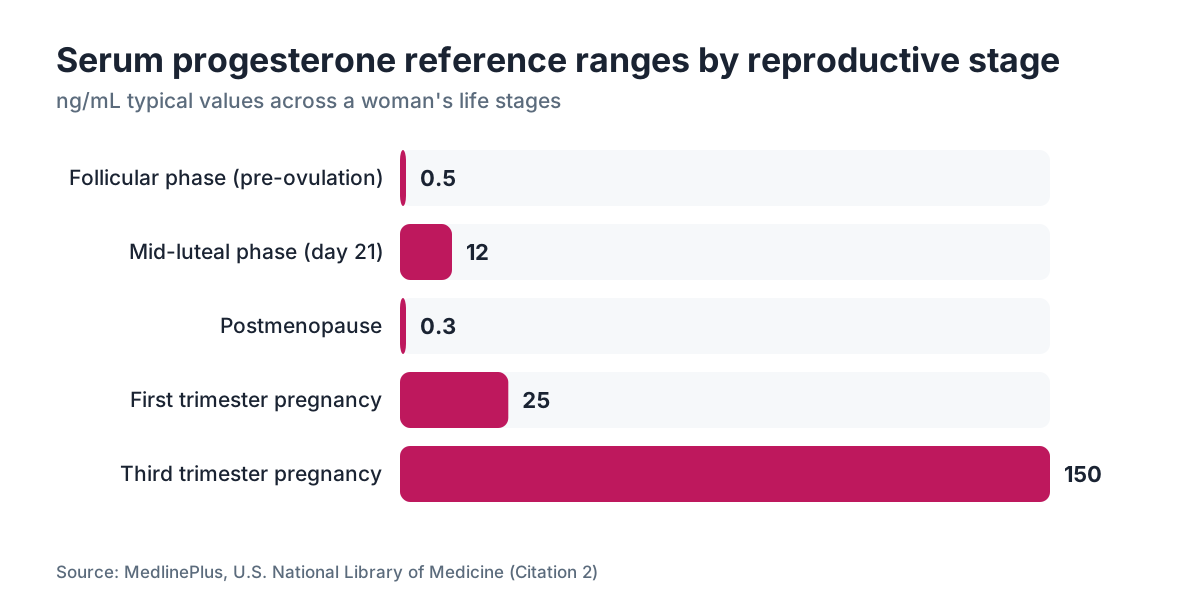
Normal serum progesterone in the follicular phase (days 1 to 14 of a typical cycle) runs below 1 ng/mL. After ovulation it rises to roughly 5 to 20 ng/mL. During pregnancy, levels climb to 100 to 200 ng/mL by the third trimester [2].
When does progesterone start to decline, and what are the signs?
Progesterone declines before estrogen does. That single fact explains most of what confuses women in their late 30s and 40s. By the mid-30s, many women are already having anovulatory cycles, meaning the ovary releases no egg that month. No egg means no corpus luteum, which means no progesterone surge in the second half of the cycle. Estrogen levels may still be normal or even elevated at this stage, because the ovary compensates. The result is a relative estrogen dominance, a common term in functional and integrative medicine that simply describes the ratio shifting unfavorably [3].
By the time a woman enters perimenopause, roughly the 4 to 8 years before the final menstrual period, progesterone levels are measurably low and erratic. Cycles may be irregular, heavier, or both. This phase typically begins in the mid-to-late 40s, though it can start earlier. You can read more about the timing at when does menopause start.
Symptoms that often track with low progesterone specifically (as opposed to low estrogen) include:
- Poor sleep, especially difficulty staying asleep in the second half of the night
- Heightened anxiety or sense of dread that is worse in the week before your period
- Irregular or heavier periods
- Premenstrual spotting
- Irritability that tracks with the luteal phase
- Breast tenderness in the second half of the cycle
None of these symptoms is diagnostic on its own. A serum progesterone drawn on day 21 of a 28-day cycle (or 7 days before your expected period if your cycle is irregular) is the most direct test, but it only captures one point in a variable cycle. Many clinicians repeat the draw if the first result is ambiguous.
Full menopause, defined as 12 consecutive months without a period, brings progesterone levels close to zero. At that point the hormone is no longer made in any meaningful quantity by the ovaries.
What is the difference between progesterone and progestins?
Progesterone and progestins are not the same molecule, and confusing them has skewed how women think about hormone therapy for two decades. This distinction is one of the most clinically important things in the menopause literature, and it gets muddled constantly.
Bioidentical micronized progesterone is chemically identical to the progesterone your ovary produced. "Micronized" means the hormone particles have been ground small enough to absorb through the gut; without that processing, oral progesterone is nearly useless because it is destroyed before reaching the bloodstream.
Progestins are synthetic compounds engineered to bind progesterone receptors, but their molecular shapes differ from the natural hormone. Medroxyprogesterone acetate (MPA) is the one most people know from the Women's Health Initiative (WHI) trial. Norethindrone, levonorgestrel, and drospirenone are others. Synthetic progestins are effective at protecting the endometrium, but they bind other hormone receptors too, including androgen and glucocorticoid receptors, which produces side effects and risks that micronized progesterone does not carry [4].
The WHI found an increased risk of breast cancer in women taking combined estrogen plus MPA. A large French cohort study called E3N, following over 80,000 women, found that women using estrogen combined with micronized progesterone had no significant increase in breast cancer risk compared to women using no hormone therapy at all, while those using estrogen with synthetic progestins did see increased risk [5]. The North American Menopause Society notes this distinction in its 2022 Hormone Therapy Position Statement. No randomized trial has directly compared the two on a breast cancer endpoint, so the evidence is still observational, but the consistency across multiple cohort studies is notable.
The bottom line for clinical use: when a clinician or a hormone replacement therapy prescriber writes progesterone, they should mean micronized progesterone, not a progestin, and those two words are not interchangeable even though they often get used that way.
What are the FDA-approved forms of progesterone, and how are they taken?
The FDA has approved oral micronized progesterone under the brand name Prometrium in 100 mg and 200 mg capsules. The approved indications are prevention of endometrial hyperplasia in postmenopausal women receiving estrogen, and secondary amenorrhea [6].
Progesterone hormone tablets taken orally are the most common form in the United States. The standard dosing for uterine protection is 200 mg nightly for 12 days per calendar month (cyclic regimen) or 100 mg nightly continuously. The cyclic regimen causes a withdrawal bleed in most women; the continuous regimen aims for no bleeding after an initial adjustment period.
Oral progesterone is highly sedating for many women because of the allopregnanolone conversion in the liver. That side effect is often listed as a problem, but most clinicians use it strategically, prescribing the dose at bedtime to improve sleep. Some women find the sedation too heavy even at 100 mg, particularly if they need to get up at night with children or for work.
Vaginal progesterone bypasses liver conversion almost entirely. Crinone gel (4% and 8%) and compounded vaginal suppositories are options. Vaginal delivery produces high local concentrations in the uterus with low systemic levels, which helps with endometrial protection but reduces the sleep and anxiety benefits that come from the brain metabolism pathway. Women who want the sleep effect specifically usually do better with the oral route.
Compounded progesterone in topical creams is popular, but the evidence for endometrial protection via transdermal cream is weak. The FDA has not approved any transdermal progesterone product for endometrial protection, and the Endocrine Society's 2015 clinical practice guidelines state that data are insufficient to support using transdermal progesterone cream as a substitute for oral or vaginal micronized progesterone in women with a uterus taking estrogen [7].
Here is a quick comparison of the main delivery forms:
| Form | Brand examples | Systemic level | Endometrial protection | Sleep effect | |---|---|---|---|---| | Oral micronized | Prometrium | High (liver metabolism) | Well established | Strong | | Vaginal gel | Crinone | Low | Well established | Minimal | | Vaginal suppository | Compounded | Low | Likely adequate | Minimal | | Transdermal cream | Compounded | Variable/low | Insufficient evidence | Minimal | | IUD (levonorgestrel) | Mirena | Very low systemic | Well established | None |
How does progesterone affect sleep, mood, and anxiety?
For many women in perimenopause, the sleep and mood shift arrives before the periods even change, and progesterone is usually the reason. This is where the science gets genuinely interesting.
Allopregnanolone, the neurosteroid metabolite of progesterone, is a positive allosteric modulator of GABA-A receptors. That is a technical way of saying it amplifies the calming signal that GABA sends in the brain. When progesterone falls, that calming effect goes with it. Women may notice they startle more easily, wake at 3 a.m. with a sense of anxiety they cannot explain, or feel a dysphoric low in the week before their period that was never there in their 20s.
A 2011 review in the journal Steroids described allopregnanolone as having "anesthetic, anxiolytic, and anticonvulsant properties" acting through GABA-A receptors, and noted that fluctuations in the hormone are associated with premenstrual dysphoric disorder and catamenial epilepsy [8]. Nobody has perfect data on exactly what serum progesterone level triggers mood symptoms in a given woman, because sensitivity to the neurosteroid varies considerably between individuals. The closest we have is the consistent clinical observation that women prescribed oral micronized progesterone at bedtime frequently report better sleep within the first week, sometimes before any other symptom has changed.
Mood effects are real but more complicated. Some women feel significantly better on progesterone. Others find the initial adjustment difficult if dosing is not right. A small subset of women are sensitive to the progesterone metabolite in the opposite direction, meaning it makes their anxiety worse. Those women often do better with vaginal delivery, which minimizes the neurosteroid conversion. This is a reason to work with a prescriber who will actually adjust the route and dose rather than giving everyone the same protocol.
What does progesterone do for bone health?
Estrogen gets nearly all the credit for bone protection in women, but progesterone has its own story here. Progesterone receptors sit on osteoblasts, the cells that build new bone. Some research suggests progesterone stimulates osteoblast activity directly, meaning it may add to bone formation rather than only slow bone loss [9].
The clinical data are less complete than for estrogen. The WHI trial evaluated combined estrogen plus progestin (not micronized progesterone) and showed a 34% reduction in hip fracture risk compared to placebo, but that result is attributed primarily to estrogen. Studies specifically isolating micronized progesterone's contribution to bone density are smaller and shorter. A bone density test (DEXA scan) is the right tool for tracking this over time, recommended by the USPSTF for all women 65 and older and for younger postmenopausal women with risk factors [10].
The practical takeaway for women on hormone therapy: progesterone is not a substitute for estrogen in protecting bone, but there is biologically plausible evidence it contributes something. Dropping progesterone out of a hormone regimen for a woman with a uterus is also clinically wrong for endometrial reasons, so the debate is somewhat moot in that population.
Is progesterone safe? What does the research actually show on breast cancer and cardiovascular risk?
Safety questions about progesterone almost always come down to one source: the Women's Health Initiative, which tested conjugated equine estrogen plus medroxyprogesterone acetate, not micronized progesterone. Applying those results to bioidentical progesterone is the single most common error in public conversation about hormone therapy.
The WHI arm using combined E+MPA was stopped early in 2002 after showing an increased risk of breast cancer (hazard ratio 1.24), coronary heart disease, stroke, and pulmonary embolism [4]. These findings alarmed women and physicians worldwide and led to a steep drop in hormone therapy use that lasted more than a decade.
Later analysis and newer studies have told a more nuanced story. The estrogen-only arm of the WHI (women without a uterus who took estrogen without a progestin) showed no increased breast cancer risk and actually a trend toward decreased risk [11]. The French E3N cohort, published in the International Journal of Cancer, found that estrogen combined with micronized progesterone was not associated with increased breast cancer risk after a mean follow-up of 8.1 years, while estrogen combined with synthetic progestins was [5].
The NAMS 2022 Position Statement concludes: "For women aged younger than 60 years or within 10 years of menopause onset, the benefit-risk ratio is favorable for treatment of bothersome vasomotor symptoms" and distinguishes between progestogen types when discussing risk [1]. The FDA label for Prometrium does still carry a class warning about breast cancer derived from the progestin class, which is a regulatory decision about class labeling, not a specific finding for micronized progesterone.
Cardiovascular data on micronized progesterone are generally reassuring compared to synthetic progestins. Micronized progesterone does not appear to oppose estrogen's beneficial effect on lipid profiles, whereas MPA blunts the HDL-raising effect of estrogen [12].
Net assessment: micronized progesterone carries a meaningfully better safety profile than synthetic progestins on current evidence, but women should review their individual risk factors with their prescriber. Hormone therapy is not one-size-fits-all.
How do doctors test progesterone levels?
Serum progesterone is measured through a standard blood draw. The timing of the draw matters enormously. Because progesterone secretion is pulsatile and varies across the cycle, a random draw at any point gives limited information.
For a cycling woman trying to confirm ovulation, the draw is best on day 21 of a 28-day cycle or 7 days before the expected period. A level above 3 ng/mL confirms some progesterone production; a level above 10 ng/mL suggests a strong luteal phase. A level below 3 ng/mL mid-luteal is consistent with anovulation or a weak luteal phase.
For a woman in perimenopause with an irregular cycle, timing is harder. Some clinicians order the draw on whatever day the woman is on when she comes in, with the understanding that interpretation will be limited. Others use multiple draws across a cycle to map the pattern.
After menopause, serum progesterone runs below 1 ng/mL by definition, so testing there is mainly useful to confirm that a woman is truly postmenopausal or to check absorption of a prescribed progesterone product.
Saliva and urine testing for progesterone are available through functional medicine labs. Saliva testing captures the free, unbound hormone fraction rather than total serum levels, and some practitioners prefer it for that reason. Standardized reference ranges for salivary progesterone in clinical practice are not well established, though, and major medical societies including the Endocrine Society do not currently recommend saliva tests as a replacement for serum levels in clinical decision-making [7].
For women evaluating their options through a telehealth service like WomenRx, blood panel results from a local lab or a home blood draw kit are typically enough to guide an initial hormone workup.
What is the standard dose of progesterone for hormone therapy?
Dosing depends on the reason for prescribing and the delivery route.
For endometrial protection in a postmenopausal woman using systemic estrogen, oral micronized progesterone at 200 mg nightly for 12 days per month (cyclic) or 100 mg nightly continuously are both FDA-recognized approaches [6]. The NAMS 2022 position statement supports both regimens. Most women under 60 or within 10 years of menopause use the continuous regimen to avoid withdrawal bleeding.
For a perimenopausal woman with irregular cycles who needs progesterone support but still has some ovarian function, the approach is individualized. Some clinicians prescribe oral progesterone for the second half of the cycle (roughly days 14 to 28) to mimic the luteal phase. Others use low-dose continuous progesterone.
For sleep specifically, some prescribers use 100 mg oral micronized progesterone at bedtime as a standalone prescription even in women who do not yet need endometrial protection, particularly in early perimenopause when sleep disruption is the dominant complaint. This is off-label use, and the evidence base is clinical experience and the neurosteroid mechanism rather than a specific randomized trial in that indication.
For women who have had a hysterectomy, progesterone is not required for endometrial protection because there is no uterus to protect. Some of those women still choose to take it for sleep and mood benefits, which is a reasonable decision to make with a clinician, though the FDA indication does not cover this use.
Starting dose, route, and timing should always be tailored to the individual. Generic protocols miss the variation in how women metabolize and respond.
Can progesterone help with perimenopause symptoms specifically?
Perimenopause is where progesterone often has the most immediate impact, and also where it is most often undertreated.
The classic perimenopausal picture is a woman in her late 40s whose periods are irregular and heavier, whose sleep has quietly gone from solid to fragmented, who feels anxious in a way that feels new and uncharacteristic, and who may have been told her estrogen levels are "fine" on bloodwork. In that scenario, progesterone is often the first hormone worth addressing. The ovary is still making estrogen (sometimes in excess during the chaotic follicular phase of perimenopause), but anovulatory cycles mean progesterone is missing or low.
Adding oral micronized progesterone in this window addresses several symptoms at once: it stabilizes the uterine lining to reduce heavy bleeding, provides the GABA-A neurosteroid effect for sleep and anxiety, and begins the protective coverage that the endometrium needs if estrogen levels are elevated. It is one of the more satisfying prescriptions in hormone medicine because women often notice an effect on sleep within days.
The caveat is that perimenopause is a long, hormonally chaotic transition, and progesterone alone rarely manages every symptom as the transition progresses. Hot flashes and vasomotor symptoms are driven predominantly by estrogen withdrawal, and progesterone does not reliably treat those. Most women in mid-to-late perimenopause eventually benefit from addressing estrogen too. The estrogen patch is a common next step when vasomotor symptoms become significant.
For women who want to understand where they are in the transition, the article on perimenopause age has more detail on the typical timeline.
What are the side effects of progesterone, and who should not take it?
The most common side effects of oral micronized progesterone are sedation and dizziness, both linked to the allopregnanolone conversion. Most women find this manageable when the dose is taken at bedtime. A small percentage feel groggy the next morning even at 100 mg, and those women may do better with vaginal progesterone.
Breast tenderness, bloating, and mood changes in the adjustment period are reported, though these are generally mild and resolve within one to two cycles. A few women experience a paradoxical increase in anxiety, as noted in the sleep and mood section above. Changing the route of delivery often resolves this.
Serious adverse events are rare with micronized progesterone. The Prometrium prescribing information notes a peanut oil base in the capsule formulation, which matters for women with peanut allergies. Those women need a compounded peanut-free alternative [6].
Women who should not take progesterone in any form include those with known or suspected progesterone-sensitive malignancies, undiagnosed vaginal bleeding, known blood clotting disorders, or active liver disease. A history of severe depression is a relative consideration, because some women with depression find progestogens worsen mood, though this varies by individual and by the type of progestogen. Synthetic progestins are more reliably associated with mood disruption than micronized progesterone.
Pregnancy is not a contraindication to progesterone. Supplemental progesterone is frequently prescribed in early pregnancy for women with a history of miscarriage or short luteal phase, though this is a separate clinical context from hormone therapy.
How does progesterone fit into a complete hormone therapy plan?
Progesterone rarely works alone. Hormone therapy for menopause and perimenopause is almost always a conversation about multiple hormones and how they interact.
For a woman with a uterus starting systemic estrogen, progesterone is a required co-prescription, not optional. The FDA-approved labeling for all systemic estrogen products states that a progestogen must be added for women with an intact uterus to prevent endometrial hyperplasia and cancer [6].
For a woman whose primary complaint is vaginal dryness or urinary symptoms only, low-dose vaginal estrogen without progesterone is generally considered safe even with an intact uterus, because local vaginal estrogen does not significantly raise systemic estrogen levels. This is a point where clinical guidelines have shifted significantly in the last decade.
Testosterone is increasingly recognized as a third hormone worth evaluating in perimenopausal and postmenopausal women, particularly for low libido and fatigue. Progesterone interacts with androgen receptors in ways that are not fully characterized in clinical trials. Some women on oral progesterone notice mild anti-androgenic effects; others notice none. This is rarely a reason to avoid progesterone but may be a factor to discuss if libido is a primary concern.
WomenRx offers a structured hormone evaluation that covers estrogen, progesterone, and testosterone together rather than treating each in isolation, which is the approach most consistent with current NAMS recommendations.
For context on the broader hormone therapy landscape, the article on hormone replacement therapy covers the evidence base and decision-making framework in more depth.
Frequently asked questions
What is a normal progesterone level for a woman in her 40s?
In the follicular phase (first half of the cycle), normal progesterone runs below 1 ng/mL. In the mid-luteal phase (around day 21), levels should reach 5 to 20 ng/mL if ovulation occurred. Women in their 40s frequently have anovulatory cycles, so a day-21 level below 3 ng/mL is common and consistent with declining ovarian function even if estrogen levels look normal.
Can low progesterone cause weight gain?
Low progesterone may contribute to weight changes indirectly. Progesterone has a mild diuretic effect and helps balance estrogen's water-retention properties. When progesterone drops in perimenopause, some women notice bloating or a slight increase in weight without dietary changes. The metabolic weight gain of menopause, though, is driven more by estrogen loss and aging-related changes in body composition than by progesterone specifically.
Is bioidentical progesterone the same as natural progesterone?
Yes, in practical terms. "Bioidentical" means the hormone is structurally identical to what the human ovary produces. Oral micronized progesterone (Prometrium) and compounded micronized progesterone are both bioidentical. The term "natural" is less precise and sometimes used to market products that contain plant-derived precursors like wild yam that the human body cannot convert to active progesterone without pharmaceutical processing.
Can you take progesterone if you have had a hysterectomy?
Women without a uterus do not need progesterone to protect the endometrium, because there is none. They can safely take estrogen alone. Some women who have had a hysterectomy still choose micronized progesterone for sleep and mood benefits, which is a reasonable discussion to have with a prescriber. There is no strong clinical trial evidence for this indication, but the risk profile of oral micronized progesterone is low.
How quickly does oral progesterone help with sleep?
Many women report improved sleep within the first one to two weeks of oral micronized progesterone at bedtime. The mechanism is rapid, acting through GABA-A neurosteroid pathways similar to sleep medications. Some women notice an effect the first night. Others take a few weeks to adjust, especially if initial sedation feels too heavy. Dose adjustments and timing optimization matter more than switching products in the first month.
What is the difference between Prometrium and compounded progesterone?
Prometrium is FDA-approved oral micronized progesterone available at standard pharmacies. It comes in 100 mg and 200 mg capsules in a peanut oil base. Compounded progesterone is prepared by a compounding pharmacy to a prescriber's specification, which allows custom doses, delivery forms like vaginal suppositories, or peanut-free formulations. Compounded versions are not FDA-approved as finished products but use the same pharmaceutical-grade micronized progesterone ingredient.
Does progesterone cream work as well as oral or vaginal progesterone?
For endometrial protection in women taking systemic estrogen, the evidence for transdermal progesterone cream is insufficient. The Endocrine Society's clinical practice guidelines explicitly state it should not be substituted for oral or vaginal micronized progesterone in women with a uterus. Progesterone cream may provide some systemic exposure and minor symptom relief, but absorption is variable and serum levels are typically too low to reliably protect the uterine lining.
Can progesterone cause depression or worsen mood?
Synthetic progestins, particularly medroxyprogesterone acetate, are more consistently linked to mood worsening than micronized progesterone. A subset of women is sensitive to progesterone metabolites and may feel worse on oral micronized progesterone, usually describing increased anxiety or dysphoria. Switching to vaginal delivery, which bypasses the neurosteroid conversion in the liver, often resolves this. Women with a personal history of depression should discuss route options with their prescriber before starting.
Can I test my progesterone level at home?
At-home saliva and dried blood spot test kits for progesterone are commercially available. Saliva tests capture free hormone but lack standardized clinical reference ranges, and major medical societies do not recommend them as replacements for serum testing. Dried blood spot kits are closer to venipuncture results but still have less validation. A serum blood draw through a lab, ordered by a telehealth or in-person provider, remains the most reliable option for clinical decision-making.
Does progesterone protect against endometrial cancer?
Yes. Progesterone is the primary protection against endometrial cancer in women taking estrogen. Estrogen causes the uterine lining to proliferate; progesterone converts it to a stable secretory state and triggers shedding. Women who take estrogen without progesterone, have chronic anovulation, or are obese (because fat tissue converts androgens to estrogen) face elevated endometrial cancer risk. Adequate progesterone supplementation eliminates the increased risk attributable to exogenous estrogen use.
How long can you take progesterone hormone tablets safely?
Duration of hormone therapy is individualized. NAMS states that for women under 60 or within 10 years of menopause, the benefits of hormone therapy, including progesterone, generally outweigh the risks for treating bothersome symptoms. There is no arbitrary upper time limit supported by current evidence for women who remain good candidates. Annual reassessment with a clinician, reviewing symptoms, risk factors, and current evidence, is the standard practice.
Is progesterone hormone therapy the same as birth control pills?
No. Hormonal birth control pills contain synthetic progestins, not bioidentical progesterone, combined at doses designed to suppress ovulation. Hormone therapy for menopause uses much lower doses of estrogen and progesterone aimed at replacing what the ovaries no longer produce. The two are pharmacologically different and carry different risk and benefit profiles. Women who used oral contraceptives without problems cannot assume hormone therapy will feel the same, and vice versa.
What happens if you stop taking progesterone abruptly?
Stopping progesterone abruptly can trigger a withdrawal bleed if the uterine lining has built up, which typically resolves on its own. For women using it primarily for sleep or mood, stopping suddenly may cause a rebound in sleep disruption or anxiety for a week or two as the body readjusts. Tapering is generally more comfortable than stopping cold, though it is not medically dangerous for most women to stop abruptly.
Does progesterone affect libido?
The relationship between progesterone and libido is modest and variable. In the natural cycle, libido tends to peak at ovulation when progesterone is still low. High progesterone in the luteal phase is associated with a slight decrease in sexual interest in some studies. Oral micronized progesterone does not consistently suppress libido clinically, but a few women notice this effect. Testosterone is the hormone most directly tied to libido in women, and low testosterone is a more common driver of sexual dysfunction in perimenopause.
Sources
- North American Menopause Society, 2022 Hormone Therapy Position Statement
- MedlinePlus (U.S. National Library of Medicine), Progesterone Levels Test
- Cleveland Clinic, Perimenopause Overview
- JAMA, Writing Group for the Women's Health Initiative Investigators, 2002
- International Journal of Cancer, E3N French cohort study, Fournier et al.
- FDA, Prometrium (progesterone, USP) Prescribing Information
- Endocrine Society Clinical Practice Guideline, Treatment of Menopause, 2015
- Steroids, Reddy DS, 2010, Neurosteroids: endogenous role in the human brain
- Osteoporosis International, Prior JC, Progesterone and bone review
- U.S. Preventive Services Task Force, Osteoporosis Screening Recommendation
- JAMA, WHI estrogen-alone trial results, Anderson et al., 2004
- Menopause, NAMS journal, micronized progesterone and cardiovascular outcomes review