Progesterone hormonal therapy: what every woman needs to know
TL;DR: Progesterone is the other half of hormone therapy for women who still have a uterus. Estrogen alone raises endometrial cancer risk, so you need a progestogen to oppose it. Progesterone also improves sleep, calms anxiety, and modestly reduces hot flashes. Bioidentical oral micronized progesterone (Prometrium) is the most-studied option. Synthetic progestins act differently and carry a different risk profile.
What is progesterone hormonal therapy and why does it matter?
Your ovaries make progesterone in large amounts during the second half of your menstrual cycle and in enormous amounts during pregnancy. As you move through perimenopause and into menopause, that production drops, often before estrogen does. This is a big reason women feel terrible in their 40s while their estrogen levels still read "normal."
Progesterone hormonal therapy means giving that hormone back, either to replace what's gone or to protect the uterine lining (the endometrium) when you're also taking estrogen. Two broad categories exist. Bioidentical progesterone is chemically identical to the molecule your body makes. Synthetic progestins are different compounds built to bind progesterone receptors.
The distinction matters far more than most doctors have time to explain. Oral micronized progesterone (OMP), sold as Prometrium and available generically, is FDA-approved and the most thoroughly studied bioidentical option [1]. Synthetic progestins like medroxyprogesterone acetate (MPA) and norethindrone acetate are also FDA-approved, but they behave differently in the body. Knowing which one you're taking changes how you should read every headline you've ever seen about hormone therapy and breast cancer.
Here's the rule that isn't negotiable. If you still have a uterus and you're on estrogen, you need a progestogen. Estrogen without opposition drives endometrial hyperplasia, which can progress to endometrial cancer. Women who've had a hysterectomy can take estrogen alone, and many feel better skipping progesterone entirely.
What are the main benefits of progesterone therapy for women?
Endometrial protection is the reason most doctors write the prescription. It's rarely the benefit women actually feel. They feel the sleep first.
Oral micronized progesterone breaks down into allopregnanolone, a neuroactive steroid that acts on GABA-A receptors in the brain. That's the same broad pathway benzodiazepines use, minus the dependency worry. Women who take OMP at bedtime often fall asleep faster and wake less. A placebo-controlled trial in Menopause (the journal of the Menopause Society) found statistically significant improvement in self-reported sleep quality with 300 mg oral progesterone versus placebo [2].
Other documented benefits:
- Anxiety and mood. Allopregnanolone has anxiolytic properties. Plenty of women who hit anxiety for the first time in perimenopause find progesterone takes the edge off.
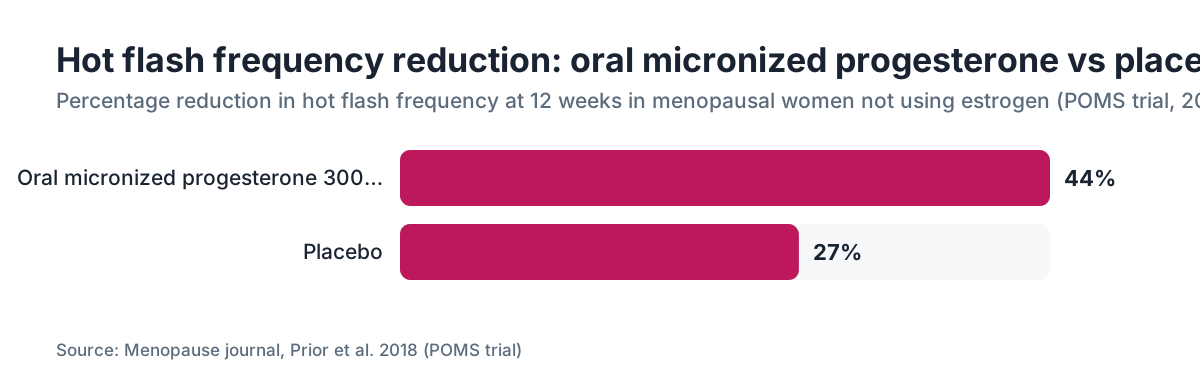
- Hot flash reduction. Progesterone alone, without estrogen, modestly reduces vasomotor symptoms. A 2018 randomized trial found 300 mg daily cut hot flash frequency by about 44% versus 27% for placebo over 12 weeks [3].
- Bone support. Progesterone receptors sit in osteoblasts, the cells that build bone. The evidence is thinner than it is for estrogen, but some studies suggest progesterone helps with bone formation rather than protection. Worried about bone loss? A bone density test is the sensible first step.
- Migraine patterns. For some women the progesterone-heavy second half of the cycle is the calm phase. Hormone swings, not hormone levels, drive most perimenstrual migraines.
These benefits don't transfer to synthetic progestins. MPA doesn't convert to allopregnanolone, so it carries none of the sleep or anxiety upside. That's one reason many clinicians now reach for OMP when both are on the table.
What is the difference between bioidentical progesterone and synthetic progestins?
"Bioidentical" got hijacked as a marketing word, which is a shame, because the underlying distinction is real and useful. Bioidentical means the molecule matches what the human body produces. Oral micronized progesterone qualifies. It starts from yams and gets converted into the exact molecule your ovary makes.
Synthetic progestins came about for two reasons. Natural progesterone has poor oral bioavailability in its raw form, and drug companies needed molecules they could patent. Progestins bind progesterone receptors but also grab other steroid receptors to varying degrees. MPA, the progestin in the old Prempro used in the Women's Health Initiative, binds glucocorticoid and androgen receptors too. Norethindrone acetate has androgenic activity. Drospirenone, used in some birth control pills and the menopause drug Bijuva, is anti-androgenic and anti-mineralocorticoid.
The Women's Health Initiative, whose 2002 results scared a generation off hormone therapy, used conjugated equine estrogen plus MPA, not bioidentical estrogen plus OMP [4]. Many researchers now argue that stretching those findings onto bioidentical regimens is a mistake. The Endocrine Society's 2022 clinical practice guideline states that oral micronized progesterone "may have a more favorable safety profile" than MPA, particularly for breast tissue and cardiovascular effects [5].
For the bigger picture on hormone replacement therapy beyond progesterone, that context helps you see where progesterone fits.
| Property | Oral micronized progesterone | Medroxyprogesterone acetate (MPA) | Norethindrone acetate | |---|---|---|---| | Bioidentical | Yes | No | No | | Converts to allopregnanolone | Yes | No | No | | Sleep/anxiolytic effects | Yes | No | No | | Androgenic activity | No | Mild | Yes | | Breast cancer signal (WHI) | Lower (not in WHI) | Elevated vs estrogen alone | Mixed evidence | | FDA-approved for HRT | Yes (Prometrium) | Yes (Provera) | Yes (Aygestin) | | Available as generic | Yes | Yes | Yes |
What are the risks and side effects of progesterone therapy?
Progesterone therapy is not risk-free. Anyone who tells you otherwise is selling something.
The most common side effects of oral micronized progesterone are sedation and dizziness, which is exactly why you take it at bedtime. That drowsiness is the allopregnanolone effect doing its job. Some women love it. Others find it too heavy if they dose too early in the evening or go too high.
Other possible effects include bloating, breast tenderness, mood changes (some women feel low on progesterone, though that's more common with synthetic progestins), spotting or irregular bleeding especially in perimenopause, and headache.
The big safety question is breast cancer. The E3N French cohort, one of the largest observational studies on this, followed over 80,000 women. Women using estrogen plus synthetic progestins had significantly elevated breast cancer risk. Women using estrogen plus micronized progesterone had a risk that was not significantly different from non-users [6]. This is observational data, not a randomized trial, so it shows association, not cause. Still, the pattern repeats across several European cohorts and has shaped clinical practice in France and elsewhere.
Blood clots (venous thromboembolism) are a real concern with oral hormone therapy generally. Progesterone itself does not appear to raise VTE risk much, but the delivery route matters. The ESTHER study found transdermal estrogen combined with progesterone carried no significant VTE increase versus non-users [7]. Route of delivery is a genuine variable, not a sales pitch.
One more group should pay attention. Progesterone receptors show up in many meningiomas. Prolonged high-dose progestogen use, particularly cyproterone acetate used in Europe, is linked to meningioma risk. That link is far less established for OMP at standard HRT doses, but if you have a meningioma history, raise it with your neurologist.
How is progesterone therapy prescribed and what are the common doses?
Dosing depends on why you're taking it, and the dose that protects the endometrium isn't always the dose that fixes sleep.
For endometrial protection alongside daily estrogen, standard oral micronized progesterone is 100 mg nightly continuously, or 200 mg nightly for 12 to 14 days a month on a cyclic schedule. Cyclic dosing usually produces a withdrawal bleed. Continuous dosing is generally preferred for postmenopausal women who'd rather skip bleeding, though breakthrough spotting is common in the first few months.
For sleep or hot flashes without estrogen (say, a woman who can't or won't use estrogen), the dose is often 300 mg at bedtime. That's the dose used in the trials showing hot flash reduction.
Progesterone comes in several forms:
- Oral capsules (Prometrium, generics): most studied, first-pass metabolism produces allopregnanolone
- Vaginal suppositories or gels (Crinone, Endometrin): mainly for fertility, minimal systemic absorption, so they don't deliver the sleep benefit or reliable systemic protection
- Transdermal creams: OTC versions exist but absorption is erratic and unreliable for endometrial protection; prescription transdermal progesterone isn't FDA-approved for HRT
- Intrauterine device (Mirena): releases levonorgestrel (a synthetic progestin) locally, gives excellent endometrial protection with almost no systemic progestogen exposure, which is why some women with progestogen intolerance pair it with systemic estrogen
If you're working with a telehealth provider, WomenRx prescribes FDA-approved formulations and can help you match the form to your symptoms and health history.
How long you stay on it has no fixed endpoint. The Menopause Society's 2023 position statement says hormone therapy can continue as long as benefits outweigh risks for the individual woman, with no mandatory stopping age [8].
What does compounded progesterone offer that FDA-approved options don't?
Compounded progesterone is a real and sometimes useful option. It also carries genuine regulatory problems that deserve a straight explanation.
FDA-approved oral micronized progesterone (Prometrium and generics) covers most women's needs. Compounding earns its place in specific cases: a dose that doesn't exist commercially, a formulation that avoids an allergen (Prometrium contains peanut oil, which matters for severe peanut allergy), or a delivery route the market doesn't sell.
The catch is that compounded products aren't FDA-approved. They aren't tested for potency, sterility, or bioavailability the way manufactured drugs are. The FDA has flagged concerns about 503A compounding pharmacies marketing hormone combinations without individualized prescriptions, and about creams and troches with unreliable absorption data [9]. The actual hormone content of compounded progesterone creams can drift well off the label.
Saliva testing, often sold alongside compounded hormones, has the same credibility problem. The Endocrine Society states that salivary hormone levels do not reliably reflect tissue levels or clinical status and should not guide HRT dosing [5]. Blood serum is the standard.
None of this makes compounding always wrong. It means use a pharmacy that follows USP standards, have your prescriber track your response with serum labs, and stay skeptical of any clinic pitching a compounded cream as automatically better than the FDA-approved version.
How does progesterone therapy affect breast cancer risk?
This is the question women ask most, and it deserves a real answer, not a pat on the head.
The Women's Health Initiative, published in JAMA in 2002, found that conjugated equine estrogen plus MPA (a synthetic progestin) was tied to a small but statistically significant rise in breast cancer risk after about five years of use [4]. The hazard ratio was roughly 1.26, about 26% higher relative risk, which worked out to around 8 extra cases per 10,000 women per year. Small in absolute terms. It still frightened millions of women off therapy that was helping them.
What the WHI never studied is bioidentical OMP. The E3N cohort, which did compare progestin types, found no significant breast cancer increase for estrogen plus micronized progesterone [6]. The Million Women Study in the UK found elevated risk with synthetic progestins. Other studies have repeated the pattern: synthetic progestins carry a stronger breast cancer signal than micronized progesterone.
The Menopause Society's 2023 statement acknowledges the distinction but notes the evidence is still mostly observational [8]. No one has run a head-to-head randomized trial of OMP versus MPA on breast cancer outcomes. So the honest answer: bioidentical progesterone appears to carry less breast cancer risk than synthetic progestins, the observational data backing that is fairly consistent, and we don't have an RCT to lock it down.
If you have a first-degree family history of breast cancer or a BRCA mutation, have this conversation with an oncologist or a menopause specialist rather than your GP.
Can progesterone therapy be used without estrogen?
Yes, and for some women it's the right call.
Women who can't or won't use estrogen (personal preference, a history of certain cancers, cardiovascular worries, or just wanting to start slow) sometimes trial progesterone alone first. The logic: many perimenopausal symptoms, including bad sleep, anxiety, and even some hot flashes, are driven partly by progesterone deficiency rather than estrogen swings.
A randomized controlled trial in Menopause in 2018 tested 300 mg nightly OMP against placebo in menopausal women not taking estrogen. It found a 44% reduction in hot flash frequency at 12 weeks versus 27% for placebo [3]. Modest, but real. For women whose main problem is broken sleep and mild anxiety rather than severe flashes, progesterone-only therapy can deliver meaningful relief.
Women in early perimenopause who still ovulate sometimes take progesterone only during the second half of the cycle (roughly days 14 to 28) to shore up what the body no longer makes reliably. This can steady mood swings, ease perimenstrual anxiety, and improve sleep without suppressing ovulation.
If you're trying to place yourself on the perimenopause timeline, the perimenopause age piece walks through the hormonal stages. Understanding when menopause starts also helps you gauge how long you might be managing this.
How does progesterone therapy compare to progestin-containing birth control?
This trips up a lot of people. Birth control pills, IUDs, implants, and injections contain synthetic progestins, not bioidentical progesterone. The overlap is in receptor binding, not molecular identity or metabolic effects.
Hormonal contraceptives use progestins at doses meant to suppress ovulation, thicken cervical mucus, and thin the endometrial lining. They work. They also shut down your own hormone production, including whatever progesterone and testosterone you're still making. Some women feel flattened on hormonal birth control for exactly that reason.
Menopause hormone therapy uses much lower doses, and the goal is replacement, not suppression. A 100 mg nightly dose of OMP in an HRT context is a fraction of the progestogen you'd get in most combined oral contraceptives.
For perimenopausal women who still need contraception and hormone support, options include the Mirena IUD (local progestogen for endometrial protection plus contraception) paired with systemic estrogen, or a low-dose combined pill that also manages hot flashes. These are individual decisions shaped by cardiovascular risk, smoking history, migraine history, and what you care about most.
The estrogen patch matters here too, since transdermal estrogen is often the preferred route for perimenopausal women who want to avoid the VTE risk that comes with oral estrogen.
What do women with PCOS or fertility issues need to know about progesterone therapy?
Women with polycystic ovary syndrome (PCOS) often run chronically low on progesterone because they ovulate infrequently or not at all. The endometrial protection issue applies here regardless of age. A uterus exposed to unopposed estrogen for years, whatever the source, faces higher endometrial hyperplasia risk.
For PCOS, progesterone is sometimes given cyclically (10 to 14 days every 1 to 3 months) to trigger a withdrawal bleed and protect the lining. That's different from HRT dosing and different again from fertility dosing.
In fertility care, vaginal progesterone (suppositories or gel) is the dominant route because it reaches high local endometrial concentrations without the same systemic exposure as oral. It supports the luteal phase after IUI or IVF egg retrieval. This is a specialized use with its own evidence base, separate from menopausal HRT.
For women with recurrent pregnancy loss, low luteal-phase progesterone gets investigated as a possible factor, though evidence that supplementation prevents miscarriage in unselected patients is mixed. The PROMISE trial found no benefit of vaginal progesterone in women with unexplained recurrent miscarriage [10]. The PRISM trial, also in the UK, found benefit specifically in women with early pregnancy bleeding [11]. The population you're in changes the answer.
None of this is simple. Progesterone in fertility is genuinely specialized and should involve a reproductive endocrinologist.
How much does progesterone therapy cost and is it covered by insurance?
Cost hinges on the form you use and whether you have insurance.
Generic oral micronized progesterone is one of the cheaper hormone therapy options. GoodRx prices for 30 capsules of 100 mg generic progesterone run roughly $20 to $50 at major pharmacies as of 2024, depending on chain and location [12]. Brand-name Prometrium costs far more, often $80 to $150 for the same quantity, which is rarely worth the premium since the generic is bioequivalent.
Insurance coverage varies. Most commercial plans and Medicare Part D cover generic progesterone capsules, especially when prescribed for HRT. Compounded progesterone usually isn't covered. Vaginal gels like Crinone cost much more and tend to be covered only for fertility, not HRT.
On telehealth platforms, prescription costs are typically separate from consultation fees. Telehealth prescriptions for generic progesterone can often be filled at retail pharmacies with a GoodRx coupon for around $20 to $40 a month. That's one of the cleaner cost comparisons in hormone therapy.
| Form | Typical monthly cost (cash pay) | Insurance typically covers? | |---|---|---| | Generic OMP 100 mg oral (30 caps) | $20-$50 | Yes, most plans | | Prometrium 100 mg (brand) | $80-$150 | Yes, but copay varies | | Compounded progesterone capsules | $40-$90 | Rarely | | Compounded progesterone cream | $30-$80 | No | | Vaginal progesterone gel (Crinone) | $200-$400 | Fertility-only, usually | | Mirena IUD (progestin, not progesterone) | $0-$1,300 (device) | ACA mandates no-cost with most insurance |
How do I know if progesterone therapy is right for me?
The honest answer: you need a baseline hormone panel and a conversation with someone who actually knows this territory.
Lab testing usually includes FSH, LH, estradiol, progesterone (ideally day 21 of a cycle if you're still cycling), total and free testosterone, SHBG, and TSH. Salivary tests, as noted, aren't the standard. Blood serum is.
Symptoms that often point to progesterone deficiency specifically: sleep-onset insomnia that showed up in your 40s, new anxiety without a clear trigger, PMS that got worse before your periods turned irregular, heavy perimenopausal periods, and mid-cycle spotting. No single one of these is diagnostic. The pattern is what counts.
Some women need to be especially careful, including those with a history of meningioma, severe liver disease, unexplained vaginal bleeding, or known or suspected hormone-sensitive cancers. The FDA label for Prometrium lists these as contraindications or precautions [1].
If you're researching your options, WomenRx offers telehealth consultations for women working through perimenopause and menopause decisions. The thing that matters is seeing someone who reviews your labs and your history rather than handing you a template protocol.
Progesterone never works in isolation. How it interacts with your estrogen, your thyroid, and your adrenal hormones shapes the result. A good clinician treats progesterone as one variable in a larger picture, not a standalone fix.
Frequently asked questions
Do I need progesterone if I've had a hysterectomy?
Generally no. The main reason to add progesterone to estrogen is to protect the uterine lining from overstimulation. No uterus, no risk. Women after hysterectomy typically take estrogen alone, which simplifies the regimen and avoids progestogen side effects. A few women without a uterus still use progesterone for sleep or mood, but that isn't standard clinical practice.
What is the difference between progesterone and progestin?
Progesterone is the natural hormone your ovaries produce. Progestins are synthetic compounds built to activate progesterone receptors but with different molecular structures. Progestins don't convert to allopregnanolone, so they lack progesterone's sleep and anxiety benefits. They also hit other hormone receptors to varying degrees, which drives differences in side effects and cancer risk data. The two terms aren't interchangeable, despite being used that way constantly in the media.
Can progesterone cream bought over the counter protect my uterus?
Probably not reliably. OTC progesterone creams have inconsistent and generally low transdermal absorption. Studies measuring serum progesterone after OTC cream application show minimal change in most women. The FDA has not approved any OTC progesterone cream for endometrial protection. If you're on systemic estrogen and need progestogen opposition, you need a prescription-strength formulation with documented bioavailability, not a cream from a health food store.
How long does it take for progesterone therapy to start working?
Sleep improvements can show up within days of starting oral micronized progesterone at bedtime, because the allopregnanolone effect is fairly quick. Mood stabilization usually takes two to four weeks. Endometrial protection is established within the first month of consistent use. Hot flash reduction, if it happens, usually shows meaningful change by six to twelve weeks. No effect at all after eight weeks at a proper dose is worth revisiting with your prescriber.
Is bioidentical progesterone the same as natural progesterone?
Bioidentical means molecularly identical to what your body makes, not that it's unprocessed or botanical. Oral micronized progesterone is derived from plant sources (typically diosgenin from yams) and converted through chemical synthesis into the exact human progesterone molecule. It is FDA-approved, tested for purity and potency, and manufactured to pharmaceutical standards. Calling it 'natural' is technically accurate in molecular terms but misleading if it implies it's unprocessed or safer by definition.
Can progesterone therapy cause weight gain?
It can, but the picture is nuanced. Progesterone has some fluid-retention effect and can increase appetite in some women. Synthetic progestins, especially older ones like MPA, have a stronger association with weight gain than bioidentical progesterone. Some women find oral micronized progesterone at bedtime actually cuts nighttime snacking because it improves sleep. The net effect varies a lot by individual, and progesterone is not a major driver of menopause-related weight changes the way declining estrogen and metabolic shifts are.
What happens if I stop taking progesterone therapy suddenly?
If you're taking progesterone continuously with estrogen, stopping suddenly can cause withdrawal bleeding as the lining sheds. It can also bring symptoms back: worse sleep, more anxiety, hot flashes. There's no dangerous medical event from stopping, unlike some medications, but the rebound can be unpleasant. If you want to discontinue, tapering over several weeks is usually smoother than quitting cold.
Can I take progesterone therapy if I have a history of depression?
It depends on the type of depression and the individual. Some women with premenstrual dysphoric disorder (PMDD) are especially sensitive to progesterone and find it worsens mood. The allopregnanolone effect that calms anxiety in many women can paradoxically trigger depressive symptoms in others with GABA receptor sensitivities. Synthetic progestins have a stronger depression association than OMP. Women with a depression history should start low and track mood carefully, ideally with psychiatric and hormonal care working together.
Does progesterone therapy interact with other medications?
Yes. Progesterone is metabolized by the liver's CYP3A4 enzyme system. Drugs that induce CYP3A4 (rifampin, carbamazepine, phenytoin, St. John's Wort) can lower progesterone blood levels significantly. Drugs that inhibit CYP3A4 (some antifungals, certain antidepressants) can raise them. Progesterone's sedative effect can stack with other CNS depressants. Give your full medication and supplement list to whoever manages your hormones. This is not a drug to run in isolation.
Is there a progesterone test I can take to know if I need therapy?
A serum progesterone level drawn on day 21 of your cycle (or 7 days before your expected period if your cycles are irregular) is the standard way to assess luteal-phase progesterone. A level below roughly 3 ng/mL suggests poor ovulation or a weak luteal phase. For postmenopausal women, progesterone is essentially undetectable by definition. Salivary tests aren't considered reliable by the Endocrine Society for guiding HRT decisions. Blood tests through a standard lab are the right starting point.
What is the Prometrium peanut oil issue and what should I do about it?
Prometrium capsules contain peanut oil as an excipient. The FDA label carries a contraindication for women with peanut allergies. Most people with peanut allergies react to peanut proteins, and the oil in Prometrium is highly refined and may contain negligible protein, but the risk isn't zero and the contraindication is clear. Alternatives include peanut-free compounded progesterone capsules from a licensed compounding pharmacy, or switching to a vaginal route or Mirena IUD for endometrial protection.
How does progesterone therapy affect libido?
Progesterone's effect on libido is mixed. It can mildly lower libido in some women, especially at higher doses, possibly by slightly reducing free testosterone availability. In women whose libido is tanked by poor sleep and anxiety, fixing those symptoms with progesterone often nets a positive effect on sexual interest. Testosterone is the primary hormone driving libido in women. If that's your main concern, testosterone therapy is a more direct route than progesterone.
Can teenagers or younger women use progesterone therapy?
Yes, in specific clinical situations. Young women with PCOS, hypothalamic amenorrhea, or premature ovarian insufficiency (POI) may be prescribed progesterone as part of their hormone management. For teenagers, this is usually handled by a pediatric endocrinologist or reproductive specialist. The concerns, evidence base, and dosing rationale differ from menopausal HRT. Using menopausal HRT guidelines for a 20-year-old with POI would be a serious clinical mismatch.
Sources
- FDA, Prometrium (progesterone) prescribing information
- Menopause journal, Caufriez et al. 2011, oral progesterone and sleep
- Menopause journal, Prior et al. 2018 (POMS trial), oral micronized progesterone for hot flashes
- JAMA, Writing Group for the WHI Investigators, 2002, Women's Health Initiative
- Endocrine Society, Clinical Practice Guideline: Treatment of Symptoms of the Menopause, 2022
- International Journal of Cancer, Fournier et al. 2008, E3N French cohort study
- Circulation, Canonico et al. 2007, ESTHER study, transdermal estrogen and VTE
- Menopause Society (NAMS), 2023 Menopause Hormone Therapy Position Statement
- FDA, Consumer Update on Compounded Hormone Therapy
- NEJM, Coomarasamy et al. 2015, PROMISE trial, vaginal progesterone and recurrent miscarriage
- NEJM, Coomarasamy et al. 2019, PRISM trial, progesterone in early pregnancy bleeding
- GoodRx, progesterone 100 mg capsule pricing data, 2024