What does progesterone do? A complete guide to progesterone function
TL;DR: Progesterone is a steroid hormone made mainly in the ovaries. It readies the uterus for pregnancy, runs the second half of the menstrual cycle, and converts to a brain-active metabolite that calms mood and deepens sleep. It also shields the uterine lining from estrogen-driven overgrowth. Levels drop early in perimenopause and fall to near-zero after menopause, driving symptoms women often blame on estrogen alone.
What is progesterone and where does it come from?
Progesterone is a steroid hormone in the progestogen family, built from cholesterol. The name comes from "pro-gestational," meaning it exists to support gestation. That name sells it short.
The ovaries make most of it during your reproductive years. After ovulation each month, the empty follicle turns into a temporary gland called the corpus luteum, which pumps out progesterone for about 12 to 14 days [1]. No pregnancy, and the corpus luteum dissolves, progesterone crashes, and your period starts. Pregnancy, and the placenta takes over by the end of the first trimester, producing levels many times higher than anything a normal cycle ever sees.
The adrenal glands make small amounts. The brain synthesizes progesterone locally as a neurosteroid. Both quantities stay modest next to ovarian output. In men and postmenopausal women, those small adrenal and brain amounts are the entire circulating supply.
One more source worth knowing: pharmaceutical progesterone. Micronized oral progesterone (sold as Prometrium in the US) is bioidentical, meaning its molecular structure matches exactly what the ovary makes [2]. Synthetic progestins like medroxyprogesterone acetate (MPA) are structurally different and don't behave the same way in the body. That distinction changes hormone therapy decisions more than almost anything else on this page.
What does progesterone actually do in the body?
Most descriptions of progesterone start and end with pregnancy. That's like describing the internet as useful for email. Here's the fuller picture.
Uterine lining protection. Estrogen thickens the endometrium (the lining of the uterus). Progesterone converts that thickening lining into a secretory state, ready for implantation. Take estrogen without progesterone while you still have a uterus, and the lining can overgrow unchecked, raising the risk of endometrial hyperplasia and, eventually, endometrial cancer [3]. This is why progesterone or a progestin is required in any estrogen-based hormone therapy for women with a uterus.
Sleep architecture. Progesterone's metabolite allopregnanolone acts on GABA-A receptors in the brain, the same receptors targeted by benzodiazepines and alcohol [1]. That GABA activity eases sleep onset and increases slow-wave sleep. Women on oral micronized progesterone often report better sleep, and this is almost certainly why [9].
Mood and anxiety. Allopregnanolone has anxiolytic (anti-anxiety) properties. When progesterone falls sharply before menstruation, the withdrawal of allopregnanolone is thought to feed premenstrual dysphoric disorder (PMDD) in susceptible women [4]. The same mechanism likely explains mood swings in perimenopause, when progesterone turns erratic.
Temperature regulation. Progesterone nudges basal body temperature up slightly, which is why tracking morning temperature works as a fertility awareness method. That same thermogenic effect can, oddly, worsen hot flashes in some women even as estrogen deficiency drives them.
Bone and cardiovascular effects. Progesterone receptors sit on osteoblasts, and some evidence suggests progesterone supports bone formation, though estrogen's protective role on bone is far stronger and better studied [5]. Cardiovascular effects hinge on whether you mean natural progesterone or synthetic progestins, and that fork in the road is one of the most consequential in menopause medicine.
Thyroid function. Progesterone competes with thyroid hormone at the receptor level and may change how cells use thyroid hormone, though this relationship is messy and varies person to person.
How does progesterone change across a woman's life?
Progesterone isn't static. It follows a predictable arc across your reproductive years, then falls off a cliff.
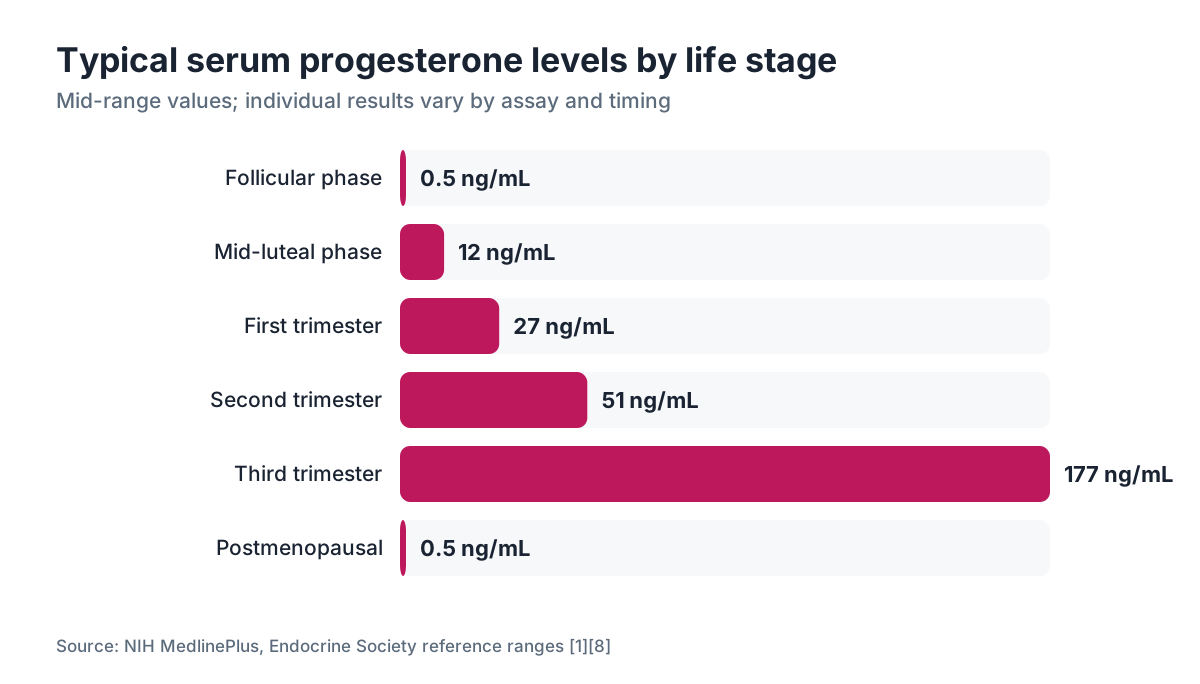
Before puberty, levels sit near zero. At puberty, the ovaries start cycling and the luteal pattern begins: low in the follicular phase (roughly days 1 to 14 of a cycle), a sharp spike after ovulation, a peak around day 21 in a 28-day cycle, then a drop before menstruation. A mid-luteal progesterone above 3 ng/mL confirms ovulation happened. Above 10 ng/mL suggests good luteal function [1].
During pregnancy, levels climb from roughly 10 to 20 ng/mL in the first trimester to 100 to 200 ng/mL by the third [8]. This is the setting where progesterone's uterine-relaxing and immune-modulating properties matter most.
Perimenopause is where it gets complicated. Estrogen swings wildly, often spiking higher than premenopausal levels before it finally declines. Progesterone behaves differently. It tends to fall earlier and more steadily. Cycles turn irregular partly because ovulation happens less often, which means fewer corpus luteums form, which means less progesterone. A woman can have periods that look regular yet be anovulatory (not ovulating) and therefore progesterone-deficient. Our perimenopause age article walks through the typical timeline.
After menopause, confirmed by 12 straight months without a period, ovarian progesterone production essentially stops. Levels fall below 1 ng/mL and stay there. This is the state most women weighing hormone therapy find themselves in.
What symptoms does low progesterone cause?
Low progesterone gets a fraction of the attention low estrogen does, but its effects are real and easy to miss.
The usual complaints tied to progesterone deficiency: sleep disruption (especially trouble staying asleep), anxiety or mood instability, heavy or irregular periods, and spotting between periods. Plenty of women in perimenopause notice worsening sleep and mood before any classic hot flash shows up, and low progesterone is often the reason.
Heavy menstrual bleeding is a badly under-recognized consequence. When progesterone can't adequately oppose estrogen's thickening effect, the lining builds up and then sheds heavily. Anyone dealing with flooding or clotting should have this checked, since anovulatory cycles (and the resulting low progesterone) are a common, treatable cause.
Anxiety that feels new or out of proportion, especially in the perimenopausal years, is worth examining through the lens of declining progesterone's GABA effects. Not every case of anxiety should be treated with hormones. But hormonal causes stay underexplored in standard psychiatric care.
What low progesterone doesn't cause on its own: hot flashes, vaginal dryness, or bone loss. Those are mainly estrogen-deficiency symptoms. Progesterone deficiency and estrogen deficiency often show up together, especially in perimenopause, which muddies the picture.
A mid-luteal serum progesterone level is the standard test for ovulatory function. It's cheap and easy to read. If you're cycling, timing matters: draw it 7 days before the expected period, roughly day 21 in a 28-day cycle [1][11].
How is progesterone different from progestins?
This distinction is genuinely important, and it's worth slowing down for.
Progesterone is the molecule your ovary makes. Micronized progesterone (Prometrium, plus compounded equivalents) is that exact molecule. Progestins are synthetic molecules engineered to switch on progesterone receptors, but their structural differences give them different side-effect profiles and different risks.
The Women's Health Initiative (WHI), published in 2002, found that continuous combined hormone therapy using conjugated equine estrogens plus medroxyprogesterone acetate (a progestin) came with a small increase in breast cancer risk [3]. That study reshaped, and arguably overcorrected, clinical practice for a generation.
Later research told a different story. A large French cohort (the E3N study) published in the International Journal of Cancer found that micronized progesterone combined with estrogen was not tied to the same breast cancer increase as synthetic progestins [6]. The Endocrine Society's clinical practice guidelines acknowledge this difference [12].
The GABA-active metabolite allopregnanolone is specific to natural progesterone. Progestins don't metabolize into allopregnanolone, which is why oral micronized progesterone carries sleep and anti-anxiety benefits that MPA can't copy.
Here's the practical takeaway. If you're discussing hormone replacement therapy with a clinician, ask specifically whether the progestogen prescribed is micronized progesterone or a synthetic progestin. The terms are not interchangeable, and the word "progesterone" printed on a package doesn't guarantee the bioidentical form.
What is the role of progesterone in hormone replacement therapy?
Progesterone in hormone therapy has one non-negotiable job: protecting the endometrium. Any woman with a uterus who takes estrogen must also take a progestogen to prevent endometrial hyperplasia and cancer [3]. Women who've had a hysterectomy don't need it for uterine protection, though some still use it for sleep and mood.
In practice, progesterone comes in a few forms.
Oral micronized progesterone (100 mg or 200 mg capsules) is the form most often prescribed in the US. Take it at night, and the first-pass liver metabolism that produces allopregnanolone actually works in your favor for sleep. The downside: some women feel next-day grogginess at the 200 mg dose.
Progesterone-releasing intrauterine devices (like the Mirena IUD) deliver progestin straight to the uterus with little systemic absorption. This works well for endometrial protection and is used more and more alongside systemic estrogen.
Vaginal progesterone suppositories and gels give local uterine delivery. They show up mostly in fertility treatment and occasionally in menopause protocols.
The schedule matters too. Sequential therapy (progesterone taken 10 to 14 days a month) usually causes a monthly withdrawal bleed. Continuous combined therapy (progesterone every day) aims for no bleeding after a few months of adjustment, though early spotting is common.
WomenRx offers progesterone-inclusive hormone therapy protocols built for perimenopausal and postmenopausal women, with clinical oversight that keeps micronized progesterone and synthetic progestins clearly separate.
Want to understand the estrogen side of the equation? Our estrogen patch overview covers delivery options and dosing ranges.
Does progesterone affect sleep, mood, and the brain?
Yes, and this may be the most underappreciated part of what progesterone does.
Progesterone is a neurosteroid precursor. After you swallow it (or after the ovary makes it), the liver and brain convert it to allopregnanolone, a strong positive allosteric modulator of GABA-A receptors [4]. GABA is the brain's main inhibitory neurotransmitter. More GABA activity means less neuronal excitability, which shows up as calmer mood, easier sleep onset, and lower anxiety.
The mechanism is solid enough that a synthetic form of allopregnanolone, brexanolone (Zulresso), won FDA approval in 2019 specifically for postpartum depression, a condition driven partly by the sudden postpartum crash in progesterone [4]. The drug works by directly mimicking what high pregnancy levels of progesterone had been doing all along.
For perimenopausal women, the takeaway is practical. Erratic progesterone means erratic allopregnanolone, which can look like new anxiety, insomnia, or mood swings that never fully respond to antidepressants or sleep medications because the hormonal root cause goes untouched.
There's early research on progesterone in traumatic brain injury recovery and neuroprotection more broadly, but that evidence is thin and sits outside most women's hormonal health conversations.
One caution: the brain effects of oral progesterone differ from vaginal or transdermal routes, because swallowing it creates much higher allopregnanolone levels through first-pass metabolism. Worth knowing if you're comparing routes.
Does progesterone protect bone density?
Estrogen's bone-protective effects are well established and drive most hormone therapy recommendations around bone density in postmenopausal women. Progesterone's role is smaller, but it isn't zero.
Osteoblasts (bone-building cells) carry progesterone receptors, and lab studies show progesterone can stimulate osteoblast activity [5]. Some observational data suggest anovulatory cycles (cycles without ovulation, and therefore without progesterone) track with lower bone density even in premenopausal women, independent of estrogen status.
A 1990 study by Jerilynn Prior, published in the New England Journal of Medicine, found that female athletes with low progesterone from anovulatory cycles had measurably lower spinal bone density than normally cycling athletes, despite similar estrogen levels [5]. That points to progesterone contributing to bone formation beyond what estrogen provides alone.
Even so, the clinical evidence for progesterone as a standalone bone-protective agent isn't strong enough to swap it in for estrogen when bone loss is the main worry. Think of it as a contributor in a combined approach, not the lead.
For women at risk of osteoporosis, adequate estrogen remains the main hormonal intervention. Making sure progesterone is present too (for endometrial protection and possible bone contribution) rounds out the approach.
What is progesterone's role in the menstrual cycle?
Progesterone and the menstrual cycle are inseparable. The hormone runs the second half of every cycle.
After ovulation, the corpus luteum produces progesterone steadily for 10 to 14 days. That progesterone does three things: it flips the thickened endometrium from proliferative to secretory phase (priming it for a fertilized egg), it suppresses further ovulation (which is why progestins work as contraceptives), and it raises body temperature slightly.
If no fertilized egg implants, the corpus luteum stops making progesterone. This withdrawal sets off the cascade that leads to menstruation. The shedding of the lining is, in a direct sense, caused by progesterone withdrawal.
Irregular cycles, heavy bleeding, and spotting between periods often signal a compromised luteal phase. Luteal phase defect, a shortened or insufficient luteal phase, means progesterone is produced for too few days or in too-low amounts to hold the lining properly. It's a recognized cause of early pregnancy loss and cycle irregularity [11].
Ovulation predictor kits and basal body temperature charting can show whether ovulation is happening. A serum progesterone drawn 7 days before the expected next period (the mid-luteal draw) is the most direct read on corpus luteum function. Labs typically use a 3 ng/mL cutoff to confirm ovulation, though functional luteal adequacy probably needs levels closer to 10 ng/mL [1].
How do progesterone levels change in perimenopause?
Perimenopause is the transition leading up to menopause, usually lasting 4 to 10 years, though that range varies a lot. Our when does menopause start piece breaks down the timeline in full.
The common story says estrogen falls in perimenopause. Partly true, but estrogen actually fluctuates wildly, sometimes spiking to levels above the normal range, before it finally declines. Progesterone's story is cleaner. It tends to fall earlier and more steadily.
Here's the mechanism. Perimenopause begins as ovarian follicle quality and quantity start dropping. Fewer viable follicles mean fewer successful ovulations. Fewer ovulations mean fewer corpus luteums. Fewer corpus luteums mean less progesterone. A woman can keep having regular periods in early perimenopause while going anovulatory in some cycles, which leaves those months with effectively no luteal progesterone at all.
That's why perimenopausal sleep trouble, anxiety, and mood changes so often arrive before the hot flashes most people associate with the transition. Progesterone is falling while estrogen is still around, sometimes in excess.
Clinically, low-dose progesterone (often 100 mg oral micronized progesterone at night) is sometimes prescribed to perimenopausal women just for sleep and mood, even before estrogen therapy is needed or wanted. It's an off-label but evidence-informed approach that matches the real hormonal picture of the transition.
Is progesterone the same as the "pregnancy hormone"?
People call progesterone the pregnancy hormone, and the label fits: without it, pregnancy can't hold. Progesterone relaxes the uterine muscle (preventing contractions), quiets the maternal immune response (preventing rejection of the genetically foreign fetus), maintains the lining that nourishes the early embryo, and later helps build breast tissue for lactation.
But boiling it down to a pregnancy hormone misses most of what it does the other eleven months of the year.
In assisted reproduction, extra progesterone is routinely given after egg retrieval in IVF cycles, because the retrieval process disrupts the follicles that would otherwise form the corpus luteum [1]. These women have no natural progesterone source, so the injected or vaginal progesterone fully substitutes. It's one of the most common clinical uses of progesterone, and it tells you how essential the hormone is to early pregnancy.
Progesterone also shows up in research on preterm birth prevention. Vaginal progesterone in women with a short cervix has been studied as a way to lower preterm birth risk, and some professional societies endorse this use, though the replication data have been mixed.
What are normal progesterone levels by cycle phase and life stage?
A progesterone number means completely different things depending on when in the cycle or life stage it's drawn. Context is everything.
| Life stage / cycle phase | Typical progesterone range | |---|---| | Follicular phase (days 1-13) | < 1 ng/mL | | Mid-luteal phase (around day 21) | 5 - 20 ng/mL | | First trimester pregnancy | 10 - 44 ng/mL | | Second trimester pregnancy | 19.5 - 82.5 ng/mL | | Third trimester pregnancy | 65 - 290 ng/mL | | Postmenopausal | < 1 ng/mL | | Male reference range | 0.2 - 1.4 ng/mL |
These ranges come from standard reference intervals used by major clinical laboratories, and values shift somewhat by assay method [8].
The mid-luteal draw is the clinically meaningful one for assessing ovulatory function. A result below 3 ng/mL at day 21 of a 28-day cycle generally reads as anovulatory for that cycle. Results between 3 and 10 ng/mL suggest ovulation happened but may point to weak luteal function [1][11].
Saliva and dried urine testing for progesterone get heavy marketing from functional medicine practitioners, but they have real limitations. Reference ranges for these tests aren't standardized, and decisions about hormone therapy should rest on serum levels [8].
If you're taking oral micronized progesterone, know that serum levels after oral dosing often look low relative to how much better you feel, because much of the benefit comes from conversion to allopregnanolone in the gut and liver, not from circulating progesterone itself. That's not a flaw in the treatment. It's just pharmacology.
Frequently asked questions
What is the main function of progesterone?
Progesterone prepares the uterine lining for a fertilized egg each month, protects against estrogen-driven endometrial overgrowth, and runs the second half of the menstrual cycle. Beyond reproduction, it converts to a brain-active metabolite (allopregnanolone) that supports sleep and lowers anxiety, which makes it relevant well outside pregnancy.
What happens when progesterone is too low?
Low progesterone commonly causes irregular or heavy periods, spotting between cycles, poor sleep, and more anxiety or mood instability. In women trying to conceive, it raises the risk of early miscarriage from insufficient uterine lining support. During perimenopause, falling progesterone is often the driver of sleep disruption before hot flashes even begin.
Does progesterone help with sleep?
Yes. Oral progesterone metabolizes to allopregnanolone, which activates GABA-A receptors, the same pathway used by sleep medications and anti-anxiety drugs. A study in the journal Sleep found oral micronized progesterone increased slow-wave sleep and improved sleep quality in postmenopausal women. This effect is specific to oral natural progesterone, not synthetic progestins.
Can progesterone cause weight gain?
Progesterone itself doesn't directly add fat, but it can increase appetite and cause some fluid retention, particularly at higher doses. Synthetic progestins (especially medroxyprogesterone acetate) are more strongly linked to weight gain and metabolic changes than micronized progesterone. The evidence for meaningful weight gain with properly dosed progesterone in hormone therapy is modest.
What is the difference between progesterone and progestin?
Progesterone is the molecule your ovaries produce, or its bioidentical pharmaceutical form (micronized progesterone, sold as Prometrium). Progestins are synthetic molecules designed to switch on progesterone receptors but with different structures and side-effect profiles. Micronized progesterone converts to the sleep-promoting metabolite allopregnanolone. Synthetic progestins do not.
Does progesterone protect against breast cancer?
This is genuinely unsettled. Large observational data, including the French E3N cohort, suggest micronized progesterone combined with estrogen carries a lower breast cancer risk than synthetic progestins combined with estrogen. Whether micronized progesterone is neutral or slightly protective versus estrogen alone stays debated. No form of hormone therapy should be called definitively protective against breast cancer.
When should I check my progesterone levels?
For cycle assessment, the right time is 7 days before your expected next period, typically day 21 of a 28-day cycle. This mid-luteal draw catches peak corpus luteum output. Testing at other times gives numbers that look low and are nearly impossible to read. Postmenopausal women and those on hormone therapy can test anytime, with context factored in.
Does progesterone decline during perimenopause?
Yes, and often earlier than estrogen. As ovarian follicle quality declines, ovulation happens less often, producing fewer corpus luteums and less progesterone. A woman may still have periods but go anovulatory in some cycles, leaving those months with essentially no luteal progesterone. This is why perimenopausal sleep and mood issues often arrive before classic hot flashes.
Do women without a uterus need progesterone in hormone therapy?
Progesterone's mandatory job in hormone therapy is protecting the uterine lining from estrogen-driven overgrowth. Women who've had a hysterectomy don't need it for that. Some clinicians still prescribe low-dose oral micronized progesterone to hysterectomized women just for sleep and mood, a reasonable but not universally endorsed approach.
Is natural progesterone safer than synthetic progestins?
Observational evidence suggests micronized (bioidentical) progesterone has a more favorable safety profile than synthetic progestins, particularly around breast cancer risk and cardiovascular markers. The KEEPS trial found oral micronized progesterone did not adversely affect mood, libido, or metabolic markers. Most experts, including the Endocrine Society, now separate the two when counseling on hormone therapy.
Can progesterone help with anxiety?
It can. Progesterone's metabolite allopregnanolone acts on GABA-A receptors and has anxiolytic properties, the same mechanism used by the FDA-approved postpartum depression drug brexanolone (synthetic allopregnanolone). Perimenopausal women noticing new or worse anxiety may be feeling the effects of declining progesterone. That doesn't make progesterone the right treatment for everyone, but it's a plausible hormonal driver.
How does progesterone affect the thyroid?
Progesterone competes with thyroid hormone at receptors and may reduce cellular response to thyroid hormones. Some practitioners believe low progesterone relative to estrogen (estrogen dominance) can worsen thyroid hormone use, feeding hypothyroid-like symptoms. The research here is limited and mostly mechanistic rather than large clinical trials, so read claims about this relationship with caution.
What foods or supplements increase progesterone naturally?
No food reliably raises circulating progesterone in clinically meaningful amounts. Supplements marketed as natural progesterone boosters (wild yam, vitex, zinc) have weak or absent evidence for raising serum progesterone. Wild yam contains diosgenin, which can be converted to progesterone in a lab, but the human body can't make that conversion. If deficiency is confirmed, pharmaceutical micronized progesterone is the only reliable option.
Is progesterone involved in libido?
Progesterone has a complicated relationship with libido. At physiologic luteal-phase levels, it doesn't clearly suppress desire. At high doses, especially with synthetic progestins, libido suppression is a reported side effect. Some research suggests progesterone may work with testosterone for female sexual interest. Falling progesterone in perimenopause likely contributes to libido changes but rarely acts alone.
Sources
- Endocrine Society, Progesterone clinical guidance
- FDA, Prometrium (micronized progesterone) prescribing information
- NAMS (North American Menopause Society), Hormone Therapy Position Statement
- FDA, Zulresso (brexanolone) prescribing information and approval announcement
- Prior JC, New England Journal of Medicine, 1990, progesterone and bone density in athletes
- Fournier A et al., International Journal of Cancer, 2008, French E3N cohort study
- NAMS, The Menopause Society 2023 Position Statement on Hormone Therapy
- NIH National Library of Medicine, MedlinePlus, Progesterone hormone reference ranges
- Schüssler P et al., Sleep, 2008, progesterone and sleep quality
- NIH Office of Research on Women's Health, KEEPS trial summary
- ACOG Practice Bulletin on Diagnosis and Management of Luteal Phase Defect
- Endocrine Society Clinical Practice Guideline, Menopause Hormone Therapy, 2015