Progesterone for perimenopause: what it does, who needs it, and how to take it
TL;DR: Progesterone is usually the first hormone to fall in perimenopause, often years before estrogen drops. It protects the uterine lining, supports sleep, and eases anxiety. Micronized progesterone (Prometrium) has the best safety record. Most women with a uterus on estrogen therapy need it, and some benefit from it even without estrogen.
What does progesterone actually do in perimenopause?
Progesterone is made almost entirely in the ovaries after ovulation. When ovulation becomes irregular in perimenopause, progesterone output becomes erratic too. Some months you ovulate normally. Other months you don't ovulate at all. No ovulation, no progesterone surge. That cycle repeats for years before estrogen meaningfully falls, which is why many women in their late 30s and early 40s feel off long before a hot flash ever appears.
The hormone does several things at once. It opposes estrogen's effect on the uterine lining, so without enough progesterone, the lining thickens and bleeding becomes irregular or heavy [1]. It also binds to GABA receptors in the brain through its metabolite allopregnanolone, producing a calming, sedating effect. That is largely why low progesterone correlates with poor sleep, anxiety, and that wired-but-tired feeling that many perimenopausal women describe before their doctors have any explanation for it.
Low progesterone also appears connected to temperature regulation, though the mechanism is less clear than estrogen's role in hot flashes. Some women notice night sweats start before estrogen has dropped significantly. The loss of progesterone may set the stage for those symptoms by disrupting the central nervous system's thermostat function.
Read more about perimenopause age and when these hormonal shifts typically begin.
When does progesterone start to drop in perimenopause?
Progesterone decline generally starts in the mid-to-late 30s, roughly a decade before the average menopause age of 51 [2]. The Stages of Reproductive Aging Workshop (STRAW+10) framework, the most widely used clinical staging system for the menopause transition, identifies early perimenopause as beginning when cycle length varies by 7 or more days in consecutive cycles [3]. By that stage, irregular ovulation, and therefore irregular progesterone production, is already underway.
Estrogen, by contrast, remains relatively stable or even rises erratically in early perimenopause. The disconnect is important. Many labs come back with "normal" estrogen levels while progesterone is effectively absent in cycles without ovulation. A single serum progesterone drawn in the mid-luteal phase (day 19-22 of a 28-day cycle) below 5 ng/mL suggests the cycle was anovulatory, though timing the draw correctly is genuinely difficult with irregular cycles [4].
This means the window of low-progesterone, normal-or-high-estrogen is real. The clinical term is estrogen dominance, though some practitioners dislike the phrase because it conflates relative and absolute hormone levels. Whatever you call it, the result is similar: heavy periods, breast tenderness, bloating, and disrupted sleep in women whose estrogen panels look fine.
See when does menopause start for a fuller picture of the entire hormonal timeline.
What are the symptoms of low progesterone in perimenopause?
The classic presentation is a cluster of symptoms that seem unrelated until you see them through the lens of progesterone deficiency. Heavy or prolonged bleeding is the most obvious sign, because unopposed estrogen stimulates endometrial growth. Spotting between periods, clotting, and cycles shorter than 24 days also fit this picture [1].
Sleep disruption is the second major complaint. Research published in Menopause found that allopregnanolone, the neurosteroid metabolite of progesterone, has direct sedative properties via GABA-A receptors, and its loss correlates with worsening insomnia in the menopausal transition [5]. Women often describe waking at 2 or 3 a.m. and being unable to return to sleep even when they don't have obvious hot flashes. That 3 a.m. cortisol spike pattern fits the progesterone-GABA disruption model well.
Anxiety and irritability, mood swings that seem out of proportion to circumstances, breast tenderness in the week before a period, bloating, and headaches tied to the luteal phase round out the picture. None of these are exclusive to progesterone deficiency. Thyroid dysfunction, iron deficiency from heavy bleeding, and plain stress cause overlapping symptoms. A good clinician works through the differential rather than treating every perimenopausal symptom with hormones automatically.
The symptoms that most clearly respond to progesterone supplementation are: endometrial protection in women using estrogen, sleep quality, and cycle-related anxiety. The evidence for mood and bloating is softer, largely observational.
What is the difference between micronized progesterone and synthetic progestins?
This distinction matters more than almost anything else in perimenopausal hormone therapy. Micronized progesterone (brand name Prometrium in the US) is bioidentical: it has the same molecular structure as the progesterone your ovaries make [6]. Synthetic progestins such as medroxyprogesterone acetate (MPA), norethindrone acetate, and levonorgestrel are structurally different. They bind to progesterone receptors, yes, but they also bind to androgen, glucocorticoid, and other receptors in ways that create different side effect profiles.
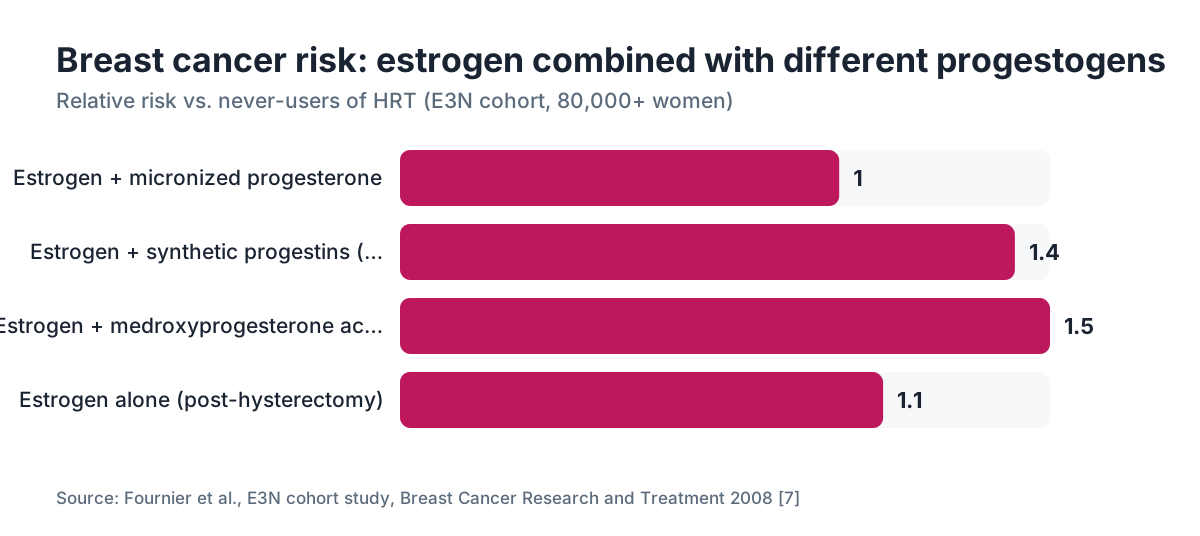
The Women's Health Initiative (WHI) trial that scared millions of women off hormone therapy in 2002 used conjugated equine estrogen plus MPA in one arm. The increased breast cancer signal in that arm has not been replicated in studies using estrogen plus micronized progesterone. The E3N cohort study from France, following over 80,000 women, found that combined therapy with estrogen and micronized progesterone did not increase breast cancer risk at five years, while synthetic progestins were associated with increased risk [7]. That is a real and clinically meaningful difference.
Micronized progesterone also converts to allopregnanolone, which is why it helps sleep. Synthetic progestins do not produce allopregnanolone in the same way, and MPA has actually been shown to block some of progesterone's GABA-A effects. If sleep is a major symptom, that pharmacological difference is directly relevant to which therapy a clinician should choose.
The North American Menopause Society (NAMS) 2022 position statement on hormone therapy states: "Micronized progesterone and dydrogesterone may have a more favorable effect on sleep, mood, and quality of life compared with synthetic progestins." [8]
For a broader view of your hormone therapy options, see our hormone replacement therapy overview.
Does everyone in perimenopause need progesterone?
No. Who needs progesterone, and when, depends on two things: whether you have a uterus, and whether you are using systemic estrogen.
If you have a uterus and are taking systemic estrogen (pills, patches, gels, sprays), you need some form of progestogen to protect the endometrium. This is not optional. Unopposed estrogen raises the risk of endometrial hyperplasia and endometrial cancer in direct proportion to dose and duration of use. The FDA labels for estrogen therapies are explicit on this point [9].
If you have had a hysterectomy, you do not need progesterone to protect a uterus you no longer have. Some clinicians still prescribe it for sleep or mood, which may be reasonable but is off-label and not the standard of care.
If you are in early perimenopause with irregular cycles but not yet on estrogen, some practitioners prescribe cyclic progesterone (10-14 days per month to mirror the luteal phase) to address heavy bleeding and sleep symptoms. This approach has biological logic behind it but less randomized trial data than combined HRT.
Women with intact uteruses who want to use an intrauterine device have another option: the levonorgestrel IUD (Mirena, Liletta) delivers progestogen locally to the uterus and is accepted by NAMS as adequate endometrial protection when paired with systemic estrogen, though it uses a synthetic progestin rather than micronized progesterone [8].
What forms of progesterone are available and how are they taken?
Oral micronized progesterone is the most studied and most commonly prescribed form. Prometrium comes in 100 mg and 200 mg capsules. For uterine protection with continuous combined HRT, the usual dose is 100 mg nightly. For cyclic use (sequential therapy), 200 mg nightly for 12-14 days per month is standard [8]. Taking it at bedtime is almost always preferred because the sedating effect from allopregnanolone conversion is a feature, not a bug, in women with sleep disruption.
Vaginal progesterone gel and suppositories exist (Crinone, Endometrin), primarily licensed for assisted reproduction and luteal phase support. Some practitioners use compounded vaginal progesterone for perimenopausal women who can't tolerate oral forms, though the evidence for endometrial protection via the vaginal route in HRT contexts is thinner than for oral use.
Progesterone cream sold over the counter is a different matter. Wild yam creams and many OTC progesterone creams contain either no measurable progesterone or sub-therapeutic amounts that do not reliably protect the endometrium. A 2005 review in the Journal of Obstetrics and Gynaecology Canada found serum progesterone levels after transdermal cream were insufficient for endometrial protection in most women [10]. If you have a uterus and are taking estrogen, an OTC cream is not an adequate substitute for pharmaceutical-grade progesterone.
Compounded bioidentical progesterone in higher-dose transdermal or sublingual forms is also available through compounding pharmacies. The FDA has not approved these preparations for any indication, and absorption is highly variable. Some women do well on them, but if the goal is endometrial protection, the data strongly favor oral micronized progesterone.
For background on the progesterone hormone itself, including its broader physiology, see our full reference article.
What does the research say about progesterone and sleep in perimenopause?
Sleep disruption is one of the most consistent complaints in perimenopause, and it is one area where progesterone has reasonably good mechanistic and clinical data behind it.
A randomized controlled trial published in Menopause in 2012 (Schüssler et al.) found that oral micronized progesterone at 300 mg significantly improved sleep quality in postmenopausal women, including reductions in wakefulness after sleep onset and increases in slow-wave sleep, compared to placebo [5]. The researchers attributed the effect primarily to allopregnanolone's positive allosteric modulation of GABA-A receptors, essentially the same mechanism as some sedative medications.
The KEEPS trial (Kronos Early Estrogen Prevention Study), which enrolled recently menopausal women aged 42-58, included sleep as a secondary outcome. Women on oral progesterone reported better sleep than those on vaginal progesterone gel, consistent with the oral conversion to allopregnanolone being the key driver [11].
Nobody has a perfect large RCT on progesterone monotherapy for sleep in perimenopausal women who are not using estrogen. The closest evidence comes from the studies above plus smaller observational work. The mechanistic rationale is strong enough that most menopause specialists consider 100 mg oral micronized progesterone at bedtime a reasonable first move for a perimenopausal woman whose main complaint is sleep disruption, provided there are no contraindications.
Contraindications to progesterone include known or suspected progesterone-sensitive cancers, active liver disease, undiagnosed abnormal genital bleeding, and hypersensitivity to peanuts (Prometrium capsules are formulated in peanut oil) [9].
How does progesterone interact with estrogen therapy in perimenopause?
Estrogen and progesterone work together in a cycle that perimenopause disrupts. Estrogen primes the endometrium and reproductive tissues; progesterone matures and stabilizes them. In the context of hormone therapy, the pairing is about protection and balance.
Continuous combined therapy means taking both estrogen and progesterone every day. This typically leads to amenorrhea (no periods) within a few months and is often preferred by women who are further into the transition or postmenopausal. Sequential (cyclic) therapy mimics a natural cycle: estrogen daily, progesterone for 12-14 days per month, producing a scheduled withdrawal bleed. Most clinicians choose sequential therapy for women still having some natural cycles in early perimenopause, and switch to continuous combined later.
The dose of progesterone matters. Higher doses provide stronger endometrial protection but may cause more sedation or mood changes. Lower doses reduce side effects but may not protect the endometrium adequately at higher estrogen doses. The general rule: the higher the estrogen dose, the more progesterone you need. NAMS's 2022 position statement provides dose-matching guidance for commonly used regimens [8].
An estrogen patch combined with oral micronized progesterone at night is currently one of the most commonly recommended regimens among menopause specialists. Two reasons. Transdermal estrogen skips first-pass liver metabolism, which cuts clot risk, and the oral progesterone delivers the sleep benefit from allopregnanolone conversion.
A telehealth service like WomenRx can prescribe and manage both components together, which matters because the estrogen-progesterone balance needs to be calibrated as a unit, not optimized in isolation.
Is progesterone safe? What are the real risks?
The safety profile of micronized progesterone is meaningfully better than synthetic progestins, but it is not risk-free, and the difference matters when you are making a long-term decision.
Breast cancer risk is the central concern for most women. The E3N cohort study, which is the most cited evidence on this, found no statistically significant increase in breast cancer risk with estrogen plus micronized progesterone over 5 years, compared to a 40% increased risk with estrogen plus synthetic progestins [7]. The British Million Women Study found similar directional results, though exact numbers differed. Be honest about what these studies are: most are observational, not randomized. The ideal trial comparing micronized progesterone to placebo for 10-plus years in a large population does not exist.
Blood clot risk (VTE) is primarily associated with oral estrogen, not progesterone. Transdermal estrogen does not carry the same VTE elevation. Progesterone itself does not appear to increase VTE risk, and some data suggest it may be neutral or mildly protective compared to synthetic progestins [8].
Cardiovascular effects of micronized progesterone appear neutral to favorable in most studies, whereas MPA has been shown to blunt some of estrogen's beneficial cardiovascular effects in animal and some human studies.
Side effects you actually see clinically: sedation (usually from oral dosing, often managed by taking it at bedtime), mild dizziness, bloating in the first few weeks, and breast tenderness. Some women get mood changes, which occasionally means progesterone makes them feel worse rather than better. This is more common in women with a history of progesterone sensitivity or PMDD.
The FDA-approved labeling for Prometrium notes: "Progesterone should not be used in women with known hypersensitivity to progesterone or any of the other ingredients, undiagnosed abnormal vaginal bleeding, liver dysfunction or disease, or known or suspected malignancy of the breast or genital organs." [9]
How do you know if your progesterone levels are actually low?
Testing progesterone in perimenopause is genuinely tricky because levels swing hard depending on whether you ovulated and where you are in your cycle.
A serum progesterone level drawn in the mid-luteal phase (roughly 7 days after ovulation, or day 21 in a textbook 28-day cycle) is the most informative single test. A level above 10 ng/mL suggests ovulation occurred. A level below 3 ng/mL in that window suggests an anovulatory cycle. In perimenopause with irregular cycles, you often don't know exactly when day 21 is, which makes interpretation genuinely uncertain [4].
Saliva and urine hormone testing for progesterone are available through direct-to-consumer labs and some functional medicine practitioners. The correlation between saliva progesterone and serum progesterone is inconsistent, and reference ranges vary widely across labs. The Endocrine Society's clinical practice guidelines on menopausal hormone therapy do not recommend saliva testing for guiding HRT decisions, noting the lack of validated reference ranges and poor reproducibility [12].
In practice, most experienced menopause clinicians treat based on symptoms and cycle history rather than a single progesterone number. The lab confirms whether ovulation is happening; it doesn't replace the clinical picture. A woman with irregular cycles, heavy bleeding, poor sleep, and luteal-phase anxiety has a compelling clinical case for progesterone support regardless of whether one blood draw came back at 4 or 6 ng/mL.
FSH, LH, and estradiol levels round out the hormonal picture and help stage the perimenopause. FSH consistently above 25 mIU/mL in the follicular phase, combined with cycle irregularity, places a woman solidly in the menopausal transition [3].
What about progesterone for women who don't want full hormone therapy?
Some perimenopausal women aren't ready for or interested in full HRT but have specific symptoms, particularly sleep disruption, heavy periods, or cycle-related anxiety, that might respond to low-dose progesterone alone.
Cyclic progesterone, prescribed as 100-200 mg oral micronized progesterone for 14 days per month, is used by some practitioners to regulate the cycle, reduce heavy bleeding, and improve the luteal-phase symptom cluster without adding estrogen. There is no large randomized trial specifically on this in perimenopausal women, but it is biologically coherent and has a benign safety profile for short-term use.
For heavy bleeding in particular, cyclic progesterone or a levonorgestrel IUD are both established options that don't require adding systemic estrogen. The IUD has the stronger evidence base for bleeding control specifically [1].
Women with severe PMDD or PME (premenstrual exacerbation of an underlying condition) in perimenopause sometimes respond to continuous low-dose oral progesterone, which stabilizes allopregnanolone levels rather than letting them fluctuate. This is a specialized area and ideally managed with someone who has genuine menopause and mood expertise.
The decision to start any hormone therapy, including progesterone monotherapy, should account for personal and family history of hormone-sensitive cancers, liver disease, cardiovascular risk, and individual symptom burden. There is no universally right answer, and the best clinicians present the actual evidence and let the patient weigh it rather than deciding for her.
How does progesterone fit into a broader perimenopause treatment plan?
Progesterone doesn't work in a vacuum. It is one piece of a hormonal picture that also includes estrogen, testosterone (often overlooked in women), thyroid function, cortisol patterns, and metabolic health. Treating sleep with progesterone when the actual driver is undiagnosed hypothyroidism wastes time. Treating anxiety with progesterone when it's primarily life-circumstance-driven misses the point.
That said, for women who have worked through the differential and are clearly in the hormonal phase of the transition, progesterone is often the most underused piece. Estrogen gets most of the attention in popular menopause coverage, but progesterone's effects on sleep, mood, and cycle regulation matter just as much for quality of life in perimenopause.
A complete perimenopause evaluation typically includes: cycle history, symptom timeline, relevant bloodwork (FSH, estradiol, progesterone, TSH, ferritin if bleeding heavily, lipids, fasting glucose), blood pressure, and a discussion of personal and family medical history. From there, a treatment plan might include lifestyle changes, HRT, or both.
Weight changes in perimenopause are also common, driven partly by hormonal shifts and partly by the normal metabolic changes of midlife. Some women pursue GLP-1 receptor agonists for weight management alongside hormone therapy. The evidence base for GLP-1s, including semaglutide for weight loss, is separate from the hormone therapy evidence base, and the two treatments are not mutually exclusive. A service like WomenRx evaluates both in the context of overall midlife women's health.
For women concerned about bone health during the transition, estrogen is the most effective intervention for bone density preservation, and bone density testing becomes relevant around the time of menopause. Read more about menopause to understand the full landscape of changes that begin in perimenopause.
Frequently asked questions
Can I take progesterone if I still have regular periods?
Yes, and it's done fairly often for luteal-phase symptoms like pre-period insomnia, anxiety, or heavy bleeding. The typical approach is cyclic dosing: 100-200 mg of oral micronized progesterone during the second half of your cycle (days 14-28), mimicking what the corpus luteum should produce after ovulation. You'd still need a prescription and a clinical evaluation to make sure there's no other cause for the symptoms.
Is micronized progesterone the same as bioidentical progesterone?
Yes. Micronized progesterone (Prometrium, and its generics) is FDA-approved, bioidentical in that it is molecularly identical to human progesterone, and standardized for dose and absorption. Compounded bioidentical progesterone from compounding pharmacies is also bioidentical in structure but lacks FDA approval, and absorption especially from creams can be inconsistent. For most women, the FDA-approved oral form is the more reliable choice.
Does progesterone cause weight gain?
Oral micronized progesterone can cause water retention in the first few weeks, which some women experience as bloating or a small weight increase. It doesn't cause the sustained weight gain that some synthetic progestins can. Most women's weight stabilizes within a cycle or two. The sedating effect can reduce physical activity if the dose is too high and not timed to bedtime, which is another reason the standard advice is to take it at night.
Can progesterone help with hot flashes?
Progesterone alone is not a first-line treatment for hot flashes, and the evidence is weaker than for estrogen. A small RCT by Prior et al. found oral progesterone reduced hot flash frequency compared to placebo, but effect sizes were modest. Estrogen remains the most effective pharmacological treatment for vasomotor symptoms. Progesterone works best as a complement to estrogen in women who need endometrial protection and as a primary treatment for sleep and cycle symptoms.
What is the difference between progesterone and progestin?
Progesterone is the naturally occurring hormone made by the corpus luteum after ovulation. Progestins are synthetic compounds that mimic some but not all of progesterone's actions and bind to additional hormone receptors in ways progesterone doesn't. The difference matters clinically because synthetic progestins, especially medroxyprogesterone acetate, have been linked to higher breast cancer risk and negative cardiovascular effects compared to micronized progesterone in observational data.
How long does it take for progesterone to start working for sleep?
Most women notice improved sleep within the first week of taking oral micronized progesterone at bedtime, often within the first two or three nights. The GABA-A receptor effect from allopregnanolone is relatively rapid. Full hormonal stabilization, including effects on cycle regularity and mood, takes longer, typically 2-3 months. If sleep doesn't improve within 4-6 weeks, dose adjustment or evaluation for other contributors like sleep apnea is appropriate.
Do I need progesterone if I use an estrogen patch?
If you have a uterus, yes. The route of estrogen delivery doesn't change the need for endometrial protection. A transdermal estrogen patch with oral micronized progesterone taken nightly is one of the most commonly recommended combined regimens, partly because transdermal estrogen avoids the VTE risk associated with oral estrogen and the oral progesterone provides sleep benefits. Without progesterone, estrogen alone raises endometrial cancer risk.
Can low progesterone cause anxiety and depression in perimenopause?
It can contribute. Allopregnanolone, the neurosteroid metabolite of progesterone, has anxiolytic and antidepressant-adjacent effects via GABA-A receptors. Its loss in anovulatory cycles or late perimenopause correlates with increased anxiety and mood dysregulation in some women. However, perimenopause-related mood changes are multifactorial, and progesterone is not a proven antidepressant. Women with significant depression or anxiety should also be evaluated for SSRIs or therapy, more than hormones.
Is progesterone safe if I have a family history of breast cancer?
This requires a personalized conversation with a clinician who knows your full history. The available data, primarily from the E3N cohort study, suggest micronized progesterone does not significantly increase breast cancer risk when combined with estrogen, unlike synthetic progestins. However, women with BRCA1/2 mutations or a strong family history typically warrant more conservative risk-benefit analysis. The benefit of progesterone for uterine protection still applies if you're using estrogen and have a uterus.
What's the difference between cyclic and continuous progesterone regimens?
Cyclic (sequential) therapy means taking progesterone for 12-14 days per month, which typically produces a scheduled withdrawal bleed and is standard for women in early perimenopause who still have some natural cycles. Continuous therapy means taking a lower dose (usually 100 mg) every day, which eventually leads to amenorrhea and is more common for women who are postmenopausal or further into the transition. NAMS recommends discussing which fits your current hormonal stage with your prescriber.
Can progesterone interact with other medications?
Yes. CYP3A4 inducers (rifampin, some anticonvulsants, St. John's Wort) can reduce progesterone levels by increasing its metabolism. Ketoconazole and other CYP3A4 inhibitors can raise progesterone exposure. Oral progesterone's sedative effect is additive with alcohol, benzodiazepines, and other CNS depressants. The peanut oil base in Prometrium is a real concern for women with peanut allergies. Always give your prescriber a full medication and supplement list.
How is perimenopause progesterone use different from birth control progesterone?
Hormonal contraceptives use synthetic progestins, not micronized progesterone, and at doses designed to suppress ovulation. The progestin in combination pills or progestin-only pills (like norethindrone) is structurally very different from the micronized progesterone used in HRT. Perimenopause HRT with micronized progesterone is not contraceptive, which matters because ovulation (and therefore pregnancy) can still occur in perimenopause. Women who need contraception in perimenopause should discuss options that cover both needs.
What blood tests should I ask for to evaluate my progesterone status?
Ask for a serum progesterone drawn in the mid-luteal phase, roughly 7 days after ovulation or day 19-22 if cycles are still predictable. Pair it with FSH, estradiol (follicular phase), TSH, and a CBC if you have heavy bleeding. A mid-luteal progesterone above 10 ng/mL suggests normal ovulation occurred. Below 3 ng/mL in that window points to anovulation. In irregular cycles, timing is hard, so multiple data points over a few months matter more than a single result.
Can I take progesterone without seeing a doctor?
Prescription progesterone, including Prometrium, requires a clinician's prescription in the US. OTC progesterone creams are available but deliver unreliable amounts and should not be counted on for endometrial protection. If you have a uterus and are taking estrogen, pharmaceutical-grade oral or vaginal progesterone prescribed by a clinician is the appropriate option. Self-treating with OTC creams when you need endometrial protection carries a real risk of undetected endometrial hyperplasia.
Sources
- ACOG Practice Bulletin No. 136 – Management of Abnormal Uterine Bleeding
- CDC National Center for Health Statistics – Menopause statistics
- Harlow SD et al., STRAW+10 staging system, Climacteric 2012
- Endocrine Society – Female Hypogonadism Clinical Practice Guideline
- Schüssler P et al., Progesterone reduces wakefulness in sleep EEG and has no effect on cognition, Menopause 2008
- FDA – Prometrium (progesterone) prescribing information
- Fournier A et al., E3N cohort study – Breast cancer risk and combined HRT, Breast Cancer Research and Treatment 2008
- The Menopause Society (NAMS) – 2022 Hormone Therapy Position Statement
- FDA – Prometrium full prescribing information, contraindications section
- Wren BG et al., Transdermal progesterone and endometrial protection, Journal of Obstetrics and Gynaecology Canada 2005
- Santoro N et al., KEEPS trial results – menopausal symptoms and hormone therapy, Journal of Clinical Endocrinology and Metabolism 2016
- Endocrine Society – Menopause and Hormone Therapy Clinical Practice Guideline