Progesterone-enhancing foods: what the evidence actually says
TL;DR: No food directly raises progesterone, but several nutrients support the hormonal pathways your body uses to make it. Zinc, magnesium, vitamin B6, and vitamin C all have documented roles in progesterone synthesis or corpus luteum function. Diet can help when deficiency is the limiting factor; it rarely replaces clinical treatment when levels are genuinely low.
Can food actually raise your progesterone levels?
Short answer: not directly. Progesterone is a steroid hormone made primarily by the corpus luteum after ovulation, and later by the placenta during pregnancy. Your ovaries synthesize it from cholesterol through a multi-step enzymatic process. No food contains meaningful amounts of bioavailable progesterone, and the foods often marketed as "progesterone-boosting" mostly work one step removed, by supplying cofactors that the enzymes in that pathway need to function.
That distinction matters a lot. If your progesterone is low because you're not ovulating (the most common reason in perimenopause), no amount of pumpkin seeds will fix the underlying problem [1]. But if suboptimal intake of zinc, magnesium, or vitamin B6 is quietly limiting your corpus luteum's output, improving those levels through food is a real and reasonable intervention.
Here's the honest framing. Diet is a foundation, not a treatment. It creates conditions where your hormonal machinery can work as well as it possibly can. Once that floor is set, if progesterone is still low, you're dealing with a structural problem, and structural problems need clinical answers. For context on what normal progesterone levels look like across the menstrual cycle and why they shift so dramatically in perimenopause, see our overview of progesterone.
Which nutrients are most tied to progesterone production?
Four nutrients have the clearest mechanistic connection to progesterone synthesis, and each has at least some human data behind it.
Zinc is required for the pituitary to release LH (luteinizing hormone), which triggers ovulation and then sustains corpus luteum function. A 2018 review in the Journal of Reproduction and Infertility found that zinc deficiency was associated with impaired LH secretion and shortened luteal phases [2]. Food sources with high zinc: oysters (the single best source at roughly 74 mg per 3 oz serving), beef, pumpkin seeds, and lentils.
Vitamin B6 is a cofactor for the enzymes that convert progesterone precursors and also helps the liver clear excess estrogen, which indirectly improves the estrogen-to-progesterone ratio. A 1984 double-blind trial published in Infertility found that B6 supplementation (200-800 mg/day, which is higher than food can deliver) improved luteal phase deficiency in some women [3]. At food-achievable levels, B6 from chickpeas, salmon, and potatoes supports baseline pathway function.
Magnesium is a cofactor for more than 300 enzymatic reactions, including several in steroid hormone synthesis. Magnesium also modulates cortisol, and chronically high cortisol competes with progesterone for shared receptor sites and blunts LH pulsatility. Pumpkin seeds, dark leafy greens, and dark chocolate are meaningful sources.
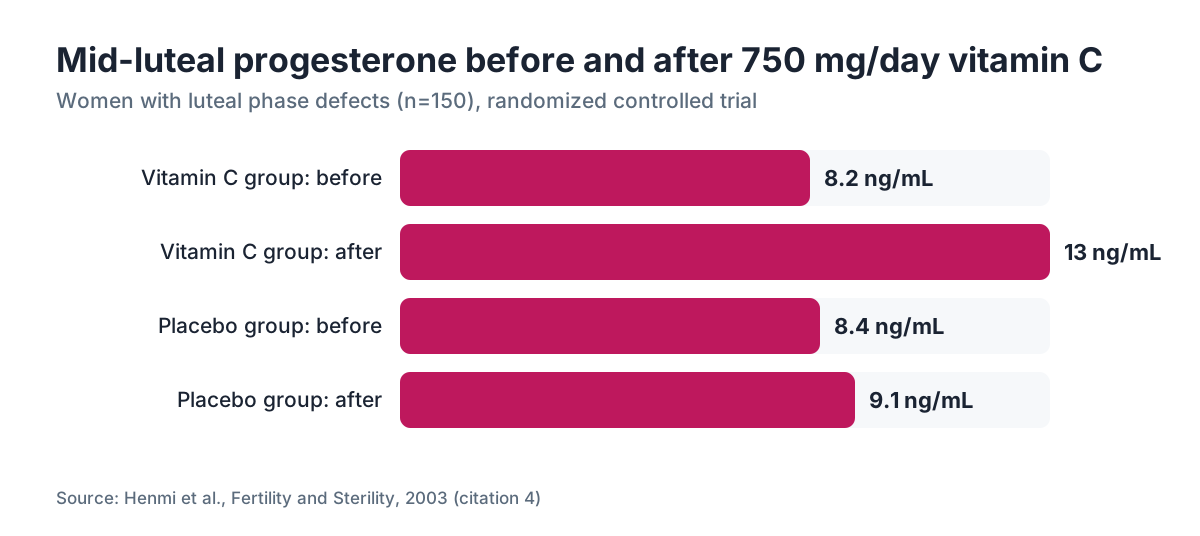
Vitamin C is concentrated in the corpus luteum at higher levels than almost any other tissue in the body. A small but frequently cited 2003 randomized trial in Fertility and Sterility (n=150) found that 750 mg/day of vitamin C significantly raised mid-luteal progesterone levels in women with luteal phase defects, from a mean of 8.2 ng/mL to 13.0 ng/mL [4]. Citrus, bell peppers, and kiwi are the best whole-food sources, though reaching 750 mg through food alone is difficult.
Vitamin E and selenium appear in the same corpus luteum literature, mostly in animal models, with weaker human evidence. Worth eating for general health. Not worth calling progesterone-specific.
What foods are highest in these progesterone-supporting nutrients?
Here is a practical breakdown of foods that deliver the four key nutrients in meaningful amounts. The table uses standard serving sizes and approximate values from the USDA FoodData Central database [5].
| Food | Serving | Key nutrient | Amount | |---|---|---|---| | Oysters (cooked) | 3 oz | Zinc | ~74 mg | | Pumpkin seeds | 1 oz | Zinc + Magnesium | 2.2 mg Zn / 168 mg Mg | | Beef (ground, lean) | 3 oz | Zinc | ~5.4 mg | | Chickpeas (cooked) | ½ cup | Vitamin B6 | ~0.57 mg | | Salmon (cooked) | 3 oz | Vitamin B6 | ~0.91 mg | | Red bell pepper | 1 medium | Vitamin C | ~152 mg | | Kiwi | 1 medium | Vitamin C | ~64 mg | | Dark leafy greens (spinach) | ½ cup cooked | Magnesium | ~83 mg | | Dark chocolate (70-85%) | 1 oz | Magnesium | ~65 mg | | Lentils (cooked) | ½ cup | Zinc + B6 | 1.3 mg Zn / 0.18 mg B6 |
A few things jump out. Oysters are almost comically superior for zinc. One serving covers the entire RDA (8 mg for women) nearly ten times over. Red bell pepper beats orange juice for vitamin C by a meaningful margin and adds almost no sugar. Pumpkin seeds are a rare food that simultaneously hits zinc and magnesium, which is why they show up constantly in discussions of luteal support.
Cholesterol deserves a mention here too. Progesterone is built from cholesterol. Very low-fat diets that push LDL and HDL below normal ranges can, in theory, limit substrate availability. This is unlikely to be the rate-limiting step for most women eating a normal diet, but it's worth knowing if you've been on an extremely restrictive fat intake for years.
Do phytoestrogens or "hormone-balancing" foods actually help progesterone?
Phytoestrogens (found in soy, flaxseed, red clover, and legumes) are plant compounds that bind weakly to estrogen receptors. They are not progesterone precursors. The marketing that lumps them into "hormone-balancing" foods is imprecise at best.
Soy's effect on progesterone specifically is genuinely mixed. Research published in the Cancer Epidemiology, Biomarkers and Prevention literature found that soy protein consumption lengthened the follicular phase and reduced peak progesterone levels in some subjects [6]. That is the opposite of what most people are hoping for. The effect may be dose-dependent and varies by individual gut microbiome composition (specifically bacteria that convert isoflavones to equol), but the blanket claim that soy boosts progesterone is not supported.
Flaxseed is similarly complicated. Lignans in flax do modulate estrogen metabolism through enterolignans produced in the gut, and there is reasonable evidence they can improve the estrogen-to-progesterone ratio indirectly by reducing circulating estradiol. But "reduces estrogen" and "raises progesterone" are different things.
Vitex agnus-castus (chasteberry) is an herbal supplement, not a food, but it deserves mention because it appears in almost every "natural progesterone" article online. Vitex appears to work on dopamine receptors in the pituitary, reducing prolactin and secondarily allowing LH to trigger ovulation more reliably. A systematic review in Phytomedicine found some evidence for Vitex in PMS and luteal phase deficiency, but the evidence quality was graded low-to-moderate [7]. It is not a source of progesterone and should not be used during pregnancy.
Does body fat affect progesterone, and does diet influence that?
Yes, and this is underappreciated. Both very low body fat and excess body fat disrupt progesterone through different mechanisms.
Women with body fat below roughly 17-22% often stop ovulating entirely (hypothalamic amenorrhea), which eliminates the primary source of progesterone. Restrictive eating that creates significant energy deficits signals the hypothalamus to downregulate reproductive function. This is not a food-specific effect. It's a caloric and metabolic one.
At the other end, excess adipose tissue produces more aromatase, the enzyme that converts androgens to estrogen. Higher estrogen without a corresponding rise in progesterone creates estrogen dominance, a pattern tied to heavier or longer periods, fibroids, and breast tenderness. Dietary patterns that support a healthy body weight indirectly support a better estrogen-to-progesterone ratio.
The Mediterranean diet pattern, high in vegetables, legumes, and olive oil with moderate fish and low processed food, has some of the best longitudinal data for hormonal health broadly. A 2018 study in Nutrients found that adherence to a Mediterranean dietary pattern was associated with lower rates of anovulation in women of reproductive age [8]. The mechanism is probably multi-factorial: better insulin sensitivity, lower inflammatory load, and higher micronutrient density all contribute.
Insulin resistance specifically disrupts the HPO axis (hypothalamic-pituitary-ovarian axis) and can suppress ovulation even in women who are not clinically diabetic. A diet that stabilizes blood glucose (adequate protein and fiber, reduced refined carbohydrates) supports more regular ovulation, which is the most direct dietary lever on progesterone output.
How does stress affect progesterone and what can diet do about it?
The "pregnenolone steal" concept has a kernel of truth, even if the name gets overused online. Pregnenolone is the precursor to both cortisol and progesterone. Under chronic stress, the adrenal glands prioritize cortisol production, and there is some evidence in animal models that this can reduce progesterone synthesis. The human evidence is less clean, but observational studies consistently show that women with higher perceived stress scores have lower mid-luteal progesterone [9].
Diet intersects with this in a few ways. Magnesium is depleted faster under chronic stress and also dampens cortisol output. Getting adequate magnesium from food (400 mg/day is the RDA for adult women) is genuinely useful here. Omega-3 fatty acids from fatty fish also show consistent anti-inflammatory and cortisol-moderating effects in clinical trials, though the effect size is modest.
Caffeine's role is debated. Some observational data links very high caffeine intake (more than 500 mg/day) to lower progesterone levels in the luteal phase, but the studies carry significant confounding and most show no meaningful effect at typical coffee consumption levels (1-2 cups/day) [10]. Alcohol is a cleaner problem. It impairs liver estrogen metabolism and some data suggest it blunts LH pulsatility acutely. More than 7 drinks per week is probably worth reconsidering if hormone balance is a priority.
Sleep is tightly coupled to cortisol and LH pulsatility. It isn't a food, but poor sleep driven by high caffeine or late eating times undermines the hormonal environment you're trying to support with food.
Does progesterone change in perimenopause and menopause, and can diet help then?
Progesterone drops first in perimenopause, often before estrogen does. As ovarian reserve declines, cycles become irregular and ovulation becomes inconsistent. No ovulation means no corpus luteum, and therefore little to no luteal phase progesterone. This is not a nutritional deficiency problem. It's a structural change in ovarian function.
For most women in early perimenopause, dietary optimization of the nutrients above is still worth doing. If you're still ovulating, maximizing the conditions for your corpus luteum to function well makes sense. But as perimenopause advances, the window where food can meaningfully shift progesterone narrows considerably.
By the time a woman reaches menopause (12 consecutive months without a period), progesterone production is essentially negligible regardless of diet. At that stage, if progesterone replacement is clinically indicated, it means using bioidentical or synthetic progestogens, typically as part of hormone replacement therapy. The FDA-approved oral micronized progesterone (Prometrium) is bioidentical in structure and has a strong safety record in postmenopausal women on estrogen therapy [11]. You can read more about the full picture of hormone replacement therapy and estrogen patches in our related guides.
If you're in the perimenopausal window and wondering whether your symptoms reflect low progesterone, WomenRx offers telehealth evaluation where a clinician can order the right labs and discuss whether dietary changes, supplementation, or prescription therapy fits your situation.
Are there foods that lower progesterone you should avoid?
A few patterns are worth limiting if progesterone support is the goal.
High-glycemic diets (lots of refined carbohydrates, sugary beverages, low fiber) worsen insulin resistance, which in turn disrupts ovulation. This is especially relevant for women with PCOS, where anovulation is the primary mechanism of low progesterone. Reducing refined carbs and increasing dietary fiber consistently improves ovulatory frequency in this population [12].
Very low calorie intake, particularly below 1200-1400 kcal/day sustained for months, suppresses GnRH pulsatility and shuts down the reproductive axis. This is one reason rapid weight loss, even when intentional and medically supervised, sometimes causes cycle disruption. The effect is usually reversible once caloric intake normalizes.
Excessive soy at pharmacological doses (concentrated isoflavone supplements rather than whole soy foods) may suppress progesterone based on the study cited earlier. Eating tofu or edamame a few times a week is unlikely to be a meaningful problem for most women.
Alcohol, as mentioned above, impairs estrogen clearance and blunts the LH surge, which delays or prevents ovulation. Even moderate regular intake (5-7 drinks/week) shows measurable effects on hormonal patterns in some studies.
What does a progesterone-supportive diet actually look like day to day?
There is no single dietary template validated specifically for progesterone, but pulling the evidence together, this pattern covers the most defensible ground.
Protein at every meal, targeting 1.2-1.6 g/kg body weight, supports overall hormonal synthesis and prevents the muscle loss and metabolic slowdown that disrupts glucose regulation. Fatty fish (salmon, sardines, mackerel) two to three times per week covers omega-3s and vitamin B6 at once. A handful of pumpkin seeds most days is one of the most efficient single-food moves for zinc and magnesium combined.
Colorful vegetables at every meal deliver the cofactors and antioxidants that protect corpus luteum function. Bell peppers, broccoli, and kiwi keep vitamin C levels consistent. Dark leafy greens (spinach, Swiss chard) handle magnesium alongside folate.
Make cholesterol less scary. Eggs are a legitimate food for women trying to support steroid hormone production. The fear of dietary cholesterol raising cardiovascular risk has been substantially walked back in mainstream nutrition guidance since 2015, when the U.S. Dietary Guidelines Advisory Committee removed the 300 mg/day dietary cholesterol limit [13]. Two eggs daily is fine for most women without familial hypercholesterolemia.
Keep processed food low, fiber high (aiming for 25-35 g/day), and refined carbohydrates moderate. That last point is less about a specific progesterone mechanism and more about maintaining the insulin sensitivity and ovulatory regularity that underpin progesterone output.
When does diet stop being enough and clinical treatment become necessary?
If your luteal phase progesterone (drawn at day 21 of a 28-day cycle, or 7 days after confirmed ovulation) is consistently below 10 ng/mL, dietary optimization is unlikely to be enough on its own. A level below 3 ng/mL in the mid-luteal phase generally indicates anovulation, not suboptimal corpus luteum function, and no dietary change will resolve that.
Symptoms that suggest progesterone is genuinely low and may need clinical attention: cycles shorter than 24 days, very heavy periods, significant premenstrual mood changes (especially anxiety and insomnia in the week before your period), difficulty maintaining early pregnancies, and the progressive cycle irregularity of perimenopause. These are signals worth evaluating with a clinician, more than optimizing your diet.
For women confirmed to need supplementation, oral micronized progesterone (Prometrium, 200 mg taken at bedtime for 12-14 days of the cycle, or 100 mg nightly for postmenopausal HRT) is the most commonly prescribed option. The North American Menopause Society (NAMS) specifically recommends micronized progesterone over synthetic progestins for postmenopausal women due to its more favorable cardiovascular and breast safety profile [14].
Diet and clinical treatment are not either-or. Eating in a way that supports your hormonal machinery still matters even if you're also on prescription progesterone, because it shapes how you metabolize hormones, your inflammatory baseline, and your general metabolic health. Think of food as the floor and treatment as the structure built on top of it.
If you want a clinical evaluation of your hormone levels, the progesterone overview on WomenRx walks through what labs to request and how to interpret them.
What about supplements, more than food?
This article focuses on food, but the two are hard to fully separate because several nutrients relevant to progesterone are difficult to get in therapeutic amounts from diet alone.
Vitamin C at 750 mg/day (the dose used in the Fertility and Sterility trial showing a 4.8 ng/mL increase in luteal progesterone) is about what you'd get from 5-7 medium bell peppers or 10 kiwis per day. Achievable in principle, impractical in practice. A 500-750 mg vitamin C supplement fills the gap without drama.
Magnesium glycinate or magnesium threonate absorb better than magnesium oxide. If you're symptomatic for low magnesium (poor sleep, muscle cramps, constipation, heightened anxiety) and eating plenty of greens and seeds, a 200-300 mg supplement at bedtime is reasonable.
Zinc at 8-11 mg/day is achievable through diet if you eat red meat or shellfish regularly. Vegetarians and vegans often fall short because phytates in legumes and grains reduce zinc absorption, and a 15-25 mg zinc supplement (as zinc picolinate or zinc bisglycinate) may be warranted.
Nobody has great randomized controlled trial data on combined micronutrient supplementation specifically for progesterone in perimenopausal women. The closest relevant data comes from fertility literature, which doesn't map perfectly. Be appropriately skeptical of expensive "hormone balance" supplement blends. Many contain sub-therapeutic doses of the nutrients that actually have evidence, padded with herbs that carry minimal human data.
Frequently asked questions
What foods are highest in progesterone naturally?
No food contains meaningful amounts of bioavailable progesterone. The marketing around "high-progesterone foods" is misleading. What certain foods do contain are nutrients, especially zinc, vitamin B6, magnesium, and vitamin C, that support the body's own progesterone-making machinery. Oysters, pumpkin seeds, salmon, chickpeas, and red bell peppers are the most evidence-backed choices for these cofactors.
Can eating more pumpkin seeds raise progesterone?
Pumpkin seeds are a genuinely useful food because one ounce delivers both zinc (about 2.2 mg) and magnesium (about 168 mg), two nutrients linked to corpus luteum function and LH secretion. If zinc or magnesium deficiency is limiting your progesterone output, adding pumpkin seeds to your diet daily may help. They won't override anovulation or menopausal ovarian decline, but they're a smart daily habit.
Does vitamin C actually raise progesterone?
One small but well-designed randomized trial published in Fertility and Sterility in 2003 found that 750 mg/day of vitamin C raised mid-luteal progesterone from a mean of 8.2 ng/mL to 13.0 ng/mL in women with luteal phase defects. The dose is hard to achieve from food alone. Whole-food sources like red bell pepper and kiwi support baseline levels; supplements may be needed for a therapeutic effect.
Is soy good or bad for progesterone levels?
The evidence is mixed and somewhat unfavorable. Research in Cancer Epidemiology, Biomarkers and Prevention found that soy protein consumption lengthened the follicular phase and reduced peak progesterone in some premenopausal women. Whole soy foods in normal dietary amounts are unlikely to cause problems, but concentrated isoflavone supplements may work against progesterone levels rather than supporting them.
What are the symptoms of low progesterone?
Common symptoms include irregular or shortened cycles (less than 24 days), heavy periods, premenstrual anxiety, mood changes, insomnia, or breast tenderness in the week before your period. Spotting between periods and difficulty sustaining early pregnancies can also reflect luteal phase insufficiency. These symptoms overlap with many conditions; a mid-luteal serum progesterone test (drawn 7 days after confirmed ovulation) is the most direct way to assess levels.
Can diet help low progesterone during perimenopause?
Dietary optimization makes most sense in early perimenopause when ovulation is still occurring, even if irregularly. Ensuring adequate zinc, magnesium, B6, and vitamin C supports corpus luteum function on the cycles where you do ovulate. As perimenopause advances and anovulatory cycles dominate, the dietary lever matters less and clinical options like prescription progesterone become more relevant.
Does stress lower progesterone and can eating help?
Chronic stress elevates cortisol, which competes with progesterone precursors and blunts LH pulsatility. Observational studies consistently link higher perceived stress to lower luteal progesterone. Diet helps indirectly: adequate magnesium (from greens, seeds, dark chocolate) dampens cortisol output, and omega-3s from fatty fish reduce the inflammatory load that amplifies the stress response. These are real but modest effects.
Is a Mediterranean diet good for progesterone?
A 2018 Nutrients study found Mediterranean diet adherence was associated with lower rates of anovulation in women of reproductive age. The diet's combination of high fiber, legumes, olive oil, fish, and vegetables supports insulin sensitivity, reduces inflammation, and delivers many of the micronutrients relevant to progesterone synthesis. It's the most broadly evidence-backed pattern for general hormonal health, even if it was not designed specifically for progesterone.
Can low-fat diets hurt progesterone levels?
Possibly, though it's rarely the primary problem. Progesterone is synthesized from cholesterol, and very low-fat diets that suppress total cholesterol to unusually low levels could theoretically limit precursor availability. More commonly, the issue with very low-calorie or very low-fat diets is that they suppress overall energy availability, which signals the hypothalamus to downregulate reproductive function, stopping ovulation and eliminating progesterone production at the source.
How much does alcohol affect progesterone?
More than 7 drinks per week appears to blunt the LH surge that triggers ovulation, potentially disrupting luteal phase progesterone. Alcohol also impairs the liver's ability to clear excess estrogen, worsening the estrogen-to-progesterone ratio. At 1-2 drinks a few times per week, the evidence for meaningful progesterone disruption is weak, but if you're already symptomatic and optimizing your diet, moderating alcohol is worth the effort.
What is luteal phase deficiency and can food fix it?
Luteal phase deficiency (LPD) means your corpus luteum doesn't produce enough progesterone after ovulation, leading to a short luteal phase (under 12 days), low mid-luteal progesterone (under 10 ng/mL), and often premenstrual symptoms or early pregnancy loss. Nutritional optimization can help if deficiency is driven by micronutrient shortfalls, but LPD caused by anovulation, PCOS, or hypothalamic dysfunction usually needs clinical management beyond diet.
Does progesterone cream sold over the counter work?
Over-the-counter progesterone creams are not equivalent to prescription micronized progesterone. Transdermal absorption is highly variable, and most OTC creams deliver too little progesterone to meaningfully raise serum levels or protect the uterine lining. The North American Menopause Society does not recommend OTC progesterone creams as a substitute for prescription progestogens in women who need uterine protection on estrogen therapy. They are not regulated by the FDA as drugs.
What labs should I get to check my progesterone?
The standard test is serum progesterone drawn in the mid-luteal phase, ideally 7 days after confirmed ovulation (more than 7 days before your next period, which is less reliable). A mid-luteal level above 10 ng/mL generally confirms ovulation occurred; above 15-20 ng/mL suggests good luteal function. Below 10 ng/mL warrants further evaluation. Timing is everything with this test; a result drawn on the wrong day is hard to interpret.
Are there any foods that block progesterone?
No food blocks progesterone the way a drug receptor antagonist would, but a few dietary patterns undermine production indirectly. Very high refined carbohydrate intake worsens insulin resistance, disrupting ovulation. Excessive alcohol blunts LH secretion. Very high-dose soy isoflavone supplements (not typical whole soy foods) may suppress peak progesterone in some women. And severe caloric restriction stops ovulation entirely, eliminating the primary progesterone source.
Sources
- National Institutes of Health, Office of Dietary Supplements: Zinc Fact Sheet for Health Professionals
- Nasiadek M et al., Journal of Reproduction and Infertility (2018): 'The Role of Zinc in Selected Female Reproductive System Disorders'
- Hargrove JT & Abraham GE, Infertility (1984): 'The incidence of luteal phase deficiency in infertile women'
- Henmi H et al., Fertility and Sterility (2003): 'Effects of ascorbic acid supplementation on serum progesterone levels in patients with a luteal phase defect'
- USDA Agricultural Research Service: FoodData Central
- Wu AH et al., Cancer Epidemiology, Biomarkers and Prevention (2000): 'Soy intake and other lifestyle determinants of serum estrogen levels among postmenopausal women in the United States and Japan'
- van Die MD et al., Phytomedicine (2013): 'Vitex agnus-castus extracts for female reproductive disorders: a systematic review of clinical trials'
- Barrea L et al., Nutrients (2018): 'Mediterranean diet and polycystic ovary syndrome: is there a relationship?'
- Schliep KC et al., Human Reproduction (2015): 'Perceived stress, reproductive hormones, and ovulatory function'
- Caan B et al., American Journal of Epidemiology (1998): 'Association of coffee intake and urinary oestrogens in premenopausal women'
- Sordia-Hernandez LH et al., Gynecological Endocrinology (2016): 'Effect of a low-carbohydrate diet in patients with polycystic ovary syndrome'
- U.S. Department of Agriculture and U.S. Department of Health and Human Services: Dietary Guidelines for Americans 2015-2020