Progesterone definition: what it is, what it does, and why it matters
TL;DR: Progesterone is a steroid hormone produced primarily by the corpus luteum after ovulation and, during pregnancy, by the placenta. It prepares the uterus for implantation, supports pregnancy, regulates the menstrual cycle, and works alongside estrogen to influence mood, sleep, and bone health. Levels decline sharply in perimenopause and reach near-zero after menopause.
What is progesterone, exactly?
Progesterone is a steroid hormone. Its name comes from the Latin 'pro gestatione', meaning 'for gestation', which tells you a lot about its original job description. Chemically, it belongs to the progestogen class and sits in the same family as estrogen, testosterone, and cortisol, all of them built from a cholesterol backbone.
The ovaries make the most of it, specifically a temporary structure called the corpus luteum that forms after an egg is released each month. The adrenal glands produce a small amount too, and during pregnancy the placenta takes over as the dominant source, pushing levels far higher than anything seen in a normal menstrual cycle [1].
Progesterone is sometimes confused with progestins. They are not the same thing. Progesterone is the molecule your body makes. Progestins are synthetic compounds designed to mimic some of progesterone's effects, used in hormonal contraceptives and some older hormone therapies. The distinction matters clinically, because bioidentical progesterone and synthetic progestins have different receptor binding patterns, metabolite profiles, and side-effect pictures [2].
If you want the deeper clinical picture of how progesterone is used therapeutically, the progesterone overview goes into dosing forms, compounding, and FDA-approved options.
Where is progesterone made in the body?
Three main sites produce progesterone, and which one dominates depends entirely on where you are in your reproductive life.
The corpus luteum is the primary source in non-pregnant cycling women. After ovulation, the follicle that released the egg collapses into this temporary gland. It pumps out progesterone for roughly 12 to 14 days. If a fertilized egg does not implant, the corpus luteum degrades, progesterone drops, and menstruation begins. If implantation happens, the developing embryo sends a signal (hCG) that keeps the corpus luteum alive and producing progesterone until the placenta is ready to take over, around 8 to 10 weeks of pregnancy [1].
The placenta becomes the dominant source from the end of the first trimester onward. Progesterone levels during the third trimester can reach 100 to 200 ng/mL, compared to the 5 to 20 ng/mL peak seen in the luteal phase of a regular cycle [3].
The adrenal glands produce a baseline amount independent of ovulation. This is why progesterone does not completely disappear even after menopause, though post-menopausal levels are extremely low, typically below 1 ng/mL [3].
A smaller and still-studied contribution comes from the brain itself. Neurosteroid synthesis converts cholesterol into progesterone locally in glial cells, and this local production is thought to influence mood, anxiety, and sleep, though human studies on exactly how much this contributes remain limited.
What does progesterone do in the menstrual cycle?
Progesterone is the hormone of the second half of your cycle. The entire menstrual cycle is easiest to understand as a two-act story: estrogen drives the first act (the follicular phase), and progesterone runs the second (the luteal phase).
After ovulation, rising progesterone does several things at once. It transforms the uterine lining from a proliferative, estrogen-driven state into a secretory state, thick and nutrient-rich, ready to receive an embryo. It raises your basal body temperature by about 0.2 to 0.5 degrees Celsius, which is why fertility trackers use temperature shifts to confirm ovulation. It thickens cervical mucus, making it less permeable to sperm. And it provides a negative feedback signal to the hypothalamus and pituitary, suppressing further LH surges so no second egg is released [4].
When the corpus luteum degrades and progesterone falls, the uterine lining sheds. Menstruation is, in a very direct sense, progesterone withdrawal.
Cycles without ovulation, called anovulatory cycles, produce estrogen but no corpus luteum and therefore little or no progesterone. These are common in early perimenopause and in conditions like polycystic ovary syndrome (PCOS). Persistent estrogen exposure without progesterone opposition can cause the uterine lining to overgrow, which is why women with a uterus who take estrogen therapy always need progestogen to protect the endometrium [5].
How do progesterone levels change with age?
Progesterone follows a predictable arc across a woman's life, though the timing varies considerably from person to person.
In adolescence, levels are low and erratic as cycles establish. Through the reproductive years, progesterone peaks in the mid-luteal phase of each ovulatory cycle, typically 5 to 20 ng/mL, and then drops before each period. During pregnancy, as noted, levels climb dramatically.
Perimenopause is where the story gets complicated. Ovulation becomes irregular before estrogen levels fall significantly. Because progesterone depends on ovulation, its levels become erratic first, dropping on months when ovulation does not occur. This progesterone deficiency, while estrogen is still present, contributes to the heavy, irregular periods many perimenopausal women experience [6]. The perimenopause age article covers the timeline in detail.
After the final menstrual period, which defines menopause, ovarian progesterone production essentially stops. Serum levels typically fall below 0.5 ng/mL and stay there [3].
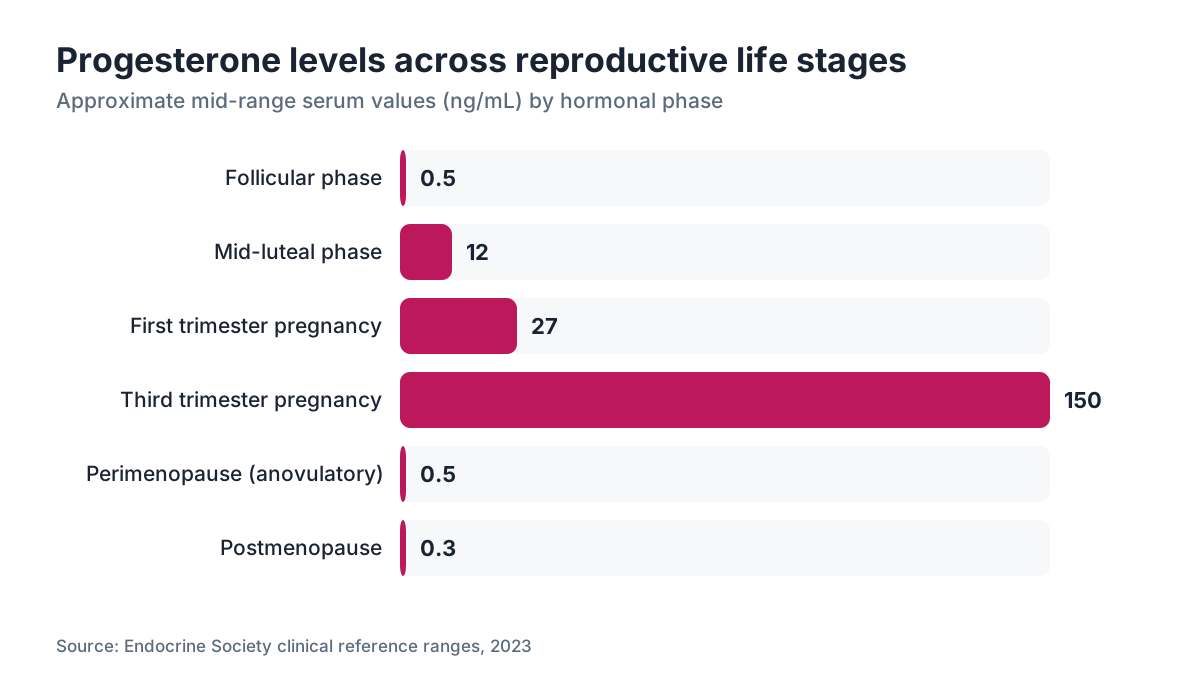
The table below shows approximate reference ranges across reproductive life stages.
| Life Stage | Typical Progesterone Range | |---|---| | Follicular phase (cycling) | < 1 ng/mL | | Luteal phase (cycling) | 5 to 20 ng/mL | | First trimester pregnancy | 11 to 44 ng/mL | | Third trimester pregnancy | 100 to 200 ng/mL | | Perimenopause (anovulatory cycle) | < 1 ng/mL | | Postmenopause | < 0.5 ng/mL |
Source: Endocrine Society / Quest Diagnostics reference ranges [3]
What are the symptoms of low progesterone?
Low progesterone rarely announces itself with a single, obvious symptom. It tends to produce a cluster of things that are easy to blame on stress, aging, or 'just how you are now.'
The most recognizable sign is menstrual irregularity. When ovulation is absent or weak, the luteal phase shortens and periods arrive early, late, or much heavier than usual. Spotting in the days before a period, called premenstrual spotting, is a classic marker of a short luteal phase and poor corpus luteum function [4].
Mood changes are common. Progesterone has a metabolite called allopregnanolone that acts on GABA receptors in the brain, producing a calming, anti-anxiety effect. Lower progesterone means less allopregnanolone, which can show up as increased anxiety, irritability, or a general sense of emotional fragility in the luteal phase [7].
Sleep disruption is another frequent complaint. Allopregnanolone promotes sleep by the same GABA mechanism, so declining progesterone tracks with lighter sleep and more nighttime waking, even before hot flashes become a factor.
Other possible symptoms include breast tenderness, headaches in the premenstrual window, and difficulty getting or staying pregnant. None of these are specific to low progesterone alone, which is why a serum level drawn at the right time in the cycle (typically day 21 in a 28-day cycle, or 7 days after suspected ovulation) is needed to confirm what is happening [4].
A word of honesty: low progesterone as a sole diagnosis in symptomatic perimenopausal women is often under-recognized, partly because the standard hormone panel focuses on FSH and estradiol. If your symptoms cluster in the second half of your cycle, ask specifically about mid-luteal progesterone testing.
What is the difference between progesterone and progestins?
This distinction shapes nearly every evidence-based conversation about hormone therapy, and it is worth getting right.
Progesterone (also called 'bioidentical progesterone' or 'micronized progesterone' in its oral form) has the exact molecular structure your body produces. The FDA-approved oral form, Prometrium, is progesterone suspended in peanut oil and micronized to improve absorption. Because its molecular structure is identical to endogenous progesterone, it produces the same metabolites, including allopregnanolone.
Progestins are synthetic molecules engineered to bind progesterone receptors but with structural differences from natural progesterone. Examples include medroxyprogesterone acetate (MPA), norethindrone, and levonorgestrel. They were developed because natural progesterone has poor oral bioavailability in its non-micronized form, and synthetic versions were easier to standardize.
Why does this matter clinically? The Women's Health Initiative (WHI), which raised alarm about breast cancer risk with hormone therapy in 2002, used conjugated equine estrogens plus MPA (a progestin), not bioidentical progesterone. Later observational studies, including the French E3N cohort of over 80,000 women, found that combinations using bioidentical progesterone showed a different breast cancer risk profile than those using synthetic progestins [8]. The North American Menopause Society (NAMS) acknowledges this distinction in its 2022 hormone therapy position statement, though it notes that large randomized controlled trials specifically comparing the two in breast cancer outcomes are still lacking [5].
For a broader look at how these options fit into treatment, the hormone replacement therapy article compares forms, regimens, and risk considerations in detail.
How does progesterone affect the brain and mood?
Progesterone's effects on the brain are real, measurable, and often underappreciated in clinical conversations.
The key mechanism runs through allopregnanolone, a neurosteroid metabolite of progesterone. Allopregnanolone is a positive allosteric modulator of GABA-A receptors, the same receptors targeted by benzodiazepines. Higher allopregnanolone levels produce sedation, reduced anxiety, and a calming effect. This is why the luteal phase, when progesterone peaks, can actually feel calmer for some women, while the sharp drop before menstruation can trigger anxiety, irritability, and mood crashes that characterize premenstrual dysphoric disorder (PMDD) [7].
The connection to sleep is direct. Allopregnanolone shortens sleep latency and increases slow-wave sleep time. This is also why oral progesterone (Prometrium) taken at bedtime is sometimes preferred over other routes of administration in menopausal hormone therapy: the first-pass liver metabolism actually increases allopregnanolone levels, which vaginal or transdermal routes do not replicate [2].
Some researchers have studied progesterone's potential role in neuroprotection, including in traumatic brain injury models, though human clinical trials have not shown the same benefit seen in animal studies. That gap is a reminder that the brain effects of progesterone are genuinely complex and still being worked out.
What is reasonably established: for perimenopausal and postmenopausal women who report sleep disruption and anxiety alongside hormone changes, declining progesterone is a legitimate contributing factor, more than a coincidence.
Does progesterone protect bone density?
The bone story for progesterone is more complicated than the estrogen story, and the evidence is less definitive.
Estrogen is the dominant hormone protecting bone in women. Its decline after menopause drives the accelerated bone loss that increases fracture risk. Progesterone's role is more nuanced. Osteoblasts, the cells that build new bone, carry progesterone receptors. Some research suggests progesterone may stimulate osteoblast activity, which would mean it contributes to bone formation rather than just slowing resorption the way estrogen does [9].
A few small studies and observational analyses suggest that women with more anovulatory cycles (and therefore lower progesterone exposure) over their reproductive years may have lower bone density at perimenopause. But this is association, not proof of causation, and the studies are small enough that confident conclusions are hard to draw.
In practice, progesterone's bone contribution is considered secondary to estrogen's. Combined hormone therapy (estrogen plus progestogen) is associated with maintained or improved bone mineral density and reduced fracture risk, but separating progesterone's independent contribution from estrogen's is methodologically difficult [5].
If bone density is a concern, a bone density test gives you a real baseline number to work from rather than relying on symptom estimates.
What forms of progesterone therapy are available?
Progesterone comes in several forms, each with meaningfully different absorption patterns, metabolite profiles, and clinical uses.
Oral micronized progesterone (brand name Prometrium in the US) is FDA-approved for endometrial protection in postmenopausal women using estrogen, and for secondary amenorrhea. The standard endometrial-protective dose is 200 mg daily for 12 days of a 28-day cycle in sequential regimens, or 100 mg daily in continuous combined regimens [10]. Because oral progesterone undergoes significant first-pass hepatic metabolism, it generates substantial allopregnanolone, contributing to its sedating and anxiolytic effects. This makes it well-suited for bedtime dosing.
Vaginal progesterone (gels, suppositories, capsules used vaginally) is used primarily in fertility treatment and luteal phase support during assisted reproduction. The vaginal route achieves high local concentrations in the uterus with lower systemic levels, which minimizes systemic side effects but also means less allopregnanolone and less of the sleep and mood benefit.
Transdermal creams are sold over the counter, and here is an honest assessment: most OTC progesterone creams contain doses that are too low and have absorption that is too variable to reliably protect the endometrium or reach therapeutic serum levels. They should not be relied on for endometrial protection if you are also taking systemic estrogen [2].
Compounded progesterone (custom-dose preparations from compounding pharmacies) is an option some women pursue for dose flexibility, particularly those who cannot tolerate peanut oil (a component of Prometrium). Quality and consistency vary by pharmacy, and compounded products lack FDA approval.
WomenRx offers evaluation for progesterone therapy as part of its hormone care programs, which can be a starting point if you are sorting out which form makes sense for your situation.
For a full comparison of hormone delivery options, the estrogen patch article also covers how transdermal delivery differs from oral forms.
Is progesterone safe? What does the evidence actually say?
Safety conversations about progesterone are heavily shaped by confusion between bioidentical progesterone and synthetic progestins, so context is everything.
The WHI trial, published in 2002, found that postmenopausal women taking conjugated equine estrogens plus medroxyprogesterone acetate (a synthetic progestin) had a small but statistically significant increase in breast cancer risk after about five years of use. That finding drove a dramatic drop in hormone therapy prescribing that lasted over a decade [5].
Later re-analyses and observational data have complicated that picture. The French E3N cohort, one of the largest prospective studies on hormone therapy type and breast cancer, found that combinations using bioidentical progesterone (rather than synthetic progestins) with estrogen did not show the same elevated breast cancer risk [8]. The NAMS 2022 position statement states: 'For women aged younger than 60 years or who are within 10 years of menopause onset and have no contraindications, the benefit-risk ratio is favorable for treatment of bothersome vasomotor symptoms and for those at elevated risk for bone loss or fracture.' [5]
Progesterone-specific risks to know about: oral progesterone increases drowsiness (which is why bedtime dosing is standard), can cause dizziness, and should be avoided by anyone with a peanut allergy because of the peanut oil base in Prometrium. It is contraindicated in undiagnosed abnormal uterine bleeding, liver disease, and known or suspected hormone-sensitive malignancies [10].
Here is the honest answer. Bioidentical progesterone appears to have a more favorable safety profile than older synthetic progestins, particularly for breast tissue. But the randomized controlled trial evidence comparing them head to head is thinner than we would like. The observational data is suggestive and clinically relevant. It is not the same as a Phase III RCT.
How is progesterone tested and what do the results mean?
A serum (blood) progesterone test measures the amount of progesterone circulating in your blood, reported in nanograms per milliliter (ng/mL). The test is simple, but reading it correctly depends almost entirely on timing.
In a cycling woman, the test is most meaningful when drawn in the mid-luteal phase, roughly 7 days after ovulation or around day 21 in a textbook 28-day cycle. A level above 3 ng/mL generally confirms that ovulation occurred. A level above 10 ng/mL indicates a healthy luteal phase. A low mid-luteal level suggests either anovulation or a poorly functioning corpus luteum [4].
Drawn at the wrong time, the test tells you almost nothing. A progesterone level of 0.5 ng/mL means very different things on day 5 (normal) versus day 21 (suggests anovulation) of a cycle.
For postmenopausal women on hormone therapy, progesterone monitoring is less standardized. Some clinicians check levels to confirm absorption of compounded or transdermal preparations, but there is no consensus on target levels during therapy, and symptoms plus endometrial monitoring are generally more useful than chasing a specific number [2].
Saliva testing for progesterone is marketed by some wellness companies. The limitation is that saliva measures free (unbound) progesterone, which does not track serum levels predictably, particularly in women using topical creams. Most endocrinologists and NAMS guidance favor serum testing for clinical decisions [2].
How does progesterone connect to pregnancy and fertility?
Progesterone is non-negotiable for establishing and maintaining early pregnancy. That is not an overstatement.
After fertilization, the developing embryo needs a progesterone-primed uterine lining to implant successfully. If the corpus luteum produces too little progesterone (a condition called luteal phase defect), implantation may fail or early pregnancy may not be maintained. Progesterone supplementation in early pregnancy is a routine part of IVF and other assisted reproductive cycles for exactly this reason [1].
The FDA-approved vaginal progesterone gel Crinone and vaginal progesterone suppositories (and in some protocols, oral progesterone) support luteal phase function in fertility treatments. In natural cycles with a history of early pregnancy loss, vaginal progesterone has been studied in multiple trials. The PRISM trial (2019) found a statistically significant benefit in women with early pregnancy bleeding and a history of recurrent miscarriage, though results in the general early-pregnancy-loss population were less clear-cut [11].
The placenta produces enough progesterone to maintain pregnancy from around 8 to 10 weeks onward, at which point supplementation is typically stopped in IVF cycles.
If you are not pregnant but have irregular cycles and suspect ovulation problems, tracking basal body temperature or using an ovulation predictor kit can give early clues before a blood test. A missing mid-cycle temperature shift, combined with short cycles or spotting before periods, is worth raising with a clinician who will actually check a timed progesterone level.
Frequently asked questions
What is the simplest definition of progesterone?
Progesterone is a steroid hormone made mainly by the ovaries after ovulation. Its primary jobs are preparing the uterine lining for a potential pregnancy, sustaining a pregnancy in its early weeks, and regulating the second half of the menstrual cycle. It also influences mood, sleep, and bone health through receptors throughout the body.
What is a normal progesterone level for a woman?
Normal ranges depend entirely on where you are in your cycle. In the follicular phase, below 1 ng/mL is normal. In the mid-luteal phase (around day 21 of a 28-day cycle), 5 to 20 ng/mL indicates healthy ovulation. After menopause, levels typically fall below 0.5 ng/mL. A single number means almost nothing without knowing the day of the cycle it was drawn.
What are the signs that progesterone is low?
Common signs include irregular or heavy periods, short cycles, spotting before a period, anxiety or mood changes in the second half of the cycle, poor sleep, and difficulty getting or staying pregnant. These symptoms can overlap with many other conditions, so a timed mid-luteal serum progesterone test (drawn around day 21) is needed to confirm a low level.
Is progesterone the same as a progestin?
No. Progesterone is the hormone your body naturally produces, with the exact molecular structure your cells recognize. Progestins are synthetic compounds designed to mimic some progesterone effects, used in birth control pills and some hormone therapies. They bind to progesterone receptors but have different metabolic pathways and side-effect profiles. Medroxyprogesterone acetate, norethindrone, and levonorgestrel are progestins, not progesterone.
What does progesterone do in menopause?
After menopause, natural progesterone production stops because ovulation no longer occurs. In hormone therapy, progestogen (usually bioidentical progesterone or a progestin) is added whenever a woman with a uterus takes systemic estrogen, to protect the uterine lining from estrogen-driven overgrowth. Progesterone in this context may also support sleep and mood as secondary benefits.
Can progesterone help with anxiety and sleep?
Progesterone metabolizes into allopregnanolone, which acts on GABA-A receptors in the brain with a calming, sleep-promoting effect. Oral micronized progesterone generates more allopregnanolone than vaginal or transdermal routes because of first-pass liver metabolism. Many clinicians recommend oral progesterone at bedtime for this reason. The mechanism is solid, though large randomized trials specifically on progesterone and insomnia are limited.
What is bioidentical progesterone?
Bioidentical progesterone refers to progesterone with the identical molecular structure to what the human body produces. The FDA-approved version is oral micronized progesterone, sold as Prometrium. It is derived from plant sources (typically yams or soy) but processed into the exact same molecule as endogenous progesterone. Compounded versions also exist. The term is sometimes misused to market unregulated products, so sourcing and dose matter.
Does low progesterone cause miscarriage?
Low progesterone in early pregnancy is associated with miscarriage risk, particularly in women with a history of recurrent pregnancy loss who also experience early bleeding. The PRISM trial (2019) found that vaginal progesterone significantly improved live birth rates in that specific subgroup. Whether low progesterone causes the miscarriage or is a consequence of an already-failing pregnancy remains debated, and supplementation is not universally recommended for all early losses.
How is progesterone different from estrogen?
Both are steroid hormones produced by the ovaries, but they have opposite effects on the uterine lining. Estrogen drives its growth; progesterone stabilizes and prepares it for implantation. Estrogen dominates the first half of the menstrual cycle; progesterone dominates the second. For mood, estrogen tends to have energizing effects while progesterone (via allopregnanolone) has calming ones. Both decline with menopause.
Can you test progesterone at home?
Home saliva test kits for progesterone exist, but most endocrinologists consider them unreliable for clinical decisions. Salivary progesterone measures free hormone and does not track serum levels consistently, especially in women using topical progesterone creams. A standard blood draw ordered by a clinician and timed to the correct cycle day is the preferred method for meaningful results.
What is the role of progesterone in perimenopause?
In perimenopause, ovulation becomes irregular, which means progesterone production becomes erratic before estrogen levels significantly drop. This progesterone deficiency, while estrogen remains relatively normal, causes the hallmark symptoms of the transition: irregular periods, heavy bleeding, and mood instability. It is the reason perimenopause can feel hormonally chaotic even when estrogen is technically still adequate.
Is over-the-counter progesterone cream effective?
Most OTC progesterone creams deliver too little progesterone at too inconsistent an absorption rate to reach therapeutic serum levels or reliably protect the uterine lining. They should not replace prescribed progesterone in women taking systemic estrogen therapy. If you want the sleep, mood, or endometrial-protection benefits of progesterone, a prescription-strength, standardized product is the appropriate option.
Does progesterone affect weight?
Progesterone can cause mild fluid retention and may slightly increase appetite in some women, which contributes to the bloating some feel in the luteal phase. It does not cause significant lasting weight gain. In hormone therapy, concerns about weight gain are more often linked to progestins than to bioidentical progesterone. If weight management alongside hormone changes is a concern, that is a separate clinical conversation.
When should I ask my doctor about progesterone therapy?
Reasonable times to ask include: if you have a uterus and are starting estrogen therapy (progestogen is required for safety); if you experience perimenopausal symptoms like heavy periods, luteal-phase anxiety, or poor sleep; if you have had recurrent early pregnancy losses; or if you suspect anovulatory cycles are affecting your fertility. Bring a record of your cycle timing and any symptoms to make the conversation more productive.
Sources
- StatPearls (NCBI Bookshelf) – Physiology, Progesterone
- The Menopause Society (formerly NAMS) – Hormone Therapy Position Statement 2022, supplementary clinical guidance on progesterone forms
- Endocrine Society – Clinical Practice Guidelines reference ranges
- American College of Obstetricians and Gynecologists (ACOG) – Interpreting progesterone levels in clinical practice
- The Menopause Society – 2022 Hormone Therapy Position Statement (published in Menopause journal)
- NIH National Institute on Aging – Menopause and perimenopause overview
- Frontiers in Neuroscience – Allopregnanolone: a neurosteroid with key neuromodulatory properties (2021)
- Breast Cancer Research – E3N cohort study: postmenopausal hormone therapy and breast cancer risk (Fournier et al.)
- Journal of Clinical Endocrinology and Metabolism – Progesterone receptors in osteoblasts and bone formation
- FDA – Prometrium (progesterone, USP) prescribing information
- New England Journal of Medicine – PRISM trial: progesterone in women with early pregnancy bleeding (Coomarasamy et al., 2019)