Progesterone cream side effects after age 50: what to expect
TL;DR: Progesterone cream sells without a prescription, but women over 50 face specific risks: absorption through skin is unpredictable, uterine protection is often inadequate if you still have a uterus, and side effects include bloating, breast tenderness, spotting, and mood shifts. Oral micronized progesterone (Prometrium) has a far stronger evidence base for this age group, and most menopause specialists pick it over OTC cream.
What is progesterone cream and why do women over 50 use it?
Progesterone cream is a topical product that contains either synthetic progestins or, more often, bioidentical progesterone made from wild yam or soy. You rub it into thin-skinned areas: the inner wrist, inner arm, or chest. The theory is that progesterone crosses the skin and enters your bloodstream.
Women reach for it for a handful of reasons. After menopause, ovarian progesterone production drops to near zero. If you also take estrogen, you need progesterone to protect the uterine lining from overstimulation. Some women use cream hoping to ease hot flashes, sleep better, or calm anxiety. A smaller group uses it because it sits on the shelf at the pharmacy, no prescription required.
Here is the catch. "Progesterone cream" is not one thing. Over-the-counter products can contain anywhere from near-zero to 400 mg of progesterone per ounce, and the FDA does not require proof of efficacy or consistent absorption for these formulations [1]. Prescription compounded creams exist too, and their absorption data is just as inconsistent. That variability is where most side effects start.
How does skin absorption change after menopause, and why does age 50 matter?
Skin gets thinner and drier after menopause because estrogen keeps collagen dense and the dermis plump. Thinner, drier skin absorbs topical progesterone differently than premenopausal skin, though whether it absorbs more or less varies by person and by where you apply it.
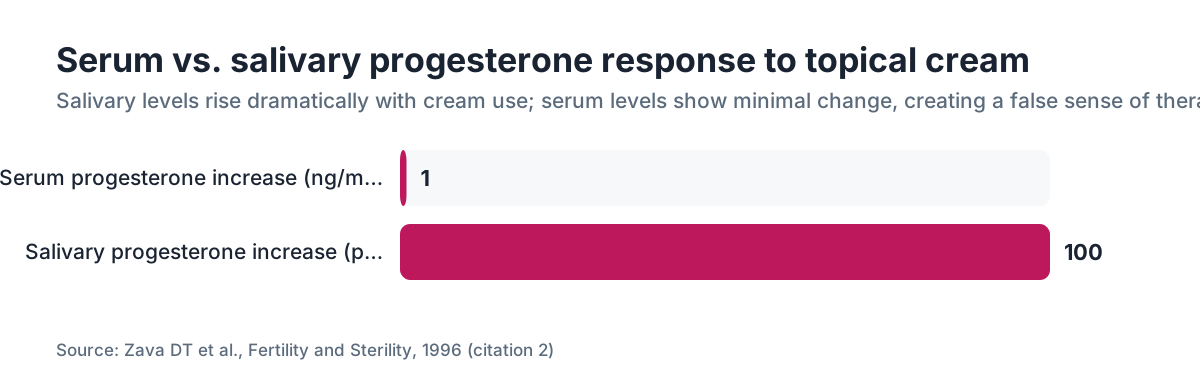
The bigger issue is that blood and saliva stop agreeing with each other once you use cream. Research published in Fertility and Sterility found that cream application raised salivary progesterone dramatically while serum (blood) progesterone barely moved [2]. A clinician who measures only saliva may see "therapeutic" numbers while the uterus is essentially unprotected.
For a woman over 50 who still has a uterus and uses estrogen, that gap is genuinely dangerous. Unopposed or underprotected estrogen stimulation of the endometrium is the main driver of endometrial cancer risk after menopause [3]. The North American Menopause Society (NAMS) states that adequate progestogen exposure is required to protect the endometrium in women with a uterus who use systemic estrogen [4].
Age brings more body fat in some women too, and progesterone is highly fat-loving. It can pool in fat stores and release erratically, driving the up-and-down hormone swings behind many of the side effects below.
What are the most common side effects of progesterone cream after age 50?
Side effects fall into a few buckets. Here is what the evidence and clinical practice keep showing.
Bloating and water retention. Progesterone acts on aldosterone receptors in the kidney. Too much progesterone, or levels that swing, can shift fluid around. This is the complaint women report most, and it can nudge the scale up two to four pounds for a while.
Breast tenderness. Progesterone stimulates breast tissue alongside estrogen. Women over 50 using both hormones together sometimes notice new or worse breast soreness, especially in the week after applying cream.
Irregular spotting or breakthrough bleeding. If serum levels are too low to fully protect the endometrium, the lining can build partway and then shed. Any postmenopausal bleeding warrants a call to your clinician. It is not automatically cancer, but it always needs a look. Our article on is bleeding after menopause always cancer walks through the workup in plain language.
Mood changes and low mood. Progesterone breaks down in the brain into allopregnanolone, which acts on GABA receptors. In most women this feels calming. In a subset, it sparks depression, irritability, or a flat mood. The reaction is more common with synthetic progestins but happens with bioidentical progesterone too, especially at higher or erratic doses [5].
Fatigue and sedation. The same allopregnanolone pathway that calms can flatten you out. Women who apply cream at the wrong time of day often feel groggy or foggy.
Headaches. Hormonal headaches in perimenopause and early postmenopause come partly from estrogen swings, but progesterone shifts can trigger them too, particularly when levels crash between applications.
Acne. Less common after 50 than during perimenopause, but some women get new jawline breakouts. This shows up more with synthetic progestins than with bioidentical progesterone.
None of these are unique to women over 50. But two of them, the uterine protection gap and the erratic fat-store accumulation, carry more weight at this stage of life.
Can progesterone cream cause weight gain after menopause?
Probably not directly. Indirectly, yes, through a few side doors.
Progesterone is not a big fat-storage hormone the way insulin is. What it does is bump appetite slightly in some women, hold onto fluid for a while (which reads as weight on the scale), and sometimes drag energy down enough that you move less. None of those build permanent fat on their own.
The messier story: if cream is driving erratic progesterone and estrogen signaling, that instability can worsen insulin sensitivity and wreck sleep, and both of those change body composition over months to years. Postmenopausal women already gain visceral fat as estrogen falls [6]. Piling hormonal chaos on top does not help.
If you have gained more than a few pounds since starting cream and nothing else changed, check serum progesterone and estradiol. That tells you what is actually happening instead of what you are guessing.
Does progesterone cream actually protect the uterus the way oral progesterone does?
This is the question that matters most, and the honest answer is: probably not consistently enough.
A 1999 study by Leonetti and colleagues in Obstetrics and Gynecology found that a commonly cited OTC progesterone cream at 20 mg per day did not produce serum levels high enough to protect the endometrium [7]. The authors concluded that OTC progesterone cream "cannot be relied upon to protect the endometrium." That line has echoed through menopause medicine ever since.
FDA-approved oral micronized progesterone, sold as Prometrium, has well-mapped pharmacokinetics and has been studied in large trials, including the Women's Health Initiative. The Endocrine Society's menopause guideline recommends oral micronized progesterone over synthetic progestins and says nothing that would prop up OTC cream as adequate uterine protection [8].
Higher-dose compounded creams (prescription, usually 100 to 200 mg per application) may reach therapeutic serum levels in some women, but the numbers scatter widely from person to person. If you have a uterus and use systemic estrogen, this is not the place to run your own experiment. Work with a clinician who will measure your levels.
Platforms like WomenRx can connect you with clinicians who prescribe FDA-approved formulations and track labs, which is the standard of care here.
What are the serious risks and warning signs to watch for?
Most progesterone cream side effects are annoying, not dangerous. A few are.
Postmenopausal bleeding. Any vaginal bleeding after 12 straight months without a period needs evaluation. The list of possible causes includes endometrial hyperplasia and endometrial cancer, both tied to inadequate progestogen protection of a uterus exposed to estrogen [3]. Do not wait to see if it clears on its own.
Signs of a clot. Progesterone is generally considered less clot-promoting than synthetic progestins. Still, if you combine hormones and carry clotting risk factors, any one-sided leg swelling, pain, or redness needs urgent evaluation.
Severe depression or suicidal thoughts. The progesterone-to-allopregnanolone pathway can deepen depression in vulnerable women. This is documented more for oral progesterone than cream [5]. If your mood has dropped sharply since starting hormones, tell your clinician right away.
New or changing breast lumps. Progesterone-related breast tenderness is usually spread out and cyclic. A distinct new lump, or a change in one you already have, always needs imaging.
For anyone still in perimenopause who has not reached full menopause, the math shifts. Ovarian progesterone is still firing irregularly, so adding cream can stack doses in unpredictable ways.
How does progesterone cream compare to oral micronized progesterone for women over 50?
Here is a straight comparison built on published data and FDA-approved labeling.
| Feature | OTC Progesterone Cream | Oral Micronized Progesterone (Prometrium) | |---|---|---| | FDA approval for uterine protection | No | Yes | | Consistent serum levels | No, highly variable [2] | Yes, well-characterized PK | | Endometrial protection evidence | Weak; one key study showed inadequate levels [7] | Strong; used in WHI and other large trials | | Sleep benefit | Possible, inconsistent | Documented for 300 mg dose [9] | | Mood/depression risk | Moderate, dose-dependent | Moderate; lower than synthetic progestins | | Bloating | Common | Less common at standard doses | | Cost (monthly, rough estimate) | $20-50 OTC, $60-150 compounded Rx | $50-120 brand; generic available | | Requires prescription | No (OTC); Yes (Rx compounded) | Yes |
For most women over 50 with a uterus using systemic estrogen, oral micronized progesterone at 100 to 200 mg nightly is the better-supported choice. If you have had a hysterectomy, uterine protection is off the table, and the comparison drops to symptom relief alone, where the evidence still favors FDA-approved oral or transdermal options over OTC cream.
Can progesterone cream help with hot flashes and sleep problems after 50?
Women use progesterone cream hoping to cool hot flashes and sleep through the night. On hot flashes, the honest answer is that there is very little good evidence for progesterone alone, and even less for cream specifically.
A randomized trial by Prior and colleagues in Osteoporosis International found some reduction in hot flashes with topical progesterone, but the effect was modest and the study was small [10]. NAMS does not recommend progesterone alone as first-line therapy for hot flashes and night sweats [4].
Sleep is a different story. Oral progesterone at 300 mg has shown a sleep benefit in randomized trials, most likely through the allopregnanolone-GABA route [9]. But that is oral, not cream, and the absorption gap matters for reaching the doses that produce meaningful allopregnanolone.
If hot flashes and sleep are your main problems, estrogen (with progesterone for uterine protection if you have a uterus) is the most effective approach the evidence supports. For a fuller picture of what the research actually shows, read the new menopause.
For extra support between hormone adjustments, some women find value in the approaches covered in health and her perimenopause support, though those are add-ons, not replacements for proven therapy.
How should you apply progesterone cream to minimize side effects?
If you are going to use progesterone cream, either because it is what you have access to right now or because your clinician has prescribed a compounded formulation, technique matters.
Rotate the sites. Using the same skin patch every day saturates it locally, and then absorption drops. Inner arms, inner thighs, abdomen, and chest all absorb at different rates. Rotating smooths out the peaks and valleys.
Apply at night. The sedative pull of progesterone metabolites lands easier when you are heading to bed anyway. Morning application can leave you tired and foggy all day.
Use the smallest effective dose. Creams that list "wild yam extract" as the active ingredient without any progesterone milligram count are basically inert for hormonal purposes. If a cream lists actual progesterone, 20 to 40 mg per day is the range you find in OTC products, though serum conversion stays unreliable.
Get your levels checked. After three months of cream, a serum progesterone level (not salivary) tells you whether you are getting real systemic exposure. Most postmenopausal women on adequate therapy aim for serum progesterone around 5 to 20 ng/mL on dosing days, though targets vary by protocol.
Skip areas with active inflammation, rash, or thin broken skin. Absorption spikes through compromised skin and can dump a dose all at once.
What do menopause specialists actually recommend for progesterone after age 50?
The NAMS hormone therapy position statement is blunt: progestogen is required to protect the endometrium in postmenopausal women with a uterus who use systemic estrogen, and "adequate" protection means demonstrated serum levels and endometrial response [4].
The Endocrine Society similarly recommends oral micronized progesterone over synthetic progestins where available, pointing to a more favorable cardiovascular and breast safety profile in observational data [8].
Neither group endorses OTC progesterone cream as adequate uterine protection. Neither does the FDA, which has never approved an OTC cream for this use.
That does not mean every clinician throws cream out. Some integrative and functional medicine practitioners use higher-dose compounded creams with close lab monitoring. The dividing line is measurement. If a clinician is not checking your serum levels on a schedule, you are guessing at a problem with real consequences.
If you want a second opinion or a clinician who specializes in postmenopausal hormone care, the menopause society keeps a "find a menopause practitioner" directory on its website, listing providers who passed a credentialing exam in menopause medicine.
You can also reach board-certified clinicians through telehealth built around women's hormones. WomenRx offers that kind of care, including lab review and prescription hormone options, without making you hunt for a local specialist.
Is progesterone cream safe if you have had breast cancer or have a high breast cancer risk?
This is real scientific uncertainty, and the answer leans heavily on your own history.
Bioidentical progesterone binds receptors differently than synthetic progestins, and some observational data hint it may stimulate breast tissue less. The E3N cohort study from France, published in Breast Cancer Research and Treatment, found lower breast cancer risk with transdermal estrogen plus micronized progesterone compared to oral estrogen plus synthetic progestins [11]. But that was observational, not a randomized trial, and it cannot prove that topical OTC cream specifically is safe.
For women with a personal history of hormone-receptor-positive breast cancer, most oncologists advise against any outside progesterone, bioidentical included. The American Society of Clinical Oncology does not endorse hormone therapy as routine care for breast cancer survivors, though the field keeps moving.
If you carry a BRCA1 or BRCA2 mutation or have dense breasts and are weighing any hormone therapy, have that talk with an oncologist or a menopause specialist experienced with high-risk patients, more than your general practitioner. This is not a decision to base on the back of an OTC label.
Thyroid function interacts with progesterone signaling in complicated ways too. If you take thyroid hormone replacement therapy, run any new hormone past the clinician managing your thyroid before you start.
What should you do if you are having side effects from progesterone cream right now?
Do not panic, and do not ignore symptoms either. Most OTC cream side effects reverse once you stop or adjust.
Spotting or bleeding? Call your clinician. Do not wait for a scheduled appointment.
Significant mood changes, fatigue, or bloating? Cut back or stop the cream and book a hormone panel. You want serum estradiol and serum progesterone at minimum. A fuller panel that adds FSH, DHEA-S, and testosterone gives your clinician more to work with.
If hot flashes or sleep were the point and the cream is not delivering, move to an FDA-approved option. The evidence for systemic estrogen (with progesterone if you have a uterus) on hot flashes and night sweats is far stronger than anything behind progesterone cream alone.
Resist the urge to stack another supplement on top of a cream that is not working. Hormone layering without measurement creates the exact erratic signaling that produces the symptoms you are trying to fix.
And if you have been running with zero lab monitoring, that is the single most useful thing to change. Hormones are not a place where intuition beats measurement.
Frequently asked questions
Can progesterone cream cause spotting after menopause?
Yes, and it is the side effect that most warrants a call to your doctor. If serum progesterone is too low to protect the uterine lining, estrogen stimulation can cause partial shedding and spotting. Any postmenopausal bleeding needs clinical evaluation to rule out endometrial hyperplasia or cancer. Do not assume spotting is harmless just because you are using progesterone.
How long does it take for progesterone cream side effects to go away after stopping?
Most women see side effects fade within one to two weeks of stopping OTC cream, since progesterone clears from circulation fairly quickly. Fat-soluble progesterone stored in body fat can release more slowly, sometimes stretching mild symptoms to three or four weeks. If symptoms hang on past a month after stopping, get your hormone levels checked.
Is progesterone cream FDA-approved for menopause?
No. The FDA has not approved any over-the-counter progesterone cream for menopause treatment or uterine protection. FDA-approved progesterone options for postmenopausal women with a uterus include oral micronized progesterone (Prometrium) and certain progesterone-containing IUDs. OTC cream sells as a cosmetic or supplement and is not held to the safety and efficacy standards of prescription hormone therapy.
Can progesterone cream cause anxiety or depression in women over 50?
It can, especially in women sensitive to allopregnanolone, the progesterone metabolite that acts on GABA receptors in the brain. For most women that produces calm and better sleep, but a documented subset gets worsening depression, irritability, or emotional flatness. The effect is dose-dependent. If your mood has clearly dropped since starting cream, stop and talk to your clinician.
How much progesterone cream do you need to actually raise blood levels?
Standard OTC doses of 20 to 40 mg per day produce minimal change in serum progesterone, even when salivary levels look elevated. Some studies found 40 mg twice daily reached detectable serum levels, but individual absorption varies widely. Compounded prescription creams at 100 to 200 mg per application have better serum data yet still scatter person to person. Measure, do not assume.
Does progesterone cream interact with other medications?
Progesterone is metabolized by the CYP3A4 liver enzyme, so drugs that block or speed that pathway shift progesterone levels. Rifampin, carbamazepine, and St. John's Wort lower it. Ketoconazole and some HIV medications raise it. If you take thyroid medication, estrogen, or blood thinners, discuss progesterone cream with your clinician first, because these interactions are clinically real.
Can you use progesterone cream if you have had a hysterectomy?
If you have had a complete hysterectomy and no longer have a uterus, you do not need progesterone for endometrial protection. Whether progesterone adds benefit for mood, sleep, or bone health after hysterectomy is debated, and the evidence is weak. Using cream here is lower-stakes for uterine safety, but side effects like mood changes and bloating still apply.
Is wild yam cream the same as progesterone cream?
No. Wild yam contains diosgenin, which can be converted to progesterone in a lab, but your body cannot make that conversion. A cream listing only "wild yam extract" with no progesterone milligram amount will not raise your progesterone. It is essentially inert for hormonal purposes. Look for products listing USP progesterone or bioidentical progesterone with a specific milligram amount.
Can progesterone cream cause bloating and breast tenderness at the same time?
Yes, and this pairing is one of the more common side effect patterns. Bloating comes from fluid retention tied to aldosterone receptor activity. Breast tenderness comes from progesterone stimulating breast glandular tissue, often amplified if you also use estrogen. Both tend to worsen at higher doses and ease when dose or formulation changes. Track both symptoms to help your clinician calibrate.
What is the difference between bioidentical progesterone cream and synthetic progestins?
Bioidentical progesterone has the same molecular structure as the progesterone your ovaries once made. Synthetic progestins like medroxyprogesterone acetate (MPA) have a different structure and bind progesterone receptors plus sometimes androgen or glucocorticoid receptors, which is why their side effect profiles differ. Observational data suggest bioidentical progesterone may carry a more favorable cardiovascular and breast safety profile than MPA, though randomized trial data are limited.
Should I measure progesterone in blood or saliva?
Blood serum is the clinically validated measure for whether you have adequate systemic progesterone, especially for endometrial protection. Salivary testing is not standardized, inflates results sharply when topical cream is used, and is not recommended by NAMS or the Endocrine Society for guiding hormone therapy. If a clinician relies on saliva alone, ask why.
Can progesterone cream help with perimenopause symptoms before menopause is complete?
During perimenopause, ovarian progesterone fluctuates rather than stops. Adding cream in this window can stack your own progesterone on top of the cream unpredictably. Some women report better sleep and mood; others feel worse from the swings. If you are perimenopausal and considering hormones, working with a clinician who can monitor labs beats self-titrating with OTC cream.
How do I know if my progesterone cream is actually working?
The only reliable check is a serum progesterone blood test drawn on a day you used the cream, ideally two to four hours after application. If your serum level is not in the range your clinician set, the cream is not working systemically, no matter how your symptoms feel. Symptom improvement alone does not prove adequate hormone exposure, especially for uterine protection.
Sources
- FDA, Cosmetics Overview: OTC Drug Products
- Zava DT et al., Fertility and Sterility 1996; serum vs saliva progesterone with cream use
- National Cancer Institute, Endometrial Cancer Risk Factors
- North American Menopause Society, 2022 Hormone Therapy Position Statement
- Schiller CE et al., Hormones and Behavior, 2016; allopregnanolone and depression
- Davis SR et al., Nature Reviews Endocrinology, 2012; body composition in menopause
- Leonetti HB et al., Obstetrics and Gynecology 1999; OTC progesterone cream endometrial protection
- Endocrine Society Clinical Practice Guideline, Treatment of Menopause, 2015
- Caufriez A et al., Sleep 2011; oral progesterone 300 mg and sleep
- Prior JC et al., Osteoporosis International 1994; transdermal progesterone and hot flashes
- Fournier A et al., Breast Cancer Research and Treatment 2008; E3N cohort, breast cancer and progestogen type