Progesterone cream: what it actually does and when it's not enough
TL;DR: Over-the-counter progesterone creams raise blood levels slightly but don't reliably protect the uterine lining the way prescription oral micronized progesterone does. For symptom relief in perimenopause or as the progestogen part of hormone therapy, most evidence supports prescription-grade progesterone over OTC cream. Creams may ease some symptoms for women who can't tolerate oral forms, but the data is thin.
What is progesterone cream and how does it differ from prescription progesterone?
Progesterone cream is a topical product, usually sold over the counter, that delivers progesterone through the skin. The hormone sits in a lotion or cream base and absorbs transdermally. Prescription progesterone, most often oral micronized progesterone (brand name Prometrium in the US), gets swallowed and absorbed through the gut.
The difference matters more than most marketing copy lets on. Oral micronized progesterone produces measurable serum and tissue levels that have been studied in large trials. Transdermal creams, including OTC versions, produce much more variable blood levels, and the evidence that those levels protect the uterine lining is genuinely weak [1].
Some prescription compounded creams exist too, and those sit in a different regulatory category than the CVS shelf product. If your provider prescribed a compounded progesterone cream from a 503A or 503B pharmacy, that is a different animal from a jar you bought at a health food store, though even compounded creams face the same absorption questions.
Wild yam cream is sometimes marketed alongside progesterone cream, or even as a substitute for it. It is not the same thing. Wild yam contains diosgenin, a plant steroid precursor that the human body cannot turn into progesterone on its own. The conversion happens in a laboratory, not in your skin. Buying wild yam cream expecting a hormonal effect wastes your money [2].
Does progesterone cream actually absorb through the skin?
Yes, some absorption happens. That part is not in dispute. The real question is whether the absorbed amount is clinically meaningful, and that is where the science gets complicated.
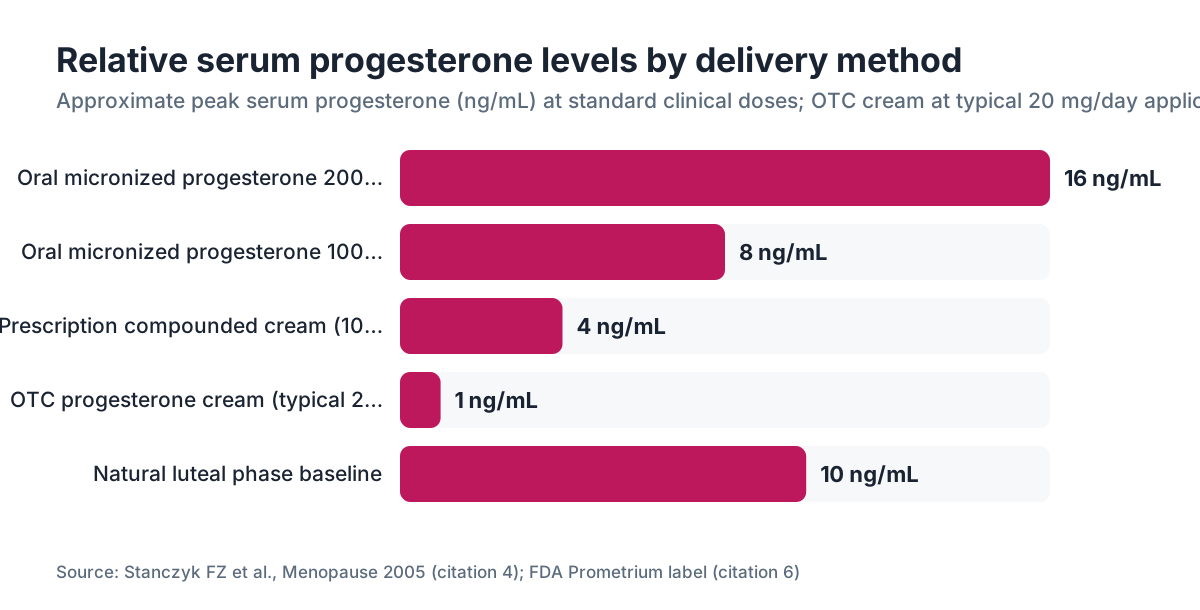
A 2005 review published in Menopause compared transdermal progesterone cream to oral micronized progesterone and found the cream produced measurable serum progesterone rises, but levels were inconsistent and lower on average than the oral form [4]. Red blood cell and salivary levels sometimes look higher than serum, which has led some practitioners and supplement companies to claim the cream works better than blood tests show. That interpretation is contested. The Endocrine Society and most reproductive endocrinologists rely on serum levels because those track with tissue protection in the uterus.
Progesterone is highly lipophilic, meaning it dissolves in fat readily. That sounds like it should help skin absorption, but it also means the hormone tends to collect in fatty tissue rather than circulating freely. Over time this creates a depot effect: the cream builds up under the skin and results get harder to predict. Some women get a delayed surge. Others plateau well below therapeutic range.
The application site matters too. Thinner skin with good capillary density (inner wrists, inner arms, upper chest) absorbs more than thicker or fattier areas. Most OTC instructions are vague about this, which adds to the dosing mess.
So: absorption is real but unreliable, and no consensus exists on what blood level from a cream is "enough" for any specific indication [4].
What does the research say about progesterone cream for menopause symptoms?
The honest answer is that the research is thin and mixed.
A small double-blind trial published in Obstetrics and Gynecology in 1999 (Leonetti et al.) followed 102 postmenopausal women using a topical progesterone cream versus placebo for a year and found significant reductions in vasomotor symptoms (hot flashes, night sweats) in the cream group [5]. That study gets cited constantly in naturopathic and integrative medicine circles. What gets cited less often is its small size, its single-center design, and the fact that larger, better-controlled trials have not consistently repeated the effect.
The 2022 NAMS hormone therapy position statement did not endorse OTC progesterone cream as adequate progestogen protection or as a first-line option for vasomotor symptoms, citing insufficient evidence [1]. For sleep disruption and mood changes in perimenopause, oral micronized progesterone has better trial data, including work from Dr. Jerilynn Prior's group at UBC showing sleep improvements in perimenopausal women using cyclic oral progesterone [11].
For women who genuinely cannot tolerate oral progesterone (some people get significant next-day sedation from Prometrium), a compounded transdermal cream or gel is a reasonable conversation to have with a prescriber. But "I read it works on a wellness blog" is not the same as "my provider and I looked at my labs and symptoms and decided this was the right tool."
See our article on progesterone for a broader look at what this hormone does across the menstrual cycle and beyond.
Can progesterone cream protect the uterine lining the way prescription progesterone does?
This is the most medically significant question about progesterone cream, and the evidence is not reassuring.
In any woman with a uterus who is taking estrogen as part of hormone therapy, adequate progestogen prevents endometrial hyperplasia (abnormal thickening of the uterine lining) and its downstream risk of endometrial cancer. This is not optional. The progestogen part of HRT exists specifically to oppose estrogen's proliferative effect on the endometrium.
Oral micronized progesterone at 200 mg/day for 12 days per cycle, or 100 mg/day continuously, has solid data showing adequate endometrial protection [6]. No comparable data exists for OTC progesterone cream at standard over-the-counter doses.
A 2003 study by Leonetti and colleagues, published in Fertility and Sterility, looked at endometrial biopsies in women using progesterone cream alongside estrogen and found that a meaningful percentage showed endometrial stimulation despite using the cream as directed [3]. That is a real safety concern, not a theoretical one.
If you have a uterus, you are using any form of systemic estrogen, and you are relying on OTC progesterone cream as your progestogen protection, please talk to a provider. The cream dose you can buy over the counter is almost certainly not enough for this job.
For more on structuring hormone therapy correctly, the hormone replacement therapy article walks through the evidence on combined regimens.
How much progesterone is in OTC creams, and is that a therapeutic dose?
This varies widely by product, which is part of the problem.
Many OTC progesterone creams contain somewhere between 400 and 500 mg of progesterone per ounce, though some contain as little as 2 mg per ounce. The FDA has classified OTC progesterone creams as cosmetics rather than drugs in many cases, which means no mandated standardization of dose or potency across products. Third-party testing has found significant label inaccuracy in some products [4].
A typical OTC application of 1/4 teaspoon twice daily from a 400 mg/oz product delivers roughly 20 mg of progesterone to the skin. Compare that to the 200 mg oral dose used in HRT trials and the gap comes into focus. Bioavailability from transdermal cream is lower than oral, but even after accounting for that, most OTC regimens fall well short of the levels tied to endometrial protection in published research.
Prescription compounded progesterone creams, by contrast, can be formulated at higher concentrations (sometimes 100-200 mg per gram) and come with specific dosing instructions from a prescriber who has presumably reviewed your hormone labs.
| Product type | Typical progesterone content | Regulatory oversight | Endometrial protection data | |---|---|---|---| | OTC progesterone cream | 2-500 mg/oz (varies widely) | FDA cosmetic (limited) | None at standard OTC doses | | Prescription compounded cream | Custom, often 100-200 mg/g | State pharmacy board + USP | Limited; case-by-case | | Oral micronized progesterone (Prometrium) | 100 or 200 mg capsules | FDA drug approval | Yes, in large trials [6] | | Progestin (synthetic, e.g. MPA) | Various | FDA drug approval | Yes, well-studied |
Who might actually benefit from progesterone cream?
Overstating the case for OTC progesterone cream is easy to do, and a lot of wellness content does exactly that. Dismissing it entirely ignores the fact that some women get real symptom relief from it.
Women in perimenopause who have a uterus and are not using systemic estrogen may find a topical cream cuts hot flashes or improves sleep, if the Leonetti trial data carries over to their situation. The risk profile here is lower because they are not relying on the cream to oppose estrogen given from outside the body.
Women who are post-hysterectomy have no endometrial protection concern, so the uterine lining argument against the cream simply doesn't apply. For this group, progesterone may still matter for sleep, mood, and possibly bone and cardiovascular reasons, but the safety math is different.
Women who cannot tolerate oral micronized progesterone because of sedation or GI side effects are another group where transdermal delivery, ideally through a properly dosed prescription compounded product rather than an OTC cream, is a reasonable alternative. A compounding pharmacy can also make vaginal suppositories or a cream at a known concentration.
If you are reading up on perimenopause age and trying to understand why your sleep and mood have changed, progesterone fluctuation is often a big part of that story. But the tool has to match the problem.
How do you use progesterone cream correctly, and where do you apply it?
If you are using a progesterone cream, application technique matters more than most people realize.
Apply to thin-skinned areas with good blood flow: inner wrists, inner forearms, upper chest, inner upper arms, or behind the knees. Avoid thick or fatty areas like the abdomen or thighs if you want more predictable absorption, though some practitioners rotate sites specifically to manage the depot effect.
Rotate your application sites daily. Applying to the same spot over and over speeds up the fat-depot buildup and makes absorption increasingly erratic.
Follow a cycling pattern if you still have a uterus and regular or irregular periods. Most practitioners suggest using progesterone cream during the luteal phase only (roughly days 14 to 28 of your cycle, or the two weeks before your expected period) rather than continuously. Continuous use can suppress your own progesterone production and feeds the depot problem.
For postmenopausal women, a continuous low-dose regimen is sometimes used, but again: if you are also on estrogen, an OTC cream is not a substitute for pharmaceutical-grade progestogen.
Track symptoms, more than the calendar. Progesterone levels in perimenopause are already erratic, and layering an unpredictable topical on top of that makes it hard to know what is working. A symptom diary alongside periodic lab checks (serum progesterone, and ideally an endometrial assessment if you are on estrogen) gives you real information.
Do not use more cream thinking more is better. The depot effect means extra application can paradoxically blunt the response, and there are theoretical concerns about chronically elevated progesterone metabolites, though long-term OTC cream safety data is sparse because nobody has funded those studies.
Are there side effects or risks to using progesterone cream?
Progesterone cream is often marketed as "natural" and therefore implicitly safe. Natural is not the same as harmless, and the hormone itself can cause real effects.
Common progesterone-related side effects, whether from cream or oral form, include drowsiness, mood changes (some women feel calmer; others report low mood or weepiness), bloating, breast tenderness, and mild headaches. These tend to be less pronounced with cream than with oral because systemic levels are lower, but they are possible.
Skin reactions at the application site (redness, itching, contact dermatitis) can happen, either from the progesterone itself or from fragrances, preservatives, or emulsifiers in the cream base. If your skin is reactive, patch-test a small area first.
The most serious risk, as covered above, is the false sense of endometrial security for women on estrogen who believe the OTC cream protects their uterine lining when it likely does not.
For women with a history of hormone-sensitive cancers, including breast and uterine cancer, any exogenous progesterone or progestin should go past an oncologist before use. The relationship between progesterone and breast cancer risk is more nuanced than the older synthetic progestin data suggested, with some evidence that micronized progesterone carries lower risk than synthetic progestins [7], but OTC cream adds another layer of uncertainty because the systemic dose is hard to quantify.
Allergies to progesterone itself (progesterone hypersensitivity) are rare but real, and can present as cyclical skin symptoms or, in extreme cases, anaphylaxis [8].
How does progesterone cream compare to other progesterone options?
If you are trying to decide between delivery methods, here is the honest breakdown.
Oral micronized progesterone (Prometrium and generics) is the best-studied option in postmenopausal women. It produces consistent serum levels, has reliable endometrial protection data, and is the form endorsed by NAMS and the Endocrine Society for HRT [6]. The downside is sedation: because progesterone converts to allopregnanolone (a GABA-active neurosteroid), taking it at night causes drowsiness that many women like for sleep but that becomes inconvenient during the day.
Vaginal progesterone (Prometrium used off-label vaginally, or gels made specifically for vaginal use like Crinone) reaches high local uterine concentrations with lower systemic levels, which cuts side effects. Data supports endometrial protection through the vaginal route. Some providers prefer this for women who are very sensitive to progesterone's sedative effects.
Compounded transdermal cream or gel, dosed by a prescriber and made at a licensed compounding pharmacy, can reach higher and more consistent levels than OTC products. Some providers use this as a middle path for women who cannot tolerate oral but want transdermal delivery. The evidence base is still smaller than for oral routes [4].
OTC progesterone cream sits at the bottom of this stack for evidence, standardization, and reliability. It is not nothing, but for most clinical indications there is a better option.
WomenRx providers can talk through prescription progesterone options with you during a hormone consultation, including which form and dose fits your labs and symptom picture.
For the fuller context on menopause hormone management, see hormone replacement therapy and menopause.
What does the FDA say about progesterone cream?
The FDA's regulatory position on OTC progesterone cream has shifted over time and remains somewhat unsettled.
In 2008, the FDA sent warning letters to several OTC progesterone cream manufacturers, stating that products with claims about treating menopause symptoms were being marketed as drugs without approval. A number of products were reformulated or relabeled in response. Today, many OTC progesterone creams are sold under cosmetic or dietary supplement claims to dodge drug classification, even though the ingredient is the same hormone.
The FDA has approved oral micronized progesterone (Prometrium) for two indications: prevention of endometrial hyperplasia in postmenopausal women receiving estrogen, and treatment of secondary amenorrhea [6]. No OTC progesterone cream holds an FDA drug approval for any indication.
The agency's position on compounded bioidentical hormones, including compounded progesterone cream, is that they do not carry the same safety and efficacy assurance as FDA-approved products because they have not gone through the approval process. FDA guidance on compounded hormone therapy encourages prescribers to use commercially available products when they can [9].
The word "bioidentical" deserves a note here. It describes the molecular structure of the progesterone (identical to what the ovary makes) rather than its safety, purity, or efficacy. FDA-approved Prometrium is bioidentical. An OTC cream is also bioidentical. The word tells you nothing about quality or dose.
Should I get my progesterone levels tested if I'm using a cream?
Yes, with a caveat about which test you order.
Serum progesterone (a standard blood draw) is the most clinically reliable measure of circulating progesterone. If you are using a progesterone cream and want to know whether it is achieving anything physiologically, a serum level is the place to start. Timing matters: draw the test roughly 7 days after starting the luteal-phase application, or 7 days into continuous use, to catch what should be a peak level.
Saliva testing is used by some integrative practitioners and is commonly marketed alongside OTC creams. Salivary progesterone levels are often dramatically elevated in cream users relative to serum, which is sometimes cited as proof that the cream is working better than blood tests show. The more likely explanation is progesterone accumulating in fatty tissue and mucous membranes contaminating the saliva sample, not that tissues are receiving more hormone than blood shows. The Endocrine Society does not recommend salivary hormone testing for monitoring exogenous hormone therapy [10].
Dried urine testing (DUTCH test) measures progesterone metabolites and is increasingly popular. It can give useful information about metabolism pathways, but it does not replace serum levels for judging whether endometrial protection thresholds are being met.
If you are on estrogen and using progesterone of any type, an endometrial assessment (usually transvaginal ultrasound looking at endometrial stripe thickness, or a biopsy if the stripe is thickened) tells you more than a blood level alone. A lining thicker than 4-5 mm on transvaginal ultrasound in a postmenopausal woman on estrogen warrants follow-up regardless of what your progesterone numbers look like [6].
For context on the broader hormonal picture during the transition, perimenopause age and when does menopause start are useful reads.
What should I actually do if I'm considering progesterone cream?
If you still have a uterus and are on any form of systemic estrogen, do not rely on OTC progesterone cream as your progestogen. Talk to a provider. Get on FDA-approved oral micronized progesterone, a prescription compounded option at a therapeutic dose, or a synthetic progestin if that fits your case. This is a real clinical decision with real stakes.
If you are in perimenopause, have a uterus, are not on estrogen, and want something for sleep, mood swings, or hot flashes, a low-dose OTC cream during the luteal phase is a lower-risk experiment. Don't expect dramatic results, and pay attention to what changes and what doesn't.
If you are post-hysterectomy and looking for progesterone for possible non-uterine benefits (sleep, mood, neuroprotection, though the evidence on these is preliminary), cream or oral both work; the choice depends on how your body responds.
Get a serum progesterone level before and 6-8 weeks into any new regimen. That gives you a real data point instead of guessing.
If cost is a barrier to prescription progesterone, generic oral micronized progesterone is available at most major pharmacies and typically runs $20-60 per month without insurance, depending on dose and pharmacy. GoodRx can bring that down further. OTC creams of reasonable quality run $20-40 per month. The price difference is not a strong argument for the cream when the clinical gap is this wide.
See the progesterone article for a deeper look at what this hormone does across your whole hormonal timeline, and hormone replacement therapy for how it fits into a complete HRT regimen.
Frequently asked questions
Can progesterone cream help with hot flashes?
One small 1999 trial (Leonetti et al., Obstetrics and Gynecology) found significant hot flash reduction with topical progesterone cream versus placebo. Larger, better-controlled trials have not consistently confirmed this. The evidence is weak enough that NAMS does not list OTC progesterone cream as a first-line option for vasomotor symptoms. Some women do report improvement, and the placebo effect in hot flash trials is substantial, often 20-30% reduction even in control groups.
Is progesterone cream safe for women with a history of breast cancer?
This requires an oncologist's input, not a general article. The relationship between progesterone and breast cancer risk is genuinely contested. Some observational data suggests oral micronized progesterone carries lower breast cancer risk than synthetic progestins. OTC creams add uncertainty because systemic dosing is unpredictable. If you have a hormone-sensitive cancer history, any exogenous hormone, including OTC products, should be cleared with your oncology team before use.
What is the difference between progesterone cream and progestin?
Progesterone cream contains bioidentical progesterone, structurally identical to what your ovaries produce. Progestins (like medroxyprogesterone acetate or norethindrone) are synthetic compounds that bind progesterone receptors but have different molecular structures and somewhat different side effect profiles. Oral micronized progesterone is bioidentical and FDA-approved. OTC cream is also bioidentical but not FDA-approved as a drug, and its dose and absorption are far less reliable.
How long does it take for progesterone cream to work?
If absorption is adequate, you might see symptom changes within one to two menstrual cycles, or roughly 4-8 weeks for postmenopausal women. The depot buildup in fatty tissue means early use may feel unpredictable. If you have seen no change in targeted symptoms after 8-12 weeks of consistent use, that is reasonable evidence to reassess whether this route works for you, ideally with a serum progesterone level to check.
Can I use progesterone cream without a doctor?
OTC progesterone cream is legal to buy without a prescription in the US. Whether you should use it unsupervised depends entirely on your situation. If you have a uterus and are on estrogen, using the cream without medical oversight carries real endometrial risk. If you are not on estrogen and are experimenting for perimenopausal symptoms, the risk is lower, but you are still introducing an exogenous hormone. A baseline lab check and a provider conversation cost less than guessing wrong.
Does progesterone cream help with sleep?
Possibly. Oral micronized progesterone has reasonably good data on improving sleep in perimenopausal women, likely through its conversion to allopregnanolone, which has sedative-like effects at GABA receptors. Whether cream produces enough of this neurosteroid effect is unclear; systemic levels are typically much lower. Some women do report better sleep with cream. If sleep is the main goal and you can tolerate oral progesterone, the oral form taken at night has better evidence.
What's the right dose of progesterone cream?
For OTC products, most instructions suggest 1/4 teaspoon once or twice daily during the luteal phase. That typically delivers 15-25 mg per application from a 400 mg/oz product. No consensus therapeutic dose exists for cream the way 100 or 200 mg per day does for oral micronized progesterone. For endometrial protection, no OTC cream dose has been validated. For prescription compounded creams, your provider sets the dose based on your labs and clinical picture.
Can progesterone cream cause weight gain?
Progesterone itself is not a well-established driver of weight gain at physiological doses, though it does mildly increase appetite and may cause temporary bloating or fluid shifts. Clinical trial data on oral micronized progesterone generally does not show significant weight gain compared to placebo. With cream, systemic levels are lower, so this concern is even smaller. Individual responses vary; if you notice persistent weight changes, check your full hormone panel and thyroid function.
Is wild yam cream the same as progesterone cream?
No. Wild yam cream contains diosgenin, a plant compound that can be converted to progesterone in a laboratory, but the human body cannot make this conversion. Wild yam cream has no measurable effect on blood or tissue progesterone levels. Products marketed as wild yam cream are not hormone therapy and will not produce the effects of progesterone cream. Some products contain both wild yam extract and added progesterone; read the ingredient list carefully.
Can progesterone cream raise your progesterone levels on a blood test?
Yes, serum progesterone rises modestly with regular cream use, but levels are typically lower and more variable than with oral micronized progesterone. Salivary levels rise dramatically in cream users, which some people read as evidence of superior tissue delivery. The more accepted explanation is fat-depot accumulation and local contamination of the saliva sample. Serum levels are the standard clinical measure, and cream-derived serum levels often fall below what is tied to endometrial protection.
How is progesterone cream different from an estrogen patch?
They are completely different hormones with different jobs. An estrogen patch delivers estradiol through the skin to treat estrogen deficiency symptoms like hot flashes, vaginal dryness, and bone loss. Progesterone cream delivers progesterone, which is added to oppose estrogen's effect on the uterine lining and has separate effects on sleep and mood. If you have a uterus and use an estrogen patch, you need a proven progestogen alongside it, and OTC progesterone cream does not meet that standard. See our article on the estrogen patch for more detail.
What should I look for when choosing a progesterone cream product?
Look for a product that states the progesterone content per ounce or per gram clearly. USP-grade progesterone is a quality marker. Avoid products listing only 'wild yam extract' without confirmed added progesterone. Third-party testing or Certificates of Analysis from the manufacturer add confidence. Prefer fragrance-free formulas if your skin is sensitive. Pharmacy-compounded products with a prescription offer more standardization than most retail options. A potency of at least 400 mg per ounce is common in products intended for luteal-phase cycling.
Does progesterone cream interact with other medications?
Documented drug interactions with topical progesterone cream are not well studied because the product has not gone through formal clinical pharmacology review. Progesterone is metabolized by CYP3A4 enzymes in the liver. Drugs that inhibit or induce CYP3A4 could theoretically alter progesterone metabolism. Known interactions for oral progesterone include rifampin, certain anticonvulsants, and ketoconazole. If you are on these or other medications, flag it with your pharmacist before adding any hormone product, OTC or otherwise.
Is progesterone cream useful during perimenopause specifically?
Perimenopause runs on erratic, often low progesterone levels alongside unpredictable estrogen swings. Some practitioners use cyclic progesterone (cream or oral) during the luteal phase to stabilize the cycle, reduce irregular bleeding, and ease mood and sleep symptoms. Evidence for cream specifically in perimenopause is thinner than for oral. If you have documented short luteal phases or anovulatory cycles, a prescriber-guided oral micronized progesterone regimen has more supporting data than OTC cream.
Sources
- North American Menopause Society (NAMS), 2022 Hormone Therapy Position Statement
- National Center for Complementary and Integrative Health (NCCIH), NIH, Wild Yam fact sheet
- Leonetti HB et al., Fertility and Sterility 2003, Transdermal progesterone cream and endometrial biopsy findings
- Stanczyk FZ et al., Menopause 2005, Endogenous progesterone and progestins: absorption and clinical application
- Leonetti HB et al., Obstetrics and Gynecology 1999, Transdermal progesterone cream for vasomotor symptoms
- FDA, Prometrium (progesterone, USP) prescribing information
- Fournier A et al., Breast Cancer Research and Treatment 2008, Breast cancer risk and different forms of progestogens
- Foer D et al., Journal of Allergy and Clinical Immunology 2019, Progesterone hypersensitivity
- FDA, Compounded Drug Products That Are Copies of Commercially Available Drug Products Under Section 503A
- Endocrine Society Clinical Practice Guideline, Menopause and Hormonal Therapy 2015 (updated guidance)
- Prior JC et al., Journal of Obstetrics and Gynaecology Canada 2018, Cyclic oral micronized progesterone and sleep in perimenopausal women