Progesterone and menopause: what every woman needs to know
TL;DR: Progesterone protects the uterine lining when you take estrogen, and it may also improve sleep and mood. Standard oral micronized progesterone doses run 100 to 200 mg nightly. Women without a uterus can skip it, though many still take it for sleep. Both NAMS and the Endocrine Society back bioidentical micronized progesterone over synthetic progestins.
What does progesterone actually do in menopause?
Progesterone is one of the two hormones that fall as you move through perimenopause into menopause, and it usually goes first. Estrogen gets most of the attention because its drop drives hot flashes and vaginal dryness. But progesterone often starts declining years before your last period. That early slide is one reason women in their late 30s and early 40s notice broken sleep, irritability, and heavier or more erratic periods long before anyone would call them menopausal. [1]
In your reproductive years, progesterone ripens the uterine lining after ovulation so a fertilized egg can implant, then holds a pregnancy in place. When ovulation gets irregular in perimenopause, you make less progesterone even while your estrogen stays fairly normal. That mismatch (higher estrogen relative to falling progesterone) drives the classic estrogen-dominance complaints: breast tenderness, bloating, disrupted sleep.
Once you're fully menopausal, progesterone's reproductive job is done. Its other jobs aren't. Progesterone receptors sit throughout the brain, including the regions that govern sleep architecture and GABA, the calming neurotransmitter. Its metabolite allopregnanolone binds GABA-A receptors the way a mild sedative does, which is why a 200 mg dose of oral micronized progesterone at bedtime genuinely helps many women fall and stay asleep. [2]
Inside hormone replacement therapy, progesterone has one job you can't negotiate. If you have a uterus and take systemic estrogen, you need a progestogen to protect the endometrium. Estrogen alone thickens the uterine lining, and unopposed, that thickening becomes hyperplasia, a precancerous change. Progestogen blocks that effect. Women who took estrogen alone after hysterectomy in the Women's Health Initiative did not carry the uterine cancer risk that women with intact uteruses faced on unopposed estrogen. [3]
Progesterone also touches mood, anxiety, bone, and possibly cardiovascular tissue, and those effects matter to women whether or not they still have a uterus. See more on the full picture of hormone replacement therapy.
What is the right progesterone dosage for menopause?
Here's the short version: 200 mg of oral micronized progesterone nightly is the standard dose for endometrial protection, taken either cyclically or continuously depending on how you're using estrogen. [4]
Here is how the dosing breaks down in practice:
| Regimen | Progesterone dose | Schedule | Best for | |---|---|---|---| | Sequential (cyclic) HRT | 200 mg oral micronized | 12 to 14 days per month | Perimenopausal women who still want a bleed | | Continuous combined HRT | 100 mg oral nightly | Every day | Postmenopausal women who want no bleeding | | Estrogen-only + uterus (not recommended) | n/a | n/a | Only for women without a uterus | | Progesterone for sleep only (no uterus) | 100 to 200 mg oral nightly | Every night | Off-label; widely used for GABA effect | | Vaginal progesterone | 45 to 100 mg gel or suppository | Varies | Local effect, minimal systemic exposure |
The FDA-approved product in the US is Prometrium, a peanut-oil-based 100 mg oral capsule of micronized progesterone. [4] The labeling calls for 200 mg nightly for 12 days in a 28-day estrogen cycle for women with a uterus who aren't postmenopausal, or 100 mg nightly continuously for postmenopausal women on 0.625 mg conjugated estrogen. Those numbers come from approval trials that used specific estrogen doses, so your actual dose should track whatever estrogen dose you're on and get confirmed with your prescriber.
One thing trips people up. Progesterone dosing for menopause is not weight-based the way some drugs are. Unlike estradiol, where patches come in micrograms and pills in milligrams, progesterone's effective range is fairly narrow and the ceiling is set mostly by tolerability, meaning daytime drowsiness if you dose at the wrong time. That's why nearly everyone takes it at bedtime and turns the sedation into a feature.
Over-the-counter topical progesterone creams typically deliver 20 to 40 mg per day, and that is almost certainly too little to protect the endometrium. The Endocrine Society's 2015 guideline stated that "there are insufficient data to support the use of progesterone cream for endometrial protection in women on systemic estrogen therapy." [5] Creams are fine for mild symptom support in women who don't have a uterus and aren't on systemic estrogen. They are not a substitute for prescription-grade therapy.
Bioidentical progesterone vs. synthetic progestins: does the difference matter?
Yes. This is one distinction worth getting right.
Bioidentical micronized progesterone, sold as Prometrium and its generics, has the same molecular structure as the progesterone your ovaries made. Synthetic progestins like medroxyprogesterone acetate (MPA, brand name Provera) and norethindrone acetate are chemically different molecules. They bind progesterone receptors, but they also bind androgen and glucocorticoid receptors in ways natural progesterone does not.
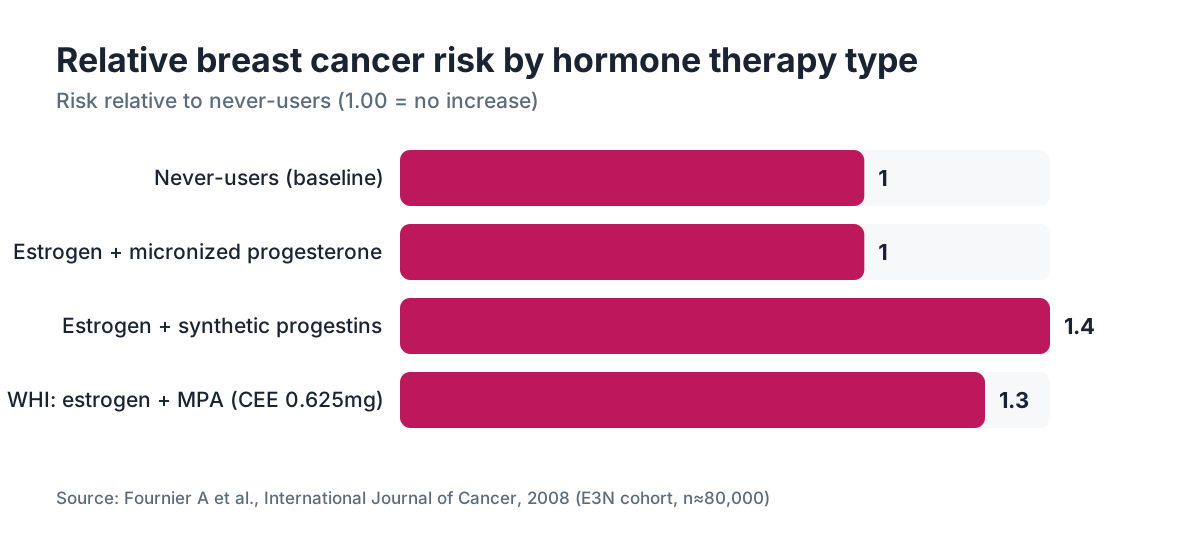
That difference shows up in the clinic. The Women's Health Initiative used conjugated equine estrogen plus MPA. The breast cancer signal that scared the world in 2002 came mostly from the combined estrogen-progestin arm, specifically that estrogen-plus-MPA pairing. [3] The estrogen-only arm, made up of women who'd had hysterectomies, showed no matching breast cancer increase. Later observational work, most notably the large French E3N cohort study, found that women on estrogen plus micronized progesterone had no significant rise in breast cancer risk versus non-users, while women on estrogen plus synthetic progestins did. [6]
Nobody should oversell this. The E3N study was observational, so it can't prove cause, and the absolute differences are small. But the biology holds up. MPA has partial androgenic activity that micronized progesterone lacks, and MPA has been shown in lab and some clinical work to push breast cell growth more than bioidentical progesterone does.
Most menopause specialists have already moved. NAMS's 2022 Hormone Therapy Position Statement notes that bioidentical progesterone "may have a more favorable effect on breast tissue than synthetic progestogens." [1] The Endocrine Society and the British Menopause Society use similar language.
What this means for you is simple. If your prescriber still defaults to Provera without a specific clinical reason, it's reasonable to ask about switching to oral micronized progesterone. Most insurance plans cover it, and the generic usually runs $20 to $50 per month. progesterone
What are the real benefits of progesterone in menopause beyond uterine protection?
Sleep is the big one. In a randomized controlled trial of peri- and postmenopausal women, oral micronized progesterone at 300 mg nightly beat placebo on subjective sleep quality, cut waking episodes, and added total sleep time. [2] The effect runs through allopregnanolone, progesterone's neuroactive metabolite, acting on GABA-A receptors. Synthetic progestins don't produce that benefit because they don't convert to allopregnanolone the same way.
Mood and anxiety are next door. Small studies and a lot of clinical experience suggest progesterone, working through allopregnanolone, has calming effects, and that the GABA activity explains why many women feel steadier after starting micronized progesterone. This isn't the same as treating a diagnosed anxiety disorder. For women whose anxiety clearly worsened in perimenopause, it can still matter.
There's a bone angle too. Progesterone receptors sit on osteoblasts, the cells that build new bone, and some data suggest progesterone has a modest bone-building effect independent of estrogen's role in slowing bone loss. The evidence isn't strong enough to use progesterone as a primary osteoporosis treatment. It does add to why combined HRT tends to show good bone outcomes. If bone density worries you, a bone density test is worth scheduling.
Cardiovascular effects are messier. Estrogen improves lipid profiles, MPA blunts some of that, and micronized progesterone appears to leave the benefit intact. That evidence is mostly observational, but it fits the mechanism.
Neuroprotection is the part everyone is watching. Allopregnanolone research took off after the FDA approved brexanolone, a synthetic allopregnanolone, for postpartum depression in 2019. [7] Whether taking progesterone protects against cognitive decline during the menopause transition is genuinely unknown. The closest data come from basic science and small human studies showing progesterone supports myelin repair and lowers neuroinflammation. The KEEPS and SWAN studies added observational signals, but no large randomized trial has settled the cognition question. Honest answer: we don't know yet. The biology is encouraging enough that it doesn't look like the wrong bet.
Does progesterone help with hot flashes and menopause symptoms?
Progesterone alone is not first-line for hot flashes and night sweats. That's estrogen's job. It isn't useless on them either.
A small but well-run randomized trial published in Menopause in 2011 found that oral micronized progesterone 300 mg nightly cut hot flash frequency by about 50% versus placebo over 12 weeks in postmenopausal women. [8] That's a real effect, even if it's smaller than estrogen delivers. For women who can't or won't take estrogen, progesterone on its own may offer partial relief.
Night sweats can improve through a different door: better sleep architecture. When you sleep deeper and wake less, you may not register mild thermoregulatory blips that would otherwise pull you awake. So some of the night-sweat benefit is likely indirect, riding on the GABA-driven sleep improvement.
For mood and brain fog, the evidence is mixed. Some women feel much better, others notice nothing. The variation probably reflects individual differences in allopregnanolone sensitivity and baseline progesterone, neither of which anyone routinely measures before starting.
If you're perimenopausal rather than fully menopausal, your hormonal picture is different from a postmenopausal woman's. Erratic estrogen swings, not simply low estrogen, drive many perimenopausal symptoms. Sometimes adding progesterone alone, without estrogen, is the right first move for a perimenopausal woman who still has decent estrogen but has clearly lost progesterone. See the full overview of perimenopause age and when does menopause start for more on timing.
For fully postmenopausal women with heavy vasomotor symptoms, though, estrogen is the treatment and progesterone (when needed) is the companion. Trying to control severe hot flashes with progesterone alone rarely works well.
Who actually needs progesterone in menopause and who can skip it?
The standard clinical answer is short. If you have a uterus and take systemic estrogen, you need a progestogen. This isn't a philosophy. It comes from hard outcome data: unopposed systemic estrogen in women with a uterus raises endometrial cancer risk substantially, with relative risks running from 2-fold to 10-fold depending on the dose and how long the estrogen goes unopposed. [3]
If you've had a hysterectomy, you don't need progesterone for endometrial protection, and most guidelines say you can use estrogen alone safely. Plenty of women in this group still add micronized progesterone for sleep and mood, and there's nothing wrong with that given the favorable safety profile at standard doses.
Women using only low-dose local vaginal estrogen (cream, ring, tablet) for genitourinary symptoms don't need to add a progestogen. Local vaginal estrogen is barely absorbed, and systemic levels stay in the postmenopausal range. [9] The FDA labeling for low-dose vaginal products was updated to reflect this, and NAMS and ACOG agree. That matters because many women with genitourinary syndrome of menopause are told they can't take any estrogen because of a breast cancer history, when local vaginal estrogen carries a very different risk profile than systemic therapy. [11]
Perimenopausal women who still have periods sit in a gray zone. If you're cycling irregularly and your worst symptoms are broken sleep, anxiety, and premenstrual-type misery, your doctor may offer cyclic progesterone (days 14 to 28 of your cycle, roughly copying what your corpus luteum should have made) before moving to full combined HRT.
If you have a personal history of breast cancer, the progesterone question gets genuinely complicated and needs an oncologist in the room. Some breast cancers carry progesterone receptors, and the risk math shifts. That's not a decision for a general article.
What are the side effects of progesterone in menopause?
The most common side effect is sedation, which is exactly why the instruction reads "at bedtime." Most women adjust within a few weeks. A few find the drowsiness carries into the morning, and they may do better splitting the dose or switching to a vaginal form, which cuts systemic absorption and largely skips the allopregnanolone conversion that drives sleepiness.
Mood can go either way. Most women feel calmer, but some, especially those with a history of PMS, PMDD, or sensitivity to progesterone shifts, get irritability, low mood, or depressive symptoms. This happens more with synthetic progestins than with micronized progesterone, but it shows up with the bioidentical form too. If you had severe PMDD, tell your prescriber before you start.
Breast tenderness and bloating can happen, mostly in the first one to three months. They usually settle. If they hang on, the dose may be too high or the regimen may need a change.
One allergy point is real. Prometrium is made in peanut oil, so women with peanut allergies can't use it. Compounded micronized progesterone in a sesame or other oil base is the alternative.
Weight changes are a fair concern. Some women hold water weight on progestogens. Micronized progesterone looks less likely to cause weight gain than MPA because it lacks the glucocorticoid receptor activity that drives fluid retention. Individual responses still vary.
Long-term safety at standard doses is generally reassuring. Reanalysis of WHI data, together with the E3N observational data, suggests micronized progesterone has a friendlier risk profile than synthetic progestins, especially for breast tissue. [6] That doesn't mean zero risk. It means the risk isn't clearly above baseline in observational studies at standard doses and durations.
For women juggling hormone symptoms and weight, telehealth practices like WomenRx that focus on women's hormones can help dial in progestogen type and dose alongside other treatments.
Oral progesterone vs. cream vs. vaginal: which form is best?
Oral micronized progesterone (Prometrium and generics) is the most studied form and the only one with FDA approval for endometrial protection in HRT. It absorbs through the gut and runs through significant first-pass metabolism in the liver, which is actually what generates the allopregnanolone that drives the sleep benefit, and it reaches systemic progesterone levels high enough to protect the endometrium. If endometrial protection is the goal, this is what the evidence backs. [4]
Vaginal progesterone (gels like Crinone, suppositories, or compounded vaginal capsules) skips first-pass metabolism almost entirely. That means less allopregnanolone and less sedation, but also less systemic progesterone. Vaginal progesterone reaches high concentrations in uterine tissue through what's called the uterine first-pass effect, where vaginal blood vessels deliver the drug straight to the uterus. For endometrial protection, vaginal routes may work at lower doses than oral, but the evidence base is thinner, and most guidelines still put oral first. [5]
Transdermal (cream) progesterone, whether prescription-compounded or bought over the counter, is the most argued-about form. Absorption is highly variable, serum levels often come in lower than expected, and the dose needed to protect the endometrium isn't well established. As noted earlier, the Endocrine Society says the data are too thin to endorse creams for endometrial protection. Creams may still help with localized symptoms in women who aren't on systemic estrogen, but they shouldn't stand in for oral or vaginal forms in women who need uterine protection.
Compounded progesterone in any route is an option when Prometrium's peanut oil base is a problem, or when a specific dose or format isn't sold commercially. Compounding quality varies by pharmacy. If you go this route, use an accredited compounding pharmacy (look for PCAB accreditation).
How do you know if your progesterone levels are low?
Serum progesterone testing gets ordered a lot, but its usefulness is limited and depends heavily on context. Here's why.
In a cycling woman, progesterone is supposed to sit low before ovulation and rise in the luteal phase (days 14 to 28). A day-21 progesterone level is the classic test for confirming ovulation, and a value above 3 ng/mL (some labs use 10 ng/mL) suggests ovulation happened. In perimenopause, cycles turn anovulatory, so day-21 values run low not because of a true deficiency state, but because ovulation didn't occur.
In postmenopause, serum progesterone is essentially zero in untreated women, because the ovaries have stopped cycling. There's no "normal" postmenopausal progesterone level to measure against the way there is for estradiol.
Once you're on oral progesterone, serum levels swing widely and track poorly with symptom relief. Part of that is first-pass metabolism: a big chunk of the absorbed dose turns into allopregnanolone before it reaches general circulation, so a blood level misses much of the actual hormonal activity.
Saliva testing and dried urine testing (like the DUTCH panel) claim to capture more of the metabolite picture, but neither has been validated against clinical outcomes well enough to count as standard of care. Functional medicine practitioners use them, and they may offer useful clues about individual metabolism, but interpret them carefully.
Here's the practical rule. Symptoms and clinical response usually guide progesterone dosing for menopause better than serum levels. If you're sleeping well, your mood is steady, your uterus looks healthy on follow-up ultrasound, and you tolerate the dose, that's meaningful information even without a "perfect" blood number.
What does the latest evidence say about progesterone safety and cancer risk?
This is the question that has driven menopause medicine since the WHI results landed in 2002. The evidence has moved a lot in the 20-plus years since.
The WHI combined hormone therapy arm used conjugated equine estrogen 0.625 mg plus medroxyprogesterone acetate 2.5 mg daily in women ages 50 to 79, many of them older and starting therapy more than 10 years after menopause. The study found a statistically significant rise in invasive breast cancer (hazard ratio 1.26, about 8 extra cases per 10,000 women per year). [3] That finding is real and has held up in later analyses.
What changed is the recognition that the progestogen type matters and timing matters. The French E3N cohort, which followed about 80,000 women, found that women on estrogen plus micronized progesterone had a breast cancer relative risk of 1.00 (essentially no increase) versus never-users, while women on estrogen plus synthetic progestins had a relative risk of 1.40. [6] That's a meaningful gap, even allowing for the observational design.
The endometrial cancer picture is cleaner. Adequate progestogen definitively lowers the endometrial cancer risk that comes with unopposed estrogen. That protection is well established. [3]
For ovarian cancer, the WHI showed a non-significant trend toward higher risk with combined HRT, and some observational studies support a modest link. The absolute numbers stay small.
Colorectal cancer: the WHI found a reduced risk with combined HRT (hazard ratio 0.63). That's real, but it's a side observation, not a reason to take hormones.
Blood clot risk (venous thromboembolism) tracks mainly with oral estrogen. Transdermal estradiol doesn't appear to carry the same VTE risk as oral conjugated estrogen. The progesterone route matters here too: oral micronized progesterone looks less clot-promoting than some synthetic progestins. [1]
The bottom line from NAMS's 2022 position: "For most healthy symptomatic women within 10 years of menopause onset, the benefits of hormone therapy outweigh the risks." [1] That isn't a green light for every woman. It's a real shift from the fear-driven prescribing that followed the 2002 WHI report. See the broader menopause guide for the full HRT evidence.
What should you ask your doctor about progesterone for menopause?
Your conversation should cover at least five things.
First, do you need it at all? If you've had a hysterectomy, the endometrial protection reason disappears. You might still want it for sleep, but that's a different conversation than a clinical requirement.
Second, which form? Given the different evidence on breast tissue, it's reasonable to ask specifically about micronized progesterone rather than accepting a synthetic progestin without discussion. Oral Prometrium (or its generic) is first-line for most women. Compounded forms are an option if peanut allergy is in play.
Third, what dose and schedule? For perimenopausal women who still cycle irregularly, a cyclic approach (12 to 14 days per month) may fit better than continuous daily dosing, which is standard for postmenopausal women. Cyclic use is typically 200 mg nightly during those days. Continuous dosing is usually 100 mg nightly.
Fourth, what monitoring do you need? Endometrial surveillance (transvaginal ultrasound, sometimes endometrial biopsy) is appropriate if you have unexplained uterine bleeding on therapy. Many women on properly dosed continuous HRT have no bleeding and need no routine biopsy, but any unexpected bleeding calls for evaluation.
Fifth, how long can you stay on it? There's no hard evidence-based ceiling on duration for women who are clearly benefiting and tolerating therapy. The old "five-year rule" came mostly from the WHI synthetic progestin data and is no longer treated as a universal limit by NAMS or the Endocrine Society. Annual reassessment of risks and benefits is the current standard. [1]
Services like WomenRx connect women with practitioners who do these conversations all day, which helps when your primary care provider is less current on menopause evidence. The estrogen patch article covers the other half of combined HRT in detail.
How does progesterone fit into a broader menopause treatment plan?
Progesterone rarely works alone. Most women who benefit from it use it inside combined hormone replacement therapy, next to systemic estradiol delivered by patch, gel, spray, or tablet. The estrogen route, the estrogen type, and the progesterone form and dose all interact.
The current prescribing preference among menopause specialists leans toward transdermal estradiol (patches, gels) plus oral micronized progesterone. Transdermal estradiol sidesteps the clot and stroke risk tied to oral conjugated estrogen. Oral micronized progesterone gives endometrial protection and sleep benefit without the lipid and breast downsides of synthetic progestins. [10] UK literature calls this pairing "body-identical HRT," and it's been widely adopted after recommendations from the British Menopause Society.
For postmenopausal women whose main trouble is broken sleep, anxiety, and mood (with manageable or absent hot flashes), some practitioners prescribe oral micronized progesterone alone, without estrogen. That's off-label but not unusual. The evidence for it is thinner than for combined HRT, but it's clinically reasonable for women who can't or don't want estrogen.
Weight sits closer to hormone therapy than most people expect. The menopause transition brings central fat gain and metabolic change that isn't purely about calories. Some women find that steadying their hormones steadies their metabolism and supports weight efforts. For women who need more weight support than hormones give, GLP-1 receptor agonists like semaglutide and tirzepatide are increasingly used alongside HRT. If that's on your mind, semaglutide for weight loss and the semaglutide vs tirzepatide comparison are good starting points.
Bone protection is one more reason to think about hormone therapy as a whole. Both estrogen and progesterone feed bone health. If you're being evaluated for osteoporosis risk, that fits naturally alongside any HRT discussion. A bone density test is typically recommended at menopause for women with risk factors, and the results can shape how hard to push hormone therapy.
Frequently asked questions
Can I take progesterone for menopause if I've had a hysterectomy?
You don't need it for uterine protection, since that organ is gone. But many women without a uterus still take oral micronized progesterone at 100 to 200 mg nightly for the sleep and mood benefit from allopregnanolone, its GABA-active metabolite. This is off-label but common and generally considered safe at standard doses. Talk it through with your prescriber.
Is progesterone cream as effective as oral progesterone for menopause?
No, not for endometrial protection. Over-the-counter creams deliver roughly 20 to 40 mg of progesterone daily, and absorption is variable. The Endocrine Society has stated there are insufficient data to support progesterone cream for protecting the uterine lining in women on systemic estrogen. Oral micronized progesterone (Prometrium) is the evidence-based standard. Creams may offer mild symptom relief for women not on estrogen.
What is the standard progesterone dosage for menopause?
The FDA-approved dosing for Prometrium is 200 mg nightly for 12 days per month in a cyclic regimen, or 100 mg nightly continuously for postmenopausal women on standard-dose conjugated estrogen. Your prescriber may adjust based on your estrogen dose, symptoms, and whether you want any monthly bleeding. These are milligram doses of oral micronized progesterone; other forms and doses exist for different situations.
Does progesterone help with hot flashes?
Somewhat. A randomized trial found that 300 mg nightly of oral micronized progesterone cut hot flash frequency by about 50% over 12 weeks versus placebo. That's real but modest next to estrogen, which typically reduces hot flashes by 80 to 90%. Progesterone is not a first-line treatment for vasomotor symptoms but can help, especially if you can't take estrogen.
Can progesterone cause weight gain in menopause?
Possibly, but the risk is lower with micronized progesterone than with synthetic progestins like medroxyprogesterone acetate. MPA has glucocorticoid receptor activity that can cause fluid retention; micronized progesterone does not. Some women hold a small amount of water weight in the first few weeks on any progestogen, then stabilize. If weight gain persists, discuss a dose or formulation change with your provider.
Is progesterone or progestin better for menopause?
Current evidence favors bioidentical micronized progesterone over synthetic progestins. Observational data, including the French E3N cohort study, found no increased breast cancer risk with estrogen plus micronized progesterone, while estrogen plus synthetic progestins showed a roughly 40% relative increase. NAMS's 2022 position statement notes that micronized progesterone may have a more favorable effect on breast tissue than synthetic progestogens.
How long does it take for progesterone to work in menopause?
Sleep effects often show up within one to two weeks of starting nightly oral micronized progesterone. Mood and anxiety improvements may take four to six weeks. Endometrial protection is established with consistent use at appropriate doses, confirmed by the absence of breakthrough bleeding (or by biopsy if indicated). If you notice no benefit after eight to twelve weeks, the dose or form may need adjusting.
Can progesterone make menopause symptoms worse?
In some women, yes. A subset, particularly those with a history of PMDD or progesterone sensitivity, get low mood, irritability, or worse anxiety on progestogens. This reaction is more common with synthetic progestins than with micronized progesterone, but it can occur with the bioidentical form too. Vaginal progesterone, which has less systemic exposure, sometimes suits these women better.
Do I need a progesterone test before starting hormone therapy?
Not usually. Serum progesterone levels are largely uninterpretable in postmenopausal women because baseline levels sit near zero, and because oral micronized progesterone produces metabolites that serum testing doesn't capture well. Your prescriber may check FSH and estradiol to confirm menopausal status and set a baseline, but progesterone levels rarely change the clinical decision.
Is it safe to take progesterone long-term for menopause?
NAMS and the Endocrine Society no longer endorse a hard five-year limit on hormone therapy for women who are benefiting and reassessed annually. The old limit came largely from WHI data using synthetic progestins; micronized progesterone carries a different risk profile. Long-term safety data beyond 10 years are thinner, so ongoing annual risk-benefit review with your provider is the standard approach.
What is the difference between natural progesterone and bioidentical progesterone?
In practice they mean the same thing: a hormone with the identical molecular structure as the progesterone your ovaries make, derived from plant sources (typically diosgenin from wild yam) and synthesized to match human progesterone exactly. Oral micronized progesterone (Prometrium and generics) is FDA-approved bioidentical progesterone. Some compounding pharmacies market creams labeled 'natural progesterone'; quality and dose vary widely.
What happens if I take estrogen without progesterone and I have a uterus?
Unopposed systemic estrogen in a woman with a uterus thickens the endometrial lining (hyperplasia). Over time, hyperplasia can progress to endometrial cancer. The relative risk from prolonged unopposed estrogen runs from 2-fold to 10-fold above baseline depending on dose and duration. That's why a progestogen is non-negotiable if you have a uterus and take systemic estrogen.
Can progesterone improve sleep during menopause?
Yes, with reasonably good evidence. Oral micronized progesterone converts to allopregnanolone, a GABA-A receptor agonist that acts like a mild sedative. A randomized controlled trial found significant improvement in sleep quality, fewer awakenings, and more total sleep time at 300 mg nightly versus placebo. This is one of the clearest non-uterine benefits of micronized progesterone and a reason many women without a uterus still take it.
Is compounded progesterone as good as Prometrium?
Possibly, with caveats. FDA-approved Prometrium has been tested for potency, purity, and bioavailability. Compounded progesterone from accredited pharmacies (look for PCAB accreditation) can be high quality, but compounding is less tightly regulated and batch-to-batch consistency can vary. Compounding is genuinely useful when Prometrium isn't appropriate, such as in women with peanut allergies, since Prometrium is made in peanut oil.
Sources
- North American Menopause Society (NAMS), 2022 Hormone Therapy Position Statement
- Hitchcock CL, Prior JC, Menopause (journal), 2012: oral micronized progesterone for menopause-related sleep disturbance
- NIH National Heart, Lung, and Blood Institute, Women's Health Initiative (WHI) study results
- FDA, Prometrium (progesterone, USP) prescribing information
- Endocrine Society, Clinical Practice Guideline: Treatment of Menopause-Associated Vasomotor Symptoms, 2015
- Fournier A et al., International Journal of Cancer, 2008: E3N cohort study of hormone therapy and breast cancer risk
- FDA, Drug approval of brexanolone (Zulresso) for postpartum depression, 2019
- Prior JC et al., Menopause (journal), 2011: randomized trial of progesterone for hot flashes
- FDA, Drug Safety and Availability: low-dose vaginal estrogen products
- Stuenkel CA et al., Journal of Clinical Endocrinology and Metabolism, 2015: Endocrine Society guideline on menopause hormone therapy
- ACOG, American College of Obstetricians and Gynecologists guidance on management of menopausal symptoms