Progesterone 200 mg side effects: what women actually experience
TL;DR: Progesterone 200 mg (oral micronized progesterone, brand name Prometrium) most commonly causes drowsiness, dizziness, headache, bloating, and breast tenderness. The sedation is strong enough that most prescribers tell you to take it at bedtime. Serious side effects are rare but include blood clots, allergic reaction, and liver changes. Most women tolerate it well once the dose is dialed in.
What is progesterone 200 mg and who is it prescribed for?
Progesterone 200 mg is oral micronized progesterone, sold as Prometrium and available as generic. 'Micronized' just means the hormone particles are ground fine enough to be absorbed through the gut, which raw progesterone cannot do reliably.
Most commonly it's prescribed to women in perimenopause or menopause who still have a uterus and are also taking estrogen. Estrogen alone thickens the uterine lining. Progesterone counters that and protects against endometrial cancer. That pairing is called combined hormone replacement therapy. [1]
It also gets prescribed for irregular cycles, endometriosis support, and sometimes for sleep or anxiety in perimenopausal women, because natural progesterone has a calming, sleep-promoting effect that synthetic progestins do not share to the same degree. [2]
You can read more background in our full guide to progesterone and to hormone replacement therapy.
What are the most common side effects of progesterone 200 mg?
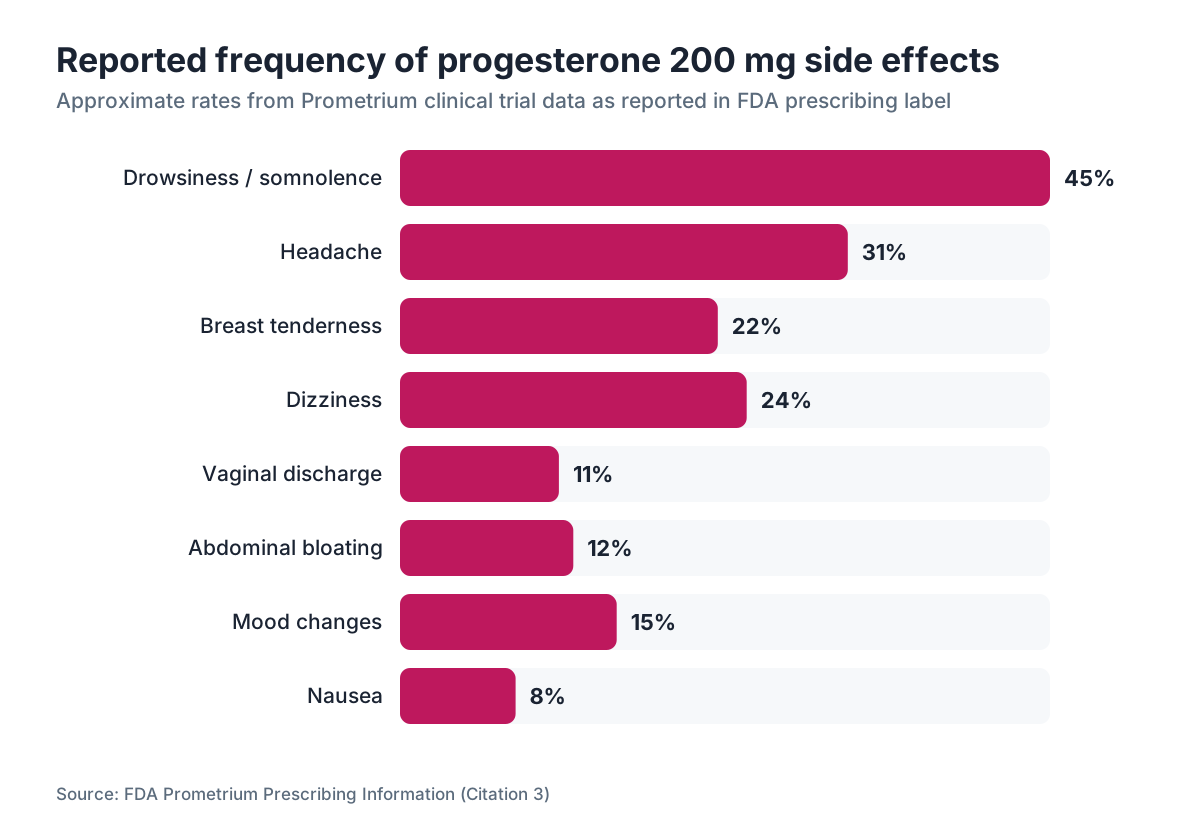
The FDA-approved label for Prometrium lists these as the most frequently reported side effects from its clinical trial data: [3]
| Side effect | Approximate frequency reported in trials | |---|---| | Drowsiness / somnolence | 45% | | Dizziness | 15-24% | | Headache | 16-31% | | Breast tenderness | 16-22% | | Abdominal bloating | 8-12% | | Nausea | 8% | | Vaginal discharge | 11% | | Mood changes (depression or irritability) | 8-15% |
Numbers vary across studies and are approximate. The label ranges differ slightly depending on the population studied.
Drowsiness is the one that surprises most women. It's genuine sedation, more than 'feeling a bit tired.' For many women this turns out to be useful, because poor sleep is one of the most disruptive symptoms of perimenopause and menopause. [4] Taken at bedtime, the sedation fades by morning for most people.
Headache is common enough that some women mistake a progesterone-related headache for a sign something is wrong. It usually fades after the first one to three cycles as the body adjusts.
Bloating and breast tenderness track the natural progesterone surge of the luteal phase, so they make biological sense. Annoying, but not medically concerning.
Why does progesterone 200 mg make you so sleepy?
Oral micronized progesterone gets metabolized in the gut and liver into a compound called allopregnanolone. Allopregnanolone acts on GABA-A receptors in the brain, the same receptors that benzodiazepines and alcohol hit. The result is real sedation and a calming effect. [2]
This belongs to natural (bioidentical) progesterone and is not shared to the same degree by synthetic progestins like medroxyprogesterone acetate (MPA). It's one reason many menopause specialists now prefer oral micronized progesterone: the sedative effect helps with the sleep disruption that is nearly universal in menopause. [4]
The sedation is dose-dependent. At 100 mg it's noticeable. At 200 mg it's strong enough that driving or operating machinery after taking it is a genuine safety concern, which is why the FDA label says to take it at bedtime. [3]
If morning grogginess lingers past a few weeks, talk to your prescriber. Some women do better with 100 mg, or with a vaginal rather than oral route, which skips the first-pass metabolism that creates allopregnanolone.
Are there serious or dangerous side effects to know about?
Serious side effects are uncommon but real, and the FDA label requires they be disclosed. [3]
Blood clots (venous thromboembolism). Synthetic progestins, especially MPA, carry a documented increased clot risk. The evidence for oral micronized progesterone is more favorable: the E3N cohort study and other observational data suggest it does not raise clot risk the way MPA does, though it is not definitively zero risk. [5] If you have a personal or family history of DVT or pulmonary embolism, tell your prescriber before starting.
Allergic reaction. Prometrium capsules are made in peanut oil. Women with peanut allergy should not take Prometrium and should ask about peanut-free compounded versions. This is not a minor footnote. [3]
Cardiovascular events. The Women's Health Initiative (WHI) found elevated risk with estrogen-plus-MPA. The risk profile of natural progesterone is being studied separately and appears lower, but long-term large RCT data specific to oral micronized progesterone are still limited. [6]
Liver effects. Progesterone is processed by the liver. In women with severe hepatic impairment it should be used cautiously.
Breast cancer. The relationship between progesterone and breast cancer risk is complicated. The WHI data concerned MPA. Observational studies suggest oral micronized progesterone may carry lower breast cancer risk than synthetic progestins, but no large randomized trial has settled this for progesterone alone. [5][6] The NAMS 2022 position statement notes this distinction. [7]
Call your doctor or go to the ER for: sudden severe headache, chest pain, shortness of breath, leg swelling and pain, sudden vision changes, or yellowing of skin or eyes. These are rare but need immediate attention.
Does progesterone 200 mg cause weight gain?
This is one of the most searched questions, and the honest answer is: a little, temporarily, for some women.
Progesterone increases water retention and can raise appetite slightly. Most women who report weight gain gain one to three pounds, and it often resolves after the first month or two once the body adjusts. The bloating is real and can move the scale without any actual fat gain.
The research here is thin. Most HRT trials tracked overall hormone effects rather than isolating progesterone's weight impact. What data exist suggest natural progesterone has a smaller adverse metabolic profile than MPA, and some studies found it slightly favorable for insulin sensitivity. [5]
If you're worried about weight during menopause more broadly, the menopause transition itself shifts fat toward the abdomen regardless of hormones. Separating 'progesterone weight gain' from menopausal metabolic change is genuinely hard.
How do progesterone 200 mg side effects compare to synthetic progestin?
The distinction matters clinically. Most of the scarier hormone data from the WHI came from medroxyprogesterone acetate, not natural progesterone. The two are not the same molecule and they don't behave the same way.
| Effect | Oral micronized progesterone 200 mg | Medroxyprogesterone acetate (MPA) | |---|---|---| | Sedation / sleep benefit | Yes, significant | Minimal | | Mood effects | Generally neutral to positive | Some data suggest worsening mood | | Blood clot risk | Appears lower (observational) | Elevated vs. no progestin | | Breast cancer signal | Possibly lower (observational) | Higher signal in WHI | | Cardiovascular | Appears more neutral | Adverse signal in WHI | | Metabolic / insulin | Possibly neutral to favorable | Less favorable |
The E3N cohort (a French observational study of 80,391 women) found that women using estrogen combined with natural progesterone did not have a significantly elevated breast cancer risk compared to non-users, while those using synthetic progestins did. [5] Observational data have limits, and correlation is not causation, but the pattern is consistent enough that NAMS and many European guidelines now separate the two. [7]
None of this makes progesterone 200 mg risk-free. It means the risk profile looks different and, in many respects, more favorable than older synthetic progestins.
What side effects are specific to taking it orally versus vaginally?
Route of administration changes the side effect picture a lot.
Oral progesterone 200 mg goes through the digestive tract and liver first. That first-pass metabolism converts a lot of it to allopregnanolone and other neuroactive metabolites. That's what causes the drowsiness, and also why oral dosing has stronger central nervous system effects.
Vaginal progesterone (same molecule, different delivery) skips first-pass metabolism. The result: less sedation, less dizziness, but also less of the sleep and anxiety benefit. Local vaginal effects like discharge and mild irritation are more common with the vaginal route. Systemic blood levels are lower for the same stated dose.
For women who need progesterone mainly to protect the endometrium and can't tolerate oral sedation, vaginal is a reasonable option. For women whose main complaint is poor sleep, oral at bedtime may be the better choice.
If you're working with a telehealth menopause prescriber, platforms like WomenRx can walk through which formulation fits your situation, since the right answer isn't the same for everyone.
When do progesterone 200 mg side effects start and how long do they last?
Sedation and dizziness happen fast. Most women feel the drowsiness the first night they take it. That's not a bug. It's allopregnanolone hitting GABA receptors within a couple of hours of dosing.
The harder side effects, including headache, breast tenderness, and bloating, typically peak in the first one to four weeks and then ease as the body adjusts. This mirrors the adaptation period most hormones require.
Mood changes can take longer to sort out. Some women feel calmer and sleep better from week one. Others go through a rough patch in the first month where irritability or low mood seems worse before improving. If mood changes are severe or persist past six to eight weeks, flag it to your prescriber. Dose adjustments or switching from oral to vaginal can help.
Perimenopause itself is hormonally chaotic, which makes pinning any given symptom on progesterone alone tricky. Keeping a simple symptom log for the first month helps you and your provider tell the difference. [4]
Can progesterone 200 mg cause anxiety or depression?
This is a real concern and the answer is nuanced.
Most women feel calmer on oral micronized progesterone because allopregnanolone quiets the nervous system. But a subset report the opposite: more anxiety, irritability, or low mood. The term in the research is 'paradoxical response to neurosteroids,' and it's thought to involve sensitivity differences in GABA-A receptor subunits. [2]
Women with a history of premenstrual dysphoric disorder (PMDD), premenstrual syndrome (PMS), or sensitivity to birth control pills are more likely to react this way. If you always felt worse in the second half of your cycle premenopause, you may be in this group.
Depression is listed as a reported adverse event in the Prometrium label. [3] If you notice a real mood decline after starting progesterone 200 mg, don't push through it for months hoping it improves. Tell your provider. Vaginal progesterone has fewer neuroactive metabolites and is often better tolerated in women with this sensitivity.
For context on how mood intersects with the hormonal shifts of perimenopause, the perimenopause age guide is worth reading alongside this one.
Who should not take progesterone 200 mg?
The FDA lists these as contraindications or situations requiring caution: [3]
Known or suspected breast cancer or other hormone-sensitive cancers. Progesterone, like estrogen, should not be used without careful oncology input in women with active or recent hormone-sensitive cancer.
Undiagnosed abnormal vaginal bleeding. You need a cause before adding hormones.
Liver disease. Severely impaired liver function affects how progesterone is metabolized.
Peanut allergy. Prometrium specifically uses peanut oil as a carrier. Compounded alternatives exist.
Active or history of blood clots (DVT, PE, stroke). The risk signal for natural progesterone is lower than for MPA, but not absent, and most prescribers use caution.
Pregnancy (in this context, unintended pregnancy in a premenopausal woman on HRT). Natural progesterone is used in fertility and early pregnancy support, but that's a separate clinical context with different dosing.
Women who smoke and are over 35 should have a frank conversation with their prescriber about overall cardiovascular and clot risk before starting any HRT component.
How do you manage or reduce progesterone 200 mg side effects?
Take it at bedtime. This is the single most effective fix for the sedation problem. Most women find morning grogginess is minimal when they take it right before sleep. The FDA label recommends this directly. [3]
Give it time. Headache, breast tenderness, and bloating usually diminish within four to eight weeks as the body adjusts. Bailing after two weeks means you may never see the benefit.
Check your dose. Some women do fine at 100 mg and don't need 200 mg. If side effects are intolerable, your prescriber may try a lower dose, particularly if you're using it cyclically rather than continuously.
Switch delivery routes. If oral sedation is a problem and you don't need the sleep benefit, vaginal progesterone cuts central nervous system effects a lot.
Time it with food. Taking progesterone with a little fat, like a few nuts, improves absorption and can smooth out the absorption curve, which may reduce peak-related dizziness.
Track symptoms. A simple app or paper log of symptom severity day by day gives your prescriber real data instead of a vague impression. Most providers find this genuinely useful.
For broader context on managing menopause symptoms, see our guide to hormone replacement therapy and the estrogen patch, which often pairs with progesterone in HRT regimens.
What does the research actually say about long-term safety?
The honest answer is that long-term randomized trial data on oral micronized progesterone specifically, isolated from estrogen, are thinner than we'd like.
Most of the large RCT data come from the Women's Health Initiative, which used conjugated equine estrogen plus MPA, not natural progesterone. [6] Extrapolating those results to oral micronized progesterone is not scientifically clean, and the NAMS 2022 menopause hormone therapy position statement acknowledges this, noting that 'micronized progesterone appears to have a more favorable effect on breast cancer risk compared with synthetic progestins.' [7]
The best long-term observational data come from the E3N cohort in France. In that study, estrogen combined with natural progesterone was not associated with a significantly elevated breast cancer risk at follow-up of up to 12 years. [5] The Women's Health Initiative found a hazard ratio of 1.24 for breast cancer with estrogen plus MPA. [6] The gap between those two findings matters clinically, even accounting for the methodological difference between observational and randomized data.
For cardiovascular outcomes, the KEEPS trial (Kronos Early Estrogen Prevention Study) used oral micronized progesterone and found no significant adverse effect on markers of cardiovascular disease progression in recently menopausal women. [8]
Here's the bottom line. The safety picture for progesterone 200 mg looks genuinely better than older synthetic progestins, but 'better than MPA' is not the same as 'proven safe over 20 years.' Decisions should be individualized, and most guidelines recommend the lowest effective dose for the shortest time that meets your clinical needs. [9] WomenRx clinicians work through exactly this kind of individualized risk-benefit analysis with patients.
What questions should you ask your prescriber before starting progesterone 200 mg?
Here are the ones worth asking out loud, instead of just wondering about:
Do I need 200 mg or would 100 mg be enough? Dose drives side effect intensity. If you're taking it for endometrial protection on continuous combined HRT, 100 mg may be adequate.
Should I take it orally or vaginally? The answer depends on why you're taking it and which side effects you most want to avoid.
Should I take it every day or cyclically? Continuous dosing (daily) tends to produce less withdrawal bleeding. Cyclic dosing (12-14 days per month) can cause monthly bleeding. Each has trade-offs.
I have a peanut allergy. What's the alternative? The answer is a compounded peanut-free formulation. Make sure your prescriber flags this in your chart.
I have a history of depression or PMDD. Does that change anything? It should prompt extra monitoring, a possible preference for the vaginal route, and a lower starting dose.
How long do I take it? The answer depends on whether you're still taking estrogen, and at what dose. Progesterone protects the endometrium only as long as estrogen is present at significant levels.
Reading our explainers on progesterone and when does menopause start before your appointment can help you ask better questions.
Frequently asked questions
Can progesterone 200 mg cause weight gain?
Some women gain one to three pounds initially, mostly from water retention and a mild appetite increase. For most, this levels off within four to eight weeks. Research hasn't shown meaningful fat gain specifically from oral micronized progesterone. The menopausal transition itself shifts fat toward the abdomen, which makes it hard to separate progesterone effects from normal hormonal change.
Why does progesterone 200 mg make me so tired?
Oral micronized progesterone is metabolized into allopregnanolone, a neurosteroid that binds GABA-A receptors in the brain and causes real sedation, similar in mechanism to how benzodiazepines work. This belongs to natural progesterone and isn't shared by synthetic progestins. Taking it at bedtime is the standard recommendation, and many women find the sedation helps with menopause-related insomnia.
Is progesterone 200 mg the same as synthetic progestin?
No. Oral micronized progesterone (Prometrium) is the same molecule your body makes. Synthetic progestins like medroxyprogesterone acetate (MPA) are structurally different and behave differently in the body. They carry higher signals for clot risk and breast cancer in clinical trials. NAMS and many European guidelines now explicitly separate the two when discussing HRT safety.
Can I take progesterone 200 mg without estrogen?
Yes, for specific indications. Some prescribers use oral micronized progesterone alone for sleep support or perimenopausal anxiety, as a lower-risk approach than benzodiazepines. It doesn't protect the endometrium in the absence of exogenous estrogen the way combined HRT does, so the clinical goal determines the regimen. Discuss your specific situation with your provider.
How long does it take for progesterone 200 mg side effects to go away?
The sedation starts the first night and continues as long as you take it, though most women adapt and stop noticing it as much. Headache, breast tenderness, and bloating typically ease within four to eight weeks. Mood changes, positive or negative, can take a full two to three cycles to stabilize. Side effects that worsen or don't improve after six to eight weeks deserve a prescriber call.
Can progesterone 200 mg cause anxiety or make it worse?
Most women find oral micronized progesterone calming because of its allopregnanolone metabolite. But a real subset, particularly women with a PMDD history or known sensitivity to hormonal cycling, experience more anxiety or irritability. This is called a paradoxical neurosteroid response. If it happens, switching to vaginal progesterone (which has fewer neuroactive metabolites) often resolves the problem.
What should I do if I miss a dose of progesterone 200 mg?
Take it as soon as you remember, unless it's close to your next scheduled dose, in which case skip the missed dose and resume your normal schedule. Don't double up. Because the main effect of a dose is sedation and dizziness, taking two doses close together could increase those effects. Missing a day occasionally is not dangerous but may trigger light spotting in some women.
Can progesterone 200 mg cause spotting or bleeding?
Yes. Irregular spotting or breakthrough bleeding is a recognized side effect, especially in the first few months. If you're on continuous combined HRT, some bleeding in the first three to six months is expected and usually settles. Bleeding that starts after months of no periods, is heavy, or returns after a long absence warrants a call to your prescriber to rule out endometrial causes.
Does progesterone 200 mg cause hair loss?
Hair loss is not listed as a common side effect in the Prometrium FDA label. Some women report hair changes during hormonal transitions, including perimenopause itself, and it can be hard to separate a progesterone effect from background hormonal hair loss. Synthetic progestins with androgenic activity (like norethindrone) are more commonly linked to hair thinning than natural progesterone.
Is progesterone 200 mg safe if I have a history of breast cancer?
This requires individualized oncology input and isn't a universal yes or no. Most guidelines recommend avoiding hormonal HRT in women with active or recent hormone-receptor-positive breast cancer. Women who are further out from treatment, or who had hormone-receptor-negative disease, may have different risk profiles. Any use in this context requires coordination between your oncologist and menopause specialist.
Can I take progesterone 200 mg if I have a peanut allergy?
No, not Prometrium specifically. The brand-name capsule uses peanut oil as a carrier and is contraindicated in peanut allergy. A compounding pharmacy can make oral or vaginal progesterone in a different oil base, such as sesame or sunflower. Make sure this allergy is documented in your chart before any HRT prescription is written.
What is the difference between oral and vaginal progesterone 200 mg side effects?
Oral progesterone causes strong sedation and dizziness because first-pass liver metabolism creates allopregnanolone, a sedating neurosteroid. Vaginal progesterone skips that metabolism, so systemic sedation is much lower. The trade-off: vaginal delivery can cause local irritation and discharge. Women who need the sleep benefit often prefer oral. Women who can't tolerate sedation or need lower systemic exposure often prefer vaginal.
How does progesterone 200 mg interact with other medications?
The main interactions are with other central nervous system depressants (alcohol, sedatives, anxiolytics) because both progesterone and those drugs hit GABA receptors, and sedation adds together. CYP3A4 inhibitors or inducers (some antifungals, anticonvulsants, rifampin) can affect how progesterone is metabolized. Always give your prescriber a complete medication list including supplements before starting.
Sources
- FDA, Prometrium (progesterone, USP) prescribing information
- Bäckström T et al., 'Allopregnanolone and neurosteroid effects on GABA-A receptors', Progress in Neurobiology, 2011
- FDA, Prometrium full prescribing information (label), including contraindications and adverse reactions table
- Menopause Society (NAMS), 'Sleep and Menopause', patient education resource
- Fournier A et al., 'Unequal risks for breast cancer associated with different hormone replacement therapies: results from the E3N cohort study', Breast Cancer Research and Treatment, 2008
- Writing Group for the Women's Health Initiative Investigators, 'Risks and Benefits of Estrogen Plus Progestin in Healthy Postmenopausal Women', JAMA, 2002
- The Menopause Society (NAMS), '2022 Hormone Therapy Position Statement'
- Harman SM et al., 'KEEPS: The Kronos Early Estrogen Prevention Study', Climacteric, 2005 (trial design) and results publications
- Endocrine Society, Clinical Practice Guideline: 'Treatment of Symptoms of the Menopause', 2015
- NIH MedlinePlus, Progesterone drug information