Progesterone 100mg: what it does, who needs it, and how to take it
TL;DR: Progesterone 100mg is the most commonly prescribed dose of oral micronized progesterone for women on estrogen therapy who still have a uterus. It protects the uterine lining and helps most women sleep. You take it cyclically or every night. The FDA-approved brand is Prometrium. Generic versions cost far less and are the same molecule your ovaries once made.
What is progesterone 100mg and why is this dose used?
Progesterone 100mg is oral micronized progesterone, a bioidentical hormone that matches the exact molecule human ovaries produce. The 100mg capsule is the building block of most hormone regimens for women who have a uterus and take estrogen. [1]
Here is why the dose exists at all. Estrogen thickens the uterine lining. Left unopposed, that lining can overgrow into a condition called endometrial hyperplasia, which raises the risk of uterine cancer. Progesterone counters that growth. Take it cyclically or continuously and the lining stays in check. [2]
The word "micronized" earns its place on the label. Older synthetic progestins like medroxyprogesterone acetate (MPA) are different compounds entirely. Micronized progesterone is ground into tiny particles suspended in an oil base (peanut oil in brand Prometrium, sunflower oil in some generics), which is why the gut absorbs it well. Both the Women's Health Initiative Memory Study and the KEEPS trial noted that micronized progesterone showed a friendlier cardiovascular and breast signal than MPA, though no large trial has been built to prove a firm difference in hard outcomes. [3][9]
The FDA-approved brand of oral micronized progesterone is Prometrium, sold in 100mg and 200mg capsules. Generics carry the identical active molecule. Only the inactive ingredients shift between manufacturers. [1]
For the wider hormonal picture, see our overview of progesterone and the full guide to hormone replacement therapy.
Who needs progesterone 100mg specifically?
Any woman with an intact uterus who takes systemic estrogen needs some form of progestogen. The Menopause Society (NAMS) puts it plainly: "progestogen therapy is required for all women with an intact uterus who use systemic estrogen therapy to prevent endometrial hyperplasia and cancer." [2]
The 100mg dose is usually the starting point for:
- Perimenopausal women who still cycle and need endometrial coverage on a sequential schedule.
- Postmenopausal women on a continuous combined regimen, where the goal is to keep the lining quiet and avoid any monthly bleed.
- Women after a hysterectomy generally do not need progesterone at all, though some clinicians prescribe a low dose purely for sleep and mood.
Perimenopausal women often start at 100mg cyclically (days 14 to 25 or a similar window) because they may still ovulate now and then, and a cycling schedule feels closer to their natural rhythm. After the final period, many clinicians switch to daily 100mg continuous dosing because it clears breakthrough bleeding within a few months. [2]
Wondering where you sit on the hormonal timeline? Our articles on perimenopause age and when does menopause start walk through the stages.
How does progesterone 100mg compare to 200mg?
The choice between 100mg and 200mg comes down to your regimen, not the strength of uterine protection. Both doses protect the lining when dosed correctly.
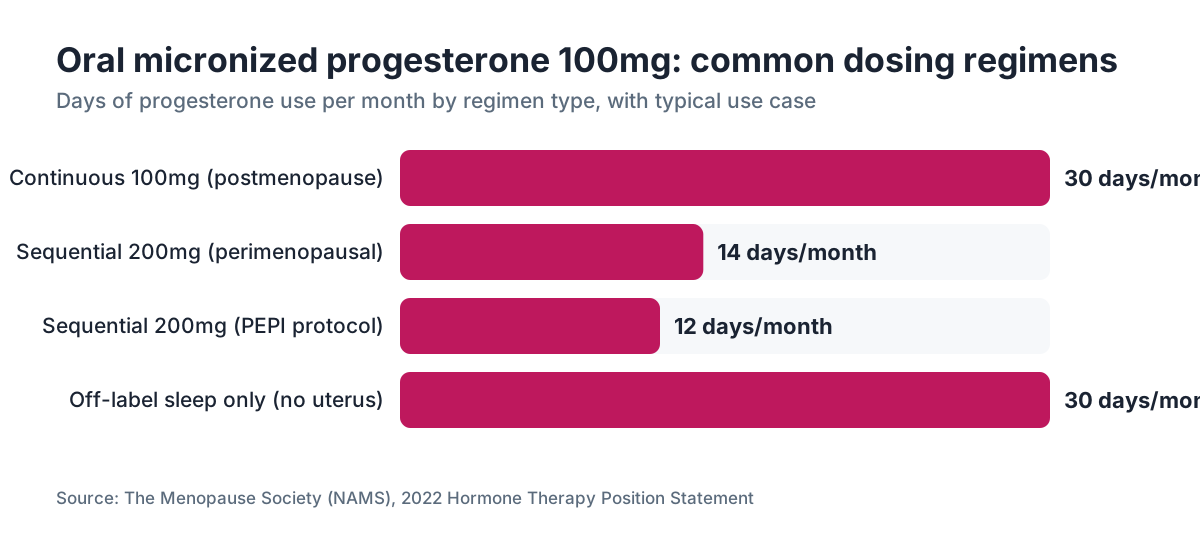
| Dose | Typical regimen | Common use case | |---|---|---| | 100mg nightly | Continuous (every night) | Postmenopausal women on daily estrogen; keeps the lining quiet without cycling | | 200mg nightly | Sequential, 12-14 days/month | Perimenopausal or early postmenopausal; produces a planned monthly bleed | | 100mg nightly | Off-label sleep/mood only (no uterus) | Women post-hysterectomy seeking the sleep benefit |
The PEPI trial (Postmenopausal Estrogen/Progestin Interventions) found that 200mg of oral micronized progesterone taken 12 days a month protected the endometrium as well as MPA did. [4] The continuous 100mg nightly route reaches the same endpoint over longer follow-up. [2]
Here is the practical difference. The 200mg sequential schedule triggers a withdrawal bleed at the end of the 12 to 14 day course. Some women like the predictability. Others find the monthly bleeding tiresome. The 100mg continuous approach takes three to six months to fully settle spotting, after which most women bleed not at all. Neither is wrong. It comes down to your preference and your clinician's read of your situation. [2]
What are the benefits of progesterone 100mg beyond uterine protection?
Progesterone receptors sit well beyond the uterus. They live in the brain, breast, bone, and cardiovascular tissue, which is why the hormone's effects reach across the body.
Sleep is the benefit women notice first. Oral micronized progesterone calms you because the liver and gut convert it into allopregnanolone, a neuroactive steroid that acts on GABA-A receptors. [5] That is the same receptor family benzodiazepines target, but the action is gentler and carries no addiction risk. A 2011 study in the Journal of Clinical Endocrinology and Metabolism found that oral micronized progesterone at bedtime reduced sleep disturbance in postmenopausal women compared with placebo. [10] Taking the capsule at night is standard for exactly this reason.
Mood is another reported benefit, especially in perimenopause when progesterone swings hard. The same allopregnanolone pathway explains why an IV form (the drug brexanolone) is approved for postpartum depression. The oral capsule offers a milder version of that mechanism. [5]
Bone. Progesterone receptors show up on osteoblasts, the cells that build bone. Some observational data suggest progesterone supports bone formation on its own, though the evidence here is thinner than for estrogen. If bone loss worries you, our article on the bone density test covers what to measure and when.
Breast risk. The WHI showed that estrogen plus MPA raised breast cancer risk while estrogen alone did not. The large French E3N cohort suggests oral micronized progesterone may carry a lower breast risk than synthetic progestins. That is observational data, not a randomized finding, so raise it with your prescriber rather than treating it as settled. [3]
How do you take progesterone 100mg correctly?
Take it at bedtime. Every guideline and every pharmacist says the same thing. The sedation from oral micronized progesterone is real, and daytime dosing leaves many women groggy enough to impair driving. [1]
Take it with a little food, or at least not on a fully empty stomach. Fat helps the oil-based capsule absorb. A handful of nuts or a few crackers does the job.
Swallow the capsule whole. Women who cannot swallow capsules sometimes open one and place the contents under the tongue, which skips first-pass liver metabolism and pushes more progesterone into the blood per milligram. The evidence for sublingual dosing and endometrial protection is thinner than for the oral route, so treat it as a workaround, not a plan. Some clinicians also insert the oral capsule vaginally, which delivers high local concentrations in the uterus with lower systemic levels and can ease the sleepiness. [6]
Miss a dose now and then on a continuous regimen and nothing dramatic happens. Miss several days in a row and the lining loses its progestogenic cover. Pick back up at your next scheduled dose and flag it at your next visit.
Storage is simple. Room temperature, away from humidity. Skip the bathroom cabinet because of the steam. A nightstand drawer works fine.
What side effects does progesterone 100mg cause?
Sedation is the effect most women meet first. Do not fight it. Dose at bedtime and let it work for you. Women with insomnia usually call it a welcome surprise rather than a side effect.
Mood can go either direction. Most women feel steadier. A smaller group, often those with a rough PMS history or low mood in the luteal phase, feel dysphoric, anxious, or flat on progesterone. This tracks with individual neurosteroid sensitivity. If it happens, switching to the vaginal route (lower systemic allopregnanolone) or a different progestogen is a reasonable next move. [6]
Breast tenderness shows up in the first few months, especially on a cyclic schedule. It usually settles.
GI upset, bloating, and occasional dizziness appear in the Prometrium prescribing information. They tend to be mild and fade after the first few weeks. [1]
Allergy alert. Brand Prometrium uses peanut oil. If you have a peanut allergy, tell your prescriber before you fill it. Compounded progesterone in a non-peanut base is available, and some generics now use sunflower oil. Confirm which formulation you are getting.
Progesterone at this dose does not pile on weight the way the old synthetic progestins did. That reputation came largely from MPA and higher-dose synthetics, not from bioidentical progesterone.
What are the risks and contraindications of progesterone 100mg?
Progesterone 100mg is not for everyone. The FDA-approved Prometrium prescribing information lists these contraindications:
- Known or suspected breast cancer, or other estrogen- or progestin-sensitive cancers.
- Undiagnosed abnormal vaginal bleeding.
- History of blood clots (deep vein thrombosis, pulmonary embolism) unless carefully evaluated.
- Active liver disease or a history of liver tumor.
- Known hypersensitivity to any ingredient, including the oil base. [1]
For women with a history of depression, progesterone is usually tolerated well, but the neurosteroid pathway can behave unpredictably when a mood disorder is in the picture, so monitoring matters. The vaginal or topical route is worth a conversation if oral progesterone drags your mood down.
Progesterone does not carry the venous thromboembolism (VTE) risk that oral synthetic progestins do. The French E3N cohort found no increased VTE risk with oral micronized progesterone, against a small but real risk with synthetic progestins. [3] That makes it the friendlier pick for women with borderline cardiovascular histories, who still deserve an individual workup.
Women who are pregnant or could become pregnant should not use this formulation without direct obstetric guidance. The capsule is not the same product used for pregnancy support, which typically uses vaginal progesterone at different doses.
How much does progesterone 100mg cost and will insurance cover it?
Cost hinges on brand versus generic and on your insurance. Generic micronized progesterone runs $15 to $40 a month cash; brand Prometrium runs $100 to $200 without coverage.
| Option | Typical monthly cost (US, 2024-2025) | Notes | |---|---|---| | Generic micronized progesterone 100mg (30 capsules) | $15-$40 cash price | Most major chains; GoodRx pushes this lower | | Prometrium brand 100mg (30 capsules) | $100-$200 without insurance | Manufacturer coupons available | | Compounded oral micronized progesterone 100mg | $30-$80/month | From a 503A compounding pharmacy | | Compounded vaginal progesterone 100mg | $40-$90/month | Varies by base and pharmacy |
Most insurance plans cover generic oral micronized progesterone at a Tier 1 or Tier 2 benefit when it is prescribed for menopause hormone therapy. Medicare Part D covers it too. Prior authorization is rarely needed at the 100mg dose for a standard menopause indication. [11]
On a telehealth service like WomenRx, the prescription goes to your preferred pharmacy or a partner pharmacy, and the pricing follows the same generic structure. Ask your prescriber to write "generic acceptable" if cost matters to you.
Compounded progesterone usually costs more than generic Prometrium, so pursue it only if you have a peanut allergy, need a non-standard dose, or specifically want a vaginal formulation.
Is progesterone 100mg the same as natural progesterone?
Yes, with one clarification. "Natural" is a marketing word. "Bioidentical" is the pharmacology. Oral micronized progesterone 100mg has the identical molecular structure (C21H30O2) as the progesterone your corpus luteum and adrenal glands make. [5] Labs synthesize it from plant sterols (usually yam or soy precursors) and build it into the same molecule your body already knows.
That sets it apart from synthetic progestins like norethindrone, levonorgestrel, and medroxyprogesterone acetate, which are chemically altered to improve oral stability or change their androgen activity. Those changes shift how they bind other steroid receptors, which explains a chunk of the side effect differences.
What it is not: wild yam cream, over-the-counter progesterone cream, or diosgenin supplements. Your body cannot turn dietary diosgenin from yams into progesterone. OTC creams contain little to no measurable progesterone and give zero endometrial protection. The FDA has not approved any OTC progesterone product for uterine protection. [8]
If a prescriber, a platform, or an influencer offers a cream or supplement as a stand-in for oral or vaginal progesterone inside an HRT regimen, that is not evidence-based care.
How long does it take for progesterone 100mg to work?
Sleep effects often land within the first few nights. This is the fastest-acting benefit, and the mechanism is direct: your body makes allopregnanolone from the dose within hours. [5]
Endometrial protection builds over the first cycle. A full month of continuous 100mg nightly dosing largely suppresses lining growth. You are not unprotected on night one; the cumulative effect is what counts.
Breakthrough bleeding and spotting can run three to six months on a continuous 100mg regimen before the lining goes quiet. That is normal, not a sign of failure. Bleeding that stays heavy or persistent past six months earns an evaluation, usually a transvaginal ultrasound to check lining thickness. [2]
Blood levels are a trap here. Serum progesterone is not a reliable way to monitor oral micronized progesterone. Most of the hormone converts to metabolites on the first pass through the liver, so a serum draw 12 hours after a dose can read very low even when the dose is doing its job. Uterine protection depends on tissue exposure, not high serum numbers. NAMS does not recommend serum progesterone as a routine monitoring tool for oral regimens. [2]
Can progesterone 100mg help with sleep and anxiety even without estrogen?
Probably yes for sleep, less clear for anxiety, and the evidence for using progesterone alone outside a full HRT regimen is thin. That is the honest answer.
The allopregnanolone mechanism does not need estrogen alongside it. A woman taking 100mg at night for sleep, without estrogen, still produces allopregnanolone from the dose. Small studies and a large body of clinical experience back the sleep benefit. [5]
For perimenopausal women who are not yet on estrogen but are wrestling with insomnia and mood shifts as progesterone starts falling (it drops before estrogen in perimenopause), a clinician might prescribe 100mg oral micronized progesterone on its own as a first step. NAMS treats this as an off-label but reasonable approach for early perimenopause with an intact uterus. [2]
After a hysterectomy, progesterone is not required for endometrial protection, but some prescribers offer it for sleep. The benefit is real and so is the variability: some women feel calmer and sleep better, others hit mood changes or breast tenderness that is not worth it.
One thing 100mg alone will not fix: hot flashes. Those are driven by estrogen withdrawal. Progesterone nudges vasomotor symptoms in some women but does not replace estrogen for anyone with real flash frequency and severity. See the menopause overview for what each therapy actually treats.
What should I ask my doctor before starting progesterone 100mg?
Bring these questions to any prescribing visit:
-
Do I actually need progesterone, or have I had a hysterectomy? It sounds obvious, but confusion about surgical history happens more than you would think.
-
What oil base is in the formulation you are prescribing? A peanut allergy means you need a sunflower-oil generic or a compounded version.
-
Should I take it cyclically or continuously? The answer depends on whether you still have periods, how long since your last one, and how you feel about a monthly bleed.
-
What is the plan if I bleed past six months?
-
Should I check my uterine lining before starting, especially if I have had any abnormal bleeding? An endometrial biopsy or transvaginal ultrasound before HRT is standard when there has been undiagnosed abnormal bleeding. [2]
-
Does it interact with anything else I take? Progesterone interacts with rifampin (drops levels sharply), ketoconazole (raises them), and several anticonvulsants. [1]
On a telehealth platform like WomenRx, the intake should cover all of this before a prescription goes out. A prescriber who ships progesterone without asking about uterine status, allergy history, or bleeding patterns is skipping the standard of care.
Frequently asked questions
Can I take progesterone 100mg if I still have a period?
Yes. Perimenopausal women who still cycle can take oral micronized progesterone 100mg cyclically, often days 14 through 25, to protect the uterine lining and smooth the second half of the cycle. This mirrors the luteal phase your body used to produce on its own. Your prescriber sets the timing based on your current cycle pattern.
Does progesterone 100mg cause weight gain?
Oral micronized progesterone 100mg does not cause meaningful weight gain in clinical studies. The weight reputation of progestogens traces to synthetic progestins like medroxyprogesterone acetate, which have androgenic and glucocorticoid activity that progesterone lacks. Some women notice slight fluid retention the first month, but it usually resolves. If weight worries you, our menopause overview covers the broader picture.
Is Prometrium the same as generic micronized progesterone?
Prometrium and generic oral micronized progesterone contain the same active molecule (micronized progesterone USP) at the same dose. What differs is the inactive ingredients and oil base (Prometrium uses peanut oil; some generics use sunflower oil) and the price. Generics are FDA-approved as bioequivalent. For most women, the generic works identically. Women with peanut allergies should confirm the oil base before filling any prescription.
Can I use progesterone 100mg vaginally instead of orally?
Yes. Clinicians sometimes use the oral capsule vaginally off-label. Vaginal dosing delivers high local uterine concentrations with lower systemic absorption, which trims the sleepiness. The evidence for endometrial protection through vaginal use of the oral capsule is smaller than for the oral route, but the approach is used in practice. Dedicated vaginal progesterone products (gels, suppositories) are also available by prescription.
How do I know if progesterone 100mg is protecting my uterus?
Symptoms alone will not tell you. On a continuous 100mg regimen, the main sign it is working is breakthrough bleeding stopping after the first three to six months. Persistent heavy or irregular bleeding past that window should be checked with a transvaginal ultrasound to measure endometrial thickness. Serum progesterone blood tests are not a reliable measure of uterine protection with oral dosing because of liver metabolism.
What happens if I stop progesterone 100mg but keep taking estrogen?
If you have an intact uterus and stop progesterone while staying on systemic estrogen, the lining resumes estrogen-driven growth. Extended estrogen stimulation without progestogen to oppose it raises the risk of endometrial hyperplasia and, over years, endometrial cancer. Never drop progesterone on your own inside an HRT regimen. Talk to your prescriber and build a plan first.
Does progesterone 100mg interact with any supplements or medications?
Yes. Rifampin and certain anticonvulsants (phenytoin, carbamazepine, phenobarbital) cut progesterone levels by inducing liver enzymes. Ketoconazole raises levels. St. John's Wort can lower them through the same enzyme induction. The FDA prescribing information for Prometrium lists these interactions. Give your prescriber and pharmacist a full medication and supplement list before you start.
Is progesterone 100mg safe for women with a history of blood clots?
Oral micronized progesterone appears to carry much lower VTE risk than synthetic progestins, based on observational data from the French E3N cohort and other studies. It is not formally approved for women with active or recent clotting disorders, who still need an individual evaluation. For women with a clot history who need a progestogen, micronized progesterone is generally favored over synthetic options when progesterone is prescribed at all.
Can progesterone 100mg help hot flashes?
Progesterone alone nudges hot flash frequency for some women, but it is not a first-line or reliable treatment for vasomotor symptoms. Hot flashes are mostly driven by estrogen decline, and estrogen therapy is far more effective. Some women on progesterone alone report mild improvement, but the evidence does not support using progesterone as an estrogen substitute for flash control.
Why does progesterone 100mg make me sleepy?
The liver and gut convert oral micronized progesterone into allopregnanolone, a neuroactive steroid that binds GABA-A receptors, the same family sleep medications target, but more gently. This is a known pharmacological effect, not a side effect to eliminate. Dosing at bedtime channels the sedation where you want it. Women with insomnia often call this one of the best parts of starting progesterone.
How is progesterone 100mg different from progestin in birth control?
Birth control pills use synthetic progestins (levonorgestrel, norethindrone, desogestrel, and others) at doses built to suppress ovulation. These are chemically altered compounds with receptor activity beyond the progesterone receptor. Progesterone 100mg is bioidentical to what your body makes, dosed to protect the uterine lining without suppressing ovulation or acting as contraception. The two overlap in purpose but are pharmacologically distinct.
Can I get progesterone 100mg through a telehealth provider?
Yes. Oral micronized progesterone 100mg is a prescription drug available through telehealth platforms that prescribe hormone therapy, including those serving perimenopausal and menopausal women. You complete an intake covering medical history, uterine status, and current symptoms. The prescription then goes to a preferred or partner pharmacy. Telehealth for HRT has expanded a lot since 2020, and NAMS treats it as an appropriate care channel.
Does progesterone 100mg affect breast density or mammogram results?
All progestogens can raise breast density in some women, which can make mammograms harder to read. Observational data suggest the effect is smaller with oral micronized progesterone than with synthetic progestins. Tell your mammography technician and radiologist that you are on hormone therapy so they can note it in the reading. The NAMS 2022 position statement discusses breast cancer risk and progestogen choice in detail.
Sources
- FDA, Prometrium (progesterone) prescribing information
- The Menopause Society (NAMS), 2022 Hormone Therapy Position Statement
- Fournier A et al., Breast Cancer Risk and Use of Hormone Therapy, E3N French Cohort Study, Breast Cancer Research and Treatment, 2008
- Writing Group for the PEPI Trial, JAMA, 1995
- Pluchino N et al., Progesterone and progestins: effects on brain, mood, and sleep, Maturitas, 2006
- de Lignieres B, Oral micronized progesterone, Clinical Therapeutics, 1999
- Endocrine Society, Clinical Practice Guideline on Menopause, Journal of Clinical Endocrinology and Metabolism, 2015
- National Institutes of Health, Office on Women's Health, Menopause hormone therapy
- Harman SM et al., KEEPS (Kronos Early Estrogen Prevention Study), Annals of Internal Medicine, 2014
- Caufriez A et al., Progesterone prevents sleep disturbances and modulates GH and TSH in postmenopausal women, Journal of Clinical Endocrinology and Metabolism, 2011
- GoodRx, progesterone 100mg price data