Progesterone 100 mg capsule: what it does, how to take it, and who needs it
TL;DR: Progesterone 100 mg capsules (brand name Prometrium) are FDA-approved to protect the uterine lining in postmenopausal women on estrogen, and to treat secondary amenorrhea. The 100 mg dose is standard for daily menopause HRT; 200 mg is standard for cyclic dosing and pregnancy support. Take it at bedtime for the sleep effect. Vaginal use is preferred for IVF.
What is a progesterone 100 mg capsule and what is it approved for?
A progesterone 100 mg capsule is micronized progesterone: the hormone ground into tiny particles and suspended in peanut oil so your body can absorb it. The most familiar brand is Prometrium. Compounded versions are common too. Without micronization, oral progesterone gets destroyed by first-pass liver metabolism before it reaches your blood.
The FDA approved Prometrium in 1998 for two specific uses: prevention of endometrial hyperplasia in postmenopausal women who have a uterus and take estrogen, and treatment of secondary amenorrhea. [1] Off-label use for luteal phase support in IVF became so routine that it now functions as standard of care, even though the labeling never fully caught up.
Here is the rule that matters most. If you have a uterus and you take estrogen, you need progesterone. Unopposed estrogen thickens the uterine lining, and sustained thickening raises endometrial cancer risk. A 100 mg capsule daily, or 200 mg for 12 days each month, offsets that risk. Women who have had a hysterectomy usually do not need it, though some clinicians prescribe it for sleep or mood. [2]
See the full picture on progesterone and how it fits into hormone replacement therapy.
How does the 100 mg dose compare to 200 mg, and when does each dose apply?
The dose depends entirely on why you are taking it. For daily menopause HRT it is 100 mg. For cyclic HRT and most pregnancy support it is 200 mg.
For menopause hormone therapy, the FDA-approved regimen is 200 mg orally at bedtime for 12 consecutive days per 28-day cycle, or 100 mg daily without a break (continuous combined therapy). [1] The cyclic 200 mg approach usually causes a monthly withdrawal bleed, which many women would rather avoid. The continuous 100 mg daily dose typically stops periods within a few months, which is why most postmenopausal women on HRT settle on the lower daily dose.
Pregnancy support is a different story. Progesterone 200 mg is typical for luteal phase support in IVF or documented deficiency in early pregnancy, often inserted vaginally twice daily. Vaginal insertion skips liver metabolism and delivers far higher concentrations straight to the uterus than the same oral dose. This is the "first uterine pass effect," and it explains why 200 mg vaginally produces uterine tissue levels well above what 200 mg by mouth achieves. [3]
For perimenopausal women with irregular cycles, 100 mg during the luteal phase (roughly days 12 to 26) is common for heavy bleeding and mood, without fully suppressing natural cycles.
| Indication | Typical Dose | Route | Duration | |---|---|---|---| | Menopause HRT (cyclic) | 200 mg | Oral | 12 days/month | | Menopause HRT (continuous) | 100 mg | Oral | Daily | | Perimenopause cycle regulation | 100 mg | Oral | Days 12-26 of cycle | | IVF luteal support | 200 mg | Vaginal | Until 8-12 weeks gestation | | Secondary amenorrhea | 400 mg | Oral | 10 days |
Sources: FDA Prometrium prescribing information [1], ACOG luteal phase support guidance [3].
What are the real side effects of progesterone 100 mg capsules?
Sedation tops the list. Progesterone converts in the brain to allopregnanolone, a neurosteroid that hits GABA-A receptors the way a mild sedative does. [4] That is why clinicians almost always tell you to take it at bedtime, and why many women sleep better once they start. At 200 mg, morning grogginess can be real enough to bother you.
Other side effects listed in the Prometrium prescribing information include dizziness, bloating, breast tenderness, headache, mood changes, and vaginal discharge. [1] Discharge shows up more with vaginal use because the oil base does not fully absorb.
Progesterone causes a small measurable drop in LDL and a mild dip in HDL in some studies, less than what synthetic progestins like medroxyprogesterone acetate produce. The Women's Health Initiative Memory Study found no cognitive benefit from estrogen-plus-progestin, but that trial used medroxyprogesterone acetate, not micronized progesterone. The two are not the same drug in terms of side effects. [5]
Allergy is a genuine concern. Prometrium capsules are made with peanut oil, so anyone with a peanut allergy should not take them. Compounded progesterone in a different oil base is an option, though compounded products carry no FDA approval.
If you have a history of blood clots, liver disease, unexplained vaginal bleeding, or known or suspected breast cancer, progesterone needs a careful talk with your prescriber first. [1]
How do you take a progesterone 100 mg capsule correctly?
Orally, take it with a little food or a glass of milk. An empty stomach lowers absorption; fat raises bioavailability. Bedtime is right for almost everyone, because the sedative effect is a feature at 10 pm and a bug at 10 am.
Vaginally, insertion is simple. Lie on your back with knees bent, insert the capsule as far back as comfortable with your finger (like a tampon without an applicator), and stay lying down for 15 to 20 minutes so the oil does not leak. Bedtime insertion solves the leaking problem for many women. The oral capsule was not physically designed for vaginal use, but oral capsules used vaginally have been studied heavily and are standard in reproductive medicine. [3]
For IVF and early pregnancy, the question "how to insert progesterone 200 mg capsule for pregnancy" comes up constantly. Same technique, just a 200 mg capsule. Some clinics supply a vaginal applicator that makes it easier. The capsule dissolves in about 30 minutes. Expect white or yellowish residue. Use a panty liner.
Do not crush the capsule to take it by mouth. The micronization lives in the fill, and swallowing the oil directly is messy with an inconsistent dose. If swallowing capsules is hard, the vaginal route is pharmacologically better for uterine indications anyway.
When during your cycle or HRT regimen should you take progesterone?
Timing matters more than most patients realize, and it changes with the reason you are taking it.
For continuous combined HRT, the most common postmenopausal regimen, you take 100 mg every night without a break. You never stop, you never cycle. [2]
For cyclic HRT, you take 200 mg for 12 consecutive days each month. Most clinicians pick days 1 to 12 or the last 12 days of the calendar month for easy tracking. This copies the luteal phase of a natural cycle.
For perimenopausal women still cycling, the usual approach is progesterone during the luteal phase only, roughly the last 12 to 14 days before an expected period. If cycles are wildly irregular, which is common in perimenopause, some clinicians draw a day-21 progesterone level to confirm whether ovulation happened and whether that cycle needs support.
For luteal phase support in fertility treatment, your reproductive endocrinologist gives you a precise schedule tied to egg retrieval or embryo transfer. Follow it exactly. In IVF, progesterone usually starts the day after retrieval for a fresh transfer, or 5 days before a frozen transfer, and continues until the placenta makes enough on its own, generally around 8 to 12 weeks. [3]
The NAMS 2022 Hormone Therapy Position Statement makes individualization the standard: no single regimen fits every woman, and dose and schedule should track symptoms, uterine status, and preference. [2]
Is micronized progesterone safer than synthetic progestins like medroxyprogesterone?
The short answer: the evidence leans toward yes, though it is not settled. This question comes up in the exam room all the time after women read about the Women's Health Initiative, and it deserves a straight answer.
The WHI used conjugated equine estrogens plus medroxyprogesterone acetate (MPA), a synthetic progestin. The higher breast cancer risk in the combined arm is widely attributed, at least partly, to MPA rather than to progesterone itself. [5]
The E3N cohort study, a French prospective study of more than 80,000 women, found that women using estrogen with micronized progesterone had no significantly higher breast cancer risk than never-users, while those on synthetic progestins did show increased risk. [6] That finding shaped a lot of practice, but it is observational, not randomized, so it cannot prove causation.
The Endocrine Society's 2015 menopause guideline said micronized progesterone may carry a more favorable cardiovascular and breast risk profile than synthetic progestins, while noting that long-term randomized data specific to micronized progesterone are limited. [7]
In practice, most updated guidelines prefer micronized progesterone (the 100 mg capsule) over MPA for women with a uterus starting HRT, especially those worried about breast cancer. It is not zero risk. But if someone asks what I would take, it is micronized progesterone, not MPA.
Can progesterone 100 mg capsules help with sleep, anxiety, or mood?
Yes, and sleep is one of the most underrated benefits of oral progesterone.
Allopregnanolone, the brain metabolite of progesterone, is a strong positive allosteric modulator of GABA-A receptors. [4] That is the same receptor benzodiazepines and alcohol hit, but at physiologic progesterone doses the effect is much gentler. Plenty of women taking 100 mg at bedtime fall asleep faster and stay asleep longer. A small well-designed randomized trial (Freeman et al., 2001) found oral micronized progesterone at 300 mg improved sleep quality in postmenopausal women versus placebo, measured by polysomnography. [8]
Mood effects are real but they cut both ways. Some women feel calmer and less anxious. Others, especially those with a history of PMDD or progesterone sensitivity, get worse mood, irritability, or low feelings. This is one reason dose and route matter. Vaginal progesterone produces lower serum allopregnanolone than the same oral dose because it skips hepatic conversion, so women who feel dysphoric on oral progesterone often do better vaginally.
If you have a history of depression or strong mood reactions to hormone shifts, tell your prescriber before starting. It does not rule out progesterone. It means the starting dose and route should be chosen with care, and a follow-up at 4 to 6 weeks is worth putting on the calendar.
For the broader menopause hormone picture and when perimenopause starts, both articles map the symptom landscape.
What is the difference between oral and vaginal progesterone, and does route of administration matter?
Route matters enormously, and most patients never hear it explained clearly. Oral drives brain effects. Vaginal drives uterine effects.
Oral progesterone absorbs well but goes through heavy first-pass liver metabolism, producing high levels of neurosteroid metabolites (the sedation) and lower systemic progesterone relative to the dose. For endometrial protection in HRT, oral at 100 to 200 mg daily works. For sleep and brain effects, oral is what you want, because you want those allopregnanolone levels. [4]
Vaginal progesterone bypasses the liver. Serum levels run lower after vaginal dosing than after the same oral dose, but uterine tissue concentrations run dramatically higher because of direct absorption through the vaginal wall. [9] That is why reproductive endocrinologists overwhelmingly prefer vaginal progesterone for IVF and early pregnancy: a lot of progesterone lands exactly where the embryo needs it, with less systemic exposure and less sedation. [3]
For a postmenopausal woman on HRT who sleeps poorly, oral at bedtime usually wins. For a woman doing IVF who has to function at work the next morning, vaginal almost always wins. For a woman who wants HRT but cannot use Prometrium because of peanut allergy, a compounded vaginal suppository or a marketed vaginal gel like Crinone is a reasonable alternative.
Compounded bioidentical progesterone is chemically identical to Prometrium's active ingredient. The difference is oversight. FDA-approved products pass potency and sterility testing; compounded products vary by pharmacy. Telehealth services like WomenRx that prescribe progesterone can help you sort out which formulation and route fits your situation.
How long does it take for progesterone 100 mg to work?
It depends on what you want it to do. For sleep, the same night. For endometrial protection, weeks. For mood, a few weeks and it is harder to measure.
For sedation: peak serum levels after a 100 mg oral dose hit within about 2 to 3 hours. [1] Take it at 10 pm and you will likely feel it by midnight.
For endometrial protection: continuous daily dosing produces measurable lining changes within 4 to 6 weeks, though the full protective effect against hyperplasia needs sustained consistent use. Annual or biannual gynecologic surveillance is still recommended.
For perimenopausal bleeding changes: most women notice a difference within one to two cycles, though the pattern can take three months to settle.
For mood and anxiety: most women report noticing something within 2 to 4 weeks of steady use, but this is anecdotal and harder to pin down than sleep. If you are using it for mood and feel nothing after 6 to 8 weeks, the dose or route may need adjusting.
For IVF: progesterone levels get monitored by blood draw, usually starting 4 to 6 days after transfer. Your reproductive endocrinologist sets the target serum level (commonly above 10 to 20 ng/mL for supported cycles) and adjusts dose off your actual levels more than your symptoms.
Who should not take progesterone 100 mg capsules?
The FDA-listed contraindications for Prometrium include known or suspected breast cancer or other hormone-sensitive cancers, undiagnosed abnormal genital bleeding, active or prior arterial or venous thromboembolism, liver dysfunction or disease, and known hypersensitivity to progesterone or peanuts (the oil base). [1]
Women with a history of depression should talk this through carefully with a prescriber. The risk is not absolute, but it is real for a subset of women.
Progesterone is not a first-line treatment for postmenopausal women with known cardiovascular disease, and it should not be started without a full symptom and risk review. The NAMS 2022 Position Statement says that for women over 60 or more than 10 years past menopause, starting hormone therapy calls for a more careful cardiovascular risk conversation. [2]
If you are premenopausal and thinking about progesterone for cycle regulation or PMDD, know that some women with PMDD react worse to progesterone's neurosteroid metabolites, not better. A trial starting at 50 mg (compounded) or a non-oral route can be a smarter opening move than jumping straight to 100 mg oral.
How much do progesterone 100 mg capsules cost, and does insurance cover them?
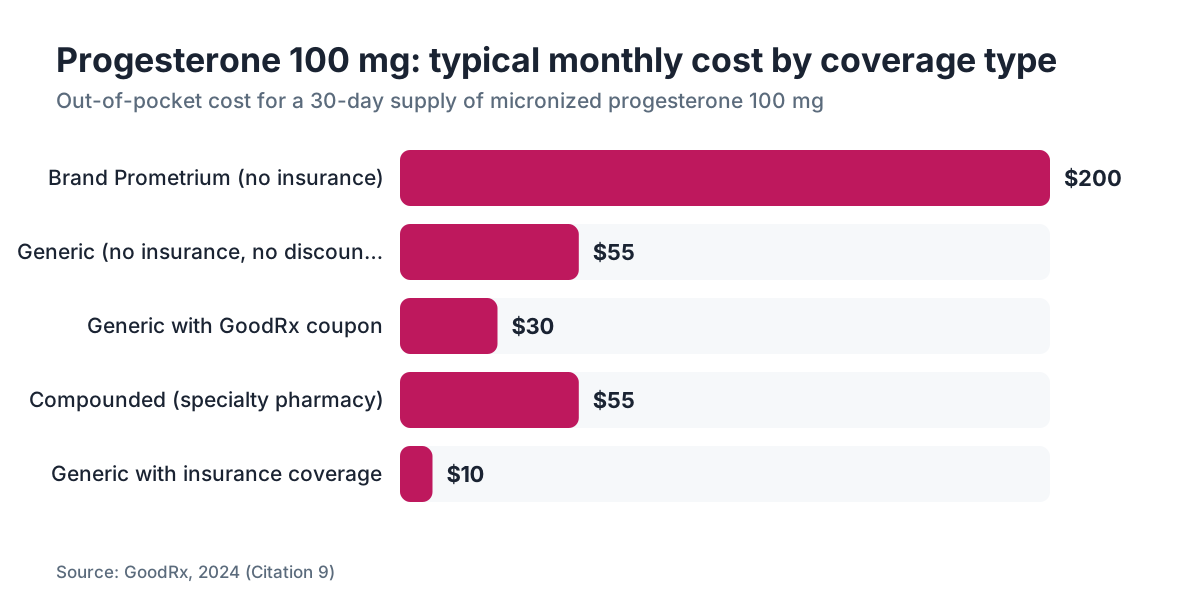
Cost swings hard on brand versus generic. Brand Prometrium can run $250 a month; generic can run $10 with insurance.
Prometrium (brand) costs roughly $150 to $250 per month without insurance for a 30-capsule supply of 100 mg. [9] Generic micronized progesterone 100 mg costs far less, typically $20 to $60 per month at major chains with a GoodRx coupon or similar discount.
Most insurance plans that cover HRT cover generic progesterone 100 mg, though prior authorization rules vary. Medicare Part D covers generic progesterone under most formularies.
Compounded progesterone from a specialty pharmacy typically runs $30 to $80 per month depending on dose and volume, and is almost never covered by insurance because it lacks FDA approval.
A telehealth prescription, including through platforms built for women's hormonal health, usually adds a consultation fee of $50 to $200 depending on the service, but it can save time and often gets you an affordable generic at retail. Read the fine print on whether the service takes insurance for the consult itself.
For the 200 mg dose (two 100 mg capsules or a separately filled 200 mg capsule), cost roughly doubles. Some pharmacies fill 200 mg capsules directly, which can beat buying 60 of the 100 mg capsules.
Can you get a progesterone 100 mg prescription through telehealth?
Yes. This has become one of the more common uses of women's telehealth in the past three years. For postmenopausal women already on estrogen, or perimenopausal women with documented irregular cycles, a telehealth clinician can review labs, symptom history, and medical background and write a progesterone prescription without an in-person visit in most states.
Expect to provide or be asked about a few things: FSH and estradiol levels (to confirm menopausal status), a Pap smear within the past few years, and ideally a baseline endometrial thickness by ultrasound if you have had unexplained bleeding. Not every service is rigorous here. If a platform will prescribe hormones with no labs at all, treat that as a red flag.
For fertility-related progesterone (IVF support, early pregnancy), telehealth is a poor starting point, because those situations need close lab monitoring coordinated with a reproductive endocrinologist.
WomenRx offers progesterone prescriptions as part of individualized hormone therapy plans, with clinician review of your labs and history before anything is written.
If you want the bigger picture on hormone replacement therapy, or whether an estrogen patch belongs alongside your progesterone, both are worth reading.
Frequently asked questions
Can I take a progesterone 100 mg capsule if I still have my period?
Yes. Premenopausal and perimenopausal women are commonly prescribed progesterone 100 mg during the luteal phase, roughly days 12 to 26, for heavy periods, PMS, or irregular cycles. The dose and timing differ from postmenopausal HRT. Your clinician should confirm you are not inadvertently suppressing ovulation if you are trying to conceive.
Do I need progesterone if I have had a hysterectomy?
Generally no. The main reason women with a uterus take progesterone alongside estrogen is to protect the uterine lining. Without a uterus, that risk is gone. Some clinicians prescribe low-dose progesterone after hysterectomy for sleep or mood, but that is off-label and the evidence is thinner. Talk through your specific situation with your prescriber.
What happens if I miss a dose of progesterone 100 mg?
Take it as soon as you remember, unless it is close to your next dose. In that case skip the missed dose and resume your schedule. Do not double up. For HRT, one missed night is not an emergency. For IVF pregnancy support, contact your reproductive endocrinologist promptly, because consistent progesterone levels matter far more in that context.
Can progesterone 100 mg cause weight gain?
It can cause fluid retention and bloating, which may show up on the scale. True fat gain directly from progesterone is not well documented in clinical trials. Some women notice a slightly higher appetite. The sedation can indirectly cut activity. If your weight changes noticeably after starting progesterone, mention it to your prescriber to rule out thyroid or other causes.
Is progesterone 100 mg the same as progestin or Provera?
No. Progesterone 100 mg capsules contain bioidentical micronized progesterone, the same molecule your ovaries make. Provera is medroxyprogesterone acetate (MPA), a synthetic progestin with a different structure. The two are not interchangeable in side effects or risk profile. Most current guidelines prefer micronized progesterone over MPA for women starting HRT.
How long should I stay on progesterone 100 mg for menopause?
As long as you take systemic estrogen and have a uterus. There is no set maximum duration. The NAMS 2022 Position Statement recommends revisiting the decision to continue, adjust, or stop hormone therapy every year with your clinician, based on current symptoms, risks, and preferences. Stopping estrogen means you can stop progesterone too.
Can I use progesterone 100 mg vaginally if my doctor wrote it as oral?
Technically the capsule dissolves vaginally, and many clinicians prescribe the oral capsule off-label for vaginal use. Clarify with your prescriber before switching routes, because the dosing implications differ. Vaginal use produces very different serum versus tissue levels. For pregnancy support, this route switch is common and well studied. For HRT, evidence on vaginal micronized progesterone for endometrial protection is thinner.
Will progesterone 100 mg stop my hot flashes?
Progesterone alone has modest evidence for reducing hot flashes, but it is not the main treatment. Estrogen is far more effective for vasomotor symptoms. If you have a uterus and take estrogen, progesterone is added to protect the lining, not to treat hot flashes. Some women notice fewer flashes after starting it, possibly through central neurosteroid effects, but count on estrogen for the heavy lifting.
How do I insert a progesterone 200 mg capsule vaginally for pregnancy support?
Wash your hands. Lie on your back with knees bent. Insert the capsule as far back as comfortable with your index finger. Stay lying down for 15 to 20 minutes. Use a panty liner for discharge. Bedtime insertion is easiest. If your clinic gave you an applicator, use it. Follow your reproductive endocrinologist's schedule exactly, and do not adjust dose or timing on your own.
Can I take progesterone 100 mg while breastfeeding?
Progesterone passes into breast milk in small amounts. Large controlled trials on use during breastfeeding are lacking. Most lactation guidelines advise caution and suggest waiting until breastfeeding is well established before starting hormonal therapy. If you need progesterone postpartum for a specific reason, weigh it with your OB or midwife, ideally before delivery.
What labs should I check before starting progesterone 100 mg for HRT?
At minimum FSH and estradiol to confirm menopausal status, a current Pap smear, and a review of any abnormal bleeding history. Many clinicians also check TSH, fasting glucose, and a lipid panel as part of a baseline workup. If you have had any abnormal bleeding, an endometrial biopsy or transvaginal ultrasound to check lining thickness before starting estrogen and progesterone is prudent.
Is there a difference between compounded progesterone and Prometrium?
The active molecule is identical: micronized progesterone. The difference is oversight. Prometrium is FDA-approved, meaning it passed potency, purity, and sterility testing. Compounded progesterone from a 503A pharmacy is made per prescription but is not FDA-approved, and potency can vary between batches and pharmacies. For most women a well-regarded compounding pharmacy is acceptable, but it is not equivalent to an FDA-approved product.
Can progesterone 100 mg help with perimenopause symptoms specifically?
Yes, and it is often underused in this window. Progesterone deficiency from anovulatory cycles is one of the earliest hormonal changes in perimenopause, often before estrogen drops much. Adding luteal-phase progesterone can reduce heavy irregular bleeding, improve sleep, and ease mood swings in women who are still cycling. See our article on perimenopause age for context on timing.
Sources
- ACOG, Practice Bulletin on progesterone and luteal phase support
- Bixo M et al., Pharmacology of allopregnanolone and GABA-A receptors, Psychoneuroendocrinology, 2017
- NIH NHLBI, Women's Health Initiative (WHI) study results and publications
- Fournier A et al., Breast cancer risk in relation to different types of hormone replacement therapy in the E3N-EPIC cohort, International Journal of Cancer, 2005
- Endocrine Society, Clinical Practice Guidelines (menopause symptom treatment, 2015)
- Freeman EW et al., Efficacy of progesterone on sleep in postmenopausal women, Menopause, 2001
- GoodRx, Prometrium price and coupon information
- Lobo RA et al., Comparative pharmacokinetics of oral and vaginal progesterone, Fertility and Sterility, 1996