What is progesterone and what does it do in your body?
TL;DR: Progesterone is a hormone made mainly in the ovaries. It preps the uterus for pregnancy, keeps estrogen in check, deepens sleep, and steadies mood. Levels crash in perimenopause and menopause. Prescribed as micronized bioidentical progesterone (Prometrium) or a synthetic progestin, it has real side effects: drowsiness, bloating, mood shifts. The risk profile splits sharply by which form you take.
What is progesterone and where does it come from?
Progesterone is a steroid hormone made mostly in the ovaries, specifically in the corpus luteum that forms after ovulation each month. The adrenal glands make a little. During pregnancy, the placenta takes over and pumps out large amounts. It belongs to the progestogen class, which means its job is preparing and holding the uterine lining.
The hormone is built from cholesterol, along a chain that also produces cortisol, testosterone, and estrogen. That shared pathway matters in the clinic because synthetic versions can grab those other hormone receptors in ways natural progesterone never does.
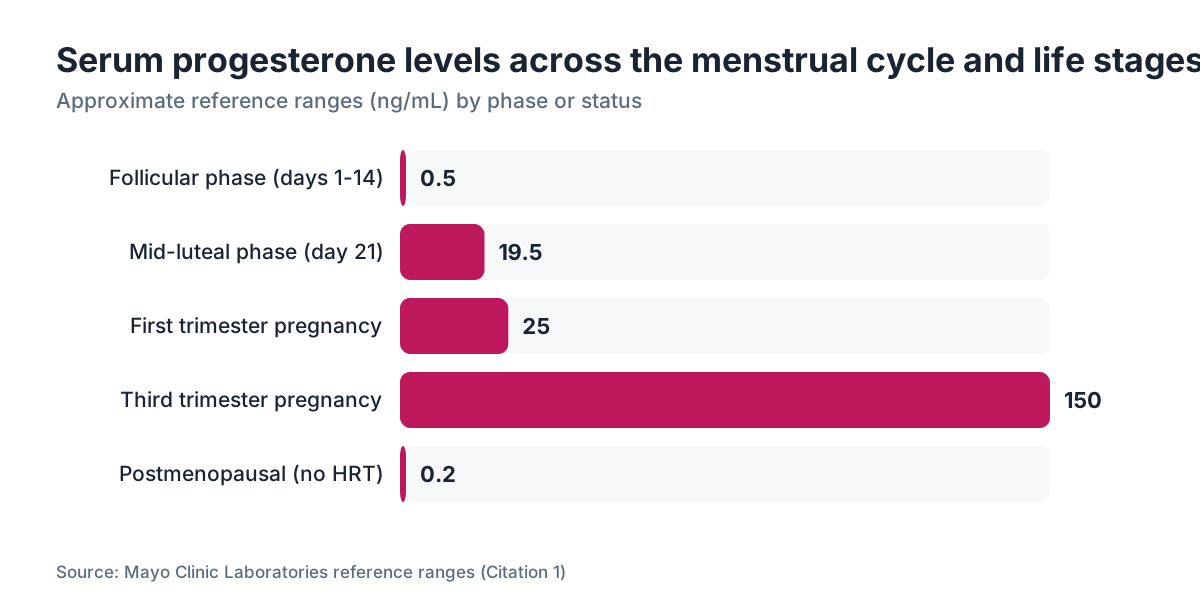
Progesterone follows a predictable rhythm in reproductive-age women. In the first half of the cycle (the follicular phase), levels sit low, roughly 0.1 to 0.9 ng/mL. After ovulation they climb fast, peaking around 10 to 29 ng/mL in the mid-luteal phase. No pregnancy, and levels fall, and your period starts [1]. In pregnancy, levels can hit 100 to 200 ng/mL by the third trimester.
When the ovaries start winding down in perimenopause, progesterone is usually the first big hormone to drop, often years before estrogen follows. That head start explains why irregular cycles, wrecked sleep, and anxiety tend to show up early in the transition.
What does progesterone do in your body beyond pregnancy?
Most people meet progesterone in the context of getting and staying pregnant. Those jobs are real: it thickens cervical mucus, quiets uterine contractions, and holds the endometrium until delivery. But the job description runs much wider.
Endometrial protection is why progesterone gets prescribed alongside estrogen in any woman who still has a uterus. Estrogen alone thickens the lining without pause, which raises the risk of endometrial hyperplasia and endometrial cancer. Progesterone answers that by making the lining differentiate and shed. The Women's Health Initiative trial confirmed that unopposed estrogen sharply raises endometrial cancer risk, which is why current guidelines from The Menopause Society (NAMS) state that any woman with a uterus on systemic estrogen also needs a progestogen [2].
Beyond the uterus, progesterone works on the brain. It converts to allopregnanolone, a neurosteroid that binds GABA-A receptors, the same target benzodiazepines hit. That is why enough progesterone tracks with calmer mood and deeper sleep, and why a deficit tracks with anxiety and insomnia in perimenopause. The FDA approved brexanolone (Zulresso) in 2019 precisely because it is a synthetic version of allopregnanolone, which confirms the brain mechanism is real, not folklore [3].
Progesterone also touches bone density (mild osteoblast stimulation), thyroid function, and fluid balance (it counters aldosterone and is a weak diuretic). It acts on breast tissue too, and that is where the synthetic-versus-natural split matters most, covered in its own section below.
For women in menopause or closing in on it, these non-reproductive roles are often what decide day-to-day quality of life.
What are the side effects of progesterone?
Side effects hinge on the form: oral micronized progesterone (OMP), a synthetic progestin like medroxyprogesterone acetate (MPA), a vaginal preparation, or a hormonal IUD. Lumping them together is where most of the confusion starts.
Oral micronized progesterone (brand name Prometrium in the US) goes through a heavy first-pass effect in the liver that turns a big chunk of it into sedating allopregnanolone. Drowsiness is the top reported side effect, hitting roughly 15 to 25 percent of users in the Prometrium prescribing data [4]. That is why most clinicians say take it at bedtime. For women fighting insomnia, and that is most of perimenopause, the drowsiness is a feature, not a bug.
Other documented side effects of oral progesterone include:
- Bloating and breast tenderness, usually in the first one to three months
- Mild dizziness, especially on standing
- Mood changes: some women feel calmer, others feel irritable
- Headache in a minority of users
- Vaginal spotting or irregular bleeding, especially at the start
- Nausea, usually mild and dose-related
Vaginal progesterone (gels, suppositories) mostly skips the liver, so sedation stays minimal. The tradeoff is local: vaginal irritation, discharge, and a mess factor plenty of women find annoying.
Weight gain is the side effect women ask about most. The evidence is mixed. Progesterone barely touches fat tissue directly, but it can hold fluid at higher doses and nudge appetite through central pathways. Any weight change on combined HRT usually traces back to the estrogen dose and delivery route, not progesterone [5].
How do bioidentical progesterone side effects differ from synthetic progestins?
This is the single most useful distinction in the whole progesterone conversation, and it gets muddled constantly, in mainstream media and in some doctors' offices.
Bioidentical progesterone means the molecule is structurally identical to what the human ovary makes: C21H30O2. The FDA-approved form is oral micronized progesterone (Prometrium), and compounded versions exist too. Synthetic progestins (medroxyprogesterone acetate, norethindrone, levonorgestrel, drospirenone, and others) carry different molecular structures built to stay orally active and last longer. That structural change means they bind other receptors, including androgen and glucocorticoid receptors, at varying strength.
The breast cancer signal is where it counts. The Women's Health Initiative estrogen-plus-progestin arm used conjugated equine estrogen combined with MPA (Prempro). That trial found a relative risk of 1.26 for invasive breast cancer with combined therapy after roughly five years, one reason it was stopped early [6]. The French E3N cohort, following 80,391 postmenopausal women, found estrogen plus synthetic progestins carried higher breast cancer risk than estrogen plus micronized progesterone, with the micronized group sitting closer to estrogen-only users [7].
The Endocrine Society and NAMS both acknowledge this split but flag that the evidence mostly comes from observational studies, not randomized trials, so the certainty is moderate, not settled [2]. Here is the honest read. Most hormone specialists today reach for micronized progesterone over MPA when both are options, mostly because the observational safety data looks better and the mood and sleep profile is friendlier.
Side effects of bioidentical progesterone are real but generally milder than synthetic progestins for most women. Sedation from oral micronized progesterone is the main practical gripe. Vaginal forms cut that down.
Bioidentical hormone pellets are a separate delivery method. Pellets go in under the skin at the hip or buttock and release hormones slowly over three to six months. They are not FDA-approved as a delivery format, though the hormone inside can be bioidentical. Pellet-specific downsides: insertion-site reactions, infection risk (uncommon but real), no way to quickly adjust or stop dosing if something goes wrong, and the chance of supraphysiologic levels if dosed too hard. The Endocrine Society does not recommend pellets as a preferred method exactly because you cannot dial the dose back [8].
What happens to progesterone levels during perimenopause and menopause?
Progesterone starts sliding in the late 30s as ovulation gets less reliable. No ovulation, no corpus luteum. No corpus luteum, no progesterone surge in the back half of the cycle. Estrogen often holds steady or even spikes high during early perimenopause, which sets up a state of estrogen dominance relative to progesterone.
By menopause (defined as 12 straight months without a period, typically around age 51 in the US [9]), ovarian progesterone production has basically stopped. Postmenopausal levels drop below 0.1 to 0.3 ng/mL, roughly matching the early follicular phase at best.
The symptoms tied most tightly to progesterone loss: trouble falling asleep, waking at 3 or 4 AM, more anxiety, luteal-phase breast tenderness, and irregular cycles with short luteal phases. These often surface 5 to 10 years before the last period. That timeline matters because plenty of women in their early to mid-40s with textbook progesterone-deficiency symptoms get told their labs are normal, because perimenopausal labs swing wildly day to day and a single serum test is a weak diagnostic tool.
To place yourself on the timeline, the pieces on perimenopause age and when does menopause start walk through it in detail.
What are progesterone pills and how are they different from progesterone cream?
Progesterone pills usually mean oral micronized progesterone capsules. In the US, Prometrium is the FDA-approved brand, and generics are widely available. Standard doses for endometrial protection in HRT are 100 mg nightly (continuous use) or 200 mg nightly for 12 to 14 days per month (cyclic use). Higher doses (300 to 400 mg) get used off-label for sleep and anxiety, though the evidence for those uses comes from smaller trials.
Progesterone cream (over-the-counter or compounded) is a topical. OTC creams usually run 2 percent progesterone, applied to thin-skinned areas. The controversy is absorption. Multiple studies show transcutaneous cream raises salivary and serum progesterone, but NOT reliably enough to protect the endometrium. A 2005 review in Climacteric concluded that topical progesterone cream should not be relied on for uterine protection in women on systemic estrogen [10]. Bottom line: if you have a uterus and take systemic estrogen, cream alone does not replace oral or vaginal micronized progesterone.
Side effects of progesterone pills specifically include the sedation covered above, plus GI upset you can blunt by taking the pill with food. Some women find the peanut oil in Prometrium triggers GI distress, and peanut allergy is listed as a contraindication in the prescribing information. Compounded progesterone in a different oil base is an option for those patients.
Is progesterone safe? What are the real risks?
For most healthy women under 60 or within 10 years of menopause onset, micronized progesterone paired with the right estrogen therapy has a favorable benefit-risk profile, per NAMS [2]. The risks are not zero. But they have to be weighed against the cost of untreated menopause symptoms: bone loss, cardiovascular shifts, and a real hit to quality of life.
The breast cancer question is the one that keeps women up at night. As noted above, the WHI signal was for estrogen plus MPA, not estrogen plus micronized progesterone. The NAMS 2022 hormone therapy position statement states: "For women aged younger than 60 years or who are within 10 years of menopause onset and have no contraindications, the benefit-risk ratio is favorable for treatment of bothersome VMS and for those at elevated risk for bone loss or fracture." [2] That covers combined therapy including progesterone.
Women with these histories need an individual assessment before starting progesterone: estrogen-receptor positive breast cancer, active liver disease, unexplained vaginal bleeding, or a known sensitivity to progesterone or peanuts (for Prometrium specifically).
Venous thromboembolism (VTE) risk runs lower with progesterone than with synthetic progestins, and substantially lower with transdermal or vaginal estrogen plus progesterone than with oral combined therapy. Route of administration matters as much as the molecule itself [5].
For the wider picture on hormone therapy safety and how to decide, the hormone replacement therapy and what is HRT explainers cover the full landscape.
How is progesterone prescribed, tested, and monitored?
Testing progesterone is done with a serum blood draw, ideally on day 21 of the cycle (for a 28-day cycle), when luteal-phase levels should peak. Salivary testing exists but lacks standardization, so most endocrinologists trust serum.
Reading the result means knowing where in the cycle you drew it. A day-21 level of 5 ng/mL suggests probable ovulation. Under 3 ng/mL on day 21 raises concern for weak luteal function. Postmenopausal reference ranges vary by lab but generally sit below 0.5 ng/mL.
Women already on prescribed progesterone for HRT do not need routine serum monitoring the same way. Clinical response (bleeding pattern, symptom control) drives dose changes more than lab numbers, because absorbed levels from oral micronized progesterone swing widely between people thanks to first-pass metabolism differences.
Show up to your prescriber with a clear symptom diary covering sleep quality, cycle length and flow, mood shifts, and any spotting, and you hand them far more usable data than a single lab draw. If you work with a telehealth provider like WomenRx, this kind of tracking usually happens through an intake questionnaire before your first visit.
For women with an intact uterus, endometrial surveillance is done occasionally by transvaginal ultrasound when bleeding on HRT is persistent or unexpected. An endometrial stripe above 4 to 5 mm in a postmenopausal woman warrants further workup.
Does progesterone affect weight, mood, and sleep?
Sleep is the clearest win. Small trials plus a large body of clinical observation back oral micronized progesterone's sedating effect through allopregnanolone and GABA-A activity. A 2018 study in Menopause found women on oral micronized progesterone reported better subjective sleep than those on synthetic progestins, in line with the neurosteroid mechanism [11].
Mood is messier. Allopregnanolone is anxiolytic for most women, which is why many feel noticeably calmer after starting progesterone. But a subset, likely those with a history of PMS or PMDD, feel worse: more anxious, more irritable, or low. The mechanism probably comes down to individual differences in GABA-A receptor sensitivity. If mood dips within two to four weeks of starting, try changing the dose, timing, or delivery route before dropping it entirely.
Weight is mostly a non-story for progesterone itself. The mild appetite bump and fluid retention are real but small. A 2019 systematic review in Obesity Reviews found HRT combining estrogen and progesterone was linked to less central adiposity than no treatment in postmenopausal women, partly because estrogen improves fat distribution and metabolic rate [5]. Some women find that dialing in hormones, progesterone included, makes weight management modestly easier, not harder. For women weighing added tools, GLP-1 medications keep coming up, and the semaglutide for weight loss article covers what the evidence actually shows.
Cognitive effects are under active study. Progesterone and its metabolites are neuroprotective in animal models. Human data is thin but hints that keeping progesterone adequate through perimenopause may support brain health. This is genuinely uncertain ground, and any clinician calling it proven is overselling.
Progesterone versus progestin: a practical comparison
The table below lays out the differences between bioidentical (micronized) progesterone and the synthetic progestins prescribed most. All figures and risk characterizations come from the referenced sources.
| Feature | Micronized Progesterone (OMP) | MPA (Medroxyprogesterone Acetate) | Norethindrone Acetate | |---|---|---|---| | Identical to human hormone | Yes | No | No | | FDA-approved for HRT | Yes (Prometrium) | Yes (Provera, Prempro) | Yes (Activella, others) | | Breast cancer signal (observational) | Lower than MPA [7] | Elevated vs OMP [6] | Intermediate | | Sedation | Common (oral) | Low | Low | | Androgenic activity | None | Moderate | Higher | | Endometrial protection | Yes | Yes | Yes | | VTE risk vs transdermal estrogen alone | Minimal added risk [5] | Some added risk | Some added risk | | Typical HRT dose | 100-200 mg/night | 2.5-5 mg/day | 0.5-1 mg/day |
This comparison applies to systemic doses for menopausal HRT. The hormonal IUD (levonorgestrel, a synthetic progestin) delivers nearly all its effect locally in the uterus with very low systemic levels, which gives it a different side effect profile than oral synthetic progestins.
For women looking at the estrogen patch combined with oral progesterone, specialists often prefer that pairing because transdermal estrogen skips hepatic first pass and micronized progesterone handles uterine protection without the breast and clot signals tied to MPA.
What should you ask your doctor about progesterone?
A few concrete questions are worth having ready before your appointment.
First: which progestogen are you being prescribed, and why? If the answer is MPA, it is fair to ask whether micronized progesterone fits your case, given the observational data favoring it. Most prescribers will switch without a fight.
Second: what dose and timing? For sleep, bedtime dosing of 100 to 200 mg makes sense. For endometrial protection on continuous combined HRT, 100 mg nightly is standard. Cyclic dosing (200 mg for 12 to 14 days a month) mimics the natural cycle and gets used often in perimenopause.
Third: how long do you stay on it? NAMS guidelines say there is no mandatory stopping point based on duration alone for women who stay symptomatic and never develop contraindications [2]. The old "five-year limit" from WHI-era guidance has been walked back hard. Annual reassessment of symptoms, risk factors, and mammography is the current standard.
Fourth: peanut oil allergy? Prometrium capsules contain peanut oil. Compounded micronized progesterone in a different base is available if this is a worry, though FDA oversight does not apply to compounded versions.
WomenRx providers run this kind of individual hormone assessment during intake, reviewing your symptom picture and any prior labs before writing a prescription. Telehealth has made it far easier than it was five years ago to reach a clinician who actually knows the difference between MPA and micronized progesterone.
Women weighing bone density concerns alongside hormonal change will find that addressing progesterone deficiency is one piece of a larger skeletal picture that also runs through estrogen, calcium, vitamin D, and resistance training.
Frequently asked questions
What is the normal progesterone level for a woman?
Normal levels vary by cycle phase. In the follicular phase (days 1-14) levels typically run 0.1 to 0.9 ng/mL. After ovulation, mid-luteal levels (around day 21) should hit 10 to 29 ng/mL. Postmenopausal women without supplementation usually show below 0.5 ng/mL. A single blood draw is an unreliable diagnostic tool because levels swing significantly day to day, especially in perimenopause.
Can progesterone cause anxiety or depression?
For most women, progesterone is calming, because its metabolite allopregnanolone is a GABA-A receptor positive modulator, the same pathway benzodiazepines use. A subset of women, mainly those with a history of PMS or PMDD, get the opposite: more anxiety, irritability, or low mood. If that happens, changing the dose, changing the timing, or switching to vaginal progesterone (which skips the liver conversion to allopregnanolone) often fixes it.
What are the side effects of bioidentical progesterone specifically?
The main side effect of oral micronized (bioidentical) progesterone is sedation and dizziness, affecting roughly 15 to 25 percent of users, driven by conversion to the sedating neurosteroid allopregnanolone. Other common effects are breast tenderness, bloating, and mild nausea, mostly in the first one to three months. Vaginal forms cut sedation sharply. Bioidentical progesterone does not carry the androgenic or clot-related side effects seen with some synthetic progestins.
Do I need progesterone if I've had a hysterectomy?
If your uterus is gone, the main reason to add progesterone to estrogen disappears: there is no lining to protect. Estrogen alone is the standard after hysterectomy. Some women and clinicians add low-dose progesterone anyway for possible sleep and mood benefits, but that is off-label and not required. The sleep benefit might justify it for some women. Talk the tradeoff through with your prescriber.
How long does it take for progesterone to start working?
Sleep improvement from oral micronized progesterone can show up within the first few nights because allopregnanolone acts fast on GABA-A receptors. Mood and anxiety effects often take two to four weeks to settle. Endometrial protection is considered active as soon as consistent dosing starts. Bloating and breast tenderness usually ease after one to three months as your body adjusts.
What is the difference between progesterone and progestin?
Progesterone is the bioidentical molecule, identical to what the human ovary makes. Progestins are synthetic compounds engineered to bind progesterone receptors but with different molecular structures. That difference means progestins can also grab androgen, glucocorticoid, or mineralocorticoid receptors at varying degrees. Medroxyprogesterone acetate (MPA), the progestin in the WHI study, carries a higher breast cancer signal in observational data than micronized progesterone does.
Can progesterone help with weight loss during menopause?
Progesterone is not a weight loss hormone. It can mildly bump appetite and hold fluid at higher doses. But a 2019 systematic review found combined estrogen-progesterone HRT was linked to less central adiposity than no treatment in postmenopausal women, partly because optimized estrogen improves metabolic rate and fat distribution. Progesterone supports that picture by making estrogen safe to use in women with a uterus.
Are bioidentical hormone pellets safer than oral progesterone?
Pellets are not FDA-approved as a delivery format, so dosing is not standardized. The hormone inside can be bioidentical, but pellets carry insertion-site risks and, worse, cannot be adjusted or stopped quickly if you react badly. Oral micronized progesterone (Prometrium) has decades of safety and pharmacokinetic data. The Endocrine Society does not recommend pellets as a preferred method. For most women, oral or vaginal micronized progesterone is a better-studied choice.
Can low progesterone cause miscarriage?
Low progesterone in early pregnancy is linked to higher miscarriage risk, though causation is debated: low levels may reflect a failing pregnancy rather than cause one. Supplemental progesterone is prescribed in some high-risk cases (recurrent loss, luteal phase defect). A 2020 Cochrane review found progesterone may reduce miscarriage risk in women with early pregnancy bleeding and a history of prior loss, but the evidence is not strong enough to recommend universal supplementation.
Does progesterone affect the thyroid?
Progesterone and thyroid hormones interact at the cellular level: progesterone can increase how sensitive cells are to thyroid hormone and affect thyroid-binding globulin (TBG), though less dramatically than estrogen does. Women with hypothyroidism starting HRT may need their thyroid dose adjusted. Checking TSH a few months after starting or changing progesterone is reasonable, particularly in women already on levothyroxine.
What foods or supplements affect progesterone levels naturally?
No food meaningfully raises progesterone the way prescribed progesterone does. Vitex (chasteberry) has been studied as a mild support, with some small-trial evidence for PMS symptoms, but the effect is modest and the evidence quality is low. Zinc and magnesium show up in hormone synthesis pathways, but no controlled trial shows they restore deficient progesterone to any clinical degree. For symptomatic deficiency in perimenopause, supplements are not a substitute for prescribed progesterone.
Can progesterone cream protect the uterus when taking estrogen?
No. Over-the-counter progesterone cream does not reliably raise serum progesterone to levels that protect the endometrium, even though it does raise salivary levels. A 2005 review in Climacteric concluded topical progesterone cream should not be used as uterine protection for women on systemic estrogen. Women with a uterus on systemic estrogen need oral, vaginal, or intrauterine progestogen proven to protect the lining.
Is progesterone safe to take with antidepressants?
Oral micronized progesterone has sedating properties through the GABA system, so pairing it with other CNS depressants, including some antidepressants or sleep medications, warrants awareness, though serious interactions are uncommon. SSRIs and SNRIs are frequently co-prescribed with progesterone without trouble. There is no strong contraindication, but telling your prescriber about every medication including HRT is standard. Bedtime dosing reduces any added daytime drowsiness.
What is the best time of day to take progesterone?
Bedtime is almost universally recommended for oral micronized progesterone. The sedation from allopregnanolone conversion usually peaks one to two hours after you take it, so nighttime dosing turns a side effect into a benefit for women with disrupted sleep, which is most women in perimenopause and menopause. Taking it with a little food improves absorption and cuts nausea. Vaginal preparations are also typically used at bedtime for comfort.
Sources
- Mayo Clinic Laboratories, Progesterone reference ranges
- The Menopause Society (NAMS), 2022 Hormone Therapy Position Statement
- FDA, Drug Approval Package for Brexanolone (Zulresso), 2019
- FDA, Prometrium (micronized progesterone) Prescribing Information
- Obesity Reviews, 2019 systematic review, Ravn et al., Hormone therapy and body composition in postmenopausal women
- JAMA, 2002, Writing Group for the Women's Health Initiative Investigators, WHI estrogen plus progestin trial
- International Journal of Cancer, 2005, Fournier et al., E3N French cohort study, breast cancer risk by progestogen type
- Endocrine Society, Clinical Practice Guideline on Menopause, 2015
- NIH National Institute on Aging, Menopause: Overview
- Climacteric, 2005, Wren et al., Transdermal progesterone and endometrial protection
- Menopause journal, 2018, Hitchcock & Prior, micronized progesterone and sleep quality