Progesterone explained: what every woman needs to know
TL;DR: Progesterone is a hormone made mainly in the ovaries after ovulation. It stabilizes the uterine lining, supports sleep, and softens estrogen's effects. Levels start falling in the mid-to-late 30s, drop sharply in perimenopause, and reach near-zero after menopause. In hormone therapy, progesterone (or a progestin) is required for anyone who still has a uterus.
What is progesterone and what does it do in your body?
Progesterone is a steroid hormone made mainly by the corpus luteum, the temporary gland that forms in the ovary after an egg is released each month. The adrenal glands and, during pregnancy, the placenta also make it, but the ovaries are by far the dominant source in reproductive-age women [1].
Its jobs are surprisingly broad. In the uterus, progesterone turns the estrogen-thickened lining into a receptive environment for a fertilized egg. If pregnancy does not happen, it triggers the lining to shed as a period. That is its most famous role. It does a lot more than manage periods.
Progesterone acts on GABA receptors in the brain through its metabolite allopregnanolone, which is why many women feel calmer and sleepier in the second half of their cycle when progesterone is high [2]. It also counters estrogen's growth effect on breast and uterine tissue, keeps fluid retention in check, and touches thyroid binding proteins in ways researchers are still working out.
A few things progesterone does not do well. It does not meaningfully raise libido on its own (that is testosterone's territory), and it does not stop hot flashes by itself. Knowing what it actually does versus what gets pinned on it online saves a lot of confusion when you are reading your lab results.
What is the difference between progesterone and progestins?
This distinction matters more than most women are told. Progesterone refers specifically to the bioidentical molecule, chemically identical to what your ovaries produce. Progestins are synthetic compounds designed to mimic progesterone's action on the uterine lining but with different molecular shapes that hit other receptors, including androgen and glucocorticoid receptors, in ways progesterone does not [3].
The most studied progestin in older HRT research was medroxyprogesterone acetate (MPA). The Women's Health Initiative (WHI), published in 2002, used conjugated equine estrogen combined with MPA and found a small increase in breast cancer risk in the combination-therapy arm [4]. That finding triggered a mass exodus from HRT that lasted years. What got lost in the headlines was that the estrogen-only arm of the WHI (women without a uterus who took no progestin) did not show the same breast cancer signal.
Later observational data, including the large E3N cohort study in France, suggested that micronized progesterone (bioidentical) combined with estradiol carried a more favorable breast safety profile than estrogen plus a synthetic progestin, though this has not been confirmed in a randomized trial [5]. The Endocrine Society's 2022 clinical practice guideline notes this distinction and acknowledges that micronized progesterone and the progestin dydrogesterone appear to have a lower breast cancer signal in observational data, while being appropriately cautious about calling it proven [6].
Bottom line: if you see "progesterone" on a prescription bottle or lab report, it means the bioidentical molecule. If you see a name ending in "-acetate" or "-one" that is not progesterone itself, it is a synthetic progestin. They are not interchangeable, and the clinical data behind them is different.
When do progesterone levels start to fall, and by how much?
Progesterone does not hold steady through your 30s and 40s. The decline starts earlier than most people expect.
In the late 30s, cycles may still look regular on the outside, but progesterone output after ovulation begins to fall because follicle quality declines. This is sometimes called the "luteal phase defect" phase, though that term is contested. By the early-to-mid 40s, anovulatory cycles (cycles where no egg is released) become more frequent. No ovulation means no corpus luteum, and no corpus luteum means almost no progesterone [1].
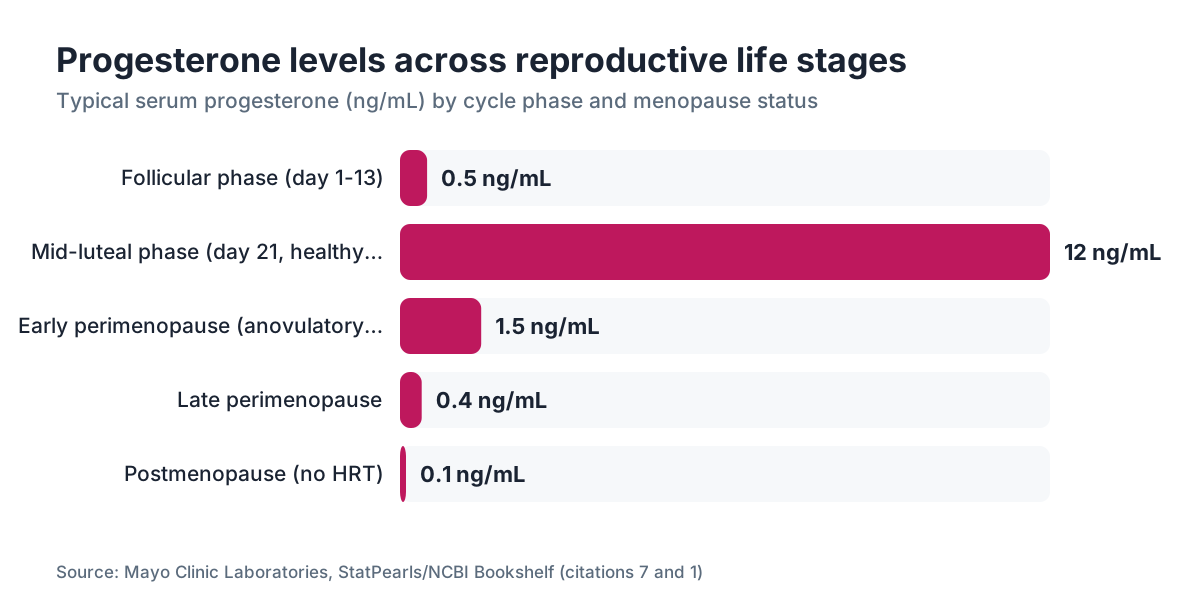
By the time a woman reaches her final menstrual period and is formally menopausal (12 consecutive months without a period), serum progesterone sits at postmenopausal reference levels, typically below 0.2 ng/mL. Compare that with mid-luteal progesterone in a healthy reproductive-age cycle, which runs from roughly 5 to 20 ng/mL [7].
Estrogen does not fall as early or as steeply in early perimenopause. It can actually spike erratically. So for several years, many women sit in a relative state of estrogen dominance because progesterone has already dropped while estrogen is still cycling. This is one reason perimenopausal women often report heavy periods, breast tenderness, bloating, and poor sleep even before hot flashes start.
See the chart below for how progesterone levels compare across reproductive life stages.
What are the symptoms of low progesterone?
Low progesterone does not produce one clean symptom. It shows up as a cluster of things that are easy to blame on stress, aging, or something else entirely.
The most reported symptoms of declining or low progesterone: irregular or heavy periods in perimenopause (because estrogen is less opposed), trouble falling or staying asleep, anxiety that feels new or worse than usual, mood changes in the week before a period, breast tenderness, and worsening PMS. In postmenopause, the absence of progesterone is not always symptomatic on its own since estrogen is gone too, but the sleep and mood effects are real for many women.
Sleep is the one that surprises people most. Allopregnanolone, the neurosteroid derived from progesterone, binds to GABA-A receptors and produces a sedating, anti-anxiety effect. When progesterone drops, that nightly calming effect disappears. Research in menopausal women found that oral micronized progesterone improved sleep quality compared to placebo, an effect separate from its uterine-protection role [2].
What low progesterone does not directly cause, despite what circulates online: weight gain on its own (low thyroid is a much more common culprit), hot flashes (estrogen withdrawal drives those), or hair loss (androgens and thyroid are the main drivers there). Blaming everything on progesterone is a shortcut that delays finding the right answer.
How is progesterone tested, and what do the numbers mean?
Progesterone is measured in serum (a blood draw) and reported in ng/mL in the US. Timing matters enormously. A progesterone level of 0.5 ng/mL is normal on cycle day 3 and a concern on cycle day 21 [7].
For women still having periods, the most informative test is a mid-luteal progesterone drawn 7 days before the expected next period, typically around day 21 of a 28-day cycle. A level above 3 ng/mL generally confirms ovulation happened. Levels above 10 ng/mL point to strong ovulation. For irregular cycles, timing is harder to pin down and you may need multiple draws across the cycle.
For postmenopausal women not on HRT, serum progesterone below 0.2 ng/mL is expected and does not require action. The number only means something in the context of your symptoms, your uterine status, and whether you are using hormone therapy.
Saliva and urine progesterone tests are sold directly to consumers and used widely in integrative medicine settings. The Endocrine Society does not recommend salivary hormone testing for clinical decision-making because progesterone partitions into saliva differently than into serum, and levels swing wildly [6]. Serum is the standard for a reason.
One more thing worth knowing: if you use topical progesterone cream, serum levels often read low even when a lot has been absorbed into tissue. This is a known limitation of serum testing with topical administration.
Why is progesterone required when you take estrogen for menopause?
Estrogen thickens the uterine lining. Left unopposed in a woman with a uterus, long-term estrogen therapy raises the risk of endometrial hyperplasia (abnormal lining thickening) and endometrial cancer significantly. Studies from the 1970s established this clearly enough that it changed prescribing practice permanently [4].
Progesterone (or a progestin) counters that thickening by opposing estrogen's growth effect and causing the lining to shed or stabilize. This is why every evidence-based guideline, including those from The Menopause Society and the Endocrine Society, states that any woman with a uterus using systemic estrogen must also use an adequate form of progestogen [8].
Women who have had a hysterectomy do not need progesterone for uterine protection since there is no uterus to protect. Some women in that group still choose micronized progesterone for sleep or mood effects, and that is a reasonable conversation to have with a clinician, but it is not required.
The forms used in practice vary. Oral micronized progesterone (Prometrium in the US) is FDA-approved and comes in 100 mg and 200 mg capsules. The 200 mg dose is typically used for 12 days per month in a cyclic regimen, or 100 mg nightly in a continuous regimen. Vaginal progesterone gel (Crinone, Prochieve) is another option. Progestins like norethindrone acetate or medroxyprogesterone acetate are alternatives, though the research distinctions above are worth understanding before choosing.
If you are researching your HRT options, our article on hormone replacement therapy lays out the full landscape including patch and oral estrogen options.
What is bioidentical progesterone and is it safer than synthetic progestins?
Bioidentical progesterone means the molecule is structurally identical to the progesterone your ovaries produce. Oral micronized progesterone (Prometrium and its generics) is bioidentical and FDA-approved. That matters because FDA-approved bioidentical products have been through the same manufacturing and clinical testing requirements as any other drug.
Compounded bioidentical progesterone is different. Compounding pharmacies can prepare progesterone in custom doses and delivery forms (troches, sublingual drops, creams, suppositories) that are not FDA-approved as finished products. The compounded versions are not inherently dangerous, but they also do not have the same quality-control verification. The Menopause Society has noted that compounded hormone products lack the pharmacokinetic and safety data of FDA-approved products and should not be assumed equivalent [8].
The safety comparison between bioidentical progesterone and synthetic progestins is one of the most discussed and least settled questions in menopause medicine. The E3N cohort data and several other observational studies suggest micronized progesterone may carry a lower breast cancer risk than MPA, but no completed randomized controlled trial has been powered to test that specific question head to head [5]. The Endocrine Society acknowledges the observational evidence while noting its limitations [6].
Most US prescribers who lean toward bioidentical approaches use oral micronized progesterone 100 mg nightly (continuous) or 200 mg for 12 days per month (cyclic) alongside an estradiol product. This is a reasonable, evidence-backed regimen. The conversation about compounded versus FDA-approved is worth having with your prescriber based on your own situation.
What is the right dose of progesterone for menopause HRT?
The FDA-approved oral micronized progesterone (Prometrium) is dosed at 200 mg per day for 12 consecutive days per 28-day cycle (sequential or cyclic regimen) or 100 mg per day continuously [9]. The cyclic approach produces a withdrawal bleed in many women. The continuous approach usually leads to no bleeding after a few months of adjustment. Which is better depends on personal preference and how far past menopause you are.
For vaginal progesterone gel (Crinone 4% or 8%), the dosing differs and is mostly studied in fertility contexts. Its use in menopausal HRT is less standardized.
Progestins carry their own dosing standards. Norethindrone acetate at 0.1 mg combined with an estradiol patch (as in the Combipatch product) is one common formulation. Medroxyprogesterone acetate at 2.5 mg daily continuous or 5-10 mg for 12 days cyclic is another.
Dosing is not one-size-fits-all. Women who have had endometrial hyperplasia, who have a family history of endometrial cancer, or who are on higher estrogen doses may need more progestogen coverage. This is a direct conversation to have with whoever prescribes your hormones. Getting the progestogen dose too low is genuinely risky for uterine health. Getting it too high may worsen mood and sleep in progesterone-sensitive women.
WomenRx clinicians manage these decisions regularly, and if you are trying to sort out whether your current regimen is dialed in correctly, a telehealth consult is a reasonable option. You can also read more in our article on menopause for broader context on what changes at this stage.
Does progesterone help with sleep, anxiety, and mood?
Yes, with real evidence behind it, more than anecdote.
The mechanism is allopregnanolone, a neurosteroid that forms when progesterone is metabolized. Allopregnanolone is a potent positive allosteric modulator of GABA-A receptors, meaning it enhances the brain's main inhibitory system, producing calming, anxiety-lowering, sleep-promoting effects. This is the same receptor system targeted by benzodiazepines, though allopregnanolone works differently and does not carry the same dependency risks [2].
A randomized trial in postmenopausal women found that oral micronized progesterone at 300 mg nightly significantly improved subjective sleep quality compared to placebo. An important nuance: this effect is largely oral-route specific. When progesterone is given vaginally or transdermally, it does not convert to allopregnanolone the same way, so the sleep and mood benefit looks much weaker or absent with those routes [2].
For anxiety, the data is mostly mechanistic and observational rather than from large clinical trials. Many women report that the week before their period, when progesterone drops sharply, is when anxiety and irritability peak. That fits the biology. Premenstrual dysphoric disorder (PMDD), the severe form of PMS, is now understood to involve abnormal sensitivity to normal progesterone fluctuations rather than abnormally low levels [1].
If sleep is your main complaint alongside other menopausal symptoms, oral progesterone is a reasonable choice to raise with your prescriber, particularly if you have a uterus and are using estrogen. If you do not have a uterus and are only considering progesterone for sleep, it is an off-label use, but one with reasonable mechanistic backing.
Can progesterone help with perimenopause specifically?
Perimenopause is the phase where progesterone's decline is often steeper and earlier than estrogen's, which makes targeted progesterone support arguably more relevant here than in established menopause.
The most common perimenopause complaints that may be linked to low progesterone are heavy, irregular periods, worsening PMS or PMDD symptoms, new sleep disruption, and anxiety. In women with a uterus who are still cycling, low-dose oral micronized progesterone or a cyclic progestin is sometimes used to regulate the lining and reduce heavy bleeding, even before full HRT is warranted [8].
Here clinical practice is ahead of the randomized trial data. The Menopause Society acknowledges that HRT can start in perimenopause and that the risk-benefit calculus is generally favorable for healthy symptomatic women under 60 who are within 10 years of menopause onset [8]. But the specific evidence for isolated progesterone therapy in perimenopause (without systemic estrogen) for symptoms other than uterine protection is thinner.
Some practitioners use progesterone alone in early perimenopause when estrogen is still adequate but progesterone has already dropped. This is not unreasonable based on physiology, but the clinical trial evidence for it is limited. Honest answer: this is a situation where you need a clinician who knows your labs, your cycle history, and your symptoms, not a protocol from the internet.
For more on timing and symptoms, see our article on perimenopause age and when does menopause start.
What are the side effects and risks of progesterone?
Progesterone's side effects are real and often underplayed in the rush to celebrate bioidentical hormones.
The most common side effect of oral micronized progesterone is sedation, which is why it is typically taken at bedtime. For most women this is a feature, not a bug, but if you need to drive or work after taking it, timing matters. Dizziness is also reported, especially at higher doses.
Mood effects cut both ways. Progesterone can lower anxiety for many women through the GABA mechanism, but a subset of women find that any progestogen worsens depression, irritability, or emotional flatness. This is more commonly reported with synthetic progestins than with micronized progesterone, but it happens with both. If you feel worse on the progestogen component of your HRT, report it rather than tolerate it [6].
Breast tenderness and bloating can occur, particularly in the first few months or at higher doses.
On the serious risk side: the breast cancer signal in the WHI was specific to MPA plus conjugated equine estrogen, not to progesterone broadly. Whether micronized progesterone plus estradiol affects breast cancer risk is genuinely unsettled. The most careful reading of current evidence suggests the risk, if any, is lower with bioidentical progesterone than with MPA, but calling it zero would be inaccurate [5].
Progesterone is not recommended in certain situations: women with a history of progesterone-sensitive breast cancer, those with undiagnosed vaginal bleeding, active liver disease, or known hypersensitivity to the compound. Prometrium capsules contain peanut oil, which matters for people with peanut allergies [9].
Cardiovascular effects of progestogens are still under study. MPA has shown some unfavorable effects on lipid profiles and vascular function in studies. Micronized progesterone looks more neutral [3]. This is one more reason the type of progestogen matters, more than whether one is present at all.
How does progesterone interact with estrogen and other hormones?
Progesterone and estrogen are wound together throughout the menstrual cycle and in HRT, but they are not simply opposites.
Estrogen rises in the follicular phase, thickening the uterine lining and building up receptor sensitivity in various tissues. After ovulation, progesterone rises and modifies the lining for implantation, cuts the number of estrogen receptors in the uterus (limiting estrogen's growth drive), and shifts the body from a building phase to a maintenance phase. When both drop at the end of the cycle, the lining sheds [1].
In HRT, the balance between estrogen dose and progestogen dose sets both endometrial safety and how a woman feels. Higher estrogen doses generally require more progestogen coverage. Getting this ratio wrong in either direction has consequences. Too little progestogen risks the uterine lining. Too much progestogen relative to estrogen can cause mood suppression, fatigue, and progestogen dominance symptoms.
Progesterone also touches thyroid function indirectly. Estrogen raises thyroid-binding globulin, reducing free thyroid hormone availability. Progesterone has a modest opposing effect, but neither hormone acts like thyroid hormone. Women on HRT who feel their thyroid management suddenly went off-kilter are right to check both together.
Testosterone and progesterone share biosynthetic pathways. Progesterone is a precursor to testosterone, cortisol, and aldosterone in the steroidogenesis cascade. Giving high doses of exogenous progesterone does not meaningfully raise testosterone in women because the conversion is controlled upstream, but it is worth knowing the hormones are biochemically related.
For a full picture of estrogen therapy options that pair with progesterone, our estrogen patch article covers transdermal delivery in detail.
Where does WomenRx fit into managing progesterone and HRT?
Getting progesterone right is not a matter of taking the highest dose you can find online or reading a single serum level yourself. It takes someone who can look at the full picture: your symptoms, your cycle status, your uterine history, your estrogen choice, and your other health factors.
WomenRx offers telehealth prescribing for hormone therapy, including individualized progesterone regimens, with clinicians who focus on perimenopause and menopause care. If you are trying to figure out whether your current regimen is working, or whether you need progesterone in the first place, that is exactly the kind of visit worth having.
This article is a reference, not a prescription. The goal is to make sure you walk into any clinical conversation knowing the vocabulary, the evidence, and the right questions to ask.
Frequently asked questions
Can I take progesterone without estrogen?
Yes. Progesterone can be used on its own, though it is most often prescribed alongside estrogen. Without estrogen, progesterone alone does not address hot flashes. Some clinicians use it in early perimenopause for sleep, heavy periods, or mood when estrogen is still adequate. If you have a uterus and take systemic estrogen, progesterone is required. If you had a hysterectomy, it is optional.
What is the difference between Prometrium and over-the-counter progesterone cream?
Prometrium is FDA-approved oral micronized progesterone (100 mg and 200 mg capsules) with published pharmacokinetic data confirming absorption and uterine-protective effect. Over-the-counter progesterone creams contain progesterone but at doses and absorption rates that are not standardized. Serum levels after cream use can read low even when tissue levels are higher. OTC cream has not been shown to adequately protect the uterine lining in women using systemic estrogen.
Does progesterone cause weight gain?
Progesterone gets blamed for weight gain, but the evidence is weak. Water retention can occur, particularly with synthetic progestins that have some glucocorticoid activity. Micronized progesterone has a more neutral metabolic profile. Most weight changes during perimenopause and menopause come from declining estradiol, lifestyle shifts, and changes in insulin sensitivity rather than progesterone directly.
What is a normal progesterone level after ovulation?
A mid-luteal serum progesterone (drawn about 7 days before the expected next period) above 3 ng/mL confirms ovulation happened. Levels of 10 to 20 ng/mL are typical for a well-functioning luteal phase. Below 3 ng/mL mid-luteal points to an anovulatory cycle. Postmenopause, levels below 0.2 ng/mL are expected and normal.
Does progesterone protect against breast cancer?
This is contested. Some researchers argue that endogenous progesterone has protective effects in breast tissue, and observational data suggests micronized progesterone combined with estradiol carries a lower breast cancer signal than synthetic progestin MPA. No randomized trial has been designed to confirm this. The most accurate current statement is that micronized progesterone appears to have a more favorable breast safety profile than MPA, but this is not yet proven.
Why does progesterone make me sleepy?
Oral progesterone is metabolized in the liver and gut to allopregnanolone, a neurosteroid that binds GABA-A receptors in the brain and produces a sedating effect. This is why oral micronized progesterone taken at night improves sleep quality in many postmenopausal women. The sedation is largely specific to the oral route. Vaginal or transdermal progesterone does not produce the same allopregnanolone levels.
Can progesterone help with anxiety and mood changes in perimenopause?
It can for many women. The allopregnanolone pathway from oral progesterone enhances GABA signaling, producing anxiety-lowering effects similar in mechanism to benzodiazepines. A subset of women find any progestogen worsens mood, particularly synthetic progestins. If progesterone seems to worsen rather than improve mood, tell your prescriber. Switching forms or adjusting the dose is often the fix.
How long do I need to take progesterone if I am on HRT?
For as long as you take systemic estrogen and have a uterus. Stopping progesterone while continuing estrogen brings back the risk of endometrial hyperplasia. There is no defined "safe" duration beyond which you can drop the progestogen. Annual review of your HRT regimen with your prescriber, including any changes in bleeding patterns that warrant uterine monitoring, is standard practice.
Is there a progesterone IUD that counts as uterine protection during HRT?
The levonorgestrel IUD (such as Mirena) delivers a progestin locally to the uterus and, at higher doses, is used off-label to provide endometrial protection in women on systemic estrogen. This is not FDA-approved for this purpose, but it is used in clinical practice, particularly for women who do not tolerate oral or systemic progestogen well. Evidence supporting this approach exists but is more limited than for oral or systemic progestogen.
What happens if you have low progesterone and do nothing?
If you are not on estrogen therapy and you have low progesterone from perimenopause or menopause, the main concerns are symptomatic: poor sleep, mood changes, and irregular or heavy periods in perimenopause. There is no acute medical emergency from low progesterone alone in postmenopause. The uterine-lining risk only applies when unopposed estrogen is present. If you are having significant symptoms, that is the practical reason to act.
Can progesterone help with hot flashes?
Not reliably on its own. Hot flashes are driven mainly by estrogen withdrawal acting on the brain's thermoregulatory center. Progesterone does not directly address that mechanism. Some small studies have suggested a modest hot flash reduction with oral progesterone, but the effect is much smaller than with estrogen therapy. If hot flashes are your main complaint, estrogen is the most effective treatment.
Are compounded progesterone preparations safe?
Compounded progesterone is not inherently unsafe, but it lacks the batch-to-batch quality-control verification and pharmacokinetic data of FDA-approved products like Prometrium. The Menopause Society recommends FDA-approved hormone products as the first choice. Compounded preparations may fit when a woman has an allergy to an ingredient in the commercial product (Prometrium contains peanut oil) or needs a custom dose or delivery form not sold commercially.
Sources
- StatPearls, NCBI Bookshelf: Physiology, Progesterone
- Menopause journal, Caufriez et al. 2011: Progesterone and sleep quality in postmenopausal women
- Journal of Clinical Endocrinology and Metabolism, Sitruk-Ware 2004: Pharmacological profile of progestins
- JAMA, Writing Group for the WHI 2002: Risks and benefits of estrogen plus progestin in healthy postmenopausal women
- International Journal of Cancer, Fournier et al. E3N cohort 2008: Unequal risks for breast cancer associated with different HRT components
- Endocrine Society, 2022 Clinical Practice Guideline: Treatment of Symptoms of the Menopause
- Mayo Clinic Laboratories: Progesterone reference ranges and test interpretation
- The Menopause Society (NAMS), 2023 Position Statement on Hormone Therapy
- FDA, Prometrium (progesterone) prescribing information
- NIH Office on Women's Health: Menopause basics and hormone therapy