Premature menopause: causes, risks, and treatment options
TL;DR: Premature menopause means your periods stop and estrogen production ends before age 40. It affects roughly 1 in 100 women. Causes range from genetics to autoimmune disease to cancer treatment. Because estrogen loss happens decades earlier than average, bone and heart risks run meaningfully higher. Hormone therapy is the standard treatment for most women, usually continued until about age 51.
What is premature menopause and how is it different from early menopause?
Premature menopause is the permanent end of ovarian function before age 40. Early menopause is a related but separate category: periods stopping between 40 and 45. Both differ from the average age of natural menopause, which is 51 in the United States [1].
The mechanism is the same in both cases. The ovaries stop releasing eggs and stop making enough estrogen and progesterone to sustain a menstrual cycle. What changes is the timing, and timing matters a great deal here, because the body expects roughly three more decades of estrogen before natural menopause would arrive.
Premature ovarian insufficiency (POI) is a term you will see used almost interchangeably with premature menopause, though there is a technical difference. POI means the ovaries are failing but may still produce some estrogen intermittently. Ovulation, and even pregnancy, can occasionally still happen [2]. True premature menopause is the permanent version. In clinical practice, the distinction matters mainly because women with POI who still want to conceive have a narrow window in which fertility interventions may work.
See our article on menopause for a full picture of the natural transition, and when does menopause start for the normal age range.
How common is premature menopause?
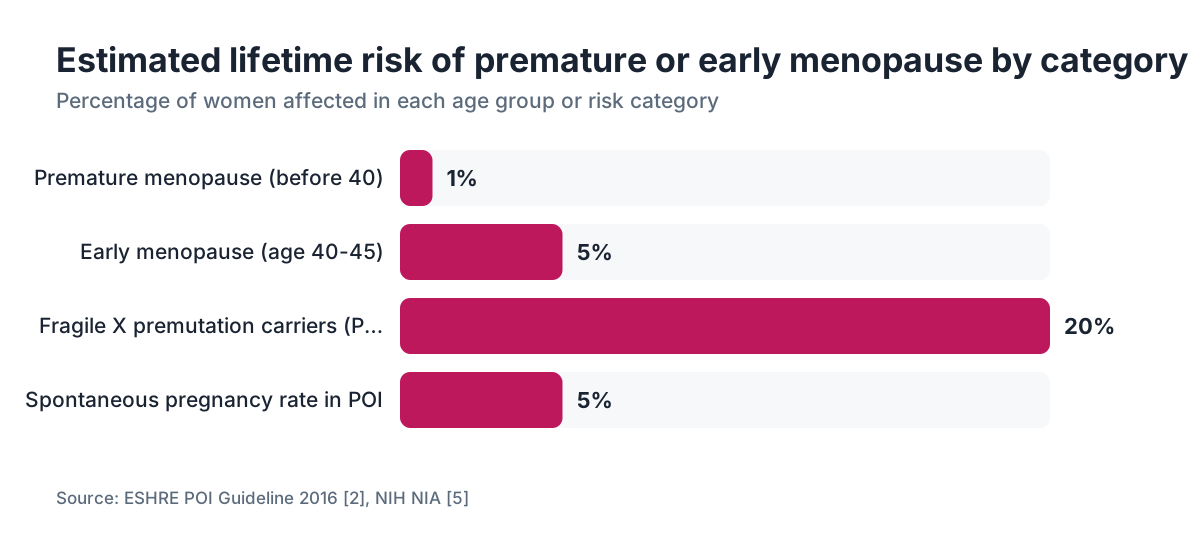
About 1% of women reach menopause before age 40 [2]. That sounds small. In a country with roughly 75 million women of reproductive age, it means hundreds of thousands of people. Early menopause, between 40 and 45, affects another 5% of women [5].
Prevalence varies by ethnicity. Data from the Study of Women's Health Across the Nation (SWAN) show that Black and Hispanic women tend to reach menopause slightly earlier than white women on average, though rates of POI specifically are not dramatically different across groups [4]. Women with a first-degree relative who had early ovarian failure are much more likely to experience it themselves, which points to a strong hereditary component in a meaningful subset of cases.
Many women go undiagnosed for years. Irregular periods in the late twenties or early thirties get blamed on stress, thyroid problems, or polycystic ovary syndrome before anyone checks ovarian reserve. That delay has real consequences. Every year without estrogen replacement is a year of accelerated bone loss.
What causes premature menopause?
The causes split into three broad groups: genetic, autoimmune, and iatrogenic (caused by medical treatment). A meaningful share of cases are idiopathic, meaning no cause is ever found.
Genetic causes. Turner syndrome, in which one X chromosome is absent or structurally abnormal, is the most recognized chromosomal cause. Fragile X premutation carriers, women who carry an expanded CGG repeat on the FMR1 gene without full fragile X syndrome, have roughly a 20% lifetime risk of POI [2]. Other gene variants affecting ovarian development or follicle function turn up regularly in research. If you have a sister or mother with premature menopause, genetic consultation is worthwhile.
Autoimmune causes. The immune system can mistakenly target ovarian tissue. About 4% of women with POI have Addison's disease (adrenal insufficiency), and thyroid autoimmunity is common in this group too [2]. Testing for adrenal antibodies matters because Addison's disease is life-threatening if missed.
Iatrogenic causes. Chemotherapy and radiation to the pelvis or total body are the most common medical causes. The risk depends heavily on the chemotherapy agent and cumulative dose. Alkylating agents (cyclophosphamide, busulfan) are the most damaging to ovarian follicles. Bilateral oophorectomy (surgical removal of both ovaries) causes immediate surgical menopause, the most abrupt version of premature menopause, because estrogen drops to near zero within 24 to 48 hours rather than declining gradually [3].
Other factors. Certain infections, including mumps affecting the ovaries, have been linked to POI. Smoking shows up consistently in studies as a factor that moves menopause earlier by roughly one to two years, though it more often causes early menopause than true premature menopause.
What are the symptoms of premature menopause?
The symptoms match natural menopause, but they often arrive without warning in women who think they are far too young to be dealing with this.
Hot flashes and night sweats are the most common complaint. Irregular or absent periods come first in many cases. Vaginal dryness, pain with intercourse, and lower libido follow as estrogen falls. Brain fog and trouble concentrating are real and reported by a sizable minority of women, though the research on cognitive changes at this age is still evolving [3].
Mood changes deserve their own line here. Depression and anxiety occur at higher rates in women with POI than in age-matched controls, and getting this diagnosis in your twenties or thirties, especially if you wanted children, can hit hard. This is more than hormonal. It is also grief.
Some women have almost no symptoms early on. Their periods simply stop, and the diagnosis comes only after an infertility workup or because a clinician happens to check hormone levels. That quiet presentation is part of why late diagnosis is so common.
How is premature menopause diagnosed?
Diagnosis needs blood tests, more than a symptom checklist. The standard workup measures follicle-stimulating hormone (FSH) and estradiol. FSH above 40 mIU/mL on two separate occasions at least four weeks apart, plus absent or irregular periods for at least three months in a woman under 40, meets the diagnostic criteria [2].
Anti-Müllerian hormone (AMH) reflects ovarian reserve and can help, but it is not part of the core diagnostic criteria for POI. Karyotype testing for chromosomal abnormalities, FMR1 gene testing for fragile X premutation, and adrenal antibody testing are all recommended at diagnosis by the European Society of Human Reproduction and Embryology (ESHRE) guidelines [2].
Thyroid function (TSH and thyroid antibodies) should be checked given how often autoimmune thyroid disease travels with POI.
A bone density test (DEXA scan) is also recommended at diagnosis to set a baseline, because bone loss may already be underway by the time the diagnosis is confirmed [9]. This is not optional monitoring. It is actionable information.
What are the long-term health risks of premature menopause?
This is where the conversation gets serious. Premature menopause is more than early hot flashes. Losing estrogen for an extra 10 to 15 years has measurable effects on multiple organ systems.
Bone. Estrogen is the main brake on bone breakdown. Without it, bone loss speeds up. Women with untreated POI have significantly lower bone mineral density than controls and a higher risk of osteoporosis and fracture later in life [3]. The Endocrine Society clinical practice guideline says women with POI should get hormone therapy at least until the average age of natural menopause (51) to protect bone [3].
Cardiovascular disease. Estrogen supports favorable lipid profiles and healthy blood vessels. Natural menopause speeds up cardiovascular risk, and that effect is amplified when menopause happens earlier. Women with premature menopause carry roughly a 50% higher risk of cardiovascular disease compared with women who reach menopause at the normal age, according to large observational cohorts [4].
Cognitive health. The data are less settled here, but observational studies suggest women who reach menopause before 40 may face a higher risk of cognitive decline and dementia. SWAN found associations between earlier menopause and lower scores on certain cognitive measures [4].
Sexual and urogenital health. Genitourinary syndrome of menopause (GSM) develops as vaginal and urethral tissue thins without estrogen. It causes painful sex, urinary urgency, and recurrent UTIs. GSM is underdiagnosed at any age. In young women it gets missed almost entirely.
Mental health. As noted, depression and anxiety rates run higher. The hormonal component is real, and so is the psychological weight of the diagnosis.
Mortality. Multiple large studies link premature and early menopause to higher all-cause mortality compared with menopause at the average age, driven largely by cardiovascular deaths. Hormone therapy appears to reduce but not erase this excess risk [10].
What are the treatment options for premature menopause?
Hormone therapy (HT) is the cornerstone of treatment, and the reasoning differs from HT used for symptom relief in natural menopause. Here the goal is replacing hormones the body should still be making, not adding hormones above a natural baseline.
The Endocrine Society and ESHRE both recommend that women with POI receive estrogen at doses that mimic premenopausal levels, generally higher than typical postmenopausal HT doses, until at least age 50 to 51 [2][3]. Women who have a uterus need a progestogen added to protect the uterine lining from unopposed estrogen. Our article on progesterone explains the options.
Formulation matters. Transdermal estrogen (patches, gels, sprays) skips first-pass liver metabolism and does not raise clotting factor levels the way oral estradiol can [7]. An estrogen patch is often preferred in younger women for that reason. For progesterone, micronized progesterone (the body-identical form) tends to have a friendlier side effect profile than older synthetic progestins. See our full guide on hormone replacement therapy for a breakdown of formulations.
Women who had surgical menopause (bilateral oophorectomy) often need higher doses, because ovarian androgen production (testosterone) also drops abruptly and completely. Testosterone replacement is an evidence-based option for libido and energy in this group, though it is not FDA-approved specifically for women and requires off-label prescribing.
Non-hormonal options exist for women who cannot take estrogen (certain breast cancer survivors, for example), including SSRIs and SNRIs for hot flashes and vaginal moisturizers for GSM. These treat symptoms but do not protect bone or heart the way estrogen does. For those women, bone-protective drugs such as bisphosphonates may be needed.
Fertility questions are time-sensitive. Women with POI who still want to conceive should see a reproductive endocrinologist quickly. Egg donation is the most consistently successful option, and the rare spontaneous ovulation that occurs in some POI cases can sometimes be captured with careful monitoring.
If you want a telehealth pathway to check your hormone levels and talk through personalized options, WomenRx offers clinician-guided hormone care for women dealing with premature and early menopause.
Does hormone therapy for premature menopause carry the same risks as HT for natural menopause?
This question comes up constantly, and the honest answer is: probably not, at least not in the same way.
Much of the fear about HT risk comes from the Women's Health Initiative (WHI) trial, which studied women with a mean age of 63, well past the average age of menopause. Applying those findings to a 32-year-old with premature ovarian insufficiency is a category error. The biological context is completely different.
For women with premature menopause, estrogen therapy until around age 51 mostly restores hormones the body would naturally have had. The Endocrine Society guideline states directly that "the risk-benefit ratio for HT in women with POI differs from that in postmenopausal women" [3]. Most experts consider the absolute risks of HT in this age group low and the benefits (bone protection, cardiovascular health, cognitive health, quality of life) to clearly outweigh them.
Breast cancer risk is the most common worry. Current evidence does not show a meaningful increase in breast cancer risk from estrogen-only therapy (appropriate for women without a uterus). Combined estrogen-progestogen therapy carries a small associated risk in observational data, but replacing hormones that should naturally be present in a young woman is a different calculation than a 60-year-old starting HT for the first time.
Individual factors still matter. Women with BRCA1 or BRCA2 variants, a personal history of hormone-sensitive cancer, or certain clotting disorders need individualized discussions with their clinician.
How does premature menopause affect fertility?
Premature ovarian insufficiency does not mean zero chance of pregnancy, but the odds are low without help. Spontaneous ovulation happens in roughly 5 to 10% of women with POI at some point, and spontaneous pregnancies have been documented [2]. Counting on it is not a fertility plan.
For women who want to conceive, the most effective path is egg donation with in vitro fertilization (IVF). Pregnancy rates with donor eggs in women with POI match those in the general IVF population, because the uterus itself usually works fine [11].
If POI is caught before ovarian function is fully gone (say, a woman with declining AMH and irregular cycles who has not yet crossed the FSH threshold), fertility preservation through egg or embryo freezing may still be possible. The window is narrow and unpredictable, which is why guidelines stress urgent referral to a reproductive endocrinologist.
Women facing cancer treatment that risks ovarian damage should be offered fertility preservation counseling before chemotherapy starts whenever possible. Ovarian tissue cryopreservation and GnRH agonist co-treatment during chemotherapy are worth discussing with an oncologist and reproductive specialist together.
Can premature menopause be prevented?
For most causes, no. You cannot prevent genetic causes, and autoimmune POI is not reliably preventable either.
What you can influence is the iatrogenic category. Women facing chemotherapy or pelvic radiation for cancer should ask about gonadal shielding, ovarian transposition (moving the ovaries out of the radiation field), and GnRH agonists during chemotherapy, which may offer some protection though the evidence is not conclusive [2]. Fertility preservation before cancer treatment is the most reliable protective step when future fertility is the goal.
Smoking cessation is the one modifiable lifestyle factor consistently tied to earlier menopause. It will not prevent premature menopause in women with a genetic or autoimmune cause, but it is worth addressing for overall health.
For women with a strong family history of early ovarian failure, earlier monitoring of ovarian reserve (AMH levels, antral follicle counts) can at least shorten the diagnostic delay and open the fertility preservation window sooner.
What should you monitor after a premature menopause diagnosis?
Ongoing monitoring is not optional. This is a condition with long-term systemic effects, and the follow-up plan matters as much as the first treatment decision.
Bone density should be checked at diagnosis and repeated every one to two years at first, then spaced out once things stabilize on hormone therapy [3]. See our guide on bone density tests for what the numbers mean and which scores warrant treatment.
Cardiovascular risk factors (blood pressure, lipids, blood glucose) warrant regular checks starting at diagnosis, not at the age when most physicians start looking. Talk frequency through with your clinician based on your personal risk.
Thyroid function should be rechecked periodically given the autoimmune overlap. Adrenal function monitoring is relevant for women who tested positive for adrenal antibodies at diagnosis.
Hormone levels themselves are worth rechecking yearly in women on HT, to confirm the dosing actually reaches premenopausal estrogen levels rather than just quieting hot flashes. Plenty of women on standard postmenopausal HT doses are under-replaced by the standards appropriate for their age.
Mental health should be asked about at every visit. Depression screening is not a luxury here. It is part of standard care for this population.
What is the emotional impact of premature menopause and where can you find support?
Getting a premature menopause diagnosis at 28 or 34 or 38 is genuinely hard. The medical facts matter, and so does the lived experience of hearing news that changes your sense of your body and, for many women, your fertility plans.
Grief is a normal response. So is anger. A lot of women describe feeling deeply isolated because none of their friends are thinking about menopause yet. Minimizing this, focusing only on clinical management and treating the emotional part as separate, does women a disservice.
The Daisy Network (daisynetwork.org.uk) is one of the longest-running peer support organizations specifically for women with POI. The International Premature Ovarian Insufficiency Association is another resource. NAMS (the North American Menopause Society) keeps a provider directory that includes clinicians who focus on this area [1].
Psychological support, whether individual therapy, a support group, or couples counseling when fertility loss strains a relationship, is as legitimate a part of treatment as the estrogen prescription. Some major centers now run interdisciplinary POI clinics that combine endocrinology, reproductive medicine, psychology, and bone health in one program.
If you want clinician-guided hormone management paired with ongoing support, WomenRx offers telehealth care built for women at this stage. The goal is more than managing symptoms. It is understanding what your body is doing and why.
Frequently asked questions
What is the difference between premature menopause and premature ovarian insufficiency (POI)?
Premature menopause is permanent loss of ovarian function before 40. POI is the broader term that includes women whose ovaries are failing but may still intermittently produce estrogen and occasionally ovulate. In POI, spontaneous pregnancy is still possible (roughly 5 to 10% of cases). In practice, both terms share the same diagnostic workup and treatment pathway, and many clinicians use them interchangeably.
Can you still get pregnant after premature menopause?
Spontaneous pregnancy in true premature menopause is rare but documented in women with POI who still have intermittent ovulation. The most reliable path is IVF with donor eggs, which carries pregnancy success rates comparable to standard IVF. Women who want to conceive should see a reproductive endocrinologist promptly after diagnosis, since timing matters for any remaining fertility preservation options.
What blood tests confirm premature menopause?
Two FSH measurements above 40 mIU/mL taken at least four weeks apart, combined with absent or irregular periods for three or more months in a woman under 40, confirm the diagnosis. Estradiol is checked alongside FSH. Additional workup includes karyotype, FMR1 gene testing, adrenal antibodies, AMH, and thyroid function, all recommended at first diagnosis.
At what age does premature menopause occur?
By definition, premature menopause occurs before age 40. Early menopause runs from 40 to 45. The average age of natural menopause in the US is 51. Premature menopause can occur in the teens or twenties in women with chromosomal conditions such as Turner syndrome, or in the thirties in women with autoimmune or idiopathic causes.
Is hormone therapy safe for women with premature menopause?
Current evidence supports HT as safe and beneficial for most women with premature menopause, with the goal of restoring hormones to levels the body should naturally have until about age 51. The Endocrine Society states that the risk-benefit ratio for HT in POI differs from that in older postmenopausal women. Individual factors like BRCA status or personal cancer history require case-by-case discussion with a clinician.
Does premature menopause increase the risk of osteoporosis?
Yes, significantly. Estrogen is essential for maintaining bone density. Women with untreated premature menopause lose bone at an accelerated rate and have measurably lower bone mineral density than age-matched controls. A DEXA scan at diagnosis sets a baseline. Hormone therapy until at least age 51 is the main bone-protective strategy, and bisphosphonates may be needed if HT is not an option.
What causes premature menopause in women in their 30s?
In a woman in her thirties, the most common identifiable causes are autoimmune ovarian failure, fragile X premutation carrier status, and prior chemotherapy or pelvic radiation. Many cases are idiopathic, meaning no specific cause is found even after full workup. Genetic testing (karyotype, FMR1) and autoimmune panels are part of the standard evaluation.
Can premature menopause be reversed?
No. Once ovarian function is gone permanently, it cannot be restored. In POI (the partial or intermittent form), some ovarian activity may persist or recur unpredictably, which is why pregnancy can still occasionally happen. But no current medical intervention reliably restores ovarian function. Research into ovarian tissue transplantation after cancer treatment is ongoing but not yet standard practice.
How does premature menopause affect the heart?
Women with premature menopause carry roughly 50% higher cardiovascular disease risk compared with women who reach menopause at the normal age. Estrogen supports favorable lipid profiles and healthy blood vessels, so its early loss speeds up cardiovascular aging. Hormone therapy appears to reduce but not fully close this gap. Regular monitoring of blood pressure, lipids, and blood glucose is part of standard follow-up care.
Does premature menopause cause weight gain?
Estrogen loss is linked to shifts in body composition: less lean mass, more visceral fat. Women with premature menopause may see these changes a decade or more earlier than their peers. Hormone therapy can partly offset them, but lifestyle factors matter too. Lower estrogen plus aging muscle mass makes maintaining a healthy weight harder than it was before diagnosis.
What is surgical menopause and how is it different from premature menopause?
Surgical menopause is caused by removal of both ovaries (bilateral oophorectomy), often done alongside a hysterectomy. It causes an immediate, abrupt drop in estrogen and testosterone within 24 to 48 hours, rather than the gradual decline of natural POI. Symptoms tend to be more severe because of the speed of hormone loss. It counts as premature menopause when it happens before 40, and early menopause when before 45.
Are there natural remedies that help with premature menopause symptoms?
Some women use phytoestrogens (soy isoflavones, red clover), black cohosh, and mind-body practices like yoga and mindfulness for symptom relief. The evidence for these reducing hot flashes is modest. None of them protect bone density or cardiovascular health the way estrogen does. For the serious systemic risks of premature menopause, non-hormonal approaches are not adequate substitutes for hormone therapy in most women.
How long should women with premature menopause take hormone therapy?
Current guidance from the Endocrine Society and ESHRE recommends continuing hormone therapy until at least age 50 to 51, the average age of natural menopause, unless there is a specific contraindication. After that point, the decision about continuing HT shifts to the same framework used for women with natural menopause. Stopping earlier raises bone and cardiovascular risk without clear benefit.
Does premature menopause affect mental health?
Yes. Depression and anxiety are more common in women with POI than in age-matched peers. The causes are partly hormonal and partly psychological: the diagnosis can bring grief over fertility loss, body image changes, and isolation from peers who are not dealing with menopause. Formal depression screening, access to psychological support, and hormone therapy (which does help mood in many women) are all part of good care.
Sources
- North American Menopause Society (NAMS), menopause.org
- ESHRE Guideline: Management of women with premature ovarian insufficiency, Human Reproduction 2016
- Endocrine Society Clinical Practice Guideline: Premature Menopause/POI, Journal of Clinical Endocrinology & Metabolism 2023
- Study of Women's Health Across the Nation (SWAN), University of Michigan / NIH
- NIH National Institute on Aging, Menopause information page
- NIH MedlinePlus, Premature ovarian failure (POI)
- FDA, Drug label for Vivelle-Dot (estradiol transdermal system)
- NIH Office on Women's Health, Menopause basics
- International Society for Clinical Densitometry (ISCD), official positions
- Faubion et al., Premature and Early Menopause, Mayo Clinic Proceedings 2019
- American Society for Reproductive Medicine (ASRM), POI and fertility patient resources
- CDC, National Center for Health Statistics, Women's health statistics