Pre-menopause age: what the timeline actually looks like
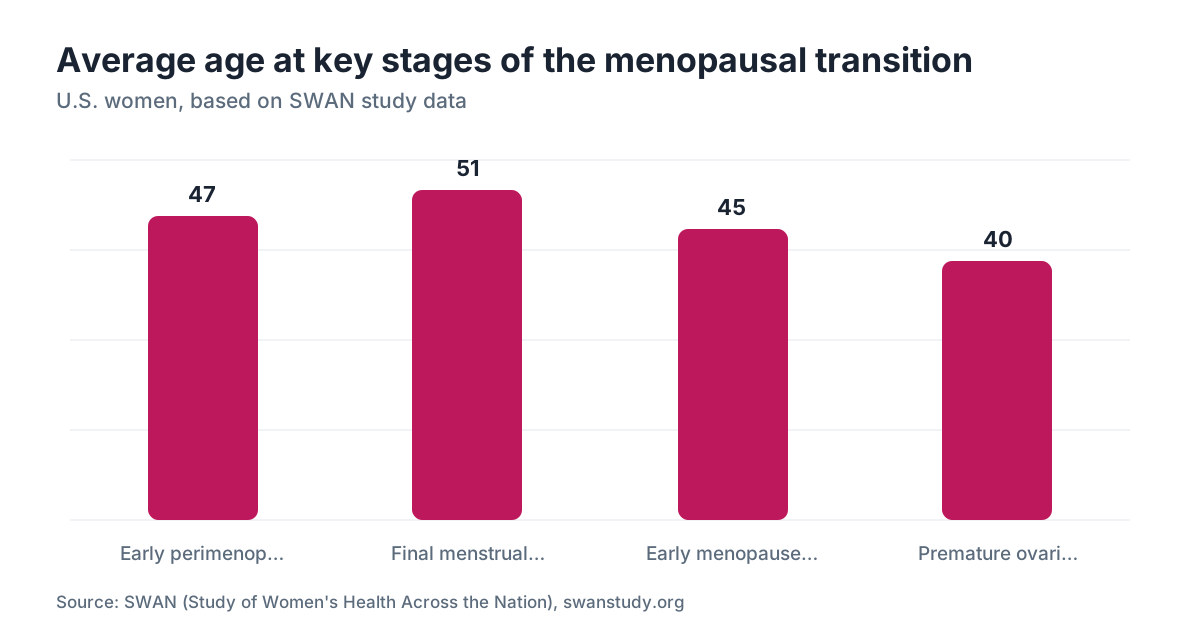
TL;DR: "Pre-menopause" most often means perimenopause, the transition phase that typically begins between ages 45 and 55, with an average onset of 47. Full menopause (12 consecutive months without a period) arrives at a median age of 51 in the U.S. Some women start earlier due to genetics, smoking, or surgery. The transition lasts four to eight years on average.
What does 'pre-menopause' actually mean?
The term is genuinely confusing because clinicians use it in two different ways. Some use 'premenopause' to mean any time in a woman's life before she reaches menopause, so technically a 28-year-old is premenopausal. Others, especially in common online use, use it as a shorthand for perimenopause, the active hormonal transition leading up to the final period.
For practical purposes, when most women search 'pre-menopause age' they want to know: when does this transition actually start, what does it feel like, and am I in it right now? That's the question this article answers.
The North American Menopause Society (NAMS) defines perimenopause as the years leading up to the final menstrual period, during which the body shifts from regular ovarian function toward the end of reproductive cycling [1]. It ends officially 12 months after the last period, at which point a woman is said to have reached menopause.
Menopause itself is a single point in time, not a phase. Everything before it is premenopause in the broad sense. The transition is perimenopause. Most of this article focuses on perimenopause because that's where the symptoms, hormone changes, and clinical decisions actually live.
What is the average age for pre-menopause to start?
The average age for perimenopause onset in U.S. women is 47 [2]. Full menopause, meaning 12 consecutive months without a period, arrives at a median age of 51.4 in the United States [2].
That means the typical transition window runs roughly from age 47 to 51, about four years. But ranges matter here. For some women the transition is two years. For others it stretches eight to ten years, with irregular cycles, hot flashes, and sleep disruption that started in their early 40s and didn't fully resolve until their mid-50s.
Early menopause is defined as menopause occurring before age 45. Premature ovarian insufficiency (POI) is menopause before age 40, affecting roughly 1% of women [3]. Both early menopause and POI carry different health implications, especially around cardiovascular risk and bone density, and generally warrant hormone therapy unless there's a specific contraindication.
These age cutoffs matter because they change the clinical conversation. A 41-year-old with irregular periods and hot flashes needs a workup for POI, more than reassurance that she's 'probably just in perimenopause.' The Endocrine Society recommends FSH testing in women under 40 with symptoms suggestive of ovarian insufficiency to confirm the diagnosis [3].
Race and ethnicity also shift the numbers meaningfully. The SWAN (Study of Women's Health Across the Nation) study, the largest longitudinal look at the transition in the U.S., found that Black women reach menopause about 8.5 months earlier than white women on average, and report more severe vasomotor symptoms [2]. Hispanic women report more hot flashes. Asian women generally report fewer. Genetics matter enormously, and the age your mother went through menopause remains one of the best predictors of your own timing [4].
What are the first signs that perimenopause is starting?
Cycle irregularity is usually the first measurable sign. The Stages of Reproductive Aging Workshop (STRAW+10) framework, the most widely used staging system for the menopausal transition, marks the onset of perimenopause by a persistent difference of 7 or more days in cycle length compared to what was normal for that woman [5]. You don't need a blood test to notice that your once-predictable 28-day cycle is now ranging from 21 to 40 days.
Hot flashes are the symptom most people associate with menopause, but they often begin in perimenopause, sometimes years before the last period. Roughly 75% of women in the United States experience vasomotor symptoms (hot flashes and night sweats), and for about 25 to 30% they are severe enough to disrupt daily life [1].
Other early signs include:
- Sleep disruption, often linked to night sweats but sometimes independent of them
- Mood changes, particularly increased anxiety or low mood around the premenstrual window
- Brain fog and difficulty with word retrieval
- Heavier or longer periods before cycles start getting irregular
- Changes in sexual desire or vaginal lubrication
- Joint aches that seem to appear out of nowhere
Not every woman gets all of these, and severity varies enormously. Some women sail through with minimal disruption. Others find perimenopause the hardest hormonal shift of their lives. Nobody can predict where you'll land on that spectrum, though your own history of premenstrual symptoms, your mood sensitivity to hormonal swings, and family history offer some clues.
How do you know if you're in perimenopause? Can a blood test confirm it?
This is where a lot of women get frustrated. Blood tests are less useful here than most people expect.
FSH (follicle-stimulating hormone) rises as the ovaries become less responsive to its signal, so an elevated FSH is one marker of the transition. But FSH swings wildly during perimenopause, normal one month and elevated the next. A single high FSH does not confirm perimenopause, and a single normal FSH does not rule it out. NAMS states that FSH levels alone are not reliable enough to diagnose perimenopause in women with an intact uterus who are still having cycles [1].
Estradiol levels also fluctuate, often swinging higher in early perimenopause before eventually declining. Anti-Müllerian hormone (AMH) falls more steadily as ovarian reserve declines, so some clinicians use it as a supplementary marker, but it's not a standard diagnostic test for perimenopause and isn't covered by most insurance plans for this indication.
The STRAW+10 criteria are the most reliable framework [5]. If you're 45 or older and your cycle lengths have changed by 7 or more days, you're in early perimenopause. If you've gone 60 or more days without a period, you're in late perimenopause. Clinical diagnosis based on age, symptoms, and menstrual history is appropriate and standard for most women in the typical age range.
If you're under 45 with symptoms, testing becomes more important. The Endocrine Society recommends two FSH measurements more than 4 weeks apart, both over 25 IU/L, to confirm POI in women under 40 [3]. Thyroid disorders and elevated prolactin can mimic perimenopausal symptoms and should be ruled out with TSH and prolactin tests, especially in younger women or those with atypical presentations.
What factors make pre-menopause start earlier than average?
Genetics is the biggest driver. If your mother or older sisters hit menopause in their early 40s, there's a meaningful probability you will too. No one has pinned down a single gene, but the heritability of menopausal age is estimated at around 50 to 85% across twin studies [4].
Smoking consistently advances menopause by one to two years. The data on this are solid and have been replicated in multiple large cohorts including SWAN [2]. The mechanism involves accelerated follicular loss and altered estrogen metabolism.
Surgical menopause is abrupt and predictable. Bilateral oophorectomy (removal of both ovaries) causes immediate menopause regardless of age. Women who have a hysterectomy while keeping their ovaries may reach menopause one to three years earlier than average, possibly because blood supply to the ovaries gets disrupted.
Chemotherapy and pelvic radiation can damage ovarian function. Whether this causes temporary or permanent ovarian failure depends on the agent, dose, and age at treatment. Women treated for cancer in their 20s and 30s should be monitored for premature ovarian insufficiency.
Body weight has a complex relationship with menopause timing. Very low body fat, often seen in elite athletes or women with a history of eating disorders, is associated with earlier menopause. Higher body fat can be mildly protective because adipose tissue produces some estrogen, though that comes with its own tradeoffs.
Autoimmune conditions including thyroid disease, rheumatoid arthritis, and lupus are associated with higher rates of POI and earlier menopause [3]. Women with these conditions and perimenopausal symptoms warrant earlier evaluation.
What happens to hormones during the pre-menopause transition?
Perimenopause is not a smooth, linear decline in estrogen. That's one of the most important things to understand because it explains why the symptoms can feel so chaotic and unpredictable.
In early perimenopause, estrogen often surges higher than it was in the reproductive years, because the pituitary gland sends out more FSH trying to recruit follicles from increasingly resistant ovaries, and those follicles respond with bursts of estradiol. This phase can produce symptoms that look like estrogen excess: breast tenderness, heavy periods, bloating, and mood swings.
As the transition continues, cycles get longer and more irregular, ovulation becomes inconsistent, and progesterone production (which only happens after ovulation) drops. This relative progesterone deficiency is a major driver of the heavy bleeding, anxiety, and poor sleep many women hit in their mid-40s.
Eventually, ovulation stops entirely, estradiol drops to postmenopausal levels (typically below 20 pg/mL), and hot flashes and night sweats peak. For most women, hot flash severity peaks in the one to two years around the final period, then gradually improves over the following years, though the timeline varies [1].
Progesterone is often the first hormone to become meaningfully deficient, which is why some clinicians will address progesterone in perimenopause before estrogen has dropped much. If you're weighing your options, reading about progesterone and the broader landscape of hormone replacement therapy gives a useful foundation for those conversations.
Testosterone also declines across the reproductive years, dropping roughly 50% between ages 20 and 45. How much testosterone deficiency contributes to libido changes, energy, and mood in perimenopause is real but hard to study, because baseline values vary so widely between women.
What age is too young to be in perimenopause?
Perimenopause before age 40 is classified as premature ovarian insufficiency (POI), not typical perimenopause. Before 45, it's called early menopause. Both categories require more thorough evaluation than average-age perimenopause.
POI affects about 1 in 100 women under 40 [3]. Causes include chromosomal abnormalities (Turner syndrome and fragile X premutation carriers are at elevated risk), autoimmune destruction of ovarian tissue, and prior cancer treatment. In many cases no cause is found.
Women with POI still ovulate intermittently about 50% of the time in the years after diagnosis, which is why spontaneous pregnancy remains possible but unpredictable. The Endocrine Society recommends that women with POI be offered hormone therapy until at least age 51 (the average age of natural menopause) to protect cardiovascular and bone health, because the risks of estrogen deprivation at a young age outweigh the hormone therapy risks seen in older postmenopausal women [3].
If you're in your late 30s and have been having irregular cycles, hot flashes, or significantly worsened premenstrual symptoms, bring it up with your doctor rather than assuming it's stress. The FSH test is inexpensive. Getting an answer early matters.
Can lifestyle choices delay or worsen the pre-menopause transition?
Lifestyle genuinely moves the needle on symptom severity, though it has less power over the actual timing of menopause than genetics does.
Exercise consistently reduces the severity of vasomotor symptoms in observational data. Whether it reduces frequency is less clear. Resistance training specifically becomes important in perimenopause because estrogen has been a major protector of muscle mass and bone density; without it, both start declining faster. The SWAN study found that physically active women reported less severe hot flashes than sedentary women, though causality is hard to establish [2].
Diet matters for symptom burden and for downstream risks. A whole-food pattern with adequate protein (most clinicians now recommend 1.2 to 1.6 grams per kilogram of body weight during the menopausal transition to preserve muscle) plus enough calcium and vitamin D supports bone health. Spicy food, alcohol, and hot beverages are among the most commonly reported hot flash triggers, though triggers vary by individual.
Weight gain during perimenopause is real, not imagined, and not purely about willpower. The hormonal shift redistributes fat toward the abdomen even in women whose weight stays constant. Some women find that approaches that worked in their 30s simply stop working. GLP-1 receptor agonists have emerged as an option some women in their 40s and 50s are exploring for this reason. Separate articles on semaglutide for weight loss and semaglutide vs tirzepatide cover that territory in detail.
Sleep hygiene matters disproportionately during this time because poor sleep worsens every other symptom: mood, cognition, hot flash perception, and cardiometabolic risk. This is not a platitude. It's mechanistic. Cortisol dysregulation from poor sleep pushes harder on an already-stressed HPA axis during perimenopause.
Smoking is the one lifestyle factor most clearly linked to earlier menopause onset. Quitting at any age reduces risk. There is no upside to continued smoking in the perimenopause context.
When should you see a doctor about pre-menopause symptoms?
Any woman over 45 with irregular cycles and classic symptoms (hot flashes, night sweats, sleep disruption, mood changes) can reasonably be diagnosed with perimenopause on clinical grounds without extensive testing, and start a conversation about management options.
But some scenarios warrant prompt evaluation rather than watchful waiting.
Spotting or bleeding after 12 or more months of no periods should be evaluated, because it can be the first sign of endometrial pathology. Do not chalk this up to 'just perimenopause' without ruling out other causes.
Heavy bleeding, meaning soaking through a pad or tampon every hour for several hours, warrants evaluation for uterine fibroids, polyps, or adenomyosis, all of which are common in the perimenopausal years and can cause iron-deficiency anemia if untreated.
Symptoms before age 40 need workup, as described above. The sooner POI is identified, the sooner protective hormone therapy can begin.
Severe depression or anxiety that develops or significantly worsens around the transition is worth evaluating with a clinician who understands the hormonal dimension. Hormone therapy has genuine evidence for mood benefits in perimenopausal women, separate from its effects on hot flashes.
Bone density becomes a relevant conversation for women in their late 40s and into menopause, especially those with risk factors like a small frame, family history of osteoporosis, prior low-trauma fractures, or a smoking history. A bone density test is typically recommended at menopause or earlier in high-risk women.
Telehealth platforms like WomenRx have made it easier to reach a clinician familiar with perimenopausal hormone management without a long wait for a specialist appointment, which matters because many primary care offices still have limited comfort with hormone prescribing for this phase of life.
What are the treatment options during pre-menopause?
Management in perimenopause is not one-size-fits-all. It depends on your dominant symptoms, your health history, your preferences around hormones, and whether you have a uterus.
Hormone therapy (HT) is the most effective treatment for vasomotor symptoms. NAMS states that hormone therapy is appropriate for healthy women under 60 or within 10 years of menopause onset who have bothersome symptoms and no contraindications [1]. The old fear that hormone therapy was uniformly dangerous came largely from a misreading of the Women's Health Initiative (WHI) trial, which used older oral conjugated equine estrogen and synthetic progestin in women who were on average 63 years old. The risk profile looks different for younger perimenopausal women using transdermal estradiol.
For women with a uterus, estrogen must be paired with a progestogen to protect the endometrium. Options include micronized progesterone (Prometrium), levonorgestrel-releasing IUDs, and synthetic progestins. Micronized progesterone is often preferred because of a friendlier side-effect profile and some data suggesting fewer cardiovascular concerns compared to synthetic progestins.
Low-dose oral contraceptives are another option specifically in perimenopause, before the final period. They suppress the chaotic hormonal fluctuations, regulate cycles, provide contraception (still needed until 12 months after the last period), and reduce hot flashes. This is an underused option in the 45 to 52 age range.
Non-hormonal options with meaningful evidence include the SSRIs paroxetine (the only FDA-approved non-hormonal option for vasomotor symptoms, under the brand name Brisdelle) and escitalopram, plus venlafaxine, gabapentin, and the newer neurokinin 3 receptor antagonist fezolinetant (Veozah), FDA-approved in 2023 specifically for vasomotor symptoms [6].
For the genitourinary syndrome of menopause (vaginal dryness, urinary symptoms), low-dose vaginal estrogen is effective, has minimal systemic absorption, and is generally appropriate even for women who choose not to use systemic hormone therapy.
The estrogen patch and hormone replacement therapy articles go deeper on specific products, doses, and how to have the conversation with a prescriber.
What happens after pre-menopause ends?
After 12 consecutive months without a period, a woman is officially in menopause and then, for the rest of her life, postmenopause. The word 'menopause' in everyday language often refers to the whole transition, but clinically it's that single threshold.
Postmenopause brings its own health considerations. Estrogen's protective effects on the cardiovascular system fade, which is part of why cardiovascular disease risk rises after menopause. Bone loss speeds up in the first three to five years after the final period, averaging 1 to 3% per year without intervention [7].
The good news: vasomotor symptoms do improve for most women over time. A 2015 analysis found that the median duration of frequent hot flashes was 7.4 years for women who first reported them in perimenopause, and that symptoms persisted beyond 10 years in a significant minority [8]. Not a quick fix, but most women do eventually reach a stable, symptom-lighter postmenopausal baseline.
Long-term health maintenance in postmenopause means continued attention to bone health, cardiovascular risk factors, cognitive health, and sexual health. Women who began hormone therapy in perimenopause and are benefiting from it can generally continue if they wish; the decision to stop should be based on individual reassessment, not an arbitrary cutoff age.
For a deeper look at timing, our related article on menopause age covers postmenopausal health benchmarks, and when does menopause start walks through the diagnostic criteria in detail.
How is perimenopause different from menopause?
Perimenopause is the transition. Menopause is the finish line.
Perimenopause is defined by hormonal variability: rising and falling estrogen, decreasing progesterone, increasingly irregular ovulation. That variability is exactly why symptoms during perimenopause can feel so erratic. You might feel fine for three weeks and then terrible for five days, because the hormones are genuinely swinging rather than steadily declining.
Menopause is defined retrospectively as 12 months of amenorrhea (no periods) with no other medical cause. You don't know you've hit menopause until a year has passed since your last period. That last period, it turns out, is only identifiable in hindsight.
Postmenopause begins immediately after menopause and lasts the rest of a woman's life. Estrogen and progesterone stabilize at low levels. FSH stays elevated. Most vasomotor symptoms gradually improve, though they can persist for years.
The practical implication: a 48-year-old with irregular periods and hot flashes is likely in perimenopause and still needs contraception. A 53-year-old who has not had a period in 18 months is postmenopausal, no longer at risk for pregnancy, but has new bone and cardiovascular health priorities to manage.
For a side-by-side picture of how the two phases compare, see perimenopause age and menopause.
Frequently asked questions
What is the earliest age perimenopause can start?
Perimenopause can technically begin in the late 30s. Onset before 40 is classified as premature ovarian insufficiency (POI), which affects about 1% of women and needs separate evaluation and management. Between 40 and 45, it's called early menopause. The SWAN study found that most women begin showing perimenopausal changes between ages 45 and 47, but individual variation is substantial.
Can you be in pre-menopause at 35?
It's uncommon but possible. At 35, symptoms suggesting ovarian dysfunction (irregular cycles, hot flashes, high FSH) should prompt evaluation for POI and other causes rather than being written off as typical perimenopause. Genetic factors, autoimmune disease, and prior cancer treatment can all push this transition earlier than normal. A doctor should test FSH, AMH, estradiol, TSH, and prolactin to clarify what's happening.
How long does the pre-menopause transition last?
The average duration is four to eight years, but the range is wide. SWAN data shows some women transition in two years or less, while others have perimenopausal symptoms and irregular cycles for ten or more years. Symptoms typically peak in the year or two around the final period. Women who start perimenopause earlier tend to have longer transitions overall.
What blood tests confirm perimenopause?
No single blood test reliably confirms perimenopause during the transition itself. FSH and estradiol fluctuate too much to interpret from a single draw. AMH declines more steadily but isn't a standard diagnostic test for this purpose. NAMS recommends clinical diagnosis based on age, symptoms, and menstrual pattern change for women 45 and older. In women under 45, FSH above 25 IU/L on two separate tests four weeks apart supports POI.
Does perimenopause affect fertility?
Yes, fertility declines significantly in perimenopause, but pregnancy remains possible until menopause is confirmed (12 months without a period). Ovulation becomes irregular and infrequent rather than absent, so unintended pregnancy is still a real possibility. Women who do not want to conceive should continue contraception through the entire perimenopausal transition. Those trying to conceive should consult a reproductive endocrinologist promptly, as options narrow with advancing age.
Can perimenopause cause anxiety and depression?
Yes. The perimenopausal transition is associated with a two- to fourfold increased risk of clinically significant depressive symptoms compared to the premenopausal years, according to multiple large studies including SWAN. The mechanism involves both the direct neurological effects of estrogen fluctuation and the sleep deprivation caused by night sweats. Hormone therapy has evidence for mood benefit in perimenopausal women and should be part of the treatment conversation.
What is the difference between premenopause and perimenopause?
Premenopause technically means any time before menopause, including a woman's entire reproductive life. Perimenopause is the specific transition phase, typically starting in the mid-40s, when cycles become irregular and symptoms appear. In everyday use people often say 'pre-menopause' when they mean perimenopause. Clinicians prefer 'perimenopause' because it's more precise about the active hormonal transition rather than just 'before menopause' in the broad sense.
Do all women get hot flashes during perimenopause?
No. Roughly 75% of women in the U.S. experience vasomotor symptoms (hot flashes and night sweats) during the transition. About 25 to 30% have them severely enough to disrupt daily life. The rest have mild symptoms or none at all. Race and ethnicity influence frequency and severity: Black women tend to report more frequent and severe hot flashes, while Asian women report fewer, based on SWAN study data.
Is weight gain inevitable during pre-menopause?
Midlife weight gain is common but not purely an estrogen story. Aging slows metabolism, muscle mass declines, and estrogen loss shifts fat distribution toward the abdomen. Women who keep protein intake high, train with resistance, and hold steady sleep patterns show less metabolic disruption. Hormonal decline is not fully reversible through lifestyle alone, which is why some clinicians also discuss hormone therapy or, in some cases, GLP-1 medications for women whose weight affects their health.
Does the age of your first period predict when perimenopause starts?
Weakly, but it's not a reliable predictor. Women who had earlier menarche may have a slightly longer reproductive window, and some data suggest later menarche correlates with earlier menopause, but the effect size is small. Your mother's age at menopause and whether you smoke are stronger predictors of your own timing. No single factor gives you a precise forecast; most estimates rely on combining several variables.
What is premature ovarian insufficiency and how is it different from early perimenopause?
Premature ovarian insufficiency (POI) is ovarian failure before age 40, affecting about 1% of women. Early menopause is natural menopause between 40 and 45. Both differ from typical perimenopause in that they carry higher long-term risks from estrogen deprivation, including bone loss and cardiovascular disease, because they happen at an age when estrogen is normally still present and protective. The Endocrine Society recommends hormone therapy for POI through at least age 51.
Can hormone therapy help during perimenopause or does it just treat menopause?
Hormone therapy is often more useful in perimenopause than it gets credit for. Low-dose oral contraceptives or cyclical hormone therapy can smooth out the hormonal swings that cause irregular bleeding, worsened PMS, and sleep disruption during the transition. NAMS endorses hormone therapy for symptomatic perimenopausal women under 60 or within 10 years of menopause who have no contraindications. Starting earlier in the transition may also give longer-term cardiovascular and cognitive benefits.
How is perimenopause diagnosed without a blood test?
Clinical diagnosis using the STRAW+10 criteria is standard and appropriate for women 45 and older. If cycle length has varied by 7 or more days compared to your normal pattern, early perimenopause is likely. If you've gone 60 or more days without a period, late perimenopause is likely. Combining age, menstrual history, and symptoms like hot flashes and sleep disruption gives most clinicians enough to diagnose perimenopause without relying on hormonal lab values.
Sources
- North American Menopause Society (NAMS), Menopause Practice: A Clinician's Guide
- SWAN (Study of Women's Health Across the Nation), NEJM / published summaries via University of Michigan
- Endocrine Society Clinical Practice Guideline: Premature Ovarian Insufficiency
- Murabito JM et al., 'Heritability of age at natural menopause in the Framingham Heart Study', Journal of Clinical Endocrinology & Metabolism 2005
- Harlow SD et al., 'Executive summary of the Stages of Reproductive Aging Workshop + 10: addressing the unfinished agenda of staging reproductive aging', Menopause 2012
- FDA, Drug Approval: Veozah (fezolinetant), 2023
- National Institutes of Health, National Institute of Arthritis and Musculoskeletal and Skin Diseases: Osteoporosis Overview
- Avis NE et al., 'Duration of menopausal vasomotor symptoms over the menopause transition', JAMA Internal Medicine 2015
- NAMS Position Statement: The 2022 Hormone Therapy Position Statement of The Menopause Society
- National Institute on Aging / NIH: Menopause
- Freeman EW et al., 'Associations of hormones and menopausal status with depressed mood in women with no history of depression', Archives of General Psychiatry 2006