Pre-menopause: what it means, symptoms, and what to do
TL;DR: Pre-menopause technically means your entire reproductive life before menopause, but most women use it for the years just before periods stop, which clinicians call perimenopause. Symptoms include irregular cycles, hot flashes, broken sleep, mood changes, and brain fog. Onset averages age 47, though it can start in the early 40s or late 30s. Hormone therapy and lifestyle changes are proven options.
What does pre-menopause actually mean?
The word trips a lot of people up. Clinically, pre-menopause means the entire stretch of your reproductive life before you reach menopause, which is defined as 12 consecutive months without a period [1]. Under that strict definition, a healthy 28-year-old is technically pre-menopausal. That is not very useful.
Most women, and plenty of clinicians, use "pre-menopause" to mean perimenopause: the transition when your ovaries begin winding down estrogen and progesterone, your cycles turn unpredictable, and symptoms start showing up. Perimenopause is the precise term. Pre-menopause is the shorthand. Both point to the same biological reality.
The distinction matters because it sets the timeline you expect. If a doctor tells you you're in pre-menopause and means the full reproductive lifespan, she's told you almost nothing. If she means the transitional phase, she's saying your hormones are already shifting. Ask her which she means.
Menopause itself is a single day, assigned in hindsight, 12 months after your last period [1]. Everything before that day is pre-menopause or perimenopause. Everything after is post-menopause. The transitional years in the middle are where most symptoms happen and where most clinical decisions get made. See our full breakdown at perimenopause age and when does menopause start.
What age does pre-menopause usually start?
Perimenopause starts around age 47 on average, and most women reach menopause at 51 to 52 [2]. That makes the typical transition four to seven years long, though it runs anywhere from two years to more than a decade depending on genetics, smoking, body weight, and any surgeries or cancer treatments you've had.
Early menopause, before 45, affects about 5% of women. Premature ovarian insufficiency, before 40, affects roughly 1% [3]. Neither is the same as ordinary perimenopause, and both carry different implications for bone density and heart risk, so they deserve a separate conversation with your provider.
Smoking is the clearest thing you can change. Women who smoke reach menopause one to two years earlier than non-smokers, on average [2]. Family history counts for a lot too. Your mother's timeline is a reasonable predictor, though it is not destiny.
Race and ethnicity shape both timing and severity. The Study of Women's Health Across the Nation (SWAN) found that Black women entered perimenopause earlier and had longer, more intense hot flashes than white women, while Asian women generally reported fewer [4]. These differences are real, and they should shape how clinicians counsel individual patients.
What are the most common pre-menopause symptoms?
Pre-menopause symptoms come from fluctuating, gradually declining estrogen and progesterone. Fluctuating is the key word. Levels don't drop in a smooth line. They swing, which is why you can feel fine one week and wake at 3 a.m. drenched in sweat the next.
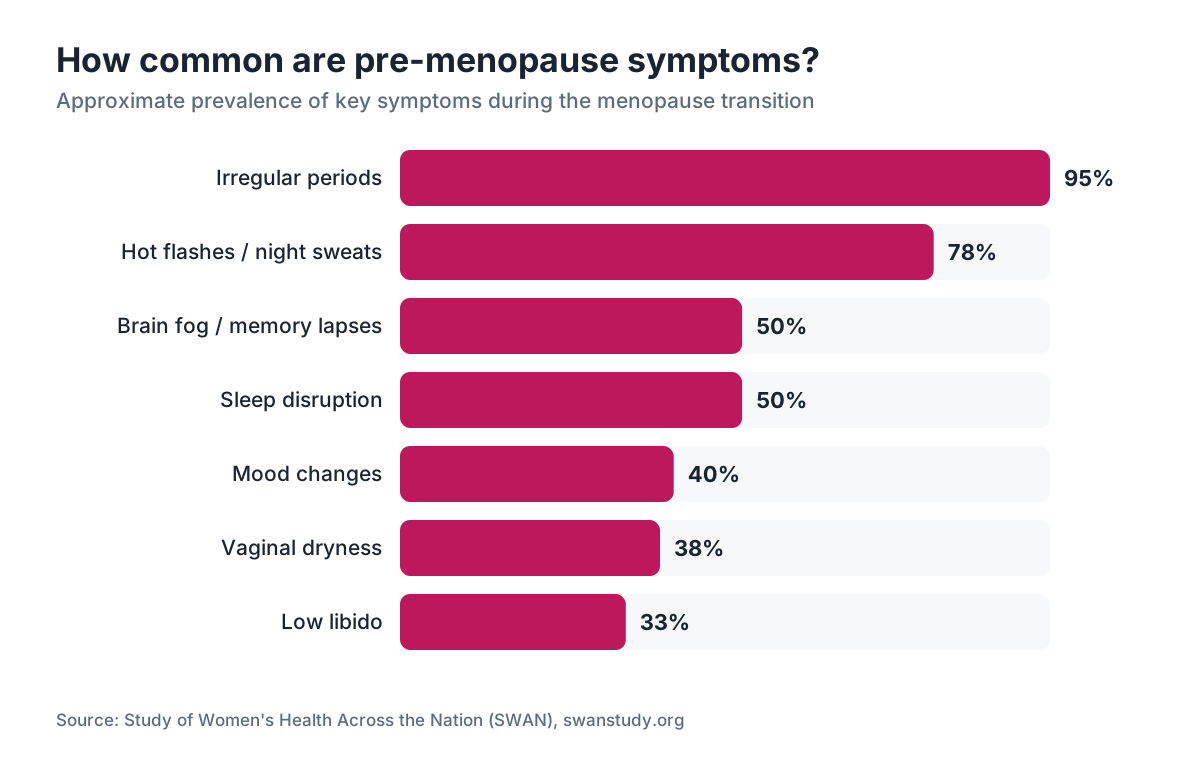
Here are the most reported symptoms, in rough order of frequency from SWAN data [4]:
| Symptom | Approximate prevalence during transition | |---|---| | Irregular periods | Nearly universal | | Hot flashes / night sweats | 75-80% of women | | Sleep disruption | 40-60% | | Mood changes (irritability, anxiety, low mood) | 30-50% | | Brain fog / memory lapses | 40-60% | | Vaginal dryness | 27-55%, worsens post-menopause | | Low libido | 20-45% | | Joint pain | Common but underreported | | Heart palpitations | Less common but distressing |
Not every woman gets all of these. Some glide through with mildly annoying cycles and little else. Others find the four to seven years genuinely disabling. There is no way to predict where you'll land, which is one reason the "just wait it out" advice is so useless.
Vaginal symptoms deserve their own note because they get left out so often. Genitourinary syndrome of menopause (GSM) affects roughly half of post-menopausal women and can begin during perimenopause [5]. Unlike hot flashes, GSM does not fade with time. It tends to get worse. It also responds well to low-dose vaginal estrogen, which carries minimal systemic absorption and is considered safe even for most women who can't use systemic hormone therapy [5].
Brain fog is the symptom that gets waved off most. "Just stressed." "Just tired." The cognitive changes during perimenopause are real. Research from SWAN found that verbal memory and processing speed both show measurable declines during the transition, with partial recovery afterward [4]. Knowing this is a neurological response to estrogen swings, not early dementia, matters enormously for women who are frightened by it.
How is pre-menopause diagnosed?
No single test says "you are in perimenopause." Diagnosis is clinical. It rests on your symptoms and your menstrual pattern, not a blood draw [1].
Labs can still help in specific situations. FSH (follicle-stimulating hormone) rises as ovarian reserve drops, but it swings so wildly during perimenopause that one high reading proves nothing. The Menopause Society does not recommend routine FSH testing to diagnose perimenopause in women over 45 who have the classic picture [1]. A high FSH in a 35-year-old with missed periods is a different story and warrants a full workup for premature ovarian insufficiency.
Estradiol can read low, normal, or high on any given day in early perimenopause. AMH (anti-Müllerian hormone) declines steadily with ovarian reserve and tracks where you are in the trajectory more reliably, but it isn't used for routine perimenopause diagnosis.
Thyroid function (TSH) is worth checking, because hypothyroidism throws off symptoms that overlap heavily with perimenopause: fatigue, weight gain, mood changes, irregular periods. Ruling it out is cheap and easy.
The STRAW+10 staging system (Stages of Reproductive Aging Workshop) is the research standard for placing a woman in the transition [2]. It uses menstrual cycle variability as the main marker. In the clinic, the rule of thumb is simpler: if you're over 40, your periods vary by more than seven days from your usual length, and you have symptoms, perimenopause is the most likely explanation.
How does pre-menopause affect your hormones?
In your 20s and 30s, your ovaries run a predictable monthly cycle: follicles get recruited, one dominant follicle is selected, ovulation happens, the corpus luteum forms. Estrogen and progesterone rise and fall in orderly fashion.
Starting in the late 30s, follicle quality and quantity fall. The ovaries need more FSH to push out a dominant follicle. Cycles can stay perfectly regular while this is happening, which is why you can be years into the transition before you notice a thing.
In early perimenopause, FSH climbs and estradiol turns erratic. You may see higher estrogen peaks than you did in your 30s, along with shorter follicular phases and sometimes no ovulation at all. No ovulation means no corpus luteum, which means no progesterone. This progesterone deficiency is often the first hormonal shift of perimenopause and explains the heavy, erratic periods and worsening premenstrual symptoms that hit in your 40s [6].
Later, in late perimenopause, estradiol falls more consistently, FSH climbs higher, and cycles stretch out and then stop. Testosterone declines too, though more gradually. Most of that decline happens in the 30s and early 40s, before the big estrogen shifts, which is part of why libido and energy can change before your periods do.
For how different estrogen delivery methods work with this changing picture, the estrogen patch and hormone replacement therapy articles cover the specifics. And if you want to understand what progesterone actually does as a neuroactive steroid, and not only as birth control, that piece is worth reading too.
Can pre-menopause cause weight gain, and why?
Yes. And it's about more than eating more or moving less, though those can contribute. The hormonal shift itself changes where and how your body stores fat.
Estrogen decides where fat lands. When estrogen is high, in the reproductive years, fat goes to the hips and thighs (gynoid pattern). As estrogen falls, fat moves toward the abdomen (android pattern) [7]. This shift happens even in women whose total weight holds steady. Visceral fat, the kind that packs around organs, is metabolically active and tied to higher cardiovascular and metabolic risk.
Sleep loss piles on. Chronic poor sleep raises cortisol, pushes up ghrelin (the hunger hormone), and lowers leptin (the fullness signal). If hot flashes wake you several times a night, your appetite and metabolism take the hit through that pathway as much as through hormones.
Insulin sensitivity drops during the transition on its own, separate from any weight gain [7]. Women who were metabolically healthy in their 30s may watch their fasting glucose or A1C creep up in their late 40s. This is real, and it's worth tracking.
GLP-1 receptor agonists like semaglutide are increasingly prescribed to perimenopausal and menopausal women because they hit both appetite and insulin sensitivity. If you're curious whether that class fits your situation, semaglutide for weight loss and semaglutide vs tirzepatide cover the clinical data in detail. WomenRx providers weigh whether a GLP-1 makes sense alongside hormone therapy, because those decisions interact.
What treatment options actually work for pre-menopause symptoms?
The menu is broader than most women realize, and the right combination depends on which symptoms are causing the most trouble.
Hormone therapy (HT) is the most effective treatment for hot flashes and night sweats, and it also protects bone and, when started within 10 years of menopause or before age 60, cardiovascular health [1]. The 2022 Menopause Society position statement puts it plainly: "Hormone therapy remains the most effective treatment for vasomotor symptoms and the genitourinary syndrome of menopause and has been shown to prevent bone loss and fracture" [1]. For most healthy women under 60 in perimenopause or early post-menopause, the benefits of HT outweigh the risks.
The Women's Health Initiative (WHI) scared a generation of women and doctors away from HT. Here's the context that got lost: WHI used older oral conjugated equine estrogen plus medroxyprogesterone acetate in women averaging 63 years old, many with existing cardiovascular risk. Modern HT uses lower doses, often a transdermal patch, and in many cases body-identical hormones (estradiol and micronized progesterone). The risk profile is not the same.
For women who can't or won't use HT, the evidence-backed non-hormonal options include:
- Fezolinetant (Veozah): an FDA-approved non-hormonal pill for moderate to severe hot flashes, cleared in 2023. It's a selective neurokinin B receptor antagonist that targets the hypothalamic pathway driving hot flashes [8].
- SSRIs and SNRIs: low-dose paroxetine is FDA-approved for hot flashes. Venlafaxine and escitalopram have good evidence too, though they're off-label for this.
- Gabapentin: modestly effective for hot flashes, particularly night sweats.
- Cognitive behavioral therapy (CBT): shown in multiple trials to cut the distress from hot flashes, even when it doesn't change their frequency.
For genitourinary symptoms specifically, low-dose vaginal estrogen (cream, ring, or tablet) works well and is not the same as systemic HT for risk purposes [5]. Ospemifene, an oral SERM, is another FDA-approved option for painful intercourse.
Lifestyle moves with real, if modest, evidence: aerobic exercise lowers hot flash severity, resistance training protects bone and muscle, alcohol reliably makes hot flashes worse, and losing excess weight eases the symptom load.
Nobody has good data on most supplements marketed for menopause. Black cohosh has the most study behind it and the most mixed results. Soy isoflavones may help a little with mild hot flashes in women who are equol producers (roughly 30-50% of Western women). For everything else, the evidence runs from weak to nonexistent. Save your money.
How does pre-menopause affect bone density?
Bone loss speeds up sharply in perimenopause and the first years after menopause. Women can lose 10 to 20% of bone density in the five to seven years surrounding the final period [9]. This is when the foundation for osteoporosis gets laid, even if the diagnosis doesn't arrive until decades later.
Estrogen's job in bone is direct. It quiets osteoclasts (the cells that break bone down) and supports osteoblasts (the cells that build it). When estrogen falls, the balance tips toward breakdown. Bone mineral density drops fastest during late perimenopause and the two to three years right after the final period.
The U.S. Preventive Services Task Force recommends bone density screening (DEXA scan) for all women 65 and older, and for younger postmenopausal women with risk factors [9]. If you're in your late 40s or early 50s with risk factors (low body weight, smoking, a family history of hip fracture, early menopause, long-term steroid use), ask about a baseline DEXA now. Our bone density test article covers what the scan involves and how to read your T-score.
Calcium and vitamin D are the foundation. The Bone Health and Osteoporosis Foundation recommends 1,200 mg of calcium a day (food plus supplement) and 800 to 1,000 IU of vitamin D for women over 50 [9]. Resistance exercise builds bone. HT, started inside the window, preserves it. If you're already osteoporotic, there are additional drug options (bisphosphonates, denosumab, teriparatide) that sit apart from HT.
Can you still get pregnant during pre-menopause?
Yes. This catches a lot of women off guard. Until you've gone 12 full consecutive months without a period, you have not reached menopause, and pregnancy is possible [1]. Perimenopausal cycles are irregular and ovulation is unpredictable, but it still happens.
The pregnancy rate drops steeply in the mid-to-late 40s, but it never hits zero. Women in their late 40s account for a small but real share of unintended pregnancies each year, partly because they assume the door has closed.
If you don't want to get pregnant, use contraception until you've confirmed 12 consecutive months without a period. Barrier methods, hormonal IUDs, and low-dose hormonal contraception are all on the table. Hormonal contraception in perimenopause can also tame heavy bleeding, ease hot flashes somewhat, and steady your cycle, though it will mask the natural pattern and make it harder to know where you are in the transition.
If you do want to get pregnant, the picture gets harder. Fertility falls sharply after 40 and more steeply after 43. Assisted reproduction with donor eggs has much higher success rates than IVF using your own eggs at this age. A reproductive endocrinologist is the right specialist for that conversation.
What should you track and monitor during pre-menopause?
Tracking your cycle is genuinely useful, and not only if you're trying to conceive. An app or even a plain spreadsheet noting the first day of your period, cycle length, flow, and notable symptoms gives you and your provider real data instead of vague impressions.
Blood work worth discussing with your doctor during this phase:
- TSH: rule out thyroid dysfunction
- Fasting lipids: cardiovascular risk climbs post-menopause, so set a baseline now
- Fasting glucose or A1C: insulin sensitivity shifts in perimenopause
- Vitamin D: deficiency is common and hits both bone and mood
- Blood pressure: rises with age and with the hormonal shift
FSH and estradiol can be checked if your provider finds them useful for context, but as covered above, a single reading rarely settles the perimenopause question in someone with a clear clinical picture.
Mammography timing under current guidelines (U.S. Preventive Services Task Force, 2024): average-risk women should start biennial screening mammography at 40 [10]. If you haven't started, perimenopause is a natural cue to get current with cancer screening across the board.
Blood pressure, cholesterol, sleep, exercise, and alcohol all matter more after 45 than they did before. The hormonal shift amplifies cardiovascular risk that estrogen used to buffer. This is the decade to build the habits that protect the next three or four.
When should you see a doctor about pre-menopause symptoms?
The honest answer: sooner than most women do. The average woman waits years before seeking help for menopause symptoms, according to The Menopause Society [1]. That's a long time to let broken sleep, mood changes, and cognitive fog chip away at your work, your relationships, and your health.
See a provider promptly if:
- Bleeding is very heavy (soaking through a pad or tampon hourly for several hours) or you're passing large clots. This warrants evaluation for fibroids, polyps, or endometrial changes, wherever you are in the transition.
- You have spotting or bleeding after sex.
- Cycles turn extremely irregular before age 40.
- Symptoms are hitting your quality of life, sleep, or work hard.
- You want to discuss hormone therapy or other treatments.
You don't need to wait for menopause to treat symptoms. Treatment can start during perimenopause. Starting HT earlier in the window (within 10 years of menopause onset) is tied to better cardiovascular and cognitive outcomes than starting later [6].
If your current provider brushes off your symptoms or tells you to "just deal with it," find someone with menopause training. The Menopause Society (formerly NAMS) keeps a database of certified menopause practitioners at menopause.org. Telehealth platforms like WomenRx focus on exactly this kind of care and can often see you faster than a traditional OB/GYN office.
For how the years after your last period differ from perimenopause, our menopause piece covers post-menopausal considerations in more depth.
Frequently asked questions
Is pre-menopause the same as perimenopause?
In everyday talk, yes, people use them interchangeably. Technically they differ. Perimenopause is the specific clinical term for the transitional phase (typically ages 45 to 52) when hormones turn erratic and symptoms appear. Pre-menopause technically covers your entire reproductive life before menopause. When someone says pre-menopause and means the symptomatic transition, they mean perimenopause.
What are the earliest signs of pre-menopause?
Cycle changes usually come first: shorter cycles (under 25 days), heavier or lighter flow, or periods that turn less predictable. Worsening PMS, especially irritability and breast tenderness, can arrive before the cycle changes. Some women notice sleep quality slipping and slower recovery after exercise before they connect it to hormones. These shifts can begin quietly in the late 30s.
How long does pre-menopause last?
The transition averages four to seven years, but the range is wide. Some women get only two or three years of it, while others have a decade of irregular cycles and symptoms before their final period. Genetics, especially your mother's timeline, and smoking are the strongest predictors. No reliable test can tell you how long your personal transition will run.
Can pre-menopause cause anxiety and depression?
Yes, and the link is hormonal more than situational. Estrogen influences the serotonin, dopamine, and GABA systems, so fluctuating estrogen destabilizes mood regulation. Women with a history of premenstrual dysphoric disorder or postpartum depression face higher risk of significant mood changes in perimenopause. The Menopause Society treats mood disturbance as a core menopausal symptom, though it can coexist with clinical depression.
What blood tests diagnose pre-menopause?
There is no single diagnostic blood test. The Menopause Society does not recommend routine FSH testing to confirm perimenopause in women over 45 with classic symptoms, because FSH swings too much to be reliable. TSH is worth checking to rule out thyroid overlap. If you're under 40 with symptoms, FSH, estradiol, and AMH testing make sense to evaluate for premature ovarian insufficiency. Diagnosis is mainly clinical.
Does hormone therapy help with pre-menopause symptoms?
Yes, and it's the most effective option available. The Menopause Society states hormone therapy is the most effective treatment for hot flashes and night sweats, and it also protects bone. For women under 60 or within 10 years of menopause onset with no contraindications, the benefits generally outweigh the risks. Modern HT using transdermal estradiol and micronized progesterone has a different risk profile than the older formulations studied in the WHI.
Can pre-menopause start at 35?
Typical perimenopause starts around 47, so 35 is early. That said, some hormonal changes, particularly progesterone dropping relative to estrogen, can begin in the late 30s and cause real symptoms. If you're 35 to 40 with irregular periods and menopausal-type symptoms, you need evaluation for premature ovarian insufficiency, which affects about 1% of women under 40 and carries distinct health implications beyond symptom relief.
How do I know if my irregular periods are pre-menopause or something else?
Age matters most. If you're over 45 with progressively irregular cycles and classic symptoms like hot flashes or broken sleep, perimenopause is the likely cause. At any age, very heavy bleeding or bleeding after sex warrants evaluation for structural causes (fibroids, polyps) or endometrial pathology. Thyroid dysfunction and elevated prolactin also cause irregular cycles at any age and are easy to rule out with bloodwork.
What lifestyle changes help with pre-menopause symptoms?
Aerobic exercise lowers hot flash severity in multiple trials. Resistance training protects bone and muscle, both of which decline in this phase. Cutting alcohol helps, since it reliably worsens hot flashes and sleep. Cooling sleep strategies (lower room temperature, moisture-wicking bedding) are simple and genuinely effective for night sweats. CBT and mindfulness reduce hot flash distress even when they don't reduce frequency.
Does pre-menopause affect heart health?
Yes. Estrogen has cardioprotective effects: it supports favorable lipids, vascular flexibility, and insulin sensitivity. As estrogen falls in perimenopause, LDL tends to rise, HDL may drop, blood pressure often climbs, and visceral fat builds. Those shifts explain why cardiovascular disease rates in women rise sharply after menopause. That's why ages 45 to 55 are the right time to set baseline lipids, blood pressure, and glucose tracking.
Can GLP-1 medications like semaglutide help with menopause-related weight gain?
GLP-1 receptor agonists address the metabolic shifts of perimenopause by cutting appetite and improving insulin sensitivity. They don't treat hormonal symptoms like hot flashes directly. Combining declining estrogen with GLP-1 therapy is an active area of clinical interest. Whether semaglutide or tirzepatide fits depends on your metabolic health, your symptoms, and your other medications. A provider who understands both hormone therapy and GLP-1s should make that call.
Is vaginal dryness part of pre-menopause?
It can start in perimenopause but is more common and more severe after menopause. Genitourinary syndrome of menopause (GSM) covers vaginal dryness, thinning, and reduced lubrication. Unlike hot flashes, GSM does not resolve on its own over time. It typically gets worse without treatment. Low-dose vaginal estrogen works well, has minimal systemic absorption, and is considered safe for most women, including many who can't use systemic hormone therapy.
How is pre-menopause different from menopause?
Menopause is a single point in time: 12 consecutive months without a period. Pre-menopause (or perimenopause) is the transitional phase leading up to it, when hormones fluctuate and symptoms are often most intense. Post-menopause is everything after. Most women find symptoms peak in late perimenopause and the first one to two years after menopause, then ease, though genitourinary symptoms are the exception and tend to worsen without treatment.
What is the difference between pre-menopause and premature menopause?
Premature menopause, also called premature ovarian insufficiency (POI), means menopause before age 40. Perimenopause that begins in the early to mid-40s is called early menopause (before 45), not premature. POI affects about 1% of women and can stem from genetic factors, autoimmune conditions, or cancer treatment. It carries higher long-term risks for bone loss and heart disease, and hormone therapy is generally recommended until the average age of natural menopause.
Sources
- The Menopause Society (NAMS), 2022 Hormone Therapy Position Statement
- Harlow SD et al., Executive Summary of the Stages of Reproductive Aging Workshop +10 (STRAW+10), Menopause 2012
- National Institutes of Health, Eunice Kennedy Shriver NICHD, Primary Ovarian Insufficiency
- Study of Women's Health Across the Nation (SWAN), overview and findings
- American College of Obstetricians and Gynecologists (ACOG), Practice Bulletin on Genitourinary Syndrome of Menopause
- Endocrine Society, Menopause and Hormone Replacement Clinical Practice Guideline
- Lovejoy JC et al., Increased visceral fat and decreased energy expenditure during the menopausal transition, International Journal of Obesity, 2008
- U.S. Food and Drug Administration, Veozah (fezolinetant) Approval, May 2023
- U.S. Preventive Services Task Force, Osteoporosis to Prevent Fractures Screening Recommendation, 2018; Bone Health and Osteoporosis Foundation calcium and vitamin D guidance
- U.S. Preventive Services Task Force, Breast Cancer Screening Recommendation, 2024