Pre-menopausal symptoms, hormones, and what to do about them
TL;DR: Pre-menopausal means the reproductive years before perimenopause begins, usually up to the mid-to-late 30s or early 40s. Hormones start shifting before classic menopause symptoms show up: progesterone drops first, causing irregular cycles, worse PMS, sleep problems, and abdominal weight gain. Recognizing these early signals gets you the right testing and treatment before symptoms harden into something tougher to manage.
What does pre-menopausal actually mean?
The term gets used loosely, so let's be precise. Pre-menopausal means the stretch of life before any menopausal transition has started. Your cycles are still regular, your ovaries are working, and estrogen and progesterone rise and fall in their normal monthly rhythm. Most women in their 20s and early-to-mid 30s are here.
The confusion comes from "pre-menopausal" getting swapped with "perimenopausal" in everyday talk and even in some clinical notes. They are not the same thing. Perimenopause is the transition stage where hormones start swinging erratically, cycles turn irregular, and symptoms like hot flashes and broken sleep show up. The North American Menopause Society (NAMS) defines perimenopause as beginning when menstrual cycles become irregular and ending 12 months after the final period [1].
Why does the distinction matter? Because if you're 38 and something feels off, knowing whether you're still pre-menopausal or already sliding into perimenopause changes what testing makes sense and what actually helps. A 38-year-old with heavy, irregular periods and mood swings may be early in the perimenopausal transition, more than having a rough couple of cycles.
Some clinicians use "pre-menopausal" to mean any woman who hasn't reached menopause, including women deep in perimenopause. When your doctor says it, ask exactly what they mean.
What are the symptoms of pre-menopausal hormonal changes?
This is where it gets clinically interesting. Hormones aren't static even before the classic transition begins. Progesterone tends to fall first, often starting in the mid-30s, while estrogen swings more wildly before it eventually drops [2]. That gap between falling progesterone and still-high estrogen creates a state some call estrogen dominance, though endocrinologists argue about the phrase.
Symptoms women report in this phase:
- Heavier or more painful periods than before
- Shorter cycles (a 28-day cycle creeping toward 24 or 25 days)
- Worse PMS, especially anxiety and irritability in the luteal phase
- New or worsening migraines, often timed to the cycle
- Sleep problems, particularly waking at 3 or 4 a.m.
- Brain fog, especially the week before a period
- Weight gain around the abdomen with no change in diet
- Breast tenderness in the week before a period
- Low libido
No single symptom is diagnostic. Heavy periods can be fibroids. Anxiety can be your job. But a cluster of cycle-timed symptoms in a woman in her late 30s to early 40s is a signal worth chasing down, not brushing off.
The SWAN study (Study of Women's Health Across the Nation), an NIH-funded project following over 3,000 women through midlife, found that sleep disruption and depressive symptoms often show up several years before the first irregular cycle [3]. Here's the part most women never hear from their doctors: symptoms can arrive before any hormone change shows up on a standard lab panel.
For how this unfolds as the transition deepens, see our guide to perimenopause age.
At what age do pre-menopausal hormonal changes begin?
Menopause itself (the final menstrual period) lands at a median age of 51 in the United States [4]. Perimenopause usually starts 4 to 8 years before that, so the transition often begins in the mid-to-late 40s. But the hormonal shifts you'd call pre-menopausal can start well before then.
Progesterone output from the corpus luteum begins dropping measurably in the mid-30s. Ovarian reserve, measured by anti-Müllerian hormone (AMH), declines steadily from around age 32 [5]. FSH (follicle-stimulating hormone) starts trending up as the ovaries get less responsive. These changes creep in slowly, over years, which is exactly why symptoms get blamed on stress, bad sleep, or just getting older.
Early menopause (before age 45) affects roughly 5% of women. Premature ovarian insufficiency (POI), once called premature ovarian failure, happens before age 40 and affects about 1% of women [6]. If you're under 40 with real cycle changes, rule that out with specific testing rather than writing it off as perimenopause.
For where your age sits in the bigger timeline, see when does menopause start and menopause age.
How do you test for pre-menopausal hormonal shifts?
Standard hormone panels have real limits here, and that's worth knowing before you spend money on them. FSH and estradiol on a single day give you a snapshot, not a movie. Hormones swing so much across the cycle and day-to-day during the transition that one normal FSH doesn't mean your ovaries aren't starting to struggle.
Still, here's what's useful:
FSH (follicle-stimulating hormone): Drawn on cycle day 2 or 3. An FSH consistently above 10 IU/L suggests declining ovarian reserve; above 25 IU/L points to the menopausal transition. One normal result doesn't rule out perimenopause.
Estradiol (E2): Also drawn on cycle day 2 or 3. An estradiol below 50 pg/mL in the early follicular phase alongside a high FSH is meaningful.
AMH (anti-Müllerian hormone): Steadier across the cycle than FSH or estradiol, so any day works. Low AMH means diminished ovarian reserve. It's not a menopause test, but it puts your trajectory in context.
Progesterone: Drawn on cycle day 21 (or 7 days after ovulation if your cycle is irregular). Below 5 to 10 ng/mL suggests luteal phase insufficiency.
TSH: Always rule out thyroid trouble. Hypothyroidism causes heavy periods, fatigue, and brain fog that mirror pre-menopausal symptoms almost exactly.
NAMS guidance stresses that perimenopause is diagnosed clinically, from symptom history and menstrual pattern, not from a single lab value [1]. Labs help confirm and rule out other causes. They don't replace a real conversation with a clinician who understands the transition.
See our overview of hormone replacement therapy if you're already weighing treatment.
Does progesterone decline before estrogen, and why does that matter?
Yes, and it's one of the most underappreciated facts about the pre-menopausal phase. Progesterone usually starts declining in the 30s, driven by more anovulatory cycles (cycles where ovulation doesn't happen). No ovulation means no corpus luteum, which means no progesterone surge in the second half of the cycle.
Estrogen, oddly, can spike erratically during perimenopause before it finally falls. Rising FSH pushes the follicles harder, and those follicles pump out more estrogen than usual. So you can have relative estrogen excess paired with falling progesterone. That combination drives the amplified PMS, breast tenderness, and heavy bleeding many women notice in their late 30s and early 40s.
This matters for treatment. A woman with these symptoms who still has regular cycles but low progesterone may do well on progesterone support in the luteal phase. Our progesterone article covers what the research says about using it at this stage, including the difference between bioidentical oral micronized progesterone and synthetic progestins.
Estrogen eventually falls as ovarian function drops off more sharply, usually in late perimenopause and after menopause. By then symptoms shift toward hot flashes, vaginal dryness, and bone loss.
What causes weight gain in pre-menopausal women?
Weight gain in the pre-menopausal and perimenopausal years is real and has a physiological basis beyond eating more or moving less, though those still matter. The mechanisms stack on top of each other.
Falling progesterone relative to estrogen affects insulin sensitivity. Estrogen shapes where fat gets stored, and as it turns erratic, fat shifts toward the abdomen faster. Cortisol hits harder when ovarian hormones run low. And sleep disruption, which starts early in the transition, worsens insulin resistance on its own.
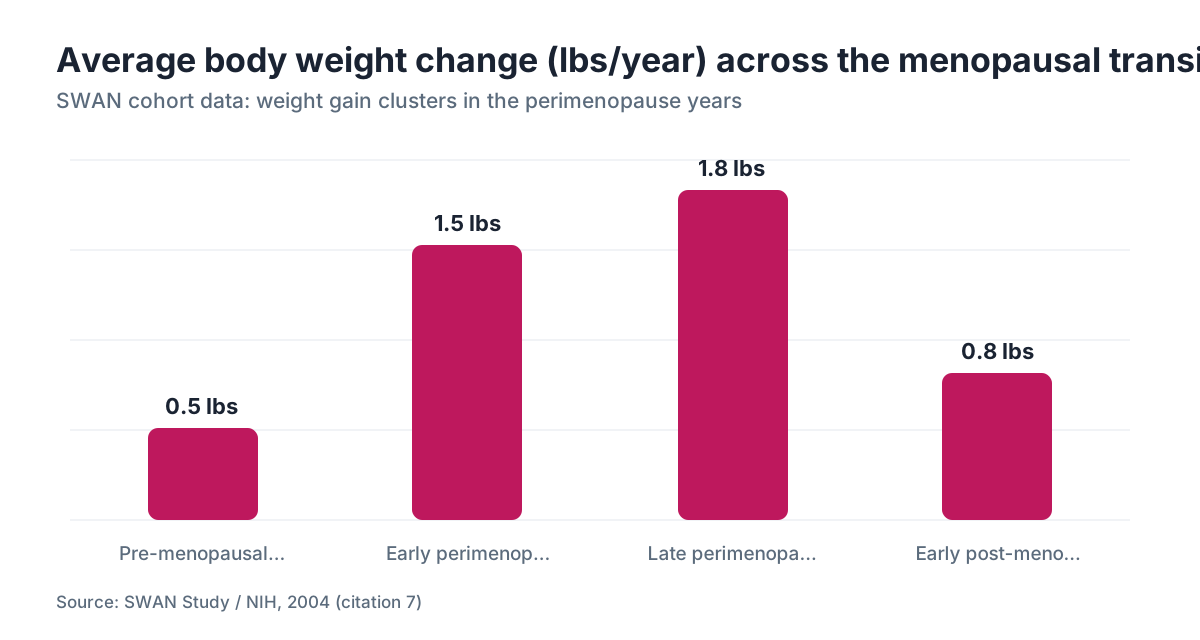
The SWAN study found women gained an average of 1.5 pounds per year during the menopausal transition, with the biggest gains clustered in the perimenopause years [7]. The gain isn't linear. It bunches up around the times of fastest hormonal change.
For women whose weight gain is significant and not budging with lifestyle changes, GLP-1 receptor agonists (semaglutide, tirzepatide) have real evidence in this age range. The STEP 1 trial showed a mean weight loss of 14.9% with semaglutide 2.4 mg over 68 weeks [8]. The SURMOUNT-1 trial showed tirzepatide reaching up to 22.5% mean weight loss at the highest dose [9]. These aren't menopause-specific studies, but women aged 40 to 55 were included.
Hormonal approaches and GLP-1s can work together. Restoring estrogen may help the fat redistribution; a GLP-1 addresses appetite and insulin signaling. If you're considering both, WomenRx offers evaluations that look at hormones and metabolic health together. Our semaglutide for weight loss article has the full evidence breakdown.
Still deciding? See semaglutide vs tirzepatide.
How does pre-menopausal hormonal change affect mood and mental health?
This is the symptom women get told isn't hormonal. It usually is.
Estrogen acts directly on serotonin, dopamine, and norepinephrine systems. As estrogen swings, those systems get shaky. Women with a history of premenstrual dysphoric disorder (PMDD) or postpartum depression carry a higher risk of significant mood symptoms during perimenopause, which points to a shared sensitivity to hormonal change rather than coincidence [2].
Depressive symptoms that are new, cycle-timed, or worse in the second half of the cycle deserve a hormonal workup alongside a mental health assessment. An SSRI without addressing the hormonal driver may give partial relief but miss the root cause for some women.
Anxiety in particular tends to spike in the late luteal phase (the week before a period) as progesterone metabolites that normally calm the brain through GABA drop off sharply. This pattern, sometimes called late luteal dysphoria, is worth tracking across several cycles. An app or a paper diary logging symptoms by cycle day makes the pattern obvious in a way that trying to remember it in a rushed doctor's visit never does.
Sleep disruption piles onto mood. Even without hot flashes, women in early perimenopause often report waking in the small hours. That's no accident. Progesterone promotes sleep, and its decline scrambles sleep architecture before any classic menopausal symptom shows up.
What's the difference between pre-menopausal and perimenopausal?
Pre-menopausal: cycles are regular, ovarian function is still within normal range, no consistent menopausal symptoms.
Perimenopausal: the transition has started. That means cycle irregularity (varying by 7 days or more from your usual pattern in the early stage, or skipping cycles in the late stage), emerging vasomotor symptoms (hot flashes, night sweats), and rising FSH. The Stages of Reproductive Aging Workshop (STRAW+10) staging system is the clinical standard for defining these stages [10].
STRAW+10 uses menstrual cycle variability as the main marker, not lab values. Early perimenopause is marked by a persistent cycle length difference of 7 or more days. Late perimenopause is marked by gaps of 60 days or more between periods.
For many women the shift from pre-menopausal to early perimenopausal happens so gradually there's no clear moment. Cycles get a few days shorter. PMS gets worse. Sleep turns lighter. Then one month the cycle runs 35 days instead of 28. That's the signal.
Our full menopause guide covers every stage, from perimenopause through post-menopause.
Should pre-menopausal women start hormone therapy?
It depends on whether symptoms are present and what's driving them. For a woman who is truly pre-menopausal with regular cycles and mild symptoms, systemic hormone replacement therapy (HRT) is generally not indicated. The hormones are still there. The goal is to address specific deficiencies rather than replace the whole system.
For luteal phase progesterone deficiency specifically, cyclic low-dose progesterone (typically oral micronized progesterone 100 to 200 mg on cycle days 14 to 28) can ease PMS, improve sleep, and lighten heavy bleeding. That's a different thing from systemic HRT.
For women in perimenopause with significant symptoms, the evidence for HRT is strong. NAMS states in its 2022 position statement that "for women younger than 60 years or who are within 10 years of menopause onset and have no contraindications, the benefit-risk ratio is favorable for treatment of bothersome VMS" [1].
The old fear that HRT causes breast cancer came largely from the 2002 Women's Health Initiative study, which used oral conjugated equine estrogen and synthetic progestins in women who were already postmenopausal (average age 63). That data doesn't map cleanly onto a 45-year-old using transdermal estradiol and micronized progesterone. The evidence base has moved a lot in the past decade.
If you're thinking about an estrogen patch or another transdermal option, that article explains the pharmacology and how it differs from oral forms.
A telehealth evaluation with a thorough symptom history and the right labs is a reasonable starting point. WomenRx clinicians work with women across this exact transition, from symptomatic pre-menopausal shifts through full perimenopause.
What lifestyle changes actually help pre-menopausal symptoms?
Lifestyle gets treated like a consolation prize when hormones are the real issue. But some of these have real physiological mechanisms.
Strength training is the highest-yield move in this age range. Muscle is metabolically active and improves insulin sensitivity. It protects bone density, which starts declining meaningfully in perimenopause. A 2019 study in Menopause found resistance exercise significantly reduced vasomotor symptoms and improved sleep quality in postmenopausal women [11]. If you're not lifting yet, starting in your late 30s or early 40s beats starting after menopause by a wide margin.
Sleep hygiene matters beyond the cliche. Specifically, holding a consistent wake time (not bedtime, wake time) anchors your circadian rhythm in a way that helps normalize cortisol and growth hormone, both of which feed into hormonal balance.
Alcohol suppresses progesterone, wrecks sleep architecture, and nudges estrogen up. The dose-response is real: even 1 to 2 drinks a day can worsen luteal phase symptoms in sensitive women.
Dietary protein in the range of 1.2 to 1.6 grams per kilogram of body weight per day preserves lean mass during the years when hormones favor fat storage. This isn't a bikini-diet goal. It's protecting metabolic health through a vulnerable decade.
A bone density test is worth raising with your doctor if you have risk factors (family history, low BMI, smoking history, long-term corticosteroid use, or early onset of symptoms). See our bone density test guide for what to expect and when guidelines recommend it.
What tests and screening should pre-menopausal women prioritize?
Women in the pre-menopausal years fall into a gap: too young for routine menopause screening, but living with symptoms nobody's pinning on hormones. Here's what to ask about:
Annual or biennial labs: TSH, fasting glucose (or HbA1c), lipid panel. Insulin resistance starts climbing in the late perimenopause years and often goes unnoticed until it's frank pre-diabetes.
Hormone panel: If you have cycle-timed symptoms, a day 2-3 FSH/estradiol plus a day 21 progesterone gives a starting picture. Add AMH if you want a sense of your ovarian reserve trajectory.
Blood pressure: Cardiovascular risk climbs after menopause, partly because estrogen protects the vasculature. A baseline while you're still pre-menopausal is useful.
Bone density (DEXA): The U.S. Preventive Services Task Force recommends screening for all women 65 and older, and for postmenopausal women under 65 with risk factors [12]. If you have early perimenopause or risk factors like low BMI or a family history of osteoporosis, discussing earlier screening with your doctor is reasonable.
Cervical and breast screening: Standard guidelines apply (Pap every 3 years for ages 21 to 65, or every 5 years with HPV co-testing; mammography starting at 40 to 50 depending on which society's guidelines your doctor follows).
The table below matches common pre-menopausal symptoms to their most likely hormonal drivers, so you can have a sharper conversation at your next appointment.
Pre-menopausal symptoms vs. perimenopausal symptoms: what's the difference in practice?
The symptom lists overlap, but certain patterns cluster in each phase:
| Symptom | More common pre-menopausal | More common perimenopausal | |---|---|---| | Heavy periods | Yes (progesterone decline, fibroids) | Less so (cycles lighten before stopping) | | PMS worsening | Yes | Yes, often severe in early perimenopause | | Shorter cycles | Yes (early sign) | Yes (then lengthening) | | Hot flashes / night sweats | Rare | Common (60-80% of women) | | Vaginal dryness | Rare | Common | | Brain fog | Sometimes, cycle-timed | Persistent, not only cycle-timed | | Sleep disruption | Often luteal phase only | More chronic | | Mood changes | Often premenstrual | More pervasive |
The clinical picture moves from cyclical and premenstrual toward pervasive and less cycle-dependent as the transition deepens. Tracking symptoms by cycle day for 2 to 3 months is the fastest way to see which pattern you're in.
If most of your symptoms cluster in the 7 to 10 days before your period and clear when you bleed, you're likely in the pre-menopausal or early perimenopausal phase. If symptoms hang around most of the month, you've probably moved further into the transition.
Frequently asked questions
Can you have pre-menopausal symptoms in your 30s?
Yes. Progesterone begins declining in the mid-30s and ovarian reserve drops steadily from around age 32. Women in their late 30s can get worsening PMS, heavier periods, disrupted sleep, and mood shifts that are hormonally driven, even with regular cycles. These are pre-menopausal hormonal changes, not yet perimenopause, but they're real and worth evaluating with the right lab work.
What is the difference between pre-menopausal and peri-menopausal?
Pre-menopausal means cycles are still regular and no menopausal transition has started. Perimenopausal means it's underway: cycles turn irregular (varying by 7 or more days from your usual pattern), FSH rises, and symptoms like hot flashes and night sweats appear. The STRAW+10 staging system defines these stages by menstrual pattern, not by a single lab value or age.
How do I know if my symptoms are hormonal or something else?
Track symptoms by cycle day for 2 to 3 months. If they cluster in the 7 to 10 days before your period and clear with bleeding, that's a strong signal of hormonal origin. A day 2-3 FSH and estradiol, a day 21 progesterone, and a TSH to rule out thyroid dysfunction (which mimics hormonal symptoms almost perfectly) round out the picture. A clinician who knows the transition will read these alongside your history.
Is weight gain normal before menopause?
Yes, and it has a physiological basis. The SWAN study found women gain an average of 1.5 pounds per year during the menopausal transition. Declining progesterone and erratic estrogen affect insulin sensitivity and fat distribution, pushing weight toward the abdomen. Lifestyle changes help, but they work against a hormonal headwind. GLP-1 medications and hormone therapy are both evidence-based options depending on your profile.
Can pre-menopausal hormone changes cause anxiety and depression?
Yes. Estrogen modulates serotonin and dopamine systems, and progesterone metabolites have GABA-like calming effects. As these hormones swing, mood and anxiety can destabilize. Women with prior PMDD or postpartum depression are especially vulnerable. New or worsening cycle-timed anxiety or depression in the late 30s to 40s deserves a hormonal evaluation alongside a mental health assessment, not an SSRI prescription alone.
Do pre-menopausal women need a bone density test?
Routine DEXA screening starts at age 65, or earlier for postmenopausal women with risk factors, per U.S. Preventive Services Task Force guidelines. If you have early onset of menopausal symptoms, low BMI, a family history of osteoporosis, long-term corticosteroid use, or other risk factors, discussing earlier screening with your doctor is reasonable. Bone loss speeds up during the perimenopausal transition, so an early baseline has value.
What blood tests check for pre-menopausal hormonal changes?
The most useful panel: FSH and estradiol on cycle day 2-3, progesterone on cycle day 21, AMH (any cycle day), and TSH to rule out thyroid issues. No single result is definitive. A normal FSH doesn't rule out early perimenopause. NAMS guidance says the diagnosis is primarily clinical, based on symptom pattern and menstrual history, with labs used to support or exclude other causes.
Can you get pregnant if you're pre-menopausal?
Yes. Pre-menopausal women are still ovulating and can conceive. Irregular cycles in early perimenopause don't mean infertility; ovulation still happens, just less predictably. Women are considered to need contraception until 12 consecutive months without a period (menopause). Assuming irregular cycles mean you can't get pregnant is a common and sometimes costly mistake.
Does HRT help pre-menopausal symptoms?
For women with regular cycles and symptoms like luteal phase mood changes and heavy periods, low-dose cyclic progesterone is often more appropriate than full systemic HRT. For women who have entered perimenopause with significant vasomotor symptoms, NAMS states the benefit-risk ratio for HRT is favorable in women under 60 who are within 10 years of menopause onset. The right approach depends on staging and symptoms.
What lifestyle changes help the most with pre-menopausal symptoms?
Resistance training is the highest-yield move: it improves insulin sensitivity, protects bone, and reduces vasomotor symptoms per a Menopause journal study. Consistent wake times stabilize cortisol and growth hormone. Cutting alcohol removes its suppressive effect on progesterone. Dietary protein at 1.2 to 1.6 g per kilogram of body weight preserves lean mass during years when hormones favor fat storage.
Are GLP-1 medications like semaglutide appropriate for pre-menopausal women with weight gain?
GLP-1s are an evidence-based option when lifestyle changes haven't been enough. The STEP 1 trial showed 14.9% mean weight loss with semaglutide 2.4 mg over 68 weeks; SURMOUNT-1 showed up to 22.5% with tirzepatide. Both trials included women aged 40 to 55. GLP-1s target the insulin resistance component of perimenopausal weight gain. They can be used alongside hormone therapy under medical supervision.
How long do pre-menopausal hormonal symptoms last before menopause?
The perimenopausal transition averages 4 to 8 years before the final period, though the range is wide: some women transition in 2 years, others take 10. Symptoms can start before the transition is clinically obvious, sometimes years earlier. The SWAN study showed sleep and mood symptoms often precede the first irregular cycle. Total duration from earliest signs to post-menopause stability varies a lot by individual.
Is it possible to have pre-menopausal symptoms but still have regular periods?
Yes. Regular periods don't mean hormone levels are optimal. Progesterone can run low in the luteal phase even with regular cycles, driving amplified PMS, sleep problems, and mood changes. AMH may be falling. FSH may be trending up at the high end of normal. Symptoms often precede measurable cycle irregularity by several years, which is why symptom history matters more than cycle regularity alone.
Sources
- North American Menopause Society (NAMS), 2022 Hormone Therapy Position Statement
- Freeman EW, Sammel MD et al., Psychiatric symptoms in perimenopausal women, Menopause 2004
- NIH, Study of Women's Health Across the Nation (SWAN)
- NIH National Institute on Aging, What is Menopause?
- Endocrine Society, Female Reproductive Aging and Ovarian Reserve
- NIH Eunice Kennedy Shriver NICHD, Premature Ovarian Insufficiency
- Sternfeld B et al., SWAN study, Physical activity and changes in weight and waist circumference in midlife women, Menopause 2004
- Wilding JPH et al., STEP 1 trial, Once-Weekly Semaglutide in Adults with Overweight or Obesity, NEJM 2021
- Jastreboff AM et al., SURMOUNT-1 trial, Tirzepatide Once Weekly for the Treatment of Obesity, NEJM 2022
- Harlow SD et al., STRAW+10 staging system, Menopause 2012
- Berin E et al., Resistance training for hot flushes in postmenopausal women, Menopause 2019
- U.S. Preventive Services Task Force, Osteoporosis to Prevent Fractures: Screening, 2018