Post menopause symptoms: what actually happens after your last period
TL;DR: Post menopause starts 12 months after your final period and lasts the rest of your life. The most common symptoms are hot flashes, vaginal dryness, sleep disruption, bone loss, and mood changes. Plenty of women still have significant symptoms at 60. Hormone therapy, non-hormonal drugs, and lifestyle changes each have real evidence behind them.
What is post menopause, exactly?
Post menopause starts on the day that marks 12 full months since your last period. Before that anniversary you are in menopause (or, for most of the lead-up, perimenopause). After it, you are postmenopausal for good. No going back, no second transition, no reset.
The average age at that 12-month mark in the United States is 51. The normal range runs from 45 to 58 [1]. If your periods stopped because of surgery, chemotherapy, or pelvic radiation, the biology is the same but the onset can arrive much earlier and much faster, often without the years of perimenopausal cushioning.
Estrogen and progesterone do not simply drop and hold flat. In the first few postmenopausal years, estrogen keeps falling. By around 60, most women settle into a low but relatively stable hormonal baseline, though symptoms do not always settle with it. Some women have their worst hot flashes in their late 50s and early 60s, not in their 40s [2].
How you got here matters. The path through perimenopause age and when does menopause start shapes your risk, because the earlier you reach menopause, the longer you spend postmenopausal, and the higher your odds of downstream effects like osteoporosis and heart disease.
What are the most common post menopause symptoms?
The symptom list is long, and some of it surprises women who assumed hot flashes were the whole story. Here is what the research and clinical experience actually confirm.
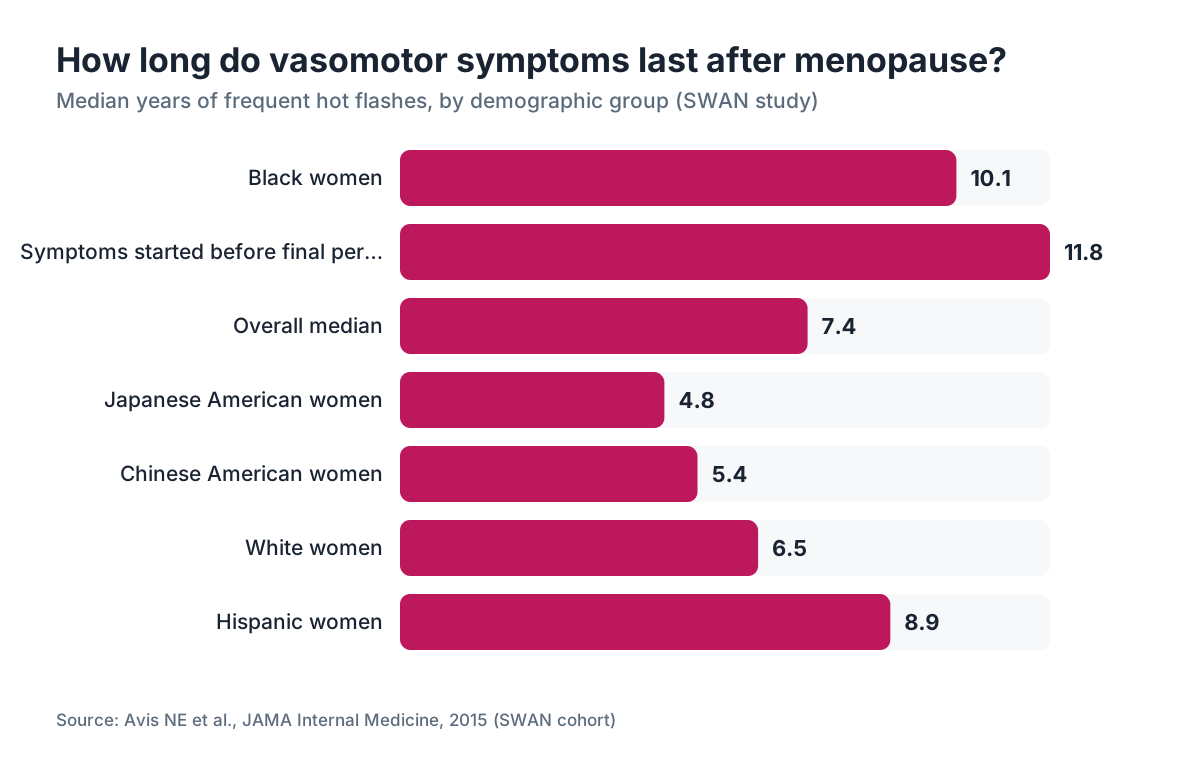
Vasomotor symptoms (hot flashes and night sweats). These are the headliners, and they last longer than most people expect. The Study of Women's Health Across the Nation (SWAN) found the median total duration of frequent vasomotor symptoms is 7.4 years, and for women whose symptoms start before their final period the median is 11.8 years [2]. Roughly 42% of women in the SWAN cohort still had hot flashes more than 10 years after their final period.
Genitourinary syndrome of menopause (GSM). This replaced the older term "vaginal atrophy" because it captures the full picture: vaginal dryness, burning, pain with sex, urinary urgency, recurrent UTIs, and changes to the vulvar tissue. Unlike hot flashes, GSM does not improve on its own. It gets worse without treatment. The North American Menopause Society (NAMS) estimates that about 50% of postmenopausal women have GSM symptoms bad enough to affect quality of life, and fewer than a quarter ever raise it with a provider [3].
Sleep disruption. Often tangled up with night sweats, but also its own problem. Low estrogen changes the architecture of sleep directly, cutting slow-wave sleep. Postmenopausal women have higher rates of insomnia, earlier morning waking, and more frequent awakenings than premenopausal women of the same age.
Mood changes, anxiety, and brain fog. Estrogen tunes serotonin and dopamine signaling. After menopause, some women develop new depressive symptoms, irritability, or anxiety even with no history of a mood disorder. Others notice word-finding trouble or memory lapses that can be alarming. Most cognitive symptoms ease as the brain adapts to lower estrogen, though the timeline is personal.
Joint pain and muscle loss. Joint stiffness and aching get reported by more than half of postmenopausal women in population surveys, and they are often blamed on anything but menopause. Estrogen has anti-inflammatory effects in joint tissue. Muscle mass also declines faster after menopause, partly because estrogen supported muscle protein synthesis.
Weight gain and metabolic shift. The typical pattern is fat moving from hips and thighs to the abdomen, even with no rise in calories eaten. Insulin sensitivity drops. Total cholesterol climbs, LDL climbs, and HDL tends to fall. The cardiovascular risk profile changes in a way you can measure.
Skin and hair changes. Skin collagen is partly estrogen-dependent. Postmenopausal women lose roughly 30% of skin collagen in the first five years, then about 2% per year after that [4]. Scalp hair may thin. Facial and body hair may increase as androgens gain relative ground.
Bone loss. This is the quietest and most consequential long-term effect. In the first 5 to 7 years after menopause, women can lose 2 to 3% of bone mineral density per year [5]. After that the pace slows but never stops. By age 65, every woman should have had a bone density test (a DEXA scan), and women with early menopause or other risk factors should test sooner.
How do post menopause symptoms change at age 60 and beyond?
It depends on the woman, and the honest answer is less cheerful than most people hope. Some symptoms ease. Others get worse the longer you go without estrogen.
For many women, acute hot flash intensity peaks in perimenopause and the early postmenopausal years, then softens. Sleep sometimes improves once the night sweats calm down. Mood tends to steady as the hormonal turbulence of the transition passes.
But GSM is the clear counterexample. The lower estrogen goes and the longer tissue goes without it, the more thinning, dryness, and urinary trouble stack up. Joint pain and osteoporosis risk compound every year. Cardiovascular risk keeps climbing after menopause because estrogen's protective effects on lipids, blood pressure, and vascular tone are gone.
For Black women, the picture deserves attention. SWAN data show Black women have more frequent and more persistent vasomotor symptoms than white women, with hot flashes lasting longer on average and rated as more bothersome [2]. Hispanic and Japanese American women in SWAN had fewer vasomotor symptoms on average. Symptom burden is not the same across groups.
Women who had surgical menopause before 45 often have more severe symptoms at 60 than women who reached menopause naturally, because their cumulative estrogen deficit is larger and their bone and cardiovascular risk sits higher. If that describes you, a conversation about hormone replacement therapy is worth having, regardless of age.
Here is a trap. Post menopause symptoms at 60 get misfiled as normal aging, by patients and clinicians both. Brain fog gets chalked up to getting older. Joint pain gets blamed on arthritis. Urinary urgency gets treated with a bladder drug instead of local estrogen. Naming the hormonal component does not mean hormones are always the answer. It means the diagnosis is right.
What does hormone therapy actually do for post menopause symptoms?
Hormone therapy (HT) is the most effective treatment there is for vasomotor symptoms and GSM. That is not a marketing line. It is the stated position of NAMS, the Endocrine Society, and the American College of Obstetricians and Gynecologists [3][6].
For hot flashes, systemic estrogen (pill, patch, gel, or spray) cuts frequency and severity by 75 to 90% in most trials. Progesterone (or a progestin) gets added for women who still have a uterus, to protect the uterine lining. Women who have had a hysterectomy can use estrogen alone. There is more on the progestogen piece at progesterone and on delivery options at estrogen patch.
For GSM, local (vaginal) estrogen is usually the first recommendation because it delivers estrogen straight to the tissue with minimal systemic absorption. It comes as a cream, ring, or tablet. NAMS states that local vaginal estrogen is safe even for many women with a history of estrogen-receptor-positive breast cancer, though that call takes individual clinical judgment.
The Women's Health Initiative (WHI) published findings in 2002 that set off widespread panic about HT, and use dropped sharply. The careful reading took years to land, and it is this: the WHI studied older women (average age 63) who started HT more than 10 years after menopause, using one specific combination (conjugated equine estrogen plus medroxyprogesterone acetate). The risks seen in that group do not transfer cleanly to women who start HT in their 40s or early 50s, closer to menopause [6]. The "timing hypothesis" is now well-supported. Benefits run highest and risks run lowest when HT starts within 10 years of the final period or before age 60.
The Endocrine Society's 2022 position statement puts it plainly: "For women younger than 60 years of age or within 10 years of menopause onset, benefits of hormone therapy outweigh risks in the absence of contraindications" [6].
HT is not right for everyone. A personal history of certain breast cancers, unexplained vaginal bleeding, active liver disease, or prior blood clots all change the math. The conversation with a clinician who knows this material matters more than any general rule.
What are the non-hormonal treatment options for post menopause symptoms?
Not every woman can or wants to use hormone therapy. The non-hormonal options vary a lot in how much evidence backs each one.
Fezolinetant (Veozah). The first FDA-approved non-hormonal prescription drug made specifically for moderate to severe vasomotor symptoms. It blocks neurokinin B signaling in the hypothalamus, the pathway that fires off hot flashes. In trials it cut hot flash frequency by about 60% at 12 weeks. The FDA approved it in May 2023 [7]. Not for women with liver disease.
SSRIs and SNRIs. Paroxetine 7.5 mg (Brisdelle) is the only SSRI FDA-approved for hot flashes. Others like venlafaxine and escitalopram are used off-label with evidence for cutting hot flash frequency by 40 to 60% in trials. A reasonable pick for women who also have mood symptoms.
Gabapentin. Reduces hot flash frequency and helps sleep in some women. Evidence is moderate. Side effects include dizziness and sedation. Often dosed low, at bedtime.
Ospemifene. An oral selective estrogen receptor modulator (SERM) FDA-approved for pain with sex from GSM. It does nothing for hot flashes and carries a small theoretical clot risk, lower than systemic estrogen.
Non-hormonal vaginal moisturizers and lubricants. Over-the-counter products (hyaluronic acid gels, polycarbophil moisturizers) reduce dryness and discomfort. They do not fix the underlying tissue atrophy the way local estrogen does, but they give real relief and NAMS lists them as a first-line choice for mild GSM [3].
Lifestyle. Aerobic exercise trims vasomotor symptom severity by a modest but real amount. Cognitive behavioral therapy (CBT) lowers how much hot flashes bother you even without lowering how often they happen. Cutting triggers (caffeine, alcohol, spicy food, hot rooms) helps some women a lot.
For bone loss. Bisphosphonates (alendronate, risedronate, zoledronic acid) and denosumab are the common drugs once bone density drops low enough to treat. Calcium (1,200 mg daily total from food and supplements for postmenopausal women) and vitamin D (800 to 1,000 IU daily) are the base, but they are not enough on their own for established osteoporosis.
Can GLP-1 medications help with post menopause weight gain and metabolism?
Weight gain around menopause frustrates women because the old playbook, eat less and move more, works worse than it used to. The metabolic setup genuinely changes. Lower estrogen cuts insulin sensitivity and pushes fat toward the visceral kind, which carries higher cardiovascular and metabolic risk.
GLP-1 receptor agonists (semaglutide, tirzepatide) mimic gut hormones that dull appetite and slow stomach emptying. They started as type 2 diabetes drugs and later got studied for weight loss. The STEP 1 trial of semaglutide 2.4 mg weekly showed a mean weight loss of 14.9% of body weight over 68 weeks in adults with obesity, or overweight plus one comorbidity [8]. The SURMOUNT-1 trial of tirzepatide showed up to 20.9% mean weight loss at the highest dose over 72 weeks [9].
Neither trial was built around postmenopausal women, but subgroup data and clinical experience point to postmenopausal women responding to these drugs. Cutting visceral fat likely helps the cardiovascular and insulin resistance risk that runs higher after menopause.
If you are weighing a GLP-1 and want to see how the two main options stack up, semaglutide vs tirzepatide breaks down the efficacy and side effect differences. WomenRx runs telehealth evaluation for GLP-1s and hormone therapy together, which matters because the metabolic and hormonal picture overlap heavily in postmenopausal women.
One thing to keep straight: GLP-1s do nothing for hot flashes, sleep disruption, or GSM. They handle one piece of the post menopause picture. Plenty of women use them alongside hormone therapy, not in place of it.
How does bone loss after menopause work, and when should you get tested?
Bone is living tissue. Estrogen holds down the activity of osteoclasts, the cells that break bone apart. When estrogen falls at menopause, osteoclast activity rises and bone breakdown outpaces bone building. The result is a measurable, predictable drop in bone mineral density that starts in perimenopause and speeds up in the first postmenopausal years.
The Bone Health and Osteoporosis Foundation (formerly the National Osteoporosis Foundation) estimates that roughly one in two women over 50 will break a bone from osteoporosis in their lifetime [5]. Hip fractures carry the worst consequences: about 20% of people who break a hip die within a year, and many survivors lose real independence.
A DEXA scan is the standard test. It takes about 10 to 20 minutes, uses very low radiation, and produces a T-score. Above -1.0 is normal. Between -1.0 and -2.5 is osteopenia (low bone density). At or below -2.5 is osteoporosis. The U.S. Preventive Services Task Force recommends screening for all women 65 and older, and for younger postmenopausal women whose 10-year fracture risk equals or exceeds that of a 65-year-old white woman with no other risk factors [10]. For what the scan itself is like, bone density test walks through it.
Risk factors that move testing earlier: early or surgical menopause, low body weight, smoking, family history of hip fracture, long-term corticosteroid use, and conditions like rheumatoid arthritis or celiac disease.
Hormone therapy does preserve bone density and counts as a reasonable option for fracture prevention in postmenopausal women who are already using it for symptoms [6]. It is not usually started for bone protection alone in women who are otherwise not candidates.
What happens to the heart after menopause?
Cardiovascular disease is the leading cause of death in postmenopausal women, and it outpaces breast cancer by a wide margin. Before menopause, estrogen's effects on lipids, vessel flexibility, and inflammation give women a relative advantage over men the same age. That advantage disappears after menopause.
In the years after the final period, LDL cholesterol typically rises 10 to 15%, HDL may slip, triglycerides climb, and blood pressure often rises. These shifts happen even in women who do not gain weight. Arterial walls also stiffen and become more prone to plaque.
Hot flashes may be a cardiovascular signal, not only a symptom. Several studies found that women with more frequent or severe hot flashes have worse endothelial function and higher rates of silent atherosclerosis than postmenopausal women without hot flashes [2]. That does not prove hot flashes cause heart disease. It suggests they may mark underlying vascular vulnerability.
So the practical part. Postmenopausal women should get blood pressure, lipids, and blood glucose checked on a regular schedule. Aerobic exercise, not smoking, holding a healthy weight, and limiting alcohol matter more for heart risk after menopause than before, because there is no hormonal buffer left. Your menopause care plan should include cardiovascular risk assessment, not only symptom management.
Does every woman experience post menopause symptoms the same way?
No. The range of postmenopausal experience is genuinely wide, and both ends are real.
About 20 to 25% of women move through menopause and post menopause with minimal symptoms. Mild or brief hot flashes, no significant vaginal symptoms, steady mood and sleep. Their bone density may still be dropping and their cardiovascular risk still rising without any symptoms, but they feel fine.
At the other end, roughly 25% of women have severe, persistent symptoms that hit quality of life, relationships, work, and sleep. Untreated, those symptoms can run well into the 60s and beyond.
Most women land in the middle: some hot flashes, some broken sleep, probably some vaginal symptoms they never mention to a doctor, and swings in mood and energy.
Factors that predict a heavier symptom burden: early or severe perimenopausal symptoms, smoking, higher BMI, higher psychological stress, being Black (for vasomotor symptoms specifically, per SWAN data), and having had early or surgical menopause. None of these are absolutes. They shift the odds.
Culture matters too. Women in cultures where menopause reads as a step up into authority and wisdom report fewer and less distressing symptoms on average than women in youth-obsessed settings. Whether that is perception, reporting bias, or a real mind-body effect is debated, but the pattern shows up across multiple studies.
When should a postmenopausal woman see a specialist?
Your primary care doctor or gynecologist can handle most post menopause symptoms. A few situations call for a menopause specialist or an endocrinologist.
See someone with menopause-specific expertise if your symptoms are bad enough to interfere with daily life, a standard treatment has already failed you, you have a complicated history (certain cancers, blood clots, liver disease) that muddies the hormone decision, or you reached menopause before 45 and have never had a full risk assessment.
NAMS keeps a searchable directory of NAMS-certified menopause practitioners (NCMP) on its site. These clinicians passed a knowledge exam in menopause medicine specifically. They practice in every state [3].
Telehealth widened access a lot. For women in rural areas, or anyone who cannot land an in-person slot fast, a telehealth consult with a hormone-literate provider can get you started on the right regimen while you find a local specialist. WomenRx offers this across multiple states, pairing hormone evaluation with GLP-1 prescribing for women whose metabolic and hormonal needs overlap.
Do not sit on symptoms for years because you assume they are "just menopause" and you should tough it out. The window for the most favorable benefit-risk ratio on hormone therapy is roughly the first 10 years after your final period. That window does not stay open.
What screening tests should postmenopausal women prioritize?
Post menopause shifts your disease risk, so your screening schedule should shift with it. Here is what the evidence supports.
Bone density (DEXA scan). Age 65 for all women, earlier with risk factors [10]. Repeat every 1 to 2 years if osteopenia turns up, every 2 to 3 years if results are normal.
Mammography. The USPSTF (2024 update) recommends biennial mammography starting at age 40 for average-risk women. Guidelines still disagree here, but postmenopausal women should not stop screening.
Lipid panel. Every 5 years if normal, more often if elevated. Statins are often appropriate for postmenopausal women based on a 10-year cardiovascular risk score (ASCVD).
Blood pressure. Every clinical visit.
Fasting glucose or HbA1c. Every 3 years from age 45, or earlier and more often with prediabetes or other risk factors.
Colorectal cancer screening. Colonoscopy every 10 years (or other approved methods on their own schedules) from age 45, per USPSTF [10].
Thyroid function. Not universally recommended, but hypothyroidism is common in postmenopausal women and its symptoms (fatigue, weight gain, cognitive slowing, dry skin) overlap heavily with post menopause symptoms. Testing once is reasonable if symptoms are present.
Pelvic exam and Pap smear. Pap smears can stop at 65 after three consecutive normal results and no high-risk history. Pelvic exams stay useful for catching GSM and other issues even after Pap smears end.
Frequently asked questions
How long do post menopause symptoms last?
Vasomotor symptoms like hot flashes last a median of 7.4 years from onset, and for women who start them before their final period the median is 11.8 years (SWAN study, 2015). About 42% of women still have hot flashes more than 10 years after their last period. Genitourinary symptoms do not resolve on their own and typically worsen over time without treatment. No single timeline fits every woman.
Can you still get hot flashes 10 or 20 years after menopause?
Yes. SWAN data show roughly 42% of women have frequent vasomotor symptoms more than 10 years after their final period. Some women in their 70s still get bothersome hot flashes. It is less common but well-documented. If hot flashes are new or suddenly worse in later postmenopause, rule out other causes like thyroid disease or medication effects before assuming it is all hormonal.
What causes weight gain after menopause?
Lower estrogen cuts insulin sensitivity and shifts fat storage from the hips and thighs to the abdomen. Muscle mass also declines faster after menopause because estrogen supported muscle protein synthesis. Total calorie needs drop as muscle drops, so women eating the same amount as before will gain. The metabolic shift is real, not simply a matter of eating more or moving less, though those still count.
Is vaginal dryness after menopause permanent?
Untreated, genitourinary syndrome of menopause (GSM) does not improve on its own and tends to worsen over time. Treated, it is very manageable. Local vaginal estrogen (cream, ring, or tablet) restores tissue health for most women within weeks to months. Non-hormonal vaginal moisturizers reduce dryness and discomfort. Ospemifene is an oral option for women who cannot use estrogen. Treatment works. The hard part is starting it.
Do post menopause symptoms get worse with age?
Some do, some do not. Hot flashes peak in perimenopause and the early postmenopausal years and often (not always) ease over time. Vaginal dryness and urinary symptoms worsen steadily without treatment. Bone loss is ongoing and cumulative. Cardiovascular risk rises every postmenopausal year. Sleep often improves once acute night sweats settle. The pattern is mixed, which is why ongoing monitoring beats a one-time conversation at menopause.
What is the best treatment for post menopause symptoms?
For hot flashes and GSM, hormone therapy (systemic estrogen, often with progesterone for women who have a uterus) has the best evidence. For women who cannot or will not use hormones, fezolinetant (Veozah), SSRIs, SNRIs, and gabapentin each have meaningful trial data for vasomotor symptoms. For GSM specifically, local vaginal estrogen is first-line. No single treatment wins for every woman; the right answer depends on symptom type, severity, and medical history.
Can post menopause cause anxiety and depression?
Yes. Estrogen tunes serotonin, dopamine, and GABA signaling in the brain. As estrogen falls, some women develop new anxiety, low mood, or irritability with no prior history of a mood disorder. Sleep loss from night sweats makes mood symptoms worse. The postmenopausal years carry higher risk of a first depressive episode. Hormone therapy helps some women's mood a lot. SSRIs, SNRIs, and CBT also have evidence for both mood and vasomotor symptoms.
How much bone do you lose after menopause?
In the first 5 to 7 postmenopausal years, women typically lose 2 to 3% of bone mineral density per year. After that the rate slows to about 1 to 1.5% per year. The Bone Health and Osteoporosis Foundation estimates one in two women over 50 will have an osteoporosis-related fracture in their lifetime. A DEXA scan at age 65 (or earlier with risk factors) is the standard way to see where you stand.
Does hormone therapy increase breast cancer risk?
The risk picture is nuanced and depends on which regimen and for how long. Estrogen alone (for women without a uterus) does not clearly raise breast cancer risk and may lower it slightly in some analyses. Combined estrogen plus progestogen carries a small increased risk with longer use. The absolute increase is small: the WHI found about 8 extra breast cancer cases per 10,000 women per year with combined HT. Weigh risk against benefit; the decision is individual.
At what age do post menopause symptoms typically start to ease?
No universal age, but vasomotor symptoms peak in the first 1 to 3 years after the final period for most women and gradually ease over 5 to 10 years. Some women carry symptoms into their late 60s. Genitourinary symptoms do not ease with time. The assumption that everything resolves by 55 or 60 is wrong for a large share of women, particularly Black women, who have longer average hot flash duration per SWAN data.
Can GLP-1 medications like semaglutide help postmenopausal women?
GLP-1 receptor agonists help with weight loss and metabolic health, both real concerns after menopause. The STEP 1 trial showed 14.9% average weight loss with semaglutide over 68 weeks. They do not treat hot flashes, vaginal symptoms, or sleep disruption. Many postmenopausal women use them alongside hormone therapy. If you are comparing options, semaglutide vs tirzepatide covers the efficacy differences. A telehealth evaluation can tell you whether they fit your situation.
What is genitourinary syndrome of menopause (GSM)?
GSM is the term for the full set of changes in the vaginal, vulvar, and urinary tissues when estrogen falls. Symptoms include vaginal dryness, burning, itching, pain with sex, urinary urgency, and more frequent UTIs. Unlike hot flashes, GSM does not improve without treatment. NAMS estimates about 50% of postmenopausal women have significant GSM symptoms, and fewer than 25% discuss it with a clinician. It is very treatable. The barrier is often just asking.
Is brain fog after menopause real?
Yes, and it shows up in research. Postmenopausal women often report word-finding trouble, memory lapses, and slower processing, especially in the early transition. The good news: for most women these cognitive symptoms improve as the brain adapts to lower estrogen, usually within 2 to 5 years of the final period. Persistent or worsening symptoms, especially after 65, deserve evaluation for other causes including thyroid disease and sleep apnea.
Do I still need birth control after menopause?
Once you have gone 12 straight months without a period (official menopause), natural pregnancy is no longer possible. You do not need contraception after that point. During perimenopause, if your periods are irregular but have not stopped, pregnancy is still possible, though uncommon after 45. If you are unsure whether you have reached full menopause, a follicle-stimulating hormone (FSH) level above 30 mIU/mL on two occasions a year apart suggests you have.
Sources
- Avis NE et al., JAMA Internal Medicine 2015, Duration of Menopausal Vasomotor Symptoms (SWAN study)
- Thornton MJ, Experimental Dermatology 2013, Estrogens and Aging Skin
- Endocrine Society, Menopause Hormone Therapy Position Statement 2022
- Wilding JPH et al., NEJM 2021, STEP 1 trial of semaglutide 2.4 mg
- Jastreboff AM et al., NEJM 2022, SURMOUNT-1 trial of tirzepatide
- U.S. Preventive Services Task Force, Osteoporosis to Prevent Fractures Screening Recommendation 2018
- Women's Health Initiative, WHI Study Results Overview (NIH NHLBI)
- NAMS (The Menopause Society), Find a Menopause Practitioner Directory