Post-menopausal symptoms: what's normal, what's not, and what actually helps
TL;DR: Post-menopause starts 12 months after your last period and lasts the rest of your life. The common symptoms are hot flashes, vaginal dryness, disrupted sleep, mood changes, and fast bone loss. For women under 60 or within 10 years of menopause, hormone therapy is the most effective treatment for hot flashes, per NAMS 2022 guidelines. Symptoms do not always fade on their own.
What exactly is post-menopause, and when does it start?
Post-menopause starts the day after you've gone 12 straight months without a period. That marker, usually between ages 51 and 52 in the United States, ends the menopausal transition [1]. Everything after it is post-menopause. It lasts the rest of your life.
The distinction matters clinically. During perimenopause, estrogen and progesterone swing without warning. After menopause, they settle into a new low baseline and stay there. That flat low drives the long-term risks: cardiovascular changes, bone breakdown, and thinning of the genitourinary tissues.
Want to know when the transition arrives? See our explainers on when does menopause start and menopause age. Some women hit surgical menopause overnight after their ovaries are removed, and symptoms can be worse because the drop is a cliff, not a slope [2].
What are the most common post-menopausal symptoms?
The list is longer than most women expect, and symptoms don't politely stop once menopause is "official." The Study of Women's Health Across the Nation (SWAN) found median hot flash duration runs about 7 years from onset, and for many women it stretches past 10 [3].
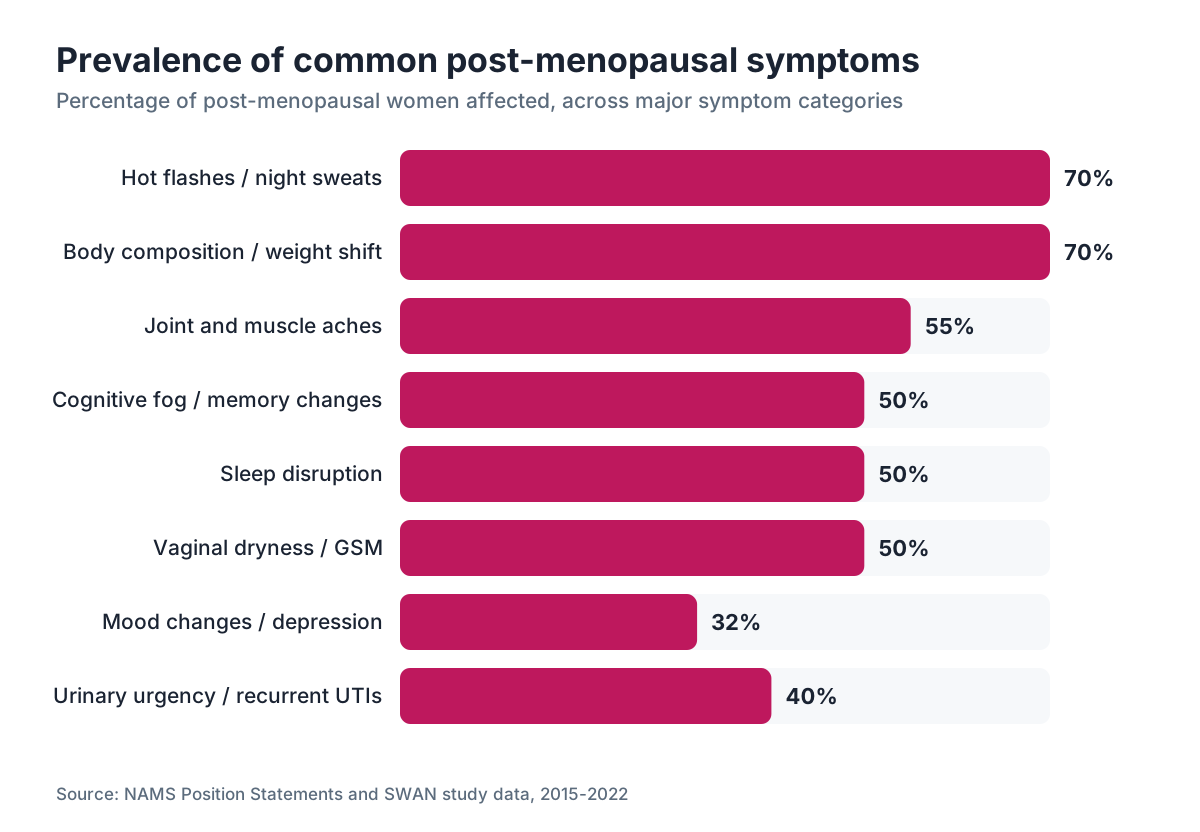
Here's how the major symptom categories break down:
| Symptom category | Estimated prevalence in post-menopausal women | Notes | |---|---|---| | Hot flashes / night sweats | 60-80% | Can persist 10+ years [3] | | Vaginal dryness / GSM | 40-60% | Gets worse over time without treatment [4] | | Sleep disruption | 40-60% | Often driven by night sweats, but also independent [5] | | Mood changes / depression | 25-40% | Risk is higher in early post-menopause [5] | | Cognitive fog / memory changes | 40-60% | Most improve after early transition period [5] | | Joint and muscle aches | 50-60% | Often missed as menopause-related [5] | | Accelerated bone loss | Up to 20% of bone in 5-7 years | Drives fracture risk [6] | | Weight gain / body composition shift | 70%+ | Central fat accumulates even without eating more [5] | | Urinary urgency / UTI recurrence | 30-50% | Part of genitourinary syndrome of menopause (GSM) [4] |
Not every woman gets every symptom. Genetics, body weight (fat tissue makes some estrone), race, smoking history, and whether you take hormone therapy all shape which symptoms hit hardest.
Why do hot flashes and night sweats happen after menopause?
Hot flashes, called vasomotor symptoms (VMS), happen because falling estrogen narrows the thermoneutral zone in the hypothalamus. Think of it as the brain's thermostat losing its buffer. A tiny rise in core temperature you'd never have noticed with estrogen on board now sets off a full cooling response: skin blood vessels dilate, sweat glands fire, heart rate jumps [3].
At night, those same events wake you soaked. Fragmented sleep piles into a real sleep debt that feeds mood symptoms and brain fog.
Some women get mild, occasional flashes. Others get them 10 to 20 times a day and call them disabling. Both are real. SWAN found Black women report more frequent and more severe flashes than white women, starting earlier and lasting longer, a gap the researchers linked to stress physiology, socioeconomic factors, and body composition more than to hormone levels [3].
What is genitourinary syndrome of menopause (GSM) and why does it get worse over time?
Genitourinary syndrome of menopause (GSM) is the umbrella term for vaginal dryness, painful sex, urinary urgency, and recurrent UTIs that follow estrogen loss in the vulvar, vaginal, and bladder tissues [4]. Hot flashes often fade over years even untreated. GSM does the opposite. The tissues get thinner, less elastic, and less lubricated the longer they go without estrogen.
About 40 to 60 percent of post-menopausal women have GSM, but only about 25 percent bring it up with a clinician, according to the Menopause Society [4]. That silence is a problem, because GSM responds well to treatment.
Local (vaginal) estrogen is the first-line treatment. It comes as a cream, a ring, or a low-dose tablet or suppository. The dose is small enough that systemic absorption is minimal, and NAMS notes that women with a history of hormone-sensitive cancer should discuss vaginal estrogen with their oncologist, but many can use it safely [4]. Ospemifene (an oral SERM) and vaginal DHEA (prasterone) are non-estrogen prescription options for women who prefer them.
Over-the-counter vaginal moisturizers used 3 to 5 days a week ease dryness but don't reverse the tissue changes. Lubricants help during sex. Neither replaces prescription therapy for moderate to severe GSM.
How does menopause affect sleep, mood, and cognitive function?
The sleep, mood, and brain symptoms of post-menopause tangle up with each other and with hot flashes. Night sweats break up sleep. Broken sleep drives irritability, depression, and fog. Low estrogen also acts directly on serotonin and norepinephrine signaling, which is why mood can slide even in women without bad hot flashes [5].
Depression risk climbs in early post-menopause. One large analysis found women in the menopausal transition had roughly 1.5 to 3 times the odds of a new depressive episode versus pre-menopausal women [5]. That's not trivial. If you're battling low mood in your early 50s and your primary care doctor isn't asking about hormones, push for that conversation.
Brain fog, the trouble finding words or holding a complex thought, is real and documented. Here's the good news: most studies show verbal memory and processing speed largely recover once you're a few years past menopause, though recovery is incomplete for some women [5]. Estrogen started close to menopause, what researchers call the "critical window," appears to support brain function better than estrogen started 10 or more years out.
What happens to bone density after menopause?
Bone loss speeds up sharply in the first 5 to 7 years after menopause. Women can lose 10 to 20 percent of their bone density in that stretch [6]. Estrogen normally puts a brake on osteoclasts, the cells that break down bone. When estrogen drops, the brake comes off.
One in two women over 50 will have an osteoporosis-related fracture in her lifetime. Hip fractures carry a one-year mortality rate around 20 percent [6]. That's not a scare stat built to sell drugs. It's a documented outcome post-menopausal women deserve to hear plainly.
A bone density test (DEXA scan) is recommended for all women by age 65, and earlier (at or right after menopause) if you have risk factors like a small frame, smoking history, family history of hip fracture, or long-term corticosteroid use [6][10]. The USPSTF and Endocrine Society agree: don't wait for symptoms, because osteoporosis has none until a bone breaks.
Hormone therapy preserves bone and cuts fracture risk, as do weight-bearing exercise, calcium (1,200 mg/day total from food and supplements for women over 50), and vitamin D (800 to 1,000 IU/day) [6][11]. If bone loss is already advanced, bisphosphonates, denosumab, or romosozumab may be indicated.
Does menopause cause weight gain, and why is it so hard to lose?
Yes, and the mechanism is specific. Post-menopausal women tend to gain central (abdominal) fat even without eating more, because low estrogen shifts fat away from the hips and thighs and toward the visceral compartment around the organs. Visceral fat is metabolically active in a bad way. It drives insulin resistance, inflammation, and cardiovascular risk [5].
Metabolic rate also drops a little with age and with the muscle loss (sarcopenia) that speeds up after menopause. Less estrogen means less lean muscle. Less muscle means fewer calories burned at rest.
This is where menopause care meets GLP-1 therapy for some women. Semaglutide and tirzepatide produce large weight loss in randomized trials, and early data suggest GLP-1 receptor agonists may cut visceral fat preferentially. If you're weighing semaglutide for weight loss or comparing semaglutide vs tirzepatide, that context matters for post-menopausal women specifically, since losing visceral fat carries cardiovascular and metabolic benefits beyond the scale number. Telehealth services like WomenRx can help you decide whether hormone therapy, a GLP-1, or both fit your situation.
Strength training isn't optional if you want to keep muscle and bone at the same time. Two to three sessions a week of progressive resistance training is the most evidence-supported lifestyle move for body composition in post-menopausal women.
What does hormone replacement therapy do for post-menopausal symptoms?
Hormone replacement therapy, now more often called menopausal hormone therapy (MHT) or hormone replacement therapy, is the most effective treatment for hot flashes, night sweats, and GSM. It also preserves bone, may lower cardiovascular risk when started early, and improves sleep and mood for many women [7].
The North American Menopause Society 2022 Position Statement backs MHT for healthy women under 60, or within 10 years of menopause onset, who have bothersome symptoms and no contraindications [7]. The statement puts it this way: "For women aged younger than 60 years or within 10 years of menopause onset and without contraindications, the benefit-risk ratio is favorable for treatment of bothersome vasomotor symptoms and for those at elevated risk for bone loss or fracture."
Estrogen alone is for women who've had a hysterectomy. Women with a uterus need progestogen added to protect the uterine lining. Micronized progesterone (bioidentical) is a prescription option, and most guidelines now prefer it over synthetic progestins for uterine protection because its risk profile looks somewhat better [8]. See our detailed explainer on progesterone.
Delivery matters. Transdermal estrogen (patch, gel, spray) skips first-pass liver metabolism and carries a lower blood clot risk than oral estrogen [7]. An estrogen patch is a common, practical choice. Oral estradiol works too and is generally fine for healthy women without clot risk factors.
Most of the fear around hormone therapy traces to the 2002 Women's Health Initiative (WHI), which was widely misread. WHI used conjugated equine estrogen plus medroxyprogesterone acetate (a synthetic progestin) in older women (average age 63) who were more than 10 years past menopause. That's a very different population and formulation from what's used today. Reanalysis and follow-up work have clarified the benefit-risk picture for younger post-menopausal women [7][13].
What are the non-hormonal treatments for post-menopausal symptoms?
Plenty of women can't or won't use hormone therapy, and that's a legitimate choice. The non-hormonal menu has grown.
Fezolinetant (brand name Veozah) was FDA-approved in May 2023 as the first non-hormonal prescription drug made specifically for moderate to severe vasomotor symptoms. It's a neurokinin B receptor antagonist that acts on the same hypothalamic pathway as estrogen without being a hormone [9]. In trials it cut hot flash frequency by roughly 45 to 50 percent. That's less than hormone therapy (usually 75 to 90 percent) but meaningful for women who can't take estrogen.
SSRIs and SNRIs, especially paroxetine (the only FDA-approved version for VMS, at a low 7.5 mg dose), venlafaxine, and escitalopram, cut hot flash frequency by roughly 40 to 60 percent in trials [5]. They also help the mood symptoms that so often ride along.
Gabapentin reduces hot flashes and improves sleep, handy for women with nighttime symptoms or neuropathic pain. Oxybutynin has shown effect in small trials.
For bone, bisphosphonates (alendronate, risedronate, zoledronic acid) and denosumab are first-line when osteoporosis is diagnosed.
Mind-body work, especially cognitive behavioral therapy (CBT) tailored for menopause, has surprisingly solid evidence for hot flash bother (not frequency, but how much the flash bugs you). The MENOS trials showed CBT cut hot flash problem ratings significantly. Acupuncture evidence is mixed and modest, but low-risk if you want to try.
Phytoestrogens (soy isoflavones, red clover) show small effects in some studies and none in others. The honest read: nobody has great long-term data, and effects vary person to person, likely because your gut microbiome decides whether you can convert isoflavones into active equol.
When should you see a doctor about post-menopausal symptoms?
Any time symptoms are hurting your quality of life. That's reason enough. You don't need to clear a severity bar to deserve treatment.
Beyond quality of life, some symptoms need prompt evaluation, not watchful waiting. Any vaginal bleeding more than 12 months after your last period has to be checked quickly to rule out endometrial cancer. This isn't optional, and it usually isn't cancer, but "usually not" is not a reassurance you should accept without an actual workup [5].
New or worsening urinary incontinence, pelvic organ prolapse symptoms, or recurrent UTIs more than twice a year all warrant a visit. Fast-worsening depression, new cardiovascular symptoms like palpitations or chest discomfort, and joint pain bad enough to limit function all need medical attention beyond symptom management.
For routine post-menopausal care, telehealth has genuinely opened up access to hormone therapy prescribing. WomenRx connects women with clinicians who focus on hormones and can manage MHT, GLP-1s, and bone health on one platform, which matters because these issues don't stay in separate lanes.
What cardiovascular and long-term health risks come with post-menopause?
Before menopause, estrogen gives the heart real protection. After it, that protection largely fades, and women's heart disease rates climb toward men's over time. By ages 65 to 70, cardiovascular disease is the leading cause of death in women [7][12].
Post-menopause also brings a less friendly lipid profile: LDL rises, HDL often drops a little, and triglycerides can climb. Insulin sensitivity falls. Blood pressure tends to rise. None of this is inevitable, but it's common enough that every post-menopausal woman should know her numbers.
The critical window hypothesis holds that estrogen started close to menopause (under 60, within 10 years) may lower cardiovascular risk, while estrogen started much later in women with established plaque may not help and could destabilize it. The NAMS 2022 position statement takes this on directly [7]. It's one reason the timing of when you start hormone therapy matters more than most people realize.
For dementia risk, the data are genuinely unsettled. Some observational studies suggest earlier MHT use protects against Alzheimer's; others are neutral. No randomized trial has been long enough or large enough to settle it. The honest answer: nobody knows yet, and anyone claiming certainty either way is ahead of the evidence.
Can lifestyle changes meaningfully reduce post-menopausal symptoms?
Yes, though "meaningfully" means something specific. Lifestyle changes reduce severity and lower long-term risk. They rarely erase symptoms the way hormone therapy erases hot flashes.
The interventions with the best evidence:
Exercise reduces hot flash bother (again, bother more than raw frequency), improves sleep, preserves bone, keeps muscle, and cuts cardiovascular risk. A mix of aerobic and resistance training beats either alone. The minimum dose that shows benefit in most trials is 150 minutes of moderate-intensity activity a week [5].
Quitting smoking is non-negotiable. Smokers reach menopause 1 to 2 years earlier on average and have worse hot flash and bone outcomes.
Cutting alcohol helps because it wrecks sleep architecture and triggers hot flashes. Even one or two evening drinks worsen night sweats for many women.
Cooling tactics (layered bedding, fans, cooling mattress pads, moisture-wicking fabrics) don't touch the underlying physiology but cut the disruption from flashes a lot.
Diet quality matters for long-term cardiometabolic risk. A Mediterranean-style pattern has the strongest evidence for cardiovascular benefit in post-menopausal women. Adequate protein (1.0 to 1.2 grams per kilogram of body weight) helps hold onto muscle when paired with resistance training.
Here's the catch. Women with severe symptoms often can't exercise well because they aren't sleeping, and sleep deprivation kills the energy and motivation to make the changes that would help them sleep. That's a real loop, and it's one of the better arguments for treating symptoms medically while you build habits that last.
Frequently asked questions
How long do post-menopausal symptoms last?
It varies widely. The SWAN study found median hot flash duration of about 7 years from onset, but more than 30 percent of women had symptoms lasting beyond 10 years. Vaginal dryness and GSM tend to persist and worsen without treatment, unlike hot flashes, which may gradually improve. There's no reliable way to predict your individual duration in advance.
Can you get hot flashes 10 or 20 years after menopause?
Yes. Hot flashes are usually most intense in early post-menopause but can persist well into a woman's 60s and even 70s. The SWAN study documented women with vasomotor symptoms 10 or more years after their final period. Late-onset or persistent hot flashes are also a reason to revisit whether hormone therapy might still make sense for you.
Is weight gain inevitable after menopause?
Weight gain is very common but not fully inevitable. The shift in fat toward the abdomen is driven directly by estrogen loss and is harder to avoid. Total gain averages 1 to 2 kg over the menopausal transition in most studies, but the range is enormous. Strength training, enough protein, and in some cases hormone therapy or GLP-1 medications can all push back on the metabolic shifts.
What is the difference between perimenopause and post-menopause symptoms?
Perimenopause symptoms happen while hormones are still fluctuating, so cycles turn irregular and symptoms can swing hard. Post-menopause symptoms reflect persistently low estrogen. Hot flashes and night sweats show up in both phases, but vaginal dryness, GSM, faster bone loss, and cardiovascular risk shifts are more characteristic of the post-menopausal years when estrogen stays low.
Is it safe to start hormone therapy years after menopause?
NAMS 2022 guidelines back hormone therapy most confidently for women under 60 or within 10 years of menopause. Starting more than 10 years out, or after age 60 in women not already on MHT, calls for more individualized risk assessment, especially around cardiovascular and clot risks. It can still be appropriate for some women, but it warrants a careful conversation with a clinician.
Does post-menopause cause joint pain?
Yes. Joint aches and muscle pain hit 50 to 60 percent of post-menopausal women and are often missed as menopause-related. Estrogen has anti-inflammatory effects and lubricates joint tissue; its absence adds stiffness and pain. Some women notice real improvement in joint symptoms on hormone therapy. Inflammatory arthritis should always be ruled out if pain is severe or asymmetric.
What are the signs that vaginal dryness is serious enough to treat?
Vaginal dryness that causes discomfort during daily activities, makes sex painful or impossible, or comes with recurrent UTIs or urinary urgency is a medical condition called GSM that warrants treatment. Over-the-counter moisturizers help mildly. Local vaginal estrogen, vaginal DHEA, or ospemifene are prescription options with good evidence. GSM worsens without treatment, so waiting rarely helps.
Can post-menopausal women still have sex, and does it get better?
Absolutely. Many women say sex improves after menopause once the pregnancy worry is gone and they know their own bodies better. The physical barrier, GSM-related dryness and pain, is highly treatable. With appropriate local estrogen or other prescription therapy, most women can resume comfortable, pleasurable sex. The key is asking for treatment rather than assuming the pain is permanent.
What blood tests or screenings should post-menopausal women get?
An annual lipid panel, blood pressure checks, fasting glucose or HbA1c, and a DEXA bone density scan by age 65 (or earlier with risk factors) are standard. Mammography (every 1 to 2 years), cervical cancer screening per current guidelines, and colorectal cancer screening are also recommended. FSH and estradiol levels aren't needed to diagnose post-menopause in women over 45 who've gone 12 months without a period.
Does hormone therapy increase cancer risk?
The picture is nuanced. Estrogen alone doesn't appear to raise breast cancer risk and may slightly reduce it, based on WHI follow-up data. Combined estrogen-progestogen therapy is tied to a small increase in breast cancer risk with long-term use, roughly the size of the risk from one daily alcoholic drink. Endometrial cancer risk is eliminated when progestogen is used correctly. Individual risk conversations with a clinician matter here.
What is fezolinetant and who is it for?
Fezolinetant (Veozah) is an FDA-approved non-hormonal pill for moderate to severe hot flashes. It blocks neurokinin B receptors in the hypothalamus, the same pathway estrogen regulates. In trials it cut hot flash frequency by roughly 45 to 50 percent. It's an option for women who can't or prefer not to use hormone therapy. It doesn't address GSM, bone loss, or cardiovascular risk.
Can GLP-1 medications like semaglutide help with post-menopausal weight gain?
GLP-1 receptor agonists produce substantial weight loss in clinical trials and appear to cut visceral fat preferentially. For post-menopausal women whose weight gain is concentrated in the abdomen, that mechanism is especially relevant. They don't address hot flashes, GSM, or bone loss. Most clinicians treating post-menopausal women now consider both hormone therapy and GLP-1s as potentially complementary tools.
Does menopause cause hair loss?
Yes. Female pattern hair thinning (androgenetic alopecia) often speeds up after menopause because estrogen's protective effect on hair follicles fades and the relative influence of androgens rises. Thinning is usually diffuse across the crown rather than a receding hairline. Thyroid dysfunction, more common post-menopause, should be ruled out. Hormone therapy can slow thinning for some women; topical minoxidil has the strongest evidence.
Is brain fog after menopause permanent?
For most women, no. Cognitive fog and word-finding trouble are most pronounced in the early post-menopausal period and improve over the following years as the brain adapts to lower estrogen. Some slowing is age-related, not menopause-specific. Women with severe or worsening cognitive symptoms years into post-menopause should be evaluated for other causes, including thyroid disease, sleep apnea, and depression.
Sources
- North American Menopause Society (NAMS), Menopause definition and staging
- National Institute on Aging, Menopause overview
- Avis NE et al., Duration of menopausal vasomotor symptoms over the menopause transition, JAMA Internal Medicine, 2015
- North American Menopause Society, Genitourinary Syndrome of Menopause position statement
- The NAMS 2023 Nonhormone Therapy Position Statement Advisory Panel, Nonhormone Therapy Position Statement, Menopause journal 2023
- National Osteoporosis Foundation / Bone Health and Osteoporosis Foundation, Clinician's Guide to Prevention and Treatment of Osteoporosis
- The Menopause Society (NAMS), 2022 Hormone Therapy Position Statement
- Endocrine Society Clinical Practice Guideline, Treatment of Symptoms of the Menopause
- FDA Drug Approval: Veozah (fezolinetant) prescribing information, 2023
- U.S. Preventive Services Task Force, Osteoporosis Screening recommendation, 2018
- NIH Office of Dietary Supplements, Calcium fact sheet for health professionals
- American Heart Association, Cardiovascular disease and menopause
- Stefanick ML et al., Women's Health Initiative, effects of conjugated equine estrogen in postmenopausal women with hysterectomy, JAMA 2004