What happens after menopause: a complete guide to postmenopause
TL;DR: Postmenopause begins exactly 12 months after your final menstrual period and continues for the rest of your life. Estrogen stays low permanently, raising risks for bone loss, heart disease, and urogenital changes. Many symptoms are treatable. Any vaginal bleeding after that 12-month mark is abnormal and needs prompt medical evaluation.
What does postmenopause actually mean?
Postmenopause is not a transition. It's a permanent state.
You're officially postmenopausal the day you pass the 12-month anniversary of your last menstrual period, with no bleeding in between [1]. The average age this happens in the U.S. is 51, though anywhere from 45 to 55 is considered normal [2]. After that marker, your ovaries have largely stopped producing estrogen and progesterone. Those levels don't bounce back.
The word gets used loosely in everyday conversation, sometimes swapped with "menopause" itself, but clinically they're different stages. Menopause is the single point in time, one day in retrospect. Perimenopause is the years of hormonal chaos leading up to it. Postmenopause is everything after.
For most women, postmenopause will span three to four decades. That's worth sitting with. The decisions you make in the first few years of this stage, about hormones, bone health, cardiovascular care, and weight, ripple forward for a long time.
What are the most common symptoms of postmenopause?
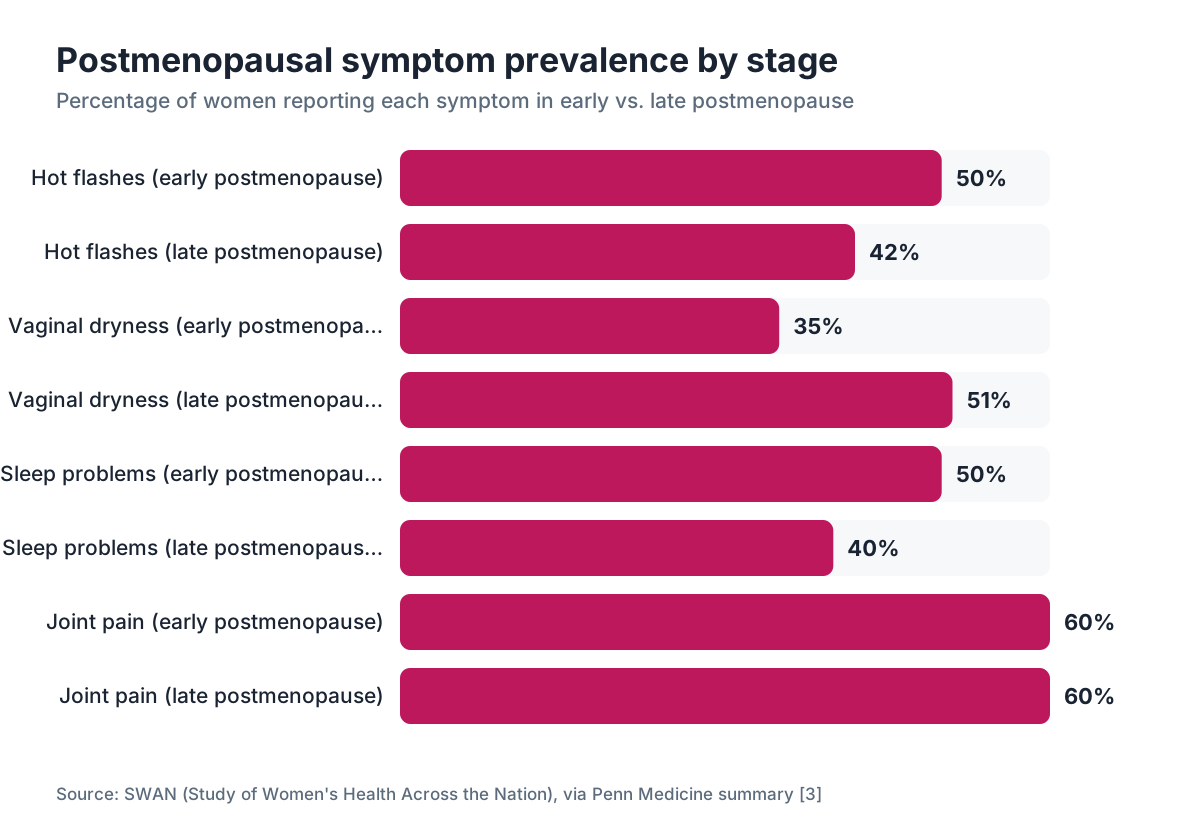
Hot flashes don't always stop when periods do. About 42% of women still have hot flashes seven or more years after their final period, and a subset experience them for 10 to 14 years [3]. That's the part nobody warns you about.
Beyond hot flashes, the symptoms that tend to define postmenopause fall into a few categories.
Genitourinary syndrome of menopause (GSM) is probably the most underreported. Low estrogen causes the vaginal walls to thin, lose elasticity, and produce less lubrication. The result is dryness, burning, painful sex, and recurrent urinary tract infections. Unlike hot flashes, GSM does not improve with time. It typically gets worse without treatment [4].
Sleep disruption is common, partly from night sweats, partly from estrogen's direct effects on sleep architecture. Mood changes, including increased anxiety and depressive symptoms, are also well-documented in the postmenopausal years, though the relationship is complex and not simply "low estrogen causes depression" [1].
Cognitive changes, often described as brain fog or word-finding difficulty, bother many women in this stage. The research is genuinely mixed on whether estrogen therapy helps with cognition, and nobody should promise you it will.
Joint pain, weight redistribution toward the abdomen, and dry skin are real and frustrating, even if they get less clinical attention.
The table below shows how symptom prevalence shifts across menopause stages based on the Study of Women's Health Across the Nation (SWAN) data.
| Symptom | Late perimenopause | Early postmenopause | Late postmenopause | |---|---|---|---| | Hot flashes | 55-65% | 45-55% | 30-42% | | Sleep problems | 40-50% | 45-55% | 35-45% | | Vaginal dryness | 20-30% | 30-40% | 47-55% | | Mood changes | 30-40% | 25-35% | 20-30% | | Joint pain | 50-60% | 55-65% | 55-65% |
What health risks increase significantly after menopause?
Estrogen wasn't just a reproductive hormone. It protected your bones and blood vessels while it was circulating. When it drops permanently, those protections go with it.
Bone loss is fastest in the first two to three years of postmenopause. Women can lose 2 to 3% of bone density per year in that window, compared to roughly 0.5 to 1% per year before menopause [5]. Over a decade, that adds up to a meaningful fracture risk. Roughly one in two women over 50 will break a bone because of osteoporosis, according to bone-health estimates cited by the USPSTF. A bone density test (DEXA scan) is recommended for all women by age 65, and earlier if you have risk factors like low body weight, smoking history, or a family history of hip fracture [5].
Cardiovascular disease becomes the leading cause of death for postmenopausal women. Before menopause, women have significantly lower rates of heart disease than men of the same age. That gap closes and eventually reverses after menopause [6]. The American Heart Association now explicitly recognizes menopause as a cardiovascular risk factor.
Diabetes risk rises too, partly because of the body composition shifts that come with low estrogen. Fat redistributes centrally, insulin sensitivity tends to drop, and muscle mass often declines. Many women notice their blood sugar control changing even if they've had no prior metabolic issues.
Urinary incontinence, both stress and urgency types, becomes more common as pelvic floor tissues lose estrogenic support. This is very treatable but significantly underreported because women assume it's just part of aging.
Is postmenopausal bleeding always a sign of cancer?
No, but it always needs evaluation. That's the clear answer.
Any vaginal bleeding that occurs 12 or more months after your final period is postmenopausal bleeding (PMB). It can have many causes, ranging from benign to serious. Endometrial atrophy (thinning of the uterine lining) accounts for about 60 to 80% of cases and is benign. Endometrial polyps and fibroids are also common non-cancerous causes [7].
Endometrial cancer is the cause in roughly 5 to 10% of women who present with postmenopausal bleeding [7]. That number sounds low, but it's high enough to require every case be evaluated promptly. The American College of Obstetricians and Gynecologists recommends transvaginal ultrasound and sometimes endometrial biopsy as the first steps when PMB occurs [7].
Medications can also cause PMB. Hormone therapy, particularly estrogen used without sufficient progesterone in women with a uterus, increases endometrial cancer risk. Blood thinners, tamoxifen (used in breast cancer treatment), and certain blood pressure medications can cause spotting.
If you're on hormone therapy and notice unexpected bleeding, your prescribing clinician needs to know. The pattern matters: breakthrough bleeding in the first three to six months of a new HRT regimen is common and often settles. Bleeding that starts after a period of none, or that's heavy or persistent, is a different situation entirely.
Bottom line: don't wait, don't assume it's nothing, and don't let anyone dismiss it without an ultrasound or biopsy. One study found that women who delayed evaluation by more than three months had more advanced endometrial cancer at diagnosis [7].
Does hormone replacement therapy help with postmenopausal symptoms?
For most healthy women under 60 who are within 10 years of menopause onset, hormone replacement therapy (HRT) is the most effective treatment for hot flashes, night sweats, and GSM. Full stop [1].
The North American Menopause Society (NAMS) states that "for women aged younger than 60 years or who are within 10 years of menopause onset and have no contraindications, the benefit-risk ratio is favorable for treatment of bothersome vasomotor symptoms" [1]. That's a direct quote from their 2022 position statement, and it matters because for years HRT was widely avoided due to a misreading of the Women's Health Initiative data.
The WHI enrolled women with an average age of 63, many with pre-existing cardiovascular disease. Applying those findings to a healthy 51-year-old in early postmenopause was always scientifically questionable. Subsequent reanalysis and newer studies have consistently shown a different risk-benefit picture for younger postmenopausal women.
For women with a uterus, estrogen must be paired with progesterone to protect the uterine lining. For women who've had a hysterectomy, estrogen alone is sufficient. The form of delivery, whether an estrogen patch, gel, spray, oral pill, or pellet, affects how the hormone is metabolized, though head-to-head data comparing all delivery methods is limited.
Local vaginal estrogen (cream, ring, or suppository) treats GSM specifically without meaningful systemic absorption, and it's safe even for women who can't use systemic HRT, including most breast cancer survivors, according to NAMS guidelines [4].
Not everyone is a candidate. Women with a personal history of hormone-receptor-positive breast cancer, unexplained vaginal bleeding, active clot disorders, or certain cardiovascular conditions need careful individual assessment. If you're trying to sort out your options, hormone replacement therapy is a good starting point, and telehealth platforms like WomenRx can connect you with clinicians who specialize in this decision.
HRT does not prevent all postmenopausal health issues. It's not the right choice for every woman, and the decision should be revisited regularly as your age and health profile change.
What happens to weight and metabolism in postmenopause?
Weight gain in postmenopause is real, but it's more complicated than "low estrogen makes you fat."
The average woman gains about 1.5 pounds per year in midlife, and this continues into postmenopause. The composition shift is arguably more important than the number on the scale: fat moves from hips and thighs toward the abdomen, which is the pattern most associated with metabolic disease and cardiovascular risk [6]. Visceral fat, the deep abdominal fat that surrounds organs, is metabolically active in ways that subcutaneous fat isn't. It produces inflammatory cytokines and contributes directly to insulin resistance.
Muscle mass also declines with age regardless of menopause, but estrogen loss appears to accelerate it. Less muscle means a lower resting metabolic rate. The same calorie intake that maintained your weight at 42 may not work at 52.
GLP-1 receptor agonists like semaglutide have become genuinely effective tools for postmenopausal weight management. The STEP 1 trial found that semaglutide 2.4 mg weekly produced an average weight loss of 14.9% of body weight over 68 weeks in adults with obesity [8]. A meaningful portion of the trial participants were postmenopausal women, though the trial wasn't stratified by menopausal status. If you're researching this option, our overviews of semaglutide and semaglutide for weight loss cover the evidence in detail, and the comparison between semaglutide vs tirzepatide is worth reading if you're deciding between medications.
Strength training is not optional in postmenopause. It's the most evidence-supported intervention for preserving muscle mass, improving bone density, and reducing fall risk. Two to three sessions per week, using enough resistance to actually challenge the muscle, is what the research supports. Walking is great, but it's not a substitute for resistance work.
How does postmenopause affect bone density?
Bone is living tissue and it remodels constantly. Estrogen suppresses osteoclasts, the cells that break bone down. When estrogen drops, osteoclast activity increases and the remodeling balance tips toward net bone loss [5].
The numbers are striking. In the five to seven years following menopause, bone density can drop by 10 to 20% total. The lumbar spine and femoral neck (the top of the hip bone) are affected most acutely. Hip fractures in postmenopausal women carry a 20 to 30% mortality rate within one year, which is genuinely sobering.
DEXA scans measure bone mineral density and express the result as a T-score. A T-score at or above -1.0 is normal. Between -1.0 and -2.5 is osteopenia, meaning low bone mass. At or below -2.5 is osteoporosis [5]. The U.S. Preventive Services Task Force recommends screening for all women 65 and older, and for younger postmenopausal women whose 10-year fracture risk is equal to or greater than that of a 65-year-old white woman [5].
Calcium and vitamin D matter, but probably less than most people think if you're already deficient in both. The current recommended daily intake for postmenopausal women is 1,200 mg calcium (preferably from food) and 800 to 1,000 IU vitamin D [5]. Getting tested for vitamin D deficiency first makes sense before supplementing aggressively.
HRT preserves bone density effectively and reduces fracture risk. Bisphosphonates (like alendronate), RANK ligand inhibitors (denosumab), and for severe osteoporosis, anabolic agents like teriparatide are the pharmaceutical options if HRT isn't appropriate or preferred.
What does postmenopause mean for heart health?
Cardiovascular disease kills more postmenopausal women than all cancers combined. This doesn't get enough attention in the typical menopause conversation.
Before menopause, estrogen raises HDL cholesterol, keeps LDL lower, maintains arterial flexibility, and reduces inflammation. After estrogen drops, LDL typically rises, HDL may fall, and blood pressure tends to increase [6]. Triglycerides often go up too. Each of these shifts increases cardiovascular risk.
The "timing hypothesis" in HRT research suggests that starting estrogen within 10 years of menopause or before age 60 may actually be cardioprotective, while starting it much later (as in the WHI) may not be and could carry risk [10]. This is still an active area of research, not settled science, but the weight of evidence has shifted toward earlier treatment being safer.
Regardless of HRT decisions, standard cardiovascular risk reduction applies: blood pressure control, lipid management, not smoking, regular exercise, and maintaining a healthy weight. These are not optional add-ons. A postmenopausal woman with hypertension, elevated LDL, and abdominal obesity has a cardiovascular risk profile that needs active management.
Aspirin is no longer routinely recommended for primary prevention in this age group following updated USPSTF guidance. Statins are appropriate for many postmenopausal women based on their calculated 10-year cardiovascular risk, more than their cholesterol numbers in isolation.
Can you still get pregnant in postmenopause?
Spontaneous pregnancy after confirmed postmenopause is not possible. Once you've gone 12 consecutive months without a period, your ovaries are no longer releasing eggs in any functional way.
The practical caution is during late perimenopause. Ovulation can still occur sporadically even as periods become irregular. Women in their late 40s and early 50s in perimenopause are at lower but not zero risk for unintended pregnancy. Most clinicians recommend contraception until 12 months after the final period if pregnancy prevention matters [1].
If you're unsure whether you've reached the 12-month mark or whether you're still in perimenopause, FSH and estradiol levels can help clarify, though hormone levels in perimenopause fluctuate enough that a single test isn't definitive. Understanding perimenopause age and when menopause starts can help you track where you actually are in the transition.
Pregnancy via donor egg IVF is technically possible in postmenopause with exogenous hormone support, though this is medically complex and most programs have upper age limits. It's a very different conversation from spontaneous fertility.
How is postmenopause diagnosed?
Postmenopause has no lab test you need to pass. It's a clinical diagnosis based entirely on menstrual history: 12 consecutive months without a period, in the absence of another explanation like pregnancy, medication effects, or illness [2].
Blood tests for FSH (follicle-stimulating hormone) and estradiol can suggest where you are in the transition. FSH above 30 to 40 mIU/mL combined with a low estradiol (below 20 to 30 pg/mL) is consistent with menopause, but these levels fluctuate wildly during perimenopause and don't definitively confirm postmenopause on their own [2].
For women who've had a hysterectomy (uterus removed but ovaries retained), there's no period to track, so the diagnosis is harder to confirm without lab work and symptom history. For women who've had both uterus and ovaries removed (bilateral salpingo-oophorectomy), they enter surgical menopause immediately regardless of age, which is physiologically distinct from natural menopause and often more abrupt and severe.
If you're using hormonal contraception, it can mask menstrual patterns entirely, making it impossible to know when your natural periods have stopped. Most clinicians suggest transitioning off hormonal contraception at some point in your late 40s (with an alternative form if needed) to get a clearer read on where you are hormonally, though this is a judgment call that depends on your individual situation.
What lifestyle changes matter most in postmenopause?
The four that actually move the needle: resistance training, sleep, not smoking, and limiting alcohol.
Resistance training preserves muscle mass and bone density. It reduces fall risk. It improves insulin sensitivity and glucose metabolism. And the research is consistent across age groups that women in their 50s and 60s respond to strength training similarly to younger women, they just need adequate protein to support muscle protein synthesis. Most data suggests 1.2 to 1.6 grams of protein per kilogram of body weight daily for older women who are strength training, which is higher than standard population recommendations.
Sleep matters more than most postmenopausal women realize. Chronic short sleep (under 6 hours) is independently associated with increased visceral fat, insulin resistance, and cardiovascular risk. If night sweats are disrupting sleep, that's a symptom worth treating rather than tolerating.
Smoking is probably the single most modifiable risk factor for both osteoporosis and cardiovascular disease in postmenopause. If you smoke, quitting at any age reduces risk, but the earlier the better.
Alcohol gets less attention but matters. Even moderate alcohol consumption (one drink per day) has been associated in multiple studies with a small but real increase in breast cancer risk, and heavier drinking worsens bone loss, disrupts sleep, and adds significant calories. The 2020-2025 Dietary Guidelines for Americans note that less is better from a health standpoint [9].
Diet broadly: the Mediterranean-pattern diet has the most consistent evidence for cardiovascular benefit in postmenopausal women and some data supporting slower cognitive decline. It's not the only healthy diet, but it's the one with the deepest evidence base in this population.
What should you talk to your doctor about at your first postmenopause checkup?
The move into postmenopause is a reasonable trigger for a full health review, even if you feel fine.
A few things worth putting on your agenda: a bone density scan if you haven't had one and have risk factors, a full lipid panel and blood pressure assessment, a discussion of HRT candidacy based on your symptom burden and medical history, and a check-in on genitourinary symptoms that you may have assumed are just "normal aging."
If you've noticed any postmenopausal bleeding, that goes to the top of the list. Same for chest pain, shortness of breath, or new palpitations.
Bring your symptom list. Clinicians in a 15-minute appointment will follow your lead. If you don't mention that sex has become painful or that you're leaking urine when you sneeze, it often won't come up. These things are treatable.
If you find that your primary care provider isn't comfortable with the nuances of postmenopausal hormone management, NAMS certifies practitioners specifically in menopause care, and their provider locator at menopause.org is a useful resource. Telehealth options have also expanded access meaningfully. WomenRx, for example, was built specifically around hormone care for women in this life stage, and an initial consultation can happen without waiting months for a specialist appointment.
One more thing: the menopause age at which you transitioned matters for your risk stratification. Early menopause (before 45) and premature menopause (before 40) carry higher long-term risks for heart disease and osteoporosis, and most experts recommend HRT at least until the average age of natural menopause if there are no contraindications [1].
Frequently asked questions
How long does postmenopause last?
Postmenopause begins 12 months after your final period and continues for the rest of your life. It is not a temporary phase. For a woman who reaches menopause at 51 and lives into her 80s, that's more than 30 years postmenopausal. Most of the health-protective decisions you make in early postmenopause, around hormones, bones, and cardiovascular risk, have consequences across that entire span.
Is postmenopausal bleeding always serious?
It always requires evaluation, but it isn't always cancer. About 60 to 80% of postmenopausal bleeding cases are caused by benign conditions like endometrial atrophy or polyps. Endometrial cancer accounts for roughly 5 to 10% of cases. Because that risk exists, any bleeding after 12 months without a period should be assessed promptly with transvaginal ultrasound and possibly endometrial biopsy, per ACOG guidelines.
Do hot flashes stop after menopause?
Not always, and not quickly. Research from the SWAN study found that about 42% of women still experience hot flashes seven or more years after their final menstrual period. A subset has symptoms for 10 to 14 years. Hot flashes tend to decrease in frequency and intensity over time, but they don't reliably stop the moment menopause is reached. Hormone therapy is the most effective treatment if they're significantly affecting quality of life.
Can postmenopausal women take hormone therapy?
Yes, and for many women it's appropriate. NAMS states the benefit-risk ratio favors HRT for healthy women under 60 or within 10 years of menopause onset who have bothersome symptoms and no contraindications. Women with a history of hormone-receptor-positive breast cancer, active clotting disorders, or unexplained vaginal bleeding need individualized assessment before starting. The decision should be revisited regularly as health circumstances change.
What causes weight gain in postmenopause?
Multiple factors: estrogen loss shifts fat distribution toward the abdomen, muscle mass declines with age (lowering resting metabolic rate), and insulin sensitivity tends to decrease. It's not simply eating more. The composition change, more visceral fat even at the same weight, may be metabolically more important than the scale number. Resistance training and adequate protein intake are the most evidence-supported strategies, with GLP-1 medications showing significant benefit in clinical trials for women who qualify.
When should I get a bone density test after menopause?
The U.S. Preventive Services Task Force recommends DEXA screening for all women at age 65. Screening earlier is appropriate for postmenopausal women under 65 whose 10-year fracture risk equals that of a 65-year-old white woman with no additional risk factors. Risk factors include low body weight, history of fracture, smoking, excessive alcohol use, prolonged corticosteroid use, and a family history of hip fracture.
Does postmenopause affect mental health?
It can. Depressive symptoms, anxiety, and mood instability are more common in the menopausal transition and early postmenopause than in the reproductive years. The relationship isn't simply hormonal: sleep disruption, life stressors, and symptom burden all contribute. Women with a prior history of depression or PMS/PMDD appear more vulnerable. HRT may help mood for some women, particularly if mood changes are tied to vasomotor symptoms. It's not a guaranteed antidepressant.
What is genitourinary syndrome of menopause and how is it treated?
GSM is the clinical term for vaginal and urinary symptoms caused by low estrogen: dryness, burning, painful sex, urinary urgency, and recurrent UTIs. Unlike hot flashes, GSM worsens over time without treatment. Local vaginal estrogen (cream, ring, or suppository) is highly effective and has minimal systemic absorption, making it safe for most women including many with breast cancer history. Non-hormonal options include vaginal moisturizers used regularly and ospemifene (a non-estrogen oral medication).
How does postmenopause affect cholesterol and heart disease risk?
LDL cholesterol typically rises and HDL may fall after menopause as estrogen's protective effects on lipid metabolism are lost. Blood pressure also tends to increase. Cardiovascular disease is the leading cause of death in postmenopausal women. Standard risk management, including lipid testing, blood pressure control, exercise, and not smoking, is essential. Statins are appropriate for many women in this age group based on overall 10-year cardiovascular risk, not cholesterol numbers alone.
Can GLP-1 medications like semaglutide help with postmenopausal weight gain?
Yes, the clinical evidence supports meaningful weight loss. The STEP 1 trial found semaglutide 2.4 mg weekly produced an average 14.9% body weight reduction over 68 weeks. Postmenopausal women were included in major trials, though results weren't broken out by menopausal status. GLP-1 medications also improve insulin sensitivity and reduce visceral fat. They're prescription medications that require medical evaluation, and they work best combined with dietary changes and physical activity.
Is it normal to have no symptoms in postmenopause?
Yes. Symptom burden varies enormously. Some women pass through the transition with minimal hot flashes and no genitourinary issues. That said, the absence of noticeable symptoms doesn't mean bone loss and cardiovascular risk aren't accumulating silently. Routine screening, including bone density testing, lipid panels, and blood pressure monitoring, matters regardless of how you feel. Asymptomatic women still benefit from knowing their numbers.
Does alcohol affect postmenopausal women differently?
There's evidence it does. Postmenopausal women metabolize alcohol less efficiently than younger women, and even moderate intake has been linked to higher breast cancer risk, worsened bone loss, disrupted sleep, and increased cardiovascular risk. The 2020-2025 Dietary Guidelines for Americans recommend limiting alcohol to one drink or fewer per day for women, with acknowledgment that less is better from a health standpoint. Many clinicians treating postmenopausal women suggest minimizing alcohol significantly.
What's the difference between perimenopause and postmenopause?
Perimenopause is the transitional phase leading up to menopause, often lasting four to eight years, during which hormone levels fluctuate and periods become irregular. Postmenopause begins after 12 consecutive months with no period. In perimenopause, estrogen swings wildly and can actually spike higher than premenopausal levels before falling. In postmenopause, estrogen is consistently and permanently low. Symptoms can overlap, but the hormonal picture and some health risks differ meaningfully.
Should postmenopausal women take calcium and vitamin D supplements?
Current guidelines recommend 1,200 mg calcium daily for postmenopausal women, ideally from food, and 800 to 1,000 IU vitamin D. Supplementation makes sense if dietary intake is insufficient or if blood testing shows vitamin D deficiency. High-dose calcium supplements (above 1,000 mg per day from supplements alone) have been associated with possible cardiovascular risk in some studies, though the evidence is debated. Get tested before supplementing aggressively, and prioritize food sources of calcium where possible.
Sources
- North American Menopause Society, 2022 Hormone Therapy Position Statement
- NIH National Institute on Aging, Menopause overview
- SWAN (Study of Women's Health Across the Nation), Penn Medicine summary
- North American Menopause Society, Genitourinary Syndrome of Menopause position
- U.S. Preventive Services Task Force, Osteoporosis to Prevent Fractures recommendation (2018)
- American Heart Association, Menopause and Heart Disease
- American College of Obstetricians and Gynecologists, Practice Bulletin on Postmenopausal Bleeding
- Wilding JPH et al., STEP 1 trial, New England Journal of Medicine (2021)
- Endocrine Society, Menopause Hormone Therapy Clinical Practice Guideline
- CDC, Women and Heart Disease Data and Statistics