Periods during perimenopause: what's normal and what's not
TL;DR: In perimenopause, most women get irregular periods with heavier flow, more cramping, or long gaps between cycles. This phase runs 4 to 10 years before your final period, about 7 on average. Skipping periods is normal. Soaking a pad or tampon every hour for two hours straight is not. Know the difference and know your options.
What actually happens to your period during perimenopause?
Perimenopause is the hormonal transition before menopause, and it runs on erratic estrogen and falling progesterone. Your ovaries still release eggs, just not on any reliable schedule. Some cycles you ovulate. Some you don't. That unpredictability is the whole explanation for why your period stops making sense.
The North American Menopause Society (NAMS) describes the marker of early perimenopause as cycle lengths that vary by seven or more days from your usual pattern. [1] So if your cycles used to run 28 days and they're now landing anywhere from 21 to 40, you're almost certainly in early perimenopause. That's not a problem. That's the transition doing exactly what it does.
As things progress, you hit what researchers call late perimenopause, defined by 60 or more days between periods. [1] At that stage, menopause (12 consecutive months with no period) is usually within a year or two. The average woman reaches menopause at 51, though anywhere from 45 to 55 is normal. [2]
The whole perimenopausal window runs 4 to 10 years, averaging around 7. [3] That's a long stretch to live with a period that refuses to behave. Knowing the pattern helps you stop getting blindsided by it.
For a broader look at where this fits in your reproductive timeline, see our guide on perimenopause age.
Why do periods get heavier in perimenopause?
Heavy bleeding sends more perimenopausal women to their doctors than any other period complaint. It feels backwards. You'd expect things to wind down slowly, like a faucet closing. Instead, for a lot of women, the faucet briefly cranks the other way.
Here's the mechanism. When you don't ovulate, your body makes no progesterone. Estrogen still climbs in the first half of your cycle and tells the uterine lining to thicken. With no progesterone to check that growth and trigger a clean, organized shed, the lining keeps building. When your period finally arrives, there's more lining to lose, and the shed is messier and heavier. This is anovulatory bleeding, and it's everywhere in perimenopause. [4]
Heavy menstrual bleeding is formally defined as losing more than 80 ml per cycle, but nobody actually measures that. Use a practical threshold instead: soaking a pad or tampon every hour for two or more hours in a row is abnormally heavy and warrants a call to your doctor. [4] So does passing clots larger than a quarter, or bleeding that runs past 7 days.
Iron-deficiency anemia is a real risk with heavy perimenopausal bleeding. If you're winded climbing stairs or dragging through your period, ask for a complete blood count. Treating the anemia is a separate job from treating the bleeding.
Then there are fibroids. Uterine fibroids show up in as many as 70% of women by their 50s, and estrogen drives their growth. [5] They tend to peak in size during perimenopause, then shrink afterward when estrogen drops. If your heavy bleeding is new and dramatic, rule out fibroids, endometrial polyps, and (always) endometrial hyperplasia or cancer before you chalk it up to hormone swings.
What does an irregular perimenopause cycle actually look like?
The honest answer: it looks different for every woman, which is exactly what makes it so disorienting.
Some women get two periods in one month, then skip the next month entirely. Others jump from clockwork 28-day cycles to 45-day cycles almost overnight. A few have shorter, lighter periods for years before things space out. The Stages of Reproductive Aging Workshop (STRAW+10) built a staging system that clinicians and researchers use to sort these changes, and even that system uses broad ranges because the variation is that wide. [3]
Here's a rough picture of what each perimenopausal stage tends to look like:
| Stage | Cycle pattern | What's happening hormonally | |---|---|---| | Early perimenopause | Cycles vary by 7+ days; still mostly regular | FSH starts rising; estrogen erratic | | Late perimenopause | 2+ missed periods; 60+ day gaps | Estrogen falling; most cycles anovulatory | | Menopause | 12 consecutive months with no period | Estrogen low and stable |
FSH (follicle-stimulating hormone) rises because your pituitary is essentially shouting louder at ovaries that are getting harder to wake up. A single FSH test won't reliably confirm perimenopause, partly because estrogen fluctuates so much day to day that FSH bounces around with it. [1] The Endocrine Society's guideline says FSH should not be used alone to diagnose perimenopause. Your symptom pattern and age matter more. [6]
Can you still get pregnant during perimenopause?
Yes. This is the one that catches women off guard, and it has real practical weight.
As long as you're still ovulating, even now and then, pregnancy is possible. Irregular cycles don't mean you've stopped ovulating. They mean you can't predict it. An unexpected ovulation plus unprotected sex can produce a pregnancy, and perimenopausal pregnancies carry higher risks than pregnancies in your 30s, including higher rates of chromosomal abnormalities and pregnancy complications. [7]
Most major medical societies say to keep using contraception until you've gone 12 consecutive months without a period, which is the definition of menopause. After that, you're no longer fertile. Before that, assume you could be.
If you're on hormonal birth control (low-dose pills, a hormonal IUD, an implant) during perimenopause, it also hides the cycle irregularity, because hormonal contraceptives control your bleed. So you can't read your period pattern to figure out where you are in the transition. Your doctor can check FSH and estradiol after you've been off the pill for a while to get a clearer read on your menopausal status.
When should you see a doctor about perimenopausal bleeding?
Most perimenopausal period changes are harmless and need nothing beyond reassurance. Some patterns need a look.
See a doctor promptly for any of these: bleeding after sex; bleeding that soaks a pad or tampon every hour for two or more hours in a row; periods lasting more than 7 days; spotting or bleeding after 12 consecutive months with no period (that is, after menopause); or any bleeding that feels dramatically different from anything you've had before. [4]
Postmenopausal bleeding, meaning any bleeding after those 12 period-free months, is a separate category. It should always be investigated. Most cases turn out benign (atrophy, a polyp), but about 10% trace to endometrial cancer, which is why the American College of Obstetricians and Gynecologists (ACOG) recommends evaluation in every case. [8]
For perimenopausal heavy bleeding, the usual workup includes a pelvic ultrasound to check lining thickness and rule out fibroids or polyps, and sometimes an endometrial biopsy, especially if you carry risk factors for endometrial cancer (obesity, diabetes, long anovulatory cycles, or family history). [8]
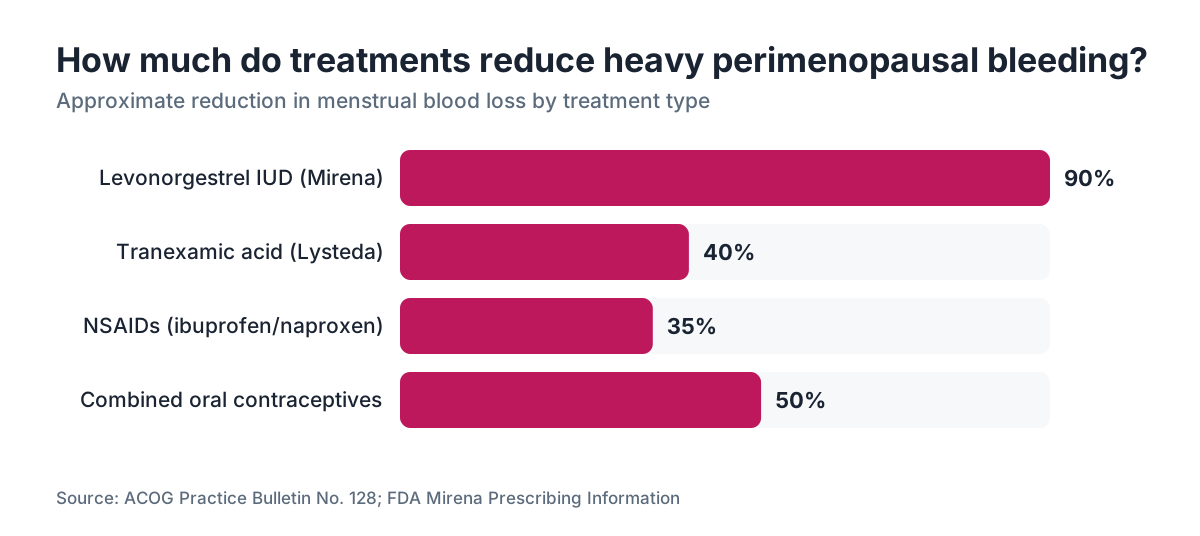
Treatment for heavy perimenopausal bleeding ranges from hormonal (progestins, low-dose combined pills, a levonorgestrel IUD) to non-hormonal (NSAIDs like ibuprofen, tranexamic acid) to procedural (endometrial ablation), depending on your anatomy, your contraception needs, and how close you are to menopause.
How does progesterone relate to your perimenopausal period?
Progesterone is the hormone most directly in charge of how your period behaves. In a normal ovulatory cycle, it rises after you ovulate, then drops, triggering a clean, timed shed of the lining. In perimenopause, anovulatory cycles mean progesterone either never rises or barely does. That's why the lining overgrows and bleeding turns unpredictable.
For heavy or irregular perimenopausal bleeding driven by anovulation, oral progesterone or a synthetic progestin taken for 10 to 14 days per cycle can mimic the natural progesterone rise and produce a more organized bleed. [9] The levonorgestrel IUD (Mirena) works especially well: it delivers progestin straight to the uterus and cuts menstrual blood loss by more than 90% in studies. [10]
Bioidentical progesterone (micronized progesterone, sold as Prometrium in the US) also goes into menopausal hormone therapy to protect the uterine lining from estrogen. If you're weighing hormone therapy for perimenopausal symptoms, this is the progestogen form most evidence-based guidelines now prefer over older synthetic progestins, largely because its cardiovascular and breast-risk profile looks more favorable. [9]
Our deeper article on progesterone covers the differences between bioidentical and synthetic forms.
What period symptoms are just annoying versus something more serious?
Perimenopause throws a lot at you, and not all of it is worth worrying about. Here's a practical way to sort it.
Normal and expected: cycles that vary by 7 to 60 days in length; periods heavier by one or two extra pads a day; more cramping than usual (anovulatory cycles tend to be crampier); occasional mid-cycle spotting; periods that run a day or two longer.
Worth a check-in: bleeding so heavy you're canceling plans or skipping activities; clots larger than a quarter; cycle gaps shorter than 21 days or longer than 90 days; periods past 7 days; real fatigue (could be anemia).
See a doctor promptly: any bleeding after 12 months with no period; bleeding after sex that keeps happening; a sudden dramatic shift in your bleeding pattern with no gradual buildup; pelvic pain that's new or severe.
One more thing worth knowing. The emotional and cognitive side of perimenopause is real and badly underreported. Low progesterone and fluctuating estrogen hit sleep, mood, anxiety, and thinking. Handling unpredictable heavy periods on top of all that piles on. When you talk to your doctor, put the bleeding and the other symptoms in the same conversation. You'll get a fuller picture and more treatment options.
Can hormone therapy help regulate perimenopausal periods?
Yes, though how it works depends on the type of therapy and where you are in the transition.
For women still having periods, low-dose combined oral contraceptives (estrogen plus progestin) can regulate cycles, reduce flow, and treat hot flashes and other symptoms. This is a common, guideline-supported option for otherwise healthy, non-smoking perimenopausal women under 50, or up to 55 in select cases. [1]
Standard menopausal hormone therapy, meaning an estrogen patch or oral estrogen plus a progestogen, works differently. Doctors generally don't prescribe it to regulate periods while you're still actively cycling, because adding outside estrogen to already-erratic estrogen gets complicated. It usually starts once you've reached menopause or are clearly in late perimenopause with minimal natural cycles. [6]
The levonorgestrel IUD sits in the middle: it controls bleeding no matter where you are in the transition, and it can act as the progestogen part of a hormone therapy regimen if your doctor adds systemic estrogen for symptoms. [1]
WomenRx offers telehealth consultations for perimenopausal hormone management, including working out which approach fits your specific symptoms and health history. Women genuinely in late perimenopause with heavy vasomotor symptoms (hot flashes, night sweats) alongside irregular bleeding are managing two problems at once, and the treatment should address both.
For more on specific options, see our guides on hormone replacement therapy and the estrogen patch.
What non-hormonal options exist for heavy or irregular periods in perimenopause?
Plenty of women can't take hormones or don't want to, and there are effective non-hormonal options worth knowing.
Tranexamic acid (Lysteda in the US) is an oral medication you take only during your period. It stabilizes clots in the uterine lining and cuts menstrual blood loss by about 40% in studies. [4] It's non-hormonal, doesn't touch ovulation or fertility, and does nothing for hot flashes or other symptoms. Good fit if flow volume is your main problem and you're not battling bad vasomotor symptoms.
NSAIDs, especially ibuprofen or naproxen sodium, taken at the start of your period and through the heavy days, lower prostaglandin production and can cut blood loss by 20 to 50% while easing cramps. [4] This is probably the most accessible option, and most women were never told to try it on a schedule. Take a full dose every 6 to 8 hours from day one instead of reacting to cramps, and it makes a real difference.
Endometrial ablation is a one-time in-office or outpatient procedure that destroys the uterine lining. It works for about 80 to 90% of women to reduce heavy bleeding, but it isn't reversible and isn't an option if you still want to conceive. [5] Since most perimenopausal women are past wanting more children, it can be a solid long-term fix. It does nothing for hot flashes.
If fibroids are driving the bleeding, uterine fibroid embolization or myomectomy may be options depending on size and location. Those conversations belong with a gynecologist or an interventional radiologist.
How do you know when your perimenopausal irregular periods are actually menopause?
The definition is simple and the experience rarely is. Menopause gets confirmed after the fact: you've gone 12 consecutive months without any period. That's the whole test. There's no blood test that tells you in real time that your last period was actually your last. [1]
Hormone levels can hint. An FSH above 30 IU/L with very low estradiol (below about 30 pg/mL) plus no periods is consistent with menopause, but because perimenopausal estrogen swings so hard, a single reading can mislead you in either direction. [6] Women on hormonal contraception can't use those markers at all while on the pill.
For most women, the practical move is to track cycles and symptoms. If you've gone 6 months with no period and your hot flashes and night sweats are ramping up, you're almost certainly in late perimenopause or early postmenopause. That's a good moment to talk with your doctor, including whether to start hormone therapy if symptoms are wrecking your quality of life.
For the full picture of timing and what to expect, see our articles on when does menopause start and menopause age.
What can you do right now to manage perimenopausal period symptoms?
The women who ride out this phase best are the ones who stop getting surprised by it and build a system.
Track your cycles. Even rough tracking in a phone app hands you data that makes doctor conversations far more useful. Log start date, end date, flow level, symptoms. After three or four months you'll see a pattern, even if the pattern is "no pattern," and that's still information.
Plan for surprises. Keep pads or tampons in your car, your desk, and your bag. If you're shifting to heavier flow, try period underwear or a menstrual cup for the first two days. These are practical moves, not surrender.
Deal with the iron. If your periods are heavy, ask for a ferritin level (the stored-iron test, more sensitive than hemoglobin alone). A ferritin below 30 ng/mL in a woman with heavy periods is worth treating with iron even when hemoglobin reads normal. [4]
Talk to your doctor before it gets bad. That conversation is far easier before you've had three miserable heavy cycles back to back. Bring your tracking data and a clear description of what's changed. Most options work better started early.
And if you want a telehealth option built for the perimenopausal picture, a service like WomenRx can match you with a clinician who reads the full hormonal context instead of treating the heavy period in a vacuum, separate from the sleep disruption and mood changes riding alongside it.
Frequently asked questions
How long do irregular periods last during perimenopause?
Cycle irregularity usually starts 4 to 10 years before your final period, averaging about 7 years. It tends to get more pronounced as you approach menopause. Once you've gone 12 consecutive months with no period, you've reached menopause and the irregular cycles are done.
Is it normal to have two periods in one month during perimenopause?
Yes. Shorter cycles, sometimes 21 days or less, are common in early perimenopause and can feel like two periods in a month. Erratic estrogen surges can trigger ovulation or bleeding at unpredictable times. If it's happening alongside very heavy flow, tell your doctor.
Can perimenopause cause periods to stop and start again?
Absolutely. It's one of the most common patterns: you skip a period or two, have one again, then skip several more. Until you've completed 12 consecutive months without any bleeding, you haven't reached menopause. Spotting or a light bleed counts as a period and resets the clock. This back-and-forth can run for years.
What does a perimenopause period feel like compared to a normal period?
Many women report heavier flow, larger clots, stronger cramps, and unpredictable timing compared with their reproductive-age cycles. Some cycles are actually lighter and shorter. The main difference is inconsistency: flow, duration, and timing stop being predictable from one cycle to the next.
Should I be worried about blood clots in my period during perimenopause?
Small clots, up to about the size of a quarter, are common with heavy perimenopausal flow and aren't an emergency on their own. Clots larger than a quarter, especially repeatedly, mean you're losing enough blood to pool significantly and warrant evaluation for fibroids, polyps, or endometrial issues. Consistent large clots with heavy flow can cause anemia.
Can stress make perimenopausal periods worse?
Yes, though indirectly. High cortisol from chronic stress disrupts the hypothalamic-pituitary-ovarian axis, which can suppress ovulation and worsen the progesterone deficiency already driving heavy, irregular bleeding in perimenopause. Nobody can pin down exactly how much stress contributes, but it's not imaginary. Sleep disruption from night sweats adds to the cortisol load.
Does losing weight help with heavy periods in perimenopause?
It can. Fat tissue converts androgens to estrogen (a process called aromatization), so women with higher body fat carry more circulating estrogen. That extra estrogen further stimulates lining growth and worsens anovulatory heavy bleeding. Research on GLP-1 medications like semaglutide shows meaningful weight loss in midlife women, though data specifically on perimenopausal bleeding as an outcome is thin.
Can the Mirena IUD help with perimenopausal heavy bleeding?
Yes, and it's one of the most effective single options available. The levonorgestrel IUD delivers progestin straight to the uterine lining and reduces menstrual blood loss by more than 90% in most users. It lasts five to eight years depending on the device, covers you for contraception, and can serve as the progestogen component if you later add systemic estrogen for hot flashes.
How do I know if my heavy period is perimenopause or something more serious?
Heavy bleeding in perimenopause is usually anovulatory or fibroid-related, but endometrial cancer has to be ruled out, especially with risk factors like obesity, diabetes, or a history of long anovulatory cycles. Any bleeding after menopause (12+ consecutive months with no period) needs evaluation. An ultrasound and possibly an endometrial biopsy are the standard starting point.
At what age do periods typically become irregular in perimenopause?
Most women notice irregularity in their mid to late 40s, though some start in their early 40s. Perimenopause before age 40 is considered premature ovarian insufficiency and needs its own evaluation. The average age of menopause in the US is 51, so perimenopause usually begins somewhere between 44 and 48.
Does perimenopause affect periods differently if you have a history of PCOS?
Yes. Women with polycystic ovary syndrome already have irregular, often anovulatory cycles and high estrogen-to-progesterone ratios through their reproductive years. Perimenopause can look a lot like what they've already lived with, which makes the transition harder to spot. Women with PCOS also carry higher baseline risk for endometrial hyperplasia, so heavy irregular bleeding deserves earlier evaluation.
Can low-dose birth control pills regulate periods during perimenopause?
Yes. Low-dose combined oral contraceptives are a guideline-supported option for perimenopausal women who need both cycle regulation and symptom relief. They control the timing and volume of bleeding, treat hot flashes, and provide contraception. They're generally appropriate for non-smoking, otherwise healthy women through the late 40s or early 50s. They also mask the natural cycle, so you won't know where you are in the transition while on them.
What vitamins or supplements actually help with heavy perimenopausal periods?
The evidence is thin. Iron supplementation matters if you're genuinely iron-deficient from heavy bleeding, full stop. Chasteberry (vitex) has some small-study support for luteal phase symptoms but nothing convincing on flow volume. Vitamin B6 and magnesium get recommended for PMS-type symptoms but lack strong data for cutting blood loss. For heavy flow specifically, the most evidence-backed non-hormonal options stay NSAIDs and tranexamic acid.
Sources
- North American Menopause Society (NAMS), Menopause 101: A Primer for the Perimenopausal Years
- NIH National Institute on Aging, What Is Menopause?
- Harlow SD et al., Executive summary of the Stages of Reproductive Aging Workshop +10 (STRAW+10), Menopause 2012
- ACOG Practice Bulletin No. 128, Diagnosis of Abnormal Uterine Bleeding in Reproductive-Aged Women
- NIH Office on Women's Health, Uterine Fibroids
- Endocrine Society Clinical Practice Guideline: Treatment of Symptoms of the Menopause, 2023
- ACOG Committee Opinion, Reproductive Health Care for Women Over 40
- ACOG Practice Bulletin: Endometrial Cancer (Management of Postmenopausal Bleeding)
- Endocrine Society Clinical Practice Guideline: Hormone Therapy in Postmenopausal Women, 2022
- FDA, Mirena (levonorgestrel-releasing intrauterine system) Prescribing Information