Perimenopause weight loss: why it's harder and what actually works
TL;DR: Perimenopause drives weight gain through falling estrogen, rising cortisol, and muscle loss, more than aging or eating more does. Women gain about 1.5 pounds a year through the transition. Hormone therapy, resistance training, protein-first eating, and GLP-1 medications each have real evidence. No single fix works for everyone, but the biology is understood and treatable.
Why do women gain weight during perimenopause?
The weight gain that hits in your 40s and early 50s feels sudden, but the biology behind it has been building for years. Perimenopause, which can start anywhere from the late 30s to the mid-50s, is defined by erratic and declining estrogen production from the ovaries. That hormonal shift does several things to your body composition at once.
Estrogen has receptors in fat cells, muscle cells, and the brain regions that regulate appetite and metabolism. When estrogen drops, fat storage shifts from the hips and thighs (subcutaneous fat) toward the abdomen (visceral fat). Visceral fat is metabolically active in ways that raise inflammation and insulin resistance, which makes future fat loss harder [1]. The SWAN (Study of Women's Health Across the Nation) followed over 3,000 women for years and found that the menopause transition itself, independent of age, was associated with increased central adiposity [2].
Muscle loss compounds the problem. Women lose roughly 3 to 8 percent of muscle mass per decade after 30, and that rate accelerates after menopause. Less muscle means a lower resting metabolic rate. You burn fewer calories at rest, so the same diet that kept you at a stable weight in your 30s now produces gradual gain.
Sleep disruption adds another layer. Hot flashes and night sweats fragment sleep, and poor sleep raises ghrelin (the hunger hormone) and lowers leptin (the fullness signal). Elevated cortisol from chronic poor sleep directly promotes visceral fat deposition. None of this is a character flaw. It is physiology.
Women in the menopausal transition gain about 1.5 pounds a year, according to SWAN data [2]. That adds up to 8 to 10 pounds across the full perimenopause period, even without any change in diet or exercise habits.
How is perimenopause weight gain different from normal aging?
Both are happening at the same time, but they are not the same thing. That is the honest answer.
Age-related metabolic slowing is real. Total daily energy expenditure does decline with age, though a much-cited 2021 paper in Science found that metabolism stays remarkably stable from age 20 to 60, then declines about 0.7 percent per year after that [3]. So pure aging is not the dominant explanation for the dramatic body composition shifts many women notice in their 40s.
What makes the perimenopausal period distinct is the speed of the hormonal change and the specific shift in fat distribution. The redistribution from peripheral to central fat, the accelerated muscle loss triggered by estrogen withdrawal, and the appetite dysregulation from disrupted sleep all happen in a compressed window. Women who have had surgical menopause (oophorectomy) tend to gain weight faster than those who go through natural menopause, which further implicates the hormonal drop rather than age alone [1].
Here is the practical part. Strategies that worked for weight management in your 30s, cutting calories a bit and adding cardio, are often not enough during perimenopause because they do not touch the underlying hormonal drivers. This phase needs a different toolkit.
Does hormone replacement therapy help with perimenopause weight loss?
Hormone replacement therapy (HRT) does not cause dramatic weight loss on its own. Let that be clear upfront. But the evidence is solid that it prevents some of the fat redistribution and muscle loss that perimenopause drives.
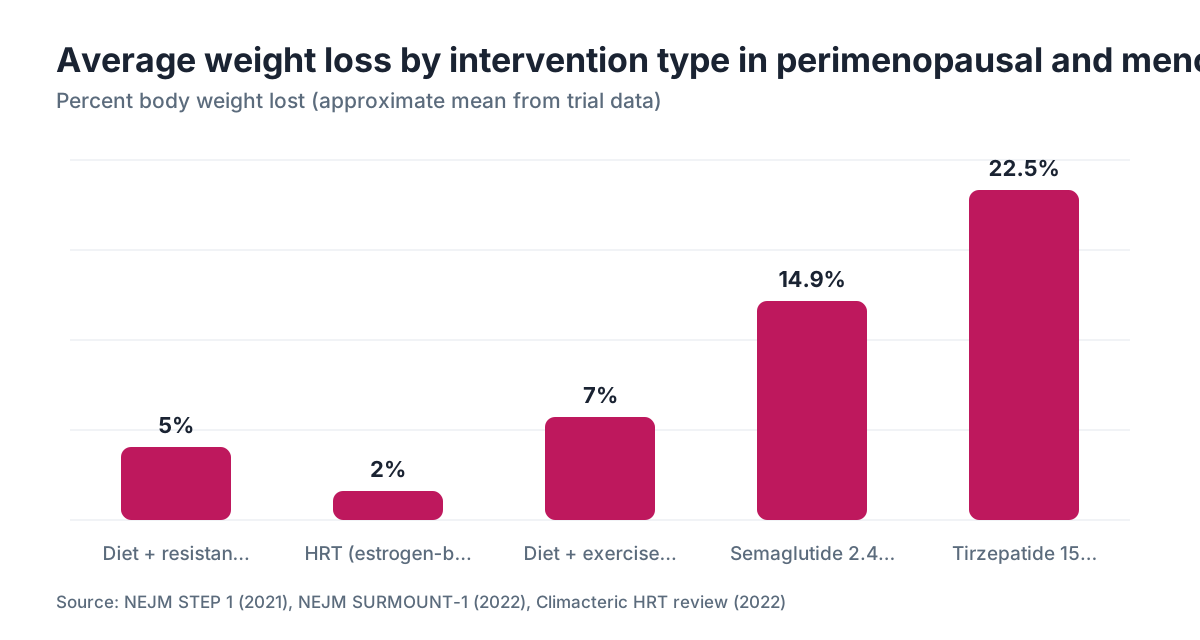
A 2022 review in Climacteric synthesized multiple randomized trials and found that estrogen therapy reduces visceral fat accumulation and partially preserves lean muscle mass in menopausal women [4]. The effect on the scale is modest, often less than 2 to 3 pounds of difference versus placebo, but the change in body composition (less visceral fat, more lean tissue) is meaningful for metabolic health and long-term disease risk.
The North American Menopause Society (NAMS) states in its 2022 position statement that hormone therapy is appropriate for healthy women under 60 or within 10 years of menopause onset who have bothersome vasomotor symptoms, and that its metabolic benefits are part of a favorable benefit-risk profile for that population [5]. That is not a blanket endorsement for everyone, but it does mean HRT is a legitimate tool for perimenopausal women, beyond hot flashes.
Progesterone matters here too. Micronized progesterone is generally weight-neutral or slightly favorable compared to synthetic progestins (medroxyprogesterone acetate), which can cause fluid retention and appetite changes in some women. If you are on combined HRT and noticing unexpected weight gain, the progestogen type is worth discussing with your provider.
The practical picture for most women: HRT addresses the hormonal root cause of fat redistribution and can make diet and exercise interventions more effective by restoring some of the metabolic environment from earlier in your reproductive years. It is not a weight loss drug, but it levels the playing field. You can learn more about delivery options on our hormone replacement therapy page and about the estrogen patch specifically.
What diet approach works best for weight loss in perimenopause?
No single diet gets crowned as definitively best for perimenopausal women. But several principles have real data behind them.
Protein is the most consistent winner. Higher protein intake (1.2 to 1.6 grams per kilogram of body weight per day) preserves lean muscle during caloric restriction, which matters enormously when estrogen-driven muscle loss is already underway [6]. For a 160-pound woman, that is roughly 87 to 116 grams of protein per day, which most women in this age group dramatically undereat. Spreading protein across meals rather than loading it all at dinner appears to improve muscle protein synthesis.
Caloric deficit still applies, but the math has shifted. A 250 to 500 calorie daily deficit is sustainable without triggering the cortisol spike that aggressive restriction causes. Very low calorie diets (under 800 calories per day) tend to accelerate muscle loss and raise cortisol in perimenopausal women, which is counterproductive.
Fiber helps with the insulin resistance component. Thirty grams of fiber per day from whole foods (legumes, vegetables, whole grains) slows glucose absorption and reduces the postprandial insulin spikes that drive visceral fat storage. The average American woman gets about 15 grams per day, half the target.
Ultra-processed foods deserve specific mention. A 2019 NIH randomized crossover trial by Hall et al. found that people eating an ultra-processed diet consumed an average of 508 more calories per day than those on an unprocessed diet, even when the diets were matched for presented calories and macronutrients [7]. The mechanism involves disrupted satiety signaling, which is already fragile in perimenopause.
Timed eating windows (16:8 intermittent fasting) have some trial data supporting modest weight loss, but no specific perimenopausal trials make a strong case for it over continuous calorie reduction. If it helps you reduce overall intake without triggering restriction-rebound cycles, it is a reasonable tool. If it makes you ravenous by dinner, it is probably not the right fit.
Alcohol is worth flagging. Even moderate alcohol intake disrupts sleep architecture, raises cortisol, impairs liver metabolism of estrogen, and adds empty calories. Many women notice that cutting back from 2 drinks a night to 2 to 3 a week produces noticeable changes in weight, sleep, and hot flash frequency.
How much does exercise matter, and what kind?
Exercise matters a lot, but not primarily for the calorie burn. The calorie math is often disappointing: a 45-minute run burns roughly 350 to 400 calories for a 150-pound woman, which is easily undone by a slightly larger meal. The real value of exercise in perimenopause is what it does to muscle mass, insulin sensitivity, bone density, cortisol regulation, and sleep quality.
Resistance training is the single most evidence-supported exercise intervention for perimenopausal body composition. A 2021 meta-analysis in Menopause found that resistance training in peri and postmenopausal women significantly reduced body fat percentage and preserved or increased lean mass [8]. Two to three sessions per week with progressive overload (meaning you increase resistance or volume over time) is the minimum effective dose. Compound movements like squats, deadlifts, rows, and overhead presses recruit the most muscle tissue.
Cardio is not useless. High-intensity interval training (HIIT) improves insulin sensitivity and has some evidence for reducing visceral fat specifically, compared to steady-state cardio. Two HIIT sessions per week alongside two resistance sessions is a reasonable combination for perimenopausal women who can tolerate the intensity.
Zone 2 cardio (sustained moderate effort, about 60 to 70 percent of max heart rate for 30 to 60 minutes) supports mitochondrial function and fat oxidation over time. Walking briskly for 45 minutes most days has real metabolic benefit and is sustainable for most women.
Bone density deserves a mention here. Perimenopause is when bone loss accelerates sharply, and weight-bearing exercise is one of the few modifiable factors that counters it. Resistance training is weight-bearing. If you have not had a bone density test, perimenopause is a reasonable time to establish a baseline.
Do GLP-1 medications like semaglutide work for perimenopausal weight loss?
They work. The evidence is strong, though most of the major trials were not run exclusively in perimenopausal women, so some extrapolation is involved.
Semaglutide (Wegovy) was studied in the STEP 1 trial, which enrolled adults with obesity or overweight plus a weight-related condition. Participants lost an average of 14.9 percent of body weight over 68 weeks on 2.4 mg weekly, versus 2.4 percent on placebo [9]. Tirzepatide (Zepbound), the dual GIP/GLP-1 agonist, showed even larger effects in the SURMOUNT-1 trial, with up to 22.5 percent average body weight loss at the highest dose [10].
For perimenopausal women specifically, GLP-1 medications hit several of the hardest drivers of weight gain: they reduce appetite and food cravings, slow gastric emptying, and improve insulin sensitivity. The appetite suppression is especially relevant because perimenopausal sleep disruption and hormonal shifts elevate hunger hormones. GLP-1 medications dampen that signal directly.
The practical question is whether GLP-1s work better or differently in women on HRT versus not. There is no high-quality trial answering that specific question yet. Mechanistically, estrogen therapy improves insulin sensitivity through one pathway, and GLP-1 agonists improve it through another, so the combination is theoretically additive. Some clinicians use both together for women with significant metabolic burden.
WomenRx providers work with perimenopausal women on exactly this combination, evaluating whether hormonal optimization, a GLP-1, or both make sense based on individual symptom profiles and metabolic labs.
If you want to compare the two main GLP-1 options in detail, see semaglutide vs tirzepatide or the deeper semaglutide for weight loss overview. For women who cannot access brand-name options, compounded semaglutide is another route worth understanding.
Side effects are real: nausea, constipation, and muscle loss if protein intake is inadequate. The muscle loss concern is worth taking seriously in perimenopause, where sarcopenia risk is already elevated. Women on GLP-1s should prioritize protein (at or above the 1.2 to 1.6 g/kg target) and keep resistance training.
What role does sleep play in perimenopause weight loss?
Sleep is not a soft wellness recommendation. It is a core metabolic lever.
Chronic sleep under 7 hours a night is associated with higher BMI, greater visceral fat, and worse insulin sensitivity in multiple large epidemiological studies. The mechanism runs through ghrelin and leptin: one night of partial sleep deprivation raises ghrelin by about 15 percent and lowers leptin by a similar amount, increasing hunger and reducing satiety the next day [11]. Do this every night for months because of hot-flash-disrupted sleep, and the cumulative effect on weight is substantial.
Hot flash management directly improves sleep and thus supports weight loss efforts. HRT is the most effective treatment for hot flashes, cutting their frequency by 75 percent or more in most women [5]. Non-hormonal options like fezolinetant (Veozah, FDA-approved in 2023) or cognitive behavioral therapy for insomnia (CBT-I) are alternatives for women who cannot or prefer not to take hormones.
Sleep hygiene interventions that matter: keeping the bedroom cool (65 to 68 degrees Fahrenheit is the research-supported range), blocking light, holding a consistent wake time (more important than bedtime), and limiting alcohol, which suppresses REM sleep even in small amounts.
How does stress and cortisol affect weight during perimenopause?
Cortisol and estrogen are linked. When estrogen drops, the hypothalamic-pituitary-adrenal (HPA) axis becomes more reactive to stress, meaning the same life stressor that was manageable in your 30s now produces a larger and longer cortisol response.
Cortisol drives visceral fat storage through glucocorticoid receptors concentrated in abdominal fat cells. It also raises blood glucose, increases appetite for calorie-dense foods, and suppresses the thyroid axis, which slows metabolic rate. This is why perimenopausal women under significant life stress often find that even well-structured diet and exercise interventions stall.
Practical cortisol management is not about eliminating stress (not possible) but about reducing the physiological response to it. Evidence-based options include: resistance exercise (paradoxically, the acute cortisol spike from exercise improves HPA regulation over time), 10 to 20 minutes of daily mindfulness meditation (a 2018 Psychoneuroendocrinology meta-analysis found significant cortisol reductions with mindfulness-based interventions), and consistent sleep as discussed above.
Thyroid function is worth checking if weight loss is not responding to otherwise sound interventions. Perimenopause overlaps with the age at which autoimmune thyroid disease (Hashimoto's) becomes more common in women, and hypothyroidism produces a clinical picture that mimics or compounds perimenopausal weight gain.
What labs should you get if you're struggling to lose weight in perimenopause?
A symptom-only approach to perimenopausal weight management misses treatable causes. A reasonable baseline lab panel includes:
FSH and estradiol: FSH above 10 to 12 IU/L (especially on day 3 of the cycle) and fluctuating or low estradiol are markers of ovarian transition. These do not diagnose perimenopause on their own (FSH is highly variable during this phase), but they provide context.
Thyroid panel: TSH is the screen; if elevated, free T4 and TPO antibodies clarify whether autoimmune hypothyroidism is present. Subclinical hypothyroidism (TSH 4 to 10 mIU/L with normal T4) can cause real weight resistance.
Fasting insulin and fasting glucose (and ideally hemoglobin A1c): These reveal insulin resistance before it becomes frank type 2 diabetes. Many perimenopausal women have significantly elevated fasting insulin with normal fasting glucose, which represents a treatable metabolic state.
Fasting lipids: Estrogen withdrawal shifts the lipid profile toward higher LDL and triglycerides. This matters both for cardiovascular risk and as a marker of metabolic health.
Vitamin D: Deficiency is common, associated with higher BMI and insulin resistance, and easily corrected. A level below 30 ng/mL is low; many clinicians target 40 to 60 ng/mL.
DEXA scan: A DEXA scan measures body fat percentage and lean mass with precision. It is the only way to know whether your weight interventions are preserving muscle or burning it. Some providers include it; others do not. It is worth asking about if you are on a GLP-1 or aggressive caloric restriction.
How long does perimenopause last, and when will weight loss get easier?
Perimenopause lasts an average of 4 to 8 years, though the range is wide, from 1 year to over a decade [5]. The most disruptive hormonal volatility tends to occur in the 2 years before the final menstrual period, when estrogen swings are largest. After menopause (12 consecutive months without a period), estrogen stabilizes at a consistently low level, and many women find that their bodies become more predictable to manage, even if the new baseline requires ongoing effort.
The weight that accumulates during perimenopause does not automatically reverse after menopause. It requires active intervention. But the hormonal chaos of the transition does settle, which means the same diet and exercise strategies that felt futile during peak perimenopause can become more effective once the transition is complete.
Women who start evidence-based interventions (protein-forward diet, resistance training, and HRT when appropriate) during perimenopause tend to arrive at menopause with better body composition than those who wait. The transition is not a window you have to let close before acting.
For reference on timing: perimenopause age covers when the transition typically begins, and when does menopause start covers the endpoint of the transition.
What about supplements? Do any actually help?
Most supplements marketed for menopausal weight loss do not have meaningful clinical evidence. That is the honest answer. But a few have legitimate supportive data.
Magnesium (glycinate or malate, 200 to 400 mg at night) improves sleep quality in several small trials and may reduce insulin resistance. It is inexpensive and low-risk. This is one of the few supplements where the evidence is reasonable enough to try.
Creatine monohydrate (3 to 5 grams a day) has emerging evidence in postmenopausal women for supporting muscle mass when combined with resistance training. A 2021 meta-analysis in Nutrients found significant improvements in lean mass and muscle function in older women supplementing with creatine alongside exercise [12]. The data in perimenopausal women specifically is thinner, but the mechanism is sound.
Vitamin D supplementation makes sense if your level is below 30 ng/mL, but supplementing when you are already replete does not produce additional weight loss benefits.
Phytoestrogens (soy isoflavones, red clover) have weak and inconsistent evidence for both symptoms and weight. They are not harmful in food amounts but are not a meaningful intervention for weight loss.
Skip these: most commercial menopause weight loss supplements, raspberry ketones, green coffee extract, and anything promising rapid fat burning. The FTC has taken action against numerous such products for unsubstantiated claims, and none have solid RCT evidence in perimenopausal women.
What is the realistic timeline for weight loss during perimenopause?
Slower than you want. Faster than doing nothing.
With a solid protein-forward diet, consistent resistance training, and adequate sleep, a realistic target is 0.5 to 1 pound per week of fat loss, while preserving or slightly gaining lean mass. That adds up to 25 to 50 pounds over a year if sustained, but most people do not sustain perfect adherence, so planning for 15 to 25 pounds over 12 months is a more honest benchmark for women with significant loss goals.
With a GLP-1 medication added, the STEP 1 trial found 14.9 percent body weight loss over 68 weeks, which for a 200-pound woman is roughly 30 pounds [9]. SURMOUNT-1 showed up to 22.5 percent weight loss with tirzepatide at the highest dose [10], or about 45 pounds for the same starting weight. These are averages; individual results vary substantially.
The measurement that matters most in perimenopause is not the scale number but the waist circumference and body fat percentage. The scale can stay stable while visceral fat is dropping and muscle is building, which is a genuinely better metabolic outcome even though it is frustrating to not see the number move.
A waist circumference below 35 inches is the clinical threshold for lower cardiovascular and metabolic risk in women, per the NIH and American Heart Association. If yours is above that and declining, you are making real progress regardless of what the scale says.
Frequently asked questions
Is it possible to lose weight during perimenopause, or should I just accept it?
Yes, weight loss during perimenopause is possible, but it takes a different approach than earlier in life. The hormonal environment makes fat loss slower and muscle loss faster, so calorie restriction alone is often not enough. Combining higher protein intake, resistance training, sleep optimization, and hormonal evaluation (and sometimes HRT or a GLP-1) produces real results for most women who commit to the approach consistently.
Why am I gaining weight in my belly during perimenopause even though I have not changed my diet?
Falling estrogen shifts fat storage from the hips and thighs to the abdomen. Visceral (belly) fat has a higher density of glucocorticoid receptors and is more sensitive to cortisol and insulin. The SWAN study confirmed this redistribution happens specifically during the menopause transition, independent of total calorie intake. Your diet has not necessarily changed, but where your body stores energy has.
Does HRT cause weight gain?
No. Well-designed studies consistently show that HRT does not cause weight gain and may slightly reduce visceral fat compared to no treatment. The confusion comes from older studies of high-dose synthetic hormones. Modern low-dose bioidentical or transdermal hormone therapy is weight-neutral to modestly favorable for body composition. Fluid retention in the first few weeks is real and temporary, which can look like weight gain on the scale.
Can semaglutide or tirzepatide be used during perimenopause?
Yes. FDA-approved semaglutide (Wegovy) and tirzepatide (Zepbound) are approved for adults with BMI over 30, or over 27 with a weight-related condition. There is no contraindication specific to perimenopause. Some providers prescribe GLP-1 medications alongside HRT for women with significant metabolic burden. Muscle preservation through adequate protein and resistance training is especially important when using these medications during perimenopause.
What is a healthy rate of weight loss for a perimenopausal woman?
Half a pound to one pound per week is realistic and sustainable. Faster loss, especially from very low calorie diets, tends to accelerate muscle loss, raise cortisol, and is rarely sustained. Body composition change (less visceral fat, more lean mass) matters as much as scale weight. A DEXA scan every 6 to 12 months gives you real data on whether you are losing fat or muscle.
How much protein should I eat during perimenopause to lose weight?
Aim for 1.2 to 1.6 grams of protein per kilogram of body weight per day. For a 150-pound (68 kg) woman, that is about 82 to 109 grams per day. Spread it across at least three meals rather than concentrating it at dinner. Muscle protein synthesis peaks when each meal delivers 25 to 40 grams of complete protein. Most perimenopausal women eat significantly less protein than this, which accelerates the muscle loss that slows metabolism.
Does intermittent fasting work for perimenopause weight loss?
Small trials show modest weight loss with 16:8 intermittent fasting, but no evidence shows it outperforms continuous caloric restriction matched for total calories. For perimenopausal women already dealing with disrupted sleep and elevated cortisol, skipping breakfast can worsen cortisol patterns in some individuals. If intermittent fasting helps you reduce total intake without triggering rebound eating, it is reasonable. If it makes you ravenous or anxious, it is not worth it.
Will losing weight help reduce hot flashes and other perimenopause symptoms?
Modestly, yes. Higher BMI is associated with more frequent and severe hot flashes, and weight loss studies show some reduction in vasomotor symptoms with significant weight loss (10 percent or more of body weight). The effect size is smaller than HRT. For women with significant hot flashes, HRT addresses the root cause far more effectively than weight loss alone.
Why does exercise not seem to be helping me lose weight during perimenopause?
Cardio exercise burns fewer calories than most people expect, and the body often compensates by reducing non-exercise activity. The bigger issue is that cardio without resistance training does not counter the muscle loss driving metabolic slowdown. If you are doing primarily cardio, shifting to at least two weekly resistance training sessions often restarts progress. Diet (especially protein intake) and sleep quality also matter more than exercise volume.
Should I see a doctor before trying to lose weight in perimenopause?
Getting baseline labs is genuinely useful, beyond a cautious recommendation. Testing thyroid function, fasting insulin, glucose, and vitamin D can reveal treatable contributors to weight resistance. If you are considering HRT or a GLP-1 medication, both require a prescription and a clinical evaluation. Trying to address perimenopausal weight gain purely through diet and exercise without evaluating the hormonal picture often produces frustrating results.
Is perimenopause weight gain permanent?
No. It is not automatically reversed either. Weight gained during perimenopause takes active intervention to lose, and the post-menopausal metabolic environment stays different from your premenopausal baseline. But many women lose significant weight after menopause with the right approach. The hormonal volatility of the transition does settle, and strategies that felt useless during peak transition often work better afterward.
What is the difference between perimenopause and menopause weight gain?
Perimenopause weight gain is driven largely by estrogen volatility and the sleep disruption from hot flashes, a chaotic hormonal environment. Menopause weight gain (after 12 months without a period) happens in a more stable low-estrogen state. Both involve visceral fat accumulation and muscle loss, but the perimenopause phase is often more acutely disruptive. Most women gain the most weight in the 2 to 3 years surrounding the final menstrual period.
Sources
- Endocrine Society, Davis SR et al., Journal of Clinical Endocrinology & Metabolism 2012
- NIH, Study of Women's Health Across the Nation (SWAN), Archives of Internal Medicine 2003
- Pontzer H et al., Science 2021, 'Daily energy expenditure through the human life course'
- Greendale GA et al., Climacteric 2022, estrogen therapy and body composition review
- North American Menopause Society, 2022 Hormone Therapy Position Statement
- Stokes T et al., Nutrients 2018, 'Recent Perspectives Regarding the Role of Dietary Protein for the Promotion of Muscle Hypertrophy'
- Hall KD et al., Cell Metabolism 2019, 'Ultra-Processed Diets Cause Excess Calorie Intake and Weight Gain'
- Balachandran A et al., Menopause 2021, meta-analysis of resistance training in peri and postmenopausal women
- Wilding JPH et al., New England Journal of Medicine 2021, STEP 1 trial, semaglutide 2.4 mg
- Jastreboff AM et al., New England Journal of Medicine 2022, SURMOUNT-1 trial, tirzepatide
- Spiegel K et al., PLOS Medicine 2004, sleep and appetite hormones
- Chilibeck PD et al., Nutrients 2021, creatine supplementation meta-analysis in older women