Perimenopause weight gain: why it happens and what actually works
TL;DR: Yes, perimenopause causes real weight gain, typically 5 to 8 pounds over the transition, driven by falling estrogen, insulin resistance, cortisol shifts, and muscle loss. Diet and exercise help but rarely reverse it completely. Hormone therapy reduces fat redistribution to the belly. GLP-1 medications are emerging as a strong option when lifestyle alone fails.
Does perimenopause actually cause weight gain, or is it just aging?
Both, and separating them matters for treatment.
Aging alone adds roughly 0.5 kg (about 1 lb) per year to the average adult body from your 30s onward, mostly from slowing metabolism and muscle loss. Perimenopause adds something on top of that: a specific redistribution of fat toward the abdomen, driven by estrogen withdrawal. The SWAN study, a long-running multiracial cohort that tracked over 3,000 women across the menopause transition, found that women gained an average of 4 to 5 lbs over the study period and that intra-abdominal fat increased even in women whose total weight barely changed. [1]
So the scale doesn't always tell the full story. A woman can gain two pants sizes in the belly while the number on the scale barely moves. That's the perimenopause effect: less about total pounds and more about where fat goes.
The clinical term is central adiposity, and it matters beyond aesthetics. Visceral fat (the deep abdominal fat that surrounds your organs) is metabolically active. It produces inflammatory cytokines and is tightly linked to insulin resistance, elevated triglycerides, and cardiovascular risk. The North American Menopause Society (NAMS) states plainly that the menopause transition is associated with increased visceral fat accumulation independent of aging. [2]
The honest answer: if you're in your mid-40s and your waist is expanding even though you're eating the same way you always have, perimenopause is a major driver, not a personal failing.
What hormonal changes drive weight gain during perimenopause?
Estrogen is the headline actor, but it has a full supporting cast.
Estrogen. In your reproductive years, estradiol (the dominant estrogen) helps regulate fat distribution by keeping fat preferentially stored in the hips and thighs. Estrogen also influences leptin sensitivity and energy expenditure. As estradiol levels begin their erratic decline in perimenopause, starting anywhere from age 38 to 51 and averaging around 45, fat storage shifts centrally. [3] Receptors in visceral fat tissue are particularly sensitive to this change.
Insulin resistance. Estrogen has protective effects on insulin signaling. As it falls, cells become less responsive to insulin, so your body secretes more of it to do the same job. Higher circulating insulin promotes fat storage and makes fat mobilization harder. A 2020 analysis in Menopause found that insulin resistance worsens progressively across the menopausal transition, independent of BMI. [4]
Cortisol. Sleep disruption from night sweats and hot flashes elevates cortisol chronically. Cortisol directly promotes visceral fat deposition. Most perimenopausal women are in a low-grade cortisol-elevated state without any additional life stress, because broken sleep does that on its own.
Muscle loss (sarcopenia). Estrogen protects muscle tissue. Its decline speeds up muscle loss, and muscle burns more calories at rest than fat does. A woman who loses 3 to 5 lbs of muscle over the transition can drop her resting metabolic rate by 100 to 150 calories per day. That's a real caloric gap that stacks up over months and years.
Progesterone. Progesterone also declines, often before estrogen does, in early perimenopause. Lower progesterone can worsen sleep quality and increase water retention, though its direct effect on fat mass is smaller than estrogen's. Some women notice bloating or puffiness that gets mistaken for fat gain.
These mechanisms stack. It's not one switch flipping. It's multiple systems shifting at the same time, which is why perimenopause weight gain tends to feel sudden and resistant to strategies that used to work.
How much weight do most women gain during perimenopause?
Most women gain 5 to 8 lbs across the full transition, though the numbers are genuinely hard to pin down because studies vary by duration, ethnicity, and how they controlled for aging.
The most commonly cited figure from the SWAN cohort is approximately 4 to 5 lbs of total body weight over the menopausal transition. [1] Other longitudinal studies put the number closer to 5 to 8 lbs over the full perimenopause-to-postmenopause window, which can span 7 to 10 years for many women. A meaningful subset of women, roughly 20%, gain significantly more, 10 to 15 lbs or more, often those with insulin resistance going in, sedentary lifestyles, or significant sleep disruption.
Body composition tells a starker story. The SWAN data showed that even women who gained minimal weight lost lean mass and gained fat mass at the same time, a pattern sometimes called "weight creep with muscle loss." Waist circumference increased in nearly all groups regardless of total weight change. [1]
Ethnicity matters here. SWAN tracked African American, Hispanic, Chinese, Japanese, and white women. African American women tended to enter perimenopause with higher BMIs on average and had different patterns of fat distribution. Chinese and Japanese women tended to gain less total weight but still showed central fat redistribution. These differences are real and mean that general advice doesn't apply identically to every woman.
The practical takeaway: even modest total weight gain during perimenopause often comes with a disproportionate jump in waist measurement and metabolic risk. Tracking waist circumference alongside scale weight gives a fuller picture.
Why does belly fat specifically increase in perimenopause?
This is the question most women are actually asking. The belly expansion is the part that feels foreign and alarming.
Estrogen receptors are distributed throughout fat tissue, but visceral fat (intra-abdominal) responds differently to estrogen loss than subcutaneous fat (under the skin). When estradiol falls, the biological signal that directed fat toward the hips, thighs, and breasts weakens. The body defaults to a more "male-pattern" distribution: fat gathers around the organs in the abdomen. [2]
Lipoprotein lipase (LPL) is an enzyme that governs fat storage in specific depots. Estrogen suppresses LPL activity in abdominal fat and promotes it in hip and thigh fat. With less estrogen, LPL in the abdomen becomes more active, actively pulling fat into that compartment.
Cortisol compounds this. Visceral fat has a high density of glucocorticoid receptors, meaning it's especially responsive to cortisol. When perimenopausal sleep disruption keeps cortisol elevated, those already-primed visceral fat cells expand further.
The result: women in perimenopause often describe gaining weight "in a different place than before." That's not perception. That's biology. The same caloric surplus that used to add weight to your thighs now adds it to your waist.
Does perimenopause slow your metabolism, and by how much?
Yes, and the effect is real, though the magnitude is often overstated.
Resting metabolic rate (RMR) declines with age, roughly 1 to 2% per decade in adults. Muscle loss speeds this up during perimenopause, since muscle is the largest driver of RMR. A woman who loses 4 lbs of muscle, which is plausible over a 5-year perimenopausal window without resistance training, loses approximately 100 to 120 calories per day of resting burn. Over a year, that's a 36,000 to 44,000 calorie gap, the equivalent of 10 to 12 lbs. [5]
Thyroid function also warrants attention. Hypothyroidism becomes more common in women in their 40s and 50s, and its symptoms (weight gain, fatigue, cold intolerance) overlap heavily with perimenopause. Any woman gaining unexplained weight during this transition should have TSH checked. That's a basic step that gets skipped too often.
The metabolism slowdown from perimenopause itself, separate from muscle loss, appears to be modest, perhaps 50 to 100 calories per day from hormonal changes alone. The bigger lever is muscle mass. This is one strong reason resistance training (more than cardio) matters more in perimenopause than at any earlier life stage.
What does the research say about diet for perimenopause weight management?
Diet matters, but which diet matters less than most people think, and consistency matters more than any specific plan.
Caloric deficit remains the foundational mechanism. No hormone shift, including estrogen loss, overrides thermodynamics entirely. But the caloric deficit required to produce the same result is larger in a perimenopausal woman than in a younger woman eating the same foods, because of the insulin resistance, muscle loss, and metabolic slowdown described above.
Protein intake deserves emphasis. Higher protein intake, in the range of 1.2 to 1.6 g per kg of body weight per day, supports muscle preservation during a caloric deficit and increases satiety. Most studies on menopause-age women use this range. [5] Most women eating a standard American diet are getting considerably less.
Low-glycemic and Mediterranean-style eating patterns show consistent benefit in perimenopausal women. These approaches naturally lower insulin load, which helps address the insulin resistance component. A 2023 trial published in Menopause found that a plant-rich, low-fat diet with soy was associated with a reduction in hot flashes and modest weight loss. [6] The effect sizes were real but small: roughly 3 lbs over 16 weeks.
Intermittent fasting and time-restricted eating have enthusiastic advocates and some supportive data, but controlled trials in perimenopausal women specifically are thin. The honest summary: it works for some women and not others, and there's no good evidence it outperforms consistent caloric restriction for this age group.
Alcohol reduces fat oxidation and adds empty calories. Women in perimenopause are also more sensitive to alcohol's effects on sleep, which then elevates cortisol. Cutting alcohol, even partially, is one of the highest-return dietary changes for this age group.
Does hormone therapy help with perimenopause weight gain?
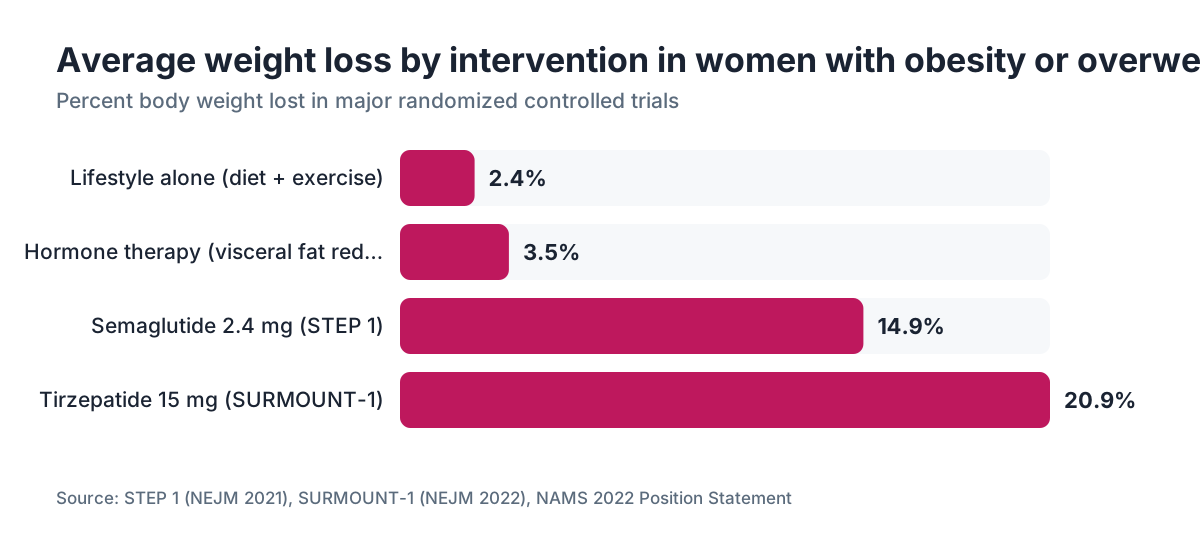
Hormone therapy (HT) does not produce dramatic weight loss on its own, but the evidence that it reduces fat redistribution to the abdomen is solid.
Multiple randomized controlled trials have found that estrogen-based hormone therapy blunts the gain in visceral fat during the menopause transition. A meta-analysis in Climacteric reviewed 23 trials and found that HT reduced waist circumference and visceral fat compared to placebo, with smaller effects on total body weight. [2] That distinction matters: HT appears to shift where fat goes more than how much total fat there is.
For many women, that shift is meaningful. A smaller waist and less visceral fat translate to lower cardiovascular and metabolic risk, even if the scale barely moves.
The decision to use hormone replacement therapy is genuinely individual. The current NAMS position statement (2022) affirms that for most healthy women under 60 or within 10 years of menopause onset, the benefits of hormone therapy outweigh the risks. [2] That framing has shifted meaningfully since the WHI study data were initially interpreted in 2002. The type of hormone, the route (oral vs. transdermal), and the progestogen used all affect the risk-benefit calculation.
One specific note on transdermal estrogen: unlike oral estrogen, the estrogen patch bypasses first-pass liver metabolism, which means lower impact on clotting factors and triglycerides. For women with elevated cardiovascular risk, this route is generally preferred.
HT is not a weight loss drug. But for women who are also dealing with hot flashes, sleep disruption, mood changes, and accelerating bone loss, treating the underlying hormonal deficiency does several jobs at once. If you're interested in what a full hormone evaluation looks like, WomenRx offers telehealth-based hormone assessments that include estradiol, FSH, and related labs.
See also: perimenopause age and when does menopause start for more on the timeline.
Can GLP-1 medications like semaglutide help with perimenopause weight gain?
Yes, and this is an area with genuinely strong data, even if most of the trials didn't specifically recruit perimenopausal women.
GLP-1 receptor agonists (semaglutide, tirzepatide) work by mimicking gut hormones that signal fullness, slow gastric emptying, and reduce appetite. They don't fix estrogen deficiency, but they address two of the biggest drivers of perimenopausal weight gain: excess caloric intake driven by disrupted hunger signals, and insulin resistance.
The STEP 1 trial (semaglutide 2.4 mg weekly) found that participants lost an average of 14.9% of body weight over 68 weeks versus 2.4% on placebo. [7] The SURMOUNT-1 trial (tirzepatide) showed even larger effects: up to 20.9% weight loss at the highest dose. [8] These trials included women across a wide age range, with substantial numbers of women in their 40s and 50s, though menopausal status wasn't reported as a subgroup variable.
For perimenopausal women specifically, the insulin-sensitizing effect is particularly relevant. Both semaglutide and tirzepatide improve insulin sensitivity, which directly counters one of the core mechanisms driving perimenopause weight gain.
The comparison between options matters. Semaglutide vs tirzepatide shows tirzepatide producing larger average weight loss in head-to-head data, partly because tirzepatide acts on both GLP-1 and GIP receptors. For women who haven't responded adequately to semaglutide, tirzepatide is a reasonable next step.
GLP-1s are not appropriate for everyone. They're FDA-approved for adults with BMI over 30, or over 27 with a weight-related comorbidity. [9] Women with a personal or family history of medullary thyroid carcinoma or MEN2 should not use them.
Cost is a real barrier. Brand-name Wegovy (semaglutide) lists at over $1,300 per month without insurance. Compounded semaglutide was available from 503B outsourcing facilities during the shortage period; FDA policy on compounding has shifted as brand supply has stabilized. Check current FDA status and your insurance coverage before assuming the brand is unaffordable.
WomenRx offers GLP-1 evaluation and prescribing through its telehealth platform for women who meet clinical criteria.
For more detail: semaglutide for weight loss and semaglutide.
What kind of exercise actually moves the needle during perimenopause?
Cardio alone is the wrong answer, and most women are only doing cardio.
Resistance training is the highest-leverage exercise for perimenopausal weight management. Building and maintaining muscle mass directly counters the metabolic slowdown from muscle loss, improves insulin sensitivity, and reduces visceral fat. A 2022 review in the Journal of Strength and Conditioning Research found that resistance training in peri- and postmenopausal women significantly reduced body fat percentage and waist circumference. [5] Two to three sessions per week of progressive resistance training (meaning the weights should get harder over time) is the minimum effective dose.
High-intensity interval training (HIIT) has strong evidence for visceral fat reduction specifically. Short bursts of high-intensity effort followed by recovery periods appear to preferentially burn abdominal fat, more so than steady-state cardio at the same caloric expenditure. Fifteen to twenty minutes of HIIT produces meaningful results.
Steady-state cardio (walking, cycling, swimming) still matters for cardiovascular health, stress management, and overall caloric balance. The mistake is treating it as the primary tool for weight management when it produces modest results for that specific goal.
Bone health is another reason resistance training matters. Estrogen decline speeds up bone density loss in perimenopause. Weight-bearing exercise stimulates bone formation. Any woman in perimenopause should be thinking about her bone density test baseline alongside her weight strategy.
Sleep is not a substitute for exercise, but it's nearly as important. Consistently sleeping less than 6 to 7 hours elevates ghrelin (hunger hormone), suppresses leptin (satiety hormone), raises cortisol, and directly promotes fat storage. Treating the sleep disruption of perimenopause, whether through hormone therapy, behavioral strategies, or both, has metabolic benefits that go well beyond mood.
When should you see a doctor about perimenopause weight gain?
Most women wait too long, partly because weight gain in middle age gets normalized in a way that masks treatable causes.
See a clinician if:
You've gained more than 10 lbs over 1 to 2 years without a clear dietary explanation. You have significant central weight gain even without much total scale change. You're experiencing symptoms that suggest thyroid dysfunction (fatigue, cold intolerance, hair loss, constipation) alongside weight gain. You have a family history of type 2 diabetes or cardiovascular disease, since metabolic risk compounds in perimenopause. You've tried reasonable dietary changes and exercise for 3 to 6 months without meaningful response.
A basic initial workup should include TSH, fasting glucose, HbA1c, a fasting lipid panel, and estradiol/FSH if perimenopause status is uncertain. This is not a full endocrine evaluation; it's a baseline. The results will tell you whether thyroid disease, prediabetes, or frank menopause are driving what you're experiencing, and that changes the treatment options available.
The goal of that visit isn't to get a weight loss prescription. It's to understand the mechanism so you can treat the right thing. Prescribing a GLP-1 to a woman whose weight gain is driven by undiagnosed hypothyroidism, without treating the thyroid, is putting the cart before the horse.
For context on the broader menopause picture, see menopause.
What are realistic expectations for losing weight during perimenopause?
Honest answer: slower than before, with more effort, but not hopeless.
A caloric deficit that used to produce 1 lb per week of loss may now produce 0.5 to 0.75 lbs per week, because of the hormonal and metabolic headwinds described in this article. That's still real progress. It just requires recalibrating expectations.
Combining interventions produces the best outcomes. Diet plus resistance training plus adequate sleep outperforms any single intervention. Adding hormone therapy (if clinically appropriate) further reduces visceral fat accumulation. Adding a GLP-1 medication on top of lifestyle changes produces the largest effects in trial data, with the STEP 1 trial showing nearly 15% weight loss with lifestyle support. [7]
Body composition goals are more useful than scale goals. Reducing waist circumference, increasing muscle mass, and improving metabolic markers (glucose, triglycerides, HDL) are all meaningful outcomes that may occur before, or even without, significant scale weight change.
Fad solutions and supplements have uniformly poor evidence in this population. No supplement has demonstrated clinically meaningful weight loss in perimenopausal women in controlled trials. That includes popular options like berberine, raspberry ketones, and most hormone-balancing blends sold online.
The perimenopausal years are not a time when your body works against you indefinitely. Postmenopause brings its own metabolic shifts, and many women find their weight stabilizes once they're through the transition and have adapted their lifestyle. Getting through perimenopause with minimal metabolic damage, by acting on the evidence now, is the practical goal.
Frequently asked questions
Does perimenopause cause weight gain even if I haven't changed my diet?
Yes. Falling estrogen increases insulin resistance, shifts fat storage centrally, and reduces resting metabolism through muscle loss. The SWAN study found women gained visceral fat even without significant total weight change. The same calories that maintained your weight at 38 will produce fat gain at 45 or 48, because the metabolic environment has genuinely changed.
How do I know if my weight gain is from perimenopause or something else like thyroid disease?
You need labs. Hypothyroidism is common in women over 40, its symptoms overlap almost completely with perimenopause, and it's easily treatable once identified. Ask your clinician for TSH, fasting glucose, HbA1c, a lipid panel, and estradiol and FSH. If TSH is elevated, that's a separate diagnosis that should be treated first before attributing everything to perimenopause.
At what age does perimenopause weight gain typically start?
Most women enter perimenopause between ages 45 and 51, but hormonal shifts can begin as early as the late 30s, a phase sometimes called early perimenopause. Weight gain and fat redistribution tend to speed up in the 2 to 3 years before the final menstrual period, when estrogen fluctuations are most pronounced. See our full breakdown at perimenopause age.
Can hormone therapy (HRT) help me lose the perimenopause belly?
Hormone therapy reduces visceral fat accumulation and waist circumference in multiple controlled trials, but it doesn't produce large-scale weight loss on its own. Think of it as stopping the redistribution process rather than reversing existing fat. A meta-analysis in Climacteric found HT reduced waist circumference compared to placebo across 23 trials. It works best as part of a broader approach.
Is semaglutide safe and effective for perimenopausal women?
The STEP 1 trial showed 14.9% average weight loss over 68 weeks with semaglutide 2.4 mg weekly in adults with obesity or overweight plus a comorbidity. That trial included women across middle-age groups. Semaglutide also improves insulin sensitivity, which directly addresses a core perimenopausal mechanism. It's FDA-approved for obesity and is not appropriate for those with personal or family history of medullary thyroid cancer or MEN2.
Does intermittent fasting work for perimenopause weight loss?
Some women find time-restricted eating helpful, but controlled trials specifically in perimenopausal women are limited. The mechanism that makes it attractive, reducing insulin load over time, is sound. The honest summary from current evidence: it works similarly to caloric restriction in most studies, meaning it helps if you actually eat less within your window. It doesn't have a special hormonal benefit beyond that.
Why is perimenopause weight gain so hard to lose with diet and exercise alone?
Because diet and exercise address caloric balance, while perimenopause weight gain involves multiple hormonal changes at once: estrogen loss shifting fat centrally, insulin resistance increasing fat storage efficiency, cortisol from poor sleep promoting visceral fat, and muscle loss lowering resting metabolism. Addressing only one lever while the others stay active produces slow, frustrating results. The most effective approaches target at least two of these at the same time.
Does losing weight during perimenopause reduce hot flashes?
There's modest evidence that excess body weight worsens hot flash frequency and severity, and that weight loss can reduce them. A 2010 trial in Menopause found that a 10-week dietary weight loss intervention produced significant reductions in hot flash frequency compared to controls. The effect size was real but modest. Hormone therapy remains the most effective intervention for hot flashes, with weight loss as a useful complement.
How does progesterone affect weight in perimenopause?
Progesterone declines earlier in perimenopause than estrogen, often in the early-to-mid 40s. It has a smaller direct effect on fat mass than estrogen, but low progesterone worsens sleep quality and can cause water retention and bloating. Some women using micronized progesterone report improved sleep, which indirectly helps with the cortisol-driven fat storage that poor sleep causes. Its direct weight effect is modest.
What is the best diet for perimenopause belly fat?
No single diet has won in head-to-head trials specifically for perimenopausal belly fat. The consistent findings across studies: higher protein intake (1.2 to 1.6 g per kg body weight) preserves muscle; lower glycemic eating reduces insulin load; Mediterranean-style patterns reduce inflammatory markers and triglycerides. Reducing alcohol has a disproportionate benefit for abdominal fat in this age group. Consistency beats any specific label.
Will the weight gain stop after menopause?
Often, yes. The most rapid fat redistribution typically occurs in the 2 to 3 years surrounding the final menstrual period. Many women find weight stabilizes in postmenopause once the hormonal turbulence settles, though some metabolic changes persist. Postmenopausal women still benefit from resistance training, protein-adequate diets, and hormone therapy for cardiovascular and bone health, even if the active weight gain phase has eased.
Should I get a bone density test if I'm gaining weight during perimenopause?
Weight and bone loss are driven by the same hormonal change: estrogen decline. NAMS recommends considering bone density testing (DEXA scan) for women under 65 who have risk factors for osteoporosis, including early menopause, low body weight, or prolonged estrogen deficiency. If you're in perimenopause and addressing metabolic health, adding a baseline bone density test makes sense. See the full guide at bone density test.
Is tirzepatide better than semaglutide for weight loss during perimenopause?
Head-to-head data (SURMOUNT-5) shows tirzepatide produces greater average weight loss than semaglutide: approximately 20% versus 15% in trial populations. Both drugs improve insulin sensitivity, which is relevant in perimenopause. Tirzepatide acts on two receptors (GLP-1 and GIP) versus semaglutide's one. Neither drug has been tested specifically in perimenopausal subgroups, so individual response still varies. See the full comparison at semaglutide vs tirzepatide.
How much does it cost to treat perimenopause weight gain?
Costs span a wide range. Hormone therapy via an estrogen patch and progesterone can run $30 to $100 per month with insurance, more without. Brand-name GLP-1 medications (Wegovy, Zepbound) list above $1,000 per month, though insurance coverage varies and patient assistance programs exist. Telehealth evaluation fees are typically $100 to $200 per visit. The highest-return low-cost intervention remains resistance training, which requires only a basic set of weights.
Sources
- SWAN Study, Sowers et al., American Journal of Epidemiology, 2007
- North American Menopause Society (NAMS), 2022 Hormone Therapy Position Statement
- National Institute on Aging, NIH, Menopause
- Janssen et al., Menopause, 2020, insulin resistance across menopausal transition
- Stanton et al., Journal of Strength and Conditioning Research, 2022
- Barnard et al., Menopause, 2023, plant-based diet and hot flashes
- Wilding et al. (STEP 1 trial), New England Journal of Medicine, 2021
- Jastreboff et al. (SURMOUNT-1 trial), New England Journal of Medicine, 2022
- FDA, Wegovy (semaglutide) prescribing information and label
- Endocrine Society, Clinical Practice Guidelines
- Huang et al., Menopause, 2010, dietary weight loss and hot flashes
- NIH Office of Women's Health, Menopause