Perimenopause vs menopause symptoms: what's actually different
TL;DR: Perimenopause is the transition before menopause. It lasts 4 to 10 years on average and brings irregular periods plus symptoms driven by fluctuating hormones. Menopause is a single point in time: 12 straight months with no period. After that day, you're postmenopausal. The symptoms overlap heavily, but their triggers, timing, and best treatments differ in ways that change what you should do.
What is the difference between perimenopause and menopause?
Perimenopause and menopause are not two names for the same thing, though most people use them that way. Perimenopause is the transition, sometimes called the menopausal transition. It begins when your ovaries start making less estrogen and progesterone, and it ends with your final menstrual period. Menopause is the finish line: 12 consecutive months without a period, by clinical definition [1]. The day after you hit that mark, you are postmenopausal.
That distinction changes how doctors treat you. During perimenopause, estrogen does not drop in a straight line. It surges and crashes without warning, sometimes spiking above premenopausal levels before falling again. That volatility, more than low estrogen itself, drives many of the most disruptive symptoms. Once you are postmenopausal, estrogen settles at a persistently low level and symptoms often stabilize, though they do not always disappear.
Most women enter perimenopause in their mid-40s. Some start in their late 30s. Perimenopause age varies more than most clinicians let on. If you want to know when the endpoint tends to arrive, when does menopause start covers the population data in detail. The North American Menopause Society puts the median age of natural menopause in the United States at 51.4 years [1].
How long does perimenopause last compared to menopause?
Perimenopause lasts anywhere from a few months to about 14 years, and most women spend 4 to 10 years in it [2]. That range is real, not a data artifact. Women who enter perimenopause earlier tend to have a longer transition. Smokers reach menopause about 1 to 2 years earlier than nonsmokers on average [2].
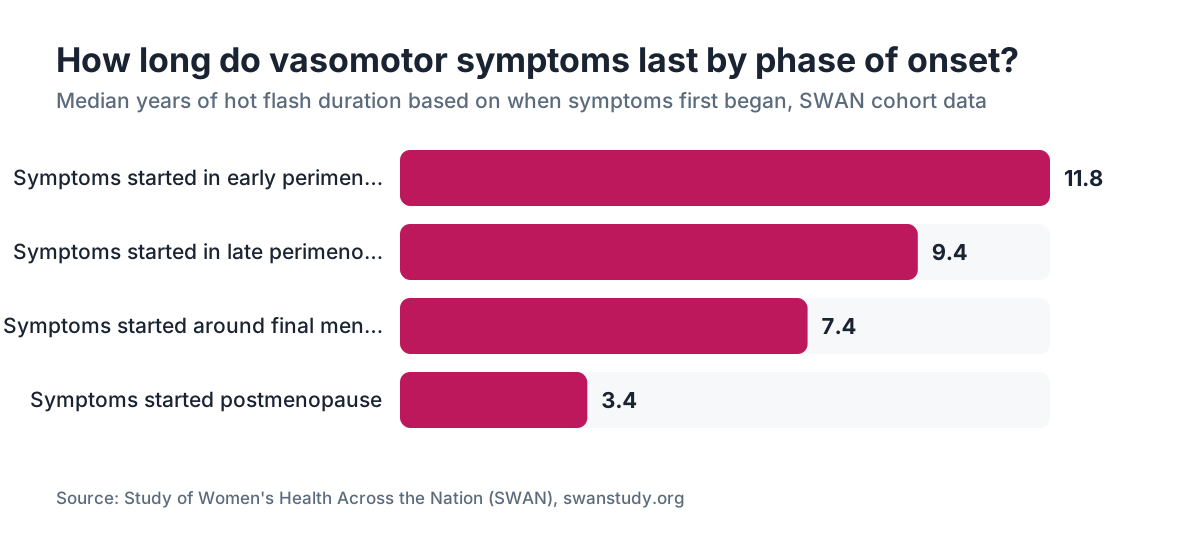
Menopause itself is not a phase at all. It lasts one day in the technical sense: the anniversary of your last period. Everything after that date is postmenopause, and it runs for the rest of your life. Postmenopausal symptoms can persist for years. Hot flashes last a median of 7.4 years in women who first get them during perimenopause, according to the Study of Women's Health Across the Nation [3].
So if you're asking how long you'll feel like this, the honest answer depends on when your symptoms started relative to your final period. Start early in the transition, and you're likely in for a longer total run of symptoms.
What symptoms do perimenopause and menopause share?
The symptom lists overlap heavily because both phases involve declining and fluctuating estrogen. The shared symptoms include:
- Hot flashes and night sweats (vasomotor symptoms)
- Disrupted sleep
- Vaginal dryness and discomfort during sex
- Mood changes including irritability, anxiety, and low mood
- Brain fog and trouble concentrating
- Fatigue
- Joint aches
- Lower libido
- Urinary urgency or more frequent infections
The Menopause Rating Scale, a validated research tool, tracks 11 symptom domains and finds heavy overlap between perimenopausal and postmenopausal women on almost every one [4]. The difference is usually intensity and predictability, not whether a symptom shows up at all.
Irregular periods are the one symptom unique to perimenopause. Once you've gone 12 months without a period, you are by definition no longer perimenopausal. Any bleeding after that point is postmenopausal bleeding and needs a medical workup to rule out endometrial cancer [1].
For the full arc of the transition, the menopause overview is a good place to start.
How do hot flashes differ between perimenopause and menopause?
Hot flashes are the most reported symptom in both phases. About 75 to 80 percent of women in the United States get them at some point during or after the transition [3]. But their character shifts between phases.
In perimenopause, hot flashes tend to come in unpredictable clusters tied to estrogen swings. Many women notice them get worse in the days before a period, when estrogen drops sharply. The erratic hormone environment means some months are far worse than others.
In postmenopause, estrogen is consistently low rather than volatile. For some women, that means hot flashes become more predictable or ease off over time. For others, they intensify in the first year or two after the final period before improving. SWAN found that women who reported their first hot flash in late perimenopause had a shorter total run of symptoms than women whose flashes started earlier [3].
Night sweats are hot flashes that happen while you sleep. They fragment sleep architecture, cut slow-wave sleep, and drive much of the fatigue and mental fog women in this transition describe. Treat the vasomotor symptoms and sleep often improves, which then lifts mood and thinking too.
What symptoms are unique to perimenopause vs postmenopause?
| Symptom | Perimenopause | Postmenopause | |---|---|---| | Irregular periods | Yes, defining feature | No (any bleeding = abnormal) | | Heavy or prolonged bleeding | Common | Not expected; evaluate | | Unpredictable hormone surges | Yes | No (estrogen stays low) | | Hot flashes | Yes | Yes, often continues | | Vaginal dryness | Developing | Often more pronounced | | Bone loss acceleration | Beginning | Accelerates in first 1-2 years post-menopause | | Cardiovascular risk shift | Starting | More marked increase | | Mood volatility tied to cycle | Yes | Less cycle-linked |
Perimenopause is hormonally noisier. The swings in estrogen and progesterone bring back PMS-like symptoms in women who hadn't had them for years, cyclical breast tenderness, and the sense that your body just does what it wants.
Postmenopause carries its own concerns, and they're less about how bad you feel day to day and more about long-term health. Bone loss accelerates most sharply in the first two years after menopause, when women lose 2 to 3 percent of bone mineral density per year [5]. Cardiovascular risk also climbs after estrogen withdrawal. These aren't dramatic daily symptoms, which is exactly why they slip past unaddressed. Most major guidelines recommend a bone density test starting at menopause or age 65, whichever comes first.
How do you know which phase you are actually in?
This is where most women get frustrated, because there's no single reliable at-home test. Blood tests for FSH (follicle-stimulating hormone) and estradiol give clues, but they swing wildly during perimenopause. FSH can be normal one week and high the next. A single elevated FSH does not confirm menopause [1].
The clinical standard for confirming menopause is the 12-months-without-a-period rule, which is backward-looking by nature. You only know you've reached menopause after it already happened.
The STRAW+10 staging system, built by a group of reproductive aging researchers and backed by major societies, gives clinicians a framework to stage the transition based on menstrual pattern more than hormone levels [6]. It splits the transition into early and late perimenopause by how irregular periods have become. Late perimenopause is the stage with periods more than 60 days apart.
Here's the practical read. If your periods are getting irregular and you have any of the overlapping symptoms, you're likely in perimenopause. If you've had no period for 12 months and weren't on hormonal contraception that would suppress bleeding, you've reached menopause. On hormonal birth control, timing is harder to call, because the pill or IUD can mask cycle changes.
For a breakdown of typical timing by age, menopause age has population-level data.
Does weight gain happen in perimenopause, menopause, or both?
Both, and the mechanism shifts between phases. During perimenopause, estrogen swings affect insulin sensitivity and where fat lands. Women start piling on more visceral fat, the metabolically active fat around the abdominal organs, even without a change in total body weight [7]. Calories in often haven't changed. The body composition has.
After menopause, persistently low estrogen pushes further shifts in fat distribution and a lower resting metabolic rate. Plenty of postmenopausal women find the tricks that used to hold their weight steady just stop working.
This is one reason GLP-1 receptor agonists have drawn so much attention from women in and past the transition. The SURMOUNT-1 trial of tirzepatide showed a 20.9 percent mean body weight reduction in adults with obesity or overweight plus a weight-related condition, though that trial wasn't specifically in menopausal women [8]. Semaglutide in the STEP 1 trial showed 14.9 percent mean weight reduction on 2.4 mg weekly [9]. Neither trial broke out results by menopausal status, but these drugs act on appetite regulation and gastric emptying, which matter regardless of hormonal phase.
If you're weighing GLP-1 options during this transition, semaglutide for weight loss covers the evidence. For a head-to-head, semaglutide vs tirzepatide is worth reading before any prescribing conversation.
How do mood and cognitive symptoms compare between perimenopause and menopause?
Perimenopause carries a higher risk of new depressive symptoms than any other reproductive stage in a woman's life, according to a 2018 analysis in JAMA Psychiatry that tracked women across the transition [10]. The hormonal volatility, more than low estrogen, looks like the driver. Women who are sensitive to hormonal change, meaning those with a history of PMS or postpartum depression, carry notably higher risk.
Brain fog also peaks during the transition. The word-finding gaps and short-term memory lapses feel alarming to a lot of women in their 40s. Current evidence says these changes are real but largely reversible. The Cognition substudy of SWAN found that processing speed and verbal memory dipped during the transition and then stabilized or improved in postmenopause [3].
That rebound is worth knowing. Many women fear early dementia. Most of them do not have it. The brain is adapting to a new hormonal environment, and that takes time.
In postmenopause, mood tends to settle for women who aren't dealing with ongoing sleep disruption from hot flashes. The link between hot flashes and mood is partly causal: bad sleep makes everything worse. Treating the flashes often does more for mood than treating the mood directly.
What are the treatment options and do they differ by phase?
Treatment is largely the same across perimenopause and early postmenopause, with a few nuances.
Hormone therapy is the most effective treatment for vasomotor symptoms in both phases. The FDA-approved indication covers moderate to severe hot flashes and night sweats, and the evidence supports its use to prevent osteoporosis [11]. The timing hypothesis, supported by the Women's Health Initiative Memory Study and later re-analyses, says that starting hormone therapy closer to the onset of menopause, within 10 years or before age 60, carries a more favorable risk-benefit profile than starting it later [1].
For women in perimenopause who still have a uterus, progesterone goes alongside estrogen to protect the uterine lining. Progesterone explains the difference between synthetic progestins and bioidentical micronized progesterone, which matters for both how well it works and its side effects. Delivery method matters too: the estrogen patch skips first-pass liver metabolism and carries a lower clot risk than oral estrogen in observational data [12].
Non-hormonal options with real evidence behind them include paroxetine 7.5 mg, the only FDA-approved non-hormonal treatment for hot flashes, plus fezolinetant (a neurokinin B receptor antagonist approved in 2023), gabapentin, and cognitive behavioral therapy for hot flashes. Local vaginal estrogen is safe and effective for genitourinary symptoms even in women who can't or won't use systemic hormones.
A telehealth platform like WomenRx can connect you with clinicians who work in this transition all day and can figure out whether hormone therapy or something else fits your history, without you having to talk a reluctant general practitioner into it.
Hormone replacement therapy has the full breakdown of the current evidence, the risks, and how prescribing has changed since the early 2000s.
Can symptoms of perimenopause and menopause be mistaken for other conditions?
Yes, all the time. This is a real problem in practice, not a rare edge case.
Hypothyroidism produces fatigue, weight gain, mood changes, and cognitive fog. It gets more common with age in women, and it can show up right alongside the transition. A TSH test is a reasonable first step when symptoms are prominent.
Anxiety disorders and depression can be worsened by, or mistaken for, the mood symptoms of perimenopause. The distinction matters, because antidepressants alone may not touch the underlying hormonal driver.
Iron deficiency anemia from heavy perimenopausal bleeding is common, and the fatigue it causes gets chalked up entirely to hormones.
Palpitations in perimenopause are often vasomotor in origin, but they need a cardiac workup if they're frequent, sustained, or come with chest pain or fainting.
Autoimmune conditions, including rheumatoid arthritis, can first show up as joint pain in midlife women, mimicking the joint aches of the transition.
All that overlap is why a thoughtful workup, including thyroid function, CBC, iron studies, and fasting glucose, makes sense before you pin everything on perimenopause. A clinician who works in women's midlife health will usually run these alongside hormone panels.
What should you track to help your doctor distinguish perimenopause from menopause?
A menstrual calendar is the single most useful tool. Log the first day of each period and note anything unusual: heavier, lighter, spotting between periods. This lets a clinician place you in the STRAW+10 framework and flag abnormal patterns that need investigation.
Also worth tracking: symptom severity by day or week (several validated apps use the Greene Climacteric Scale or the Menopause Rating Scale), sleep hours, and any triggers you notice for hot flashes like alcohol, caffeine, heat, or stress.
If you've had a hysterectomy that left your ovaries in place, you no longer have periods to track. In that case, symptoms and hormone levels are the only signals you have, and FSH above 30 mIU/mL along with symptoms is often used clinically as evidence of ovarian failure, though single measurements aren't definitive [1].
Hormone testing early in the cycle (day 2 to 5 for FSH and estradiol) gives more meaningful data than a random draw. In late perimenopause, when cycles are irregular, good timing is harder to pin down. Your clinician may want a series of measurements over time rather than a single result.
Frequently asked questions
Can you be in perimenopause and still get pregnant?
Yes. Ovulation is irregular in perimenopause but it still happens, so pregnancy is possible. Women in perimenopause should use contraception until they've gone 12 months without a period if they don't want to conceive. Fertility drops sharply, but it isn't zero until menopause is confirmed. Unintended pregnancy rates in women 40 to 44 remain measurable in population data.
What blood tests confirm perimenopause or menopause?
No single blood test confirms either phase with certainty. FSH above 30 mIU/mL and low estradiol fit the transition or menopause, but FSH swings widely during perimenopause. Thyroid function, AMH (anti-Mullerian hormone), and estradiol together give a fuller picture. The clinical standard for menopause is still 12 consecutive months without a period, not a lab value.
How do I know if my irregular periods are perimenopause or something else?
Irregular periods in your 40s are most often perimenopause, but other causes matter: thyroid dysfunction, high prolactin, uterine fibroids or polyps, and uncontrolled diabetes can all disrupt cycles. A workup that includes TSH, prolactin, and a pelvic ultrasound is reasonable. Heavy irregular bleeding especially needs evaluation to rule out endometrial cancer, regardless of age.
At what age does perimenopause usually start?
Most women notice perimenopausal changes in their mid-to-late 40s, but symptoms can start in the late 30s. The average age of the final menstrual period is 51.4 years in the US, and the transition averages 4 to 10 years, which puts the typical start of perimenopause somewhere between 41 and 47. Genetics, smoking, and prior cancer treatment can shift it earlier.
Are hot flashes worse in perimenopause or after menopause?
It depends on the person. Some women find hot flashes worsen in the first year or two after the final period, when estrogen settles at its new low baseline. Others get the worst flashes in late perimenopause, when hormone swings are most erratic. SWAN data shows the median total hot flash duration is 7.4 years for women whose symptoms began in perimenopause.
Can perimenopause cause anxiety even without prior anxiety history?
Yes. New anxiety and depressive symptoms are far more common during perimenopause than at any other reproductive stage, per a 2018 JAMA Psychiatry analysis. The hormonal volatility, especially estrogen swings affecting serotonin and GABA pathways, appears responsible. Women with no prior psychiatric history can develop clinically significant anxiety during the transition. Hormone therapy sometimes reduces it more effectively than anxiolytics in this context.
Does hormone therapy work the same way in perimenopause and menopause?
Largely yes, but the formulation details differ. Perimenopausal women who still have a uterus need progesterone alongside estrogen. Those still having periods may need cyclical rather than continuous progesterone. When you start hormone therapy relative to menopause affects the risk-benefit math, with evidence favoring a start within 10 years of menopause or before age 60 for cardiovascular and cognitive outcomes.
What causes vaginal dryness and does it get worse after menopause?
Vaginal dryness comes from declining estrogen, which thins and dries vaginal tissue and cuts natural lubrication. It usually develops gradually in perimenopause and often gets more pronounced in postmenopause, when estrogen stays consistently low. Unlike hot flashes, which ease over time for many women, vaginal dryness tends to worsen without treatment. Local vaginal estrogen (cream, ring, or tablet) is safe and highly effective.
Can GLP-1 medications help with menopause weight gain?
GLP-1 receptor agonists like semaglutide and tirzepatide act on appetite regulation and metabolic factors behind midlife weight gain. The STEP 1 trial showed 14.9 percent mean weight loss with semaglutide 2.4 mg, and SURMOUNT-1 showed 20.9 percent with tirzepatide, though neither trial specifically enrolled menopausal women as a primary cohort. GLP-1s don't address hormonal drivers of body composition, so for some women they work best alongside hormone therapy.
Is brain fog during perimenopause permanent?
Current evidence says no for most women. SWAN cognitive data shows verbal memory and processing speed dip during the transition and then stabilize or improve in postmenopause. Brain fog during this time is real and disruptive, but it's not typically a sign of dementia. Treating sleep disruption from night sweats and managing hot flashes often improves cognitive function noticeably.
How does bone loss differ between perimenopause and postmenopause?
Bone loss starts accelerating in the two to three years before the final period and peaks in the first two years after menopause, when women can lose 2 to 3 percent of bone mineral density per year. After that, the rate slows but doesn't stop. This is why a bone density test is recommended at or around menopause, especially for women with added risk factors like smoking, low body weight, or a family history of fracture.
Do symptoms of perimenopause and menopause differ by race or ethnicity?
Yes, meaningfully. The SWAN study found that Black women report the most frequent and severe hot flashes and tend to have a longer duration of symptoms. Hispanic women report more somatic symptoms. Asian women generally report fewer hot flashes. These differences aren't fully explained by body mass, socioeconomic factors, or health behaviors, which points to biological and cultural components. Treatment thresholds and expectations may need to account for them.
What is postmenopause, and how is it different from menopause?
Postmenopause begins the day after you reach menopause (12 months without a period) and lasts the rest of your life. It's not a transition but a stable hormonal state marked by persistently low estrogen. Many symptoms improve in postmenopause, but long-term risks including osteoporosis and cardiovascular disease become more prominent. Genitourinary symptoms often worsen without treatment in this phase.
Sources
- North American Menopause Society (NAMS), Menopause Practice: A Clinician's Guide
- NIH National Institute on Aging, Menopause overview
- Study of Women's Health Across the Nation (SWAN), University of Michigan/NIH
- Heinemann et al., Menopause Rating Scale validation, Health and Quality of Life Outcomes 2004
- Bone Health and Osteoporosis Foundation
- Harlow et al., STRAW+10 staging system, Menopause 2012
- Lovejoy et al., Increased visceral fat and decreased energy expenditure during the menopausal transition, International Journal of Obesity 2008
- Jastreboff et al., SURMOUNT-1 trial of tirzepatide, NEJM 2022
- Wilding et al., STEP 1 trial of semaglutide 2.4 mg, NEJM 2021
- Bromberger & Epperson, Depression During and After the Perimenopause, JAMA Psychiatry 2018
- FDA, Hormone Therapy Drug Labels and Guidance
- Canonico et al., Hormone therapy and venous thromboembolism, Circulation 2007