Perimenopause vs menopause: what actually makes them different
TL;DR: Perimenopause is the transition leading up to menopause. It lasts roughly 4 to 10 years, with estrogen and progesterone swinging erratically. Menopause is one single day: 12 straight months without a period. Postmenopause is every day after that. Each stage has its own hormone pattern, its own symptoms, and its own treatment needs.
What is the actual difference between perimenopause and menopause?
Perimenopause is a process. Menopause is a moment. That one line clears up most of the confusion.
Nobody talks about these as separate things, so the mix-up makes sense. A woman walks into a doctor's office with hot flashes, wrecked sleep, and periods that come whenever they feel like it. She gets told she's "going through menopause." Technically, she's almost certainly in perimenopause.
Perimenopause starts when your ovaries begin making less estrogen and progesterone. That usually happens in your 40s, sometimes in your late 30s [1]. Cycles get irregular. Hormone levels swing hard instead of gliding down a smooth curve. The phase runs an average of 4 years, with a range of about 1 to 10 [2].
Menopause is the point where you've gone exactly 12 consecutive months with no period. That's the clinical definition, and it doesn't bend to how you feel. The average age in the United States is 51, with most women landing between 45 and 55 [3]. You can only name it looking backward. Once 12 months have passed, the date of your last period becomes your menopause date.
Postmenopause starts the day after and lasts the rest of your life. Estrogen stays low for good. The acute chaos of perimenopause quiets down, but the slow effects of low estrogen on your bones, your heart, and your urogenital tissue keep stacking up over the years [4].
Perimenopause is the earthquake. Menopause is the second the shaking stops. Postmenopause is living in the changed landscape after.
How long does perimenopause last compared to menopause?
Perimenopause averages about 4 years. Menopause lasts zero days. That's the whole comparison in two sentences, but the range on the perimenopause side is wide enough to matter.
The Study of Women's Health Across the Nation (SWAN), one of the largest long-term studies of the menopause transition, found the late perimenopause stage alone runs several years, and counting from the first irregular cycles the whole thing can stretch toward a decade [2]. Some women clear it in a year. Others sit in it for ten.
Menopause itself is a single calendar date. Nothing more.
Postmenopause is permanent. Reach menopause at 51 and you could spend 30 or more years there. That's a long stretch to live with estrogen at a fraction of what it was at 35, which is exactly why postmenopausal health (bone density, heart risk, cognitive changes) earns real attention instead of a pat on the back for "getting through it."
For a perimenopause age breakdown and more on when does menopause start, those two articles walk through the timeline in detail.
What do hormones look like in perimenopause vs menopause vs postmenopause?
The stages truly split apart here, and it matters because treatment follows the hormone pattern.
Perimenopause: Estrogen doesn't fall so much as lurch. Early on it can spike higher than a normal cycle before crashing. FSH (follicle-stimulating hormone) climbs as the pituitary shouts louder and louder at aging ovaries. Progesterone usually drops first, before estrogen, which is why irregular periods and broken sleep show up early. A single FSH or estradiol lab in perimenopause is close to meaningless, because the numbers can swing dramatically from one day to the next [5].
Menopause: By the transition point, estrogen has dropped a lot. FSH usually sits above 30 mIU/mL and often above 40. The Endocrine Society notes that a single FSH reading is unreliable during perimenopause precisely because estradiol and FSH bounce around day to day [5].
Postmenopause: Estradiol typically runs below 30 pg/mL, often under 20. Progesterone sits near zero because ovulation has stopped. FSH stays high. These low, steady levels are what drive the long-term risks postmenopausal women manage for decades.
| Stage | Estradiol range | Progesterone | FSH | |---|---|---|---| | Reproductive (for reference) | 30-400 pg/mL | Varies with cycle | 3-10 mIU/mL | | Perimenopause | Erratic, 10-400+ pg/mL | Declining, often low | Rising, 10-40+ mIU/mL | | Menopause (at the point) | Typically <50 pg/mL | Very low | >30-40 mIU/mL | | Postmenopause | <20-30 pg/mL | Near zero | >40 mIU/mL |
Are the symptoms different in perimenopause versus menopause and postmenopause?
The symptoms mostly overlap, but the timing and the intensity shift as you move through the stages.
In perimenopause, irregular bleeding is the signature. Hot flashes may start, though they're often milder than they get at the transition. Sleep trouble, especially waking at 3 or 4 in the morning, tends to arrive early and tracks with the drop in progesterone. Mood swings, brain fog, and breast tenderness are common here too, and they get far less attention than they should [6].
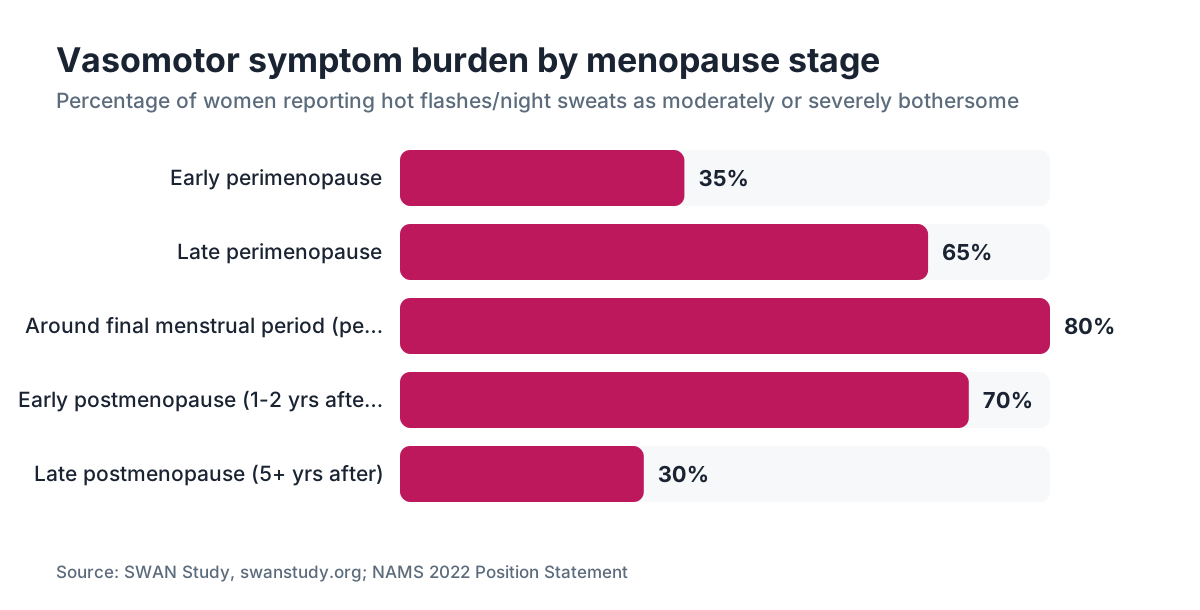
At the menopause transition and in early postmenopause, hot flashes usually peak. SWAN found that vasomotor symptoms (hot flashes and night sweats) are most frequent in the year or two around the final period [2]. About 80% of U.S. women get hot flashes. For 25 to 30%, they're bad enough to knock daily life off course [6].
Postmenopause often calms the acute stuff, then hands you new problems. Genitourinary syndrome of menopause (GSM), which covers vaginal dryness, painful sex, and urinary symptoms, hits roughly 50% of postmenopausal women. Unlike hot flashes, it doesn't fade on its own [7]. Bone loss speeds up. Heart risk climbs. Cognitive symptoms may lift or linger depending on the person.
Here's what nobody warns you about: you can still get pregnant in perimenopause. Ovulation is irregular, not gone. Contraception stays necessary until you've finished the 12 months that define menopause. That's not a footnote.
How do you know which stage you're actually in?
It's usually a clinical judgment call, not a clean lab number. That's the honest answer.
The Stages of Reproductive Aging Workshop (STRAW+10) criteria, published in 2011 and still the working framework, sort the stages mainly by menstrual cycle patterns rather than hormone levels [1]. Here's how to place yourself roughly:
Early perimenopause: Periods still come, but cycle length varies by more than 7 days from your normal. You skip a month now and then.
Late perimenopause: Two or more skipped cycles, with at least one gap of 60 days or longer. Symptoms tend to intensify here.
Menopause: 12 straight months with no period, not caused by illness, surgery, or medication.
Postmenopause: Everything after that 12-month mark.
If you've had a hysterectomy but kept your ovaries, cycle tracking is off the table. Symptoms and hormone labs (FSH, estradiol) become the main tools, though both are shaky in perimenopause. If you've had a hysterectomy plus removal of the ovaries (surgical menopause), you land in postmenopause immediately, often with rougher symptoms because the drop is abrupt instead of gradual [3].
Blood work earns its keep in confirmed postmenopause or when premature ovarian insufficiency is on the table (menopause before 40, which affects about 1% of women [3]). In the thick of perimenopause, a single FSH tends to confuse more than it clarifies.
Does treatment differ for perimenopause versus menopause versus postmenopause?
Yes, a lot. The hormones you might need, the doses, and the risks all move with the stage.
In perimenopause, progesterone often matters as much as estrogen, sometimes more. Cycles are irregular and you may still ovulate here and there, so a common approach is low-dose hormonal contraception (which also handles symptoms) or standalone progesterone for sleep and mood. Anyone who still has a uterus needs progesterone alongside any systemic estrogen to protect against uterine cancer. That rule holds across every stage [8].
At menopause and in early postmenopause (the "window of opportunity" the cardiology literature keeps citing), hormone therapy started within 10 years of menopause or before age 60 has a better cardiovascular safety profile than therapy started later [8]. The WHI results that scared a generation off HRT in 2002 came from older postmenopausal women on oral conjugated equine estrogen plus a synthetic progestin. The full picture is more layered than the headlines were. The NAMS 2022 position statement puts it plainly: "Hormone therapy remains the most effective treatment for vasomotor symptoms and the genitourinary syndrome of menopause" [8].
For a full look at options, the hormone replacement therapy guide covers the evidence. If a patch is on your mind, the estrogen patch article covers transdermal delivery. And progesterone has its own part to play, especially in perimenopause, that too often gets skipped over.
In postmenopause, low-dose vaginal estrogen for GSM works well, reads as safe even for most women with a history of breast cancer by the evidence so far, and stays badly underused [7]. Systemic HRT choices in late postmenopause (started more than 10 years out or after 60) need more careful, individual risk math.
Platforms like WomenRx give telehealth access to clinicians who can figure out which stage you're in and what treatment, if any, fits your history. That kind of individual read is what these decisions actually take.
What about weight gain across all three stages?
Weight gain around perimenopause and menopause is real, and it's badly misunderstood. It's not a willpower story.
Several things pile up at once. Falling estrogen shifts fat storage from hips and thighs to the belly. Muscle mass drops with age and low estrogen. Insulin sensitivity slips. And the sleep disruption that's so common in this stretch drives appetite and fat storage on its own. The average woman gains about 1.5 pounds a year in the years around menopause, though that varies a lot [6].
GLP-1 receptor agonists like semaglutide and tirzepatide fit in here. They slow gastric emptying, raise satiety signals, and dial down appetite centers in the brain. For perimenopausal and postmenopausal women who haven't budged with lifestyle changes, they can work. The STEP 1 trial of semaglutide found an average 14.9% body weight reduction over 68 weeks in adults with obesity [9]. The SURMOUNT-1 trial of tirzepatide reached up to 22.5% at the highest dose [10].
Those are big numbers for women who've watched the scale climb while doing everything "right." The head-to-head is in the semaglutide vs tirzepatide article. Semaglutide for weight loss covers the evidence on its own.
One caveat, stated flat: weight loss on GLP-1s can speed up bone loss, which is already a worry after menopause. Checking bone density before and during treatment is reasonable, especially if you're postmenopausal.
Can you still get pregnant in perimenopause?
Yes. And it catches more women off guard than it should.
Ovulation in perimenopause is irregular, not stopped. The unpredictable cycles make it hard to know when, or whether, you ovulated in a given month, but an egg can still drop. Pregnancy rates run far lower than in your 20s, but they aren't zero, and unintended pregnancies over 40 happen more than people assume.
ACOG guidance is clear: keep using contraception until menopause is confirmed, meaning 12 consecutive months without a period [3]. Low-dose combined hormonal contraceptives, the hormonal IUD, or progestin-only options all work in perimenopause, and many double as treatment for heavy or irregular bleeding.
Once you're past the 12-month mark and definitively postmenopausal, contraception is done.
How does brain fog compare across perimenopause, menopause, and postmenopause?
Cognitive symptoms get waved off in clinics, and they shouldn't be. Word-finding trouble, short-term memory gaps, trouble concentrating, and a general mental haze get reported by 60% or more of women during perimenopause and the early postmenopause years [6].
Estrogen has receptors all over the brain. It touches neurotransmitter systems, cerebral blood flow, and how neurons handle energy. When estrogen is chaotic (perimenopause) or drops abruptly (early postmenopause after surgery), the cognitive hit is usually loudest.
Here's the good news. For most women, the fog lifts in the later postmenopause years as the brain settles into the new hormonal setting. SWAN found that objective cognitive performance, measured by standardized testing, actually improved after the final period in most women, even when they still felt foggy [2]. That gap between how you feel and what the tests show is real, and worth knowing.
For women with heavy cognitive symptoms, timing of hormone therapy seems to matter. The "critical window" idea suggests estrogen started early in the transition may help the brain more than estrogen started years later. It's still an open research question, not a settled recommendation [8].
What are the long-term health risks that differ by stage?
Postmenopause carries the heaviest long-term load, but the groundwork gets laid back in perimenopause.
Bone health: Bone loss speeds up sharply in the 2 to 3 years around the final period, with estimates of 1 to 2% loss per year in early postmenopause versus 0.3 to 0.5% per year before menopause [4]. Over ten postmenopausal years with no intervention, that compounds. Osteoporosis affects about 20% of women over 50 in the U.S. [4]. A baseline bone density test is typically recommended at 65 for average-risk women, earlier for surgical menopause or other risk factors.
Cardiovascular disease: Estrogen protects the heart. Losing it in menopause comes with worse lipids (LDL rises, HDL shifts), stiffer arteries, and higher blood pressure. Cardiovascular disease passes cancer as the leading cause of death in postmenopausal women [4].
Urogenital health: GSM is essentially postmenopause-specific. It doesn't surface until estrogen has been low for a while. Left alone, it's chronic and gets worse.
Mental health: Depression risk rises during perimenopause. Women with a past history of depression are especially exposed. This is physiological, not "in your head," and it tracks with estrogen's effects on serotonin [6].
None of this is meant to scare you. It's the case for managing these transitions instead of waiting them out.
Perimenopause vs menopause: quick comparison at a glance
| Feature | Perimenopause | Menopause | Postmenopause | |---|---|---|---| | Definition | Transition phase; irregular cycles | 12 months with no period | Every day after menopause | | Duration | 1-10 years (avg ~4) | A single point in time | Rest of life | | Average age | Starts 40s (sometimes late 30s) | 51 in U.S. | 51+ | | Estrogen | Erratic, fluctuating | Low and falling | Persistently low | | Progesterone | Declining early | Very low | Near zero | | FSH | Rising | >30-40 mIU/mL | Persistently elevated | | Periods | Irregular | None for 12 months | None | | Pregnancy possible? | Yes | After 12 months: no | No | | Hallmark symptoms | Irregular periods, sleep disruption, mood changes | Hot flashes peak, night sweats | GSM, bone/heart risk | | Treatment focus | Progesterone, low-dose HC, lifestyle | HRT, non-hormonal options | HRT timing, bone/CV, vaginal estrogen |
Sources: NAMS 2022 Position Statement [8], STRAW+10 criteria [1], SWAN study [2]
When should you talk to a doctor about your symptoms?
The threshold is lower than most women set for themselves. If symptoms are wrecking your sleep, your relationships, your work, or your sense of who you are, that's enough. You don't have to be in crisis.
Some situations call for prompt evaluation. Periods stopping before 45 needs a workup to rule out premature ovarian insufficiency. Very heavy bleeding in perimenopause can point to fibroids, polyps, or endometrial trouble and should never be shrugged off as "just hormones." Any bleeding more than 12 months after your last period (postmenopausal bleeding) needs evaluation to rule out uterine cancer. And symptoms bad enough to hurt daily function are reason enough on their own.
If you want to explore hormone therapy, knowing your stage shapes the whole conversation. A good clinician won't stop at hot flashes. They'll ask about your menstrual pattern, your surgical history, your family history of heart disease and breast cancer, and what you actually want out of treatment.
WomenRx runs telehealth consultations built for this transition, with clinicians who can prescribe and monitor hormone therapy, GLP-1s, and other treatments against your full picture. The menopause hub covers the full range of management options if you want to read more before booking anything.
Frequently asked questions
What are the first signs that perimenopause is starting?
The earliest signs are usually changes in cycle length (shorter or longer by more than 7 days from your norm) and sleep disruption, especially waking in the night for no clear reason. These often come months or years before hot flashes. Mood changes, worse PMS, and breast tenderness are early markers too. Many women are already a year or two into perimenopause before they connect the dots.
Can perimenopause symptoms be mistaken for something else?
Often, yes. Thyroid disorders produce nearly identical symptoms: fatigue, weight changes, mood swings, irregular periods, poor sleep. Anxiety, depression, and anemia can mimic it too. A TSH test and basic labs are worth running before pinning everything on hormones. That said, perimenopause and thyroid problems do co-occur, so both can be true at the same time.
How do you know if you're in perimenopause or just stressed?
This is one of the harder calls. Chronic stress suppresses the reproductive axis and can throw off cycles. But if you're in your 40s with cycle changes, broken sleep, and brain fog that don't clear when the stressor passes, perimenopause is the likelier cause. A clinician who takes a proper history and maybe checks FSH and estradiol across two or three cycle days can help sort it out.
What age does menopause usually happen?
The average age of menopause in the United States is 51, with most women reaching it between 45 and 55. Menopause before 40 is premature ovarian insufficiency (POI) and affects about 1% of women. Menopause between 40 and 45 is early menopause. Both deserve evaluation and often more aggressive treatment, given the longer lifespan without estrogen.
Is it possible to skip perimenopause and go straight to menopause?
Surgical menopause, after removing both ovaries (bilateral oophorectomy), skips perimenopause entirely. Hormone levels drop abruptly instead of gradually, and symptoms can hit harder as a result. Women with surgical menopause before natural menopause age carry higher risk of heart disease and bone loss if they don't get hormone therapy. Outside of surgery, the gradual perimenopausal transition is the norm.
Do hot flashes mean you're in menopause or perimenopause?
They can happen in both. Hot flashes often start in late perimenopause and peak in the year or two around the final period. Having them doesn't confirm menopause. If your periods haven't stopped for 12 straight months, you're likely still in perimenopause. The distinction matters for treatment, especially around contraception and hormone choices.
Can a blood test confirm menopause?
Not definitively, especially during perimenopause when FSH and estradiol swing widely day to day. In confirmed postmenopause, FSH above 30-40 mIU/mL with estradiol below 20-30 pg/mL is consistent with menopause. The clinical definition, 12 straight months without a period, is still the standard. Lab tests are most useful for women under 45, where premature ovarian insufficiency needs to be ruled in or out.
Does HRT work differently in perimenopause versus postmenopause?
Yes. In perimenopause, low-dose hormonal contraception is often preferred because it steadies irregular bleeding and covers contraception while managing symptoms. In postmenopause, contraception is no longer needed, and lower systemic doses of estrogen plus progesterone are the standard HRT approach. The risks and benefits, cardiovascular ones especially, also depend on how many years past the final period therapy begins.
Does perimenopause cause weight gain even without eating more?
Yes. Falling estrogen shifts fat toward the abdomen, reduces muscle mass, and worsens insulin sensitivity. The sleep disruption common in perimenopause drives appetite-hormone changes on top of that. Women often gain weight, especially around the middle, with no clear diet change. This metabolic shift is real and not a willpower problem. GLP-1 medications and hormone therapy are both used to address it, sometimes together.
What is postmenopause and how long does it last?
Postmenopause starts the day after menopause (12 consecutive months without a period) and lasts the rest of your life. Reach menopause at 51 and you could spend 30+ years there. The phase runs on persistently low estrogen and progesterone. Health priorities shift to bone density, heart risk, and urogenital health rather than the acute symptom management of perimenopause.
Is vaginal dryness a perimenopause or menopause symptom?
It can begin in perimenopause but usually worsens in postmenopause. Genitourinary syndrome of menopause (GSM), which covers vaginal dryness, painful sex, and urinary symptoms, affects about 50% of postmenopausal women. Unlike hot flashes, GSM doesn't resolve on its own and often gets worse over time without treatment. Low-dose vaginal estrogen works well and reads as safe for most women, including many with prior breast cancer.
Can you be in perimenopause for 10 years?
Yes. The Study of Women's Health Across the Nation found that some women go through the full transition (early plus late stages) for up to 10 years. The average is closer to 4-5 years when you count from the first irregular cycles to the final period. Women whose symptoms start younger often have a longer perimenopause overall. Duration alone doesn't predict how severe symptoms will be.
Do symptoms get better after menopause?
For hot flashes and night sweats, yes, for most women. Vasomotor symptoms usually peak in the year or two around the final period and fade over the next 2-5 years, though about 10% of women still have them into their 70s. Sleep may improve. But genitourinary symptoms, bone loss, and heart risk keep going and need active management, not passive waiting.
Should I take hormone therapy if I'm only in perimenopause?
It depends on your symptoms, your menstrual pattern, and your history. Women in perimenopause who still need contraception often do well on low-dose combined hormonal contraceptives, which also manage symptoms. Women who want hormone therapy without contraceptive coverage may use low-dose estrogen plus progesterone. A clinician who knows the transition well should guide this. It isn't one-size-fits-all, and starting hormone therapy in perimenopause is safe for most healthy women.
Sources
- Harlow SD et al., Menopause, 2012: STRAW+10 Executive Summary
- Study of Women's Health Across the Nation (SWAN), University of Michigan
- ACOG Committee Opinion on Menopause, American College of Obstetricians and Gynecologists
- National Institute on Aging, Menopause and Bone Health
- Endocrine Society Clinical Practice Guideline: Menopause
- NIH Office of Research on Women's Health, Menopause Overview
- NAMS Position Statement: Genitourinary Syndrome of Menopause, Menopause 2020
- NAMS 2022 Hormone Therapy Position Statement, Menopause 2022
- Wilding JPH et al., STEP 1 Trial, NEJM 2021
- Jastreboff AM et al., SURMOUNT-1 Trial, NEJM 2022
- FDA MedWatch: Hormone Therapy Drug Labels