Perimenopause vitamins: what actually helps and what to skip
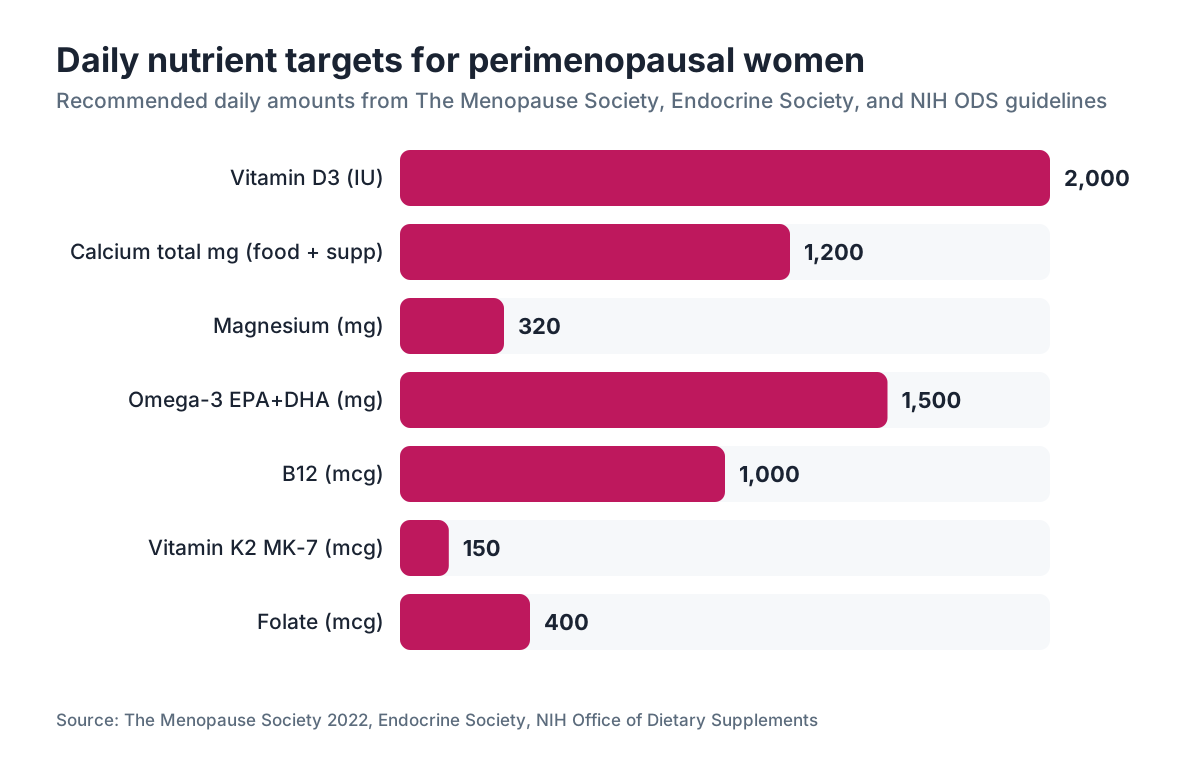
TL;DR: The vitamins with the clearest evidence for perimenopause are vitamin D3 (1,500-2,000 IU daily), magnesium (310-320 mg), calcium (1,000-1,200 mg from food and supplements combined), and B12. Adaptogens and proprietary blends mostly lack rigorous trial data. Hormone therapy still addresses the root cause better than any supplement, but targeted nutrients genuinely fill real gaps that perimenopause creates.
What is perimenopause and why do nutritional needs change?
Perimenopause is the years-long hormonal transition before your final menstrual period. Estrogen and progesterone swing wildly before they fall for good, and that swing changes how your body absorbs, uses, and needs several key nutrients. Most women enter perimenopause somewhere in their 40s, though it can start earlier. (If you want to understand the timeline better, read our piece on perimenopause age.)
Falling estrogen directly impairs calcium absorption from the gut. It changes how your kidneys handle vitamin D. It speeds up bone turnover. It wrecks sleep, and poor sleep burns through magnesium faster. It shifts the gut microbiome in ways that cut B-vitamin production. This is not vague "oxidative stress" language. These are specific, documented biochemical shifts.
That matters for how you think about supplements. You're not trying to replace hormones with vitamins. Vitamins cannot bind estrogen receptors or stop hot flashes the way estradiol does. What you're doing is preventing deficiencies that perimenopause makes you newly vulnerable to, and supporting the body systems (bone, sleep, mood, nerve function) that take the hardest hit during this window. [1]
One more thing worth knowing: plenty of women in this age range were already quietly deficient before perimenopause began. National Health and Nutrition Examination Survey (NHANES) data show that roughly 35 percent of U.S. adults over 40 have vitamin D levels below the 20 ng/mL minimum, and deficiency runs higher in women than men. [2] Perimenopause compounds a problem that was already there.
Which vitamins and minerals have real evidence for perimenopause?
There is a big gap between supplements that are genuinely evidence-backed for this life stage and supplements that are marketed hard to perimenopausal women. Here is an honest breakdown of the ones that hold up.
Vitamin D3
This is the highest-priority supplement for most perimenopausal women. The Endocrine Society's clinical practice guideline recommends 1,500 to 2,000 IU daily for adults at risk of deficiency, and the North American Menopause Society (NAMS) flags vitamin D as critical during the menopause transition for bone protection. [3] Vitamin D works with calcium to keep bone mineral density up, and low D blunts whatever calcium you take. A serum 25(OH)D level below 20 ng/mL is defined as deficient; optimal for bone health is generally 30 to 50 ng/mL. Get your level tested before deciding on dose. Women who carry extra weight, have darker skin, or live at northern latitudes run a higher risk of low levels. [4]
Calcium
NAMS recommends 1,200 mg of calcium daily for women over 50, and 1,000 mg for women 19 to 50, with the caveat that food sources count toward that total. [5] Most women get 500 to 700 mg from food, so a 500 to 600 mg supplement is usually enough. Calcium carbonate is cheapest but needs food to absorb; calcium citrate absorbs without food and is easier on women taking proton pump inhibitors. Splitting doses helps because the gut only processes about 500 mg at once. The cardiovascular worry with calcium supplements applies mainly to doses well above 1,000 mg/day from supplements alone. Stay within the total dietary recommendation and the risk is not meaningfully raised. [5]
Magnesium
The RDA for women over 31 is 320 mg daily, and most American women get only around 220 to 260 mg from food. [6] Low magnesium worsens sleep disruption, muscle cramps, and anxiety, all of which perimenopause already amplifies. Magnesium glycinate and magnesium citrate absorb better than magnesium oxide, which mostly just acts as a laxative. A small 2012 randomized controlled trial found magnesium cut hot flash frequency by about 41 percent versus baseline, though the trial had no placebo arm, so take that number with honest skepticism. [7] What the evidence supports more cleanly is magnesium for sleep quality and muscle function, both well-documented.
B12 absorption drops with age no matter what you eat, because it needs adequate stomach acid and intrinsic factor, both of which decline after 40. Women on metformin (common in perimenopause as insulin resistance rises) are especially at risk. The RDA is 2.4 mcg, but since absorption is the limiting factor rather than intake, most clinicians suggest 500 to 1,000 mcg of methylcobalamin or cyanocobalamin for anyone over 50 to guarantee enough passive absorption. Low B12 causes fatigue, cognitive fog, and nerve tingling. All of those symptoms also show up in perimenopause, which makes a deficiency easy to miss without a blood test. [6]
Vitamin K2
K2 steers calcium into bone rather than into arterial walls, and it works alongside vitamin D3. The MK-7 form has the best evidence and the longest half-life. The data are still emerging, but a meta-analysis in Osteoporosis International found K2 supplementation was tied to lower bone turnover markers and modestly better bone mineral density in peri and postmenopausal women. [8] If you are taking vitamin D3 and calcium for bone health, adding K2 (100 to 200 mcg MK-7) is reasonable. Most standard multivitamins carry only K1, not K2, so you have to look specifically.
Omega-3 fatty acids (EPA/DHA)
Not a vitamin, but worth including because the evidence in perimenopausal women is real. An analysis published in Menopause found omega-3 supplementation reduced hot flash frequency and improved mood scores. The effective dose in trials is generally 1,000 to 2,000 mg of combined EPA+DHA daily. Fish oil is the most studied form; algae-based omega-3 works if you're vegetarian and tends to oxidize less. [9]
What does a perimenopause vitamin comparison table look like?
The table below sums up the evidence level, typical dose, and what each nutrient actually does in perimenopause. "Evidence level" here means whether there are randomized controlled trials (RCTs) or at minimum strong observational data specifically in perimenopausal or menopausal women.
| Nutrient | Evidence level | Daily dose target | Primary benefit in perimenopause | |---|---|---|---| | Vitamin D3 | Strong (RCT + guidelines) | 1,500-2,000 IU | Bone density, immune function, mood | | Calcium | Strong (guidelines) | 1,000-1,200 mg total (food + supplement) | Bone density | | Magnesium | Moderate (RCT, small) | 310-320 mg | Sleep, cramps, anxiety, hot flashes | | B12 | Strong for deficiency prevention | 500-1,000 mcg | Energy, cognition, nerve function | | Omega-3 (EPA/DHA) | Moderate (meta-analysis) | 1,000-2,000 mg | Hot flashes, mood, cardiovascular | | Vitamin K2 (MK-7) | Moderate (meta-analysis) | 100-200 mcg | Bone density, cardiovascular | | Iron | Conditional (test first) | Only if deficient | Fatigue in women still menstruating | | Folate/B9 | Moderate | 400-600 mcg | Cardiovascular, mood, cervical health |
A few nutrients on that table need a test before you supplement. Iron is the main one. Perimenopausal women still having heavy periods can run iron-deficient, but women whose cycles have lightened or stopped do not need extra iron, and excess is harmful. Always check ferritin before adding iron. [6]
Are vitamin supplements a replacement for hormone therapy in perimenopause?
No. This is the most important thing to say plainly, and supplement marketing keeps burying it.
Hormone therapy (estradiol with or without progesterone) is the only treatment that addresses the actual hormonal deficit driving most perimenopausal symptoms. The Menopause Society's 2022 position statement says hormone therapy is the most effective treatment for vasomotor symptoms (hot flashes, night sweats) and genitourinary syndrome, and that for women under 60 or within 10 years of menopause, the benefits generally outweigh the risks. [1] No vitamin does that. Magnesium can trim hot flash frequency a bit. Vitamin D can protect bone. But neither replaces the effect of estradiol.
The honest way to think about it: vitamins and hormone therapy solve different problems. Hormones treat the cause. Vitamins prevent the deficiency damage that happens alongside the hormonal shift. Many women do both, and doing both is reasonable.
If you are curious what hormone therapy options look like, the hormone replacement therapy and estrogen patch pages cover them in detail. The progesterone page explains why progesterone matters if you still have a uterus.
For women who cannot or choose not to use hormone therapy, a well-targeted supplement protocol is genuinely useful, even if it is partial. Nobody should feel pushed into one approach. The goal is informed choice, and that requires knowing what the evidence actually says each intervention does and does not do.
What about supplements marketed specifically for menopause symptoms?
The shelves are packed with products named "Menopause Support" or "Hot Flash Relief" full of black cohosh, evening primrose oil, dong quai, chasteberry (Vitex), red clover isoflavones, and ashwagandha. Here is where the evidence actually stands.
Black cohosh: The most studied herbal for hot flashes. Systematic reviews land on mixed results. A Cochrane review found some evidence of a modest drop in hot flash frequency, but the effect size was small and the studies were all over the place. It does not act on estrogen receptors, despite the common claim. Most safety data supports up to 6 months of use; long-term data are thin. Rare liver toxicity cases have been reported. [10]
Soy isoflavones and red clover: These carry phytoestrogens that weakly bind estrogen receptors. A 2021 meta-analysis found soy isoflavones cut hot flash frequency by about 20 percent versus placebo, a real but modest effect. Women with hormone-sensitive cancers should talk to their oncologist before using them. [12]
Ashwagandha: A small randomized trial showed ashwagandha root extract reduced menopausal symptoms including hot flashes, anxiety, and sleep disruption over 8 weeks, but it was a single small study funded by the manufacturer. The cortisol-lowering effect has more independent data. Treat it as a modest stress and sleep support, not a hot flash fix.
Evening primrose oil: Sold heavily for hot flashes, but the evidence is genuinely weak. A 2013 RCT in Archives of Gynecology and Obstetrics found no significant benefit over placebo for hot flash severity.
The trouble with proprietary blends is that most cram 8 to 12 herbs in at sub-therapeutic doses and never publish trial data. You are paying for the concept. If you want one of these ingredients, buy it as a standalone supplement at the dose used in whatever trial exists. That beats a blend built on a marketing promise.
How much vitamin D do you actually need in perimenopause?
The tolerable upper intake level for vitamin D is 4,000 IU per day for adults, set by the National Academy of Medicine. [4] The Endocrine Society allows up to 10,000 IU in cases of documented deficiency under medical supervision. For most perimenopausal women without a lab test, 1,500 to 2,000 IU of D3 daily is a reasonable starting point. If your 25(OH)D comes back below 20 ng/mL, a physician will often prescribe 50,000 IU weekly (prescription ergocalciferol, D2) for 8 to 12 weeks to correct it, then move you to maintenance D3 dosing.
Vitamin D toxicity from food or sun alone is essentially impossible. Toxicity from supplements needs sustained intake above 10,000 IU/day for months, and it typically shows up as hypercalcemia (elevated blood calcium). At the 1,500 to 2,000 IU range, the risk is negligible.
Take D3 with your largest meal of the day since it is fat-soluble and absorption climbs with dietary fat. Vitamin D3 (cholecalciferol) raises blood levels more effectively than D2 (ergocalciferol) at equivalent doses, which is why D3 is now the preferred form for supplementation. [4]
What role does magnesium play in perimenopause sleep and mood?
Magnesium runs over 300 enzymatic reactions, including ones that regulate the nervous system, muscle relaxation, and melatonin synthesis. When sleep worsens in perimenopause (which it does for most women), one underappreciated factor is that poor sleep itself depletes magnesium, which sets up a loop.
A 2017 meta-analysis in Nutrients found magnesium supplementation improved subjective sleep quality, sleep onset latency, and early morning waking in adults with insomnia or poor sleep. [7] The doses used were generally 300 to 500 mg.
For mood, low magnesium tracks with higher anxiety and depressive symptoms, and perimenopausal mood changes are a known phenomenon tied to estrogen swings. Magnesium is not an antidepressant. But correcting a deficiency strips away one layer of neurological stress that makes everything else worse.
Best forms for absorption: magnesium glycinate for sleep and anxiety (less laxative effect), magnesium malate for muscle aches and fatigue, magnesium citrate if constipation is also in the mix. Skip magnesium oxide for anything except constipation. Take magnesium in the evening, 30 to 60 minutes before bed, if sleep is the goal. [6]
What vitamins support bone density during perimenopause?
Bone loss speeds up sharply in the two to three years around the final menstrual period, then continues at a slower pace. Women can lose 10 to 20 percent of bone density in the first 5 to 7 years after menopause. [1] This is not a future problem to sort out later. Perimenopause is the time to act.
The bone-protective nutrient stack with the most evidence:
- Calcium (1,000-1,200 mg total daily from all sources)
- Vitamin D3 (1,500-2,000 IU daily, adjusted by blood level)
- Vitamin K2 as MK-7 (100-200 mcg daily)
- Magnesium (310-320 mg daily; magnesium is part of the bone mineral matrix, more so than calcium)
Protein intake matters more than most people realize. Adequate dietary protein supports the collagen matrix that bone mineral sits in. Women eating very low-protein diets to lose weight during perimenopause may be quietly speeding up their own bone loss.
Weight-bearing exercise is still the single most powerful non-drug intervention for bone density. No supplement replaces it. Think of supplements as the nutritional support that makes your exercise land in the bone.
If you are unsure about your current bone status, a bone density test (DEXA scan) is the standard diagnostic. NAMS recommends women with risk factors consider it before age 65, earlier than the standard screening age suggests. [1]
Do B vitamins help with perimenopause brain fog and fatigue?
Brain fog is one of the most common and distressing perimenopause symptoms, and one of the most multifactorial. Estrogen directly supports brain metabolism and memory consolidation. But B vitamin deficiencies, particularly B12 and folate, cause cognitive symptoms on their own that overlap almost perfectly with hormone-driven fog.
B12 deficiency causes memory lapses, trouble concentrating, fatigue, peripheral tingling, and depression. These symptoms often creep in slowly and get waved off as "perimenopause" when B12 is actually the problem, or at least part of it.
Folate (B9) supports methylation pathways that build neurotransmitters. Women with the MTHFR gene variant (present in roughly 40 to 60 percent of the population, depending on the variant) have impaired folate conversion and do better with methylfolate than folic acid. [6]
B6 supports serotonin and dopamine synthesis. A few small trials show B6 supplementation reduces premenstrual and perimenopausal mood symptoms. The upper tolerable intake level for B6 is 100 mg/day in adults; long-term doses above that cause peripheral neuropathy, so stick to 25 to 50 mg unless a clinician says otherwise.
The B vitamins work best as a group. A methylated B-complex (one that uses methylcobalamin instead of cyanocobalamin and methylfolate instead of folic acid) is the most useful single product for cognitive and mood support during perimenopause.
What about iron, iodine, and other minerals that come up in perimenopause?
Iron: As noted above, test before you supplement. Women still having heavy perimenopausal periods are genuinely at risk for iron-deficiency anemia, which causes deep fatigue, cold intolerance, and cognitive problems. But women whose periods have lightened or stopped do not need supplemental iron. Excess stored iron (high ferritin) tracks with oxidative stress and cardiovascular risk. Check both ferritin and hemoglobin. [6]
Iodine: Thyroid function gets more fragile in perimenopause, and low iodine is one environmental factor that can worsen subclinical hypothyroidism. The RDA is 150 mcg. Most women eating varied diets get enough, but women avoiding dairy and seafood (two major sources) can fall short. Kelp supplements vary wildly in iodine content and can deliver far too much, causing thyroid problems. A supplement with a labeled 150 mcg dose is safer.
Zinc: Involved in immune function, wound healing, and ovarian hormone production. The RDA is 8 mg for women. Moderately low zinc is common in women eating low-calorie or heavily plant-based diets. Most decent multivitamins include enough.
Selenium: Supports thyroid hormone conversion (T4 to T3) and acts as an antioxidant. Brazil nuts carry about 70 to 90 mcg each, close to the RDA of 55 mcg. Two Brazil nuts daily is a reasonable food-based approach. Selenium toxicity is real above 400 mcg/day, so high-dose selenium supplements are unnecessary.
How should you build a perimenopause vitamin routine?
The honest starting point is labs, not supplements. Before spending money on anything, know your vitamin D level (25-OH-D), B12, ferritin, and ideally a full metabolic panel. Many deficiencies stay symptomless until they're advanced. A targeted protocol based on your actual levels is more effective and cheaper than buying every supplement a forum mentions.
A reasonable baseline for a perimenopausal woman with no specific deficiencies:
- Morning with food: vitamin D3 (2,000 IU) plus K2 (100-200 mcg MK-7), omega-3 (1,000-2,000 mg EPA+DHA), methylated B-complex
- Calcium citrate: split 500 mg twice daily if dietary calcium is below 800 mg (count your food intake honestly before adding)
- Evening: magnesium glycinate or citrate (300-400 mg)
Total cost runs roughly $40 to $80 per month depending on brands, skipping premium subscription companies. Generic and store-brand versions of each are fine if they pass third-party testing. Look for NSF Certified for Sport, USP Verified, or ConsumerLab approval on the label. The FDA does not evaluate supplements for safety or efficacy before sale, so third-party verification is the only real quality signal. [11]
If you are already working with a telehealth provider on perimenopause hormone care, WomenRx clinicians review supplements as part of your intake and can order the labs that shape your protocol. Reviewing symptoms alongside labs means fewer guessing-game purchases.
Avoid any product promising to "balance hormones naturally." No supplement does this. Hormones are balanced by hormones. Supplements support the downstream effects of hormonal change. That is the accurate framing.
What should you avoid or be careful with in perimenopause supplements?
A few categories deserve specific caution.
Proprietary blends with hidden doses: If a label reads "Women's Hormone Support Blend 850 mg" over a list of 9 ingredients, you have no idea whether any single one hits a therapeutic dose. This is a legal workaround to avoid disclosing amounts. Skip it.
High-dose single-nutrient products without medical supervision: Fat-soluble vitamins (A, D, E, K) accumulate. Vitamin A above 10,000 IU daily long-term raises fracture risk and is teratogenic, which matters for perimenopausal women who may still be cycling. Vitamin E above 400 IU daily tracks with increased all-cause mortality in meta-analyses.
St. John's Wort: Commonly used for perimenopausal mood. It has real antidepressant evidence at 300 mg three times daily. But it induces cytochrome P450 enzymes that lower blood levels of many medications including birth control, anticoagulants, antiretrovirals, and some antidepressants. It also weakens some forms of hormone therapy. [10] Do not take it without telling your prescriber.
Melatonin at high doses: Sold widely in 5 to 10 mg doses, but the effective dose for sleep onset is 0.5 to 1 mg. Higher doses cause next-day grogginess and may blunt your own melatonin production over time. Perimenopause already disrupts melatonin timing partly through declining estrogen. Low-dose melatonin (0.5 to 1 mg) 30 minutes before bed is reasonable. [6]
Are there vitamins specifically for perimenopause weight gain?
Weight gain in perimenopause comes mostly from declining estrogen pushing visceral fat redistribution, falling muscle mass from lower estrogen and (in some women) lower testosterone, and disrupted sleep messing with hunger hormones. No vitamin reverses that mechanism.
That said, a few nutrients modestly support metabolism and body composition:
Vitamin D deficiency tracks with higher body fat and insulin resistance in multiple large observational studies, and correcting a deficiency modestly improves insulin sensitivity. It is not a weight loss supplement, but it clears one metabolic drag. [2]
Magnesium supports insulin sensitivity and glucose metabolism. Again, not a weight loss intervention, but correcting a deficiency matters.
Protein (technically a macronutrient, not a vitamin) is the biggest nutritional lever for holding onto muscle mass during perimenopause. Aim for at least 1.2 to 1.6 grams per kilogram of body weight daily.
For women who need more than lifestyle and nutrient support for perimenopausal weight gain, GLP-1 medications like semaglutide and tirzepatide now have strong trial evidence in women specifically. If that fits your situation, the semaglutide for weight loss and menopause pages cover how these treatments interact with the hormonal transition.
Frequently asked questions
What is the most important vitamin to take during perimenopause?
Vitamin D3 has the clearest evidence and the widest deficiency gap in perimenopausal women. The Endocrine Society recommends 1,500 to 2,000 IU daily for adults at risk. Pair it with magnesium and calcium for bone protection. Get a 25-OH-D blood test first so you know your baseline rather than guessing at a dose.
Can vitamins reduce hot flashes in perimenopause?
Some can, modestly. Magnesium cut hot flash frequency by roughly 41 percent in one uncontrolled trial. Soy isoflavones cut frequency by about 20 percent versus placebo in a 2021 meta-analysis. These effects are real but partial. Estradiol therapy is substantially more effective. If you cannot use hormones, magnesium plus omega-3s is the most evidence-supported supplement approach.
Should I take a multivitamin or individual supplements for perimenopause?
Individual targeted supplements usually win for perimenopause because multivitamins rarely carry therapeutic doses of vitamin D, magnesium, or omega-3s. Most multivitamins include 400 IU D3 and 100 mg magnesium oxide, both too low to correct a deficiency. Use a multivitamin as a baseline, then add specific supplements at appropriate doses based on your labs.
Is vitamin B12 important during perimenopause?
Yes. B12 absorption drops with age no matter what you eat, because the mechanism requires stomach acid and intrinsic factor, both of which decline after 40. Women on metformin face additional depletion. Low B12 causes fatigue, brain fog, and nerve symptoms that overlap exactly with perimenopause. Test your level and consider 500 to 1,000 mcg of methylcobalamin daily.
How much calcium do women need during perimenopause?
NAMS recommends 1,200 mg daily total from all sources for women in and after the menopause transition. Most women get 500 to 700 mg from food. A 500 to 600 mg supplement (calcium citrate absorbs best without food) covers the gap. Splitting doses improves absorption because the gut handles only about 500 mg at a time. Avoid exceeding 1,200 mg from supplements alone.
Are there vitamins that help with perimenopause anxiety and mood?
Magnesium glycinate is the best-evidence option for anxiety relief; low levels directly raise nervous system excitability. A methylated B-complex supports serotonin and dopamine synthesis. Vitamin D deficiency tracks with depressive symptoms on its own, and correcting it helps. Omega-3s have modest antidepressant evidence in perimenopausal women. None of these replace treatment for clinical anxiety or depression.
What vitamins help with perimenopause fatigue?
B12 and iron deficiency are the two most common correctable causes of fatigue in perimenopausal women. Test both before supplementing, since excess iron is harmful. Vitamin D deficiency also causes fatigue and muscle weakness. Magnesium supports energy metabolism at the cellular level. Fixing these deficiencies produces noticeable energy gains in women who were actually low.
Is it safe to take supplements alongside hormone replacement therapy?
Generally yes, with exceptions. Vitamin D, calcium, magnesium, B12, omega-3s, and K2 have no meaningful interactions with standard HRT. St. John's Wort is the major exception: it induces liver enzymes that speed up estrogen metabolism, which can reduce HRT effectiveness. High-dose vitamin E may affect clotting. Always tell your prescribing clinician what supplements you take.
What are the best vitamins for perimenopause brain fog?
A methylated B-complex covering B12, B6, and folate addresses the most common nutritional contributors to cognitive symptoms. Vitamin D deficiency tracks with cognitive decline. Omega-3s support brain membrane integrity. Fixing sleep with magnesium removes a major driver of fog. These are supportive measures; estrogen loss is the primary cause, and hormone therapy has the strongest evidence for cognitive protection in this window.
Do any supplements actually work for perimenopause sleep problems?
Magnesium glycinate (300 to 400 mg at bedtime) has the best evidence for improving sleep quality and reducing early morning waking in adults with poor sleep. Low-dose melatonin (0.5 to 1 mg, not the 5 to 10 mg doses commonly sold) can help with sleep onset. Neither fixes the hormonal root of perimenopausal insomnia. But both are safe and modestly effective bridges.
How do I know if I'm getting enough vitamin D during perimenopause?
A blood test for 25-hydroxyvitamin D (25-OH-D) tells you exactly where you stand. Below 20 ng/mL is deficient; 20 to 30 ng/mL is insufficient; 30 to 50 ng/mL is generally optimal for bone and immune health. This test is standard and covered by most insurance when ordered with a preventive care visit. Roughly 35 percent of U.S. adults over 40 fall below the minimum threshold.
Can magnesium help with perimenopause weight gain?
Indirectly. Low magnesium impairs insulin sensitivity and glucose metabolism, both of which affect body composition. Correcting a deficiency supports metabolic function but does not cause weight loss. The weight changes in perimenopause are driven mostly by estrogen decline. Magnesium is most useful here for blood sugar regulation and for supporting the better sleep that helps regulate hunger hormones.
Should I take vitamin K2 with vitamin D3 during perimenopause?
Adding K2 (100 to 200 mcg of the MK-7 form) to your D3 protocol makes sense for bone health. Vitamin K2 activates the proteins (osteocalcin and matrix Gla protein) that direct calcium into bone and away from arteries. A meta-analysis in Osteoporosis International found K2 supplementation was tied to lower bone turnover markers and modest improvements in bone mineral density in perimenopausal women.
What third-party certifications should I look for on perimenopause vitamins?
Look for NSF Certified for Sport, USP Verified, or ConsumerLab approval on labels. These are independent organizations that verify a supplement actually contains what it claims, in the amounts stated, without harmful contaminants. The FDA does not review or approve supplements before they are sold. Third-party verification is the only real quality signal available to consumers buying over-the-counter products.
Sources
- The Menopause Society (formerly NAMS), 2022 Hormone Therapy Position Statement
- CDC/NHANES, National Health and Nutrition Examination Survey data on vitamin D status
- Endocrine Society, Clinical Practice Guideline on Vitamin D Deficiency
- National Academy of Medicine (formerly IOM), Dietary Reference Intakes for Calcium and Vitamin D (2011)
- The Menopause Society, Calcium Recommendations for Menopause
- NIH Office of Dietary Supplements, Dietary Supplement Fact Sheets (Magnesium, B12, Iron, Folate, Zinc, Selenium, Melatonin)
- Abbasi B et al., The effect of magnesium supplementation on primary insomnia in elderly: a double-blind placebo-controlled clinical trial. Journal of Research in Medical Sciences, 2012
- Huang ZB et al., Does vitamin K2 play a role in the prevention and treatment of osteoporosis for postmenopausal women: a meta-analysis. Osteoporosis International
- Meta-analysis data published in Menopause (journal of The Menopause Society) on omega-3 and hot flashes
- National Center for Complementary and Integrative Health (NCCIH), Black Cohosh and St. John's Wort herb pages
- U.S. FDA, Dietary Supplements Overview
- Meta-analysis published in Menopause on soy isoflavones and hot flashes, 2021 update