Why perimenopause makes you so tired, and what actually helps
TL;DR: Perimenopause causes fatigue through four overlapping pathways: dropping estrogen disrupts sleep architecture, low progesterone raises cortisol at night, hot flashes fragment sleep, and thyroid dysfunction becomes more common after 40. Up to 46% of perimenopausal women report significant fatigue. Hormone therapy, sleep hygiene targeted to night sweats, and ruling out thyroid and iron deficiency are the highest-yield first steps.
Why does perimenopause make you so tired?
Perimenopause fatigue is not laziness, depression, or getting older in some vague sense. It has specific biological causes that doctors can measure and treat. Understanding them is the first step to doing something about it.
Estrogen is deeply involved in how your brain regulates sleep. It modulates serotonin and norepinephrine, two neurotransmitters that set your sleep-wake rhythm. When estrogen drops, and during perimenopause it drops erratically rather than smoothly, your circadian clock gets less stable input. [1] Women in perimenopause spend less time in slow-wave (deep) sleep and REM sleep than premenopausal women of the same age, which is why you can log eight hours and still feel like you slept four. [2]
Progesterone compounds this. It metabolizes into allopregnanolone, a neurosteroid that acts on GABA-A receptors, the same receptors targeted by sleep medications. When progesterone levels fall, you lose that natural sedating effect. Cortisol rises in the second half of the night. You wake at 3 a.m. with your heart pounding and your brain already composing tomorrow's to-do list. That pattern is characteristic enough that clinicians sometimes call it "progesterone withdrawal insomnia." [3]
Hot flashes and night sweats add a third layer. A single night sweat can raise core body temperature enough to jolt you out of deep sleep. Women averaging more than six hot flashes per 24 hours have objectively worse sleep on polysomnography, worse than they even recall subjectively. [2] If you are soaking the sheets two or three times a night, you are getting medically fragmented sleep regardless of how many hours you spend in bed.
One more layer. Perimenopause is the window when thyroid disease and iron deficiency become much more common in women, and both cause fatigue that looks identical to hormone-related exhaustion. About 10% of women over 40 have subclinical hypothyroidism. [4] Anyone attributing all her tiredness to perimenopause without ruling out thyroid and a complete blood count is skipping steps that matter.
How common is fatigue during perimenopause?
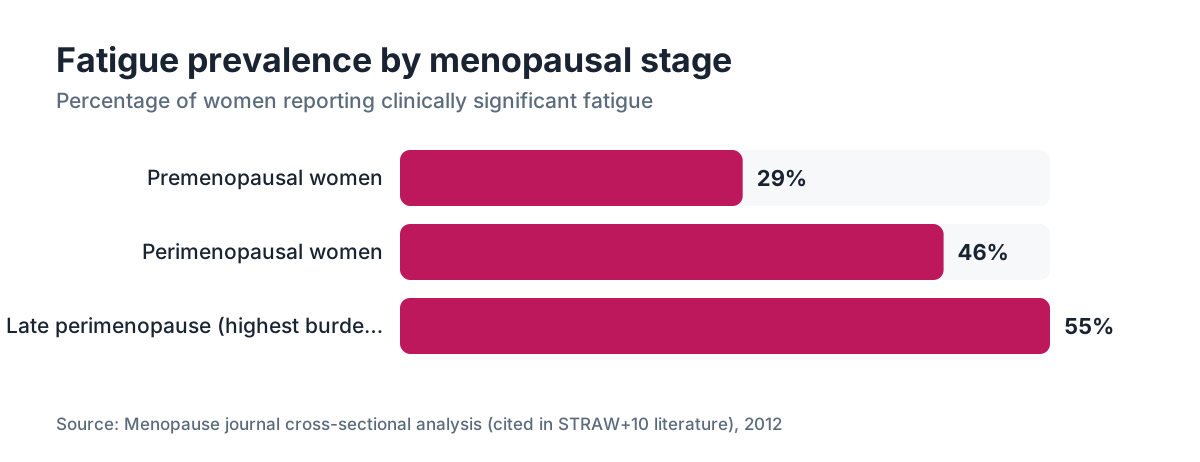
The numbers are high enough that fatigue should be treated as a core symptom of perimenopause, not a side complaint. A cross-sectional analysis published in Menopause found roughly 46% of perimenopausal women reported clinically significant fatigue, compared with about 29% of premenopausal women the same age. [5] That gap, near 17 percentage points, is not explained by age alone. It tracks the hormonal transition.
The Study of Women's Health Across the Nation (SWAN), which followed over 3,300 women longitudinally, documented that sleep difficulty rose as women moved from premenopause through perimenopause, with the late perimenopause stage carrying the heaviest burden. [2] Sleep difficulty and daytime fatigue in that cohort correlated strongly with vasomotor symptoms, meaning night sweats were doing a lot of the damage.
Here is the practical read. If you are 42 to 52 and you feel exhausted all the time, you are in the statistical majority, not an outlier. Majority experience does not mean you have to accept it.
What does perimenopause fatigue actually feel like?
Women describe it differently than ordinary tiredness. It often has a physical heaviness to it, limbs that feel weighted, an effort to do things that used to feel automatic. Cognitive fog shows up alongside: difficulty finding words mid-sentence, losing a thought between rooms, reading a paragraph three times and still not absorbing it. Researchers sometimes call this "brain fog" though the clinical term is cognitive dysfunction or subjective cognitive complaints in midlife women. [1]
Another distinctive feature is the non-restorative quality. You sleep, you still feel tired. You rest on the weekend, Monday morning feels the same. That pattern points toward disrupted sleep architecture (too little deep sleep) rather than too few hours, which changes how you should approach it. Sleeping longer without fixing the quality rarely solves it.
Emotional fatigue often rides along with the physical kind. Irritability, lower frustration tolerance, a sense of being overwhelmed by demands that used to feel manageable. This is partly a sleep consequence, partly direct neurotransmitter effects of fluctuating estrogen on serotonin and dopamine pathways. [1] It is not a personality change. It is a chemistry change.
Fatigue that includes significant low mood, anhedonia (loss of pleasure in things you used to enjoy), or changes in appetite that persist for more than two weeks warrants screening for depression, which is also more common in perimenopause. The two can coexist, and treating only one usually leaves the other unresolved.
How do hormonal changes cause sleep problems in perimenopause?
Sleep is where most perimenopausal fatigue starts, so the mechanism is worth understanding in some detail.
Estrogen affects the hypothalamic thermoregulatory center. When levels drop, the "thermoneutral zone," the range of temperatures your body tolerates without sweating or shivering, narrows sharply. Small temperature swings that would be imperceptible to a premenopausal woman trigger full vasomotor responses: flushing, sweating, heart rate increase. These episodes last 1 to 5 minutes on average, but the arousal they cause can block a return to deep sleep for 20 to 30 minutes. [2]
Estrogen's effect on REM sleep is direct. Animal and human studies show that estrogen administration increases REM sleep percentage; estrogen withdrawal decreases it. REM sleep is where emotional memory consolidation happens, which is one reason perimenopausal women often feel heightened emotional reactivity and mood instability. You are consolidating emotional experiences less efficiently.
Progesterone's sedating properties are well-characterized. Allopregnanolone (3-alpha-hydroxy-5-alpha-pregnan-20-one), the progesterone metabolite that acts on GABA-A receptors, has anxiolytic and hypnotic properties. [3] A published review in Sleep Medicine Reviews noted that micronized progesterone (the bioidentical form) may improve sleep quality partly through this mechanism, whereas synthetic progestins lack the same GABA-A activity and may not produce the same benefit.
Serotonin synthesis, which depends partly on estrogen, affects both mood and the regulation of the suprachiasmatic nucleus, your master circadian clock. When estrogen is low and fluctuating, serotonin signaling becomes less predictable. Sleep timing shifts, sleep pressure builds more slowly, and early morning waking becomes common.
Stack it up. You are losing the thermoregulatory stability that lets you stay asleep, the progesterone sedation that helps you fall and stay asleep, and the serotonin regulation that sets your sleep clock, all at once. No wonder you are tired.
What other conditions cause fatigue that looks like perimenopause?
Getting this right matters because some of these conditions are serious and all of them are treatable.
Hypothyroidism. Subclinical hypothyroidism affects about 10% of women over 40. [4] Overt hypothyroidism is less common but more symptomatic. Both cause fatigue, cold intolerance, brain fog, weight changes, and mood shifts, a symptom profile that overlaps almost perfectly with perimenopausal fatigue. A TSH plus free T4 is a mandatory first workup. Thyroid antibodies (TPO Ab) identify Hashimoto's, which is far more common in women than men.
Iron deficiency. Perimenopause often involves irregular, sometimes heavy periods before cycles stop entirely. Heavy bleeding depletes iron stores. Iron deficiency without frank anemia is enough to cause significant fatigue. Check serum ferritin, more than hemoglobin. Ferritin below 30 ng/mL is associated with fatigue even with normal hemoglobin. [6]
Sleep apnea. Estrogen is somewhat protective against obstructive sleep apnea. As estrogen falls during perimenopause, OSA risk climbs substantially. Women with OSA are often misdiagnosed because they present differently than men: less obvious snoring, more insomnia, more fatigue rather than daytime sleepiness. If you wake with headaches, wake gasping, or your partner notices breathing pauses, get a sleep study.
Vitamin D deficiency. Prevalence rises with age. Low vitamin D correlates with fatigue and musculoskeletal pain. It is cheap to test and cheap to correct.
Depression and anxiety. Perimenopause is a neurobiological risk window for new-onset depression, even in women with no prior history. The Endocrine Society's 2015 clinical practice guideline noted that perimenopausal women have higher rates of depressive symptoms than premenopausal women independent of sleep disruption. [1]
The practical takeaway: a basic blood panel before you pin everything on hormones is not over-medicalization. It is good medicine.
Does hormone therapy actually help perimenopause fatigue?
Yes, for most women, and the evidence is reasonably solid, though the mechanism varies by symptom pathway.
For fatigue driven by night sweats, hormone replacement therapy is the most effective treatment available. The 2022 North American Menopause Society (NAMS) position statement affirms that estrogen-based therapy is the most effective intervention for vasomotor symptoms (hot flashes and night sweats). [7] When night sweats stop, sleep improves, and daytime fatigue typically follows. This is not subtle. Women who have been waking three or four times a night often report dramatic changes within weeks of starting estrogen.
For fatigue driven by sleep architecture disruption and the loss of progesterone's GABA-A effects, micronized progesterone appears to have a direct sleep benefit. A randomized trial published in Menopause found that oral micronized progesterone improved subjective sleep quality versus placebo independent of its effect on hot flashes. [3] This matters because some women have fatigue without prominent night sweats, and progesterone may be doing meaningful work for them.
For cognitive fatigue and brain fog, the evidence is more nuanced. Estrogen therapy started early in the menopause transition (the "timing hypothesis" or "window of opportunity" concept) appears to protect verbal memory and processing speed, but estrogen started well after menopause does not show the same benefits and may carry different risks. [1] The basic message: early is better if cognition is your concern.
Who is hormone therapy not appropriate for? Women with certain histories, including estrogen-receptor-positive breast cancer, unexplained vaginal bleeding, active DVT or PE, or stroke within the past year, need individual assessment. The risk-benefit math is genuinely different for those women and deserves a real conversation with a prescriber rather than a blanket refusal or blanket approval.
If you are exploring hormone therapy options, WomenRx offers telehealth consultations specifically for perimenopause, including estrogen patch and progesterone options, with prescribers who can review your history and lab work.
What non-hormonal treatments actually help with perimenopause fatigue?
Some women cannot or do not want hormone therapy. Others want to combine approaches. There is real evidence for several non-hormonal strategies.
Cognitive behavioral therapy for insomnia (CBT-I). This is the first-line treatment for chronic insomnia recommended by the American College of Physicians, regardless of cause. [8] It works by restructuring the sleep behaviors and beliefs that keep insomnia going. A 2020 randomized trial found CBT-I tailored to perimenopausal women improved both sleep and hot-flash-related waking. It takes 4 to 8 sessions and the effects last. It is harder to access than a pill, but the data are better than most drug options.
Exercise. Aerobic exercise, particularly moderate-intensity done in the morning or early afternoon (not within 3 hours of bed), improves both sleep quality and daytime energy. A meta-analysis in Menopause found exercise cut vasomotor symptom frequency and improved sleep scores in menopausal women. [9] Resistance training matters too, for bone density and metabolic health during this transition.
Sleep hygiene targeted to night sweats. Keep the room cold (65 to 68 degrees Fahrenheit). Use moisture-wicking sheets. A cooling mattress pad can genuinely help, not a gimmick. Skip alcohol within 3 hours of bedtime. Alcohol reliably worsens night sweats and fragments sleep architecture even though it feels sedating at first.
Magnesium glycinate. Weak evidence, but weak evidence is not the same as no evidence. Some small trials suggest 300 to 400 mg of magnesium glycinate at bedtime may reduce insomnia severity and nocturnal waking. [10] It is cheap and safe. I would not put it at the top of the list, but I would not argue against trying it.
SSRIs and SNRIs. Low-dose paroxetine (7.5 mg) is the only FDA-approved non-hormonal option for vasomotor symptoms, sold as Brisdelle. Other SSRIs and SNRIs have off-label evidence for hot flash reduction, which can improve sleep and, through it, fatigue. [7] Worth discussing if hormone therapy is off the table.
Fezolinetant. Approved by the FDA in May 2023, this is a neurokinin 3 receptor antagonist, the first non-hormonal drug approved specifically for moderate to severe vasomotor symptoms. In the SKYLIGHT trials, it cut hot flash frequency by roughly 60% versus placebo at 12 weeks. [11] If night sweats are your main driver and you cannot take estrogen, this is a real new option.
For overall perimenopause management, combining behavioral approaches with appropriate medical treatment usually beats either one alone.
When should you see a doctor about perimenopause fatigue?
Immediately if the fatigue comes with chest pain, shortness of breath, significant unexplained weight loss, or severe depression. Those need same-day or next-day evaluation.
Within a few weeks if fatigue is significantly impairing your work, relationships, or daily function, if it has gone on more than a month, or if you have never had basic labs done. At minimum you want TSH, free T4, CBC, ferritin, a metabolic panel, and vitamin D. Many clinicians add a full sex hormone panel (FSH, estradiol, progesterone), though timing matters for these and a single draw during irregular cycles is hard to interpret.
FSH above 10 mIU/mL with irregular periods is consistent with perimenopause, but FSH fluctuates widely during the transition and a single normal value does not rule it out. [12] The NAMS position is that perimenopause is primarily a clinical diagnosis based on symptoms and menstrual pattern in women over 40, not a single lab value. [7]
Bring a symptom log to your appointment. Track what time you go to bed, what time you fall asleep, how many times you wake, what woke you (hot flash vs. anxiety vs. bladder vs. nothing you can identify), what time you finally get up, and how you feel in the afternoon. Three to seven days of this data is more useful to a clinician than a verbal summary.
If your primary care doctor waves off your fatigue as "just stress" without running labs or asking about menstrual changes, push back or find a clinician with specific perimenopause experience. You deserve an actual workup.
How long does perimenopause fatigue last?
This is an honest question with an imprecise answer, because perimenopause duration varies enormously between women.
Perimenopause typically begins somewhere between ages 40 and 51 and lasts an average of 4 to 7 years before the final menstrual period, though for some women it is shorter (1 to 2 years) and for others it stretches to 10 years or more. [12] Fatigue tracks the hormonal instability of this period. Many women find it is worst during late perimenopause, when estrogen levels are falling most steeply and cycles are becoming very irregular.
For perimenopause age context: the median age of the final menstrual period in the US is 51. So if symptoms started at 46, you are potentially looking at 5 years of this transition. That is a long time to white-knuckle it, which is why treatment matters.
Once periods stop and you are in full menopause, many women find sleep stabilizes somewhat as hormone fluctuation settles into a new (lower) baseline. But women with persistent vasomotor symptoms after menopause, which can last 7 or more years post-menopause in some cases, may have ongoing sleep disruption and fatigue. [7]
The practical message: if your fatigue is perimenopause-driven, it probably does not resolve in weeks without intervention. Treatment, whether hormonal or behavioral or both, is a reasonable choice, not a surrender.
Can GLP-1 medications affect energy and fatigue in perimenopausal women?
This is a newer and genuinely interesting area. GLP-1 receptor agonists like semaglutide and tirzepatide are increasingly used by perimenopausal women for weight management, and weight in this transition is its own complicated story.
Carrying excess weight increases vasomotor symptom severity. A 2010 randomized trial published in JAMA Internal Medicine found weight loss significantly reduced hot flash frequency in overweight women. [9] So if a GLP-1 medication helps with weight, it may indirectly improve sleep and fatigue by cutting night sweats.
There are also GLP-1 receptors in the brain, and some early evidence suggests these medications may affect neuroinflammation and energy regulation beyond their weight effects. This is not settled science. The large trials, STEP for semaglutide and SURMOUNT for tirzepatide, were not designed to measure fatigue outcomes in perimenopause specifically.
What is documented is that GLP-1 medications can cause fatigue as a side effect, particularly in the first few weeks of titration when nausea and appetite suppression are prominent. This usually resolves. If you are on a GLP-1 and still fatigued, rule out insufficient caloric or protein intake, both common on these medications and both capable of dragging your energy down.
The bottom line: GLP-1 use in perimenopausal women is growing. The fatigue question specifically needs more research. If you are considering semaglutide for weight loss during perimenopause, the interaction with hormone status is worth discussing with your prescriber. WomenRx works with perimenopausal women on GLP-1 protocols alongside hormone management, a combination that makes clinical sense given how much these patient populations overlap.
What can you do tonight to sleep better during perimenopause?
These are practical, evidence-informed steps you can start today without waiting for a prescription.
Keep your bedroom at 65 to 68 degrees Fahrenheit. Cooler than most people's default. It is the single most consistent environmental change that reduces night-sweat-triggered waking.
Skip alcohol in the evening. One drink within three hours of bedtime measurably fragments the second half of sleep and lowers the threshold for hot flashes. This one is annoying to give up, and it produces a noticeable difference faster than almost anything else you can try.
Go to bed and wake up at the same time every day, weekends included. This sounds basic because it is basic, and CBT-I research keeps showing it is also one of the highest-leverage behaviors for sleep quality. Your circadian rhythm needs a consistent anchor point, especially when hormones are no longer providing one.
If you wake at 3 a.m. and cannot get back to sleep within 20 minutes, get out of bed. Go somewhere dim and cool. Do something quiet and unstimulating. Return when you feel sleepy. This is the stimulus control piece of CBT-I. Lying in bed awake and anxious trains your brain to associate bed with wakefulness. It is counterintuitive and it works.
If night sweats are waking you, try moisture-wicking sleepwear, a fan pointed at the bed, and a cool pack or cooling pillow insert on standby. These do not fix the hormone problem, but they blunt the sleep-disrupting consequence enough to matter.
Get morning light. Fifteen to thirty minutes of bright outdoor light within an hour of waking helps anchor your circadian clock, which gets shaky during perimenopause. This is not woo. It is photobiology, and the research is consistent. [8]
Frequently asked questions
Is extreme fatigue normal in perimenopause?
Yes, significant fatigue is common and has documented biological causes. About 46% of perimenopausal women report clinically significant fatigue, compared with roughly 29% of premenopausal women the same age. It is driven by disrupted sleep architecture, night-sweat-related waking, falling progesterone, and fluctuating estrogen. Normal does not mean you have to accept it; most causes are treatable.
Why am I waking up at 3 a.m. during perimenopause?
Early morning waking is one of the most consistent perimenopause sleep complaints. Falling progesterone reduces the GABA-A receptor activity that normally keeps you sedated through the night. Cortisol rises earlier than it should. Night sweats frequently strike in the early morning hours when core body temperature starts its natural rise. All three can converge around 2 to 4 a.m. Micronized progesterone and treating night sweats both help.
Can perimenopause cause chronic fatigue syndrome?
Perimenopause can produce fatigue severe enough to resemble CFS, but the two are different diagnoses. CFS (also called ME/CFS) requires post-exertional malaise, unrefreshing sleep, and cognitive impairment lasting at least six months, by established diagnostic criteria. Perimenopausal fatigue typically improves with hormone treatment or sleep intervention; CFS does not follow that pattern. If your fatigue is extreme, prolonged, and does not respond to perimenopause-directed treatment, formal evaluation for ME/CFS is appropriate.
What blood tests should I ask for if I'm exhausted in perimenopause?
At minimum: TSH and free T4 (thyroid), CBC (anemia), serum ferritin (iron stores), 25-OH vitamin D, and a metabolic panel. Many clinicians also run FSH, estradiol, and a morning cortisol. If you have symptoms suggesting sleep apnea, a sleep study matters more than any blood test. Ferritin below 30 ng/mL and TSH above 4.0 mIU/L are both actionable findings that can explain fatigue independent of hormones.
Does estrogen replacement help with fatigue and brain fog?
For fatigue driven by night sweats, estrogen therapy is the most effective treatment available and the evidence is strong. For cognitive fog, timing matters: estrogen started early in the menopause transition protects verbal memory and processing speed, while estrogen started years after menopause does not show the same effects. NAMS endorses hormone therapy for vasomotor symptoms in otherwise healthy women under 60 within 10 years of menopause.
How is perimenopause fatigue different from depression?
They overlap substantially and frequently coexist. Depression-dominant presentations include persistent low mood, loss of interest in previously enjoyable activities, changes in appetite, and feelings of worthlessness. Perimenopause fatigue is more likely to have a clear sleep-disruption pattern, to be tied to night sweats, and to improve with hormone treatment. If low mood and anhedonia are prominent and have lasted two or more weeks, use a PHQ-9 screening tool and get evaluated. Treating only one when both are present rarely works.
Can supplements help with perimenopause fatigue?
A few have modest evidence. Magnesium glycinate at 300 to 400 mg at bedtime may improve sleep quality in some women. Correcting documented vitamin D deficiency (below 20 ng/mL) improves energy in deficient people. Iron supplementation corrects iron deficiency fatigue definitively. Beyond these, most supplement marketing for perimenopause fatigue runs far ahead of the evidence. Ashwagandha, maca, and black cohosh have small studies with mixed results and no head-to-head trials versus hormone therapy.
Does perimenopause fatigue get worse before it gets better?
For many women, yes. Late perimenopause, when estrogen levels are dropping most steeply and cycles become very irregular or infrequent, tends to be the most symptomatic phase. The SWAN longitudinal study documented that sleep difficulty peaked in late perimenopause. Once the final menstrual period passes and hormones settle at a new baseline, many women find sleep and energy stabilize, though vasomotor symptoms can persist 7 or more years post-menopause for some women.
Is perimenopause fatigue worse with poor diet or weight gain?
Yes, both direction and magnitude are affected. Excess body weight amplifies hot flash frequency and severity, which worsens sleep disruption and fatigue. A 2010 JAMA Internal Medicine trial found weight loss significantly reduced hot flash frequency in overweight women. Diets low in protein can worsen fatigue directly by reducing the amino acid availability for neurotransmitter synthesis. High glycemic eating destabilizes blood sugar, which affects energy and can trigger nocturnal cortisol spikes.
Will my fatigue improve on its own without treatment?
For some women it does, once menopause is complete and hormonal fluctuation stabilizes. But waiting it out can mean 4 to 7 years of significant sleep disruption and fatigue across the average perimenopause transition. There is no medical reason to accept years of impaired function when treatments exist that suit your health profile. Whether that is hormone therapy, CBT-I, fezolinetant, or lifestyle changes, a plan beats waiting.
How does perimenopause fatigue affect work and daily life?
Significantly. Cognitive fatigue, poor concentration, word-finding difficulties, and lower frustration tolerance all affect job performance and relationships. Studies in occupational health populations show menopausal symptoms are among the leading reasons midlife women consider reducing hours or leaving the workforce early. The economic and personal costs are real. This is not a good reason to white-knuckle through without help.
Can fixing sleep actually reduce other perimenopause symptoms?
Yes, sleep and hormonal symptoms have a bidirectional relationship. Night sweats disrupt sleep, but severe sleep deprivation also lowers the threshold for hot flashes and increases cortisol, which further destabilizes hormone signaling. Women who achieve better sleep through any means, CBT-I, hormone therapy, temperature management, or a combination, typically report improvements in mood, cognitive function, and overall symptom burden well beyond energy alone.
Sources
- Endocrine Society Clinical Practice Guideline: Treatment of Menopause-Associated Vasomotor Symptoms (2015)
- Study of Women's Health Across the Nation (SWAN), NIH-funded longitudinal cohort, published findings across multiple journals
- Caufriez A et al., Menopause, 2011: 'Progesterone prevents sleep disturbances and modulates GH, TSH, and melatonin secretion in postmenopausal women'
- American Thyroid Association, thyroid disease prevalence data
- Harlow SD et al., 'Executive Summary of STRAW+10', Menopause 2012
- Verdon F et al., BMJ, 2003: 'Iron supplementation for unexplained fatigue in non-anaemic women'
- North American Menopause Society (NAMS) 2022 Hormone Therapy Position Statement
- American College of Physicians Clinical Practice Guideline: Management of Chronic Insomnia Disorder in Adults, Annals of Internal Medicine 2016
- Thurston RC et al., JAMA Internal Medicine, 2010: 'Weight loss and frequency of vasomotor symptoms in overweight and obese women'
- Abbasi B et al., Journal of Research in Medical Sciences, 2012: 'The effect of magnesium supplementation on primary insomnia in elderly'
- Johnson KA et al., NEJM, 2023: SKYLIGHT 1 and 2 trials of fezolinetant for vasomotor symptoms
- Harlow SD et al., STRAW+10 Staging System, NIH/NAMS, Menopause 2012