Perimenopause symptoms list: all 34+ signs explained
TL;DR: Perimenopause usually starts in a woman's 40s and lasts 4 to 10 years before her final period. Symptoms cluster into four systems: vasomotor (hot flashes, night sweats), neurological (brain fog, mood shifts, insomnia), genitourinary (dryness, urgency, recurrent UTIs), and musculoskeletal (joint pain, bone loss). Up to 80% of women get hot flashes. Almost all of it is treatable.
What exactly is perimenopause and when does it start?
Perimenopause is the hormonal transition leading up to menopause, defined by the North American Menopause Society (NAMS) as the stretch of changing ovarian function that begins with irregular menstrual cycles and ends 12 months after the last period [1]. It is not a single event. It is a years-long process.
Most women enter perimenopause between ages 40 and 51, with the average onset around 47, though some notice changes as early as 35 [2]. The full transition averages 4 to 8 years and can stretch to a decade. See our deeper look at perimenopause age and when does menopause start for the data on timing.
The driving force is estrogen variability. In menopause, estrogen simply declines. In perimenopause it surges and crashes as the ovaries lose their rhythm. Progesterone also falls, often earlier than estrogen does, which is why some symptoms appear while cycles still look regular. That background explains why the symptom list runs so long: estrogen and progesterone receptors sit in the brain, bones, blood vessels, bladder, skin, and gut. When those hormones swing, signals get scrambled everywhere.
What are all the symptoms of perimenopause?
The full list is longer than most people expect. The Menopause Rating Scale and data from large cohort studies like the Study of Women's Health Across the Nation (SWAN) identify more than 34 distinct symptoms across multiple body systems [3]. Here is the most complete list, organized by system.
Vasomotor symptoms (the most recognized)
- Hot flashes: sudden intense heat, usually in the chest, neck, and face, lasting 1 to 5 minutes. They hit roughly 75 to 80% of perimenopausal women [1].
- Night sweats: hot flashes during sleep, often soaking the sheets and wrecking sleep architecture.
- Cold chills right after a hot flash.
- Heart palpitations or a racing heartbeat that tracks with hot flash episodes.
Sleep and neurological symptoms
- Insomnia or trouble staying asleep (separate from insomnia caused only by night sweats).
- Brain fog: trouble concentrating, word retrieval problems, short-term memory lapses.
- Fatigue that rest does not fix.
- Dizziness or lightheadedness.
- Headaches, including new-onset migraines in some women.
- Tingling or burning in the hands and feet (paresthesia).
- Tinnitus (ringing in the ears): reported by some women, though the evidence is thinner than for other symptoms.
Mood and mental health symptoms
- Irritability, low frustration tolerance.
- Anxiety, sometimes showing up for the first time.
- Depression or persistent low mood. Women with a history of premenstrual dysphoric disorder (PMDD) or postpartum depression carry higher risk [3].
- Emotional lability, crying more easily than usual.
- Reduced motivation or anhedonia.
Genitourinary symptoms
- Vaginal dryness.
- Vaginal atrophy (thinning and loss of elasticity of vaginal tissue).
- Painful intercourse (dyspareunia).
- Decreased libido.
- Urinary urgency or increased frequency.
- Recurrent urinary tract infections.
- Urinary leakage with coughing or sneezing (stress incontinence).
Musculoskeletal and metabolic symptoms
- Joint pain and stiffness, often worst in the morning.
- Muscle aches.
- Bone density loss, speeding up sharply in the two years before and after the final period [4].
- Weight gain, particularly visceral fat around the abdomen.
- Slowed metabolism and insulin resistance.
Skin, hair, and body composition changes
- Dry skin and loss of skin elasticity.
- Thinning hair or increased shedding.
- Fine hair on the chin or upper lip (a relative androgen rise as estrogen falls).
- Breast tenderness, especially in early perimenopause when estrogen surges are common.
- Changes in body odor.
- Itchy skin (formication in some women: a crawling-skin sensation).
Menstrual changes (often the first sign)
- Cycles getting shorter (often the earliest change, cycles shortening from 28 to 21 to 25 days).
- Cycles getting longer or skipping months.
- Heavier or lighter flow than your baseline.
- Spotting between periods.
Not every woman gets all of these. Some sail through with irregular periods and little else. Others take a dozen at once. Severity also shifts over time: vasomotor symptoms usually peak in late perimenopause and early postmenopause, while genitourinary symptoms tend to worsen the longer they go untreated.
How common is each perimenopause symptom? (frequency data)
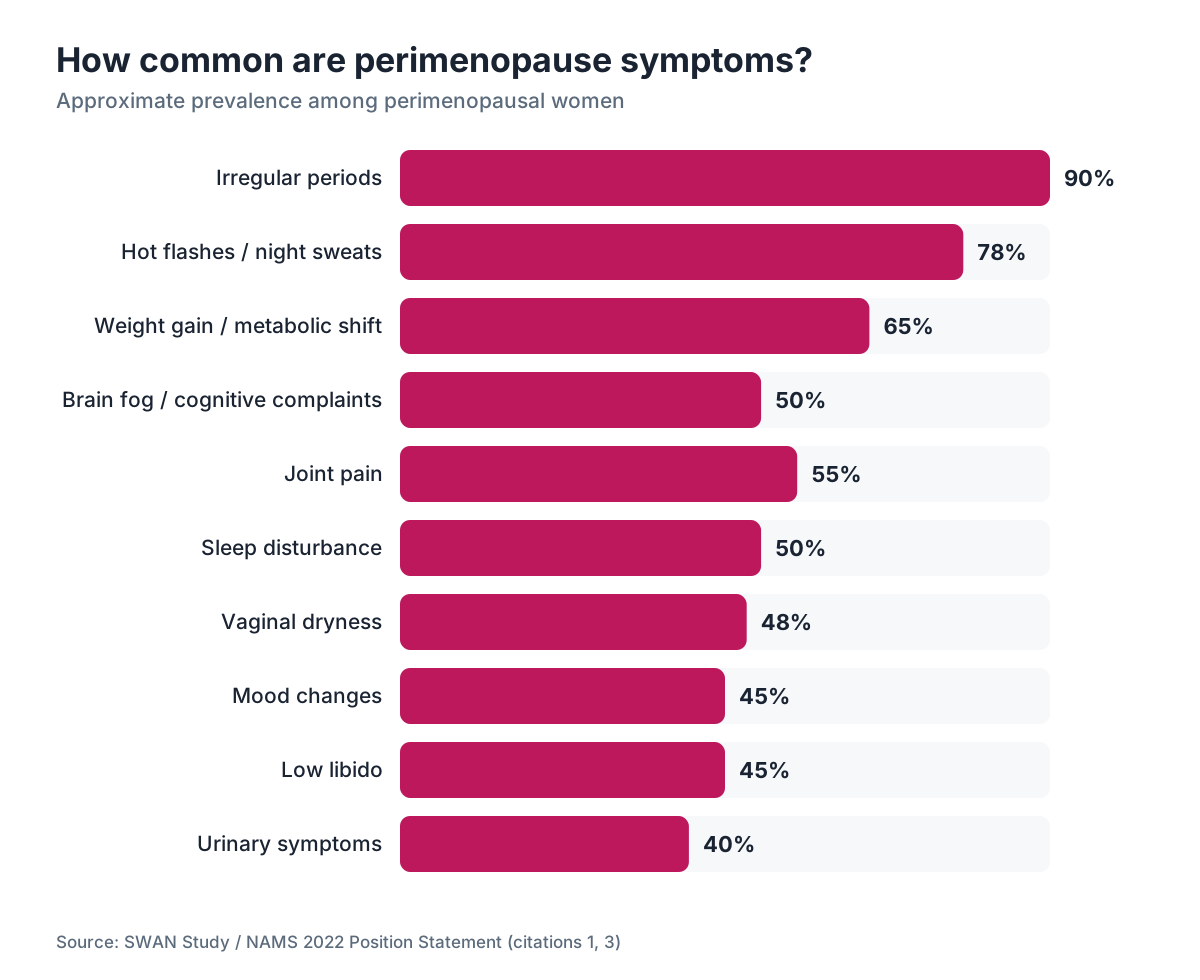
Prevalence data come mostly from the SWAN study, which followed 3,302 women across racial and ethnic groups for more than 20 years, and from the 2022 NAMS position statement [1][3]. The numbers below reflect perimenopausal women specifically, not the general adult female population.
| Symptom | Approximate prevalence in perimenopause | |---|---| | Hot flashes / night sweats | 75 to 80% | | Sleep disturbance | 40 to 60% | | Vaginal dryness | 40 to 55% | | Mood changes (irritability, low mood) | 40 to 50% | | Brain fog / cognitive complaints | 40 to 60% | | Joint pain | 50 to 60% | | Low libido | 40 to 50% | | Irregular periods | up to 90% by late perimenopause | | Weight gain / metabolic shift | 60 to 70% | | Urinary symptoms | 30 to 50% | | Anxiety (new or worsened) | 30 to 40% | | Headaches | 30 to 40% | | Hair thinning | 30 to 50% | | Breast tenderness | 30 to 50% (esp. early perimenopause) |
Race and ethnicity matter here. SWAN found that Black women report more frequent and more severe hot flashes than white women, while Japanese and Chinese American women in the study reported fewer vasomotor symptoms overall [3]. These are group averages, not predictions for any one person, but they shape what a clinician should expect.
Severity is just as individual. The same drop in estrogen can mean mild annoyance in one woman and genuinely disabling symptoms in another. Genetics, stress load, sleep quality, body fat, and smoking history all change how hard perimenopause lands [3].
What are the earliest signs of perimenopause?
The first thing most women notice is a shift in their cycle, usually periods getting slightly shorter (from 28 days to 24 or 25). This happens because the follicular phase shrinks as ovarian reserve drops. It is easy to miss unless you track it.
Breast tenderness often shows up early too, driven by the estrogen surges of an ovary starting to fire irregularly. Women sometimes read this as PMS that has gotten worse. It has.
Mood changes and disrupted sleep can precede obvious hot flashes by years. SWAN found that self-reported sleep problems and depressive symptoms often appeared in early perimenopause well before vasomotor symptoms were prominent [3]. This is the phase where women are most likely to have their symptoms waved off as stress.
Irritability out of proportion to the situation, a lower threshold for anxiety, and a sense that PMS has gotten much worse are all early hormonal signals. If you are in your mid-to-late 40s and telling people you no longer recognize your own moods, perimenopause belongs on the differential.
Why do perimenopause symptoms affect the brain so heavily?
Estrogen is a neurosteroid. It tunes serotonin, dopamine, and norepinephrine signaling. It supports the hippocampus, the brain region most involved in forming memory. When estrogen levels turn erratic, the brain's thermostat, mood systems, and memory circuits all feel it [5].
Brain fog is real and measurable, not in your head. A 2021 study in Menopause Journal found that verbal memory and processing speed declined measurably during the menopausal transition, with the steepest drop in the late perimenopausal and early postmenopausal window, and some recovery afterward as the brain settles into its new lower-estrogen baseline [5].
Insomnia in perimenopause has layers. Night sweats physically wake women up. But estrogen and progesterone both promote sleep, so their decline changes sleep architecture on its own, cutting slow-wave and REM sleep even on dry nights. That is why some women report unrefreshing sleep without a single hot flash.
Anxiety here has a specific flavor. It is often physical (racing heart, chest tightness, a sense of dread), and it can appear suddenly in women who have never been anxious. The estrogen-withdrawal mechanism looks a lot like what happens during severe PMS. Recognizing that pattern helps separate perimenopausal anxiety from a new anxiety disorder.
What is genitourinary syndrome of menopause and why does it get its own name?
Genitourinary syndrome of menopause (GSM) is the clinical term for the cluster of vaginal and urinary symptoms caused by estrogen deficiency in the lower genital tract. It replaced the older phrase "vaginal atrophy" because the syndrome takes in the bladder and urethra as well as the vagina [6].
The American College of Obstetricians and Gynecologists (ACOG) and NAMS both endorse GSM as the preferred term [6]. The vaginal walls thin, lose rugation (the folds that let tissue stretch), and make less natural lubrication. Vaginal pH climbs as Lactobacillus populations drop, which makes recurrent UTIs more likely.
GSM is the one symptom domain that gets worse over time without treatment, while vasomotor symptoms ease for many women within 5 to 7 years post-menopause. Vaginal dryness, painful intercourse, and urinary urgency tend to progress. That matters, because so many women wait to treat it.
Local (vaginal) estrogen works well and carries a very different risk profile than systemic hormone therapy. The FDA-approved options include vaginal estradiol cream, vaginal estradiol tablets (Vagifem), and the vaginal ring (Estring). Because systemic absorption is minimal at properly dosed local estrogen, NAMS states that for women with GSM who have contraindications to systemic therapy, low-dose vaginal estrogen is generally considered acceptable [1].
Ospemifene, an oral selective estrogen receptor modulator, is also FDA-approved for moderate to severe dyspareunia from GSM [6]. Prasterone (a DHEA vaginal insert, brand name Intrarosa) is another non-estrogen option. Women managing perimenopause who have not read the current evidence on hormone replacement therapy are often surprised how much the risk narrative has shifted since the original WHI interpretation.
Does perimenopause cause weight gain, and is that inevitable?
Weight gain during perimenopause is common but not fixed, and the mechanism shapes how you handle it. Total weight changes modestly on average (about 1.5 pounds a year in midlife women), but the distribution shifts hard: visceral fat rises while lean muscle drops, even when the scale barely moves [3].
The drivers stack up. Estrogen helps regulate fat distribution and insulin sensitivity, so as it falls, fat parks in the abdomen instead of the hips and thighs. Disrupted sleep raises ghrelin (the hunger hormone) and cortisol. Less movement from joint pain and fatigue makes it worse.
This shift is clinically significant beyond appearance. Visceral fat is metabolically active and pro-inflammatory, tied to higher cardiovascular and metabolic disease risk. The years around menopause are a real fork in the road: the metabolic trajectory either drifts worse or gets actively managed.
For women whose weight gain is not budging with diet and exercise, GLP-1 receptor agonists (semaglutide, tirzepatide) have the strongest evidence for medically supervised weight loss in this age group. The SURMOUNT-1 trial of tirzepatide showed mean weight reduction of 20.9% at 72 weeks in adults with obesity or overweight [7]. These medications are increasingly used in perimenopausal and menopausal women. They are not a substitute for addressing the hormonal substrate underneath. You can read a detailed comparison at semaglutide vs tirzepatide.
At WomenRx, clinicians often see women who need both hormonal optimization and metabolic support, and treating only one arm leaves the other unaddressed. Still, the starting point for any perimenopausal woman with weight concerns is a full hormonal workup first.
Which perimenopause symptoms signal a need for immediate medical evaluation?
Most perimenopause symptoms are disruptive but not dangerous. A few patterns warrant prompt evaluation instead of watchful waiting.
Heavy bleeding that soaks a pad or tampon every hour for two or more hours in a row, or periods lasting more than 7 days, needs to be checked. Irregular cycles are expected in perimenopause; heavy bleeding is not always benign, and uterine polyps, fibroids, and endometrial hyperplasia can coexist.
New chest pain or palpitations that last past the brief flutter of a hot flash need a cardiac workup. Cardiovascular risk climbs after menopause, and perimenopause is not too early to set a cardiovascular baseline.
Depression or anxiety that is impairing daily function needs clinical attention, not a wait for hormones to settle. Perimenopause is a genuine risk window for new-onset major depression, especially in women with prior mood episodes [5].
Bone loss speeds up sharply in the two years before and after the final period, running 2 to 3% a year versus about 0.5 to 1% a year in premenopause [4]. A bone density test (DEXA scan) is worth discussing with your provider, particularly if you have risk factors: family history of osteoporosis, low body weight, smoking, or a long stretch of low estrogen.
Any postmenopausal bleeding (vaginal bleeding more than 12 months after the last period) requires endometrial evaluation, period.
What treatments actually work for perimenopause symptoms?
The evidence here is genuinely good for several treatments, which is reassuring.
Hormone therapy is still the most effective treatment for vasomotor symptoms. The 2022 NAMS hormone therapy position statement concludes: "For women aged younger than 60 years or who are within 10 years of menopause onset and have no contraindications, the benefit-risk ratio is favorable for treatment of bothersome vasomotor symptoms" [1]. The old fear about breast cancer risk came largely from the combined estrogen-progestogen arm of the original Women's Health Initiative (WHI), in women who averaged 63 years old at enrollment, much older and further from menopause than the typical woman seeking treatment [10]. The 2022 picture is more nuanced [1].
Hormone therapy options include oral estradiol, the estrogen patch (transdermal delivery skips first-pass liver metabolism and may carry a better clot risk profile), gel, spray, and vaginal ring. Women with a uterus need progestogen to protect the uterine lining; progesterone (bioidentical, FDA-approved as Prometrium) is one option. The type of progestogen matters: micronized progesterone appears to have a more favorable cardiovascular and breast risk profile than synthetic progestins like MPA on current evidence [1].
Non-hormonal FDA-approved options now include fezolinetant (Veozah), a neurokinin B receptor antagonist the FDA approved in May 2023 specifically for moderate to severe vasomotor symptoms in women who cannot or prefer not to use hormones [8]. Low-dose paroxetine (Brisdelle) is the only FDA-approved SSRI for hot flashes. Venlafaxine, gabapentin, and oxybutynin have evidence for hot flashes but are used off-label.
Lifestyle changes have real but modest effects. Regular aerobic exercise, keeping a healthy weight, layered bedding, and cutting alcohol and spicy-food triggers can drop hot flash frequency by 20 to 30% in some studies. That is not enough on its own for severe symptoms, but it helps as an add-on.
For GSM specifically, local vaginal estrogen works well and is appropriate for most women. Non-hormonal vaginal moisturizers (used regularly, not only at intercourse) and lubricants help with comfort but do not reverse the tissue changes the way estrogen does.
For bone loss, estrogen started in perimenopause preserves bone density effectively. Calcium (total intake around 1,200 mg/day from food and supplement combined for women over 50) and vitamin D (the Endocrine Society recommends 1,500 to 2,000 IU/day for adults at risk of deficiency) are baseline support [4]. Women with established low bone density may need bisphosphonates or other bone-specific therapy.
How do you know if what you're experiencing is perimenopause or something else?
No single blood test diagnoses perimenopause, which frustrates a lot of women. FSH (follicle-stimulating hormone) rises as the ovaries become less responsive, and a single FSH above 25 IU/L in the right clinical context is supportive, but FSH swings wildly during perimenopause and a single normal reading does not rule it out [2].
Diagnosis is mostly clinical: a woman in the expected age range, with irregular cycles and symptoms that fit hormonal fluctuation, probably has perimenopause. This is exactly why so many women get diagnosed late, or get their symptoms pinned on thyroid disease, anxiety disorders, or depression without the hormonal context.
Thyroid dysfunction is a real differential. Hypothyroidism causes fatigue, weight gain, brain fog, and mood changes; hyperthyroidism causes palpitations, heat intolerance, and anxiety. A TSH is worth checking. Anemia explains fatigue and sometimes palpitations. None of these are either/or with perimenopause; they can coexist.
If your cycles are still regular and you are under 40 with these symptoms, primary ovarian insufficiency (POI), which affects about 1% of women, should be evaluated. POI is not premature menopause in the strict sense (ovarian function can still fluctuate) but it carries its own health implications, especially for bone and cardiovascular health.
The practical approach: track your cycles, log your symptoms with timing and severity, get a TSH and basic metabolic panel, and see a clinician who takes a full menstrual and symptom history. The menopause overview on this site covers the diagnostic framework in more detail.
How long do perimenopause symptoms last?
Longer than most women expect, and longer than most doctors used to say.
A 2015 JAMA Internal Medicine study tracking women in the SWAN cohort found the median duration of frequent vasomotor symptoms was 7.4 years total, and for women whose hot flashes started in early perimenopause, the median stretched past 11 years [9]. The younger a woman was when symptoms began, the longer they lasted. That upended the old "two to three years" estimate many providers were still quoting.
Genitourinary symptoms do not follow that arc. While vasomotor symptoms tend to peak and then fade, GSM tends to worsen over time without treatment.
Cognitive symptoms (brain fog, memory complaints) mostly improve in postmenopause as the brain adapts to lower, stable estrogen, though the fluctuation phase of perimenopause is when cognition takes the biggest hit [5].
Mood symptoms also tend to ease in postmenopause for most women, though the subset with a significant depressive history may stay vulnerable.
Bone loss speeds up for roughly 5 to 7 years around the transition before slowing to a lower but still ongoing rate.
What should you track and bring to your doctor appointment?
A few months of data makes your appointment far more productive. Here is what actually matters.
Cycle log: First day of each period, last day, any spotting. How has this changed from your usual? Many women like an app; some prefer paper. The raw data is what your provider needs.
Symptom frequency and severity: Hot flashes per day and overnight, sleep quality (hours slept and whether you wake and can drop back off), a mood rating, and any pelvic or urinary symptoms. "I feel bad" is hard to treat. "I have 6 hot flashes a day and wake three times a night" is actionable.
Labs to ask about at your baseline visit: TSH, CBC (to check for anemia given heavy cycles), fasting glucose and lipids (metabolic risk rises during the transition), FSH and estradiol (useful for context even if not diagnostic), and vitamin D if it has not been checked recently.
Medical history to bring: Family history of cardiovascular disease, osteoporosis, breast cancer, and blood clots. Personal history of depression, PMDD, postpartum depression, migraines with aura. Current medications, including hormonal contraceptives (which can mask perimenopause symptoms by supplying outside hormones). Smoking status. These directly shape which treatment options are safest for you.
If you have not found a provider who takes these symptoms seriously, telehealth platforms focused on women's hormones, including WomenRx, can provide evidence-based evaluation and treatment without the often-long wait for an in-person menopause specialist.
Frequently asked questions
What are the first signs of perimenopause?
The earliest signs are usually cycle changes (periods getting slightly shorter or closer together), worsened PMS, breast tenderness, and mood shifts like more irritability or anxiety. Sleep disturbances often show up before obvious hot flashes. Most women are in their mid-to-late 40s when this begins, though some notice changes in their late 30s or early 40s.
Can perimenopause cause anxiety and depression?
Yes. Perimenopause is a genuine neurobiological risk window for both anxiety and depression. Estrogen tunes serotonin, dopamine, and GABA signaling. Women with prior PMDD, postpartum depression, or a history of major depression carry higher risk. New-onset anxiety, sometimes physical in character (racing heart, chest tightness), is common and distinct from a primary anxiety disorder, though clinical assessment matters.
How do I know if I'm in perimenopause or just stressed?
Perimenopause and chronic stress share symptoms: fatigue, poor sleep, mood changes, brain fog. The distinguishing clues are age (mid-40s or older), menstrual cycle changes, and physical symptoms like hot flashes or night sweats. A TSH to rule out thyroid disease plus a menstrual history review with a clinician is the practical starting point. FSH can be supportive but swings too much to stand alone.
Can perimenopause cause heart palpitations?
Yes, palpitations are a recognized vasomotor symptom, often occurring alongside or triggered by hot flashes. They are generally benign and estrogen-related. That said, new or persistent palpitations, palpitations with chest pain or shortness of breath, or palpitations in a woman with known cardiac risk should be evaluated with an EKG and clinical workup to rule out arrhythmia.
What is the average age for perimenopause to start?
The average onset is around 47, with most women going through the transition between 45 and 55 before reaching menopause at an average age of 51 in the United States. Some enter perimenopause as early as 35 to 40. Smoking speeds the transition by roughly 1 to 2 years. Our perimenopause age article covers the timing data in detail.
Does perimenopause cause hair loss?
Thinning hair and increased shedding affect an estimated 30 to 50% of perimenopausal and menopausal women. The mechanism is partly direct (estrogen supports the hair follicle growth phase) and partly a relative androgen excess as estrogen falls. Thyroid disease and iron deficiency, which should be excluded, can produce similar changes. Minoxidil is the most evidence-supported topical treatment; hormonal optimization may help the underlying driver.
Is brain fog a real perimenopause symptom or is it just aging?
It is real and it is hormonal, not simply age. A 2021 study in Menopause Journal found measurable declines in verbal memory and processing speed during the menopausal transition that partly recovered in postmenopause once estrogen stabilized at a new lower baseline. The fluctuation phase (perimenopause) is when cognitive symptoms are worst. This pattern is distinct from age-related cognitive decline.
Can you have perimenopause symptoms with regular periods?
Yes. Hormonal fluctuations, particularly falling progesterone, can cause perimenopausal symptoms even when cycles look regular from the outside. Mood changes, disrupted sleep, breast tenderness, and worsened PMS are often early signs that precede obvious cycle irregularity. Many women are in early perimenopause for 2 to 4 years before their cycles become measurably irregular.
How long does perimenopause last?
On average 4 to 8 years, though a 2015 JAMA Internal Medicine study following women in the SWAN cohort found the median duration of frequent vasomotor symptoms was 7.4 years, and exceeded 11 years in women whose hot flashes started in early perimenopause. Women who entered the transition younger had the longest symptom duration. Genitourinary symptoms do not resolve on their own and tend to progress without treatment.
Does perimenopause cause joint pain?
Yes. Joint pain and morning stiffness affect an estimated 50 to 60% of perimenopausal women. Estrogen has anti-inflammatory properties and estrogen receptors sit in cartilage and synovial tissue. As estrogen falls, joint inflammation rises. The knees, hands, and hips are the most commonly reported. Some women find joint symptoms improve with hormone therapy, though direct trial data on HRT for joint pain specifically is limited.
Can perimenopause cause weight gain even if I'm not eating more?
Yes, and this is one of the most maddening parts. The hormonal shift changes body composition: visceral (abdominal) fat rises while lean muscle drops, even without eating more. Metabolic rate slows. Disrupted sleep raises cortisol and ghrelin, pushing fat storage further. Exercise, especially strength training to hold onto muscle mass, is the most evidence-supported behavioral move, alongside adequate dietary protein.
What blood tests should I get if I think I'm in perimenopause?
Useful labs include TSH (to exclude thyroid disease, which mimics many perimenopause symptoms), CBC (especially with heavy cycles), fasting glucose and lipid panel (metabolic risk rises during the transition), FSH and estradiol (context, not diagnosis), vitamin D, and ferritin if fatigue is prominent. FSH swings widely during perimenopause, so a single result is not diagnostic; the clinical picture matters more.
Are perimenopause symptoms different from menopause symptoms?
The categories overlap heavily. The key difference is context: perimenopause symptoms happen alongside fluctuating and sometimes still-present cycles, while menopause is defined as 12 consecutive months without a period. Perimenopausal estrogen swings can make some symptoms (particularly breast tenderness and migraines) worse than in postmenopause, when estrogen settles at a new lower baseline. Read our menopause overview for the comparison.
Sources
- North American Menopause Society (NAMS), 2022 Hormone Therapy Position Statement
- NIH National Institute on Aging, Menopause overview
- Study of Women's Health Across the Nation (SWAN), NIH
- Endocrine Society, Osteoporosis Clinical Practice Guideline
- Maki PM et al., Menopause Journal 2021, cognitive function during menopausal transition
- ACOG Committee Opinion, Genitourinary Syndrome of Menopause
- Jastreboff AM et al., SURMOUNT-1 trial, NEJM 2022
- FDA Drug Approval, Fezolinetant (Veozah), May 2023
- Avis NE et al., Duration of menopausal vasomotor symptoms over the menopause transition, JAMA Internal Medicine 2015
- NIH National Heart, Lung, and Blood Institute, Women's Health Initiative overview