Perimenopause symptoms and treatment: what actually works
TL;DR: Perimenopause is the transition before menopause, and it lasts 4 to 10 years on average. Hot flashes, irregular periods, broken sleep, mood swings, and brain fog are the usual complaints. Hormone therapy is still the most effective treatment for most symptoms. Non-hormonal options work too: SSRIs, fezolinetant, cognitive behavioral therapy. Your best plan depends on which symptoms bother you most and your health history.
What is perimenopause, exactly?
Perimenopause is the runway to menopause, the stretch of years when estrogen and progesterone stop being predictable. Ovarian function winds down unevenly. Your ovaries still work, just erratically, and that erratic part is what drives most of the symptoms.
Menopause itself is a single point in time: 12 straight months without a period. Everything before that point is perimenopause. The North American Menopause Society (NAMS) marks the start as the moment cycles become noticeably irregular, and the end as one year after the final period [1].
Perimenopause usually begins around age 47, though starting anywhere from 40 to 51 is common. Some women start earlier, which we cover in our piece on perimenopause age. The whole transition runs 4 to 10 years, and most women spend about 4 years in late perimenopause before hitting the 12-month mark [2]. To understand when the endpoint arrives, see when does menopause start.
What are the most common perimenopause symptoms?
The symptom list is long, and for many women it disrupts daily life in ways they didn't expect. Here are the ones women report most.
Vasomotor symptoms (hot flashes and night sweats): Up to 80% of women get these [1]. A hot flash is a sudden wave of heat, usually spreading from chest to face, often followed by sweating and then a chill. Night sweats are the same thing while you sleep. They peak in late perimenopause and the first two years after menopause, then fade for most women over 4 to 5 years. About 10% of women have them for more than a decade [3].
Menstrual irregularity: This is usually the first thing you notice. Cycles lengthen, shorten, or skip. Flow gets heavier or lighter. A gap of 60 days or more between periods means you are in late perimenopause [2].
Sleep disruption: Often tied to night sweats, but estrogen and progesterone both change sleep architecture on their own. Women in perimenopause report more time awake after falling asleep, less deep sleep, and waking too early even on nights with no sweating [3].
Mood changes: Irritability, anxiety, and low mood show up early, when estrogen swings hard before it starts trending down. The Study of Women's Health Across the Nation (SWAN) found depressive symptoms were roughly twice as likely during perimenopause as in the premenopausal years [4].
Cognitive changes (brain fog): Losing words mid-sentence, forgetting names, feeling a step slow. Most of this is temporary and tracks with poor sleep and estrogen swings, not permanent decline [3].
Genitourinary symptoms: Vaginal dryness, painful sex, urinary urgency, and repeat UTIs. Grouped under the term genitourinary syndrome of menopause (GSM), these get worse over time instead of resolving on their own [1].
Other reported symptoms: Joint pain, heart palpitations, shifting libido, belly weight gain, and headaches. The evidence tying each of these specifically to the hormonal transition varies, but women describe all of them constantly.
How do doctors diagnose perimenopause?
There is no single definitive test. Perimenopause is a clinical diagnosis, which means your doctor reads the picture from your symptoms and your period history, not from one lab result.
FSH (follicle-stimulating hormone) climbs as ovarian reserve drops, but during perimenopause it bounces around wildly. One high FSH does not confirm perimenopause, and a normal FSH does not rule it out [1]. NAMS specifically advises against using FSH alone to diagnose perimenopause in women over 45 who have clear symptoms [1].
Estradiol testing has the same problem. Your level on the day of the draw could be high, low, or middling, depending entirely on where you are in that particular cycle.
The reliable approach is age plus symptom pattern plus menstrual change. If you are 45 or older, your periods are irregular, and you are having hot flashes or the other symptoms above, perimenopause is almost certainly the answer. Premature ovarian insufficiency (before age 40) is different and needs a fuller hormonal and genetic workup.
Thyroid disease, pregnancy, and some medications mimic perimenopausal symptoms, so a good doctor rules those out first.
What are the treatment options for perimenopause symptoms?
Treatment splits into three buckets: hormonal therapies, non-hormonal prescriptions, and lifestyle or behavioral approaches. The right mix depends on which symptoms bother you most and your health profile.
Hormonal therapies
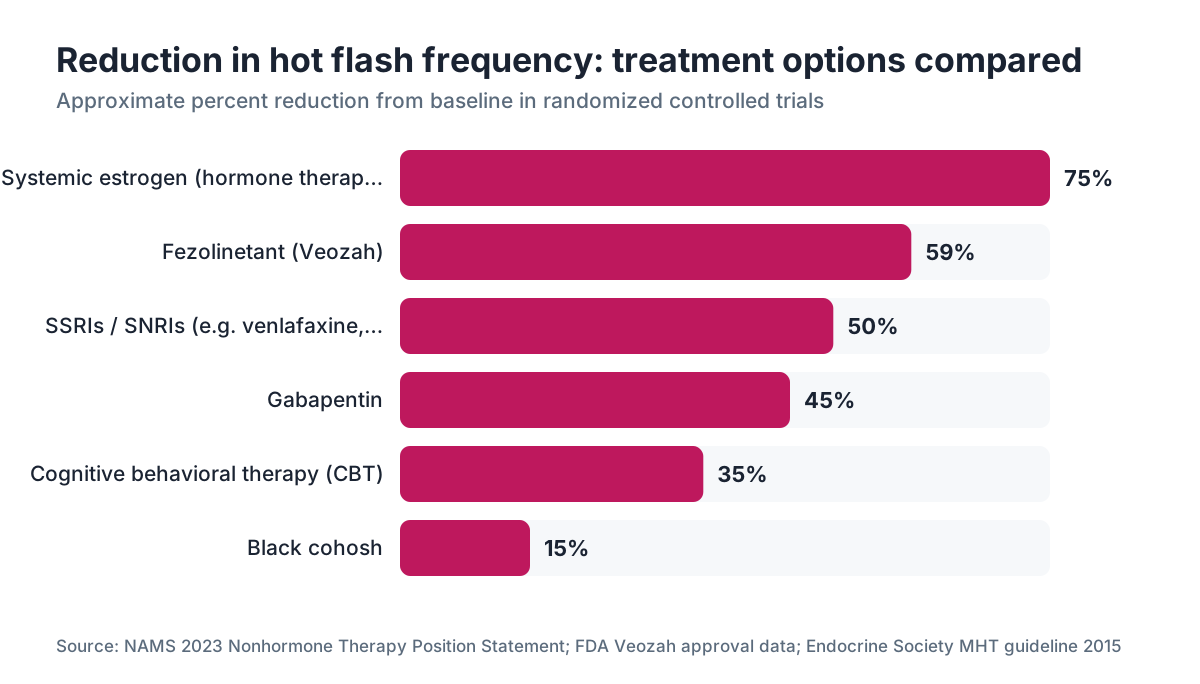
Systemic hormone therapy (estrogen alone, or estrogen plus a progestogen if you have a uterus) is the most effective treatment for hot flashes, night sweats, and sleep disruption. It also helps genitourinary symptoms, bone loss, and mood. The Endocrine Society's clinical practice guideline says that for healthy women under 60 or within 10 years of menopause onset, the benefits of hormone therapy outweigh the risks for treating bothersome vasomotor symptoms [5].
If you have a uterus, you need a progestogen alongside estrogen to protect the uterine lining. Progesterone (bioidentical, oral micronized) and synthetic progestins both protect the endometrium, though their side effect profiles differ enough to be worth a conversation with your provider.
Delivery method matters. Transdermal estrogen (patch, gel, spray) skips the liver and carries a lower clot risk than oral estrogen [5]. The estrogen patch is worth understanding in detail if you are weighing routes. Vaginal estrogen (cream, ring, tablet) works locally for GSM with almost no systemic absorption, and it is considered safe even for most women who cannot take systemic hormones [1].
For the full picture of how hormone therapy works across the menopause spectrum, see our explainer on hormone replacement therapy.
Non-hormonal prescription medications
Fezolinetant (brand name Veozah) is the first non-hormonal prescription drug FDA-approved specifically for hot flashes. It is a neurokinin 3 receptor antagonist, meaning it targets the brain pathway that drives vasomotor symptoms. FDA approved it in May 2023. In trials it cut moderate-to-severe hot flash frequency by about 57% from baseline at 12 weeks [6]. Good option for women who cannot or would rather not use hormones.
SSRIs and SNRIs (paroxetine, escitalopram, venlafaxine, desvenlafaxine) reduce hot flash frequency by roughly 40 to 60% versus placebo in controlled trials [3]. Paroxetine 7.5 mg (Brisdelle) is the only one with an FDA indication for vasomotor symptoms. The others are off-label but have solid trial data behind them.
Gabapentin and pregabalin reduce hot flashes, especially the nighttime ones. They shine for women whose main problem is night sweats wrecking sleep. Sedation is the catch.
Clonidine has older data showing modest hot flash reduction, but low blood pressure, dry mouth, and dizziness push it down the list in current practice.
Lifestyle and behavioral approaches
Cognitive behavioral therapy (CBT) for hot flashes has more evidence than most people expect. A UK trial published in Menopause (the MENOS 1 trial) found CBT significantly cut hot flash problem rating and improved mood and sleep versus a waiting-list control [7]. It is not as strong as hormone therapy, but for women who want to skip medication, it is a legitimate first choice.
Paced respiration, a slow diaphragmatic breathing technique, reduced hot flash frequency in some small trials, though the evidence is inconsistent. Low risk, worth a try.
Aerobic exercise does not reliably cut hot flash frequency in randomized trials, but it clearly helps sleep, mood, weight, and bone density. Those are real wins even if it does not cool you down directly.
Weight loss matters more than most guidelines admit. Fat tissue generates heat and may worsen hot flashes. Some data show women who lose weight report fewer and milder vasomotor symptoms. This is where GLP-1 receptor agonists are entering the picture, especially for perimenopausal women dealing with both weight gain and hot flashes. Read more about semaglutide for weight loss, or compare semaglutide vs tirzepatide to see which fits your situation.
For genitourinary symptoms specifically
Vaginal estrogen is first-line and works extremely well. Non-hormonal alternatives include ospemifene (an oral SERM), vaginal DHEA (prasterone), and good lubricants and moisturizers for everyday comfort. The American College of Obstetricians and Gynecologists endorses all of these [8].
Is hormone therapy safe for perimenopause?
This is where the confusion lives, and most of it traces back to how the Women's Health Initiative (WHI) was reported in 2002. The WHI studied oral conjugated equine estrogen plus medroxyprogesterone acetate in women who averaged 63 years old, many of them more than 10 years past menopause. The risks it found, mainly a small rise in breast cancer risk in the combined-hormone group after 5 years of use, do not map onto younger perimenopausal women starting therapy near menopause onset [5].
The Endocrine Society's 2015 clinical practice guideline states: "For women who are within 10 years of menopause onset or younger than 60 years and have no contraindications, the benefits of MHT are likely to outweigh the risks for treatment of bothersome menopausal symptoms and prevention of bone loss" [5].
The absolute numbers matter. For combined hormone therapy, the WHI found roughly 8 extra breast cancer cases per 10,000 women per year, a risk on par with one to two glasses of alcohol daily. Estrogen alone (in women without a uterus) was actually linked to a lower breast cancer risk in the WHI [3].
Some conditions genuinely warrant caution or avoidance: a personal history of hormone-receptor-positive breast cancer, unexplained vaginal bleeding, active liver disease, a history of blood clots or stroke (especially with oral estrogen), and active cardiovascular disease. Transdermal estrogen largely sidesteps the clot risk because it avoids first-pass liver metabolism [5].
Here is the honest bottom line. For most healthy women in early-to-mid perimenopause with bothersome symptoms, hormone therapy is worth discussing. It is not right for everyone. But a 2002 headline is not a good reason to skip the conversation.
For a wider look at the evidence and options, see our full article on hormone replacement therapy and our piece on menopause.
How does perimenopause affect weight, and what can help?
Weight gain in perimenopause is real, and it has a biological explanation. Estrogen helps regulate where fat sits. As estrogen drops, fat shifts toward the belly instead of the hips and thighs. Metabolic rate falls too, partly from the hormone shift and partly from age-related muscle loss. The average woman gains about 1.5 pounds a year through the menopause transition, according to SWAN data [4].
Hormone therapy does not cause weight gain. Studies consistently show women on hormone therapy gain no more weight than women who skip it, and some data suggest it may soften the waist-to-hip shift [5]. That does not make it a weight loss treatment. It just means it is not the culprit people once assumed.
For women who need real weight loss support, GLP-1 receptor agonists (semaglutide, tirzepatide) changed what is possible. The SURMOUNT-1 trial of tirzepatide showed an average 20.9% body weight loss at 72 weeks in adults with obesity or overweight [9]. These drugs have not been studied in perimenopausal women as a separate subgroup, but the weight loss mechanisms are not sex-specific. WomenRx prescribes GLP-1s for women managing hormone changes and weight at the same time.
Strength training is the most underused tool here. Building and holding muscle pushes back against the metabolic slowdown. Two to three resistance sessions a week is the standard recommendation from the American College of Sports Medicine.
What happens to bone health during perimenopause?
Bone loss speeds up sharply in late perimenopause and the first few years after menopause. Estrogen is a main signal for bone remodeling, so when it drops, the cells that break down bone (osteoclasts) start outpacing the cells that build it (osteoblasts). Women can lose 1 to 3% of bone density a year in the early postmenopausal years [1].
This matters because fractures from osteoporosis carry serious consequences. A hip fracture in a woman over 70 is linked to significant mortality and loss of independence. The window to prevent that opens in perimenopause, not after the first break.
Hormone therapy preserves bone density and reduces fracture risk. That is one of the clearest non-symptom benefits of MHT for women who need it for symptom control anyway.
If you are not using hormone therapy, calcium (1,200 mg a day total from food plus supplements for women over 51) and vitamin D (600 to 800 IU a day recommended, though many clinicians aim for 25-OH vitamin D levels of 30 to 50 ng/mL) are the baseline. Bisphosphonates are the main drug option once osteoporosis is diagnosed.
A bone density test (DEXA scan) is recommended by the U.S. Preventive Services Task Force for all women 65 and older, and for younger postmenopausal women with risk factors. Many clinicians grab a baseline DEXA in early postmenopause to track change over time.
What supplements actually work for perimenopause symptoms?
The supplement market for menopause is enormous and mostly unsupported by good evidence. That is the honest answer, and it saves you money to hear it early.
Black cohosh: The most-studied herb for hot flashes. Trial results are mixed. A 2012 Cochrane review concluded the evidence was insufficient to recommend it, and there are rare but documented cases of liver injury [3]. Not a first-line pick.
Phytoestrogens (soy isoflavones, red clover): Weakly estrogenic plant compounds. Some trials show modest hot flash reductions, others show nothing. When the effect shows up, it is smaller than any prescription option. Women with hormone-sensitive breast cancer should check with their oncologist first.
Magnesium: Some evidence for better sleep and possibly mood. Generally safe. Reasonable to try.
Melatonin: Can help you fall asleep. Does nothing for the underlying hormone shift. Short-term use is low-risk.
Ashwagandha: Small trials suggest lower stress and cortisol, plus modest sleep gains. Not enough data to say much for perimenopause specifically.
What to skip: Over-the-counter progesterone cream barely absorbs and does not protect the endometrium. It is not the same as prescription oral micronized progesterone. Evening primrose oil, wild yam cream, and DHEA supplements have thin evidence for perimenopausal symptoms.
The FDA does not check supplements for whether they work, only for limited safety. If a product claims to treat hot flashes or balance hormones, the company does not have to prove that claim before selling it to you [10].
How do I talk to my doctor about perimenopause treatment?
Plenty of women say their perimenopausal symptoms got waved off as anxiety, stress, or just aging. This is a documented problem in primary care. Walking in prepared changes the conversation.
Track your symptoms for two to four weeks before the appointment: hot flash frequency and severity, sleep quality (rate it 1 to 10), your menstrual pattern, mood, and anything that hits your daily function. A symptom diary turns a vague complaint into data your provider can actually act on.
Ask directly: "I think I may be in perimenopause. Can we talk about hormonal and non-hormonal treatment options?" Naming the conversation forces it to happen.
If your provider does not know current NAMS or Endocrine Society guidance, you are within your rights to ask for a referral to a menopause specialist. NAMS keeps a directory of certified menopause practitioners at menopause.org.
Telehealth has made informed prescribers much easier to reach. Platforms like WomenRx connect women with clinicians who focus on hormonal care, review your history, weigh risks and benefits in context, and prescribe when appropriate, without the hunt for a local specialist.
Bring your questions and your symptom log. Do not accept "this is just part of getting older" as a medical plan.
How is perimenopause different from menopause?
The distinction is clinical, more than semantic. Perimenopause is the transition; menopause is the confirmed endpoint (12 months without a period). Postmenopause is everything after.
Symptoms usually peak in late perimenopause and the first 1 to 2 years postmenopause, then ease for most complaints except genitourinary ones, which keep worsening without treatment. Knowing where you are in the transition helps you and your provider set realistic expectations about how long the hard part lasts.
Contraception is still relevant in perimenopause. You can still ovulate, even with irregular cycles. NAMS recommends continuing contraception until 12 months after the last period for women over 50, and until age 55 or 24 months after the last period for women under 50 [1]. Hormone therapy at standard doses does not reliably prevent pregnancy.
Some women do well on low-dose hormonal contraceptives during perimenopause because those handle symptoms and contraception at once. Worth discussing, especially if your cycles are very irregular or heavy.
For more on the timeline differences, see menopause age.
What does the evidence say about emerging and off-label treatments?
The treatment landscape is genuinely changing. A few things worth knowing.
Fezolinetant (Veozah): FDA-approved May 2023. The SKYLIGHT trial program showed statistically significant drops in hot flash frequency and severity versus placebo, with 45 mg a day reducing moderate-to-severe hot flashes by roughly 60% from baseline at week 12 [6]. Liver function monitoring is required. It is a real option, especially for women who cannot use hormones.
Low-dose vaginal estrogen in breast cancer survivors: Still a nuanced, actively debated area. NAMS issued a 2022 position statement noting that for many breast cancer survivors with severe GSM that has not responded to non-hormonal measures, low-dose vaginal estrogen may be appropriate with oncologist input and informed consent, given the minimal systemic absorption [1]. Not a blanket endorsement, but a shift from the old categorical no.
Testosterone for women: Low-dose testosterone has growing evidence for low libido (hypoactive sexual desire disorder) in postmenopausal women. The Global Consensus Position Statement on the Use of Testosterone Therapy for Women (2019) concluded that testosterone therapy improves sexual function in postmenopausal women [11]. There is no FDA-approved testosterone product specifically for women in the US, so all prescribing is off-label, usually compounded formulations or very low doses of male-labeled products.
Progesterone for sleep: Oral micronized progesterone has a sedating effect that seems separate from its endometrial-protection job. Some women take low-dose oral progesterone specifically to sleep better, and there is reasonable mechanistic and clinical rationale for it [12].
Nobody has great long-term data on some of these newer approaches. The strongest well-designed data we have covers vaginal estrogen and the established SSRIs and SNRIs. The fezolinetant data runs to one year. Practice will keep shifting as longer trials report out.
Frequently asked questions
How long does perimenopause last?
Perimenopause lasts 4 to 10 years on average, with most women spending roughly 4 years in late perimenopause before reaching menopause. Duration varies a lot. Women who start earlier tend to have longer transitions. The STRAW+10 staging system, still used clinically, identifies early and late perimenopause stages based on cycle irregularity and FSH trends.
Can perimenopause cause anxiety and depression?
Yes. Estrogen affects serotonin and other neurotransmitter systems. The SWAN study found perimenopausal women were roughly twice as likely to report depressive symptoms compared to their premenopausal baseline, even without a prior depression history. Mood symptoms often ease once estrogen stabilizes postmenopause, but they deserve treatment in the meantime, whether with hormone therapy, antidepressants, therapy, or a combination.
Is it safe to use hormone therapy if I smoke?
Smoking raises clot and cardiovascular risk. Oral estrogen compounds that risk further, making it a real concern. Transdermal estrogen (patch, gel, spray) skips the liver and carries a much lower clot risk, so it is a safer route for smokers who need hormone therapy. The absolute contraindication is fuzzier with transdermal forms, but it still has to be weighed against your full cardiovascular picture. Talk it through with your prescriber.
What are the best non-hormonal treatments for hot flashes?
The most evidence-backed non-hormonal options are fezolinetant (FDA-approved, about 57 to 60% reduction in hot flash frequency in trials), paroxetine 7.5 mg (FDA-approved for vasomotor symptoms, with off-label doses of other SSRIs and SNRIs also working), venlafaxine, desvenlafaxine, and gabapentin. Cognitive behavioral therapy has solid trial data for cutting hot flash distress. Cooling strategies and paced breathing help at the margins.
Can I get pregnant during perimenopause?
Yes. Ovulation still happens, even with irregular cycles. Pregnancy in perimenopause is less likely than in peak fertility years but not impossible, and it carries higher risks including chromosomal abnormalities and pregnancy complications. NAMS recommends contraception until 12 consecutive months without a period. Standard hormone therapy doses do not provide reliable contraception, so you need a separate contraceptive method.
Does perimenopause affect sex drive?
It often does. Falling estrogen causes vaginal dryness and tissue changes that make sex uncomfortable, which understandably drags down libido. Testosterone also declines with age and ovarian changes, and low testosterone is more directly tied to reduced desire. Options include vaginal estrogen or DHEA for tissue symptoms, lubricants and moisturizers for everyday comfort, and off-label low-dose testosterone for desire specifically.
Why are my periods so irregular in perimenopause?
Irregular periods are the hallmark of perimenopause. As ovarian function gets erratic, the hormonal signals that set cycle length and flow stop being consistent. You may get short cycles, long cycles, skipped cycles, or very heavy periods. A gap of 60 or more days between periods signals late perimenopause. Very heavy or prolonged bleeding warrants evaluation to rule out fibroids, polyps, or endometrial problems.
How do I know if my brain fog is perimenopause or something else?
Perimenopausal brain fog usually means word-finding trouble, forgetfulness, and mental slowness. It tends to track with poor sleep and estrogen swings rather than permanent cognitive decline. If the symptoms are severe, rapidly worsening, or come with personality changes, get evaluated for other causes. Most research, including SWAN data, shows objective cognitive performance largely returns to baseline postmenopause.
Can losing weight help with perimenopause symptoms?
There is evidence that excess fat tissue worsens hot flashes, partly because fat generates heat and partly because it alters estrogen metabolism. Some studies show women who lose meaningful weight report fewer and milder vasomotor symptoms. Weight loss also helps mood, sleep, joint pain, and metabolic health, all relevant during this transition. How you lose the weight matters less than whether you keep it off.
What is the difference between bioidentical and synthetic hormones?
Bioidentical means the hormone molecule is chemically identical to what your body makes. FDA-approved bioidentical options include oral micronized progesterone (Prometrium), plus estradiol patches, gels, and sprays. Compounded bioidentical hormones are not FDA-approved and lack standardized dosing or safety testing. The Endocrine Society and NAMS both caution against choosing custom-compounded hormones over regulated FDA-approved products, which already include bioidentical options.
Should I check my hormone levels to know if I am in perimenopause?
Probably not on their own. NAMS specifically advises against relying on a single FSH or estradiol test to diagnose perimenopause in women over 45 with classic symptoms, because levels swing widely cycle to cycle. The diagnosis is clinical: your age, symptom pattern, and menstrual changes together tell the story. Testing makes more sense for women under 45, where premature ovarian insufficiency needs ruling out.
What does perimenopause do to sleep?
Both night sweats and direct hormonal effects disrupt sleep. Progesterone has GABA-receptor activity that promotes sleep, so as it declines, sleep architecture worsens. Estrogen affects body temperature regulation and REM sleep. Women in late perimenopause report significantly worse sleep quality than premenopausal women, and that disruption is one of the strongest drivers of fatigue, mood problems, and cognitive complaints during this transition.
Is vaginal estrogen safe if I have had breast cancer?
This needs individual oncologist input. Low-dose vaginal estrogen has minimal systemic absorption and is not the same as systemic hormone therapy. The NAMS 2022 position statement acknowledges that for many breast cancer survivors with severe genitourinary symptoms unresponsive to non-hormonal options, vaginal estrogen may be appropriate after shared decision-making with their oncologist. Women on aromatase inhibitors need more caution. Non-hormonal options (lubricants, moisturizers, ospemifene, vaginal DHEA) are alternatives.
How do GLP-1 medications fit into perimenopause care?
GLP-1 receptor agonists like semaglutide and tirzepatide are not perimenopause treatments, but they matter for perimenopausal women fighting weight gain, metabolic shifts, or insulin resistance that worsens during this transition. The SURMOUNT-1 trial showed tirzepatide produced an average 20.9% body weight loss. Weight loss can improve vasomotor symptoms and overall metabolic health. These medications need a prescription and medical supervision.
Sources
- North American Menopause Society (NAMS), Menopause Practice: A Clinician's Guide
- Harlow SD et al., STRAW+10 Staging System, Menopause 2012
- The NAMS 2023 Nonhormone Therapy Position Statement Advisory Panel, Menopause 2023
- Study of Women's Health Across the Nation (SWAN), National Institute on Aging
- Endocrine Society Clinical Practice Guideline: Treatment of Symptoms of the Menopause, 2015 (affirmed in subsequent guidance)
- FDA Drug Approval: Fezolinetant (Veozah), May 2023
- Ayers B et al., MENOS 1 trial, Menopause 2012
- American College of Obstetricians and Gynecologists (ACOG), Practice Bulletin on Genitourinary Syndrome of Menopause
- Jastreboff AM et al., SURMOUNT-1 Trial, NEJM 2022
- FDA, Dietary Supplements: What You Need to Know
- Global Consensus Position Statement on the Use of Testosterone Therapy for Women, Journal of Clinical Endocrinology & Metabolism 2019
- Leonetti HB et al., Obstetrics & Gynecology 1999; Hitchcock CL & Prior JC, Endocrine Reviews 2012