Perimenopause symptoms by age: what to expect from your late 30s to early 50s
TL;DR: Perimenopause usually begins between 40 and 44, though some women notice changes in their mid-to-late 30s. The transition lasts 4 to 8 years on average. Core symptoms are irregular periods, hot flashes, broken sleep, mood shifts, and brain fog. Menopause itself, defined as 12 straight period-free months, arrives at a median age of 51.4 in the United States.
When does perimenopause actually start?
Most women enter perimenopause between 40 and 44. The range is wide. The SWAN study (Study of Women's Health Across the Nation), which followed more than 3,000 women for over two decades, put the median age of the final menstrual period at 51.4 years, with the transition to that point running about four years on average [1]. For 10 to 15 percent of women, it runs longer than eight.
Early perimenopause, starting before 40, is uncommon but not rare. The Endocrine Society defines "premature ovarian insufficiency" as menopause before 40, which affects roughly 1 percent of women, and "early menopause" as menopause between 40 and 45, another 5 percent or so [2]. These women often go years without a diagnosis because neither they nor their doctors expect hormonal changes this early.
Here is the short version. If you are 37, your periods are getting erratic, and you keep waking at 3 a.m. soaked through, you are not imagining it. You may be in early perimenopause.
For a closer look at the age data, the article on perimenopause age breaks down the numbers.
What causes perimenopause symptoms at every age?
The engine behind every perimenopause symptom is estrogen that no longer behaves. During your reproductive years, the ovaries make estrogen on a fairly predictable monthly schedule. As viable eggs run low, that schedule falls apart. Estrogen spikes high (breast tenderness, bloating, heavy periods) and crashes low (hot flashes, vaginal dryness, wrecked sleep), sometimes inside the same week.
Progesterone drops earlier and faster than estrogen, often before anything feels wrong. Low progesterone relative to estrogen, sometimes called estrogen dominance, drives the heavy, irregular periods and mood swings of early perimenopause [3]. The article on progesterone covers why this hormone matters and what low levels look like on a lab panel.
FSH (follicle-stimulating hormone) climbs as the ovaries stop responding. One high FSH reading proves nothing, because it swings hard from day to day, but persistently high FSH alongside symptoms and cycle changes tells a real story. Estradiol is even worse as a one-time snapshot. It oscillates too widely to trust.
So the symptoms do not march neatly from mild to severe across your 40s. Many women say 47 to 50 is the worst stretch, when ovarian output is most chaotic, before things settle after menopause.
What are the most common perimenopause symptoms by age group?
Symptoms change in character and intensity as the transition moves along. Here is a realistic picture by age range, built from SWAN data and the NAMS (North American Menopause Society) position statements [1][4].
| Age range | Most reported symptoms | Notes | |---|---|---| | 35-39 | Shorter cycles, heavier bleeding, worsening PMS, sleep changes | Often missed or blamed on stress; estrogen can still be near-normal | | 40-44 | Irregular cycles, first hot flashes, mood instability, fatigue | FSH begins rising; progesterone output falling | | 45-47 | Hot flashes peak in frequency, night sweats, brain fog, weight redistribution | Most women in late perimenopause; estrogen swings widest | | 48-51 | Vaginal dryness, low libido, joint aches, cycles skip for months then return | Approaching final period; some symptoms intensify | | 51+ | Post-menopause: vasomotor symptoms often ease, but GSM and bone loss speed up | Symptoms persist 4-7 years past menopause for some women |
At 45, you are most likely in mid-to-late perimenopause. SWAN data show vasomotor symptoms (hot flashes and night sweats) affect roughly 35 to 50 percent of women in this window, and they are more frequent and more bothersome than they were at 40 [1].
By 48, the transition is usually near its end. Cycles skip two or three months, then come back. This is when genitourinary symptoms of menopause (GSM), including vaginal dryness, painful sex, and urinary urgency, often show up for the first time, because estrogen in the vaginal tissue drops along with systemic levels [4].
Brain fog gets its own sentence: it is real, measurable, and temporary for most women. A longitudinal analysis published in the journal Menopause found that verbal memory declined during the transition and largely recovered afterward [5].
How long does perimenopause last at different ages?
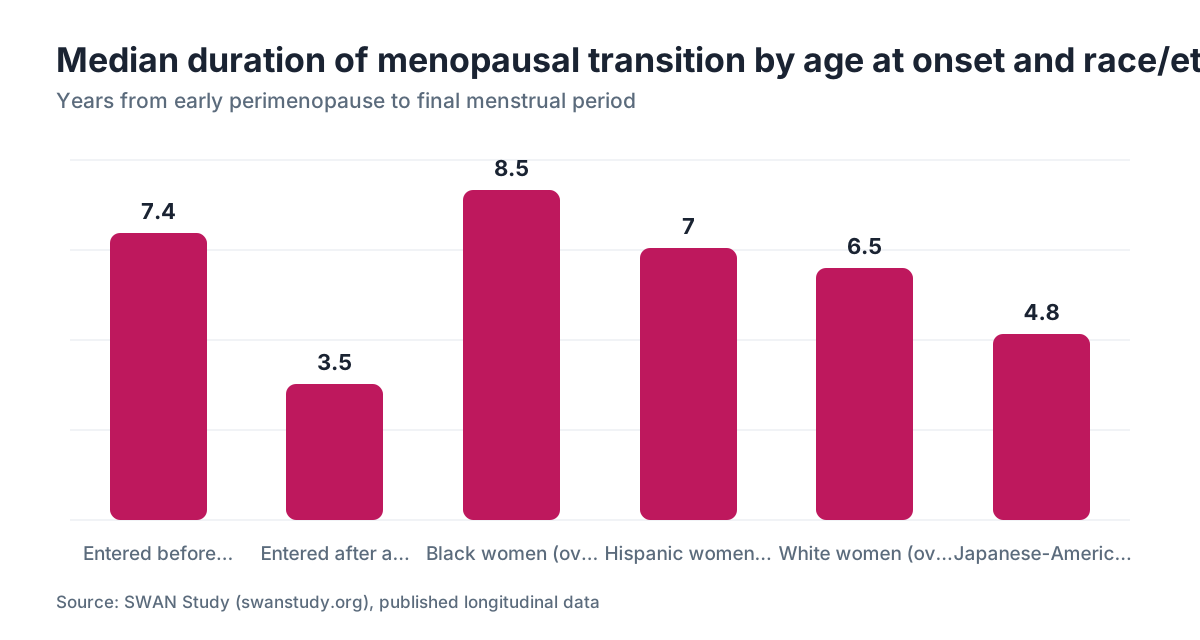
Duration varies a lot, and your starting age drives it. Women who begin perimenopause earlier, say at 40, tend to have longer transitions than those who begin at 47. SWAN reported that women who entered late perimenopause before age 45 had transitions lasting a median of 7.4 years, versus 3.5 years for those entering after 45 [1].
Race and ethnicity shape duration too. In the SWAN cohort, Black women had the longest transitions (an average of 8.5 years) and Japanese-American women the shortest (about 4.8 years). These are population averages with wide individual spread, not forecasts for any one woman.
Smoking shortens the transition by roughly one to two years. That may sound like a shortcut until you remember it also brings earlier bone loss and higher cardiovascular risk.
The practical read: if you are 42 and already noticing cycle changes, you could be looking at six or more years ahead. That is a long time to white-knuckle it without help, which is one reason a thorough symptom history beats a single lab draw.
For the data on when the final period itself lands, the article when does menopause start covers it.
Are perimenopause symptoms different if they start in your late 30s?
Yes, and they get misdiagnosed constantly. Women in their late 30s with perimenopause are far more likely to be told it is anxiety, thyroid disease, or stress. Thyroid problems are worth ruling out, since hypothyroidism mimics nearly every perimenopause symptom, but a normal TSH does not mean your hormones are holding steady.
Early perimenopause in the late 30s tends to run on luteal-phase symptoms: mood swings the week before a period, heavier flows, shorter cycles (under 25 days can be a sign), and PMS that keeps getting worse. Hot flashes may be missing entirely, because estrogen is still being made, just unpredictably.
Women with a mother or sister who went through early menopause should pay close attention. Genetics explains a meaningful share of menopausal timing, with heritability estimates ranging from 44 to 65 percent across studies [2].
If you are 37 or 38 and suspicious, a reasonable first move is a menstrual diary across two or three cycles plus a hormone panel (FSH, estradiol, AMH, and TSH) drawn on day 2 or 3 of your cycle. AMH (anti-Mullerian hormone) is the single best marker of ovarian reserve and falls steadily through the 30s and 40s, often before FSH ever climbs.
Which perimenopause symptoms are the hardest to manage, and why?
Ask most women and the answer is sleep. Everything else compounds when you are not sleeping. A night sweat wakes you at 2 a.m., your cortisol is already rising so you cannot drop back off, and by morning you have banked maybe five broken hours. That feeds the mood problems, the weight gain, the fog, the friction at home. SWAN found sleep disturbance in 38 to 60 percent of perimenopausal women, depending on stage [1].
Hot flashes and night sweats (vasomotor symptoms, or VMS) are the most talked about and the most studied. They peak in the year before and the two years after the final period, which for most women lands in the late 40s to about 51 [4]. For roughly 25 to 30 percent of women, they hit daily function.
Brain fog scares women more than any other symptom, because it feels like early dementia. Losing a word mid-sentence, dropping your train of thought, struggling to focus: these are real effects of estrogen swings on the brain. The reassuring part is that the research, including a longitudinal analysis from the Penn Ovarian Aging Study, consistently shows cognition stabilizes or improves after the final period [5].
Mood changes are more than "feeling emotional." Studies show a two-to-four-fold higher risk of a major depressive episode during the transition, especially in women with a prior history of depression or PMS [6]. That is a clinical signal, not a character flaw.
Genitourinary symptoms, including vaginal dryness, pain with sex, and urinary urgency, stay underreported because women feel awkward raising them. Unlike hot flashes, these do not fade after menopause. They get worse without treatment, which is exactly why treating them early is worth the conversation.
What is the difference between perimenopause and menopause symptoms?
Menopause is a single point in time, the 12-month anniversary of your last period. Before it, you are in perimenopause. After it, you are postmenopausal. The symptoms ignore that line.
Hot flashes, night sweats, broken sleep, and mood changes often start in perimenopause and run for years past menopause. The SWAN analysis published in Menopause found the median total duration of frequent hot flashes (6 or more a day) was 7.4 years, and they lasted longer in women who first got them during perimenopause than in those who first got them after [1].
What actually changes at menopause is the volatility. In perimenopause, estrogen lurches up and down. Post-menopause, it settles at a steady low. That steadiness can make some symptoms easier to treat with HRT, because you are no longer chasing a moving target.
The article on menopause covers what happens hormonally and symptomatically in the years after the final period.
One line worth memorizing: irregular bleeding belongs to perimenopause. If you are postmenopausal and bleed at all, that needs evaluation. It is not a perimenopause symptom, and it can point to something serious.
How do you know if symptoms are perimenopause or something else?
This is the question that matters most day to day, and the honest answer is that you often cannot tell from symptoms alone. The overlap list is long. Hypothyroidism causes fatigue, weight gain, fog, and mood changes. Iron-deficiency anemia, which can itself come from heavy perimenopausal bleeding, causes fatigue and slowed thinking. Autoimmune disease, sleep apnea, and ADHD all blur into the same picture.
A minimum workup for a woman in her 40s with these symptoms includes TSH, a CBC (to check for anemia), fasting glucose, and a hormone panel. Add AMH if you want a read on ovarian reserve. If you carry cardiovascular risk factors, a lipid panel and fasting insulin make sense too, since heart risk shifts across the transition.
Here is the catch nobody likes: no lab confirms perimenopause. NAMS and the Endocrine Society both call it a clinical diagnosis, based on age, symptoms, and menstrual pattern [4]. FSH can read normal one week and high the next. Estradiol swings so widely that a single value is close to useless. The history is the sharpest tool your clinician has.
If you want to walk in prepared, a menstrual diary plus a symptom log over 60 to 90 days tells your doctor more than any single blood draw.
Does weight gain during perimenopause have its own pattern?
Yes, and it is biologically distinct from ordinary weight gain. Women in perimenopause tend to gain weight centrally, around the abdomen, even when the scale barely moves. Falling estrogen shifts fat storage from the hips and thighs toward the waist. Add declining muscle mass (sarcopenia gets going in the mid-40s) and worsening insulin sensitivity, and you have a real metabolic shift [4].
Average weight gain during the transition runs roughly 1.5 kg (about 3.3 lbs) a year, though much of that tracks with aging rather than menopause itself, per analyses from the SWAN cohort [1]. The change in body composition, more fat and less muscle at the same scale weight, is arguably the bigger concern than the number itself.
For women fighting significant weight gain through perimenopause, GLP-1 receptor agonists have become a serious option. The SURMOUNT-1 trial showed tirzepatide produced average body weight reductions of up to 22.5 percent in adults with obesity over 72 weeks [7]. Whether GLP-1s interact specifically with menopausal hormone shifts is still being studied, but their effect on insulin resistance and central fat maps directly onto perimenopause physiology. For context, see semaglutide for weight loss and the semaglutide vs tirzepatide comparison.
WomenRx clinicians work with women managing hormonal symptoms and weight changes at the same time, and can talk through whether hormone therapy, a GLP-1, or a combination fits a given situation.
What treatments work for perimenopause symptoms at different ages?
Menopausal hormone therapy (MHT, also called HRT) is the most effective treatment for hot flashes, night sweats, sleep disruption, and mood changes tied to the transition. The NAMS 2022 position statement puts it plainly: "for women who are younger than age 60 or who are within 10 years of menopause onset and have no contraindications, the benefit-risk ratio is favorable for treatment of bothersome vasomotor symptoms" [4]. That window covers most women in perimenopause.
If you have a uterus, estrogen has to be paired with a progestogen to protect the uterine lining. Options include oral micronized progesterone (which has a favorable sleep and mood profile), a levonorgestrel IUD, or synthetic progestins. The article on hormone replacement therapy walks through the formulations, and the estrogen patch article covers transdermal delivery specifically.
Non-hormonal options with real evidence include:
- Fezolinetant (Veozah), an NK3 receptor antagonist the FDA approved in May 2023 specifically for vasomotor symptoms [8]
- SSRIs and SNRIs at low doses (paroxetine 7.5 mg is FDA-approved for hot flashes; venlafaxine and escitalopram have supporting data)
- Cognitive behavioral therapy, which has solid evidence for sleep and for coping with hot flashes
- Gabapentin, particularly for nighttime hot flashes
Vaginal estrogen for GSM sits apart from the systemic HRT conversation. It is low-dose, barely absorbed, safe for most women including many breast cancer survivors under oncology guidance, and it works. It should be offered earlier and more often than it is.
Bone health is where the transition years pay off later. A bone density test (DEXA scan) is worth considering if you have risk factors like early menopause, low body weight, or a family history of osteoporosis.
WomenRx offers telehealth prescribing for hormonal therapies, GLP-1s, and other evidence-based treatments, with clinicians who know this transition well.
Can lifestyle changes actually reduce perimenopause symptoms?
Some of them, a lot. Others, barely.
Exercise has the strongest evidence of any lifestyle change. Aerobic training cuts hot flash frequency in some studies, improves sleep, slows bone loss, holds onto muscle, and lowers cardiovascular risk. A 2023 systematic review in Maturitas found aerobic training significantly improved vasomotor symptom scores against control groups, though the effect was smaller than HRT [9]. Resistance training matters at least as much for body composition and bone.
Alcohol works the other way. It is a reliable hot flash trigger, it breaks up sleep architecture, and it worsens night sweats in most perimenopausal women. That is physiology, not a moral judgment.
Diet quality shapes symptom burden through inflammation, blood sugar stability, and the gut microbiome, which in turn affects how you metabolize estrogen. Higher-fiber, lower-glycemic eating patterns track with lower symptom burden in observational data, though randomized evidence is thin.
Sleep hygiene counts for more here than at almost any other life stage, because the neurobiology is already working against you. Consistent sleep and wake times, a cool bedroom (your thermoregulation is already compromised), and cutting screens before bed are not throwaway advice. They are damage control.
Mindfulness-based stress reduction (MBSR) has decent evidence for perimenopausal mood and for how severe hot flashes feel, though it does not change your core temperature during a flash.
My honest read: lifestyle changes are necessary and rarely enough on their own for moderate-to-severe symptoms. They work best alongside medical therapy, not instead of it.
When should you see a doctor about perimenopause symptoms?
Earlier than you think. There is no prize for grinding through wrecked sleep, mood swings, and daily hot flashes for years before you ask for help. If symptoms are hitting your sleep, work, relationships, or quality of life, that is reason enough for a conversation.
A few situations call for sooner rather than later.
New irregular or very heavy bleeding. Heavy bleeding can cause iron-deficiency anemia and can sometimes signal endometrial pathology, which needs evaluation regardless of hormones.
Symptoms starting before 40. Premature ovarian insufficiency carries bone, cardiovascular, and neurological consequences that go past symptom relief. The Endocrine Society recommends HRT until at least age 51 for these women unless contraindicated [2].
Depressive symptoms. A two-to-four-fold higher risk of depression during the transition means this is more than moodiness. It deserves real evaluation and treatment.
Any bleeding after 12 months with no periods. That is postmenopausal bleeding until proven otherwise, and it needs investigation.
For most women in their 40s with typical symptoms, a primary care doctor or an OB-GYN with an interest in menopause medicine is a fine starting point. If your provider brushes it off as normal aging or tells you that you are too young, that is your cue to hand them the NAMS guidelines or find someone who works in this transition.
Frequently asked questions
Can perimenopause start at 35?
Yes. The average onset is around 40 to 44, but some women notice hormonal changes in their mid-to-late 30s. At this age the symptoms are usually heavier or shorter cycles, worsening PMS, and sleep changes rather than hot flashes. A hormone panel including AMH can clarify what is happening. Onset before 40 is classified as premature ovarian insufficiency and warrants evaluation regardless of symptom severity.
What are the most common perimenopause symptoms at age 45?
At 45, most women are in mid-to-late perimenopause. The most reported symptoms are hot flashes, night sweats, irregular periods, broken sleep, mood changes, and fatigue. Brain fog, including trouble concentrating and word-finding difficulty, is common. Vaginal dryness may begin. SWAN found vasomotor symptoms affect 35 to 50 percent of women in this age window, with severity peaking in the late 40s.
What are the signs of perimenopause at age 48?
At 48, you are likely in late perimenopause, close to your final period. Signs include cycles skipping one to three months before returning, intensifying hot flashes and night sweats, noticeable vaginal dryness or pain with sex, low libido, joint aches, and disrupted sleep. Some women find brain fog most pronounced here. Many women this age say symptoms are harder to manage than they were at 44 or 45.
How long do perimenopause symptoms last?
The average transition lasts 4 to 8 years, with wide individual variation. SWAN data show women who enter the transition before 45 have a median duration of 7.4 years; those entering after 45 average about 3.5 years. Hot flashes specifically can persist for a median of 7.4 years total from onset. For about 10 percent of women, symptoms continue for more than a decade.
Is brain fog a normal perimenopause symptom?
Yes. Brain fog, including forgetfulness, trouble concentrating, and word-finding difficulty, is a well-documented symptom of the transition, driven by estrogen's effects on dopamine and serotonin systems. Research from the Penn Ovarian Aging Study found verbal memory declines during perimenopause and largely recovers after the final period for most women. It is temporary, not a sign of early dementia.
Can a blood test confirm perimenopause?
Not definitively. Both NAMS and the Endocrine Society call perimenopause a clinical diagnosis based on age, symptoms, and menstrual pattern. FSH and estradiol fluctuate so widely during perimenopause that a single result can mislead. AMH is a more stable marker of ovarian reserve and declines gradually through the 40s. Bloodwork is useful for ruling out other conditions like thyroid disease, not for confirming perimenopause itself.
Does perimenopause cause weight gain?
It shifts fat distribution more reliably than it adds total weight. Falling estrogen moves fat storage toward the abdomen, and muscle mass declines with age, lowering metabolic rate. SWAN data show average weight gain of roughly 1.5 kg a year during the transition, though much tracks with aging broadly. Insulin sensitivity also worsens, making central fat harder to reverse with diet alone.
Is hormone therapy safe during perimenopause?
For most women under 60 and within 10 years of menopause onset, NAMS states the benefit-to-risk ratio of hormone therapy is favorable for treating bothersome symptoms, and that includes women in perimenopause. Women with a uterus need a progestogen alongside estrogen to protect the uterine lining. Absolute contraindications include estrogen-sensitive breast cancer, unexplained vaginal bleeding, and active venous thromboembolism. A conversation with a knowledgeable clinician is the right first step.
What is the difference between early perimenopause and late perimenopause?
Early perimenopause is marked by cycle irregularity of 7 or more days while you are still menstruating. Late perimenopause begins when you skip at least 60 days between periods and runs until 12 months of amenorrhea define menopause. Symptoms often intensify in late perimenopause because estrogen output becomes most erratic. Vasomotor symptoms and genitourinary changes are more common and more severe in the late stage.
Can depression be a perimenopause symptom?
Yes, and it is clinically significant. Research shows a two-to-four-fold higher risk of a major depressive episode during the transition, especially for women with a history of depression, severe PMS, or postpartum mood episodes. Hormonal swings, particularly falling progesterone and erratic estrogen, act directly on serotonin and GABA systems. Treating the hormonal side with MHT can improve mood, though some women also benefit from antidepressant therapy.
What lifestyle changes help with perimenopause symptoms?
Exercise has the strongest evidence: aerobic training reduces hot flash frequency in some trials, and resistance training preserves muscle and bone. Cutting alcohol reduces hot flash triggers and improves sleep. A lower-glycemic diet supports blood sugar stability and may lower symptom burden. Consistent sleep schedules and a cool bedroom help with sleep disruption. Mindfulness-based stress reduction has evidence for mood and perceived hot flash severity. None of these replace medical treatment for moderate-to-severe symptoms.
When does perimenopause end and menopause begin?
Menopause is defined as 12 consecutive months without a period. The final period lands at a median age of 51.4 in the United States. Perimenopause ends at that 12-month mark, and after it you are postmenopausal. Symptoms do not necessarily stop there: hot flashes can persist for years, and genitourinary symptoms usually worsen post-menopause without treatment.
Does ethnicity affect when perimenopause symptoms start or how long they last?
Yes, meaningfully. SWAN found Black women experience the longest transitions, averaging 8.5 years, and report more severe vasomotor symptoms. Japanese-American women had the shortest, around 4.8 years. Hispanic women reported transitions of about 7 years. Timing of the final period also varies by ethnicity. These are population averages with wide individual spread, but they are real differences in how women experience perimenopause.
Can perimenopause symptoms affect your heart health?
Yes. Estrogen protects cardiovascular function, including effects on LDL cholesterol, arterial flexibility, and inflammation. As estrogen declines during perimenopause, cardiovascular risk starts to rise. Hot flashes specifically have been linked to increased subclinical cardiovascular disease in SWAN imaging data. This is one reason timing matters with hormone therapy: starting HRT close to menopause onset may carry cardiovascular benefits that starting a decade later does not.
Sources
- Study of Women's Health Across the Nation (SWAN), NAMS / multiple journals
- Endocrine Society Clinical Practice Guideline: Menopause and Hormone Therapy
- Prior JC. Progesterone as a bone-trophic hormone. Endocrine Reviews, Oxford Academic
- North American Menopause Society (NAMS) 2022 Hormone Therapy Position Statement
- Greendale GA et al. Penn Ovarian Aging Study longitudinal analysis. Published in Menopause journal
- Freeman EW et al. Associations of hormones and menopausal status with depressed mood in women with no history of depression. JAMA Network / Archives of General Psychiatry
- Jastreboff AM et al. SURMOUNT-1 trial. Tirzepatide once weekly for the treatment of obesity. New England Journal of Medicine, 2022
- FDA Drug Approval: Fezolinetant (Veozah) for vasomotor symptoms of menopause, 2023
- Berin E et al. Resistance training for hot flushes in postmenopausal women. Maturitas / systematic review data
- NIH National Institute on Aging: Menopause overview
- CDC: Reproductive Health - Menopause