Perimenopause supplements: what actually works and what doesn't
TL;DR: A handful of supplements have reasonable evidence for perimenopause symptoms: magnesium glycinate for sleep and mood, vitamin D3 plus K2 for bone, creatine for muscle, and possibly black cohosh or phytoestrogens for hot flashes in women who can't use hormones. None beat hormone therapy for severe symptoms. Perimenopause weight gain responds better to protein, resistance training, and sometimes medication than to any supplement.
What is perimenopause and why do symptoms start before your period stops?
Perimenopause is the hormonal transition that leads up to your final period. It typically starts in the mid-to-late 40s, though some women notice changes in their late 30s. Learn more about perimenopause age. The defining feature is erratic estrogen fluctuation, not a clean decline. Estrogen can spike higher than normal one week and crash the next, which is why you can feel like a different person from one cycle to the next.
Progesterone drops earlier and more steadily, often starting in the early 40s as ovulation becomes less reliable. Progesterone loss affects sleep, anxiety, and heavy bleeding before estrogen ever becomes the dominant problem. This is why perimenopause can feel like anxiety and insomnia at first, with hot flashes arriving later.
The formal definition from the Stages of Reproductive Aging Workshop (STRAW+10) criteria describes early perimenopause as irregular cycle length (more than 7 days different from normal), and late perimenopause as intervals of 60 days or more between periods [1]. This matters for supplements because the symptom profile shifts as you move through stages, and no single supplement targets all of them.
Can supplements actually help perimenopause symptoms?
Some can help at the margins. A few have solid mechanistic reasons to take them regardless of symptoms. Most don't have good enough data to make strong claims. The supplement industry sells hope more than evidence, and perimenopause is a lucrative target because the symptoms are real, bothersome, and hormone therapy still carries stigma.
Dismissing all supplements is also wrong. Magnesium deficiency is genuinely common in perimenopausal women, and correcting it can make a measurable difference in sleep and mood [2]. Vitamin D insufficiency is nearly universal in American women over 40, and the bone consequences are well established [3]. Creatine monohydrate has emerging evidence specifically in estrogen-declining populations for preserving muscle and cognitive function [4]. These are not fringe claims.
The honest framework: treat supplements as adjuncts, not replacements. If your hot flashes disrupt sleep every night and your quality of life is poor, a supplement is unlikely to fix that. Hormone therapy remains the most effective treatment for vasomotor symptoms, with a risk-benefit profile far more favorable than the 2002 Women's Health Initiative misinterpretation made it look [5]. Supplements make more sense as support tools while you manage lifestyle, wait out mild symptoms, or bridge to a hormone conversation with your doctor.
Which supplements have the best evidence for perimenopause?
Here is what the research actually shows, ranked by quality of evidence.
Magnesium glycinate or magnesium threonate (200-400 mg/day) Magnesium is involved in more than 300 enzymatic reactions, and the glycinate and threonate forms cross into the brain more efficiently than cheap magnesium oxide. A 2021 review in Nutrients found that magnesium supplementation improved sleep efficiency and reduced subjective anxiety in perimenopausal and postmenopausal women [2]. It also helps with the muscle cramps and restless legs that often spike in perimenopause. This is probably the highest-value supplement on the list. The deficiency is common, the supplement is cheap, and the risk is essentially zero at these doses.
Vitamin D3 plus K2 The North American Menopause Society (NAMS) recommends 1,200 mg of calcium daily from food and supplements combined, and notes that vitamin D intake of 800 to 1,000 IU per day is appropriate for women over 50 [3]. Most women need more than the 600 IU RDA to keep blood levels above 30 ng/mL. Vitamin K2 (as MK-7) helps direct calcium to bone rather than arteries. A 2013 three-year trial in Osteoporosis International found that K2 supplementation significantly reduced bone loss at the femoral neck in postmenopausal women compared to placebo [6]. Take D3 with fat for best absorption.
Creatine monohydrate (3-5 g/day) Creatine is more than for gym bros. A 2021 randomized trial published in Medicine and Science in Sports and Exercise found that postmenopausal women taking creatine with resistance training gained significantly more lean mass and strength than those doing resistance training alone [4]. Estrogen normally supports creatine uptake in muscle, so as estrogen falls, supplemental creatine may compensate. Researchers are also studying cognitive benefits, but that data is still early.
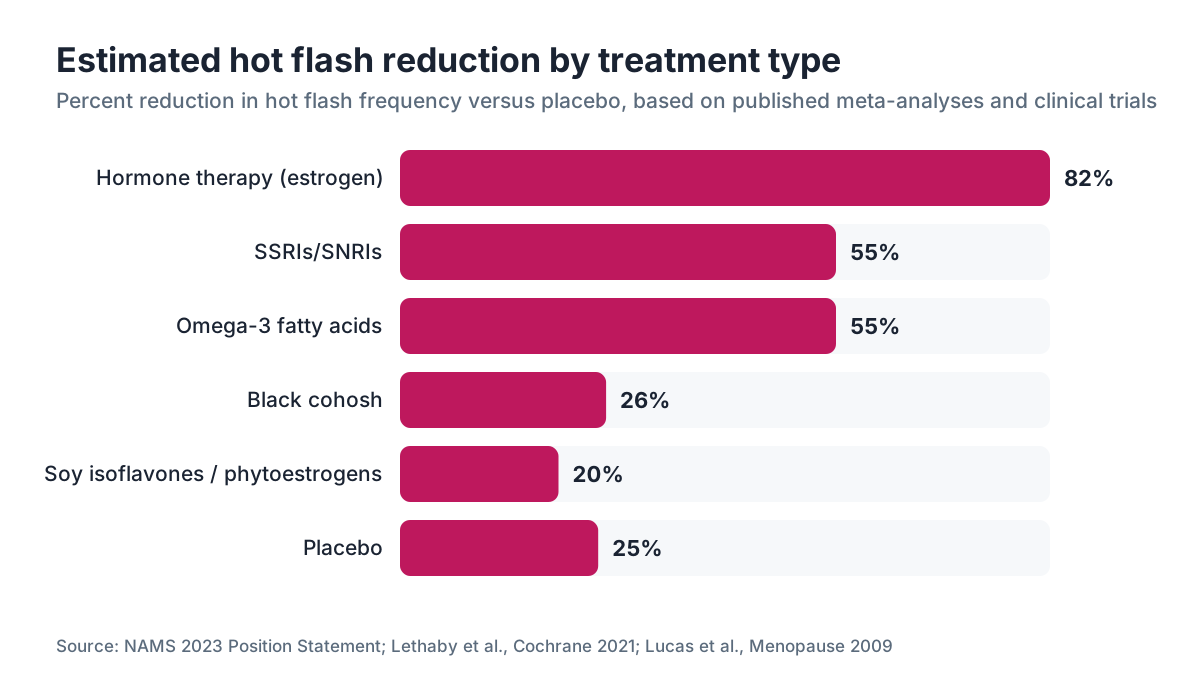
Omega-3 fatty acids (EPA/DHA, 1-2 g/day) A 2009 pilot randomized controlled trial found that omega-3 supplementation reduced hot flash frequency by about 55% in perimenopausal women [7]. The effect size is modest and the trial was small (91 women), but the cardiovascular and anti-inflammatory benefits of omega-3s in midlife make this a reasonable addition regardless.
Black cohosh (Actaea racemosa) This is the most studied botanical for hot flashes. NAMS states in its 2023 position statement that "there is evidence from meta-analyses supporting use of black cohosh for mild-to-moderate vasomotor symptoms" [8]. The evidence is not strong by pharmaceutical standards, but it is real. Standard dose is 20-40 mg twice daily. Black cohosh is not a phytoestrogen and appears safe for breast cancer survivors in most studies, though evidence is not definitive. Do not confuse it with blue cohosh, which is an unrelated and potentially toxic herb.
Phytoestrogens (isoflavones from soy or red clover) Soy isoflavones (equol-producing capacity matters) and red clover extracts have meaningful data for hot flash reduction. A 2021 Cochrane review found that phytoestrogen supplements reduced hot flash frequency by approximately 1.3 fewer flashes per day compared to placebo [9]. That is a real but modest effect. Women who metabolize isoflavones into equol in the gut (roughly 30-50% of Western populations) get more benefit. If you try soy isoflavones and nothing happens after 8 weeks, you may be a non-converter.
What supplements help with perimenopause weight gain specifically?
Perimenopause weight gain is one of the most common complaints, and it is genuinely hard to address with supplements alone. Several shifts happen at once: estrogen decline pushes fat toward the visceral, abdominal area, muscle mass falls as anabolic support drops, insulin sensitivity worsens, sleep disruption raises cortisol and ghrelin, and resting metabolic rate falls as lean mass shrinks.
No supplement reverses all of that. A few address specific pieces.
Creatine (discussed above) helps preserve lean mass, which keeps resting metabolic rate from dropping as fast. This is the most direct supplement contribution to metabolic health in perimenopause.
Inositol, specifically myo-inositol, has reasonable evidence for improving insulin sensitivity in women with PCOS, and some practitioners use it for perimenopausal insulin resistance too. A 2019 study in Gynecological Endocrinology found myo-inositol improved fasting glucose and insulin resistance in postmenopausal women [10]. The dose studied was 2-4 g/day. This is not a weight loss supplement, but insulin resistance drives fat distribution, so it matters.
Protein deserves mention even though it is food, not a supplement. Perimenopausal women generally need more dietary protein than the outdated 0.8 g/kg recommendation, closer to 1.2-1.6 g/kg body weight per day, to hold onto muscle now that estrogen no longer helps. A protein powder can fill the gap if your dietary protein is low.
For women whose weight gain is significant and not responding to diet and exercise, GLP-1 medications like semaglutide have strong clinical trial evidence. The STEP 1 trial found that semaglutide 2.4 mg weekly produced an average 14.9% body weight reduction over 68 weeks in adults with obesity [11]. These are prescription medications, not supplements, but they address the metabolic disruption at a level no supplement can match. Platforms like WomenRx can connect you with clinicians who specialize in GLP-1 prescribing for midlife women.
What does the evidence say about supplements for perimenopause sleep?
Sleep disruption in perimenopause has several drivers: night sweats wake you up, progesterone loss removes its naturally sedating effect (it acts on GABA receptors), and cortisol dysregulation pushes sleep toward lighter stages.
Magnesium glycinate at 200-400 mg before bed is probably the most evidence-supported supplement for this specific problem, partly by supporting GABA pathways and partly by dampening the cortisol response to stress [2].
L-theanine (100-200 mg) is structurally related to GABA and has small but consistent evidence for reducing sleep latency and improving sleep quality. A 2019 randomized trial in Nutrients found L-theanine improved sleep quality and daytime function in individuals with subclinical anxiety [12]. It stacks well with magnesium.
Melatonin deserves nuance. Perimenopausal women with sleep-onset insomnia (trouble falling asleep) may benefit from 0.5-1 mg of low-dose melatonin, not the 10 mg doses sold in stores. High doses can actually blunt your own melatonin signal over time. If your problem is sleep maintenance (waking at 2-3am), melatonin is less likely to help, because that pattern is often progesterone-driven, not circadian-driven.
If night sweats are the root cause of waking, treating the vasomotor symptoms directly, with hormone therapy or black cohosh, will do more for your sleep than any sleep supplement.
Which supplements help with perimenopause mood and anxiety?
The anxiety, irritability, and low mood of perimenopause are mostly driven by fluctuating estrogen affecting serotonin turnover and progesterone loss removing GABA support. Supplements cannot replicate those hormonal inputs, but a few address secondary contributors.
Magnesium deficiency is independently linked to anxiety and depression. Correcting it matters [2].
Ashwagandha (Withania somnifera) has the best adaptogen evidence. A 2019 double-blind RCT in Medicine found that ashwagandha root extract at 240 mg/day significantly reduced anxiety and morning cortisol versus placebo over 60 days [13]. The studies in perimenopausal women specifically are smaller, but the cortisol-modulating mechanism is relevant because high cortisol amplifies the mood swings of fluctuating estrogen.
B vitamins, particularly B6 (pyridoxine) and methylfolate, support serotonin and dopamine synthesis. Women on oral contraceptives may run low on B6, and that can persist into perimenopause. Methylated forms matter if you carry MTHFR variants, which affect roughly 40-60% of the population.
Saffron extract (30 mg/day) has a small but real evidence base for mild depression. A 2013 meta-analysis in Human Psychopharmacology found saffron significantly improved depressive symptoms versus placebo across five randomized trials, with an effect size comparable to low-dose antidepressants. This is not a replacement for clinical depression treatment, but it is worth knowing about.
What supplements support bone density in perimenopause?
Bone loss accelerates sharply in the two to five years around your final period, roughly 2-3% per year in the spine during early postmenopause, driven by estrogen withdrawal. Perimenopause is the time to build the habits that slow this.
Vitamin D3 and calcium: NAMS recommends calcium of 1,200 mg/day total (food plus supplements combined) and vitamin D of 800-1,000 IU/day for women over 50 [3]. Most women get about 700-800 mg calcium from food if they eat dairy, so supplemental calcium of 500 mg is often enough. Calcium carbonate needs stomach acid (take with food); calcium citrate does not and is better for women on acid-reducing medications.
Vitamin K2 (MK-7 form, 90-180 mcg/day) activates osteocalcin, the protein that binds calcium to bone matrix. The three-year Osteoporosis International trial mentioned above found a 1.7% difference in femoral neck bone mineral density between the K2 and placebo groups after three years, a clinically meaningful gap [6].
Collagen peptides (specifically type I, 5-10 g/day) have emerging evidence for bone and joint health. A 2018 study in Nutrients found that specific collagen peptides improved bone mineral density and bone markers in postmenopausal women with low bone mass over 12 months [14].
Boron (3 mg/day) is a trace mineral that supports calcium and magnesium metabolism and may weakly affect estrogen metabolism. Evidence is thin, but the supplement is safe and cheap.
For women with established bone loss or major risk factors, supplements are not enough on their own. A bone density test (DEXA scan) is the right starting point, and hormone replacement therapy remains the most effective intervention for bone preservation in perimenopause.
Are there supplements for perimenopause hot flashes specifically?
Hot flashes come from estrogen fluctuation affecting the hypothalamic thermoregulatory zone, not simply from low estrogen. This matters because supplements that weakly influence estrogen signaling may still have some effect.
Black cohosh is the most studied option, with NAMS acknowledging meta-analysis evidence for mild-to-moderate vasomotor symptoms [8]. Allow 4-8 weeks to see an effect.
Soy isoflavones and red clover extracts may cut hot flash frequency by about 1 per day on average [9]. Modest. Worth trying for 8-12 weeks if hormone therapy is not an option.
S-equol is a metabolite of the soy isoflavone daidzein, sold as a standalone supplement in some markets. Studies on equol specifically, particularly in women who don't produce it naturally, show more consistent results than studies on isoflavone mixtures. A Japanese trial found 10 mg S-equol twice daily significantly reduced hot flash frequency and severity versus placebo.
Probiotics: this sounds surprising, but the gut microbiome produces an enzyme (beta-glucuronidase) that influences estrogen recycling through the estrobolome. Supporting a healthy estrobolome with probiotics is a plausible mechanism, but direct clinical trial evidence for hot flash reduction is thin as of 2025.
What does not work well: dong quai alone (no consistent human trial data), evening primrose oil (a 2007 Maturitas trial found no significant effect on hot flashes versus placebo), and wild yam cream (wild yam contains diosgenin, which the human body cannot convert to progesterone, despite marketing claims).
How do perimenopause supplements compare to hormone therapy?
This question comes up constantly, and the honest answer is that they don't compare well for significant symptoms. They are different categories of intervention.
Hormone therapy is the most effective treatment for hot flashes, cutting frequency by 75-90% in clinical trials. It protects bone, improves sleep, and for women who start before age 60 or within 10 years of menopause onset, the cardiovascular risk profile is neutral to favorable [5]. NAMS, the Endocrine Society, and the British Menopause Society all agree the risk-benefit balance has been reconsidered since the early 2000s misreading of WHI data.
The Endocrine Society's 2015 clinical practice guideline on menopause states that "for women younger than 60 years or within 10 years of menopause onset and without contraindications, the benefit-risk ratio is favorable for treatment of bothersome vasomotor symptoms" [5].
Supplements sit in a different role. They are worth trying for mild symptoms, they address specific nutrient gaps that worsen perimenopause, and they complement whatever else you are doing. If your symptoms are hurting your work, relationships, or mental health, supplements are unlikely to be enough.
For women who cannot take hormones (active hormone receptor-positive breast cancer, uncontrolled blood clots, certain liver conditions), non-hormonal options including SSRIs, SNRIs, gabapentin, and the newer neurokinin B antagonist fezolinetant (FDA-approved in 2023 specifically for vasomotor symptoms) are the tier-two options, above supplements in the evidence hierarchy.
You can explore options with specialists through platforms focused on women's midlife care, including WomenRx, which offers telehealth access to clinicians for hormone therapy and other perimenopausal decisions. Hormone replacement therapy is worth understanding before defaulting to supplements alone.
What supplements should you avoid or approach with caution in perimenopause?
Some products sold for perimenopause have weak evidence, real risks, or both.
Pregnenolone and DHEA: Sold over the counter in the US as supplements, these are actual steroid precursors. They convert to testosterone, estrogen, and other hormones in unpredictable amounts depending on your individual enzymes. Taking them without baseline labs and monitoring is guessing at your hormone regimen. They are not inherently dangerous at low doses, but they are not supplements in the usual sense.
Wild yam cream: The body cannot convert diosgenin to progesterone. It does not raise progesterone levels. Studies confirm this consistently. It is not a substitute for bioidentical progesterone.
High-dose melatonin (5-10 mg): The doses sold in US stores sit far above physiologically relevant amounts. Long-term high-dose use may suppress your own melatonin production.
Iodine above 150-300 mcg/day: Popular in some functional medicine circles for thyroid support, but excess iodine can trigger thyroid dysfunction, particularly in women with underlying autoimmune thyroid conditions. Perimenopause coincides with the highest-risk window for Hashimoto's thyroiditis. Unless labs confirm deficiency, high-dose iodine is risky.
Unverified proprietary blends: Products like "perimenopause relief" blends often stack 10-15 ingredients at sub-therapeutic doses of each. You get the marketing without the effective dose of anything. Individual, well-dosed single ingredients are almost always a better approach.
How do you build a basic perimenopause supplement stack?
Start with what addresses genuine deficiencies and has bone or metabolic implications regardless of symptoms. Add symptom-specific options after.
The core stack most perimenopausal women benefit from:
- Vitamin D3 (2,000 IU with fat, daily) plus K2 (100 mcg MK-7)
- Magnesium glycinate (200-400 mg, evening)
- Omega-3 fatty acids (1-2 g EPA/DHA combined)
- Creatine monohydrate (3-5 g, with breakfast or pre-workout)
Add based on symptoms:
- Sleep and anxiety: L-theanine 100-200 mg at night, ashwagandha 240-300 mg morning
- Hot flashes (if not on hormones): black cohosh 20-40 mg twice daily, or soy isoflavones 40-80 mg/day
- Mood support: methylated B complex, saffron 30 mg if mild depressive symptoms
- Bone support: calcium citrate to bring total to 1,200 mg/day, collagen peptides 5-10 g
- Insulin resistance or weight gain: myo-inositol 2 g twice daily
A few practical notes. Quality matters. Look for USP, NSF International, or Informed Sport certification on products, which verify that what is on the label is in the bottle [15]. The FDA does not pre-approve supplements for efficacy or safety before they reach shelves. Give any supplement at least 6-8 weeks before judging it. Take photos of the products so you can track what changed if you add several things at once.
None of this replaces a conversation with your clinician, particularly about bone health, mood, and vasomotor symptoms that significantly affect your life. See also: menopause and when does menopause start for the broader context of this transition.
Frequently asked questions
What is the single best supplement for perimenopause symptoms?
If I had to pick one, it is magnesium glycinate. It addresses sleep, anxiety, muscle cramps, and cortisol dysregulation, all of which worsen in perimenopause. It is inexpensive, well-tolerated, and the deficiency is common. Vitamin D3 is a close second because the bone and metabolic consequences of insufficiency are severe and the supplement is trivially cheap.
Can supplements stop perimenopause weight gain?
No supplement reliably prevents the visceral fat redistribution of perimenopause. Creatine helps preserve muscle mass, which keeps metabolism from dropping as fast. Myo-inositol may improve insulin sensitivity. Adequate protein (1.2-1.6 g/kg/day) is more important than any supplement. For significant weight gain, hormone therapy addresses the root cause better than supplements; GLP-1 medications are the strongest option for women with obesity.
Is black cohosh safe for perimenopause?
Black cohosh appears safe for most women at 20-40 mg twice daily for up to 12 months, based on current evidence. Rare cases of liver injury have been reported but causality is debated. It is not a phytoestrogen and is generally considered safe for breast cancer survivors, though definitive evidence is lacking. Avoid it if you have liver disease. Do not confuse it with blue cohosh, which is different and potentially toxic.
Do supplements work as well as hormone therapy for hot flashes?
No. Hormone therapy reduces hot flash frequency by 75-90% in clinical trials. The best botanical options, black cohosh and phytoestrogens, reduce frequency by roughly 20-30% and about 1 fewer flash per day, respectively, based on meta-analyses. Supplements are appropriate for mild symptoms or when hormone therapy is contraindicated, but they are a clearly lower tier for moderate to severe vasomotor symptoms.
What supplements help with perimenopause anxiety and mood?
Magnesium glycinate addresses the deficiency-related anxiety component. Ashwagandha at 240-300 mg/day has randomized trial evidence for cortisol reduction and anxiety. Methylated B vitamins support neurotransmitter synthesis. Saffron 30 mg/day has a small evidence base for mild depressive symptoms. These help at the margins. If anxiety or depression is significantly impairing your function, a clinical evaluation is the right move, not more supplements.
Can you take perimenopause supplements while on hormone therapy?
Generally yes, with some caveats. Vitamin D, magnesium, omega-3s, creatine, and B vitamins are safe alongside hormone therapy. Black cohosh and phytoestrogens have theoretical overlap with estrogen effects; they are generally avoided with hormone therapy simply because there is no added benefit when hormones are already on board. Always tell your prescriber what supplements you take because some affect liver enzyme metabolism.
How long does it take for perimenopause supplements to work?
Magnesium may improve sleep within a week or two. Black cohosh and phytoestrogens typically take 4-8 weeks before any hot flash benefit shows up. Vitamin D3 takes 6-8 weeks to measurably shift blood levels. Creatine loading for muscle takes 4-6 weeks of consistent use. If you have not noticed any change from a supplement after 8-12 weeks, it is reasonable to stop.
Are perimenopause supplements regulated by the FDA?
Dietary supplements are regulated under the Dietary Supplement Health and Education Act of 1994 (DSHEA). The FDA does not evaluate supplements for safety or efficacy before they reach market. Manufacturers are responsible for safety, and the FDA can act after a product causes harm. This is why third-party testing by organizations like USP or NSF International matters when choosing a supplement brand.
What supplements help perimenopause brain fog?
Brain fog in perimenopause comes partly from poor sleep, partly from estrogen fluctuation affecting cholinergic and dopaminergic circuits, and partly from worsening insulin resistance. Creatine has preliminary evidence for cognitive support in estrogen-declining women. Omega-3s support against neuroinflammation. Fixing sleep with magnesium and treating night sweats directly (with hormones if appropriate) often improves cognition more than any nootropic supplement.
Is soy bad for perimenopause or should you take soy isoflavones?
Soy isoflavones are not harmful for most perimenopausal women and have modest evidence for reducing hot flash frequency. The fear that soy raises breast cancer risk comes from in-vitro studies that do not translate to whole-food or supplement intake in humans. Population data from Japan, where soy intake is high, does not show elevated breast cancer risk. Women with active hormone receptor-positive cancer should discuss soy with their oncologist before supplementing.
What are the best supplements specifically for perimenopause bone loss?
Vitamin D3 (2,000 IU/day), calcium citrate to meet a total of 1,200 mg/day, and vitamin K2 as MK-7 (90-180 mcg/day) form the evidence-supported core. A 3-year randomized trial found K2 supplementation reduced femoral neck bone loss versus placebo. Collagen peptides (5-10 g/day) have 12-month trial data supporting bone mineral density in women with low bone mass. A DEXA scan first tells you whether your bone density actually needs attention.
When should I see a doctor instead of trying perimenopause supplements?
If hot flashes are waking you more than twice per night, if anxiety or depression is affecting your daily function, if you have had a fracture after age 45, if your periods have become very heavy or very irregular, or if symptoms are significantly harming your quality of life, a clinical evaluation is the right first step. Supplements are appropriate for mild symptoms; moderate to severe symptoms have better treatment options.
Does creatine actually help perimenopausal women?
Growing evidence says yes. A 2021 randomized trial in Medicine and Science in Sports and Exercise found that postmenopausal women taking 5 g of creatine monohydrate daily with resistance training gained significantly more lean mass than the resistance-training-only group. Since estrogen normally supports creatine uptake in muscle, supplemental creatine may compensate for that lost effect. It is safe, well-studied for decades, and inexpensive.
Can I just get all my perimenopause supplement needs from food?
For some nutrients, yes. Calcium is well-obtained from dairy, sardines, and leafy greens. Omega-3s come from fatty fish 2-3 times per week. Magnesium is in nuts, seeds, and dark chocolate. But vitamin D is extremely hard to get from food in meaningful amounts, and most women in northern latitudes are insufficient regardless of diet. Creatine from meat provides only 1-2 g/day, below the therapeutic dose. Targeted supplementation fills real gaps.
Sources
- Harlow et al., Fertility and Sterility, 2012 - STRAW+10 criteria for reproductive aging stages
- Tarleton et al., Nutrients, 2021 - Magnesium supplementation and sleep/anxiety in perimenopausal women
- North American Menopause Society (NAMS) - Menopause Practice: A Clinician's Guide, calcium and vitamin D recommendations
- Endocrine Society Clinical Practice Guideline - Treatment of Symptoms of the Menopause, 2015
- Knapen et al., Osteoporosis International, 2013 - Three-year low-dose menaquinone-7 supplementation and bone loss
- Lucas et al., Menopause, 2009 - Omega-3 fatty acids and hot flash frequency pilot RCT
- NAMS 2023 Nonhormonal Management of Menopause-Associated Vasomotor Symptoms Position Statement
- Lethaby et al., Cochrane Database of Systematic Reviews, 2021 - Phytoestrogens for vasomotor symptoms in menopausal women
- Genazzani et al., Gynecological Endocrinology, 2019 - Myo-inositol and insulin resistance in postmenopausal women
- Wilding et al., STEP 1 trial, New England Journal of Medicine, 2021 - Semaglutide 2.4 mg for weight management
- Hidese et al., Nutrients, 2019 - L-theanine effects on sleep and anxiety RCT
- König et al., Nutrients, 2018 - Specific collagen peptides and bone mineral density in postmenopausal women
- FDA - Dietary Supplement Labeling Guide and DSHEA overview