Perimenopause sleep issues: why you can't sleep and what actually helps
TL;DR: Up to 60 percent of perimenopausal women have significant sleep disruption, driven by falling estrogen and progesterone, hot flashes, anxiety, and shifting circadian rhythms. Hormone therapy is the most effective treatment for sleep problems tied to hormonal changes. CBT for insomnia, oral micronized progesterone, and certain antidepressants are proven alternatives when hormones aren't an option.
How common are sleep problems in perimenopause?
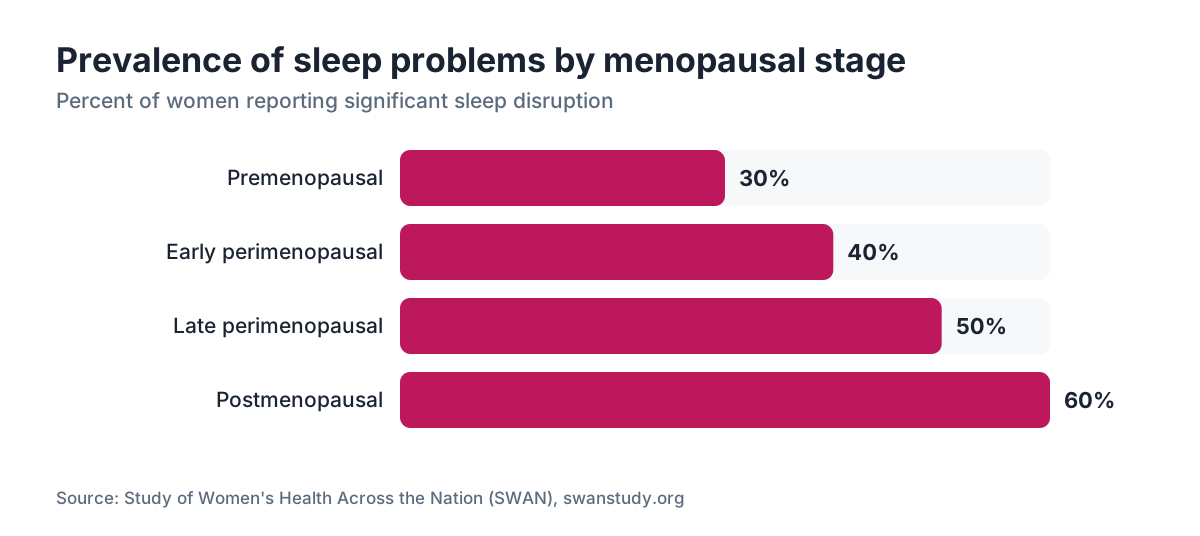
Sleep trouble is one of the most reported symptoms of perimenopause, and the numbers back that up. Studies consistently find that 40 to 60 percent of perimenopausal women report significant sleep disruption, compared to roughly 30 percent of premenopausal women the same age [1]. The National Sleep Foundation estimates postmenopausal women are about twice as likely to be diagnosed with insomnia as men their age, and the trouble starts well before the final period.
The Study of Women's Health Across the Nation (SWAN) followed more than 3,000 women across the country. Difficulty sleeping climbed steadily through the transition and was reported by roughly half of participants during the late perimenopausal years [2]. This isn't ordinary tiredness. We're talking trouble falling asleep, waking multiple times a night, waking too early, and feeling wrung out in the morning.
Perimenopause can start as early as the mid-30s, though most women notice changes in their 40s. If you're not sure where you fall, the article on perimenopause age lays out the timeline. The point stands: sleep problems in this window are not random, they're rarely just stress, and they are not something you have to accept.
What causes sleep problems during perimenopause?
Several mechanisms fire at once, which is why perimenopause sleep disruption is harder to treat than plain stress insomnia.
Estrogen shapes the brain's thermoregulatory system, serotonin production, and how the brain handles melatonin. As estrogen drops and swings unpredictably, the hypothalamus (the brain's internal thermostat) gets less stable. That instability produces hot flashes and night sweats, and it fragments sleep architecture directly, cutting time in the deep, restorative stages of slow-wave sleep [3].
Progesterone has its own job. It acts on GABA receptors and produces a mild sedative effect. Its metabolite, allopregnanolone, is a strong GABA-A receptor modulator. When progesterone falls in the years before menopause, women lose that built-in calming signal, which can raise anxiety and make it harder to both fall asleep and stay asleep [4]. The article on progesterone covers how this hormone works.
Cortisol and circadian shifts pile on. Estrogen helps keep cortisol in check, so as estrogen drops, nighttime cortisol can rise, holding the nervous system in low-grade alert at exactly the wrong hour. Sleep cycles also drift earlier with age (circadian phase advance), and hormonal change speeds that up.
Then there's life. Perimenopause often lands alongside aging parents, career shifts, and relationship strain. Anxiety and low mood track hormonal swings and set up a loop: bad sleep worsens mood, worse mood wrecks sleep. None of these causes acts alone.
How do hot flashes and night sweats specifically disrupt sleep?
Night sweats are the most direct driver of perimenopause insomnia. A hot flash wakes the brain, and even a brief arousal can block re-entry into slow-wave and REM sleep. SWAN found that women who had hot flashes showed objectively worse sleep on polysomnography, more than worse self-reported sleep [2].
Here's the part that surprises people. Research using EEG monitoring has shown that many women show cortical arousal (brain wave patterns of wakefulness) before a hot flash even registers as a change in skin temperature. The brain disruption comes first. Hot flashes may be doing more sleep damage than women realize, because some arousals don't wake them enough to remember.
Frequency drives severity. Women who have more than seven vasomotor episodes a day sit at the highest risk for real sleep disruption, and in moderate-to-severe perimenopause some report 15 or more hot flash events in 24 hours. Treat the hot flashes hard and sleep tends to improve fast, which is strong evidence that vasomotor symptoms are the cause here, not a side show.
Environment helps at the margins. A cool, ventilated room, moisture-wicking bedding, and a bedroom held between 65 and 68 degrees Fahrenheit can lower the intensity of each event. These aren't cures. They reduce the thermal size of each episode and can cut nighttime awakenings.
Does perimenopause cause insomnia even without hot flashes?
Yes, and this gets missed constantly. A real subset of perimenopausal women develop classic insomnia (lying awake, racing mind, early waking) with no prominent hot flashes or night sweats. The hormonal machinery is still running, just through different wiring.
Falling progesterone lowers GABA-ergic tone, producing arousal that feels a lot like anxiety. Women describe it as wired-but-tired: worn out all day, unable to switch off at night. This shows up early in perimenopause, when progesterone starts declining before estrogen drops get dramatic.
Estrogen's effect on serotonin and norepinephrine matters too. It modulates serotonin receptor sensitivity and transporter expression. Lower estrogen can bring mood changes, more anxiety, and a nervous system stuck on high, all of which disrupt sleep onset and maintenance.
The clinical takeaway is simple. Treating only hot flashes may not fix insomnia in women whose sleep trouble is mostly anxiety-driven or GABA-mediated. A broader hormonal or behavioral approach is usually the answer.
What sleep disorders are more common in perimenopause?
Perimenopause raises the risk of several distinct sleep disorders beyond plain insomnia.
Obstructive sleep apnea (OSA) is far more common after menopause than before. Estrogen and progesterone seem to protect against airway collapse and breathing instability during sleep. The Wisconsin Sleep Cohort Study found postmenopausal women not on hormone therapy had two to three times the rate of sleep-disordered breathing compared to premenopausal women [5]. Risk starts climbing during the transition. OSA in women often looks different than in men (less snoring, more frequent waking, fatigue rather than witnessed apnea), so it gets missed often.
Restless legs syndrome (RLS) also rises in perimenopause. Hormonal swings, iron deficiency (common in women still having heavy irregular periods), and changes in dopamine regulation all feed it. RLS creates an irresistible urge to move the legs at rest, worst in the evening, and it makes falling asleep miserable.
If you're sleeping badly and the standard advice does nothing, ask your doctor specifically about a sleep study. Treating undiagnosed OSA can change your sleep in ways no amount of sleep hygiene ever will.
Does hormone replacement therapy actually improve sleep in perimenopause?
For sleep problems driven mainly by vasomotor symptoms, hormone therapy (HT) is the most effective treatment available. Multiple randomized controlled trials show estrogen therapy reduces hot flash frequency and severity, and that reduction tracks with better sleep continuity and more time in slow-wave sleep [6].
The Menopause Society (formerly NAMS) states in its 2022 position statement that "hormone therapy remains the most effective treatment for vasomotor symptoms and is appropriate for healthy women who are within 10 years of menopause onset or younger than 60 years" [7]. Sleep improves as a downstream benefit.
Progesterone alone, especially oral micronized progesterone (Prometrium), has sleep-promoting effects independent of estrogen. Small studies show 300mg at night improves sleep quality in postmenopausal women, likely through its conversion to allopregnanolone and the resulting GABA-A receptor activity [4]. Lower doses (100mg) go with estrogen for uterine protection and may carry some of the same benefit, though the effect is dose-dependent.
HT isn't for everyone. Women with a personal history of hormone-receptor-positive breast cancer, unexplained vaginal bleeding, active blood clots, or certain cardiovascular conditions need a careful risk-benefit conversation with a clinician. For good candidates, the hormone replacement therapy page walks through the options, including systemic versus local formulations.
One note on delivery. The estrogen patch matters for sleep because transdermal estrogen skips first-pass liver metabolism, so it doesn't raise clotting factors the way oral estrogen does. Many clinicians now prefer the patch, especially for women with cardiovascular risk factors.
What non-hormonal treatments work for perimenopause insomnia?
Several options have solid evidence behind them.
Cognitive behavioral therapy for insomnia (CBT-I) is the first-line treatment for chronic insomnia in nearly every major sleep guideline, and it works in perimenopausal women specifically. A 2019 trial in the journal Menopause found CBT-I improved insomnia severity, sleep efficiency, and wake after sleep onset in midlife women, with effects that held at six-month follow-up [8]. CBT-I combines sleep restriction, stimulus control, cognitive work, and relaxation. It takes effort, usually six to eight sessions with a trained therapist or a structured digital program, but the gains last in a way sleeping pills don't.
SSRIs and SNRIs are approved or well-studied for hot flash reduction in women who can't or won't use hormones. Escitalopram, paroxetine (Brisdelle, the only FDA-approved non-hormonal hot flash drug), venlafaxine, and desvenlafaxine cut vasomotor symptoms by roughly 50 to 60 percent in trials, which tends to improve sleep secondarily [9]. They're a poor fit if your insomnia is anxiety-free and your hot flashes are mild. For women with co-occurring depression or anxiety, they handle two problems at once.
Fezolinetant (Veoza) is an FDA-approved NK3 receptor antagonist for moderate-to-severe menopausal hot flashes, approved in 2023. It blocks neurokinin B signaling in the hypothalamus, the pathway that fires off hot flashes. The SKYLIGHT trials showed roughly 50 to 60 percent fewer hot flashes and real improvement in sleep disturbance scores [10]. It's non-hormonal, so it opens a door for women who can't use HT.
Melatonin has a small but genuine role. It won't fix hot-flash awakenings, but 0.5 to 1mg taken 30 to 60 minutes before bed can help with circadian shifts and sleep onset. Doses above 5mg don't work better and can leave you groggy.
Sleep hygiene counts more in perimenopause than in younger years, because the margin for error is thinner. A consistent wake time, less alcohol (it fragments sleep and worsens hot flashes), a bedroom below 68 degrees Fahrenheit, and no screens after 9pm aren't glamorous. They work.
Are sleep medications and supplements safe in perimenopause?
Prescription sleep drugs help short-term, but they come with tradeoffs and none of them treat the hormonal cause.
Benzodiazepines (temazepam, triazolam) and Z-drugs (zolpidem, eszopiclone, zaleplon) get you to sleep in the short term. The trouble is tolerance, dependence, and cognitive side effects that tend to hit women harder than men. The FDA updated Z-drug labeling in 2019 with a boxed warning about complex sleep behaviors and next-morning impairment [11]. These are tools for acute, severe insomnia, not a plan.
Low-dose doxepin (Silenor, 3 to 6mg) is FDA-approved for sleep maintenance insomnia and works through histamine blockade rather than the Z-drug mechanism. It has a cleaner side effect profile for older women than higher-dose tricyclics.
Orexin receptor antagonists like suvorexant (Belsomra) and lemborexant (Dayvigo) block wake-promoting signals instead of sedating you, a more physiologically clean mechanism. Suvorexant improved sleep onset and maintenance in perimenopausal and postmenopausal women in one analysis of its phase 3 data. These tend to have fewer next-day effects than Z-drugs.
Magnesium glycinate (200 to 400mg before bed) is low-risk with some support for better sleep quality and less anxiety, though trials in menopausal women are small. L-theanine (100 to 200mg) sits in the same low-risk, modest-evidence spot.
Skip high-dose melatonin, valerian (weak evidence, possible liver concerns with long-term use), and any supplement sold with big claims about menopause sleep. Nobody has good data on most of them, and the closest studies are small and often industry-funded.
How can I track and describe my sleep problems to my doctor?
Good documentation changes your outcomes. Doctors make faster, better treatment calls when you bring real data instead of "I can't sleep."
Keep a two-week sleep diary. Note the time you got into bed, when you fell asleep (estimate), how many times you woke, what woke you (hot flash, anxiety, no clear reason, needing to urinate), the time of final waking, and a 1-to-10 rating of how rested you feel. Track hot flash events in a separate column. Log alcohol, caffeine timing, and exercise. Two weeks of this gives a clinician a real pattern instead of a memory-distorted summary.
Wearables like the Oura ring or a Fitbit give continuous data that can help, but treat them as supplementary, not diagnostic. Consumer devices overstate sleep-stage accuracy against polysomnography. Good for trends. Not for precise staging.
If your primary care doctor isn't helping, a reproductive endocrinologist, a menopause specialist (look for a Menopause Society Certified Practitioner), or a sleep medicine specialist can dig deeper. Telehealth platforms like WomenRx that focus on hormonal care are a practical way to reach clinicians who take perimenopause sleep disruption seriously instead of blaming stress.
Come ready to answer: how long has this gone on, is it mostly falling asleep, staying asleep, or early waking, do hot flashes wake you, do you snore (ask a bed partner), do your legs bother you at night, and what have you already tried.
What lifestyle changes have real evidence behind them for perimenopause sleep?
Not all lifestyle advice is equal. Here's what the evidence actually supports.
Moderate aerobic exercise, four to five days a week, consistently improves sleep quality in perimenopausal and postmenopausal women in randomized trials. A 2014 Menopause trial found 12 weeks of aerobic exercise improved sleep quality scores and cut insomnia severity [12]. The effect is smaller than CBT-I or hormone therapy, but the general health payoff makes it a first-line move regardless. Skip vigorous exercise within three hours of bed.
Alcohol deserves a blunt word, because the wine-and-relaxation story is nearly the opposite of the physiology. Alcohol shortens sleep latency (you fall asleep faster) but fragments the second half of the night by suppressing REM and triggering rebound arousal as it clears. It also dilates peripheral blood vessels, which can set off or worsen hot flashes. Even one drink four hours before bed measurably changes sleep architecture in women.
Weight matters because excess tissue around the neck raises OSA risk, and perimenopause shifts fat toward the middle even without the scale moving. GLP-1 receptor agonists like semaglutide have shown meaningful weight loss in trials that included midlife women, and weight loss independently improves sleep apnea and sleep quality. The semaglutide for weight loss article covers the evidence if that's relevant to you.
Mind-body practices (yoga, tai chi, mindfulness-based stress reduction) have supportive but modest evidence for sleep in menopausal women. Worth trying, no risk, and they hit the anxiety component that often rides along with hormonal sleep trouble.
Caffeine timing is genuinely important here. Caffeine's half-life is 5 to 7 hours, so a 2pm coffee still has half its dose in your system at 9pm. Many women find that pushing their last caffeine to noon or earlier meaningfully improves sleep onset.
What does the research say about long-term outcomes of untreated perimenopause insomnia?
Bad sleep in perimenopause is more than uncomfortable. Evidence keeps building that chronic sleep disruption in midlife carries real downstream health costs.
Insulin resistance worsens with chronic sleep loss, and perimenopause already tips women toward metabolic vulnerability, so the two compound. Short sleep, under six hours a night, is independently linked to higher HbA1c and greater diabetes risk in the research literature.
Cardiovascular risk tracks sleep quality. Short sleep is tied to higher blood pressure, elevated inflammatory markers, and more atrial fibrillation. SWAN data showed women with the most severe sleep disruption during perimenopause had worse subclinical cardiovascular measures at follow-up [2].
Cognition takes a hit. Sleep is when the brain clears metabolic waste, including amyloid beta, through the glymphatic system. Chronic midlife sleep disruption is associated with higher dementia risk in epidemiological studies, though causality is hard to pin down. This is active, unsettled research. The biological plausibility is strong.
The mental health burden is large. Women with perimenopause insomnia have much higher rates of depression and anxiety. The relationship runs both ways: mood disorders wreck sleep, and poor sleep wrecks mood. Treating sleep hard is one of the most effective moves for perimenopausal mood instability.
Untreated perimenopause insomnia is not a minor quality-of-life issue. Take it seriously and treat it specifically.
How is perimenopause sleep different from postmenopause sleep?
The transition is often the worst stretch for sleep, because hormones are swinging wildly rather than sitting low. That unpredictability of estrogen and progesterone destabilizes sleep systems more than the stable (if low) hormonal environment of settled postmenopause.
Many women find some sleep symptoms actually stabilize after the final period, though others pick up new problems, especially OSA, which grows more common with age. If you're still menstruating irregularly, you're likely still in perimenopause. The when does menopause start article explains how clinicians define the transition.
Timing shapes results. Starting hormone therapy earlier in the transition, when fluctuations are most disruptive, tends to produce better symptom relief than starting years after menopause. The "timing hypothesis," supported by data from the Women's Health Initiative Memory Study and SWAN, holds that the cardiovascular and neuroprotective effects of HT are also more favorable when treatment starts closer to menopause onset.
Women deep into postmenopause who develop insomnia for the first time deserve a careful workup for OSA, depression, medication side effects, and pain conditions, all of which climb with age regardless of hormones.
Frequently asked questions
Why do I wake up at 3am every night during perimenopause?
Early-morning waking is a classic perimenopause pattern. It's usually a mix of night sweats or subtle hot flashes causing brief arousals, rising early-morning cortisol (which comes earlier as estrogen falls), and reduced slow-wave sleep that makes the back half of the night lighter and more fragmented. Treating vasomotor symptoms with hormone therapy or a non-hormonal option like fezolinetant often resolves it. CBT-I techniques, especially sleep restriction and avoiding extra time in bed, also help.
Can low estrogen cause insomnia without hot flashes?
Yes. Estrogen affects serotonin, norepinephrine, and circadian rhythm directly, so insomnia can develop from hormonal change even when hot flashes are mild or absent. Falling progesterone also reduces GABA-ergic signaling, producing nervous system arousal that makes sleep onset hard. Women in early perimenopause often notice this anxious, wired-but-tired insomnia before any prominent vasomotor symptoms show up.
What is the best sleep aid for perimenopause?
It depends on the cause. For hot-flash-related disruption, hormone therapy is the most effective option. For anxiety-driven insomnia without prominent hot flashes, oral micronized progesterone or CBT-I is typically first-line. Non-hormonal options like fezolinetant (FDA-approved 2023) or low-dose antidepressants work well for women who can't use hormones. Melatonin at 0.5 to 1mg helps with circadian shifts but won't fix hot-flash awakenings. Prescription sleep aids help short-term but don't touch the hormonal cause.
Does progesterone help with sleep in perimenopause?
Oral micronized progesterone (brand name Prometrium) has genuine sleep-promoting effects through its conversion to allopregnanolone, which activates GABA-A receptors. Studies using 300mg nightly in postmenopausal women showed better sleep quality and less waking. The 100mg dose used in combination hormone therapy carries some benefit, though smaller. Vaginal or non-oral progesterone doesn't produce the same sleep effect because it bypasses the conversion pathway.
Is melatonin safe to take during perimenopause?
Low-dose melatonin (0.5 to 1mg) taken 30 to 60 minutes before bed is generally safe and can help with sleep onset and the circadian shifts of perimenopause. It won't reduce hot flashes or touch the hormonal roots of insomnia, so it works better as a complementary tool than a primary treatment. Doses above 5mg are no more effective and more likely to cause next-day grogginess. There's no good evidence for the 10mg doses sold in many drugstores.
Can perimenopause cause sleep apnea?
Perimenopause significantly raises obstructive sleep apnea risk. Estrogen and progesterone protect against airway collapse during sleep, so as these hormones fall, OSA risk climbs. The Wisconsin Sleep Cohort Study found postmenopausal women had two to three times the rate of sleep-disordered breathing compared to premenopausal women not using hormone therapy. Women's OSA often looks like frequent waking and fatigue rather than loud snoring, so it's missed often. If sleep trouble persists despite treating other causes, get a sleep study.
How long do perimenopause sleep problems last?
Sleep disruption tends to track the length of the transition itself, which averages four to eight years but can run from one to over ten. The worst sleep symptoms usually hit during the late transition, when hormone swings peak. Many women see improvement after the final period as hormones settle at a new lower baseline. But untreated insomnia can become self-reinforcing through learned arousal, which is why CBT-I is worth doing even when hormones improve.
Does cognitive behavioral therapy for insomnia (CBT-I) work in perimenopause?
Yes. A 2019 randomized trial in the journal Menopause found CBT-I improved insomnia severity, sleep efficiency, and nighttime waking in midlife women, with effects holding at six months. CBT-I is first-line for chronic insomnia in nearly every major sleep guideline. It's especially useful once insomnia develops a behavioral component, meaning you've started associating the bed with wakefulness or dread. It takes six to eight structured sessions but produces durable results.
What vitamins or supplements actually help perimenopause sleep?
The evidence is modest for most. Magnesium glycinate (200 to 400mg before bed) has the best support for reducing sleep onset time and anxiety in perimenopausal women, and it's low-risk. Low-dose melatonin helps with sleep onset and circadian shifts. L-theanine (100 to 200mg) has small studies suggesting less anxiety and better sleep quality. Valerian has weak, inconsistent evidence and some liver safety concerns long-term. Skip anything sold with dramatic menopause sleep claims. Nobody has rigorous trial data on most of them.
Can anxiety from perimenopause cause insomnia?
Absolutely. Perimenopausal anxiety and insomnia feed each other. Falling estrogen reduces serotonin signaling and the brain's stress-buffering capacity. Falling progesterone removes a natural GABA-ergic calming signal. The result is a nervous system that's genuinely more reactive and more prone to nighttime hyperarousal, beyond ordinary psychological stress. Treating the hormonal cause often resolves the anxiety. Where it doesn't, SSRIs, SNRIs, or buspirone can help, and CBT-I addresses the learned arousal component.
What bedroom and sleep hygiene changes make the biggest difference in perimenopause?
Keeping your bedroom between 65 and 68 degrees Fahrenheit, using moisture-wicking bedding, and adding a fan or cooling mattress topper are the highest-impact environmental changes for hot-flash waking. A consistent wake time (even after a rough night) anchors your circadian rhythm better than a flexible schedule. Cutting alcohol within four hours of bed and moving your last caffeine to before noon handle two big, underrated disruptors. None of these replace hormonal treatment if that's what's driving the problem.
Should I get a sleep study during perimenopause?
If you snore, have a bed partner who has seen you stop breathing, wake repeatedly without hot flashes, feel unrefreshed despite adequate hours, or have treatment-resistant insomnia, a sleep study is worth doing. OSA in perimenopausal women is underdiagnosed because it presents differently than in men, and it won't respond to hormone therapy, CBT-I, or any insomnia treatment. A home sleep test is now commonly covered by insurance and is accurate for most adults without significant comorbidities.
Does fezolinetant (Veoza) help with sleep in perimenopause?
Fezolinetant was FDA-approved in 2023 for moderate-to-severe vasomotor symptoms and is non-hormonal, making it an option for women who can't use hormone therapy. The SKYLIGHT trials showed roughly 50 to 60 percent fewer hot flashes and statistically significant improvement in sleep disturbance scores. It blocks neurokinin B signaling in the hypothalamus, the upstream trigger for hot flashes. It doesn't treat insomnia independent of hot flashes, so its sleep benefit runs mainly through cutting nighttime vasomotor events.
How does weight affect sleep during perimenopause?
Excess weight, especially around the neck and abdomen, raises obstructive sleep apnea risk and independently worsens sleep quality. Perimenopause tends to shift fat toward the middle even without weight gain, and that raises OSA risk. Losing even 10 percent of body weight can meaningfully reduce apnea severity. GLP-1 medications have shown clinically significant weight loss in midlife women in trials, and one study found semaglutide reduced apnea events. The semaglutide article covers the GLP-1 evidence in detail.
Sources
- National Sleep Foundation, Women and Sleep
- Study of Women's Health Across the Nation (SWAN), University of Michigan
- National Institute on Aging, Menopause and Sleep
- Menopause Journal (The Menopause Society), Progesterone and sleep
- Wisconsin Sleep Cohort Study, University of Wisconsin
- Journal of Clinical Endocrinology and Metabolism, hormone therapy and sleep
- The Menopause Society (formerly NAMS), 2022 Hormone Therapy Position Statement
- Menopause Journal, CBT-I for midlife women, 2019
- FDA, Brisdelle (paroxetine) prescribing information
- FDA, Veoza (fezolinetant) approval and SKYLIGHT trial data, 2023
- FDA, Boxed Warning Update for Sleep Medications, 2019
- Menopause Journal, aerobic exercise and sleep quality trial, 2014