Perimenopause shoulder pain: why hormones hurt your joints
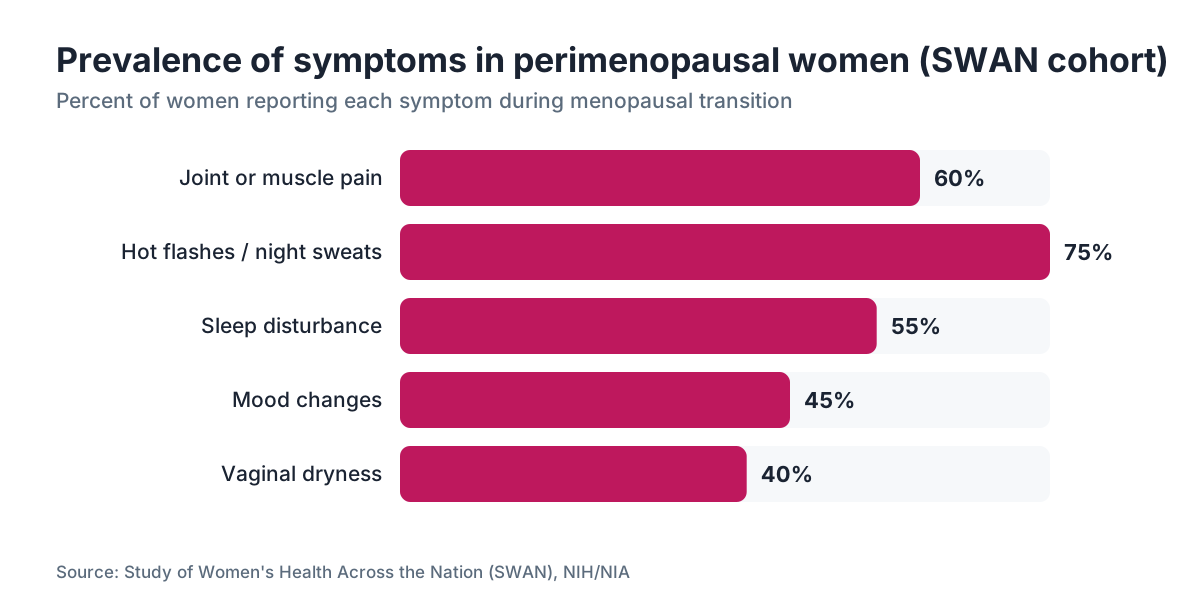
TL;DR: Falling estrogen during perimenopause raises systemic inflammation, thins the collagen in tendons and cartilage, and lowers the pain threshold. That combination makes shoulder pain a genuinely common symptom. Studies put joint pain prevalence at 50 to 70 percent in midlife women. Hormone therapy, targeted physical therapy, and anti-inflammatory strategies all have evidence behind them. Frozen shoulder is especially linked to this hormonal window.
Is shoulder pain really a perimenopause symptom?
Yes, and it gets missed constantly. Most women expect hot flashes and irregular periods when perimenopause begins, usually somewhere in the early-to-mid 40s (see perimenopause age for the full breakdown). Shoulder pain rarely makes the symptom checklist a doctor hands over, so it gets blamed on sleeping wrong or aging without anyone connecting it to hormones.
The Study of Women's Health Across the Nation (SWAN), which has tracked over 3,000 women through the menopausal transition, found that 50 to 70 percent of perimenopausal women reported musculoskeletal pain, with joint and muscle aches ranking among the most common physical complaints after hot flashes and night sweats. [1] That is not a fringe finding. It held up across racial and ethnic groups in the cohort.
Shoulder pain stands out because estrogen receptors sit inside tendons, ligaments, cartilage, and synovial tissue. When estrogen drops, those tissues change structurally and biochemically. The shoulder joint has an unusually large amount of that connective tissue relative to its bony support, which may explain why it shows up so often as a problem site.
What does estrogen actually do for your shoulder joints?
Estrogen does several things inside joint tissue that most people never think about.
First, it drives collagen synthesis. Tendons and ligaments are mostly type I collagen, and estrogen turns up the fibroblasts that build it. Research in the Journal of Orthopaedic Research found that estrogen deficiency measurably reduces tendon stiffness and collagen content, making tendons more prone to microinjury and slower to heal. [2] Your rotator cuff is four tendons working together. If all four are slightly weaker than they were at 38, a repetitive motion that used to be fine now causes pain.
Second, estrogen modulates synovial fluid production. The synovium lines the joint capsule and keeps everything lubricated. Less estrogen, less fluid, more friction. Women describe this as a grinding or a deep ache rather than a sharp pain.
Third, estrogen has a direct anti-inflammatory effect. It suppresses pro-inflammatory cytokines including interleukin-1 and TNF-alpha. When levels fall during perimenopause, that suppression lifts and baseline systemic inflammation climbs. [3] The shoulder, already a mechanically stressed joint, feels that change.
Fourth, estrogen influences pain perception in the brain and spinal cord. It raises the pain threshold in the central nervous system. Lower estrogen means the same amount of tissue irritation registers as more painful. This is not psychological. It is neurochemistry.
What is frozen shoulder and why does it peak during perimenopause?
Frozen shoulder (adhesive capsulitis) is a condition where the shoulder joint capsule thickens, contracts, and fills with scar-like adhesions, causing severe pain and lost range of motion. In the general population it affects 2 to 5 percent of adults. In perimenopausal and postmenopausal women, estimates run as high as 10 to 20 percent. [4]
The link is not a coincidence. The joint capsule is rich in estrogen receptors, and the fibroblast-driven capsular contracture that defines frozen shoulder looks biochemically similar to other estrogen-deficiency fibrotic processes. A study in the Journal of Shoulder and Elbow Surgery found that women aged 40 to 60 made up a disproportionate share of frozen shoulder cases, and hormonal status was an independent predictor. [4]
Frozen shoulder moves through three phases: a freezing phase of worsening pain (6 to 9 months), a frozen phase of stiffness with less acute pain (4 to 6 months), and a thawing phase of slow recovery (6 to 24 months). The whole process can take two to three years. Many women cycle through physical therapy, cortisone injections, and even manipulation under anesthesia without anyone ever mentioning that hormonal decline may be the root driver.
If you are in perimenopause and your shoulder is progressively stiffening, tell your provider to rule out adhesive capsulitis specifically. It needs different treatment than rotator cuff tendinopathy.
How do you tell if shoulder pain is hormonal or a structural injury?
The honest answer is that you often cannot tell from symptoms alone, and sometimes it is both at once. Hormonal changes make the shoulder more vulnerable to structural injury, so a small rotator cuff tear that would have been silent at 35 becomes painful at 48.
Some patterns do point toward hormonal involvement.
The pain is bilateral. Mechanical injuries from overuse or a single trauma are almost always one-sided. Pain in both shoulders at once, without a clear injury, is a red flag for a systemic cause including hormonal inflammation.
It shows up alongside other perimenopause symptoms. If shoulder pain appeared around the same time as cycle changes, sleep disruption, or hot flashes, that clustering matters.
It is worse at night. Inflammatory and hormonal joint pain often peaks after dark when cortisol is low and there is no movement to pump synovial fluid through the joint.
Non-hormonal causes to rule out: rotator cuff tear (often sudden onset after a specific movement), bursitis (point tenderness over the bursa, pain with overhead reach), cervical radiculopathy (pain radiating down the arm with neck involvement), and referred pain from the heart, diaphragm, or gallbladder. A musculoskeletal ultrasound or MRI can distinguish structural damage. Plain X-rays are useful mainly for ruling out arthritis or calcific tendinopathy.
Seeing a sports medicine physician or orthopedic specialist alongside your gynecologist is worth it when shoulder pain is severe or limiting function.
Does hormone therapy actually reduce joint pain in perimenopause?
The evidence says yes, with some caveats.
The Women's Health Initiative (WHI), despite its complicated history, collected data on musculoskeletal symptoms. Women on combined estrogen-progestin therapy reported significantly lower rates of joint pain and stiffness than women on placebo. The difference was clinically meaningful, not a marginal statistical blip. [5]
Smaller randomized trials back this up. A study in Arthritis and Rheumatism found that postmenopausal women on hormone therapy had lower concentrations of pro-inflammatory markers and better joint symptom scores than women not on therapy. [3] The effect was most pronounced in women who started therapy closer to menopause, which fits the broader timing hypothesis in HRT research.
For hormone replacement therapy to help joint pain, the dose and formulation probably matter. Estradiol (bioidentical estradiol, not conjugated equine estrogen) at physiologic doses has the best receptor-level activity in connective tissue. Transdermal delivery through an estrogen patch skips first-pass liver metabolism and may hold serum levels steadier, which matters for tissues sensitive to estrogen swings.
Progesterone also carries some anti-inflammatory properties, and its role is worth raising with your prescribing clinician, especially since the type of progestogen matters (micronized progesterone and synthetic progestins have different receptor profiles).
HRT is not a blanket fix, and it carries its own risk-benefit math depending on your history. But joint pain, including shoulder pain, is a legitimate reason to put hormone therapy on the table, and a provider who waves it off as "just aging" is not giving you the full picture.
What physical therapy and movement strategies actually help?
Physical therapy is the highest-evidence non-hormonal treatment for perimenopause shoulder pain, but the type of PT matters.
For rotator cuff tendinopathy, eccentric and isometric loading exercises have the strongest evidence. Eccentric loading, where you lengthen the tendon under load, drives collagen remodeling. A Cochrane review of rotator cuff disease found that exercise therapy produced clinically significant improvements in pain and function, though the optimal protocol varies by person. [6]
For frozen shoulder, PT in the freezing phase focuses on pain control and gentle range of motion, not aggressive stretching, which can worsen inflammation. In the frozen and thawing phases, progressive capsular stretching and shoulder mobilization are appropriate.
Strength training matters beyond the shoulder itself. Bone density starts declining in perimenopause (check bone density test for baseline testing guidance), and the muscles that protect joints become more important as bone strength drops. A program with rows, face pulls, and external rotation work keeps the rotator cuff functional and lowers impingement risk.
Swimming and water-based exercise are especially useful because the shoulder moves through its full range with minimal load. Plenty of women with significant shoulder pain can tolerate pool work when weight training is too much.
Yoga and stretching help with range of motion but should not be your primary treatment for a painful shoulder. Flexibility without strength can actually increase instability in a shoulder that is already under-supported by weaker perimenopausal tendons.
What anti-inflammatory approaches help beyond medication?
Food first. A Mediterranean-style diet lowers circulating inflammatory markers including CRP and IL-6, the same cytokines that rise when estrogen falls. A 2020 meta-analysis in Nutrients found that higher adherence to Mediterranean diet patterns was associated with lower systemic inflammation in midlife women. [7] That is not a cure for shoulder pain, but it is a real signal.
Omega-3 fatty acids (EPA and DHA from fish or algae) have specific data for joint pain. A 2017 systematic review found that omega-3 supplementation at 2 to 4 grams per day reduced joint stiffness and pain scores in inflammatory arthritis. [8] Perimenopause joint pain is not rheumatoid arthritis, but the inflammatory pathways overlap enough that the mechanism is plausible. Two to three grams daily of combined EPA and DHA from a decent supplement is a reasonable trial.
Sleep quality is underrated in this conversation. Deep sleep is when cortisol bottoms out and growth hormone peaks, which is when tissue repair happens. The same hormonal shifts that cause shoulder pain also wreck sleep. If you are sleeping badly, your tendons are not recovering between uses. Fixing sleep (through HRT, CBT for insomnia, or other means) is structural joint care, not a soft lifestyle add-on.
NSAIDs (ibuprofen, naproxen) work for acute flares but should not be your daily strategy. Chronic NSAID use carries gastrointestinal and cardiovascular risks that stack up in perimenopause. Topical diclofenac is a reasonable alternative for localized pain with lower systemic absorption.
Corticosteroid injections can buy several weeks to months of relief for both bursitis and frozen shoulder and make sense for moderate to severe cases, but repeated injections speed collagen breakdown in tendons. Most orthopedic guidelines cap them at three per site per year.
Can GLP-1 medications affect joint pain in perimenopause?
This is an emerging area without clean trial data specific to perimenopausal shoulder pain, so honest hedging applies.
GLP-1 receptor agonists (semaglutide, tirzepatide) reduce body weight and have direct anti-inflammatory effects independent of weight loss. The SURMOUNT-1 trial of tirzepatide found significant reductions in CRP, a marker of systemic inflammation, beyond what weight loss alone would predict. [9] Since inflammatory cytokines are a core mechanism of perimenopausal joint pain, GLP-1s may cut that burden. But no trial has looked at shoulder pain as a primary or even secondary endpoint in perimenopausal women.
The mechanical argument is more settled: every pound of body weight removed reduces joint loading. The shoulder is less affected by weight than the knee or hip, but the whole musculoskeletal system runs in a less inflammatory state at lower body weight.
Some women using semaglutide or similar medications through telehealth platforms including WomenRx report better joint symptoms alongside weight loss, but self-reported anecdote is not clinical evidence. If you are already weighing GLP-1 therapy for weight management, joint pain relief is a reasonable secondary hope, not a primary reason to start. See the semaglutide for weight loss page for the evidence on primary outcomes.
For a comparison of GLP-1 options, semaglutide vs tirzepatide walks through the head-to-head data.
When should you see a doctor about perimenopause shoulder pain?
Go sooner than you think you need to. The biggest mistake I see women make is tolerating shoulder pain for a year because they assume it is just perimenopause, then arriving for evaluation with a frozen shoulder already in the frozen phase that needs months of intensive treatment.
See a provider promptly if the pain came on after a specific injury or fall, you have real weakness in the arm (suggesting a rotator cuff tear), the shoulder is progressively stiffening (early frozen shoulder), you feel pain radiating down the arm with numbness or tingling (nerve involvement), or the pain disrupts your sleep night after night.
For hormonal evaluation, a gynecologist or menopause specialist is the right starting point. FSH and estradiol levels give useful context, though they swing during perimenopause and a single normal result does not rule out a hormonal contribution. A symptom timeline tells you more than one lab value.
The North American Menopause Society (NAMS) has published position statements supporting hormone therapy for perimenopausal symptoms including musculoskeletal pain in appropriate candidates. [10] If your provider is unfamiliar with this evidence, asking them to review the NAMS 2022 hormone therapy position statement is a fair request.
Telehealth platforms like WomenRx can evaluate hormonal contributors and prescribe evidence-based HRT when appropriate. A structural shoulder problem still needs in-person orthopedic or physical therapy evaluation. The two are not mutually exclusive.
What is the typical timeline for perimenopause shoulder pain to resolve?
This depends almost entirely on what is driving it.
Pure hormonal inflammation with no structural injury: many women see improvement within two to three months of starting hormone therapy, assuming the formulation and dose are right. Some see faster relief, some need adjustments. Anti-inflammatory dietary changes start shifting inflammation markers within four to six weeks, though pain relief may lag behind.
Rotator cuff tendinopathy: with a consistent physical therapy program, 70 to 80 percent of people improve significantly within three to six months. [6] Tendons heal slowly. Expecting to be 100 percent in six weeks is unrealistic and leads to re-injury.
Frozen shoulder: the natural history is long no matter what you do, typically one to three years for full resolution. Aggressive early treatment (corticosteroid injections, PT, and addressing hormonal factors) shortens the symptomatic period. Manipulation under anesthesia or hydrodilatation (injecting saline into the joint to stretch the capsule) can speed thawing phase recovery.
Calcific tendinopathy (calcium deposits in the rotator cuff, more common in perimenopausal women than the general population): this can clear on its own over one to two years or may need ultrasound-guided needling or shockwave therapy.
The honest answer is that shoulder pain in perimenopause often has a hormonal component that responds to hormone treatment and a mechanical component that needs local treatment, and you usually need both running at once to get the best outcome in the shortest time.
How is perimenopause shoulder pain different from what happens after menopause?
The biology overlaps, but the timing differs. During perimenopause, estrogen fluctuates erratically, sometimes spiking above premenopausal levels and then crashing. That volatility may be more inflammatory than the steadily low estrogen of postmenopause, which is one reason perimenopause can feel worse symptomatically than the years after the final period.
After menopause, estrogen settles at a low level and many women find their joint pain either plateaus or slowly improves. But bone density loss accelerates sharply in the first three to five years after menopause (see menopause for the full picture), and the structural support for joints drops with it. Women who did not address tendon and muscle health during perimenopause often find they have bigger joint problems in their 60s.
For the full arc from perimenopause through postmenopause, when does menopause start and menopause age are useful references on the hormonal timeline.
The treatment approach shifts too. Women more than ten years past menopause starting HRT for the first time face a different cardiovascular risk profile than women starting during perimenopause. The timing hypothesis from WHI reanalysis suggests starting hormone therapy during perimenopause or within ten years of the final period carries the most favorable benefit-to-risk ratio. That matters for any woman considering HRT as part of her shoulder pain strategy.
Frequently asked questions
Can perimenopause cause shoulder and neck pain at the same time?
Yes, and it is common. The same estrogen-related inflammatory processes affect cervical spine joints and paraspinal muscles. Many women develop what looks like shoulder tendinopathy and upper trapezius tension at the same time. Cervical radiculopathy (a pinched nerve in the neck) can also refer pain into the shoulder. An MRI of the cervical spine can rule this out if neck involvement is suspected alongside shoulder symptoms.
Why is my shoulder worse at night during perimenopause?
Two reasons. Inflammatory joint pain follows a circadian pattern: cortisol, which is anti-inflammatory, is lowest between midnight and 4 a.m., so inflammatory pain peaks during sleep. Second, when you lie on a shoulder, you compress the subacromial space and reduce blood flow to tendons that are already less vascular. Side-sleeping on the affected shoulder consistently makes perimenopause-related shoulder inflammation worse.
Does perimenopause cause shoulder bursitis?
Perimenopause does not directly cause bursitis, but it creates conditions where bursitis becomes more likely. When tendons are less mechanically sound due to estrogen deficiency, altered movement patterns and microinjury increase friction in the subacromial bursa. The reduced anti-inflammatory effect of lower estrogen means the bursa stays inflamed longer once irritated. Women in perimenopause are more likely to develop bursitis from activities that would have been tolerable a few years earlier.
Is frozen shoulder linked to perimenopause specifically?
Yes. The peak incidence of adhesive capsulitis in women is between ages 40 and 60, exactly the perimenopause and early postmenopause window. Estrogen receptors in the joint capsule are well-documented. Researchers hypothesize that estrogen deficiency drives the fibrotic capsular changes central to frozen shoulder. Women with diabetes carry extra risk, and insulin resistance, which rises during perimenopause, compounds the susceptibility.
Will hormone therapy help with frozen shoulder?
There is no randomized trial specifically on HRT for frozen shoulder, so honest uncertainty applies. Mechanistically, restoring estrogen should reduce the fibrotic drive and inflammation sustaining the condition. Several observational studies show women on HRT have lower rates of adhesive capsulitis. Most orthopedic and menopause specialists would consider HRT appropriate for women who qualify, with local treatment (PT, injections) continuing alongside.
What blood tests should I ask for if I think my shoulder pain is hormonal?
Ask for FSH, estradiol, and ideally a complete metabolic panel plus CRP (C-reactive protein). During perimenopause, FSH and estradiol swing widely, so single values are less informative than the pattern. A high CRP supports systemic inflammation. Thyroid function (TSH, free T4) is worth checking because hypothyroidism, more common in midlife women, independently causes joint pain and can mimic hormonal shoulder symptoms.
Can weight gain during perimenopause make shoulder pain worse?
Yes, through two pathways. First, excess adipose tissue is metabolically active and secretes pro-inflammatory cytokines including TNF-alpha and IL-6, amplifying the inflammation already driven by falling estrogen. Second, weight gain alters posture and shoulder girdle mechanics. Increased thoracic kyphosis (forward rounding of the upper back), common with midlife weight redistribution, tightens the subacromial space and increases impingement risk.
Are there supplements with evidence for perimenopause joint pain?
Omega-3 fatty acids (2 to 4 grams daily of EPA and DHA combined) have the strongest evidence, with multiple trials showing reduced joint pain scores. Collagen peptides (10 grams daily) have modest trial data for tendon support; a 2019 study in the American Journal of Clinical Nutrition showed improved tendon collagen synthesis with collagen supplementation plus vitamin C. Glucosamine and chondroitin have mixed evidence specifically for shoulder tendinopathy.
Can perimenopause cause pain in both shoulders at once?
Yes, and bilateral shoulder pain is actually a clinical signal that points toward a systemic cause rather than a mechanical one. If both shoulders ache at once without a bilateral injury or overuse pattern, hormonal inflammation, inflammatory arthritis, or thyroid disease should be evaluated. Unilateral pain is more typical of rotator cuff tears, bursitis, or frozen shoulder, though frozen shoulder does occasionally occur sequentially in both shoulders.
How long does perimenopause last and will my shoulder eventually improve?
Perimenopause typically lasts four to eight years, though ranges vary widely. Joint pain tends to peak during the most volatile phase of hormonal fluctuation and often improves once estrogen stabilizes at postmenopausal levels, usually one to two years after the final period. Women who address both the hormonal drivers and the local structural issues with physical therapy tend to have better long-term shoulder function than those who wait it out alone.
Is shoulder pain from perimenopause different from fibromyalgia?
They overlap symptomatically but are distinct. Fibromyalgia involves widespread musculoskeletal pain with specific tender points and a central sensitization mechanism. Perimenopause can worsen fibromyalgia or trigger a fibromyalgia-like picture in susceptible women because falling estrogen raises central pain sensitivity. Localized shoulder pain without widespread tender points and fatigue is less likely to be fibromyalgia. A rheumatologist can formally evaluate if widespread pain is present.
Should I avoid shoulder exercises during perimenopause to protect my joints?
No, and rest is usually counterproductive beyond the acute injury phase. Tendons and cartilage have poor blood supply and depend on mechanical loading to drive nutrient exchange and collagen remodeling. Complete rest weakens tendons further. Graded loading, meaning starting light and progressing gradually, is the evidence-based approach. Working with a physical therapist to set appropriate loading for your specific shoulder problem is worth the investment.
Can perimenopause shoulder pain be a sign of something more serious?
Rarely, but yes. Shoulder pain can be referred from cardiac events (particularly in women, who often present atypically), from diaphragm irritation (gallbladder disease, pneumonia), or from a Pancoast tumor at the lung apex. Red flags requiring urgent evaluation: shoulder pain with shortness of breath or chest tightness, pain that worsens lying flat and improves sitting up, severe night sweats with weight loss and lymph node swelling. These are uncommon but should not be missed.
Sources
- Study of Women's Health Across the Nation (SWAN), NIH/National Institute on Aging
- Journal of Orthopaedic Research, Tendon and estrogen deficiency
- Arthritis and Rheumatism, Hormone therapy and inflammatory markers in postmenopausal women
- Journal of Shoulder and Elbow Surgery, Adhesive capsulitis and hormonal status in women aged 40-60
- Women's Health Initiative, NIH National Heart, Lung, and Blood Institute
- Cochrane Database of Systematic Reviews, Exercise therapy for rotator cuff disease
- Nutrients, Mediterranean diet and systemic inflammation in midlife women (2020 meta-analysis)
- PubMed, Omega-3 supplementation and joint pain systematic review (2017)
- SURMOUNT-1 trial, New England Journal of Medicine (tirzepatide, 2022)
- North American Menopause Society (NAMS), 2022 Hormone Therapy Position Statement
- American Journal of Clinical Nutrition, Collagen peptides and tendon synthesis (2019)