Perimenopause and sex drive: why it drops and what actually helps
TL;DR: Perimenopause commonly lowers sex drive because estrogen, progesterone, and testosterone all shift during this transition, which can last 4 to 10 years. Vaginal dryness, mood changes, and poor sleep compound the problem. Treatments with real evidence include hormonal therapy, the FDA-approved medication ospemifene, and in some cases low-dose testosterone. Lifestyle and relationship factors matter too.
What is perimenopause and how long does low libido last?
Perimenopause is the hormonal transition leading up to menopause, defined as 12 consecutive months without a period. It typically starts in the mid-40s, though it can begin as early as the late 30s for some women, and it can last anywhere from 4 to 10 years [1]. During that window, ovarian hormone production becomes erratic before it falls off for good.
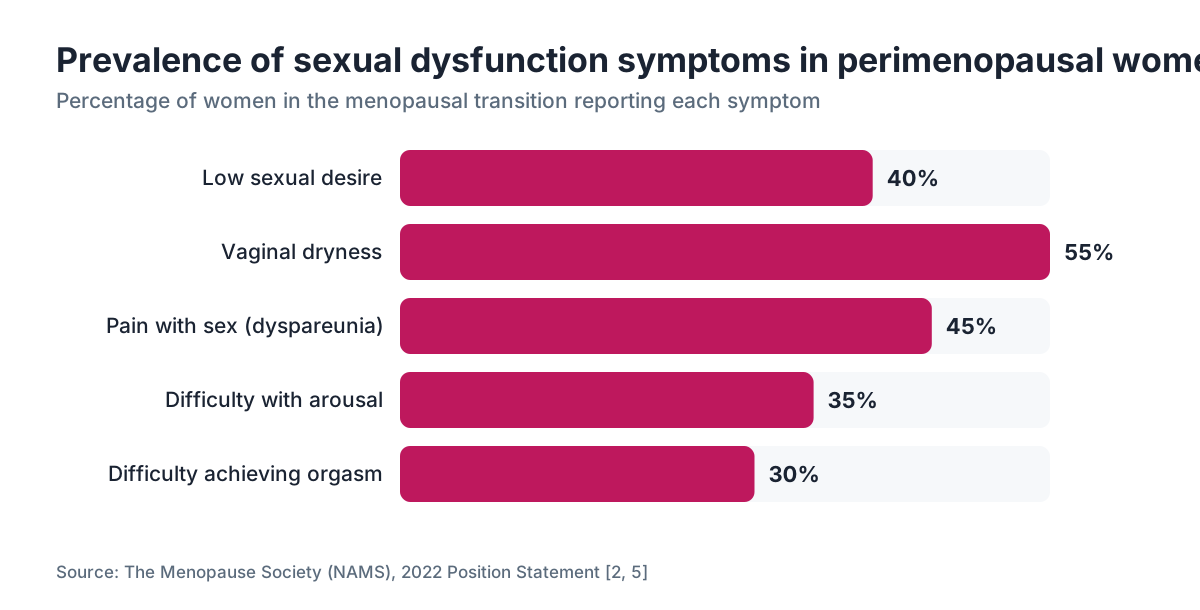
Low libido during this phase is not a character flaw or a relationship problem. It is a physiological event. The North American Menopause Society (NAMS) notes that sexual dysfunction, including reduced desire, affects an estimated 40 to 50 percent of women during the menopausal transition [2]. That number is not small. It is a majority experience that simply does not get talked about enough in routine medical visits.
Here is the part women miss. Desire problems often begin years before a woman's last period, sometimes before she even realizes she is in perimenopause. If your cycles are still coming but your interest in sex has quietly disappeared, the hormone shifts of perimenopause are a very plausible explanation. You can read more about the broader timeline in our article on perimenopause age.
How long the low libido lasts depends on where a woman is in the transition and whether she treats the underlying causes. For women who move through perimenopause without any intervention, desire often stays suppressed into postmenopause. For women who address the hormonal and physical contributors, meaningful improvement is realistic.
Why does perimenopause lower sex drive? The hormone mechanics
Three hormones drive most of what happens to libido during perimenopause: estrogen, progesterone, and testosterone. Understand each one and the rest of this article makes sense.
Estrogen is the big story. As ovarian function becomes inconsistent, estrogen levels swing wildly before declining overall. Lower estrogen affects libido both directly and indirectly. Directly, estrogen receptors sit in the brain regions involved in arousal. Indirectly, falling estrogen causes vaginal tissue to thin and dry out, a condition now formally called genitourinary syndrome of menopause (GSM). Sex that hurts is sex that women understandably want less of.
Progesterone tends to drop earlier in perimenopause, during the phase when cycles become irregular but estrogen may still be relatively high. Progesterone has a sedating, calming effect on the central nervous system. When it falls, some women get worse anxiety and disrupted sleep, both of which kill libido.
Testosterone is the hormone most directly tied to sexual desire in women, even though women make it in much smaller amounts than men. Ovarian testosterone production declines with age, and that decline speeds up around perimenopause [3]. The research here is less clean than the estrogen literature, but the clinical signal is real: women with low testosterone relative to their prior baseline often report flat or absent desire more than anything else.
Then come the downstream effects. Hot flashes disrupt sleep. Poor sleep blunts every dimension of mood and desire. Weight changes can hit body image. Depression, which is more common during perimenopause than at other life stages, drops libido sharply [4]. The hormones create conditions that make low sex drive almost overdetermined.
How do you know if low libido is from perimenopause or something else?
This is genuinely hard to sort out without some clinical help, and that is not a cop-out. Libido has psychological, relational, and physiological roots, and perimenopause tends to disrupt all three at once.
That said, patterns point toward a hormonal cause. If your desire dropped noticeably around the same time your periods started changing, that timing is meaningful. If you also have vaginal dryness or pain with sex, hot flashes, sleep disruption, or mood changes, those are more signs that the menopausal transition is the driver [2].
A doctor can check FSH (follicle-stimulating hormone), estradiol, and free testosterone. No single lab value is diagnostic of low libido, but labs help rule out thyroid disease, anemia, and other medical causes, and they give you a baseline to work from. FSH above 10 to 12 IU/L, with irregular cycles, is a reasonable marker of perimenopause, though the Endocrine Society notes that FSH alone is an imperfect test because it fluctuates so much during this transition [3].
Relationship dissatisfaction, unresolved conflict, and a partner's sexual dysfunction can independently suppress desire and can coexist with perimenopause. A sex therapist or couples counselor is not a fallback for women who can't get good medical care. It is a legitimate parallel track that makes the medical treatment work better.
Depression is worth calling out on its own. The perimenopausal years carry a statistically elevated risk of new-onset depression, and many antidepressants (particularly SSRIs and SNRIs) further suppress libido. If you started an antidepressant during perimenopause and your desire dropped, that medication deserves a close look.
What does low libido actually feel like during perimenopause?
Women describe it differently, and that variation matters because it shapes what kind of help is most useful.
For some women it is absence. The desire simply is not there. They do not think about sex, do not initiate it, and feel neither aroused by things that used to work nor particularly bothered by the absence in the moment, though they often feel troubled by what it means for their relationship or their sense of self.
For others it is interference. They still want to want sex, they can get interested mentally, but physical arousal is slow or incomplete. Lubrication is reduced. Sensation is muted. The body does not follow where the mind goes.
For others it is avoidance. Sex is uncomfortable or painful because of vaginal dryness or thinning tissue, and avoidance of the pain starts to generalize into avoidance of anything that might lead to sex.
These three patterns often overlap, but they call for somewhat different interventions. The absence pattern responds most to hormonal treatment and, where appropriate, to testosterone. The arousal difficulty pattern responds to better lubrication and to fixing the physical environment of sex. The avoidance-from-pain pattern often needs direct treatment of GSM before desire can return. Knowing which pattern fits your experience helps you have a more productive conversation with a clinician.
What treatments for low libido in perimenopause have real evidence?
The evidence landscape here is uneven. Some options are well-studied. Others are popular but poorly documented. Here is an honest breakdown.
Menopausal hormone therapy (MHT/HRT) is the most studied intervention for menopausal symptoms as a whole. Systemic estrogen reliably reduces hot flashes and sleep disruption, which removes two major libido-killers. Its direct effect on desire is less consistent, though many women report improvement [5]. For women also taking progestogens, the choice of progestogen matters. Some (like medroxyprogesterone acetate) are linked to more libido suppression than others (like micronized progesterone). You can learn more about the full scope of hormonal options in our article on hormone replacement therapy.
Vaginal estrogen and vaginal DHEA treat GSM locally, without meaningful systemic absorption, which makes them appropriate even for women who have concerns about systemic HRT. Vaginal estrogen (creams, rings, suppositories) and intravaginal DHEA (prasterone, brand name Intrarosa) both rebuild vaginal tissue, reduce dryness, and reduce pain with sex. The FDA approved prasterone in 2016 specifically for dyspareunia (painful sex) due to menopause [6].
Ospemifene is a daily oral medication, a selective estrogen receptor modulator, FDA-approved for moderate to severe dyspareunia and vaginal dryness from menopause. It works for women who cannot or prefer not to use vaginal products [6].
Testosterone is commonly prescribed off-label for low libido in women in the US. There is no FDA-approved testosterone product for women in the United States, but the evidence base for its use is genuinely meaningful. A 2019 systematic review and meta-analysis in The Lancet Diabetes and Endocrinology, analyzing 46 randomized controlled trials covering more than 8,000 women, concluded that testosterone improved sexual function, desire, arousal, and orgasm in postmenopausal women [7]. Perimenopause-specific data is thinner, but the biological rationale is solid. Doses used for women are roughly one-tenth the male dose. Pellets, creams, and injections are all used.
Flibanserin (Addyi) is FDA-approved for hypoactive sexual desire disorder (HSDD) in premenopausal women. It is not approved for postmenopausal or perimenopausal use, and its effect sizes in trials were modest. In the registration trials, women on flibanserin had roughly 0.5 to 1 additional satisfying sexual events per month compared to placebo [8]. Worth knowing about, but not a first line for most perimenopausal women.
Bremelanotide (Vyleesi) is a self-injectable melanocortin receptor agonist, also FDA-approved for premenopausal HSDD, used on demand before anticipated sex. Nausea is a common side effect and limits tolerability for some women [8].
Non-hormonal options like mindfulness-based sex therapy, pelvic floor physical therapy, and cognitive behavioral therapy have evidence in the sexual medicine literature. They are not substitutes for treating a hormonal deficiency, but they improve outcomes when combined with medical treatment.
Does low-dose testosterone actually work for perimenopause sex drive?
This is probably the question women ask most once they have already tried estrogen and still feel like desire is missing.
The evidence says yes, with important caveats. The 2019 Lancet Diabetes and Endocrinology meta-analysis pooled data from 8,480 women across 46 randomized trials and found that testosterone therapy was associated with significantly improved sexual desire, arousal, and orgasm compared to placebo or comparator [7]. The Endocrine Society's 2014 clinical practice guideline on female sexual dysfunction acknowledged testosterone's role in treating postmenopausal women with HSDD, while noting the lack of an FDA-approved product [3].
The caveats matter. There is no FDA-approved testosterone formulation specifically for women in the US, so all prescribing is off-label. Doses need to be physiological, meaning they aim to restore testosterone to the normal premenopausal female range, not to male levels. Supraphysiologic doses cause acne, hair changes, and clitoral enlargement. A clinician who monitors blood levels during treatment can keep the dose in a reasonable range.
Long-term safety data beyond two years is limited. Short- and medium-term data (up to two years) do not show increased cardiovascular risk or breast cancer risk at physiologic doses, but longer studies are needed [7]. Women with hormone-sensitive cancers should discuss this carefully with their oncologist.
If you are working with a telehealth provider like WomenRx that prescribes hormones for women, testosterone is a conversation worth having once you have already addressed estrogen and vaginal health and your desire is still flat.
How does vaginal dryness make low libido worse, and what fixes it?
Vaginal dryness is one of the clearest cause-and-effect stories in this whole topic. When estrogen drops, the vaginal epithelium thins, loses collagen, and produces less natural lubrication. The vaginal pH rises. The result: dryness, irritation, and pain during sex. The pain does not have to be dramatic to suppress desire. Even mild chronic discomfort trains the brain to link sex with unpleasantness.
This is genitourinary syndrome of menopause (GSM), and unlike hot flashes, it does not get better on its own after menopause. It tends to worsen over time without treatment.
Local vaginal estrogen, applied as a cream, ring, or suppository, is the gold standard treatment. Because absorption into the bloodstream is minimal at the doses used, it is generally considered safe even for women who are avoiding systemic estrogen, though women with a history of estrogen-sensitive breast cancer should discuss with their oncologist. Vaginal estrogen reverses the tissue changes in weeks to months.
Prasterone (Intrarosa), the vaginal DHEA suppository, converts locally to both estrogen and testosterone in vaginal tissue. The FDA approved it specifically for dyspareunia due to menopause, and clinical trials showed statistically significant improvements in vaginal dryness, pain, and sexual function scores [6].
For women who want to avoid all hormones, high-molecular-weight hyaluronic acid vaginal moisturizers (different from lubricants) have evidence from small randomized trials showing comparable effects to vaginal estrogen on dryness, though less effect on tissue structural changes. Regular lubricant use during sex is basic and genuinely helpful. Silicone-based lubricants last longer than water-based ones and are safe with skin and with most toys.
Pelvic floor physical therapy is worth considering if pain persists even after dryness is treated. Tight pelvic floor muscles are common in women who have been avoiding sex because of pain.
Do lifestyle changes help perimenopause sex drive?
Yes, and the honest answer is that they help more than most women expect but less than a properly dosed hormonal intervention when there is a real hormonal deficit.
Sleep is the highest-leverage lifestyle factor for libido at any age, and it gets more important in perimenopause because hot flashes wreck it. Treating the hot flashes, either with MHT or with non-hormonal options like fezolinetant or cognitive behavioral therapy for insomnia, often produces a secondary improvement in desire simply by restoring sleep architecture.
Exercise has a meaningful effect on sexual function, likely through better blood flow, body image, and mood. A 2015 randomized trial in the Journal of Sexual Medicine found that aerobic exercise in midlife women was associated with improved sexual desire and satisfaction scores [10]. Resistance training has added relevance because it supports testosterone maintenance and improves body composition in a period when fat redistribution is common.
Alcohol suppresses libido in dose ranges that many women consider moderate. More than one or two drinks reliably blunts arousal, even if it temporarily lowers inhibition.
Stress, specifically elevated cortisol, directly suppresses gonadal hormone production through a pathway called the hypothalamic-pituitary-gonadal axis. This is not vague wellness advice. It is a documented physiological mechanism. Chronic work stress, caregiving burden, or financial anxiety during the perimenopausal years can meaningfully compound the hormonal suppression already happening from ovarian aging.
Body image deserves a specific mention. The physical changes of perimenopause, weight gain (especially around the middle), skin changes, and hair changes, affect how many women feel in their bodies. Interventions that address body composition and energy (including, for some women, GLP-1 medications like semaglutide) can secondarily improve how women feel about sex, even though GLP-1s have no direct effect on libido.
Does perimenopause affect orgasm and arousal, more than desire?
Yes. Desire is only one dimension of sexual response. Perimenopause affects arousal (the physical response to sexual stimulation) and orgasm as well, often more than desire itself.
Arousal depends on blood flow to the genitals, nerve sensitivity, and adequate lubrication. All three are estrogen-dependent. As estrogen falls, genital blood flow decreases, clitoral and vaginal sensitivity can diminish, and lubrication slows. Women who have had reliable orgasms their whole lives sometimes find in perimenopause that orgasms take longer, feel less intense, or become difficult to reach.
This is frustrating and often alarming, but it is physiologically explicable. Estrogen maintains the neural pathways involved in genital sensation. Some of the most honest research on this comes from the science of GSM, which documents reduced clitoral blood flow and tissue changes even in women who are otherwise healthy and sexually active.
Vibration (through a vibrator) becomes more relevant for many perimenopausal women because it compensates for reduced sensitivity. This is not a consolation prize. It is a practical tool backed by the observation that stronger stimulation is needed when nerve sensitivity drops. Sexual medicine clinicians now discuss this routinely.
Orgasmic dysfunction that persists after treating dryness and hormonal deficiency may have a pelvic floor component. Pelvic floor physical therapists are trained to address both hypertonic (too-tight) and hypotonic (too-loose) pelvic floor function, both of which can impair orgasm.
The good news is that arousal and orgasm are often among the first things to improve once GSM is treated with vaginal estrogen or DHEA. Desire takes longer to come back. The physical response often responds faster.
What should you tell your doctor about perimenopausal low libido?
Many women find this conversation hard to start, and many doctors do not bring it up unless asked. That gap costs women years of treatable suffering.
The most useful thing you can do before the appointment is be specific. "My sex drive has been low" is hard to act on. "I have had no desire for sex for about 18 months, I avoid it, and when I do have sex it hurts" gives a clinician a real clinical picture to work with.
Come prepared to answer: When did this start? Does sex hurt? Has arousal changed, more than desire? Are there relationship factors? Are you on any medications that could contribute (SSRIs, antihistamines, oral contraceptives, which can lower SHBG and affect free testosterone)? Have you had mood changes, sleep changes, or hot flashes?
Ask specifically about FSH, estradiol, and free testosterone. Ask about options including vaginal estrogen, systemic HRT, and off-label testosterone. If your doctor dismisses low libido as a normal part of aging with nothing to be done, that response is outdated. Seek a second opinion from a menopause specialist. The Menopause Society (formerly NAMS) maintains a provider locator at menopause.org [2].
A telehealth approach can make this conversation easier for women who feel uncomfortable raising it in person. Providers who specialize in women's hormones, including those at WomenRx, are trained to work through this clinical picture without the awkwardness of a rushed general practice visit.
Be honest about what matters to you. Clinicians sometimes assume that low libido is less important to older women. Sexual health matters across the entire lifespan. You do not need to justify why it matters.
What are the risks of treating perimenopause low libido with hormones?
Risk is real and needs to be stated plainly, not minimized.
For systemic estrogen (with a uterus, combined with a progestogen): the Women's Health Initiative (WHI) found a small increased risk of breast cancer with combined estrogen plus progestin (MPA specifically), and a small increased risk of stroke with oral equine estrogen [9]. The absolute risk numbers were small, the study population was older than typical candidates for MHT, and later analysis suggests that the type of estrogen (estradiol vs. equine estrogen), the route (transdermal vs. oral), and the type of progestogen matter significantly for risk profile. The estrogen patch, for instance, skips first-pass liver metabolism and is associated with lower thrombosis risk than oral estrogen. This is a conversation to have with a doctor who will look at your individual history.
For vaginal estrogen: systemic absorption is minimal, and the safety data for local vaginal estrogen in breast cancer survivors is accumulating, though it remains controversial and should be discussed with an oncologist.
For testosterone: at physiologic doses, the short- and medium-term safety data are reassuring. Long-term data (beyond two years) are thin. The key risks at appropriate doses are mild. Acne, hair changes in predisposed women, and minor voice changes are rarely reported at physiologic doses. Supraphysiologic dosing causes more meaningful androgenic side effects.
For ospemifene: it carries a boxed warning about endometrial effects (as a SERM, it has some estrogenic activity on the uterus) and about theoretical cardiovascular risk, consistent with other SERMs. Women with a uterus are monitored.
The alternative, doing nothing, also has costs: persistent pain, relationship damage, reduced quality of life, and accelerating vaginal atrophy. Risk assessment means weighing both sides.
When does perimenopause sex drive come back?
The honest answer is that it depends on whether and how aggressively the underlying causes are treated, and it usually takes longer than women hope.
For women who treat GSM with vaginal estrogen, physical symptoms (dryness, pain) often improve within 4 to 12 weeks. The desire response tends to lag behind the physical recovery. Expect 3 to 6 months before judging whether a treatment is working [5].
For women on systemic HRT, hot flash relief often comes within a few weeks, and the downstream improvement in sleep and mood tends to lift libido gradually over 2 to 3 months.
For women adding testosterone, published studies typically assess outcomes at 12 to 24 weeks. The Lancet meta-analysis used a minimum 12-week follow-up window and still found statistically significant improvements [7]. Patience is warranted.
For women who do not treat the hormonal components, the picture is bleaker. Vaginal atrophy worsens over time without treatment. Desire that has been absent for years can be harder to recover than desire that has recently declined. This is one reason menopause specialists generally recommend starting treatment earlier in the perimenopausal transition rather than waiting for postmenopause.
Postmenopause does not automatically mean permanent low libido. Many women in their 50s and 60s who have been adequately treated report satisfying sex lives. The menopausal transition is a chapter, not an ending. Understanding when menopause starts and what happens after helps place where you are in this process.
Sexual response also adapts. What aroused a 35-year-old woman may not be what works at 50, and that shift is normal. Couples and individual therapists who specialize in sexual medicine can help women explore what desire looks like in this stage, which is often less spontaneous and more responsive.
Frequently asked questions
Can perimenopause cause a complete loss of sex drive?
Yes. Some perimenopausal women experience near-total loss of desire, more than reduced frequency. This is most common when estrogen, progesterone, and testosterone all shift simultaneously, compounded by poor sleep, mood changes, and painful sex. It is physiologically explainable and treatable. Complete loss of desire that persists warrants a full hormonal workup, more than reassurance that it is normal.
Does perimenopause affect arousal and orgasm, or just desire?
All three dimensions are affected. Arousal slows because genital blood flow and nerve sensitivity depend on estrogen. Orgasms can take longer, feel less intense, or become harder to reach. Vaginal dryness and thinning tissue contribute directly. Treating genitourinary syndrome of menopause with local vaginal estrogen or DHEA often improves arousal and orgasm faster than it improves desire.
At what age does sex drive start to drop in perimenopause?
For many women, desire starts to shift in the mid to late 40s, though it can begin in the late 30s for women who enter perimenopause early. The drop often precedes noticeable cycle changes, so women may not connect it to hormones at first. The Menopause Society notes that sexual dysfunction affects up to 50 percent of women during the menopausal transition.
Is low libido in perimenopause permanent?
Not necessarily. With appropriate treatment, including vaginal estrogen for dryness, systemic HRT for global hormonal support, and off-label testosterone for persistent low desire, many women report meaningful improvement. Starting treatment earlier in the transition generally produces better outcomes. Untreated vaginal atrophy does worsen over time, making earlier intervention worthwhile.
Can testosterone therapy help perimenopause sex drive?
Yes. A 2019 meta-analysis in The Lancet Diabetes and Endocrinology covering 46 randomized trials and more than 8,000 women found that testosterone significantly improved desire, arousal, and orgasm. No FDA-approved testosterone product exists for women in the US, so prescribing is off-label. Physiologic doses (roughly one-tenth male doses) are used, and blood levels should be monitored.
How do I talk to my doctor about low libido during perimenopause?
Be specific: when it started, whether sex hurts, and whether arousal has changed, more than desire. Ask about FSH, estradiol, and free testosterone. Ask specifically about vaginal estrogen, systemic HRT, and off-label testosterone. If your doctor dismisses it as untreatable, seek a menopause specialist through the Menopause Society's provider locator at menopause.org.
Does hormone replacement therapy improve sex drive during perimenopause?
Often yes, though not always directly. Systemic HRT reliably reduces hot flashes and improves sleep, which removes two major libido suppressors. Its direct effect on desire is less consistent. Women who add vaginal estrogen for dryness and pain see the most complete sexual function improvement. Adding testosterone off-label produces the most targeted effect on desire itself.
What is the difference between low libido and hypoactive sexual desire disorder (HSDD)?
HSDD is a formal clinical diagnosis: persistent low sexual desire that causes personal distress. Low libido is a symptom. Not every perimenopausal woman with reduced desire meets criteria for HSDD; some adapt without distress. The diagnosis matters because the FDA-approved medications flibanserin and bremelanotide are indicated for HSDD in premenopausal women, not broadly for anyone with reduced desire.
Can vaginal dryness be treated without hormones?
Yes, partially. High-molecular-weight hyaluronic acid vaginal moisturizers, used regularly, reduce dryness and have shown comparable effects to vaginal estrogen on subjective symptoms in small trials, though with less tissue-rebuilding effect. Silicone-based lubricants reduce friction during sex. Ospemifene is a non-estrogen oral option approved for vaginal dryness and pain. Pelvic floor physical therapy helps if muscle tension is adding to pain.
Do GLP-1 medications like semaglutide affect sex drive in perimenopausal women?
GLP-1 medications have no documented direct effect on libido or gonadal hormones. However, weight loss and improved body image from GLP-1 therapy can secondarily improve sexual confidence and willingness. Some women also report better energy and mood as metabolic health improves. GLP-1s are not a libido treatment; they are a weight and metabolic tool with possible indirect benefits.
Why do antidepressants worsen sex drive during perimenopause?
Most SSRIs and SNRIs inhibit serotonin reuptake, and elevated serotonin suppresses dopaminergic and noradrenergic pathways involved in sexual desire and arousal. They also can delay or prevent orgasm. Since perimenopause independently raises depression risk, many women start antidepressants during this transition and experience a compounded drop in sexual function. Switching to bupropion, which works differently, sometimes helps.
Is it normal to have higher sex drive at times during perimenopause?
Yes. Because hormone levels fluctuate erratically rather than declining steadily, some perimenopausal women experience episodes of increased desire, sometimes around ovulation if it still occurs. These fluctuations are hormonally driven and are completely normal. Women who notice their desire tracks their cycle, even an irregular one, are picking up on real hormonal variation.
Does perimenopause affect sex drive differently if you have had a hysterectomy?
Yes. Women who had both ovaries removed (bilateral oophorectomy) experience surgical menopause with an abrupt and dramatic drop in estrogen and testosterone, often producing more severe libido changes than natural perimenopause. Women whose ovaries were left in place after hysterectomy still experience natural ovarian aging and perimenopause; they just cannot use cycle changes as a marker, making hormone testing more important for tracking where they are.
Can mindfulness or therapy help with low libido during perimenopause?
Yes, meaningfully so when combined with medical treatment. Mindfulness-based cognitive therapy for sexual dysfunction has evidence in the sexual medicine literature showing improved desire and satisfaction. Sex therapy and couples counseling address the relational and psychological layers that hormonal treatment alone does not reach. They are not alternatives to treating hormonal deficiency; they are effective additions that improve outcomes.
Sources
- The Menopause Society (NAMS), Menopause Practice: A Clinician's Guide
- The Menopause Society (NAMS), Sexual Health Position Statement
- Endocrine Society, Clinical Practice Guideline: Androgen Therapy in Women, 2014
- NIH National Institute of Mental Health, Menopause and Mental Health
- The Menopause Society (NAMS), Hormone Therapy Position Statement 2022
- FDA, Drug Approval Package: Intrarosa (prasterone) and Osphena (ospemifene)
- Islam RM et al., The Lancet Diabetes and Endocrinology, 2019: Testosterone for women's sexual dysfunction
- FDA, Drug Approval: Addyi (flibanserin) and Vyleesi (bremelanotide) prescribing information
- NIH National Heart, Lung, and Blood Institute, Women's Health Initiative (WHI) study results
- Stanton AM et al., Journal of Sexual Medicine 2015: Exercise and sexual function in midlife women
- NIH MedlinePlus, Genitourinary syndrome of menopause (GSM)
- American College of Obstetricians and Gynecologists (ACOG), Menopause: Resource Overview