Perimenopause rage: why you're furious and what actually helps
TL;DR: Perimenopause rage is the sudden, disproportionate anger many women feel during the hormonal transition before menopause. Fluctuating estrogen disrupts serotonin and GABA signaling, which makes emotional control genuinely harder. It usually peaks in the late 40s to early 50s. Hormone therapy, targeted lifestyle changes, and in some cases antidepressants have the best evidence for relief.
What is perimenopause rage and is it a real medical phenomenon?
Yes. It's real, it has a biological mechanism, and it is not a character flaw.
Perimenopause rage means episodes of intense, sudden anger that feel out of proportion to what set them off. Women describe snapping at their kids over a cereal bowl, feeling white-hot fury at a slow driver, or sitting in a meeting and wanting to flip the table. The emotion often arrives faster than the thought. Then it fades and leaves guilt behind.
The North American Menopause Society (NAMS) lists irritability and mood changes among the recognized symptoms of the menopausal transition [1]. These are not edge-case complaints. Survey data from the Penn Ovarian Aging Study found that up to 70% of women report increased irritability during perimenopause, which makes it more common than hot flashes in some cohorts [2].
What makes it medical rather than personal is the mechanism. Estrogen modulates serotonin receptors, regulates GABA-A receptor sensitivity, and shapes the HPA axis stress response. When estrogen falls or swings wildly, the brain's normal emotional buffering system gets destabilized. The amygdala, which processes threat and anger, becomes more reactive. The prefrontal cortex, which puts the brakes on, gets less support. The result is a faster, louder anger response that the woman herself often finds baffling.
The anger is new data about your hormones, not evidence that something has gone wrong with your personality.
What causes perimenopause rage at a hormonal level?
The main driver is estrogen variability, more than low estrogen.
In the years before the final period, estrogen does not decline in a straight line. It swings from month to month, sometimes week to week. A 2006 study in the Journal of Clinical Endocrinology and Metabolism tracking daily hormone levels found that perimenopausal women had much greater cycle-to-cycle estradiol variability than premenopausal women, with some cycles producing estradiol peaks two to three times higher than normal before crashing [3]. That whiplash is what the brain reacts to.
Here is why estrogen variability matters for mood:
Serotonin. Estrogen increases serotonin production and slows its breakdown. Lower or unstable estrogen means weaker serotonin signaling, which tracks directly with irritability, low frustration tolerance, and depressed mood.
GABA. Estrogen metabolizes into neurosteroids (mainly allopregnanolone, a progesterone metabolite) that act on GABA-A receptors, the brain's main calming receptors. Less progesterone in perimenopause means less allopregnanolone, which means less GABAergic calm. This is the same receptor system benzodiazepines target.
Cortisol reactivity. Estrogen normally dampens the HPA axis stress response. When it fluctuates, the cortisol spike from ordinary stressors is bigger and lasts longer. Everything feels more urgent because the body's alarm system is miscalibrated.
Sleep fragmentation. Night sweats and broken sleep, both common in perimenopause, worsen emotional control on their own. Even one night of poor sleep makes the amygdala about 60% more reactive to negative stimuli, according to a 2007 study in Current Biology [4]. Most women dealing with rage are also sleeping badly, and sleep loss compounds every hormonal effect.
Progesterone deserves its own mention. In perimenopause, cycles become anovulatory (no egg released, no corpus luteum, no progesterone surge). Progesterone's job as a natural calming agent disappears with those cycles. The estrogen-to-progesterone ratio shifts, and the nervous system pays for it. You can read more about progesterone's specific role in mood at our progesterone article.
When does perimenopause rage typically start and how long does it last?
Most women enter perimenopause between ages 40 and 51, with onset usually in the mid-to-late 40s [1]. Rage and mood instability tend to peak in the early-to-middle stages of the transition, when estrogen swings are the most chaotic, not necessarily when it's lowest.
The full perimenopausal transition lasts, on average, four to eight years according to NAMS, though the range runs from one year to more than a decade [1]. Mood symptoms often ease once a woman reaches full menopause (twelve consecutive months without a period) and hormones settle at a lower, more predictable level. For many women the rage is worst roughly two to three years before the final period.
Some women carry mood symptoms into postmenopause, especially with a history of depression or premenstrual dysphoric disorder (PMDD). A prior PMDD history is one of the strongest predictors of severe perimenopausal mood symptoms, because the brain has already shown it is sensitive to hormonal fluctuation.
If you want to place yourself on the timeline, our articles on perimenopause age and when does menopause start lay out the staging criteria in plain language.
How is perimenopause rage different from PMS mood changes or clinical depression?
The three overlap, but each has its own pattern.
PMS and PMDD mood changes are cyclically timed. They appear on schedule in the luteal phase (days 14-28 of the cycle) and clear with menstruation. Perimenopausal rage is less predictable because the cycle itself is irregular. A woman may feel fine for six weeks, then have two weeks of intense irritability that does not track with any obvious cycle phase.
Clinical depression usually shows up as persistent low mood, loss of interest, and slowed thinking. Perimenopausal rage is often ego-dystonic, meaning the woman is angry at her own anger. She does not feel numb or hopeless between episodes. She may feel completely like herself one afternoon and then explosively irritable the next morning.
That distinction matters clinically. The 2018 NAMS position statement on menopause and mental health notes that perimenopausal women face roughly double the risk of a major depressive episode compared to premenopausal women, but also that a subset of these cases are hormonally driven mood lability that responds better to hormone therapy than to antidepressants [1].
Many women have a mix. Depression and perimenopausal rage can coexist, and ruling out thyroid dysfunction (which spikes in this age group and mimics both) matters before you pin everything on hormones. A TSH, free T4, and a basic metabolic panel are reasonable first steps alongside a hormone panel.
What symptoms usually come alongside perimenopause rage?
Rage rarely shows up alone.
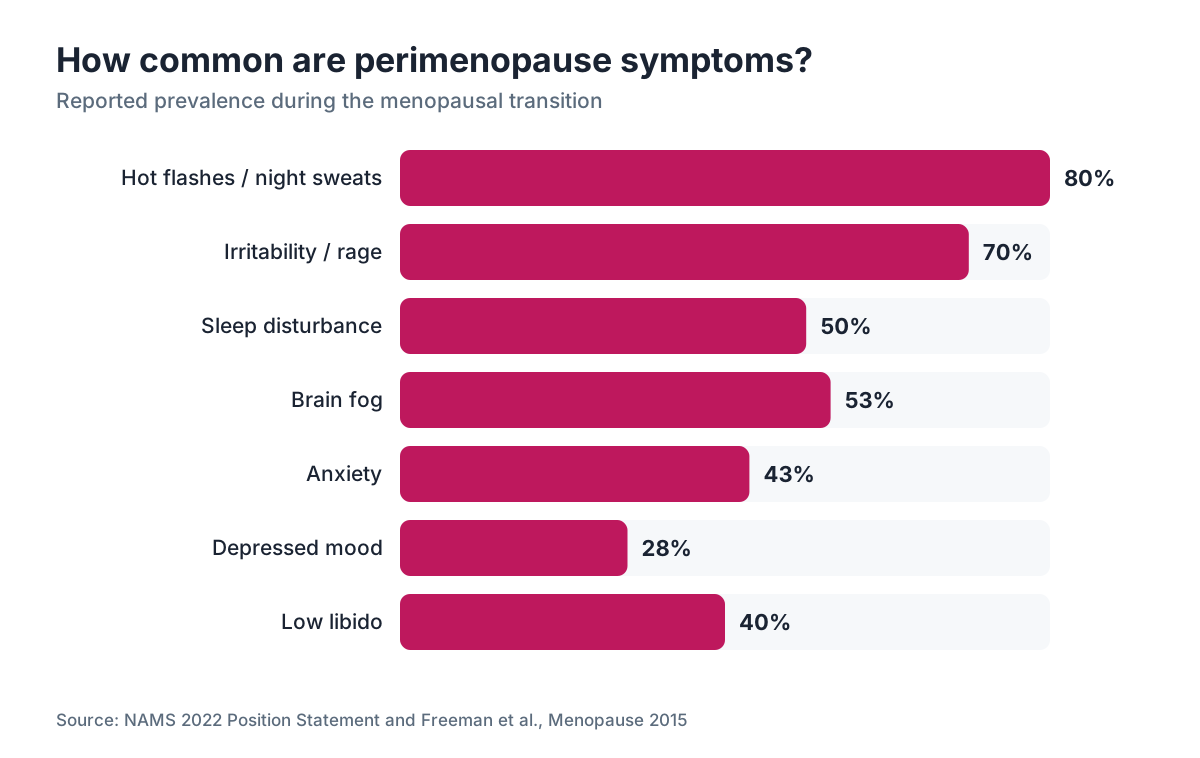
The most common companions are broken sleep, hot flashes, and anxiety. Together they form a cluster clinicians sometimes call the vasomotor-mood syndrome. The full picture usually includes several of the following:
| Symptom | Reported prevalence in perimenopause | |---|---| | Irritability / rage | Up to 70% [2] | | Sleep disturbance | 40-60% [1] | | Hot flashes / night sweats | 75-85% at peak transition [1] | | Anxiety | 35-50% [1] | | Brain fog / poor concentration | 44-62% [5] | | Low libido | 30-50% [1] | | Depressed mood | 18-38% [1] |
The two-way relationship between sleep and rage is one of the most underappreciated. Night sweats wake a woman multiple times. Sleep loss amplifies cortisol reactivity. High cortisol worsens hot flash frequency. Worse hot flashes wreck sleep further. Treating the hot flashes often breaks this loop and cuts rage sharply without any direct psychiatric treatment.
Brain fog feeds anger too. When you cannot find the word you're reaching for, cannot hold a thought through a meeting, or keep losing your keys, it builds a low-grade frustration that drops the threshold for an explosion when something else goes wrong.
Does hormone therapy actually help with perimenopause rage?
For most women with hormone-driven mood symptoms, yes. The evidence is reasonably strong.
A 2018 systematic review published in Maturitas found that estrogen therapy reduced irritability and depressed mood in perimenopausal women with vasomotor symptoms, with the largest effect in women who also had disrupted sleep [6]. The mechanism fits: stabilizing estrogen reduces the fluctuation that destabilizes serotonin, GABA, and cortisol signaling.
The NAMS 2022 Hormone Therapy Position Statement calls hormone therapy the most effective treatment for vasomotor symptoms and associated mood changes in healthy women under 60 or within 10 years of menopause onset [1]. That window matters. Women who start within it have a better benefit-to-risk balance than those who begin more than a decade past menopause.
Estradiol alone is not enough for women with a uterus. Progesterone (rather than synthetic progestins) has to be added to protect the uterine lining. Micronized progesterone (Prometrium) has an edge here because it metabolizes into allopregnanolone, the GABA-A agonist mentioned earlier, which adds a direct calming effect on mood. Synthetic progestins do not do this, and some women report mood getting worse on them. Worth raising with your prescriber.
Delivery route matters too. Transdermal estrogen (patch, gel, spray) skips the liver's first-pass metabolism and produces steadier blood levels than oral estrogen, which can swing between peaks and troughs. That steadiness may be exactly what a fluctuation-sensitive brain needs. An estrogen patch is often the preferred starting point for women with significant mood symptoms.
For women who can't or won't use systemic hormone therapy, there are options, though they are less potent. The FDA approved fezolinetant (Veozah) in 2023 specifically for vasomotor symptoms, and cutting hot flashes often improves sleep and, in turn, mood [7]. Low-dose antidepressants (SSRIs and SNRIs) also help irritability in perimenopause, though they don't touch the other hormonal symptoms and carry their own side effects.
If you're exploring hormone therapy and want a starting point for the conversation with a clinician, WomenRx offers hormone evaluation for perimenopausal women and can help you assess whether hormone replacement therapy fits your situation.
What non-hormonal treatments reduce perimenopause rage?
Several approaches have real data behind them.
SSRIs and SNRIs. Paroxetine (Brisdelle, the only FDA-approved non-hormonal option for vasomotor symptoms) and venlafaxine cut both hot flash frequency and irritability. A 2014 trial published in Menopause found venlafaxine 75mg reduced hot flash scores by 51% versus 15% for placebo [8]. Irritability improved right alongside the hot flashes, which points to shared pathways.
Cognitive behavioral therapy (CBT). CBT adapted for menopause (CBT-M) has a solid evidence base for hot flashes and mood. The MENOS trials (UK randomized controlled trials) showed real reductions in hot flash problem rating and depressed mood versus control at six weeks [5]. It works partly by changing how women interpret their symptoms and partly by improving sleep, which breaks the sleep-rage loop.
Aerobic exercise. A meta-analysis of exercise interventions in perimenopausal women found that moderate-intensity aerobic exercise (150 minutes per week, matching federal physical activity guidelines) reduced depression and anxiety with effect sizes comparable to low-dose antidepressants [9]. Exercise raises serotonin and BDNF, improves sleep, and lowers cortisol reactivity over time. It's free and has no drug interactions.
Alcohol reduction. Alcohol worsens hot flashes, fragments sleep architecture, and drives up cortisol the next morning. Many women find that cutting to one drink or fewer per day produces a noticeable drop in rage episodes within two to three weeks.
Magnesium. The evidence is modest. Magnesium glycinate at 200-400mg nightly improves sleep onset and eases anxiety in some women. It's low-risk and cheap. Nobody has great randomized data on this specifically for perimenopausal rage, but the GABA-related mechanism is plausible and the downside is minimal.
Mindfulness-based stress reduction (MBSR). A 2011 randomized trial found MBSR reduced total menopause symptom bother scores and improved emotional reactivity measures versus waitlist control [10]. That means eight weeks of structured practice, not casual use of a meditation app.
Can perimenopause rage affect relationships and work, and what should I tell the people around me?
Yes, and this is one of the least discussed consequences.
Women consistently report that mood symptoms do more damage to quality of life than physical symptoms. A 2015 study in Menopause found that irritability and mood changes were rated more bothersome than hot flashes by women in the late perimenopausal stage [2]. Relationships take the hit. Partners who don't understand the mechanism tend to personalize the anger. Children feel unsafe around unpredictable moods. Colleagues notice the change.
What to say to the people around you: keep it simple and factual. Something like, "My estrogen is dropping and it's affecting how I regulate my emotions. It's biological, I'm getting it treated, and I want you to know it's not about you." That's not an excuse. It's an explanation. There is a difference.
For partners, the most useful thing they can do is not try to solve the anger in the moment, not escalate, and be willing to learn what perimenopause actually is. Many couples benefit from a session or two with a therapist who understands menopause, not to fix the relationship but to give the partner context.
At work, you are not required to disclose anything. But if brain fog and emotional swings are hurting performance, it can help to front-load hard meetings earlier in the day when energy is higher, cut down on decision fatigue where you can, and build in recovery time after high-stress interactions.
How do I talk to my doctor about perimenopause rage without being dismissed?
Be specific and use numbers.
Vague complaints get vague responses. Instead of "I've been really moody," try: "For the past four months I've had at least three or four episodes a week of intense, disproportionate anger I can't easily control. It's affecting my relationship and my work. I've also had night sweats three to four nights a week and my cycles have been irregular for two years."
Bring data. Apps like Clue or Flo, or even a paper log tracking rage episodes, sleep, night sweats, and cycle timing for four to six weeks, give a clinician something concrete and make it much harder to wave your symptoms off.
Ask specifically about hormone testing. A serum FSH and estradiol test won't diagnose perimenopause on a single draw (levels swing too much for that), but an FSH above 25 mIU/mL on two draws 30 days apart, with irregular cycles, is consistent with the menopausal transition per NAMS guidance [1]. Testing also rules out thyroid disease and premature ovarian insufficiency.
If your provider dismisses you or blames everything on stress or anxiety without looking at the hormonal picture, get a second opinion. Menopause-trained clinicians are listed through the NAMS provider locator at menopause.org, and telehealth has made access much easier for women who can't get a timely appointment with a local specialist.
Are there any risks to treating perimenopause rage with hormones?
Yes, and they are real. They are also frequently exaggerated.
The risk most women have heard of is breast cancer from hormone therapy. Here is what the data actually show. The 2002 Women's Health Initiative (WHI) trial found a small increased risk of breast cancer with combined estrogen-progestin therapy (conjugated equine estrogen plus medroxyprogesterone acetate) in postmenopausal women, roughly 8 additional cases per 10,000 women per year after five or more years of use [11]. Estrogen-only therapy in women without a uterus did not raise breast cancer risk in the WHI and was actually tied to a lower risk.
The WHI population was also older (average age 63), largely postmenopausal rather than perimenopausal, and used oral conjugated equine estrogen, not transdermal estradiol. Whether those findings carry over to a 47-year-old using a transdermal estradiol patch with micronized progesterone is genuinely uncertain. The NAMS 2022 position statement acknowledges that the benefit-risk balance is more favorable for younger women starting therapy close to menopause onset [1].
Other real risks to discuss with your prescriber: venous thromboembolism (blood clots, higher with oral estrogen than transdermal), stroke risk (also lower with transdermal), and gallbladder disease. The absolute increases are small for healthy women in the perimenopausal window, but they matter more if you smoke, have high blood pressure, or have a personal or strong family history of clotting disorders.
The risk of not treating is real too. Untreated perimenopausal mood symptoms are linked to relationship breakdown, lost jobs, worse metabolic health, and higher cardiovascular risk through chronically elevated cortisol and inflammatory markers. Treating symptoms is not vanity. It's risk management.
Our menopause article covers the full risk-benefit picture of hormone therapy in more detail.
What does a realistic treatment plan for perimenopause rage look like?
It's layered, not one thing.
Most women who get good control of perimenopausal rage use a combination rather than a single fix. Here is what a realistic first three to six months might look like.
Month 1. Rule out thyroid disease and anemia. Get a baseline hormone panel (FSH, estradiol, progesterone, testosterone). Track symptoms daily. Start aerobic exercise five days a week if you aren't already. Cut alcohol to fewer than seven drinks a week as a starting floor.
Months 1-3. If a clinician agrees hormone therapy fits: start transdermal estradiol (typically a 0.05-0.1 mg patch changed twice weekly) plus micronized progesterone 100-200mg nightly if you have a uterus. Expect four to eight weeks before mood clearly improves. Sleep usually improves first.
Months 2-6. If hormones are off the table or you'd rather not use them: try venlafaxine 37.5-75mg or low-dose paroxetine, paired with CBT-M (eight sessions) if you can get it. Consider magnesium 200-400mg nightly. Reassess at three months.
Ongoing. Annual review with your prescriber. Bone density baseline at menopause if you haven't had one (our bone density test article explains when and why). Adjust hormone doses as you move through the transition.
Some clinicians add low-dose testosterone for mood and libido in perimenopause, though testosterone is not FDA-approved for women and the evidence is thinner than it is for estrogen. Worth a conversation.
Telehealth platforms, including WomenRx, can evaluate and prescribe hormone therapy for perimenopausal women who can't get in-person care in a reasonable timeframe. If you've been waiting months for an appointment, an online evaluation is a legitimate way to get started sooner.
Frequently asked questions
Is perimenopause rage a recognized medical symptom or am I just being dramatic?
It is recognized. NAMS and the Endocrine Society both list irritability and mood lability as core symptoms of the menopausal transition. The mechanism is biological: estrogen variability disrupts serotonin, GABA, and cortisol regulation in the brain. Up to 70% of perimenopausal women report increased irritability in some surveys. You are not being dramatic. You are describing a hormonal phenomenon with a name and with treatments.
What age does perimenopause rage usually start?
Most women enter perimenopause between 40 and 51, with the average in the mid-to-late 40s. Mood symptoms, including rage, tend to peak in the early to middle stages when estrogen is swinging most wildly, often two to three years before the final period. Some women notice mood changes as early as 38 to 40 if they have a history of hormonal sensitivity like severe PMS or PMDD.
Can perimenopause rage happen if I'm still having regular periods?
Yes. Perimenopause does not need irregular cycles to produce mood symptoms. The earliest hormonal changes, particularly rising FSH and greater cycle-to-cycle estradiol variability, can precede menstrual irregularity by years. A woman with perfectly regular cycles can still have significant perimenopausal mood changes if her estradiol is fluctuating abnormally between cycles.
How do I know if my anger is perimenopause or just life stress?
The clearest signal is a change from your baseline. If you weren't an angry person before and sudden intense rage is new, especially with night sweats, irregular periods, or brain fog, the hormonal picture deserves a look. Stress and hormonal disruption also feed each other, so it can be both. A hormone panel plus a thyroid panel helps separate the contributors.
Will antidepressants help perimenopause rage if I don't want hormones?
Possibly. SSRIs and SNRIs, particularly paroxetine and venlafaxine, reduce irritability and hot flashes in perimenopausal women with evidence from randomized trials. A 2014 trial found venlafaxine 75mg cut hot flash scores by 51% versus 15% for placebo, and irritability improved alongside. They are a reasonable second-line option and are sometimes used together with low-dose hormone therapy.
Does perimenopause rage get better after menopause?
For most women, yes. Rage and mood instability tend to peak when estrogen is fluctuating most, during the perimenopausal transition. Once estrogen settles at its lower postmenopausal level, many women report mood improvement even without treatment. Women with a history of depression or PMDD may have symptoms that persist postmenopause and benefit from continued hormone therapy or antidepressants.
Is there a difference between perimenopause anxiety and perimenopause rage?
They share a mechanism but present differently. Perimenopause anxiety often feels like dread, racing thoughts, or heart palpitations with no specific trigger. Rage is usually triggered, fast, and intense, then passes. Both come from disrupted estrogen and GABA signaling. Many women have both at once. Treatment overlaps: hormone therapy helps both, and CBT-based approaches help both as well.
Can progesterone alone help with perimenopause rage without estrogen?
Micronized progesterone (not synthetic progestins) metabolizes into allopregnanolone, which calms via GABA-A receptors. Some women in early perimenopause who still have estrogen but have lost progesterone from anovulatory cycles find that adding cyclic or nightly micronized progesterone reduces anxiety and rage. It is not universally effective and works better when estrogen levels are adequate. A hormone evaluation helps determine whether it fits.
Does perimenopause rage affect work performance?
Yes, and it's underreported. Women describe impaired emotional control in meetings, lower frustration tolerance with colleagues, and reduced ability to handle conflict calmly. Brain fog compounds this by making it harder to reach the verbal fluency and strategic thinking that usually allow composed responses. Treating the underlying hormonal cause tends to improve work performance faster than behavioral strategies alone.
What can I do right now, today, to reduce perimenopause rage while I figure out treatment?
Cut alcohol for two weeks; it worsens hot flashes and disrupts sleep, both of which amplify rage. Walk or exercise vigorously for 30 minutes; the cortisol reduction is measurable within hours. Try magnesium glycinate 300mg before bed to improve sleep onset. Tell the people closest to you what's happening so they stop taking your anger personally. Track your episodes daily for four weeks to bring concrete data to your next appointment.
Can I use hormone therapy if I have a family history of breast cancer?
It depends on the specifics. A family history of breast cancer in a first-degree relative raises your background risk, but it does not automatically rule out hormone therapy. The conversation needs a detailed personal and family history, ideally with a clinician familiar with menopause management. BRCA1 or BRCA2 carriers need specialized counseling. Many women with a family history do safely use hormone therapy, particularly transdermal estrogen, after a thorough risk discussion.
Is perimenopause rage worse for women who had severe PMS?
Yes. A history of PMS or PMDD is one of the strongest predictors of significant perimenopausal mood symptoms. Women with PMDD have already shown their brain is sensitive to hormonal fluctuation, specifically to the progesterone drop in the luteal phase. The perimenopausal transition is, in a sense, a longer and louder version of that drop. These women often benefit most from hormone therapy that stabilizes rather than swings their estrogen.
Do I need to check my hormone levels to diagnose perimenopause rage?
Hormone testing is useful but not diagnostic on its own. FSH and estradiol fluctuate too much in perimenopause for a single draw to confirm or rule out the transition. NAMS treats perimenopause as a clinical diagnosis based on age, symptoms, and menstrual history. Testing helps rule out thyroid dysfunction, premature ovarian insufficiency, and anemia, all of which can look like perimenopause rage but need different treatment.
Sources
- North American Menopause Society, NAMS 2022 Hormone Therapy Position Statement
- Freeman EW et al., Penn Ovarian Aging Study, Menopause 2015
- Santoro N et al., Journal of Clinical Endocrinology and Metabolism 2006
- Yoo SS et al., Current Biology 2007
- Ayers B et al., MENOS trials, Menopause 2012
- Rubinow DR et al., Maturitas 2018 systematic review
- FDA, Drug Approval for Veozah (fezolinetant), 2023
- Joffe H et al., Menopause 2014, venlafaxine trial
- Daley A et al., BJOG 2015, meta-analysis of exercise in menopausal women
- Carmody JF et al., Menopause 2011, MBSR randomized trial
- Women's Health Initiative Writing Group, JAMA 2002